Holly vs Boxwood
Boxwood and small-leaved hollies can both form low, clipped hedges. Taller evergreen hollies offer other screening options, while deciduous winterberry provides berries without winter leaf cover. The best fit depends on the named cultivar, soil and purpose, not a rule that holly is tall and boxwood is small.
Holly
Ilex spp.
Boxwood
Buxus spp.
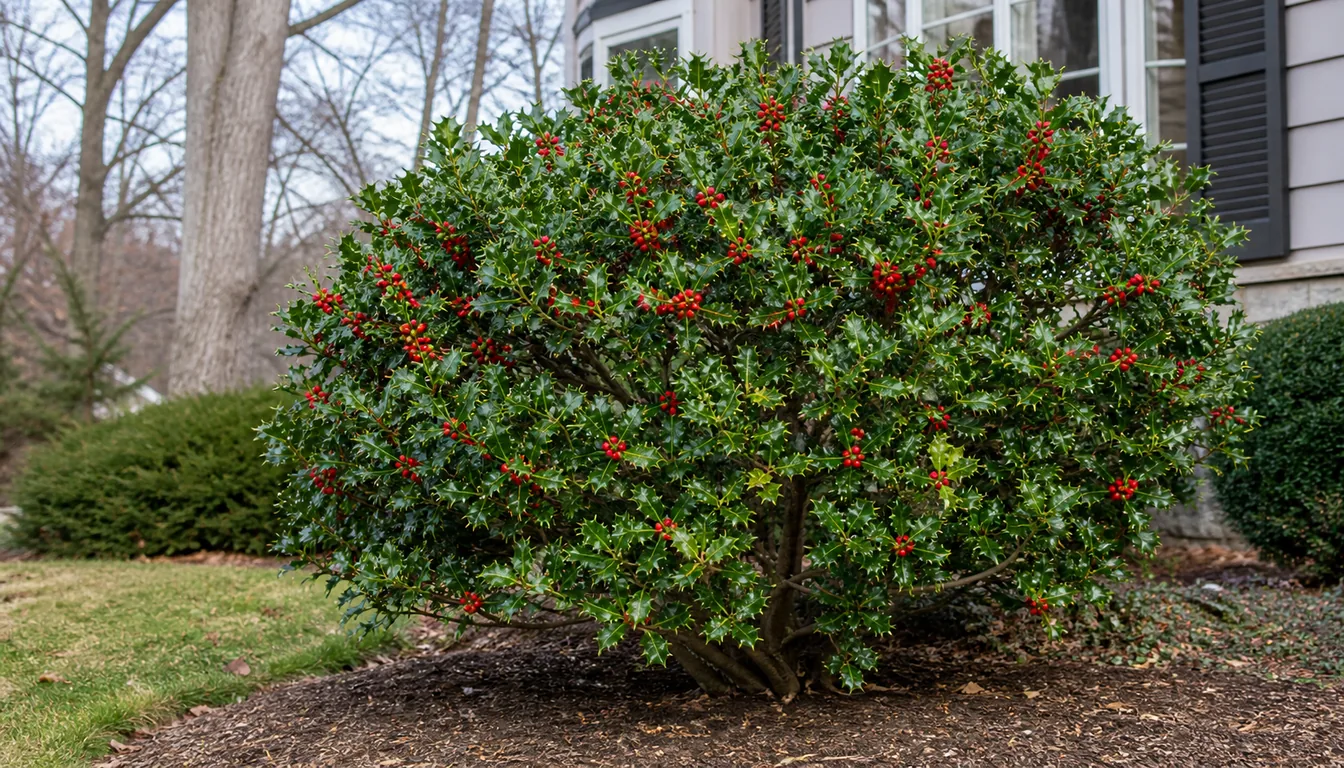
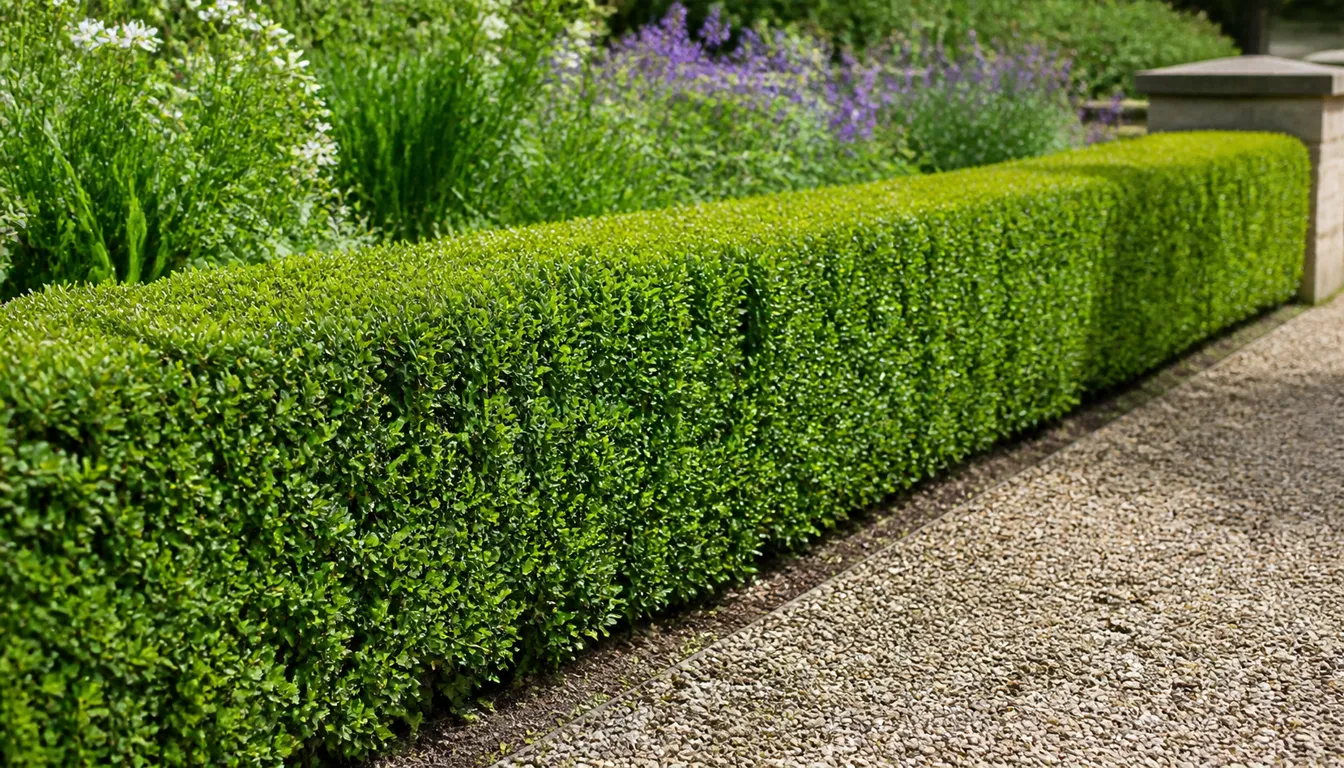
A holly with glossy, spiny leaves and red berries looks very different from a rounded boxwood. Yet Japanese holly has small leaves and compact cultivars that can look remarkably similar to boxwood in a border. Comparing the two genera as if each had one shape hides the most useful choices.
This choice starts with the job the planting must perform. A low edge, a year-round screen and a winter berry display need different traits. The same plant does not necessarily deliver all three, and regular pruning cannot make up for unsuitable soil or a cultivar that is too large.
Specifications
Compare the traits that change the growing decision.
| Feature | Holly | Boxwood |
|---|---|---|
| Winter leaf cover | Evergreen in Japanese holly and inkberry; deciduous in winterberry | Evergreen |
| Low hedge options | Compact Japanese holly and inkberry cultivars | Compact boxwood cultivars |
| Larger forms | Includes upright shrubs and trees | Includes upright cultivars and large shrubs |
| Fruit display | Species-specific color; pollination often required | Small capsules rather than a showy berry display |
| Soil comparison | Japanese holly favors acidic, well-drained soil; inkberry tolerates wetter conditions | Well-drained soil; Maryland guidance gives pH 6.5–7.2 |
| Boxwood blight | Not susceptible to this particular disease | A material risk; cultivar resistance does not erase site history |
Best Use Cases
Choose by the job the planting needs to do.
A low formal border
Dwarf boxwood is a familiar option, but Japanese holly cultivars also work in clipped forms. Soil and local climate can separate two plants that look similar in nursery pots.
Small leaves do not prove small mature size. The cultivar label needs to describe the final height and width.
Replacement after confirmed boxwood blight
Hollies offer alternatives that are not susceptible to boxwood blight. That removes a specific disease constraint without making them immune to other problems.
The replacement still needs to match the site. Japanese holly and inkberry differ in soil and moisture tolerance, so they are not interchangeable substitutes.
Winter berries and wildlife interest
The species, plant sex and compatible flowering period determine the prospect of fruit. Native winterberry is useful for berry display, but loses its leaves.
If privacy depends on winter foliage, an evergreen species is necessary. Fruit color alone does not answer that requirement.
Holly includes boxwood-sized choices
Japanese holly, Ilex crenata, has compact selections used for borders and topiary. NC State lists ‘Helleri’ around 4 feet tall and 5 feet wide, while ‘Sky Pencil’ has a narrow, upright form. Neither resembles the broad, spiny shrub many people picture when they hear holly.
Boxwood varies just as meaningfully. Common boxwood cultivars include compact ‘Vardar Valley’ and upright ‘Dee Runk’, which NC State describes at up to about 8 feet. A choice between these forms changes window clearance, path access and the amount of pruning more than the generic name does.
The goal is a mature outline that fits the bed, with enough room to reach the plant for maintenance. A hedge can be kept smaller than its natural dimensions, but doing so creates an ongoing job. A tight space is a reason to compare compact cultivars rather than promise that occasional clipping will keep any shrub small.
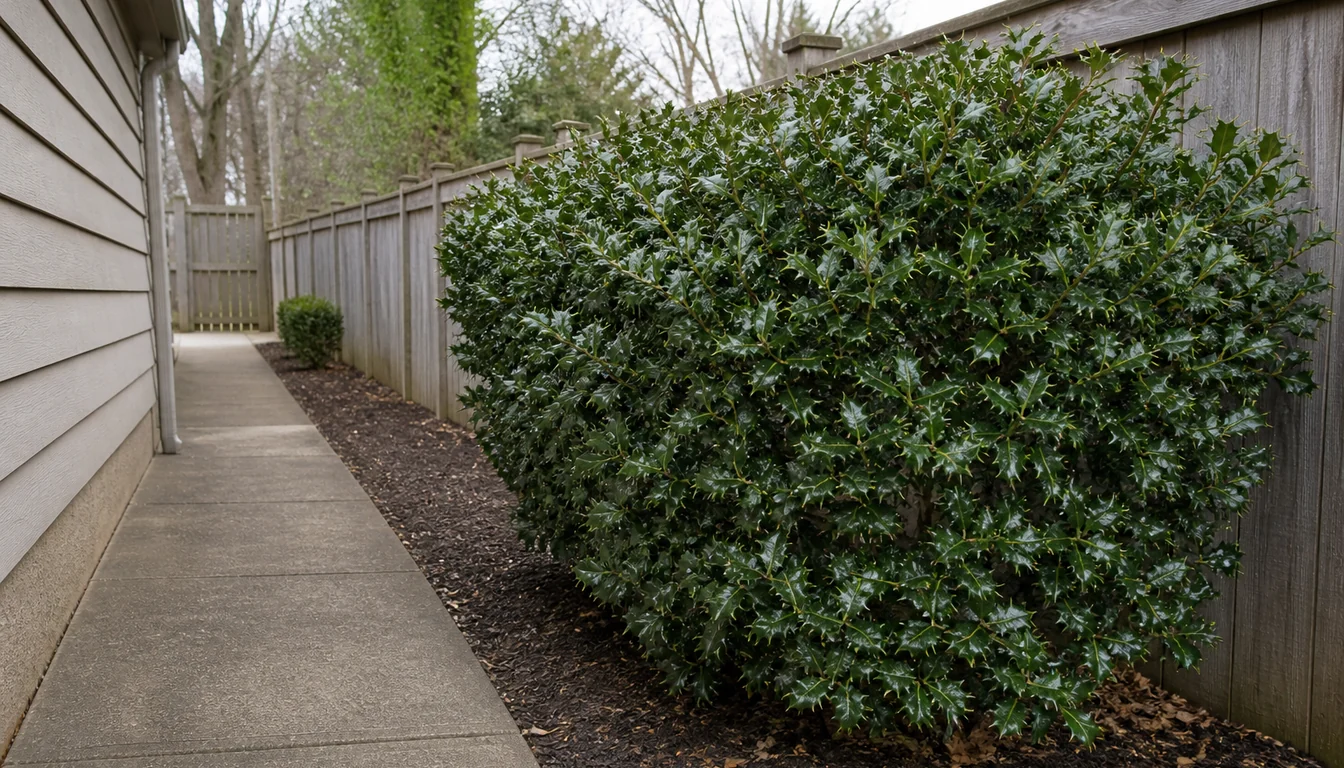
Similar foliage can hide different site needs
Japanese holly prefers acidic, well-drained soil and can turn yellow in alkaline conditions. Maryland’s boxwood guidance gives a preferred pH of 6.5–7.2. That difference makes a soil test useful when choosing between visually similar plants, especially where an existing planting has persistent yellow foliage.
Inkberry, Ilex glabra, broadens the options for acidic sites with more moisture. It tolerates occasional wetness and has compact cultivars, although the species can sucker and form colonies. It should not be treated as a drainage prescription for every waterlogged bed.
Winter exposure matters separately from a hardiness-zone label. Boxwood can lose moisture through its leaves while frozen soil limits replacement water. Japanese holly can also suffer in cold winds, and NC State notes difficulty with high heat and humidity in parts of the South. Neither group deserves a universal cold-climate victory.
The most useful evidence is performance of the named cultivar in similar local conditions. A zone range describes winter cold tolerance, not protection from drying wind, poor drainage or an unsuitable soil reaction.
Berries require a different plan from privacy
Many hollies carry male and female flowers on separate plants. A fruiting female needs a compatible pollen source with overlapping bloom. Buying two plants is not enough if both are female or their flowering periods do not line up, and one male can serve multiple compatible females rather than requiring a pair for every shrub.
Winterberry, Ilex verticillata, makes this distinction easy to see. It drops its leaves and carries fruit on bare branches. Maryland Extension describes matching early-blooming ‘Red Sprite’ with ‘Jim Dandy’, or later-blooming selections with a suitable later male. That is a berry planting, not a leafy winter screen.
Japanese holly generally carries small dark fruit, so a red-berry expectation would be misplaced. Boxwood has flowers and small fruit capsules, even though these are not its main ornamental feature. It is inaccurate to describe boxwood as having no fruit or no ecological value.
Bird use of holly fruit is one benefit of an appropriately selected planting. It does not make the fruit edible for people or pets, and it does not replace attention to local species suitability.
A boxwood replacement needs more than a similar shape
After confirmed boxwood blight, replanting another boxwood can put a new hedge into a site that still contains infectious material. University of Maryland Extension identifies hollies among the non-susceptible alternatives. A suitable holly can preserve the intended evergreen structure while avoiding that particular host-pathogen pairing.
That choice follows a diagnosis. Brown leaves or bare branches can also result from winter injury, root trouble and other causes. Replacing boxwood with a holly that dislikes the same wet soil would not resolve a drainage problem.
For retained boxwood, selective thinning helps light reach the interior. Shearing only the outside creates a different structure and can conceal bare inner branches. The desired outline, plant condition and growth rate determine pruning work, so a fixed annual trim count is a poor way to compare the two groups.
Soft leaves do not mean edible foliage
Spiny holly foliage can be awkward beside a narrow path, but not all hollies are spiny. Japanese holly has small rounded teeth along the leaf edge. Physical contact and ingestion are separate questions, so choosing softer foliage does not establish pet safety.
ASPCA lists boxwood, Buxus species, and American holly, Ilex opaca, as toxic to dogs, cats and horses. Its American holly record does not establish the same evidence for every species sold under the name holly. None should be offered as animal browse on the strength of a broad gardening comparison.
Keep hedge clippings away from animals that chew plants. If a pet may have eaten a toxic plant, contact a veterinarian or an animal poison service promptly rather than relying on a “mildly toxic” label.
Sources & References
- Buxus sempervirens, NC State Extension Gardener Plant Toolbox
- Boxwood: Identify and Manage Common Problems, University of Maryland Extension
- Ilex crenata, NC State Extension Gardener Plant Toolbox
- Ilex glabra, NC State Extension Gardener Plant Toolbox
- Winterberry Holly, University of Maryland Extension
- Boxwood, ASPCA
- American Holly, ASPCA
Related Comparisons
Boxwood vs Privet: Fast Hedge Or Formal Shape
Read Comparison
Arborvitae vs Juniper: Evergreen Screen Showdown
Read Comparison
Azalea vs Rhododendron: Which Fits Your Beds
Read Comparison