
Why Azalea Leaves Turn Yellow and What to Check First
Yellow azalea leaves can reflect seasonal shedding, nutrient availability, root stress, or insect feeding. Leaf age and pattern help narrow the possibilities, but moisture checks, pest inspection, and sometimes a soil test are needed before treatment.
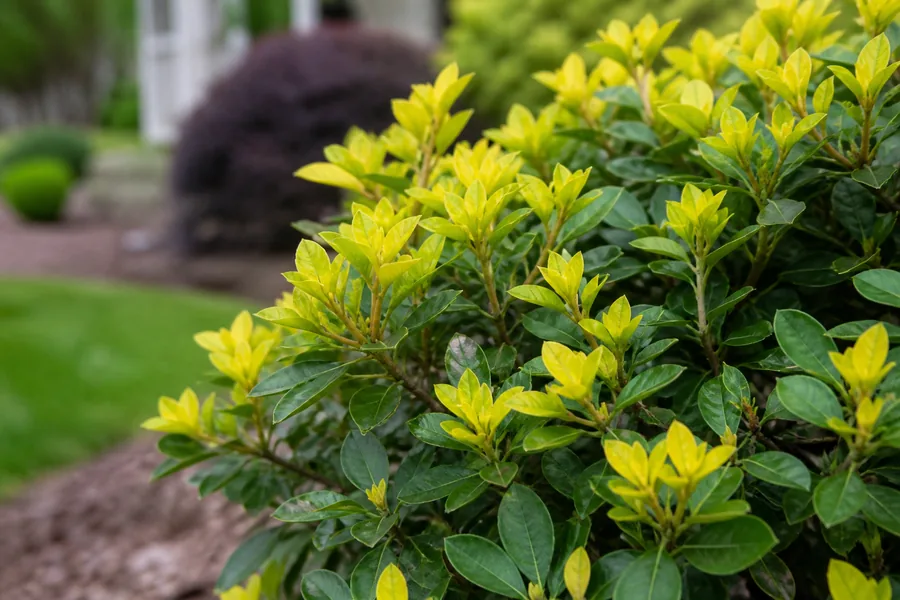
Quick diagnosis
Leaf pattern is a clue, not a diagnosis
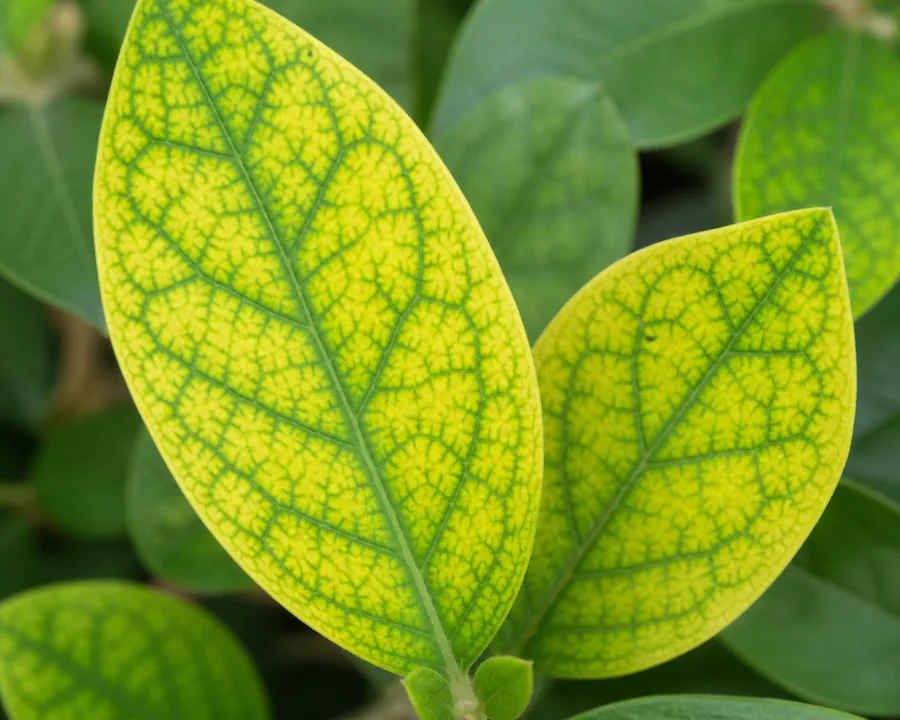
Yellow tissue between green veins on young leaves suggests a nutrient-availability problem, including iron or manganese. It does not prove which nutrient is involved or that the soil pH is wrong.
Wilting deserves a moisture check before more water or fertilizer. Compare the root ball with nearby soil. Wet surrounding ground can coexist with a dry newly planted root ball, while persistently saturated roots can struggle to supply water.
Older interior leaves yellowing in fall can be normal. Widespread decline, twig death, or damage spreading into new growth needs a closer look even when some tips remain green.
Open the full diagnosisWhat You Are Seeing
The useful question is what changed alongside the leaf color. A recently planted azalea, an established shrub after prolonged rain, and a healthy evergreen shedding interior leaves may all look yellow from a distance, yet need different responses.
Leaf age helps because some nutrients can move from older leaves into new growth more readily than others. Nitrogen and magnesium shortages often show first in older foliage, while iron-related chlorosis usually appears in younger leaves.
Those tendencies help select a test. They cannot separate every deficiency from damaged roots, irrigation trouble, or pests. Adding a nutrient without checking the cause can leave the underlying problem in place.
Common Causes
01 Compare new and older leaves
Nutrients are unavailable or out of balance
A green vein network against yellow tissue is called interveinal chlorosis. On young leaves, iron is one possibility, but manganese deficiency can look similar. A photograph cannot reliably distinguish them.
Soil pH affects nutrient availability. Azaleas generally grow well in acidic soil around pH 4.5 to 6.0. At higher pH, iron may be present yet difficult for the plant to use. Poor drainage or injured roots can also interfere with uptake.
A soil test helps separate these possibilities before amendments are chosen. The amount needed to change pH depends on the starting pH and soil properties, and some sites remain difficult to acidify. Suitable chelated nutrients may relieve a confirmed deficiency without correcting the site problem.
How to identify it
- Compare the youngest leaves with mature leaves on several branches.
- Record whether the veins remain green and whether shoot growth has slowed.
- Note recent planting, fertilizer use, drainage changes, or nearby masonry. These are context, not proof.
What to do
- Request a soil test with recommendations for azaleas before applying sulfur, iron, or manganese.
- If nutrient availability remains unclear, ask a local Extension service whether a leaf analysis or root assessment would help.
- Follow the test recommendation and the product label. More iron is not a substitute for checking a possible manganese problem.
- For persistently alkaline ground, a suitable container or a plant adapted to the site may be more practical than repeated amendments.
02 Consider season and cultivar
Seasonal loss of older leaves
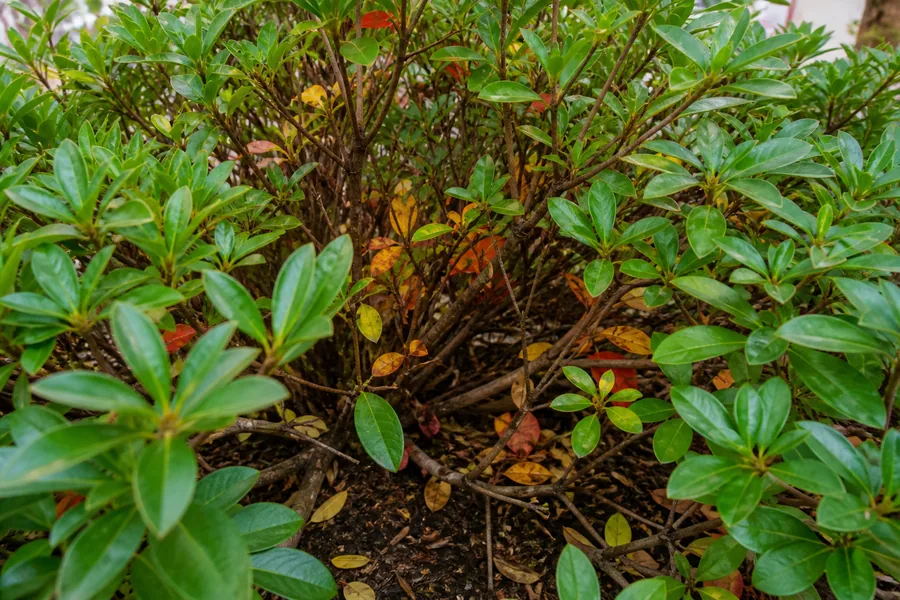
Evergreen azaleas retain foliage through winter but still shed older leaves. Interior yellowing in fall can be part of that cycle. Deciduous azaleas lose their foliage more broadly as the season ends.
Healthy newer foliage and otherwise normal growth support seasonal shedding as an explanation. They do not rule out a second problem. Yellowing that spreads unusually fast, wilt, or dying branches needs further assessment.
How to identify it
- The timing fits the usual leaf change for this azalea.
- Older foliage is affected while newer leaves and branches otherwise look healthy.
- There is no accompanying wilt, rapid spread, or new twig death.
What to do
- Monitor the pattern rather than fertilizing solely to stop seasonal leaf loss.
- Investigate other causes if new growth yellows or the shrub begins to decline.
03 Check moisture before watering
Wet soil and impaired roots
A wilting shrub in wet soil may have roots that cannot take up water effectively. Saturation reduces the air available to roots, and some root diseases also thrive in poorly drained sites. Yellow leaves alone do not establish root rot.
Recent planting adds another complication. The original root ball can remain dry even when the surrounding bed feels wet. Comparing both areas is more useful than assuming that every wilted shrub needs either more water or none at all.
Persistent decline calls for an assessment of planting depth, drainage, and root condition. Similar limits apply when investigating root and crown rot in rhododendrons. A healthy-looking patch of crown tissue does not exclude damage to fine roots.
How to identify it
- Compare moisture in the root ball and adjacent soil without cutting major roots.
- Look for standing water, runoff entering the bed, buried stems, or mulch piled against them.
- Record whether decline followed planting, heavy rain, irrigation changes, or fertilizer application.
What to do
- Pause irrigation to a saturated root zone and reassess it as drainage improves. Do not deliberately let all roots become bone dry.
- Keep mulch away from stems and correct avoidable runoff or irrigation problems.
- Seek local diagnostic advice for persistent wilt or branch death before using a fungicide or removing the shrub.
- If planting depth or the site is unsuitable, plan a correction with attention to the existing roots rather than repeatedly lifting the plant to inspect it.
04 Assess growth as well as color
Possible nitrogen shortage
Nitrogen shortage can leave older leaves uniformly pale and reduce shoot growth. That combination warrants investigation, but neither slow growth nor a missed fertilizer application proves that nitrogen is lacking.
An established azalea may need little supplemental fertilizer. Damaged roots can also limit growth, and feeding them will not fix drainage or planting problems.
How to identify it
- Older leaves are broadly pale rather than strongly patterned between veins.
- New shoots are shorter or smaller than expected for the cultivar and season.
- Root conditions and recent care do not already explain the decline.
What to do
- Use soil-test recommendations together with growth history to decide whether fertilizer is needed.
- If feeding is indicated, use an appropriate product at its labeled rate and locally suitable timing.
- Avoid applying fertilizer to a drought-stressed or waterlogged shrub as an attempted rescue.
05 Test before adding magnesium
Possible magnesium shortage
Magnesium deficiency often begins as interveinal yellowing on older leaves. Reddish areas and brown margins may develop, but scorched edges also occur with other nutrient and environmental problems.
Epsom salt supplies magnesium. It is not a general treatment for yellow azaleas, and an image or the age of one leaf cannot establish the need for it.
How to identify it
- Older foliage shows yellowing between veins.
- The pattern occurs across several leaves rather than only on one damaged leaf.
- A soil test or further diagnostic assessment supports magnesium deficiency.
What to do
- Obtain a soil test before adding magnesium sulfate.
- If magnesium is deficient, follow the laboratory recommendation for the amount and suitable amendment.
- Avoid adding lime simply because it contains magnesium when the soil pH does not need raising.
06 Look for active insects
Lace bug feeding
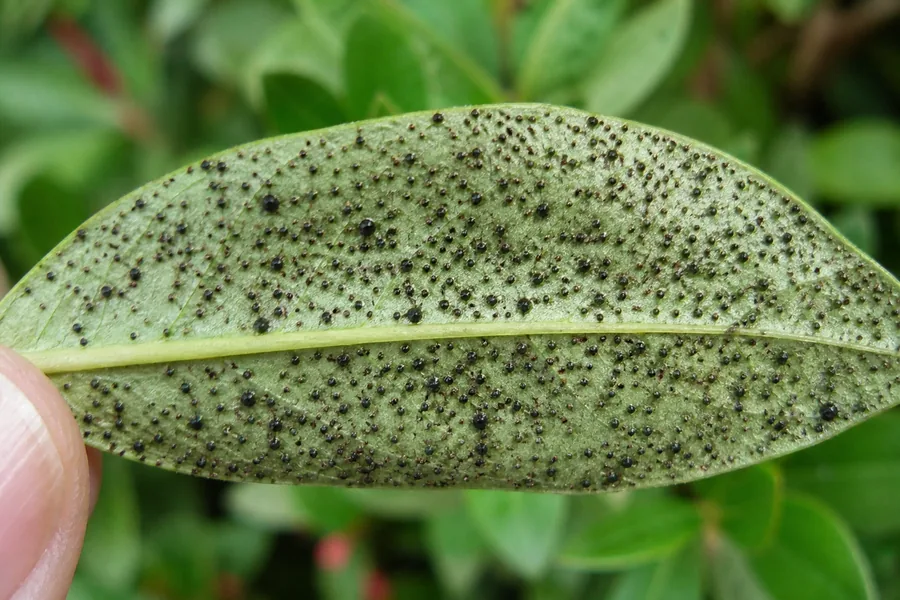
Lace bugs feed from the underside of leaves, leaving pale stippling on the upper surface. Heavier damage can give foliage a bleached or yellow appearance. Dark fecal spots underneath are a useful clue, especially alongside the insects.
Old marks can remain after the insects are gone. A few spots do not establish an active infestation that needs treatment. Examining several leaves with a hand lens helps distinguish current feeding from old damage and other leaf problems.
How to identify it
- The upper leaf surface has fine pale stippling.
- Dark spots occur underneath affected leaves.
- Small lace-winged adults or spiny immature insects are present on affected foliage.
What to do
- Inspect several leaves and look for beneficial insects as well as pests.
- Tolerate limited damage when natural enemies are controlling a small population.
- If a damaging population requires treatment, a product labeled for azaleas and lace bugs must reach the leaf undersides. Follow its temperature, application, and pollinator precautions.
- Reduce avoidable drought and exposure stress without moving the shrub solely because old feeding marks remain.
07 Confirm dryness in the root zone
Dry roots and water stress
Azaleas can become water-stressed during dry weather because much of their root system is near the surface. A dry original root ball is also possible soon after planting, even in a bed that received rain.
Wilt and brown edges are not unique to drought. Actual moisture in the roots distinguishes a need for water from several problems that extra irrigation could worsen.
How to identify it
- The root ball or active root zone is dry, not just the soil surface.
- The plant has experienced dry weather, competing tree roots, or a sheltered rain shadow.
- Moisture observations fit the timing of the decline.
What to do
- Water a dry root zone slowly enough for moisture to enter it, then confirm that it became moist.
- Allow drainage and reassess moisture before watering again rather than adopting a fixed daily schedule.
- Maintain mulch over the shallow roots while leaving space around stems.
Will Yellow Leaves Recover?
Some nutrient-related yellowing can improve after the underlying problem is corrected. Brown dead areas and insect feeding scars will not become intact leaf tissue again.
New growth is useful evidence of improvement, but one green flush does not prove that drainage, soil chemistry, or a pest problem has been resolved. Follow the original cause as well as the appearance of the leaves.
When the Pattern Does Not Fit
More than one problem can affect the same shrub. Wet roots can reduce nutrient uptake, while lace bugs damage a different set of leaves. Applying fertilizer and insecticide together makes it harder to judge which change helped and may expose the plant to unnecessary treatment.
A useful diagnostic record includes the cultivar if known, planting date, recent weather and irrigation, photographs of the whole shrub and both leaf surfaces, and soil-test results. A local Extension service or plant clinic can advise whether a sample is needed before you remove roots or branches.
Recovery Plan
Establish the next check
Compare leaf ages and surfaces, moisture in the root ball and bed, and recent care. Collect a soil sample when nutrient availability is suspected.
Follow the original problem
Watch moisture, active pests, or growth according to the cause being treated. Existing damaged leaves may remain marked even when conditions improve.
Reassess rather than repeat
Repeat soil testing at the interval recommended for the amendment and local conditions. If decline continues, revisit the diagnosis instead of automatically applying more product.
A suitable site reduces repeated yellowing problems. Azaleas need acidic soil with drainage that allows roots to breathe while retaining usable moisture. A soil test is more informative than assuming nearby concrete has changed the pH.
Organic mulch helps moderate moisture around shallow roots. It does not replace a measured pH correction, and piling it against the stems creates another problem.
The shrub's normal seasonal pattern is also useful context. A change from that pattern, especially with wilt or dying branches, deserves closer attention.
Sources
- Interveinal chlorosis on azaleas and rhododendron, Purdue University Consumer Horticulture
- Nutrient deficiency of trees and shrubs, University of Maryland Extension
- Lace bugs on trees and shrubs, University of Maryland Extension
- Azaleas and Rhododendrons: Identify and Manage Problems, University of Maryland Extension