
Why Won't My Azalea Bloom? Usually It Is the Pruning Date
An azalea decides this spring's flowers during last summer, so a bare shrub is almost always reporting something that happened months ago. One check halves the problem straight away.
After that come the pruning window, shade, cold-killed buds, nitrogen, drought during bud set, and the fungus that leaves dead buds sitting on the stem.
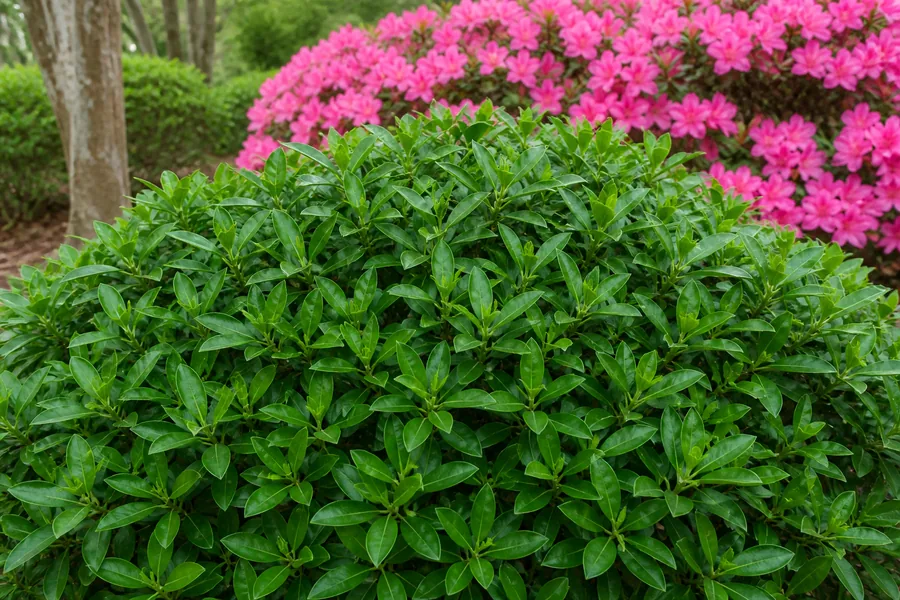
Quick diagnosis
Flower buds were removed by pruning after they had already formed.
Look at the stem tips before you do anything else, because the answer splits in two there. Plump rounded buds at the tips mean the plant made its flowers and then lost them, which points to cold, a late frost, or the fungus that leaves buds brown and firm.
Nothing but slim pointed leaf buds means the flowers were never made at all, which points to the pruning date, shade, nitrogen, or a dry late summer.
Open the full diagnosisWhat You Are Seeing
An azalea flowers on old wood, and it sets those buds during the summer before, starting within weeks of the last flowers fading. By the time autumn arrives, next spring is already decided and sitting on the plant.
That is why a bare shrub in April is reporting on the previous July. Nothing you do in spring changes this year's display, which is frustrating but also useful, because it tells you exactly which months to examine.
The whole page turns on one observation. Either the buds were never made, or they were made and then destroyed, and those two situations share almost no causes and no repairs.
Common Causes
01 High likelihood
Pruned after the buds had formed
The safe window is narrow and it is tied to the plant rather than the calendar. You have the few weeks straight after flowering finishes, and by around the start of July the shrub has begun laying down next spring's buds on the stem tips.
Anything cut after that takes the flowers with it. This is why a sheared hedge can look immaculate all year and never bloom, since shearing removes precisely the outermost growth where the buds sit.
Late cutting costs twice over. It also pushes soft new growth that has no time to harden, so a shrub pruned in autumn can lose that growth to the first hard frost as well.
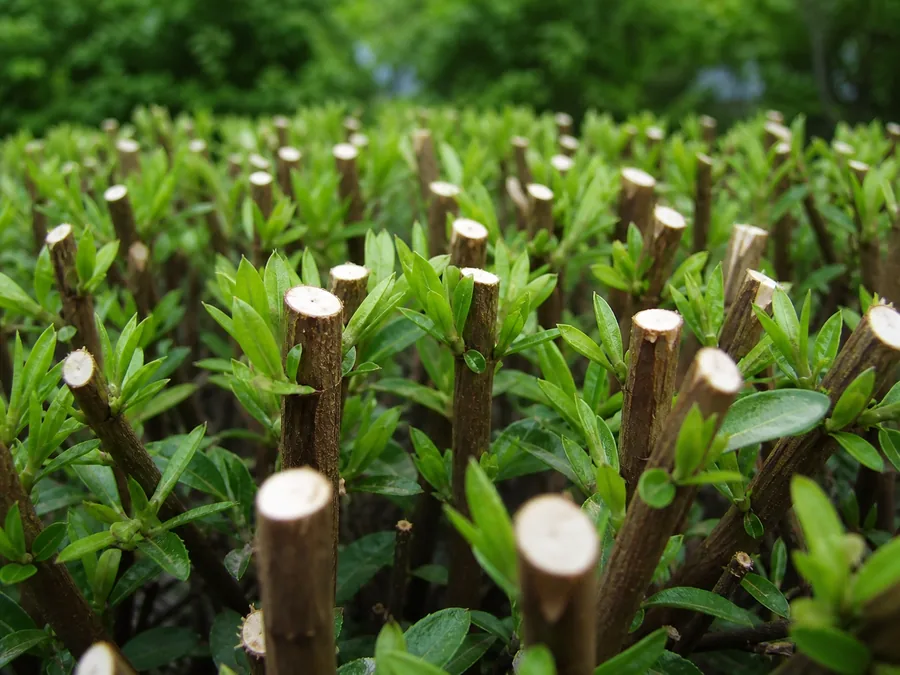
How to identify it
- Stem tips end in flat cut surfaces rather than buds.
- The shrub is neatly shaped and vigorously leafy.
- It was tidied in late summer, autumn, or winter.
- Any flowers that do appear are low down or deep inside, where the shears missed.
What to do
- Prune only in the weeks straight after the flowers fade, and stop by the start of July.
- Thin out whole stems at their base rather than shearing the outside, which keeps the bud-bearing tips on the plant.
- Leave the shrub unpruned for a full year if you are unsure where you are in the cycle.
- Tie the job to the plant by doing it while the spent flowers are still on the ground, not to a date in a diary.
02 High likelihood
Too much shade to fund the buds
Leaves are cheap for a plant and flowers are not. A shaded azalea keeps producing perfectly good foliage and quietly stops producing buds, which is why the shrub can look healthier than its flowering neighbors.
Shade rarely arrives as an event. The trees above grow a little each year until a bed that was bright when the shrub went in has become genuinely dark, and nobody remembers it being any different.
How to identify it
- The shrub is leafy and green but has no buds at any tip.
- Nearby trees or a structure have grown or been added since planting.
- Flowering is better on the side that faces open sky.
- Growth is loose and reaching rather than compact.
What to do
- Stand under the shrub around midday and judge how much sky you can actually see.
- Thin the branches of whatever is casting the shade rather than moving the azalea first.
- Aim for morning sun with afternoon shade, which suits azaleas better than full sun.
- Move the plant in autumn if the shade cannot be reduced, and accept a settling year afterwards.
03 High likelihood
Cold or drying wind killed the buds
Flower buds are killed at higher temperatures than the wood is. That gap is the whole story here, because it lets a shrub come through a winter alive, healthy and completely flowerless, which reads as a disease to anyone who does not know about it.
In milder zones the usual culprit is not a hard freeze at all. Drying wind over frozen ground pulls water out of the buds faster than the roots can replace it, and that takes more flowers than outright cold does.
A late frost is a different event with the same result. It catches buds that have already begun swelling in a warm spell, and it does its damage in a single night rather than across a season.
How to identify it
- Buds are present at the tips but brown and soft rather than firm.
- The exposed or windward side of the shrub lost more buds than the sheltered side.
- A warm spell was followed by a sharp cold snap.
- The foliage and stems are otherwise healthy.
What to do
- Leave the shrub alone, since the buds are gone and nothing restores them.
- Shelter the exposed side with a screen before the next winter rather than wrapping the whole plant.
- Cover a shrub with swelling buds on a night when a late frost is forecast.
- Choose a cultivar rated for colder conditions than your own if this repeats, because bud hardiness varies far more than plant hardiness does.
04 Medium likelihood
Too much nitrogen
Nitrogen buys leaves, and a shrub given plenty of it will spend on foliage rather than flowers. The result looks like the shade case from a distance, which is why it is worth checking both.
The source is usually not a decision anyone made. Lawn feed spread near the bed reaches the shrub roots regardless of where it was aimed, and an established azalea in reasonable soil rarely needs feeding at all.
How to identify it
- Growth is unusually lush, soft and dark green.
- The shrub sits within a few feet of a fed lawn.
- It has been given a general fertilizer in the last year.
- Stem extension is long while bud count is nil.
What to do
- Stop feeding the shrub entirely for a season and see what it does.
- Keep lawn fertilizer off the bed and away from the drip line.
- Feed only if a soil test or visibly poor growth calls for it, and then use a product formulated for acid-loving shrubs.
- Resist bloom-booster products, which do not address a shrub that never made buds.
05 Medium likelihood
Drought during the summer the buds were being set
The months that decide the flower count are the middle and late summer ones, running into early autumn. A shrub short of water then makes fewer buds, and in a bad year makes none.
Azaleas feel a dry spell early because they root shallowly. Deeper-rooted neighbors can look untroubled through the same weeks that cost the azalea its whole spring.
How to identify it
- Last summer was dry and the shrub was not watered.
- It sits under a roof overhang, a large tree, or in fast-draining soil.
- Some leaf drop or dull foliage was noticed the previous late summer.
- Nearby shrubs on irrigation flowered while this one did not.
What to do
- Water deeply through late summer and early autumn, which is when next spring is being built.
- Keep a mulch layer over the shallow roots and hold it back from the stems.
- Soak rather than sprinkle, so the water reaches below the surface where the roots sit.
- Check for a rain shadow from a wall or overhang, which can keep a spot dry through a wet season.
06 Medium likelihood
Bud blast fungus
Blasted buds stay on the plant, which is what makes this one deceptive. The shrub looks properly budded right up until spring, and then nothing opens.
Touch settles it. A blasted bud is dry, brown and noticeably firm, where a bud killed by cold goes soft, and fine black bristle-like growths on the surface confirm the fungus outright.
The dead buds are not just evidence, they are the reservoir. Left in place they carry the fungus through to the following season, so removing them is the treatment rather than a tidy-up.
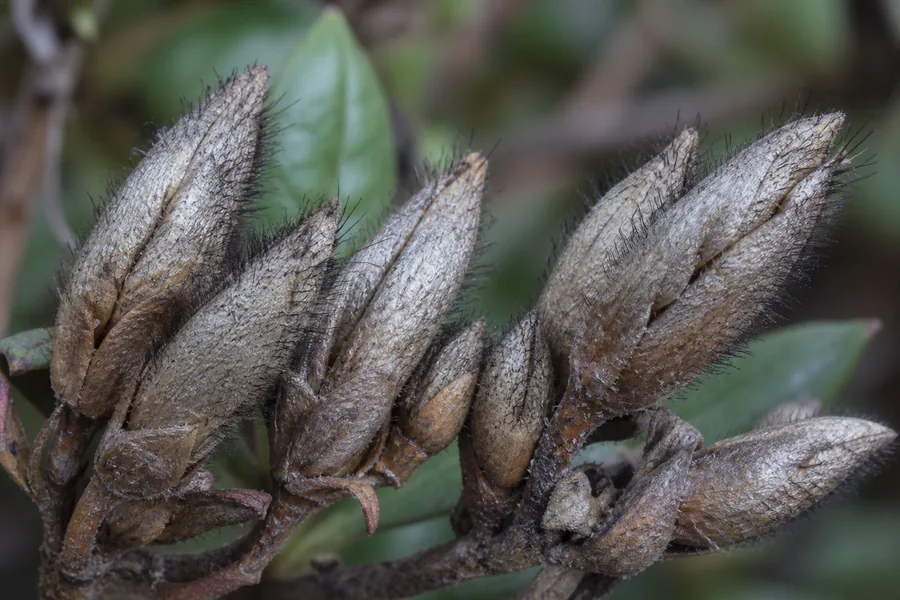
How to identify it
- Buds are brown, closed and firm when squeezed.
- Fine black bristles stand up from the bud surface.
- Dead buds from previous years are still attached to the stems.
- Healthy buds elsewhere on the same shrub opened normally.
What to do
- Pick off every blasted bud you can reach and bin them rather than composting them.
- Work over the shrub in autumn and again before bud break, since old buds are easy to spot on bare tips.
- Improve air movement around the shrub by thinning crowded stems.
- Treat removal as the main control and leave fungicides as a last resort on a shrub that keeps losing whole seasons.
07 Low likelihood
The plant is young or was recently moved
A recently planted or transplanted azalea spends its first seasons on roots rather than flowers, and that is the correct allocation. Nursery plants make this worse by arriving in full bloom, which sets an expectation the plant cannot repeat until it has settled.
How to identify it
- The shrub went in within the last two or three years.
- It was moved, divided, or root-pruned recently.
- New shoot growth is strong while flowering is absent.
- It flowered heavily the year it was bought and not since.
What to do
- Wait, which is genuinely the whole answer for one or two seasons.
- Water through dry spells so root establishment is not slowed.
- Avoid feeding to hurry it, since that pushes leaves and delays flowering further.
- Leave pruning alone entirely while it settles.
Is the Plant in Trouble?
Almost certainly not. With the exception of severe drought, nothing on this page threatens the life of the shrub, and several of the causes describe a plant that is growing too well rather than badly.
Flowering is the first thing a plant gives up when anything is short.
That makes a missing bloom an early warning rather than a late one, and it is why a flowerless azalea so often has flawless foliage.
The honest health measures are elsewhere.
Leaf color, the length of this year's new shoots, and whether the shrub is holding its foliage will tell you far more about its condition than the flower count will.
Start by Finding Out Whether It Has Buds
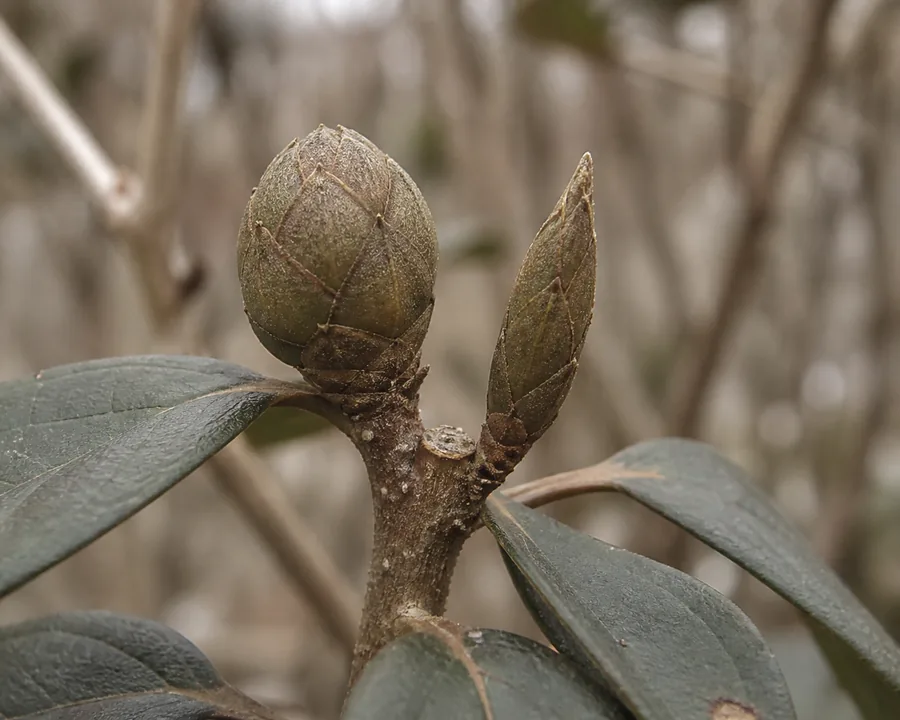
Look at the tips of the outermost stems, and do it from autumn onward rather than waiting for spring. The buds for the coming season are visible for months before anything opens, which means you can know the answer in October instead of finding out in April.
The two bud types are easy to separate once you have seen them together. A flower bud is plump and rounded and sits at the very tip, while a leaf bud is noticeably slimmer and comes to a point.
Finding no flower buds at all rules out everything in the second half of this page. The flowers were never made, so the cause is the pruning date, the light, the feeding, or last summer's water.
Finding buds means the opposite, and then the texture tells you the rest. Squeeze one gently, because a firm brown bud points at the fungus and a soft brown one points at cold.
Recovery Plan
Nothing to recover
This season's flowers were settled last year and cannot be brought back.
The useful work is identifying which cause applies while the evidence is still on the plant.
The season that decides next spring
Prune only just after flowering, keep the shrub watered through the bud-setting months, and stop any feeding. Everything that produces next year's display happens now.
Where you check your work
Look at the stem tips before winter. Plump rounded buds mean the repair worked, and you will know months before the flowers would have told you.
Two habits prevent most of this.
Prune only in the weeks straight after the flowers fade, and water deeply through late summer while the buds are being laid down.
Both are tied to the plant's calendar rather than the tidying calendar, which is the part people get wrong.
An azalea cut when it looks untidy in September is an azalea that will not flower, however well it is treated for the rest of the year.