Care snapshot
- Light
- Full sun, 6+ hours
- Water
- Water new plants; drought tolerant once established
- Height
- 2-3 ft mound; flower stalks up to 5 ft (UF/IFAS)
- Zone
- Zones 5-9 (NC State); Clemson says 6-9 and 7-10
- Spread
- 2 ft 4 in to 3 ft wide (NC State)
- Temperature
- Tolerates heat, humidity, drought, and poor soil
What Does Pink Muhly Look Like Through the Year?
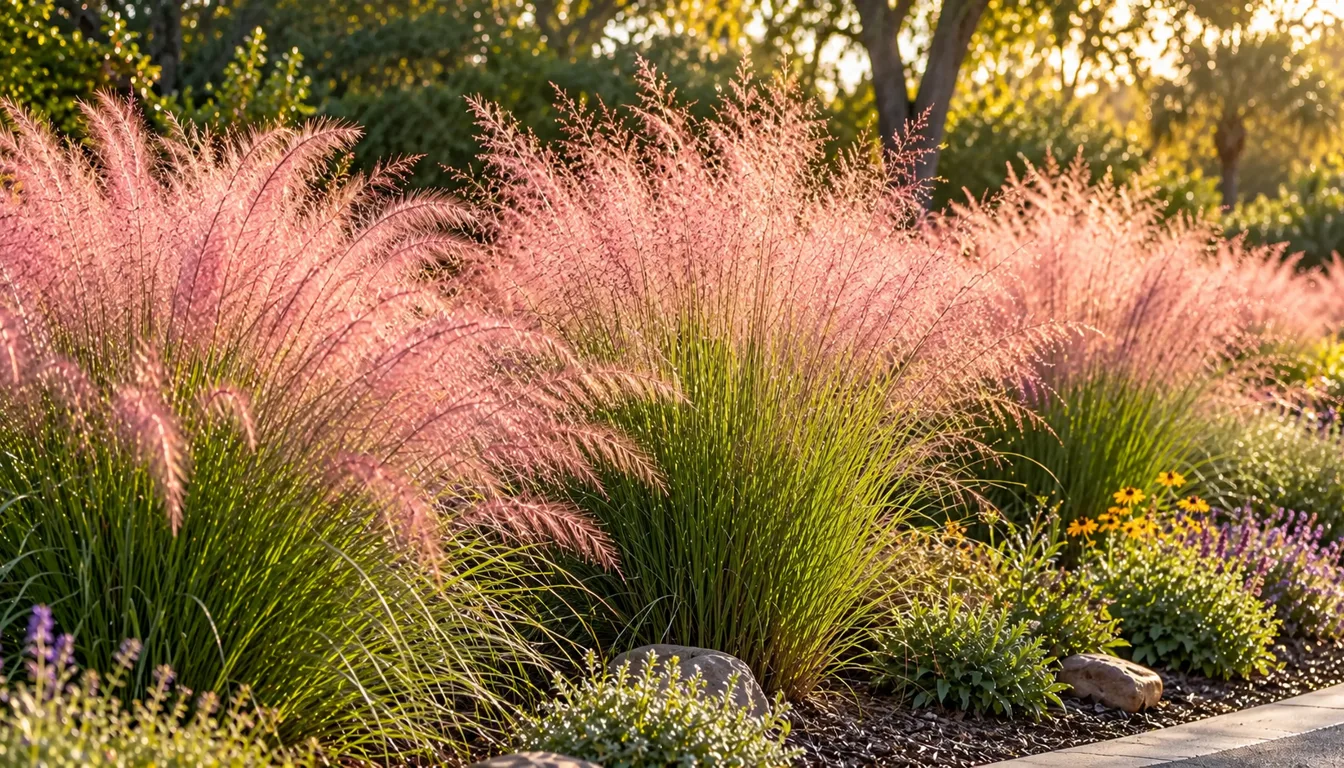
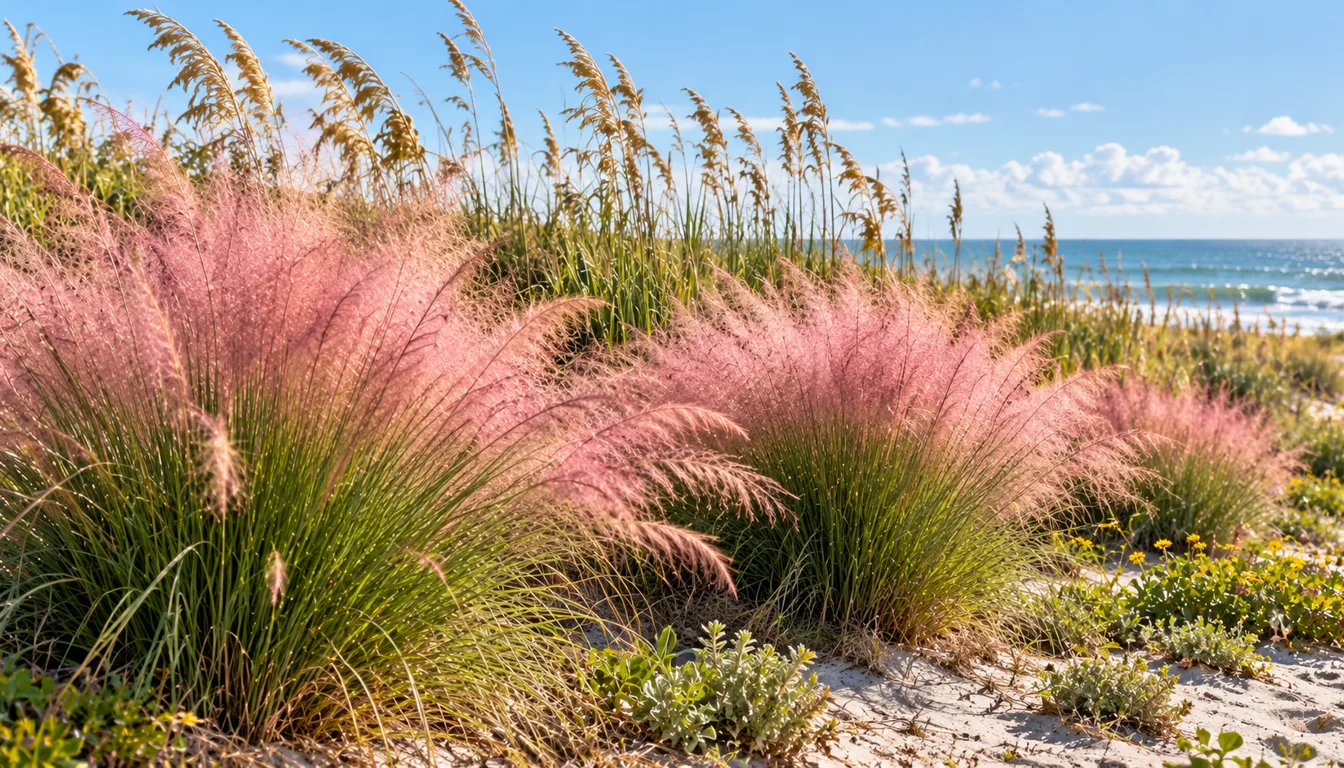
Pink muhly (Muhlenbergia capillaris), also called Gulf muhly or muhly grass, is a clumping warm-season perennial grass. The foliage emerges in spring and reaches its full size by summer (Clemson), forming a mound of wiry, thread-like, dark green leaves and stems 2 to 3 feet tall (NC State).
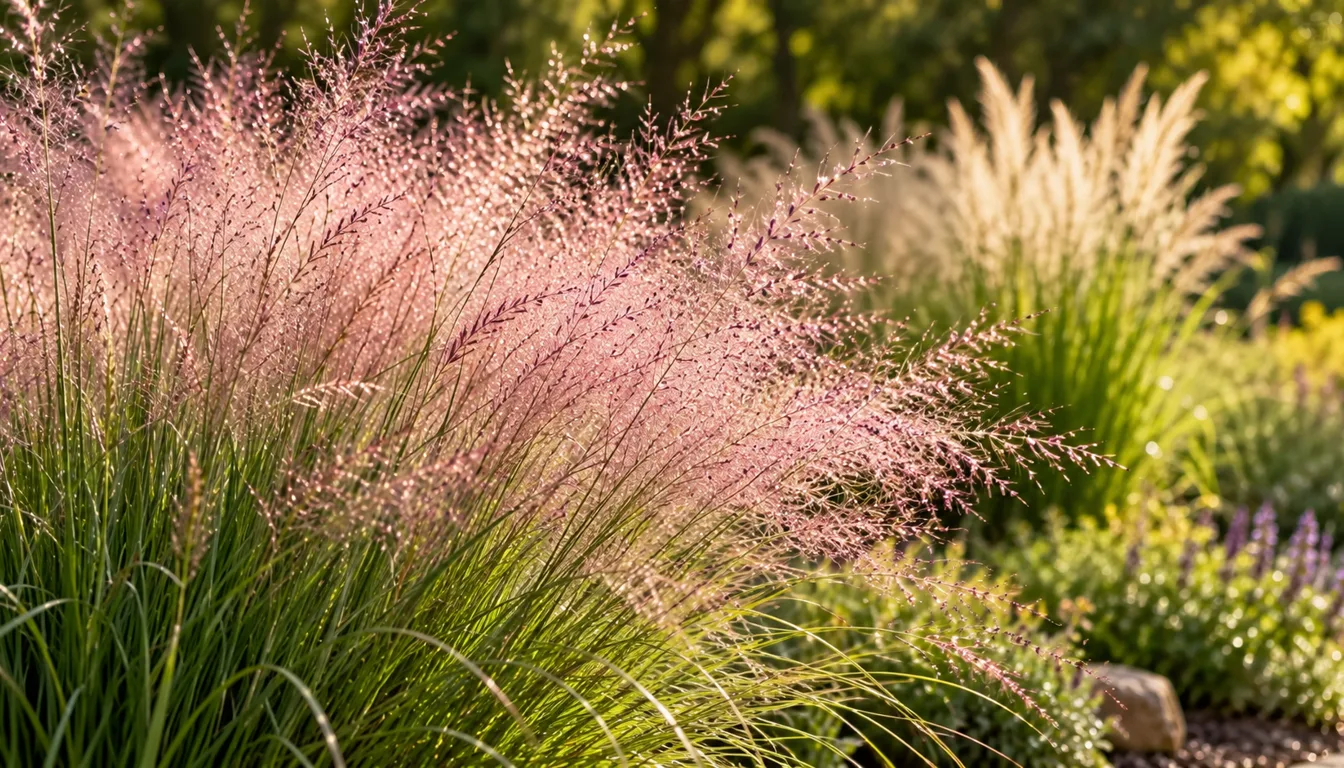
The show comes in fall, when airy pink to pinkish-red flower clusters up to 12 inches long appear to float above the foliage. NC State puts the bloom at September through November, while Clemson's ornamental grass sheet says October. UF/IFAS adds that the flower stalks can reach up to 5 feet.
- Plume color
- Pink, purplish red, or purplish gray, drying to light buff (NC State)
- Winter
- Tan seed plumes that stay attractive through winter (NC State)
- Wildlife
- Year-round cover, seeds for songbirds and small mammals, and butterflies (NC State)
- Deer
- Highly resistant (NC State)
Pink muhly is native to the central and eastern United States and south to Mexico and Guatemala (NC State), and Clemson gives its range as Kansas to Massachusetts and south to Florida.
In the wild, NC State finds it in clay or thin rocky soils, especially ground that was burned and prairie-like. Clemson lists wet prairies, savannas, the outer edge of marshes, well-drained upland pine forests and coastal inter-dune swales, and UF/IFAS adds Florida's pine flatwoods and coastal uplands.
It tolerates salt spray and the poor soils typical of the coast, and Clemson says it attracts beneficial insects such as lady beetles.
Does Pink Muhly Need Full Sun and Good Drainage?
Give pink muhly full sun, which NC State defines as six or more hours of direct light, because plenty of sunshine gives the best floral display. Clemson's rain garden sheet lists full sun to light shade, and UF/IFAS says it performs best in a sunny area. It tolerates heat, humidity, drought and poor soil, and it is highly salt-tolerant (NC State).
Soil type matters little as long as the spot is well drained. NC State lists clay, loam, sand and shallow rocky soil across acid to alkaline pH, and Clemson prefers sites with good drainage while noting the grass tolerates a variety of soil types and moisture conditions.
Hardiness ratings differ between sources. NC State rates pink muhly for zones 5 to 9, Clemson's ornamental grass sheet says zones 6 to 9, and its rain garden sheet says zones 7 to 10, so in a zone 5 or 6 garden it is worth asking your local extension office before you plant.
Before you buy, check three things.
- Your zone matches the hardiness rating you trust (5 to 9, 6 to 9, or 7 to 10, depending on the source).
- The spot gets six or more hours of direct sun.
- Water drains well.
Because pink muhly tolerates drought once established, it fits the dry, sunny sites that suit other drought-tolerant plants.
How Do You Plant, Water, and Pair Pink Muhly?
Water new plants until they are established (UF/IFAS). Clemson says muhly grass needs supplemental irrigation at planting but is very drought tolerant once established, and that it looks better and flowers more profusely with periodic supplemental irrigation during a drought.
Fertilizer is rarely needed. Clemson says most ornamental grasses need very little, and that excess nitrogen can cause overly vigorous growth and weak stems that make the grass fall over, so base any feeding on a soil test.
The sources give different planting distances, so pick one and leave the plants room to reach full size.
- UF/IFAS
- Space plants 24 to 36 inches apart
- Clemson
- Space plants 2 to 3 ft apart
- NC State
- Allow 3 to 6 ft of available space to plant
Companions and uses
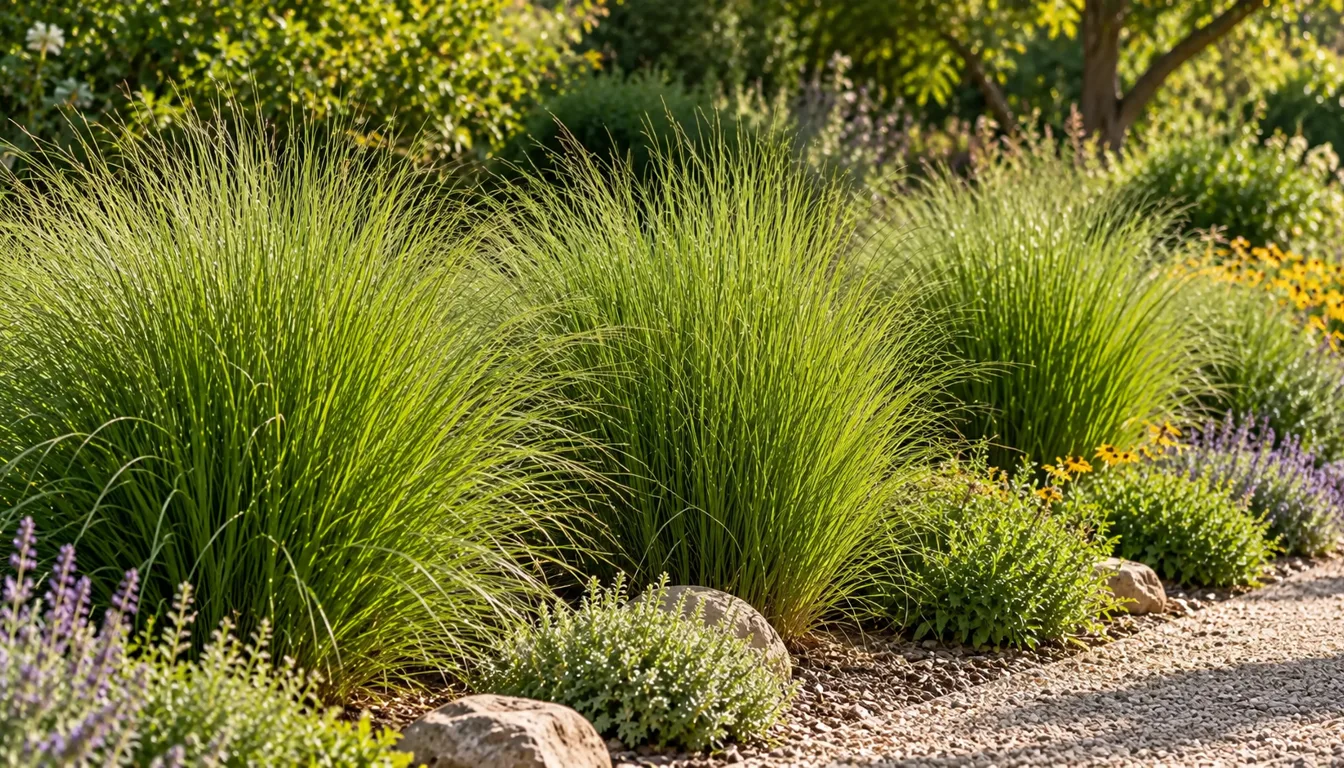
Clemson calls muhly grass a mid-range height grass that works best as an intermediate or connecting plant in perennial borders, meadows and rain gardens. To get the strongest fall show, plant large clumps in masses so the delicate flowers are concentrated and more visible.
Clemson pairs it with evergreen shrubs such as holly (Ilex glabra and Ilex vomitoria), or with deciduous shrubs like blueberry and winterberry. For color in other seasons, it suggests these perennials.
- Butterfly milkweed, with orange-yellow flowers in summer
- Columbine (Aquilegia canadensis), with red flowers in spring
- Hardy ageratum, with violet-blue flowers from summer through fall
- Joe-pye weed, with pink-red flat-topped flowers in late summer
- Iris species, with white or purple flowers from spring through summer
For flowers that bloom alongside the plumes, see the fall-blooming flowers guide. NC State says pink muhly suits any garden style, as a ground cover, a mass planting or a border.
When Do You Cut Back and Divide Pink Muhly?
The tan seed plumes stay attractive through winter (NC State), so you can leave the clump standing until spring. Clemson says to cut the foliage back to the ground in early spring, before new growth begins, and UF/IFAS says late winter, before the spring flush of foliage.
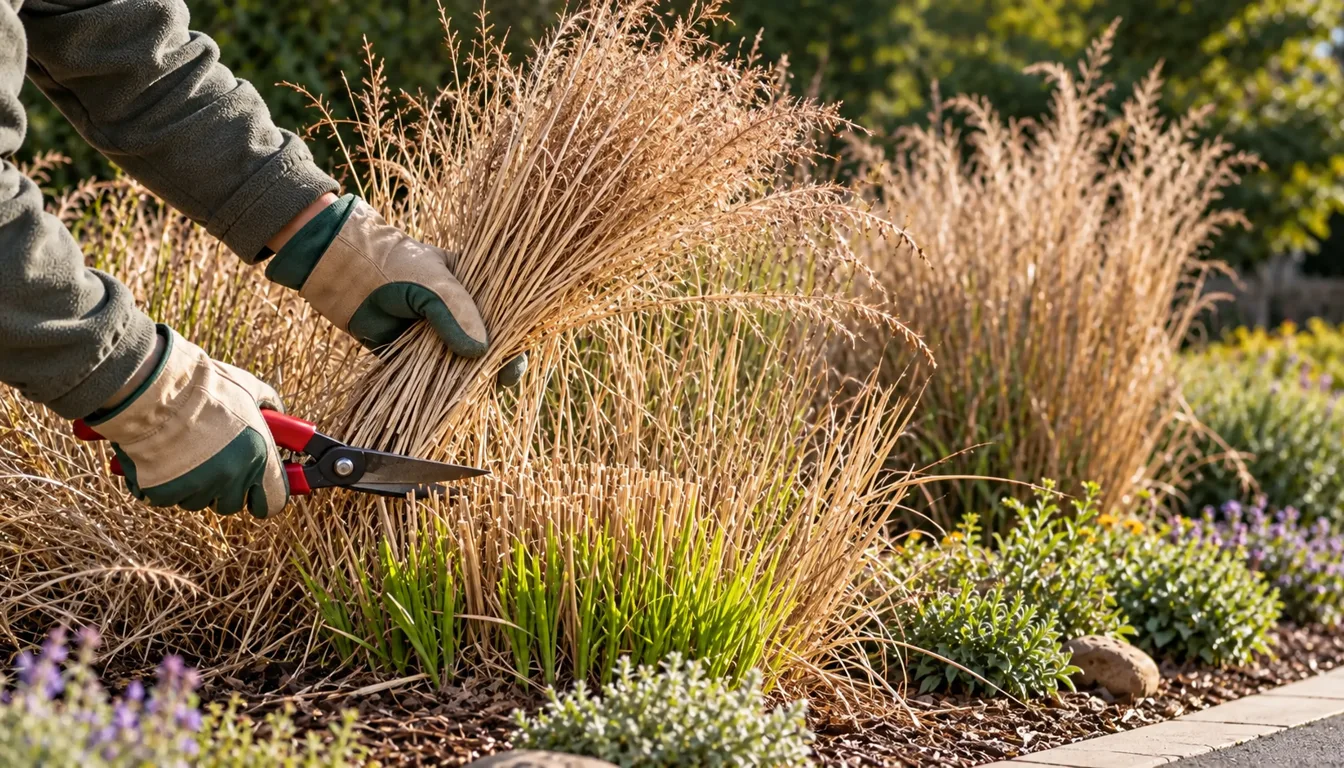
Muhly grass is a clumping species, so Clemson says to divide it periodically in spring or early summer to renew vigor. For warm-season grasses in general, Clemson says to dig and divide in early spring, just before new growth starts, and that most grasses need division every 3 to 4 years.
Which Muhly Cultivars Exist, and What Problems Show Up?
Cultivars differ in height, flower color and care.
- ‘White Cloud’ has airy seed heads that are bright white to ivory and bloom shortly after the native pink muhly (Clemson). NC State lists it as resistant to tar spot.
- ‘Pink Flamingos’ grows about 4 ft tall and wide, or 5 ft tall with its flower clusters, with narrow blue-green stems and a wide arching habit. It is a selection of Peckerwood Garden in Hempstead, Texas (Clemson).
- ‘Regal Mist’ grows 3 to 4 ft tall and 4 ft wide, with flower clusters adding about a foot. Its narrow dark green blades are evergreen, and Clemson says it needs regular watering, once a week, in extreme heat.
- Bamboo muhly (Muhlenbergia dumosa) is a different species that grows 5 to 6 ft tall in zones 7 to 10, in full sun, and it is drought resistant once established (Clemson).
NC State reports no serious insect or disease issues on muhly grass, though muhlygrass mealybug is becoming more of an issue in North Carolina.
Fountain grass is a taller arching grass, with foliage 3 to 4 feet tall according to Clemson, which also says fountain grass reseeds and may be invasive into natural areas. The ornamental grasses guide compares other border grasses.
Frequently Asked Questions
Does pink muhly grass spread?
It grows as a clump. NC State lists its habit as clumping and its width as 2 ft 4 in to 3 ft. Clemson says to divide the clump in spring or early summer to renew vigor.
How tall do the pink plumes get?
The mound is 2 to 3 feet tall (NC State, though its description text says the plant can reach 4 feet tall and 3 feet wide), and UF/IFAS says the flower stalks can reach up to 5 feet. The airy flower clusters themselves are up to 12 inches long (NC State).
Can pink muhly grow in shade?
NC State lists full sun, six or more hours, and says plenty of sunshine gives the best floral display. Clemson's rain garden sheet lists full sun to light shade, and UF/IFAS says it performs best in a sunny area.
How far apart should I plant pink muhly?
UF/IFAS says to space plants 24 to 36 inches apart and Clemson says 2 to 3 feet. NC State lists 3 to 6 feet of available space.
Is pink muhly hardy in zone 5?
NC State rates it for zones 5 to 9. Clemson gives zones 6 to 9 in its ornamental grass sheet and 7 to 10 in its rain garden sheet, so a cold garden should check with a local extension office.
Is pink muhly grass salt tolerant?
Yes. NC State calls it highly salt-tolerant, and Clemson says it tolerates the salt spray and poor soils typical of the coast.
Should I water pink muhly in a drought?
It is very drought tolerant once established, but Clemson says it looks better and flowers more profusely with periodic supplemental irrigation during a drought.