Care snapshot
- Light
- Full sun, tolerates part shade
- Water
- Drought tolerant once established
- Height
- Hardy 2 to 4 ft (NC State), crimson 4 to 5 ft by fall (Clemson)
- Zone
- Zones 6 to 9 for hardy types (NC State)
- Spread
- 2 to 4 ft wide
- Temperature
- Crimson types hardy only in zones 9 to 11 (NC State)
Are Hardy, Crimson, and Purple Fountain Grass the Same Plant?
Two related grasses are sold as fountain grass, and they differ in hardiness and invasiveness. Hardy fountain grass (Cenchrus alopecuroides) is a perennial rated for zones 6 to 9 by NC State, while crimson fountain grass (C. setaceus) is rated for zones 9 to 11 and is normally grown as an annual.
Both were long classed as Pennisetum and are now placed in Cenchrus, so you will see either name on tags, and Wisconsin Extension notes that not every reference has adopted the change.
- Hardy fountain grass (C. alopecuroides)
- Native to Asia and Australia, zones 6 to 9 (NC State), plumes midsummer to fall (NC State) or late summer (Wisconsin)
- Crimson fountain grass (C. setaceus)
- Zones 9 to 11 (NC State) or 9 to 10 (Clemson), normally grown as an annual, listed invasive or noxious in the states below
- Purple fountain grass (red C. setaceus cultivars)
- Burgundy-leaved forms such as Rubrum. Cal-IPC notes the red cultivar is sterile, but Hawaii lists red fountain grass as a pest
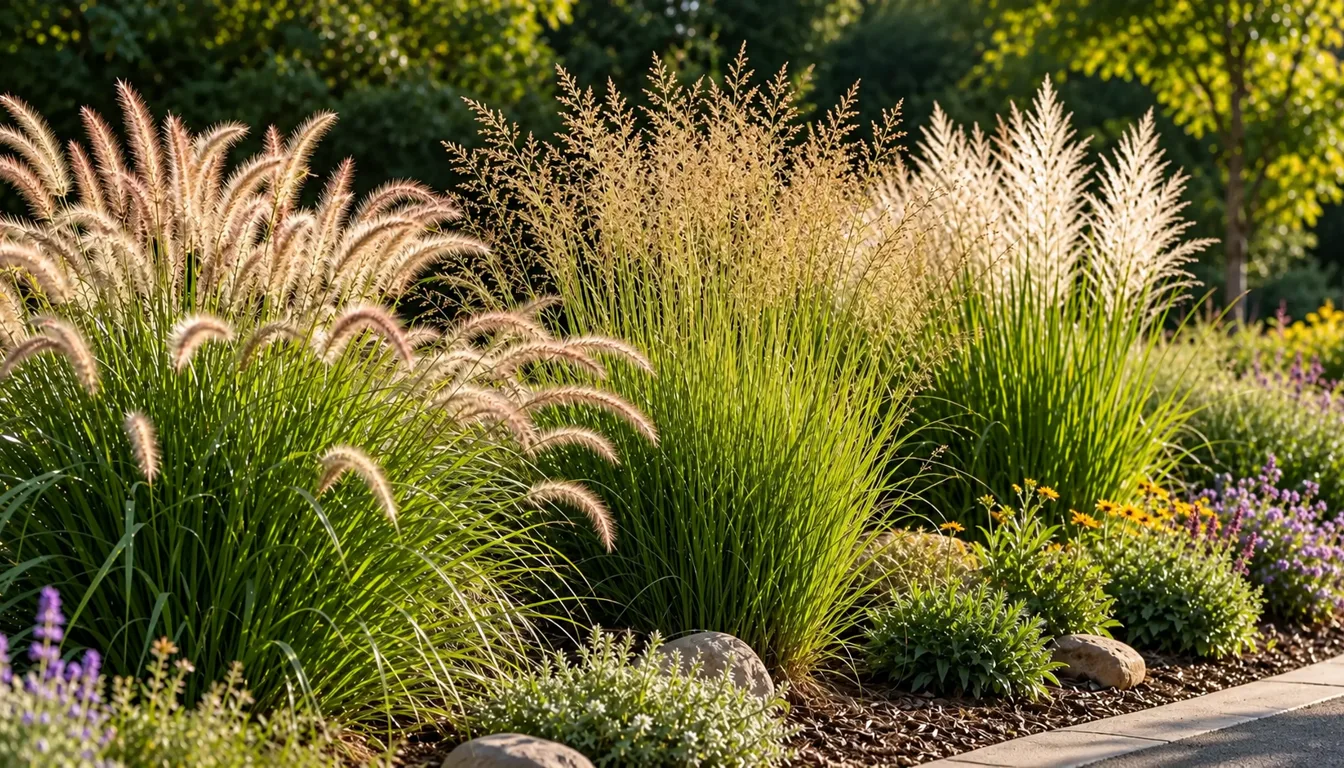
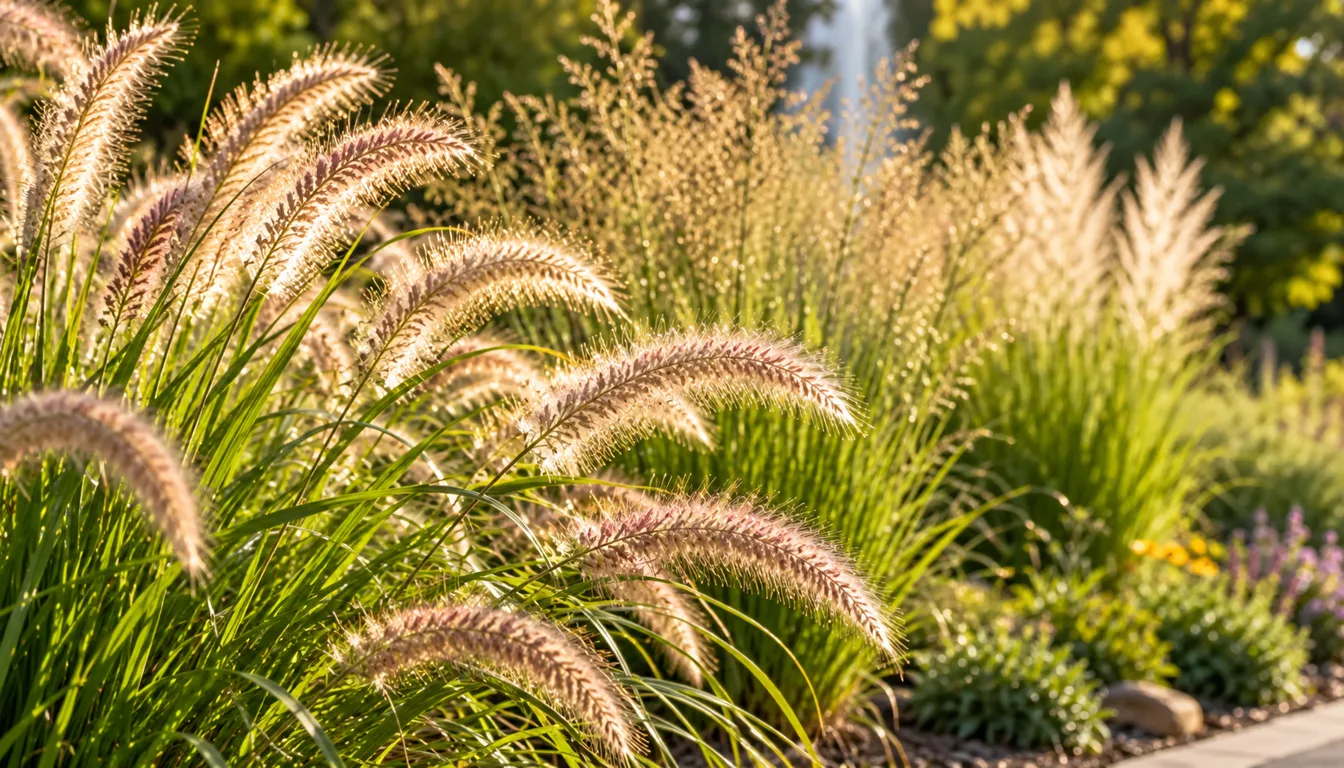
Hardy fountain grass forms a clump 2 to 4 feet tall and wide, with linear arching leaves up to 20 inches long (NC State). From midsummer to fall it sends up bottlebrush-like flower spikes that move from green to reddish purple to golden brown, and the leaves turn yellow or tan for winter (NC State). Wisconsin Extension adds that the flower spikes hold together for only a few months, because the seeds begin to shatter after a few hard freezes.
Where Is Fountain Grass Invasive?
Green crimson fountain grass (Cenchrus setaceus) is listed or rated invasive in Arizona, California, Hawaii, and Nevada and carries a Caution rating from UF/IFAS in Florida. Cal-IPC notes it is well adapted to fire and can recover to pre-burn density or denser after a burn, and the Hawaii Invasive Species Council rates it a likely high fire risk in Hawaii.
- Arizona
- Classified as a noxious weed by the University of Arizona's AZ Invasive Plants guide, which says to avoid it for landscaping because it is sold in nurseries
- California
- Rated Moderate by the California Invasive Plant Council, mainly along the southern coast
- Florida
- UF/IFAS assessment says Caution, manage to prevent escape, in north, central, and south Florida
- Hawaii
- Hawaii Noxious Weed List, High Risk weed, named one of Hawaii's Most Invasive Horticultural Plants
- Nevada
- Green fountain grass is a Category A noxious weed, subject to active exclusion and eradication
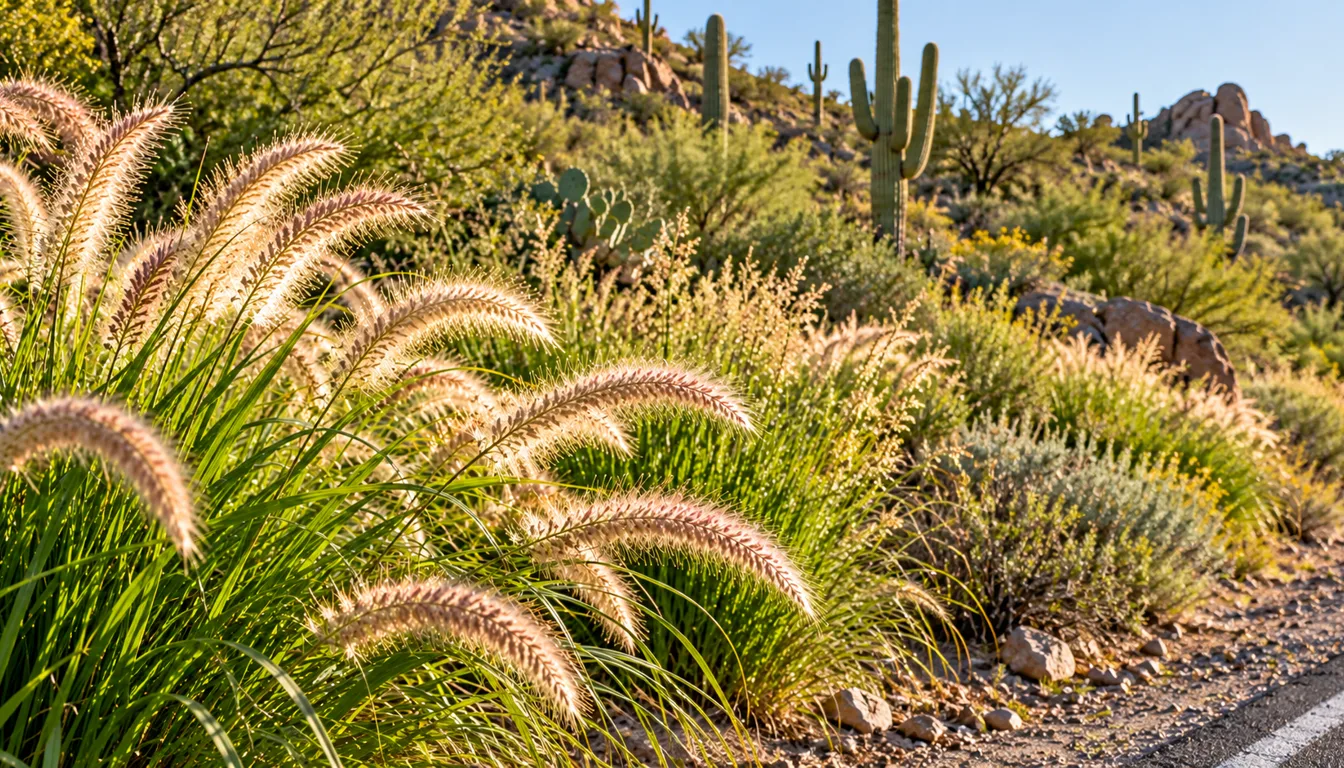
Seeds stay in the soil for years, so removal takes repeated passes. Arizona's invasive plants guide says the seeds can remain viable in the soil for at least six years, and Hawaii's council gives up to six years. Arizona says to pull the entire plant including the roots and to repeat the treatment, and Hawaii's council says burning is not recommended because the grass grows back rapidly after fire.
The state pages above name crimson fountain grass, not the hardy one. NC State still says hardy fountain grass can spread rapidly by seeds carried by wind or by attaching to clothes or fur, and that it has escaped gardens and become problematic in some areas of the country. Wisconsin Extension adds that in colder climates it never becomes invasive the way it can in warmer areas.
Delaware added Chinese fountaingrass (Cenchrus purpurascens, syn. Pennisetum alopecuroides) to its Invasive Plant List with enforcement from May 1, 2028, and conditionally exempts Praline, Hush Puppy, Cayenne, Etouffee, and Jambalaya.
What Sun, Soil, and Water Suit Hardy and Annual Fountain Grass?
Hardy fountain grass prefers full sun in dry to moist, well-drained soil and tolerates partial shade, though NC State says flowering is best in full sun. It is drought tolerant once established, slightly salt tolerant, and highly resistant to deer. Wisconsin Extension describes it as easily grown in most soils, preferring fairly dry soil but also growing in moist, well-drained soil.
Wisconsin Extension names three water-related cautions for hardy fountain grass.
- Set the crown above ground level to prevent crown rot, especially in very moist situations.
- Expect decline in very wet years or in poorly drained soil.
- Water in drought, or the leaf tips may turn brown.
Hardy fountain grass carries cream to pink bottlebrush flowers from mid to late summer over foliage 3 to 4 feet tall, according to Clemson, which says it prefers sun and moisture but needs well-drained soil. Wisconsin Extension says some cultivars are listed to zone 4 or 5 but the plant is marginally hardy in zone 4 and northern zone 5, where large parts of the crown can die out in some winters and leave lopsided or misshapen plants.
Crimson fountain grass is handled differently.
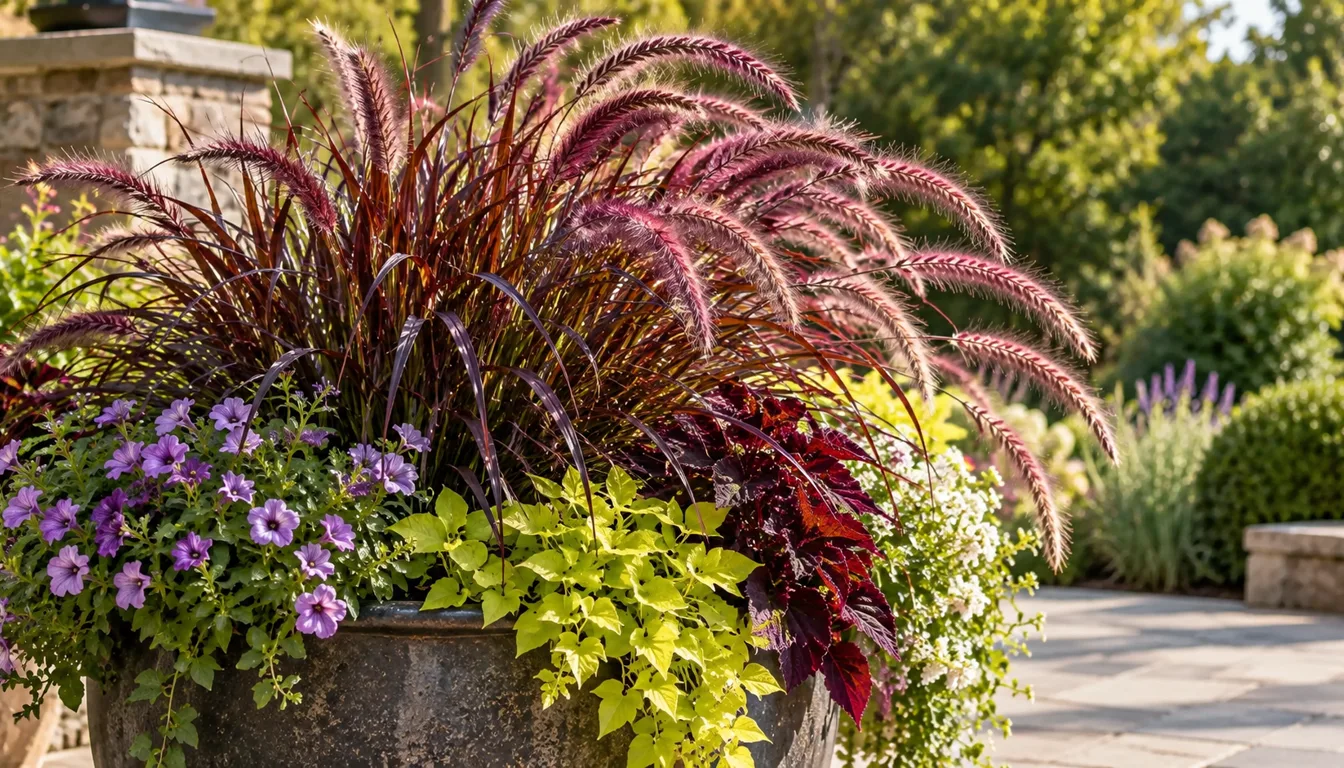
- NC State says it is normally grown as an annual and used as a bedding plant, in borders, and for color accents, with blooms lasting until frost.
- Clemson says it grows 4 to 5 feet by summer's end in South Carolina, flowers continuously through summer, and is only cold hardy in zones 9 to 10.
- Clemson calls it popular in mixed container gardens, where the potted plant watering guide covers timing.
- Clemson gives it full sun and moist, well-drained, fertile soil, NC State says full sun to partial shade in a wide range of soils, and Clemson also lists purple fountain grass among annuals for poor soil.
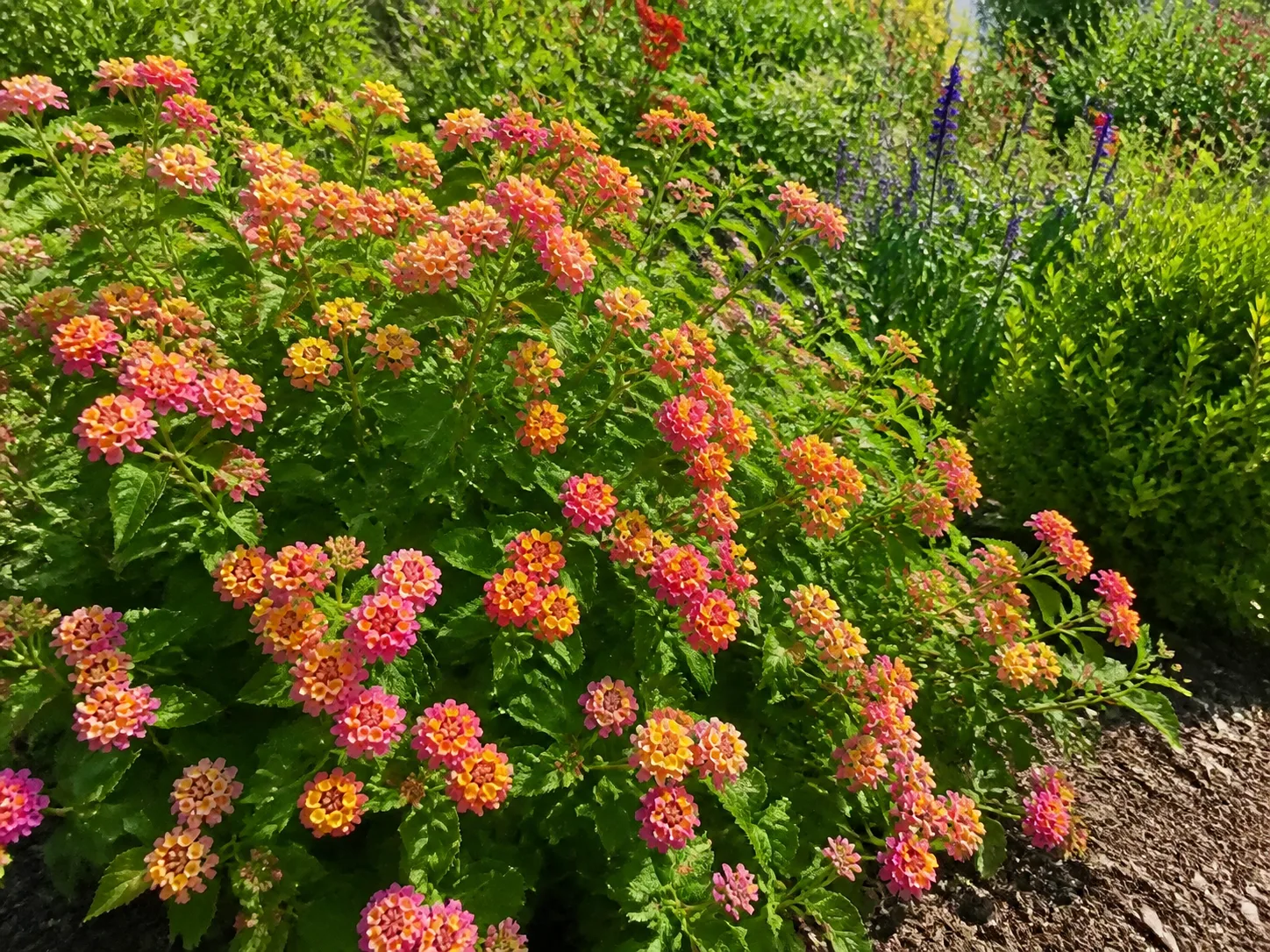
For another sun-loving bedding plant to compare, see lantana.
How Do You Control Seedlings, Cut Back, and Divide Fountain Grass?
Hardy fountain grass is a warm-season grass, which Wisconsin Extension says does not start growing each year until conditions warm considerably. That leaves time after winter to trim the old growth before new shoots appear. NC State says to cut the foliage to the ground in late winter, and Wisconsin says to trim it to 3 to 6 inches above the ground, which is easy with hedge trimmers if you tie the clumps up with string first.
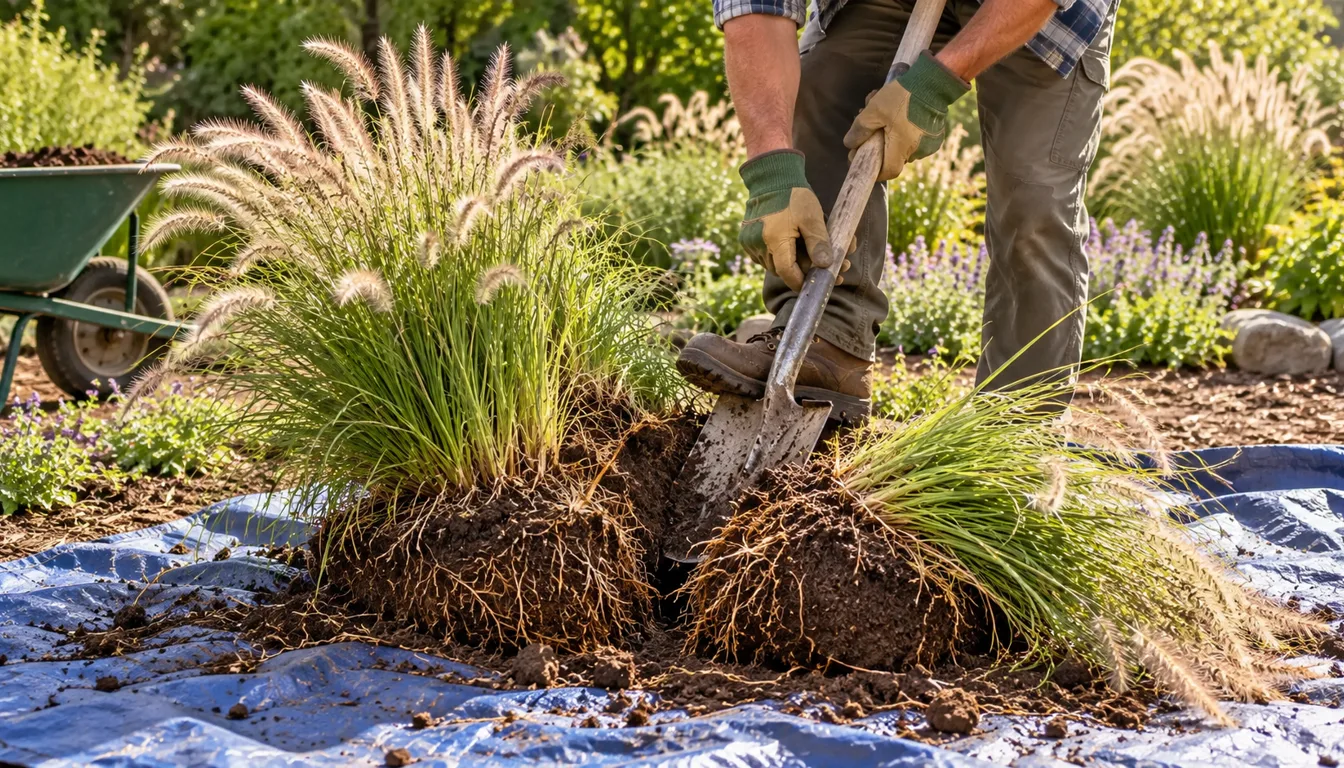
As a clump ages the center often dies out and forms an open ring, which Wisconsin Extension reads as the sign that it needs dividing. It suggests dividing about every three years, replanting after shearing to rejuvenate the clump, and Wisconsin says plants divide easily in spring as growth begins. Colorado State finds spring division, before growth resumes, the most successful for warm-season grasses such as Pennisetum.
Seedlings are the other maintenance job. Wisconsin Extension says many fountain grasses self-seed readily to the point of being weedy, and that seedlings do not always come true from seed. NC State recommends the University of Georgia Infertile Collection, which was bred to be sterile and includes 'Cayenne', 'Etouffee', 'Hush Puppy', and 'Praline'.
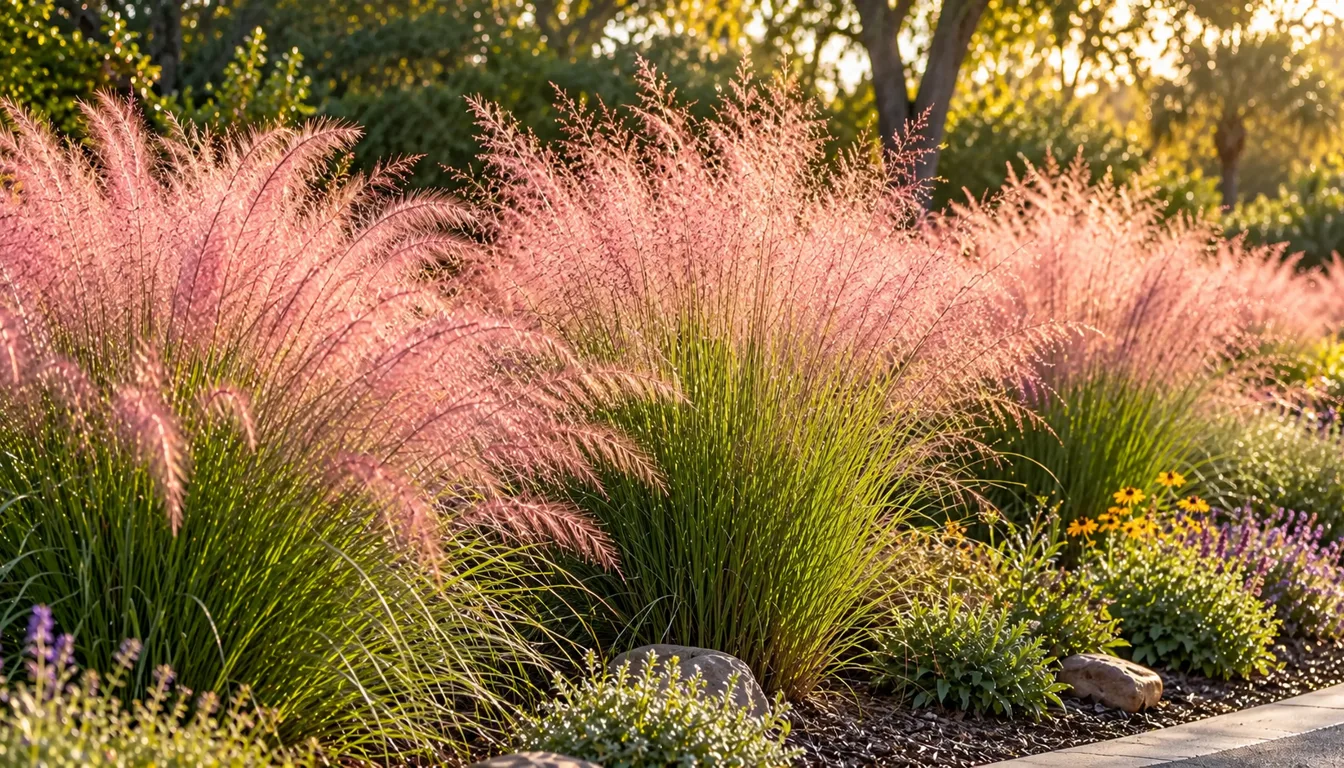
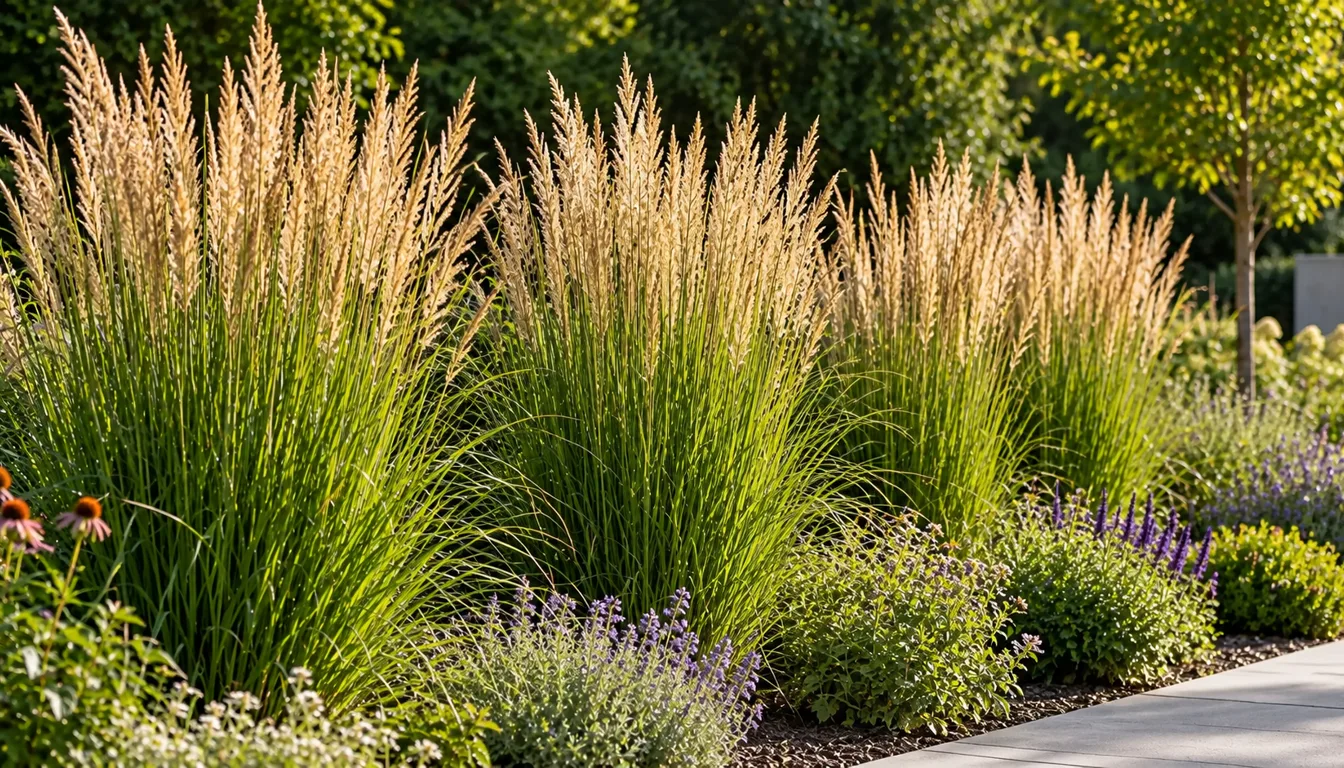
NC State also lists native alternatives to hardy fountain grass, and pink muhly grass (Muhlenbergia capillaris) is one of them. Feather reed grass is another option, since Wisconsin Extension says 'Karl Foerster' is sterile and will not reseed.
Which Fountain Grass Cultivar Fits Your Yard, and Is It Pet Safe?
Cultivars differ in height and in how freely they seed. Heights run from about 1 foot ('Little Bunny') to 5 to 6 feet ('Burgundy Giant') according to Clemson, and NC State flags 'Hameln', 'Little Bunny' and 'Moudry' as self-seeders, while Wisconsin says 'Hameln' reseeds less than the species and many other cultivars.
- 'Hameln'
- Compact, about 2 ft, best in the Piedmont, zones 4 to 9 (Clemson). Wisconsin rates it zone 5, often grown in zone 4, and says it does not reseed as prolifically as the species, while NC State says it can self-seed aggressively
- 'Little Bunny'
- About 1 ft in full sun to part shade (Clemson), 12 to 18 in (NC State), can self-seed aggressively (NC State)
- 'Hush Puppy'
- Sterile, pink plumes, 3 to 3.5 ft (NC State)
- 'Moudry'
- Black flower spikes, 2 to 3 ft, reseeds abundantly but usually does not come true (Clemson), prolific self-seeder (NC State)
- 'Rubrum' (purple fountain grass)
- Dark burgundy-red foliage and spikes, 3 to 5 ft (Clemson)
- 'Rubrum Compacta'
- 2.5 to 3 ft, finer foliage, not quite as red (Clemson)
- 'Fireworks'
- Burgundy, hot pink, green, and white leaves, 3 to 4 ft (Clemson)
- 'Burgundy Giant'
- Broad deep red foliage, 5 to 6 ft (Clemson)
NC State lists no significant pest or disease problems for hardy fountain grass but calls it weedy, and says crimson fountain grass is weedy and spreads readily by seeds. Pet safety is unknown, because neither the ASPCA plant list nor NC State rates fountain grass.
Wisconsin Extension suggests planting hardy fountain grass near lady's mantle or purple cultivars of heuchera for dramatic contrast. For other border grasses, see the ornamental grasses list.
Frequently Asked Questions
Is fountain grass invasive?
Green crimson fountain grass is listed or rated invasive in Arizona, California, Hawaii, and Nevada, and UF/IFAS gives it a Caution rating in Florida. NC State says hardy fountain grass can spread rapidly by seed and has escaped gardens in some areas.
Is purple fountain grass invasive?
Cal-IPC notes the red cultivar is sterile and not considered invasive, but Hawaii's Invasive Species Council lists red fountain grass as a pest. Crimson fountain grass is rated for zones 9 to 11 (NC State) and is normally grown as an annual.
Does fountain grass come back every year?
Hardy fountain grass is rated for zones 6 to 9 by NC State, and Wisconsin Extension calls it marginally hardy in zone 4 and northern zone 5. Crimson fountain grass is rated for zones 9 to 11 (NC State) or 9 to 10 (Clemson) and is normally grown as an annual.
When should I cut back fountain grass?
Cut hardy fountain grass foliage to the ground in late winter (NC State), or trim it to 3 to 6 inches above the ground before new shoots appear (Wisconsin).
How do I stop fountain grass from spreading?
Plant sterile cultivars. NC State lists Cayenne, Etouffee, Hush Puppy and Praline from the University of Georgia Infertile Collection.
What should I do about fountain grass in Hawaii?
Skip it entirely. The Hawaii Invasive Species Council lists it on the state noxious weed list and asks residents who see it on Oahu, Maui, Lanai, Molokai or Kauai to report it to 643pest.org or 808-643-7378.
Can purple fountain grass grow in a pot?
Yes. Clemson calls annual fountain grass popular in mixed container gardens and says it grows best in full sun and moist, well-drained, fertile soil.
Sources & References
- Cenchrus alopecuroides, North Carolina Extension Gardener Plant Toolbox
- Cenchrus setaceus, North Carolina Extension Gardener Plant Toolbox
- Fountain grass, AZ Invasive Plants, University of Arizona
- Pennisetum setaceum Profile, California Invasive Plant Council
- Cenchrus setaceus Assessment, UF/IFAS
- Fountain Grass, Hawaii Invasive Species Council
- NAC 555.010 Designation of Noxious Weeds, Nevada Administrative Code
- Nursery Inspection and Invasive Plant List, Delaware Department of Agriculture
- Ornamental Grasses and Grass-like Plants, Clemson Cooperative Extension HGIC
- Growing Annuals, Clemson Cooperative Extension HGIC
- Fountain grass, Cenchrus (Pennisetum) alopecuroides, Wisconsin Horticulture
- Dividing Ornamental Grasses, PlantTalk Colorado, Colorado State University Extension
- Toxic and Non-Toxic Plants List, ASPCA