Care snapshot
- Light
- Full sun
- Water
- Medium-moist to dry, well-drained
- Height
- 9 to 12 in
- Zone
- Zones 4 to 8
- Spread
- 12 to 18 in wide
- Temperature
- Declines in hot, humid summers
What Is Blue Fescue, and What Is It Grown For?
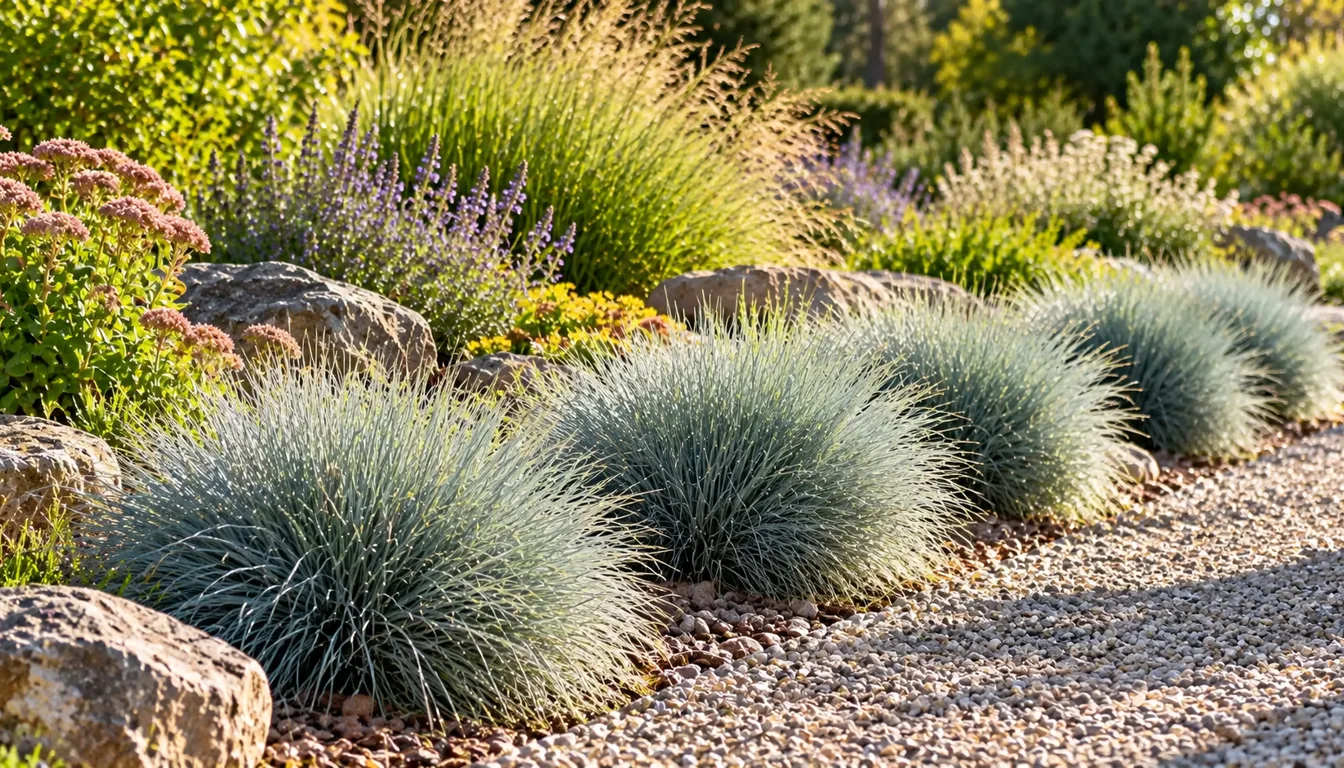
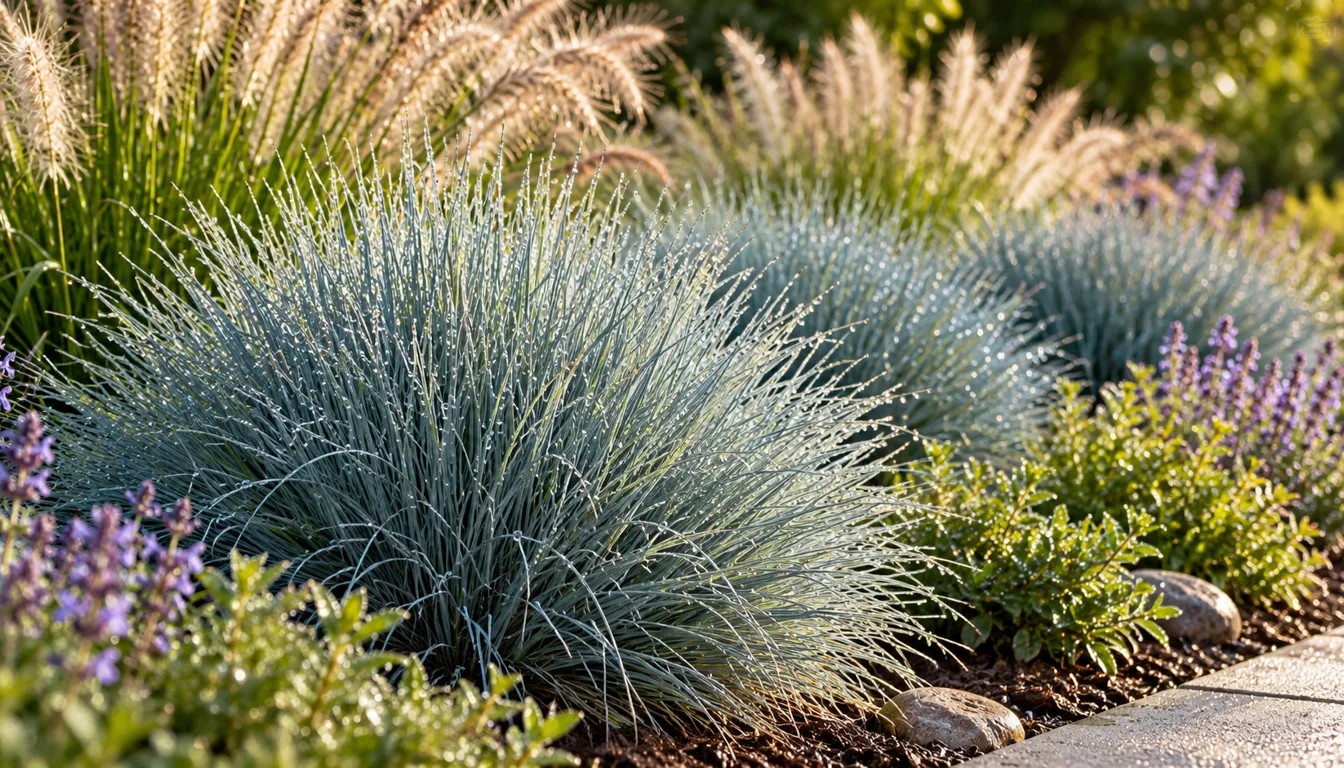
Blue fescue (Festuca glauca) is a semi-evergreen, clumping, cool-season ornamental grass that matures at 9 to 12 inches tall and 12 to 18 inches wide, in a dome of fine, needle-like blue-gray blades (NC State). It is native to Spain and as far as north and northwestern Italy, and gardeners grow it for that blue-gray foliage as a ground cover or accent plant.
NC State also calls it short-lived, with clumps that tend to die and need division every two to three years, which shapes most of the care below. If you are seeding a lawn instead, the fine fescue profile covers the lawn types.
- Hardiness
- Zones 4a to 8b (Wisconsin)
- Light
- Full sun, with some partial shade tolerated
- Color
- Blue-gray, most attractive in spring and fall (NC State). Wisconsin describes light blue-silver early in the season, more blue-green in summer, and a darker mottled green in fall.
- Flowers
- Late spring to early summer, green flowers with a purple tinge in panicles (NC State)
- Tolerates
- Drought, poor soil, and urban conditions (NC State), plus winter salt spray and juglone from black walnut (Wisconsin)
What Sun and Soil Does Blue Fescue Need?
Blue fescue prefers full sun and tolerates some partial shade (NC State), but the blue color does not develop as well in partial shade (Wisconsin), so give it the sunniest spot you have. It thrives in medium-moist to dry, well-drained soil and tolerates drought and poor soil, while wet or poorly drained soil is where it struggles (NC State).
It can be short-lived in wet soils, heavy clay, and areas with high humidity and high temperatures (Wisconsin), and it tends to decline in hot, humid summers (NC State). In mild climates the grass may keep its bluish-gray color through winter, though in colder climates or severe winters it shows browning (NC State).
- Pick the sunniest spot you have, because the blue color does not develop as well in partial shade (Wisconsin).
- Space plants 8 to 10 inches apart for a ground cover. Wisconsin gives a clump spread of 10 to 12 inches (NC State says 12 to 18) that expands only very slowly and will not get much larger with age, so planting at this spacing lets the tufts meet.
- In a humid climate, choose ‘Boulder Blue’ for its heat and humidity tolerance (NC State).
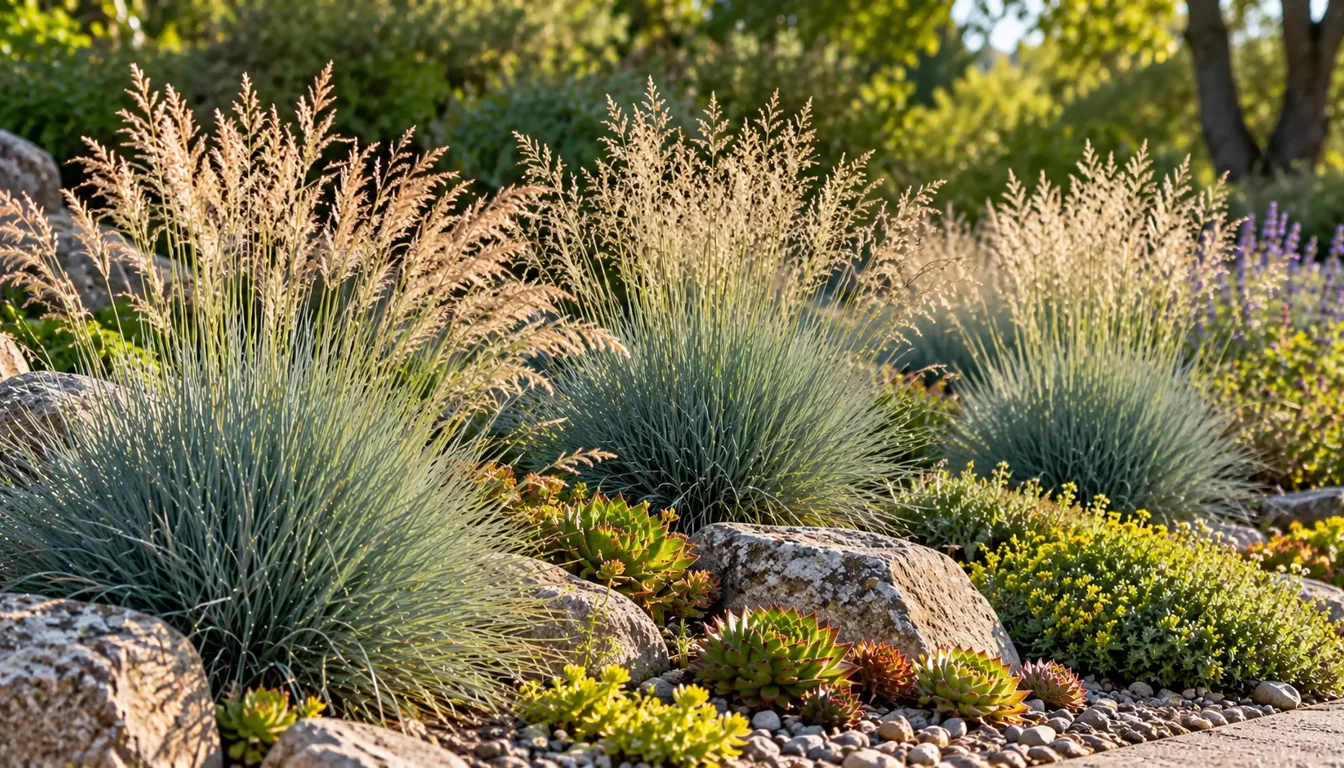
Where Does Blue Fescue Look Best?
Blue fescue works as an edging plant along a path or among stones in a rock garden. Wisconsin Extension also lists it as a specimen plant, in mass plantings, and as a filler plant, since it is not as showy as some other ornamental grasses, and in beds and borders mixed with herbaceous perennials.
In containers or troughs it adds a vertical element, and the blue color blends well with cool-colored flowers and softens brightly colored ones (Wisconsin). For how to water a pot, see watering potted plants.
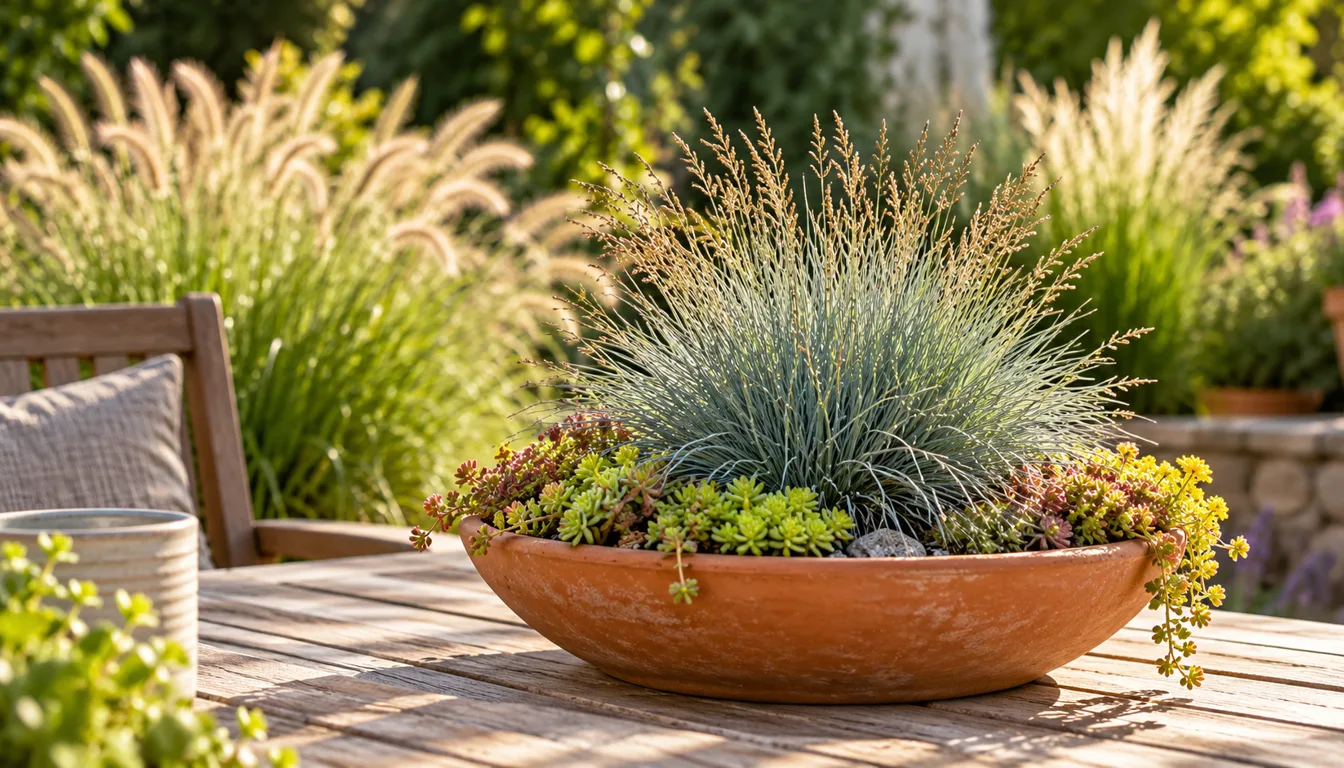
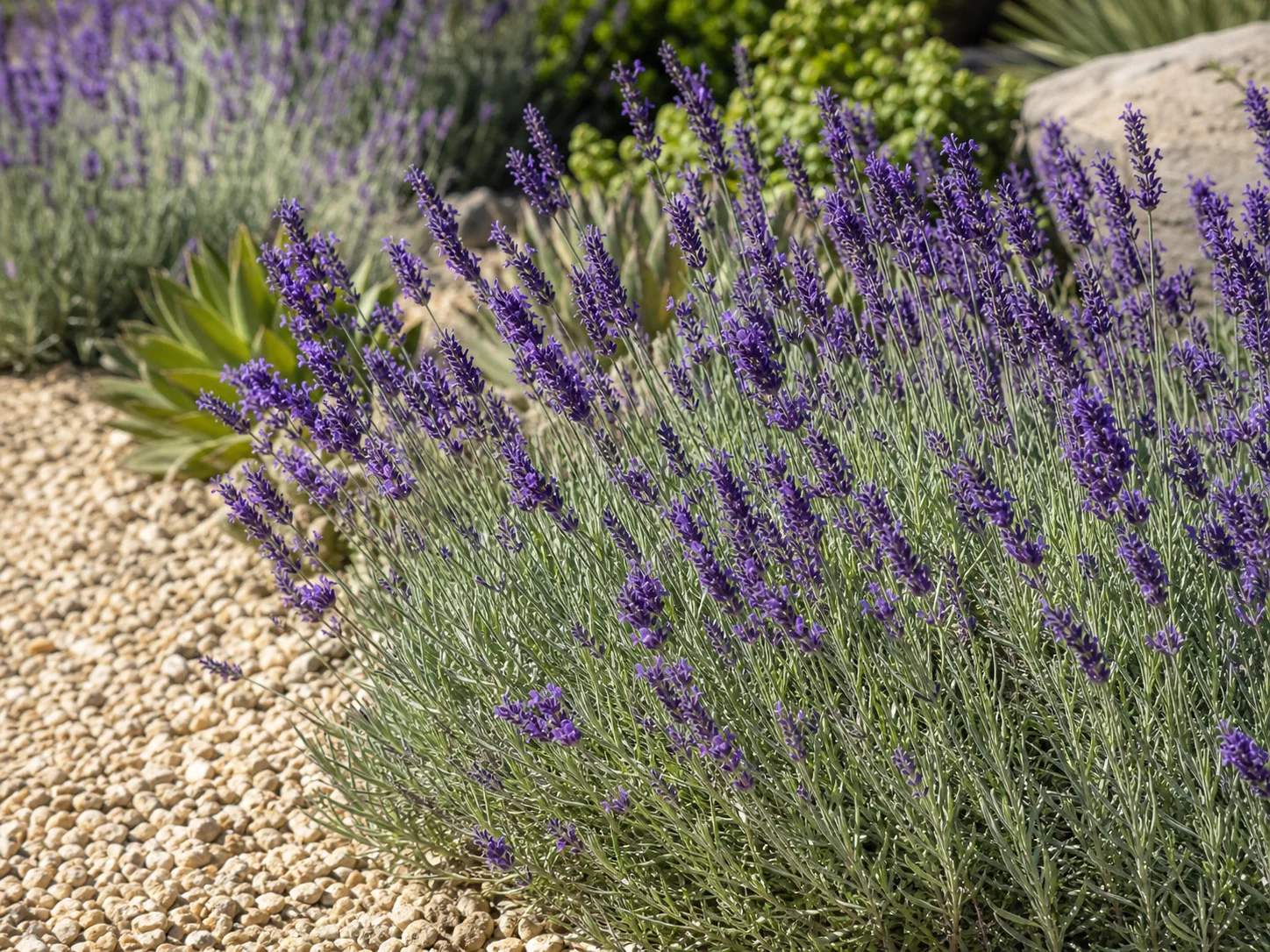
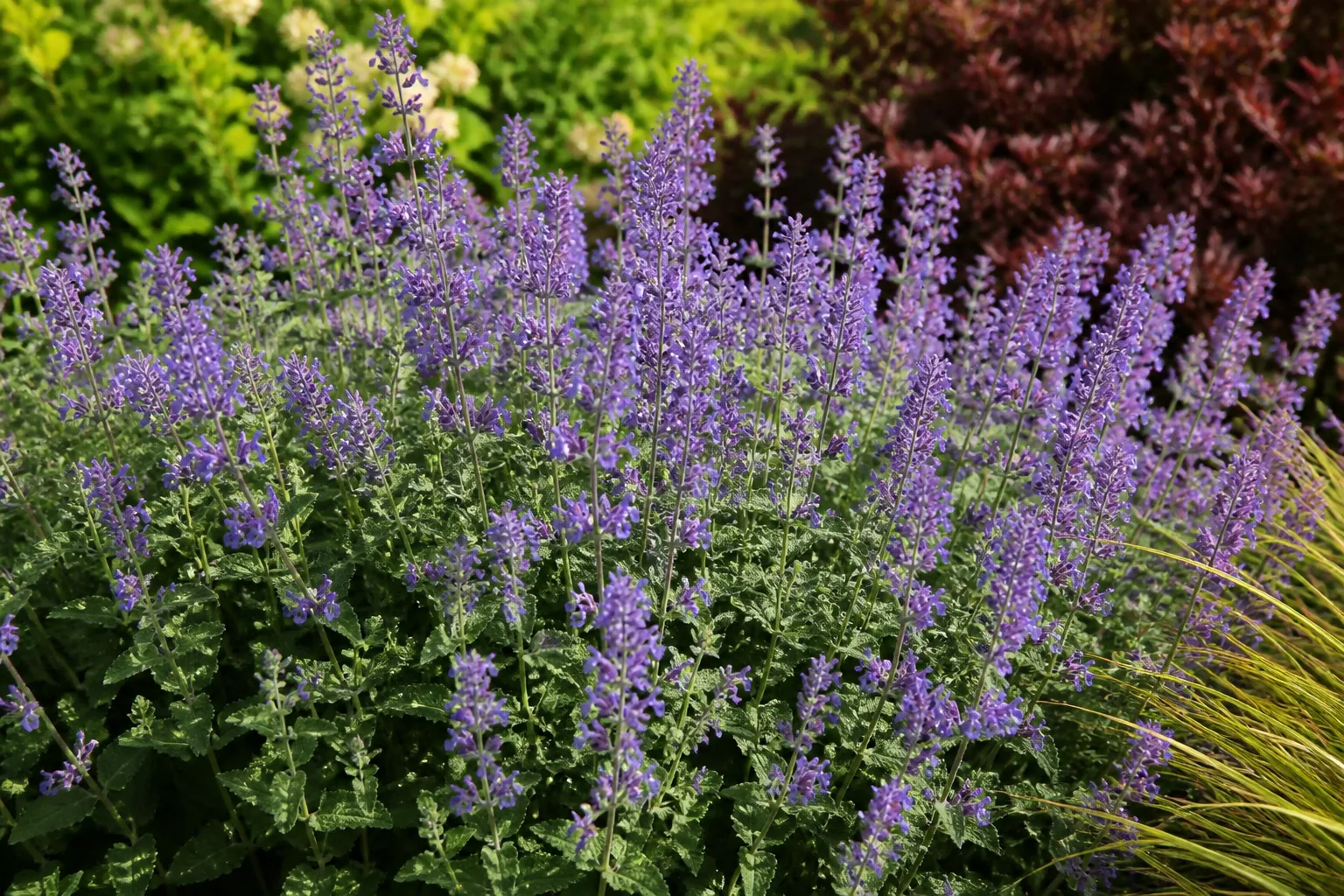
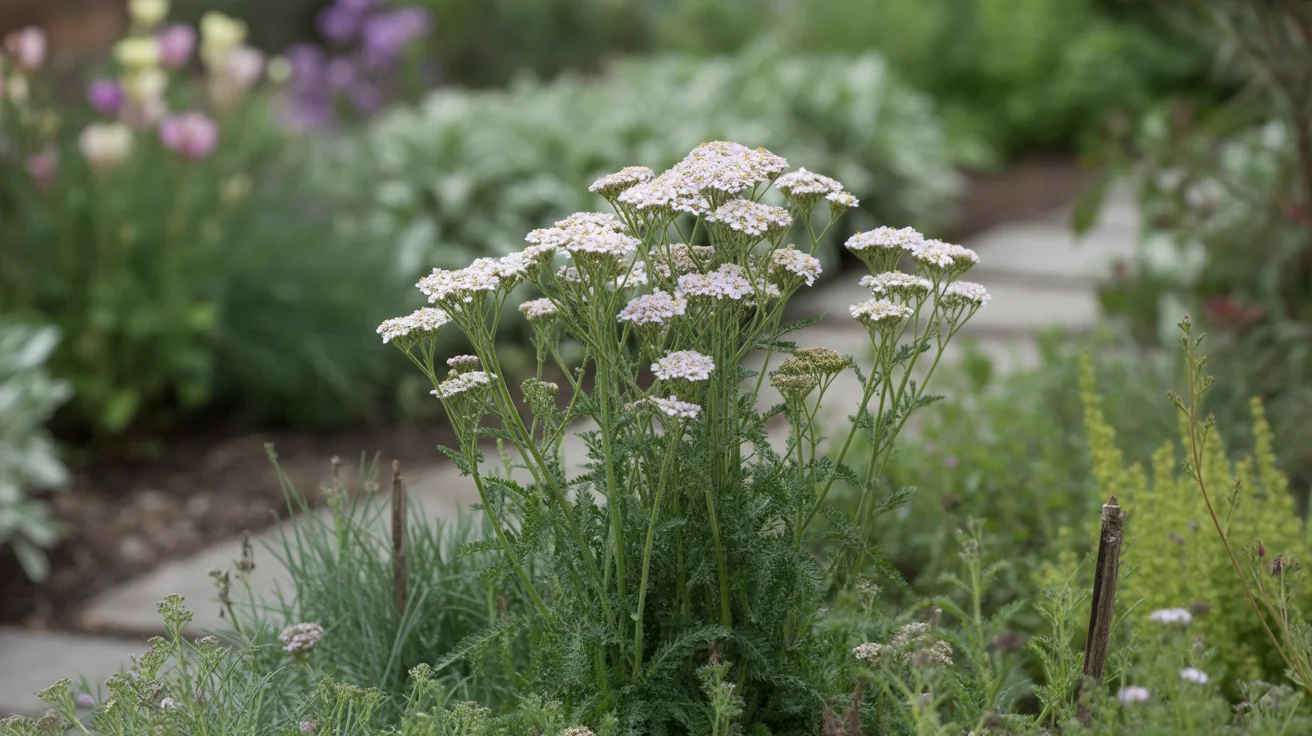
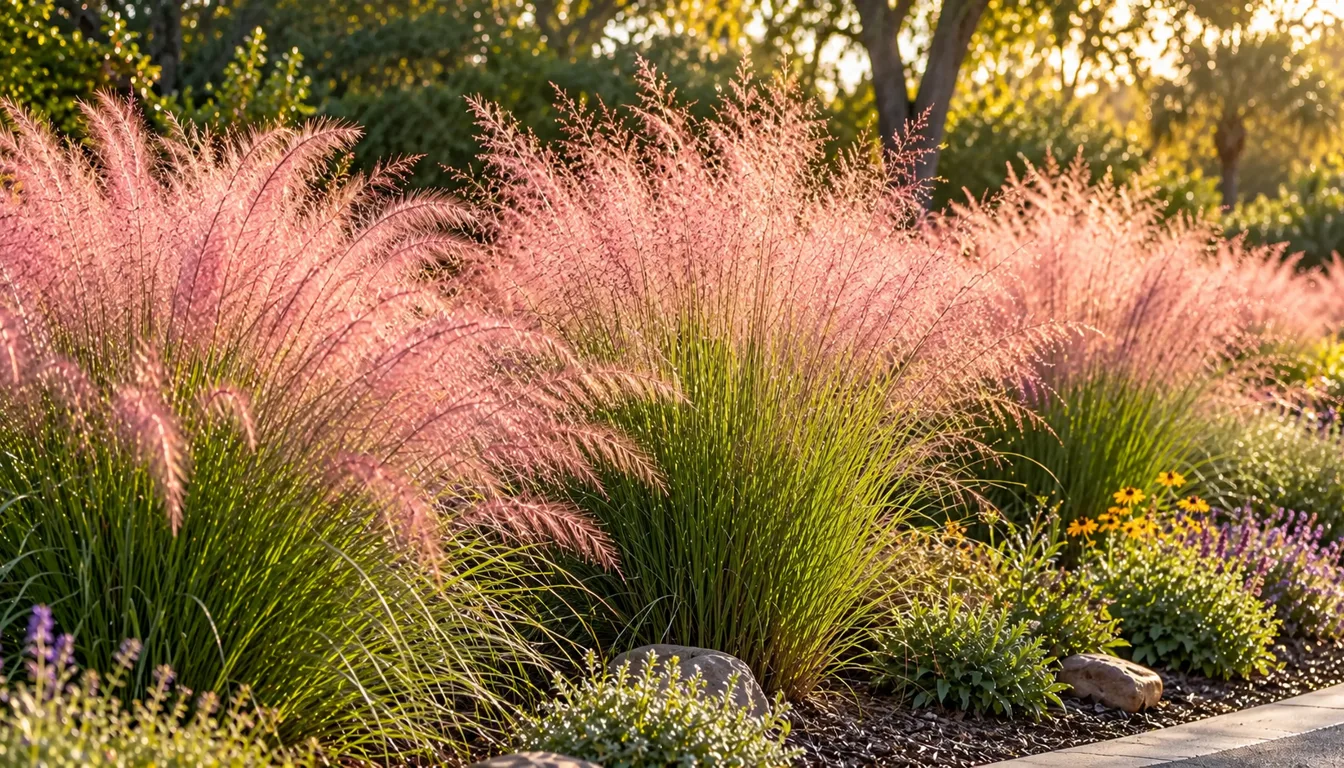
It blends well with other ornamental grasses (NC State). For companions in a dry, sunny spot, compare lavender, catmint, and yarrow.
When and How Do You Divide Blue Fescue?
Clumps tend to die and need division every two to three years (NC State). The reason sits in the middle of the clump, which becomes crowded as the plant ages and may die (Wisconsin). Dig and divide in early spring, discarding the centers and replanting the more vigorous portions. Division is the best method of propagation, and seed also works, though leaf color may vary (NC State).
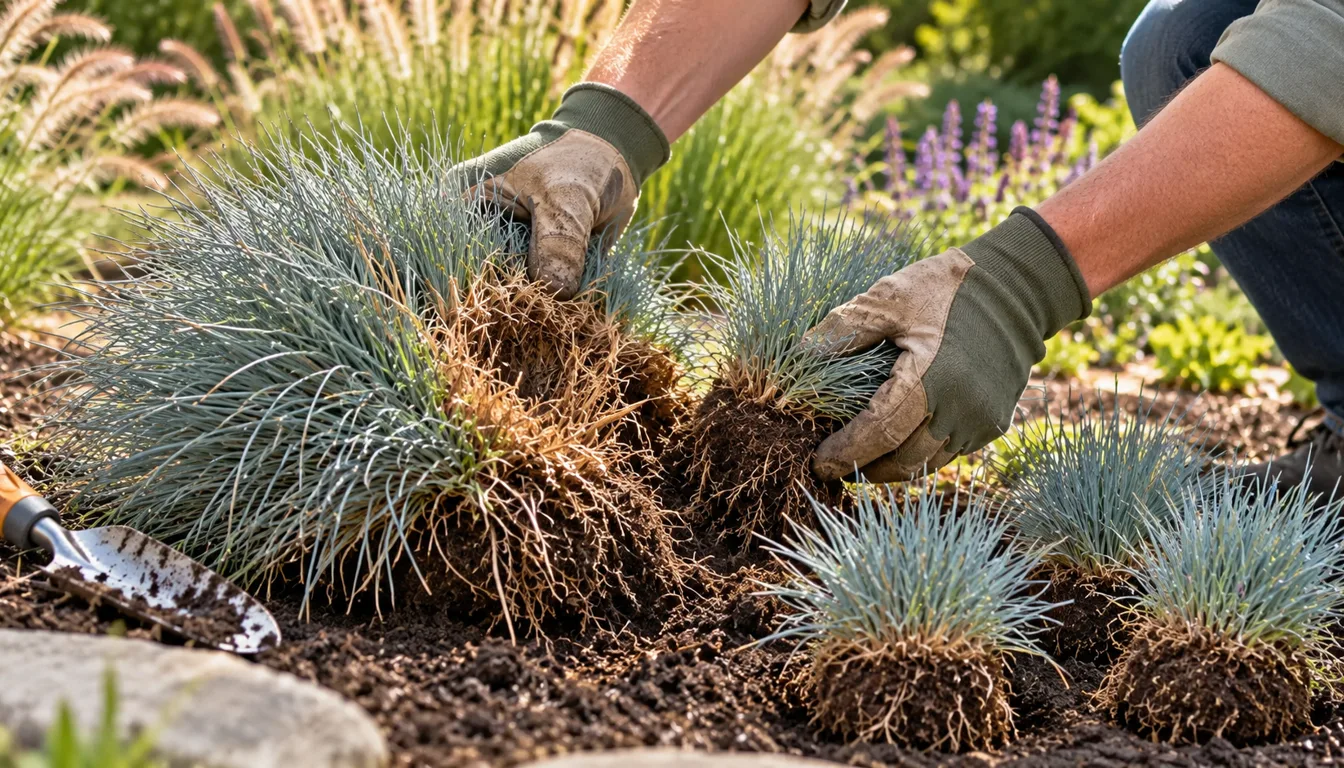
Early spring is also when to cut the plants back carefully to 3 to 4 inches so new growth can emerge, or to comb out the older brown leaves (Wisconsin). The early-summer flower spikes are not highly ornamental and can be sheared off. If you leave them, brown seed heads form, and Wisconsin notes that the plant easily self-sows and can become weedy.
Which Blue Fescue Cultivar Fits, and What Problems Should You Expect?
Cultivars range from ‘Tom Thumb’, which grows up to 4 in tall (NC State), to ‘Blue Whiskers’, at 10 to 12 in tall and 18 to 22 in in bloom (NC State, Wisconsin). ‘Elijah Blue’ is the most popular (NC State) and the most commonly available (Wisconsin).
- ‘Elijah Blue’
- The most popular, 8 to 12 in tall (NC State). It has more silvery or sky-blue foliage in spring than the species, and the blue lasts longer into the growing season (Wisconsin).
- ‘Boulder Blue’
- More stiff and upright than ‘Elijah Blue’, with slate blue leaves and better tolerance of heat and humidity (Wisconsin)
- ‘Blue Whiskers’
- 10 to 12 in tall, 18 to 22 in in bloom, taller and more vigorous than ‘Elijah Blue’ with larger leaves and brighter leaf color (Wisconsin)
- ‘Seeigel’ (Sea Urchin)
- A compact selection with bright steel blue foliage (Wisconsin)
- ‘Tom Thumb’
- Up to 4 in tall (NC State)
- ‘Golden Toupee’
- A compact habit and vibrant chartreuse foliage (Wisconsin)
Both NC State and Wisconsin Extension report no significant insect or disease problems. The trouble it does have comes from climate, since blue fescue is a short-lived grass that does not tolerate hot or humid conditions (NC State). Deer and rabbits are known to graze the foliage (NC State), so plan on protecting it where they browse.
Pet safety is unknown, since neither the ASPCA nor NC State rates blue fescue.
Frequently Asked Questions
Why is my blue fescue dying out?
The center of an aging clump becomes crowded and may die (Wisconsin), and NC State says clumps tend to die and need division every two to three years. Wet soil and hot, humid summers can shorten its life further.
Is blue fescue the same as fescue lawn grass?
Blue fescue is a clumping ornamental grass, 9 to 12 inches tall, grown for its blue-gray foliage as a ground cover or accent plant (NC State). If you are seeding a lawn, read the fine fescue profile.
Does blue fescue need full sun?
It prefers full sun but tolerates some partial shade (NC State), though the blue color does not develop as well there (Wisconsin).
Can blue fescue grow in the South?
It tends to decline in hot, humid summers (NC State). ‘Boulder Blue’ is listed with better heat and humidity tolerance (NC State, Wisconsin).
How do I propagate blue fescue?
Division is the best method (NC State). Seed works, but blade color may vary.
Do deer eat blue fescue?
Deer and rabbits are known to graze the foliage (NC State), so it is not a reliable deer-resistant choice.
Should I cut back blue fescue?
Cut it back carefully in early spring to 3 to 4 inches, or comb out the older brown leaves, so new growth can emerge (Wisconsin).
Does blue fescue spread?
Clumps expand only very slowly, but the plant easily self-sows and can become weedy if the flower spikes are left to set seed (Wisconsin).
Sources & References
- Festuca glauca, North Carolina Extension Gardener Plant Toolbox
- Blue Fescue, Festuca glauca, Wisconsin Horticulture Extension
- Toxic and Non-Toxic Plant List: Dogs, ASPCA Animal Poison Control
- Toxic and Non-Toxic Plant List: Cats, ASPCA Animal Poison Control
- Toxic and Non-Toxic Plant List: Horses, ASPCA Animal Poison Control