
What's a Ti Plant? How to Keep Its Leaves From Turning Green
Cordyline fruticosa Asparagaceae
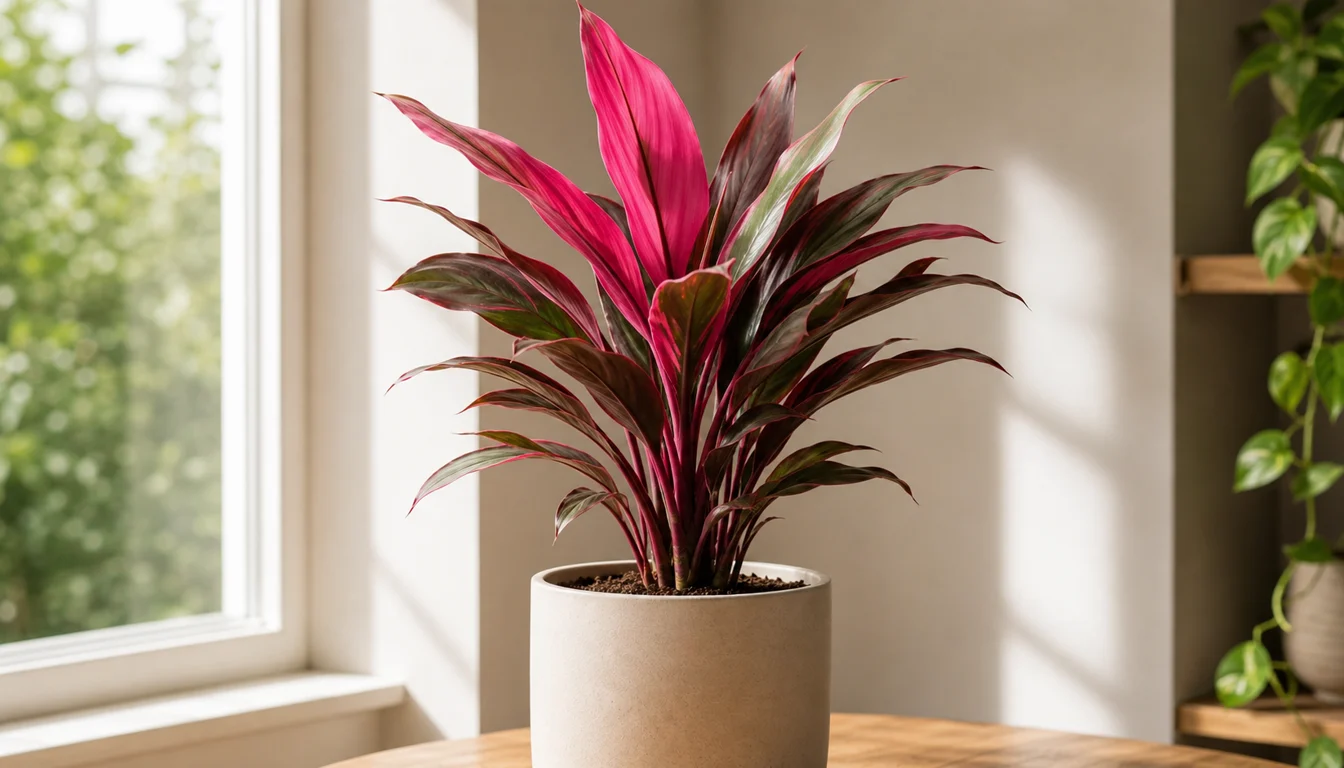
Ti Plant grows broad red, pink, purple, or green leaves in crowns at the tops of upright canes. Strong filtered light, even root-zone moisture, warmth, and timely cane cuts preserve the color and shape people grow it for.
Care snapshot
What Are You Really Maintaining as a Ti Plant Gets Taller?
Ti Plant is the broadleaf evergreen shrub Cordyline fruticosa, with smooth leaves that spiral from upright canes into burgundy, rose, purple, cream, or green crowns according to cultivar.
It comes from Australia and the western Pacific islands rather than Hawaii, where it is planted widely and treated as a bringer of good luck. The genus name comes from the Greek word for a club, and fruticosa simply means shrubby.
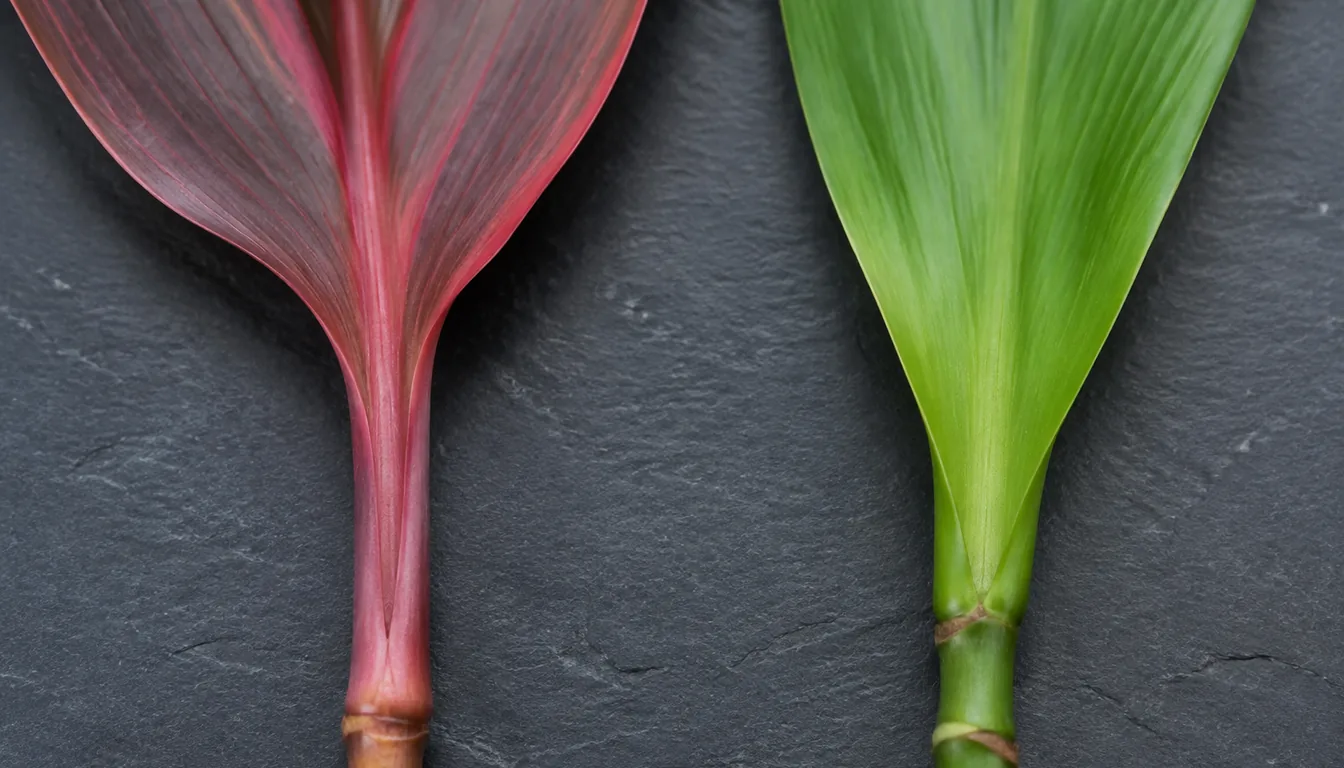
The plant is mislabelled often enough that two checks are worth knowing. A Ti leaf narrows into a grooved stalk before it reaches the stem while a dracaena leaf clasps the stem with no stalk at all, and the roots underneath are white where a dracaena's run orange or yellow.
The leaves themselves have a range most indoor plants never reach. A settled blade can run to 30 inches long and six across, arranged in a spiral up the cane rather than in ranks.
A cane naturally sheds its oldest leaves as it lengthens, so one spent leaf at the bottom of a firm crown is not an emergency. Watch the newest leaves instead because their color, size, and firmness reveal whether current light, warmth, and root conditions support growth.
Indoor specimens commonly reach 3 to 6 feet and rarely flower or fruit, while plants in frost-free ground can become much larger shrubs or small trees. The useful goal is a firm set of canes carrying full, colorful crowns at a height that fits the room, so pruning matters more than extra fertilizer when a crown sits on a long bare pole.
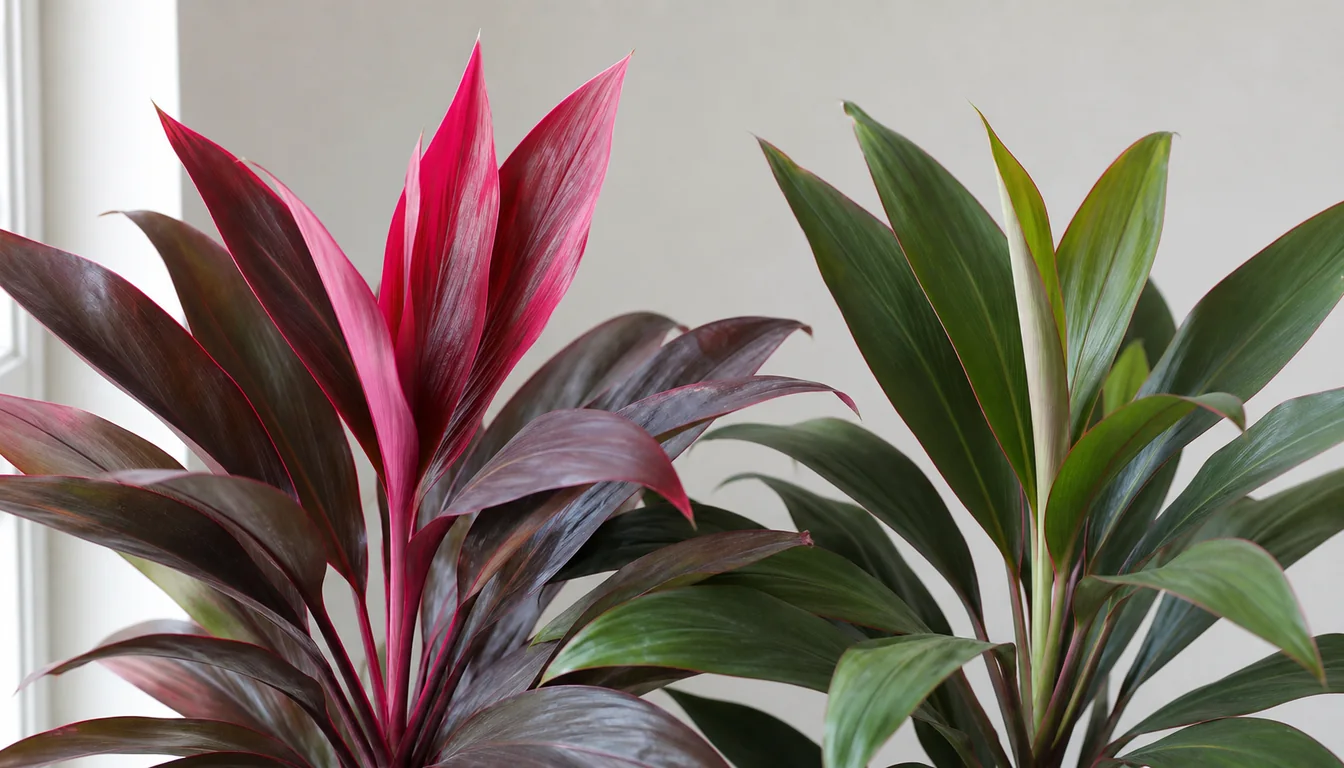
Color is the whole selection, and the range is wider than most shelves show. A dark cultivar will never produce the pinks of a variegated one no matter how good the light gets, so the plant decides the ceiling and the position decides how close it comes to it.
- Black Magic
- Deep purple-black through the whole leaf
- Ruby
- Rich deep red above, burgundy underneath, 3 to 6 feet
- Pink Passion
- Bright pinkish-purple with darker pink margins
- Candy Cane
- Green streaked with cream, edged in pink
- Morning Sunshine
- Yellow, pink, orange and green in one blade
- Sherbert
- Green striped with pink, cream and magenta
How Much Light Keeps Red and Pink Leaves From Turning Green?
Place a colored Ti Plant at an east window or a bright position set back from hot south or west glass, where strong filtered daylight uses the gentler side of morning sun rather than afternoon sun without heating the leaves sharply.
Judge the position from leaves that opened after the plant arrived. New growth that emerges smaller and greener than the established crown points to insufficient light, while a naturally dark burgundy cultivar may never display the same pink as a cultivar such as 'Kiwi' or 'Red Sister'.
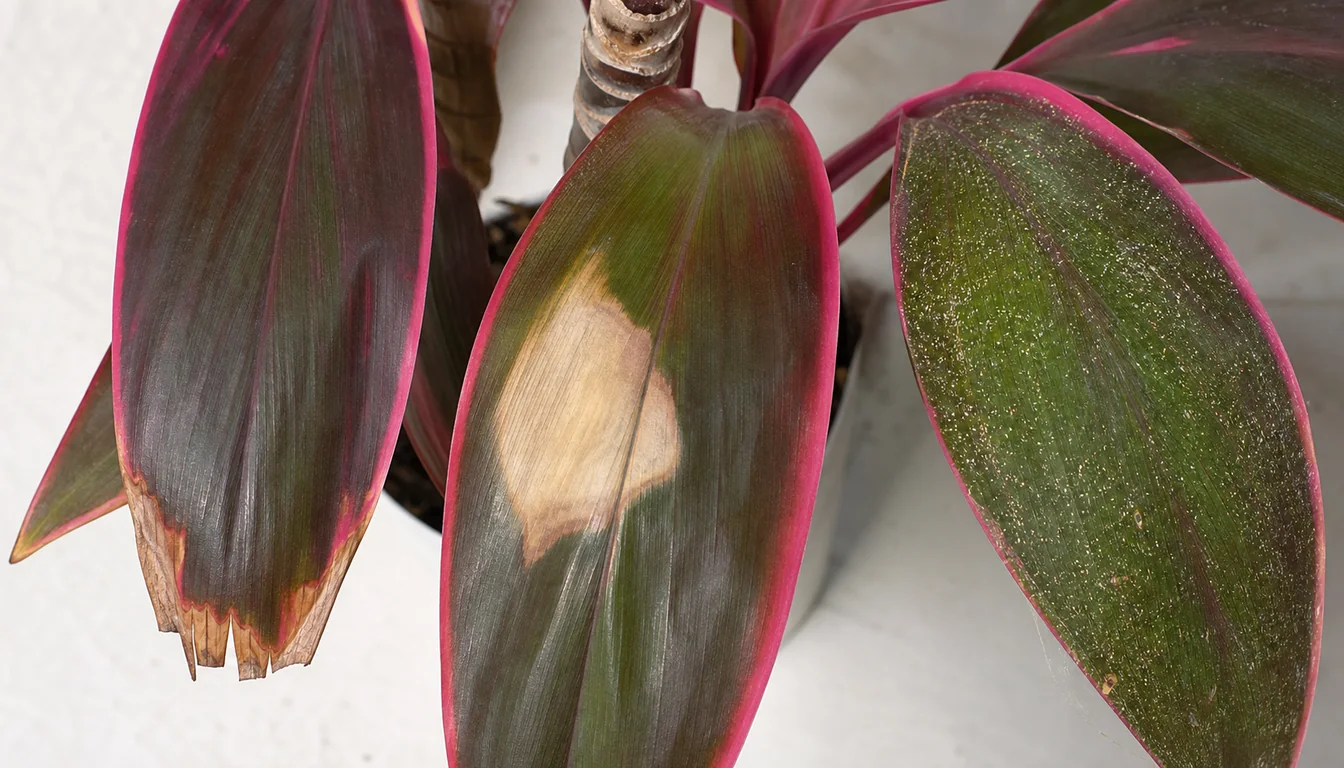
Pale tan patches on the window-facing surface often appear after a shaded plant meets several hours of strong direct sun, and the damaged tissue will not regain its color.
Turn the pot a quarter turn when one crown leans hard toward the window, but do not rotate it on a strict schedule when growth remains balanced. Light should correct weak new color first because feeding a dim plant creates soft growth without restoring the cultivar's pattern.
Humidity sits alongside light in holding the color. This is a high-humidity plant that often wants a humidifier indoors, and a crown in bright light over dry winter air still ends up duller than the cultivar can manage.
Water the Root Ball Before the Whole Pot Swings Dry
Ti Plant performs best when its root ball stays lightly and evenly moist through active growth, so let the surface begin to dry and then check an inch or two deeper where a tall pot may remain wet.
Push a wooden skewer into the center or feel the mix below the surface near the pot wall. Water when that zone is only faintly damp, soak the full root ball until excess runs from the drainage holes, and empty the saucer.
- Check the center of the root ball, not just the loose surface mix.
- Water the full pot when the center approaches lightly damp.
- Let drainage finish before returning the pot to its cover or saucer.
A repeated bone-dry wilt scorches leaf margins and can empty the lower cane faster. Constant saturation causes a slower decline because the rhizomatous roots lose air, lower leaves yellow while still soft, and the cane base may eventually weaken.
Reduce the frequency when winter light falls and growth slows, but keep checking rather than waiting for a fixed weekday. A draining houseplant mix based on peat or coir with added coarse aeration holds useful moisture, while a pot only slightly wider than the root mass avoids a large wet ring around the roots.
Two numbers bracket the year. Growth is best between 65 and 95F and the plant does not tolerate anything below 50, so watering drops from late autumn to late winter without the schedule being abandoned.
Can Tap Water Cause Brown Tips on a Ti Plant?
Tap water can contribute to Ti Plant tip burn because Cordyline fruticosa is sensitive to fluoride, but dry air and repeated moisture swings can produce the same narrow brown tips.
Water quality moves higher on the list when the crown stays firm, the pot dries predictably, and successive leaves develop similar dry tips. If the damage appeared after a heater started running or after several missed waterings, humidity and root-ball moisture deserve attention first.
- Firm crown with repeating dry tips
- Trial distilled or suitable rainwater on new growth
- Tips worsen beside heating airflow
- Move away from the vent and group plants
- Soft yellow leaves over wet mix
- Inspect drainage and roots before adding water
Use one change long enough for a new leaf to respond because old brown tissue cannot heal, and use distilled water for a clearer short trial unless a filter manufacturer specifically documents fluoride reduction.
Flush accumulated fertilizer salts by running plenty of suitable water through an unobstructed pot, then let it drain completely. This helps only when the mix still drains well and does not rescue roots already sitting in sour, collapsed soil.
Should Your Ti Plant Spend Summer Outdoors?
A Ti Plant can use summer warmth and brighter light outdoors, but this optional move should wait until nights stay safely above 55°F because the Zones 10 to 12 evergreen can suffer cold injury well before frost.
The outdoor version is a different plant in scale. Where it stays in the ground it reaches 9 to 15 feet tall and three to eight wide, carries foot-long panicles of small fragrant white to pale lavender flowers, and follows them with red berries.
Begin under a covered porch or a bright tree canopy, then introduce a short period of gentle morning sun if the cultivar needs stronger color. Keep midday sun off leaves that formed indoors and recheck moisture because outdoor wind can dry the root ball much faster.
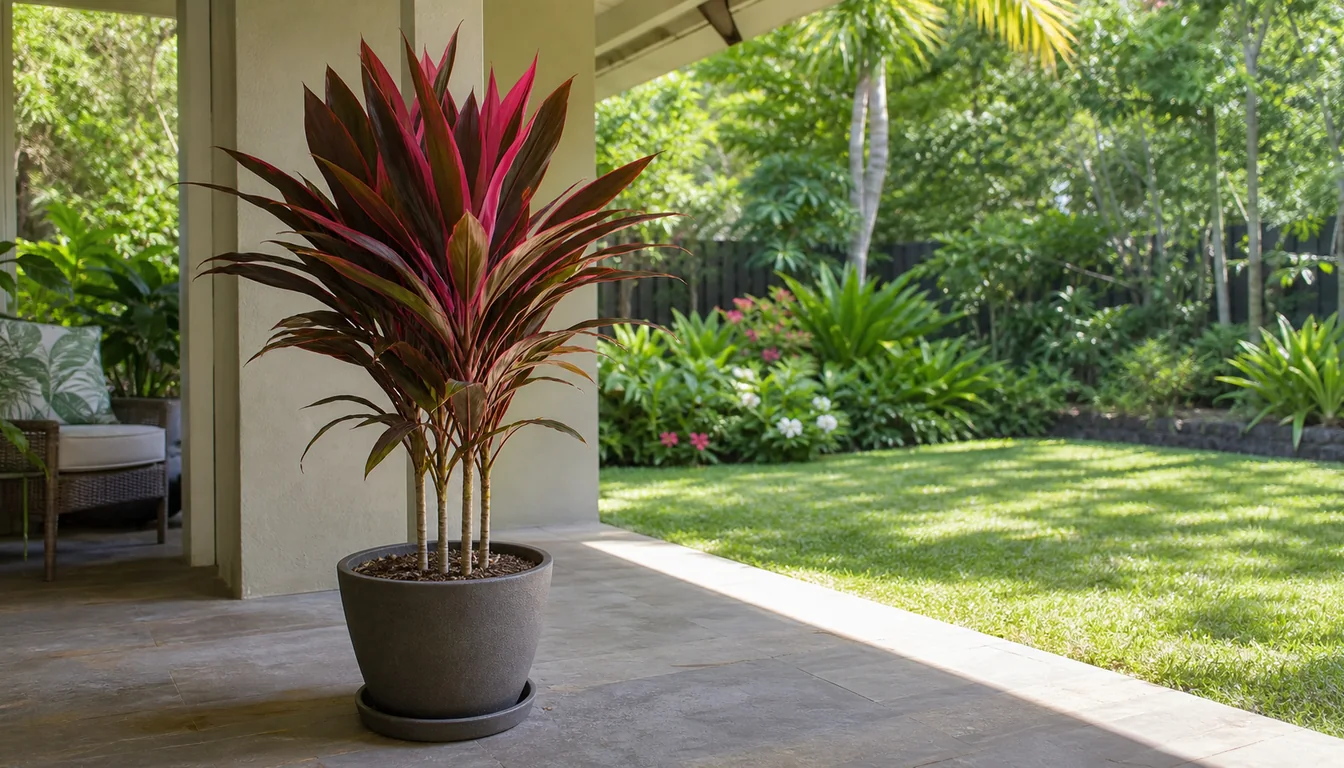
Bring the plant inside before cold nights return and inspect leaf undersides, cane joints, and the pot rim first. A week or two apart from other houseplants makes mites, scale, or mealybugs easier to catch before they spread.
Cut a Bare Cane Where You Want the Next Crown
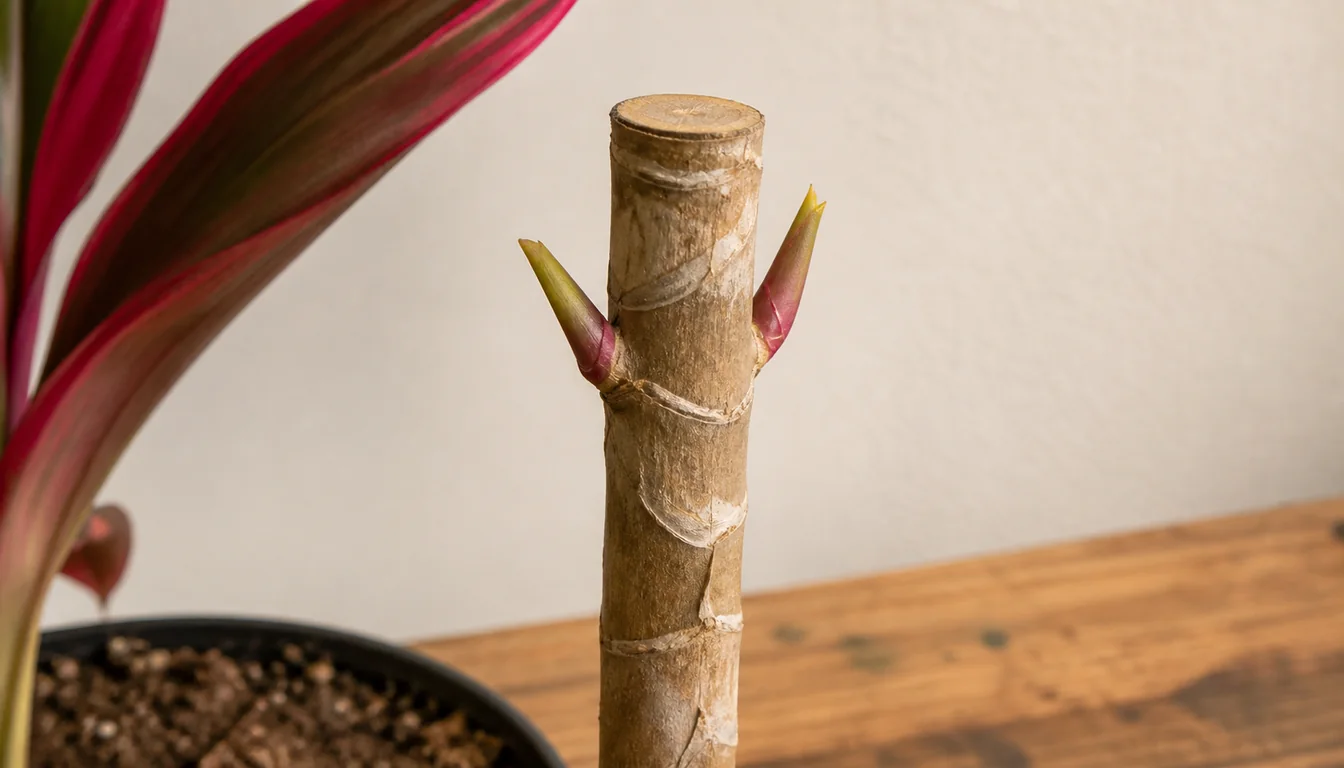
A tall bare cane is structural history, so prune this cane-growing houseplant during warm active growth instead of burying the stem or moving a plant with firm healthy roots into a huge pot.
Choose the height where a new crown would fit the room and make a clean cut with a disinfected blade. Dormant buds below the cut can produce new shoots, so leave enough healthy cane to support the shape you want.
- Remove only the cane or canes that make the plant top-heavy.
- Cut through firm tissue above the intended regrowth area.
- Keep the parent warm and brightly lit without soaking the pot.
- Wait for visible new growth before returning to regular feeding.
The leafy top can become an upright stem cutting, while a sound bare section can be laid horizontally on a moist peat and sand medium like a commercial Ti log. Keep sections warm and barely moist because cold saturated material can rot before roots and shoots form.
Do not expect every node to break or every cane piece to root. The parent plant is the priority, so discard soft, dark, or foul-smelling sections instead of propagating damaged tissue.
Read Damage by Where It Starts on the Leaf or Cane
Start diagnosis with the first damaged plant part because a dry tip, a bleached window-side patch, and a soft dark cane base point toward different causes even when all three later turn brown.
Narrow crisp tips support a water-quality, dry-air, salt, or moisture-swing check. Pale tan areas across exposed leaf surfaces fit sunscald better, especially after the pot moved closer to glass or went outdoors.
Sudden dark limp patches after a cold night suggest chilled tissue, while yellow soft lower leaves over wet mix shift attention to roots. Slide the root mass out when the pot smells sour, drainage has slowed, or the cane feels weak at soil level.
Dry tips on firm leaves
- Review water source
- Check heating airflow
- Track new leaves
Pale window-side patches
- Reduce hot direct sun
- Keep damaged leaves for now
- Watch protected new growth
Soft base and wet mix
- Stop watering
- Inspect roots and rhizomes
- Remove collapsed tissue
Fine stippling and webbing
- Check leaf undersides
- Isolate the pot
- Treat confirmed mites
Cotton or fixed bumps
- Inspect cane joints
- Confirm mealybugs or scale
- Treat all occupied surfaces
Spider mites leave fine pale stippling and may build delicate webbing, while mealybugs gather as cottony masses and scale insects remain fixed like small bumps. Aphids, thrips and fungus gnats round out the list, and the gnats live in the mix rather than on the leaf.
Spreading spots are a third category, separate from both the tips and the pests. Leaf spot and other fungal problems take hold where air movement is poor and the mix stays wet, so the correction is airflow and drainage rather than anything applied to the leaf.
Where Can You Keep a Ti Plant Away From Cold Glass and Pets?
Choose a bright position that stays above 65°F, keeps leaves off cold winter glass, and prevents cats or dogs from reaching the crown or fallen foliage. A stable raised planter can solve access, but it must still drain and support the weight of several canes.
Because the ASPCA lists Ti Plant as toxic to cats and dogs due to saponins, remove dropped leaves promptly and contact a veterinarian or animal poison service if a pet chews the plant.
The saponins reach horses as well as cats and dogs. Vomiting that sometimes carries blood, diarrhea, lethargy, heavy drooling and dilated pupils in cats are the signs, and the plant is rated low severity for people while still causing stomach upset if eaten.
The sap is a separate problem from the swallowing. It causes skin irritation and rash on contact, so gloves belong on for any pruning or root work rather than only for the messy jobs.
Frequently Asked Questions
Why is my Ti Plant turning green?
New leaves usually lose red or pink intensity when the plant receives too little light. Move it toward stronger filtered daylight in stages and judge the next leaf rather than feeding it first.
How often should I water a Ti Plant?
Water when the center of the root ball approaches lightly damp, then soak and drain the pot. The interval changes with light, temperature, pot depth, and season.
Can I cut the top off a tall Ti Plant?
Yes. Cut a firm cane at the height where you want new shoots, and do the work during warm active growth while the roots are healthy.
Can a Ti Plant live outdoors?
It can remain outdoors year-round in Zones 10 to 12 and can spend warm summers outside elsewhere. Acclimate indoor leaves under cover and bring the pot back before nights turn cold.
Is Ti Plant safe for cats and dogs?
No. ASPCA lists Ti Plant as toxic to both cats and dogs, so keep the plant and fallen leaves out of reach.
Sources & References
Related Plants
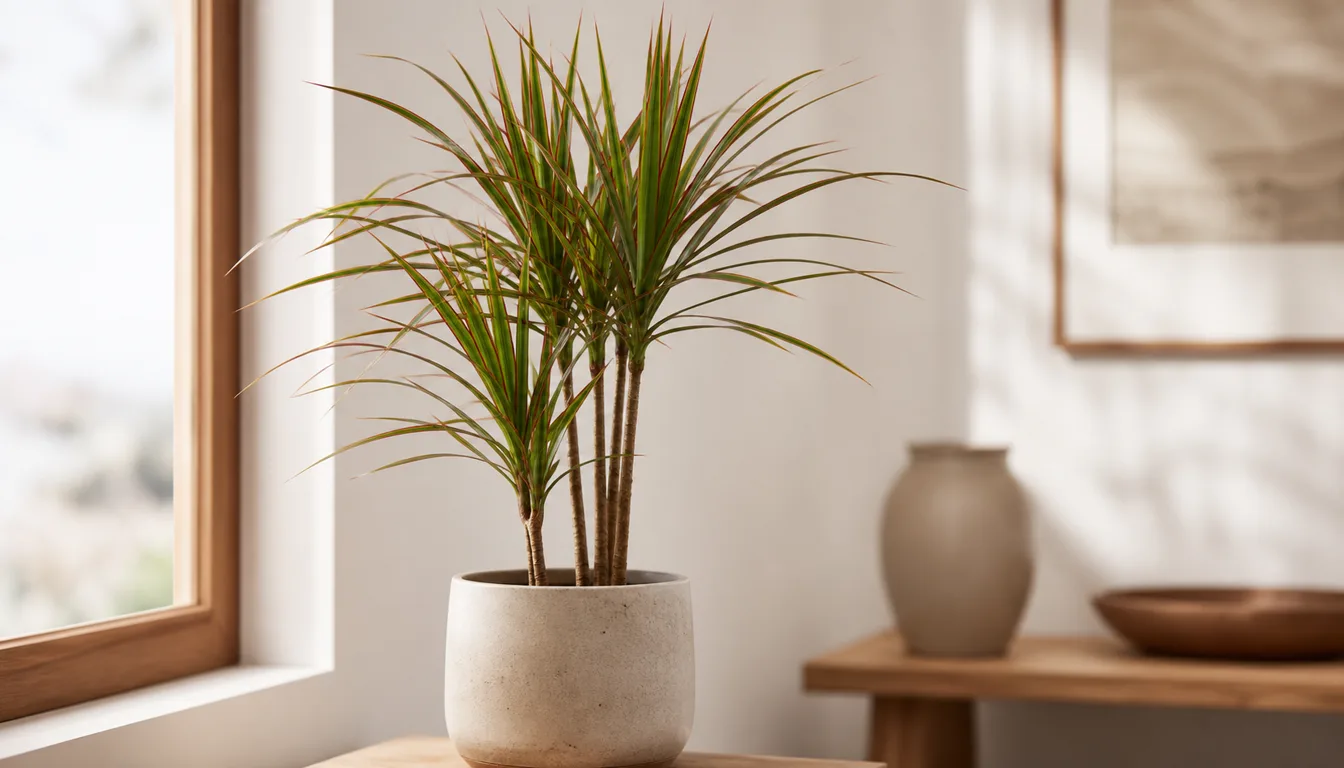
Dracaena Marginata
A narrower-leaved cane plant that accepts more drying and less humid air.
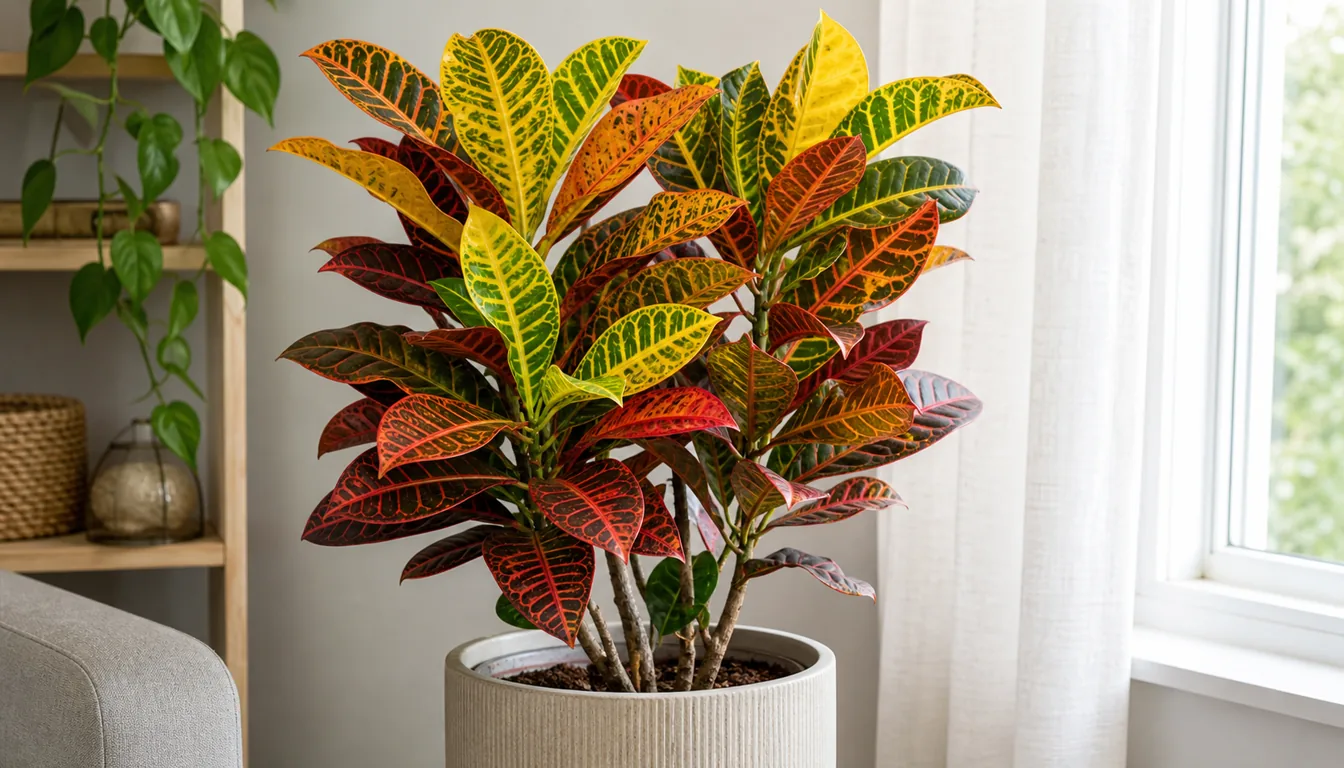
Croton
A branching tropical shrub with bold multicolored foliage and stronger sun tolerance after acclimation.
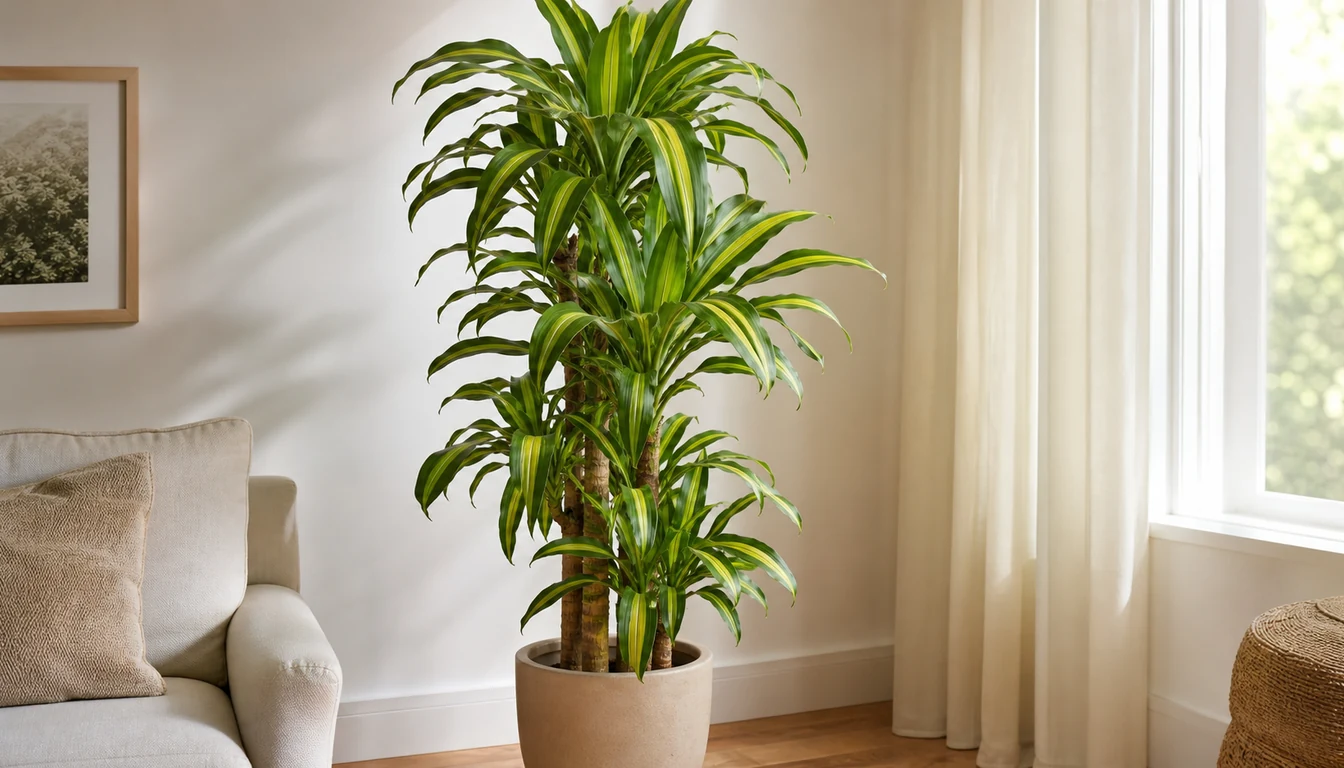
Corn Plant
A taller Dracaena with broad green leaves, woody canes, and a longer dry-down indoors.
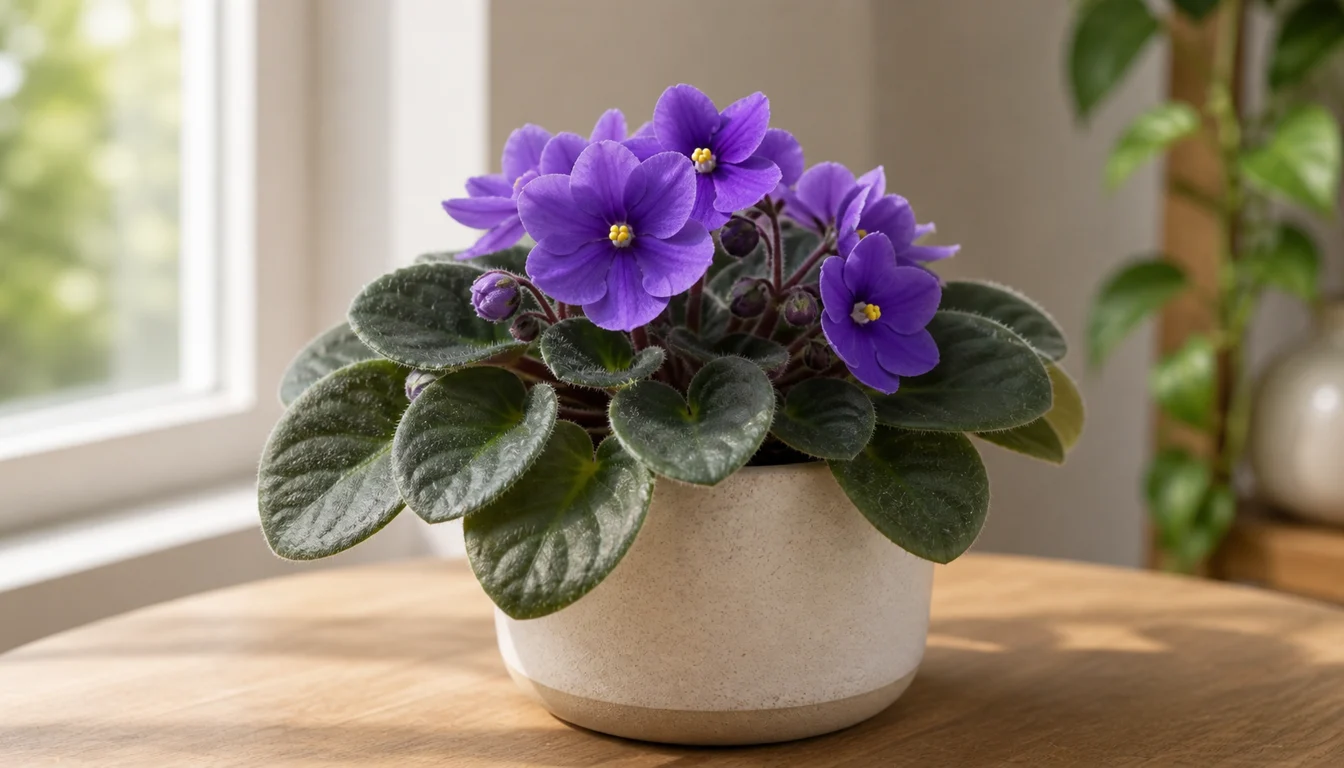
African Violet
African Violet is a windowsill bloomer that rewards steady, small-pot care.
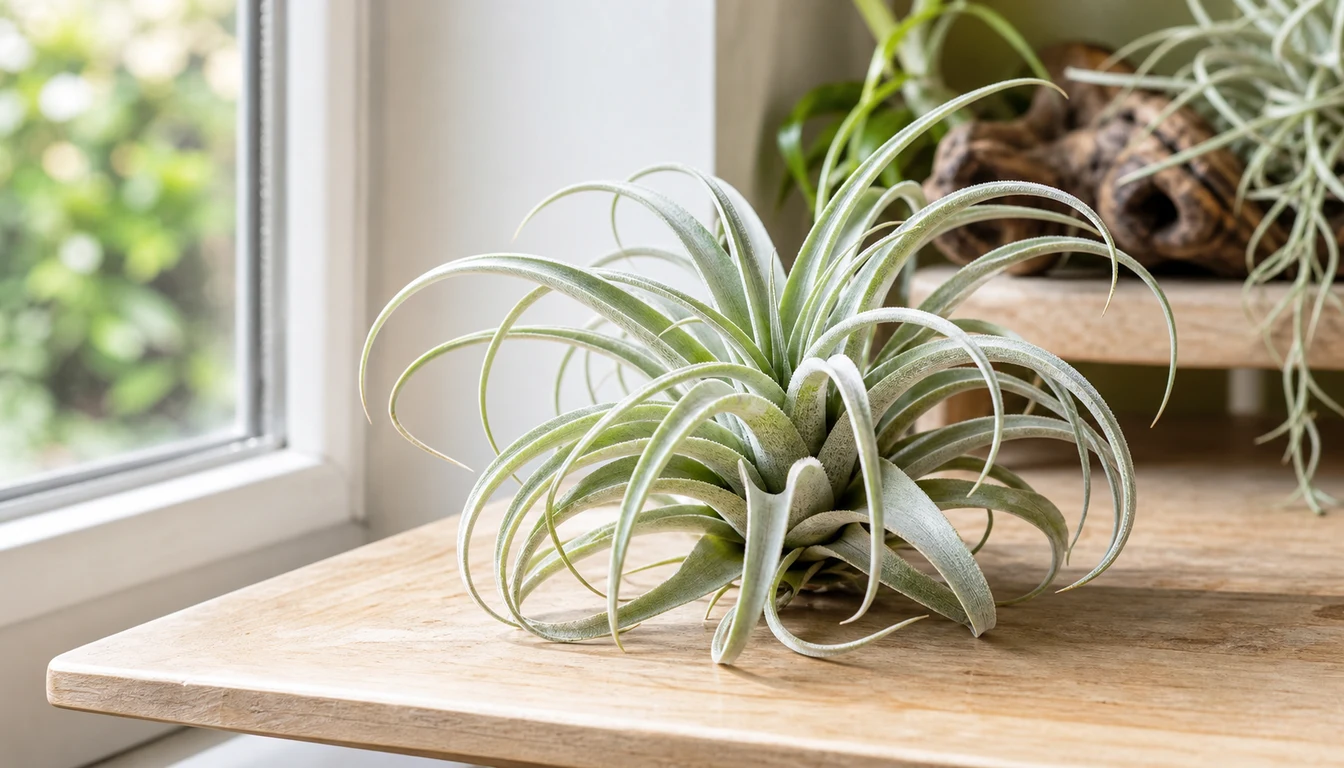
Air Plant
Air plants are living sculptures that thrive without soil, anchoring to driftwood, rocks, or shells while drawing…
Alocasia
Alocasias include compact, textured houseplants and large elephant ears that need substantial floor space.