
How to Grow String of Dolphins and Read Changes in Its Leaves
× Bacurio delphinatifolius Asteraceae
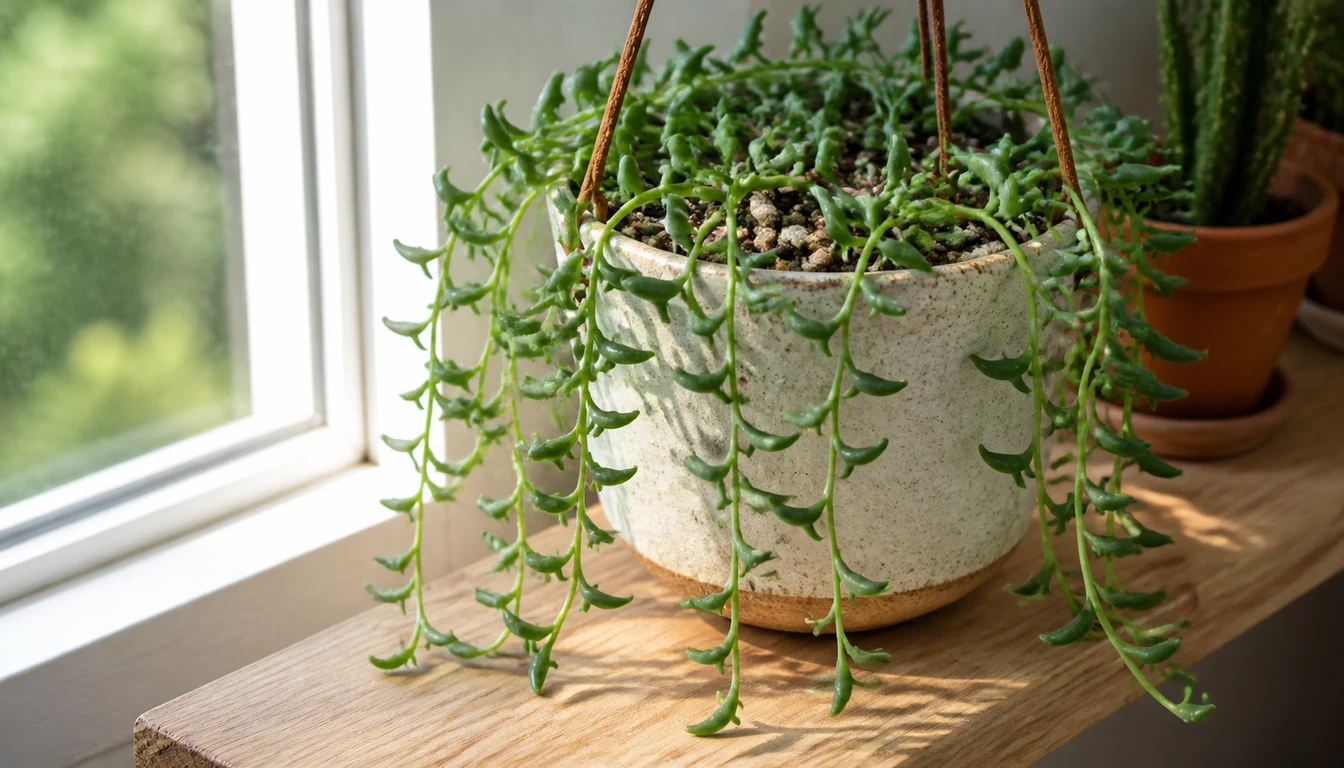
String of Dolphins carries curved succulent leaves with small lateral points that create a dolphin-like outline. Bright filtered light, a freely draining pot, and drying between waterings suit this trailing plant. A flattened or wrinkled leaf needs context before you change its care.
Care snapshot
The Dolphin Outline Belongs to a Leaf
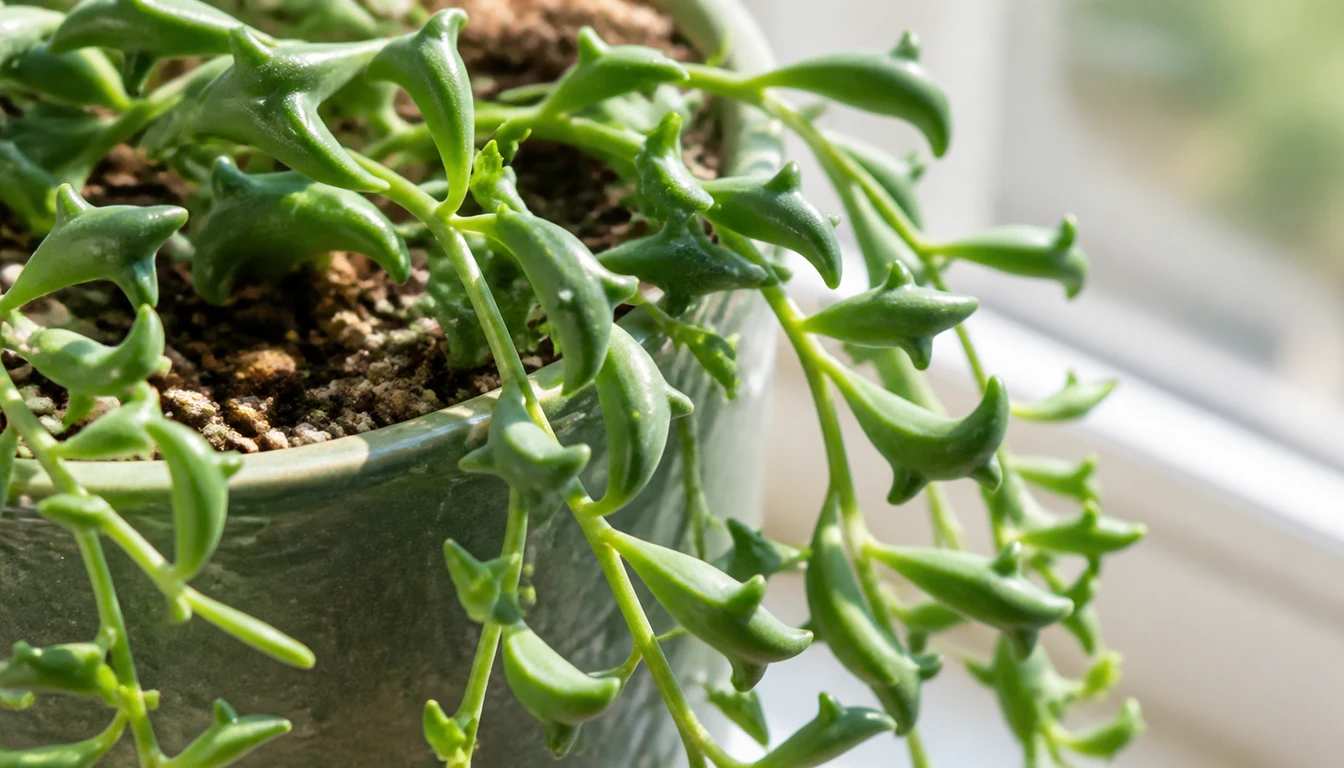
The small points along each curved leaf give String of Dolphins its name. They are parts of the leaf outline, not separate stems or new plants. The main stem runs between the leaves and carries the nodes used in propagation.
This hybrid appears in horticulture as Curio × peregrinus or Senecio × peregrinus. Kew currently accepts the name × Bacurio delphinatifolius and records the cross as Baculellum articulatum × Curio rowleyanus. The latter parent is String of Pearls.
A plant label may therefore use an older name without indicating a different care requirement. The hybrid sign matters when comparing botanical records, because a similar name without it can refer to a different plant. A common name, a photograph and the full botanical name together make identification more reliable.
The close view below shows the lateral points and the stem connecting separate leaves. A flat-looking leaf is a visible change to investigate, but its outline does not measure light or show the condition of unseen roots. A plump leaf likewise does not prove that the entire plant is healthy.
Kew records the hybrid from South Africa’s Cape Provinces. A nursery trade name alone also cannot establish a cultivar or a different watering requirement.
Choosing a Pot for the Display You Want
A useful nursery plant has enough foliage near the rim to make a full display, with stems that are accessible for inspection. Long strands alone can conceal a bare or deteriorating center. Missing leaves may reflect handling, older growth or stress, so the pattern of damage matters.
- At the rim
- Look for intact stems and leaves rather than judging only the hanging tips.
- Under the pot
- Check for drainage holes and water trapped in a sleeve or cover pot.
- Along the strands
- Look for soft areas, widespread shriveling and actual insects.
- At home
- Allow room for the stems without placing them within routine brushing or chewing reach.
A potting mix that is wet immediately after normal watering is not automatically defective. Persistent saturation, standing runoff or soft tissue adds the context needed to question the root environment. Squeezing a tight crown is unnecessary and may damage stems.
String of Bananas has curved leaves without the same lateral points, while String of Pearls has nearly round beads. String of Hearts and String of Turtles belong to other genera. Those shape differences help select a display, but they do not establish a ranking for disease resistance or recovery speed.
Bright Light Across the Whole Plant
RHS recommends bright indirect light for the trailing succulent group that includes String of Dolphins. An east- or west-facing window can provide suitable light, with protection from harsh direct sun in the middle of the day. Exposure depends on season, shading and the room as well as compass direction.
The top of the pot needs light alongside the hanging ends. A high shelf can cast shade across the stem bases while the lower trails grow toward a window. Placing the pot where its rim also receives filtered light helps support that upper growth.
Low light can produce weak, straggly growth or small leaves in these plants. That does not prove that every flattened dolphin-shaped leaf is caused by low light. Recent moves, moisture, temperature and physical damage belong in the same assessment.
A grow light can supplement a dim location when its output and placement suit the area being lit. Its operating guidance matters more than assigning every fixture the same distance or number of hours. Abruptly placing a dim-grown plant in strong sun can scorch tissue.
After a move, the useful observations are whether new damage appears and how later growth develops. Existing scars will remain visible. A single changed leaf is not a reason to move the plant repeatedly between very different exposures.
Drying Mix and a Draining Root Ball
The RHS care guide recommends letting the mix dry between waterings for these trailing succulents, with less water when growth and water use slow. The fleshy leaves hold a reserve, but they do not remove the need for water or make prolonged neglect harmless.
Pot weight and moisture below the surface help show what is happening around the roots. A dry crust can cover damp material, particularly in a container larger than the root ball. The same pot becoming lighter gives more useful information than comparing two pots made of different materials.
- Drying mix and a lighter pot help establish when watering is due.
- Shriveling in dry mix can support a concern about water shortage.
- Shriveling in persistently wet mix calls for drainage and tissue checks before more water.
- Standing runoff needs to be emptied, regardless of how the leaves look.
When watering is due, the water needs to reach the root ball and drain away. Small splashes that leave the center dry will not supply the roots, while a pot left sitting in runoff can remain saturated. A narrow spout makes it easier to reach the mix between stems.
The leaves do not have to collapse before every watering. Conversely, a plump leaf does not justify adding water to already wet mix. The moisture evidence and growing conditions carry more weight than a leaf-shape rule.
Drainage Matters Below the Surface
A freely draining cactus or succulent potting mix provides a useful starting point. The roots need moisture after watering and air as excess water leaves. A gritty surface alone cannot show whether the lower mix drains well.
RHS recommends a replacement pot only slightly larger than the previous one. Excess mix around a small root ball can stay wet for longer than the plant can use it. The depth and shape also need to fit the roots and support the hanging display.
Terracotta can dry faster because moisture escapes through its walls. Plastic and glazed containers behave differently, so pot material changes the checking interval. None removes the need for drainage holes and an empty saucer or outer pot after watering.
- Mix that remains saturated
- Check drainage, container size and material below the surface.
- Roots filling the pot
- Consider a modest increase in space rather than a much larger basket.
- Bare growth at the rim
- Review light and stem health before assuming repotting will fill it.
Adding pumice on top does not repair a waterlogged root ball. Repotting can replace failed mix, but it cannot restore tissue that has already collapsed. Supporting the stems and keeping the plant at its previous planting depth limits avoidable damage during the move.
Stem Cuttings and Layering Fill Different Roles
A cutting is detached from the parent before it roots, while layering keeps the stem attached during root formation. RHS describes both methods for these trailing succulents. Layering an attached strand into the existing pot can help fill a sparse area once it roots.
The node is where a leaf meets the main stem. A dolphin-shaped leaf’s lateral point is not that node. Following the stem between leaves helps avoid selecting a loose leaf when the intended method requires a stem cutting.
- Select a stem without visible pests, spreading damage or collapse. Use a clean tool for a detached cutting, or retain its connection for layering.
- Place the lower stem nodes in contact with moist, well-drained rooting mix. Keep the foliage above the mix.
- For layering, hold the stem gently against the surface without crushing it, using a loose bent-wire staple if needed.
- Keep the rooting area moist but not saturated in bright filtered light.
- Separate an attached layer after roots develop, or move a rooted cutting while preserving its new roots.
The parent remains a source of water and nutrients for a layer until separation. A detached cutting must establish independently, so prolonged dryness can harm it even when a mature plant normally dries between waterings. The needs of a propagation tray are not identical to those of a rooted basket.
A green stem or one new leaf alone does not confirm a developed root system. Rooting can take longer under less favorable conditions. Repeatedly tugging at delicate material to test it can disrupt newly formed roots.
Cuttings can rebuild a display after its growing conditions are improved. They are not a way to certify a clean replacement from a plant with an unidentified disease or infestation. A tray of more cuttings will face the same problem if the original cause remains.
Shriveled Leaves and Cottony Deposits Are Different Clues
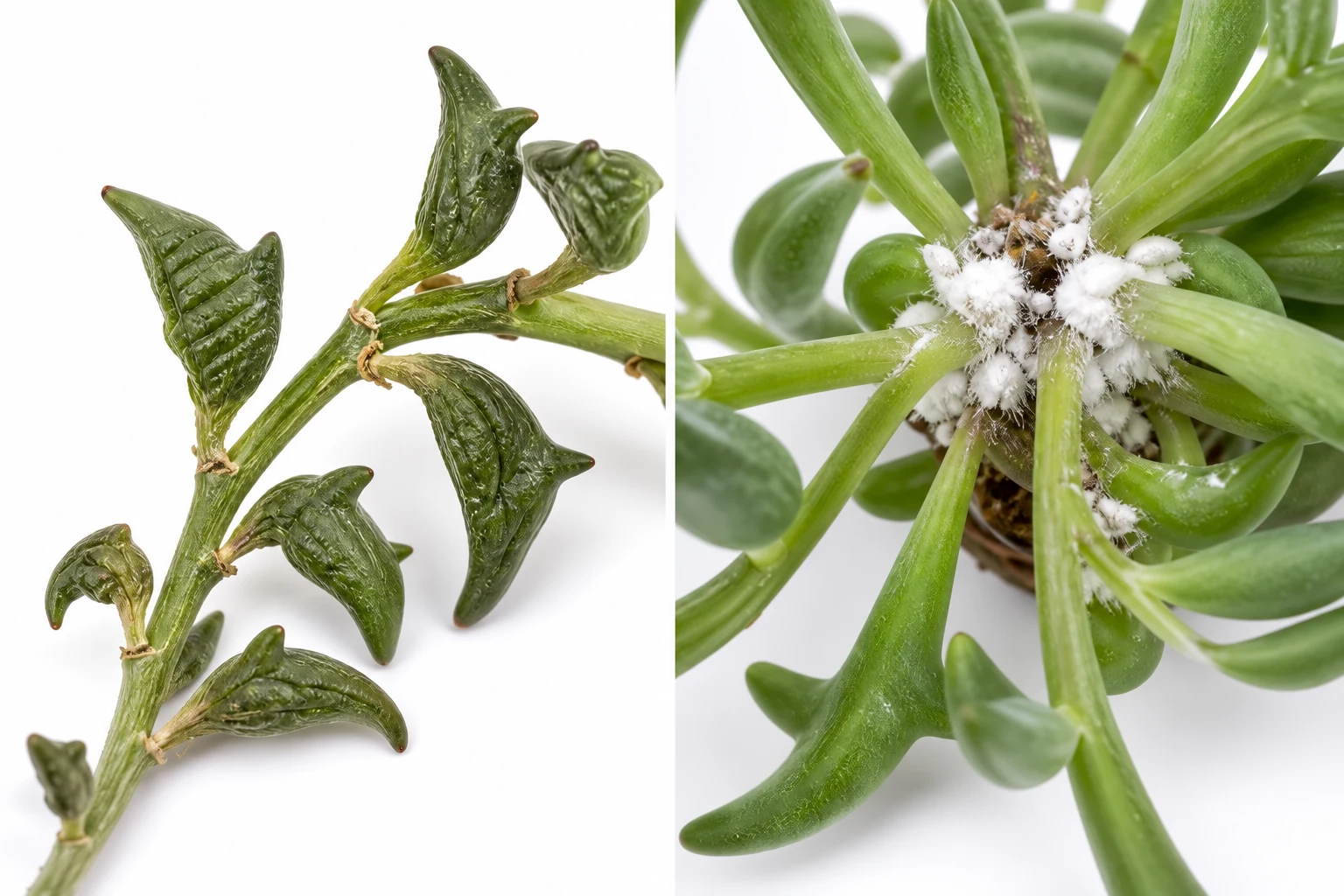
Shriveled leaves show a change in condition, but they cannot distinguish dry soil from roots that are failing in wet soil. A plant’s recent watering, exposure and damage history narrows the possibilities. The first observations can usually be made without lifting the plant from its pot.
Aphids and mealybugs are among the pests RHS lists for this group. Cottony deposits around a stem joint can point toward mealybugs, especially when insects are visible within them. A wrinkled leaf with no visible insect remains a different observation.
- Shriveling with a dry root ball
- Review water supply and whether watering reaches the center.
- Shriveling with wet mix
- Check runoff, drainage and tissue condition before watering again.
- Visible insects or cottony deposits
- Identify the pest and separate a suspected infestation while choosing treatment.
- New injury after stronger sun or cold
- Review the exposure change alongside moisture and other symptoms.
Treatment needs to match the identified pest and a product label suitable for indoor ornamental plants. Stronger mixtures are not necessarily more effective and can damage succulent foliage. Follow-up inspection needs to account for hidden insects and later-emerging stages.
A new leaf does not prove that pests have gone, and a photograph of clean-looking roots cannot rule out every root problem. Continued collapse or an uncertain diagnosis may need help from a local Extension service.
Growth, Feeding and Cooler Conditions
Active growth can make pruning and propagation more productive, but the timing follows suitable light and temperature. Long stems may be trimmed when they no longer fit the display. Pruning is optional maintenance, not a cure for roots sitting in saturated mix.
RHS gives a general indoor temperature range of about 50 to 75°F for this group. That is culture guidance, not a guarantee that a wet or newly moved plant tolerates every exposure at either end of the range. Cold window glass and direct heat from a vent can create conditions unlike the rest of the room.
Modest feeding during active growth is sufficient for these succulents. The product directions and any fertilizer already in the potting mix determine the amount. Fertilizer cannot compensate for inadequate light or damaged roots, and leaf shape is not a nutrient test.
Water use usually slows in dimmer or cooler conditions. That calls for observing how the pot dries, not assuming that every green plant needs a scheduled winter drink or that every succulent should remain dry until spring.
An outdoor move needs gradual adjustment to brighter exposure and protection from prolonged rain and cold. A generic hardiness-zone label cannot establish the temperature of an indoor shelf or a safe local moving date.
A Cautious Placement With Clear Safety Limits
RHS warns that the group of trailing succulents covered by its guide, including String of Dolphins, is poisonous and can irritate skin. Keep the plant out of chewing reach of children and pets, and wear gloves when pruning or handling sap.
That group warning is useful for placement, but the reviewed material does not provide an exact hybrid-specific listing for dogs, cats and horses. A generic ASPCA plant directory is not such a record. These sources do not quantify a toxic dose or establish an individual animal’s likely response.
The unresolved recipient-specific detail does not make the plant safe. For a suspected ingestion, a veterinarian or poison service needs the plant name, a photograph and the exposure details. Home treatments or waiting for a severe reaction can delay appropriate advice.
A location still needs enough light at the top and safe access for watering. A dark shelf that is hard to inspect creates a care problem without necessarily keeping a climbing pet away. If an accessible bright area is the only option, a plant with an applicable non-toxic listing may be a better fit.
Sources & References
Related Plants
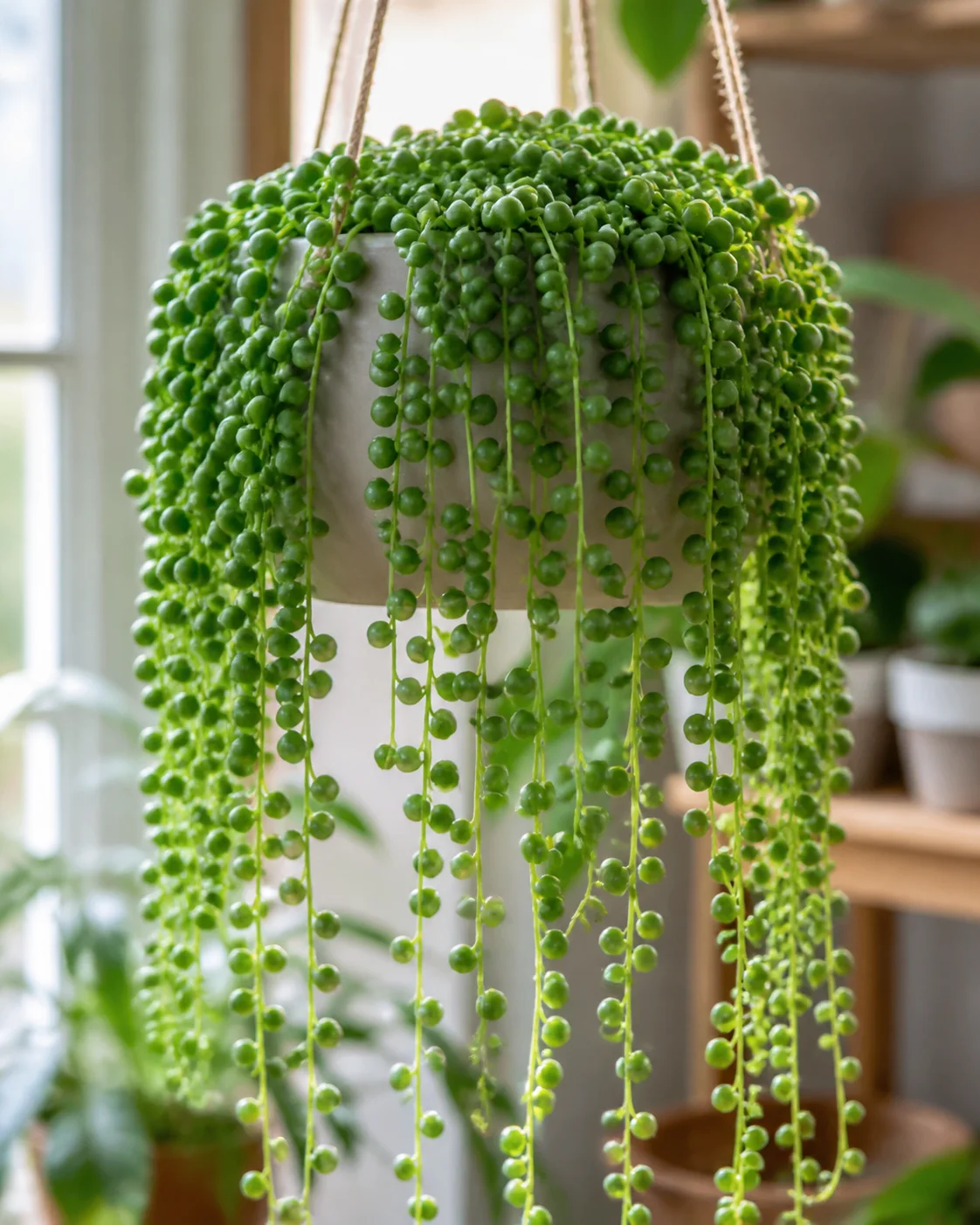
String of Pearls
Round bead-like leaves on a species identified by Kew as one parent of this hybrid.
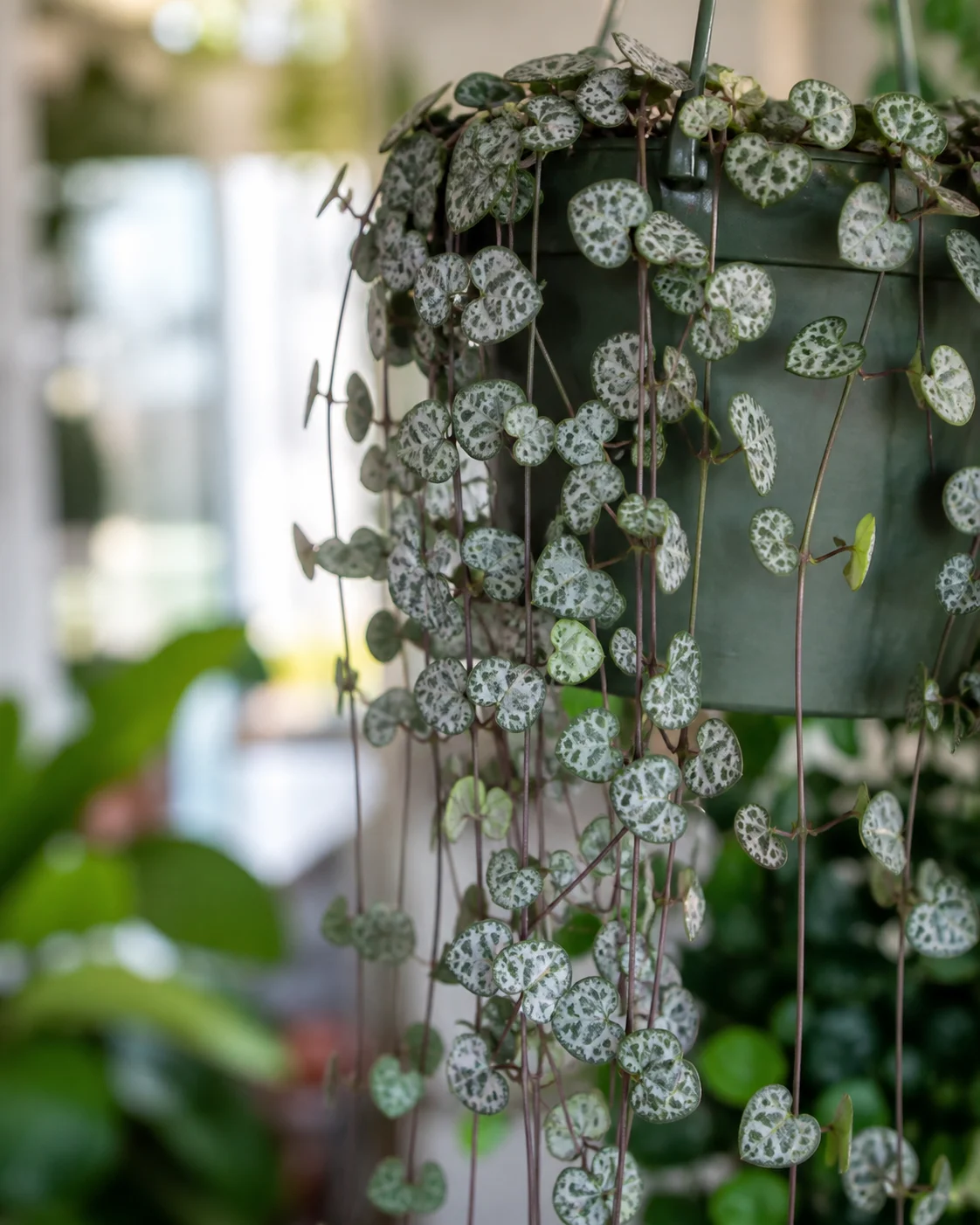
String of Hearts
Heart-shaped leaves on a different genus with its own care requirements.
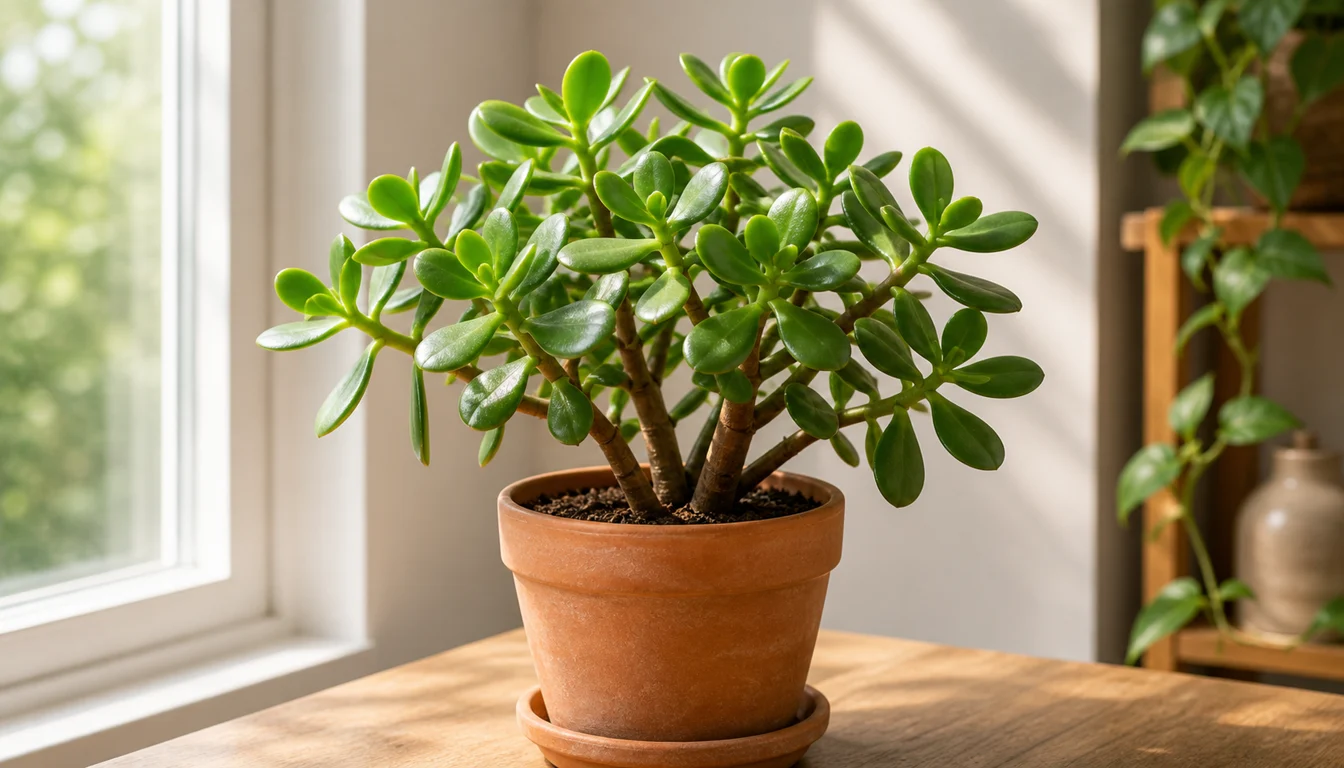
Jade Plant
A branching upright succulent for a different display shape.
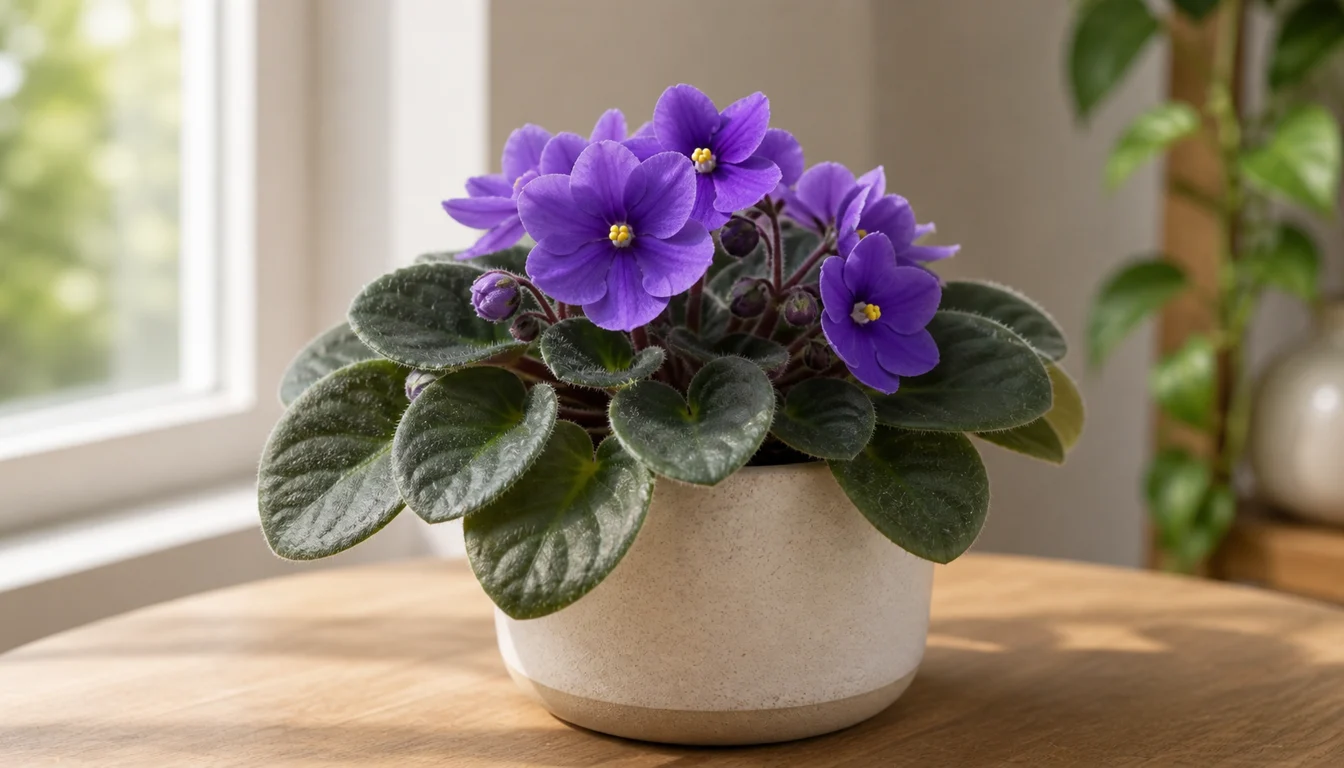
African Violet
African Violet is a windowsill bloomer that rewards steady, small-pot care.
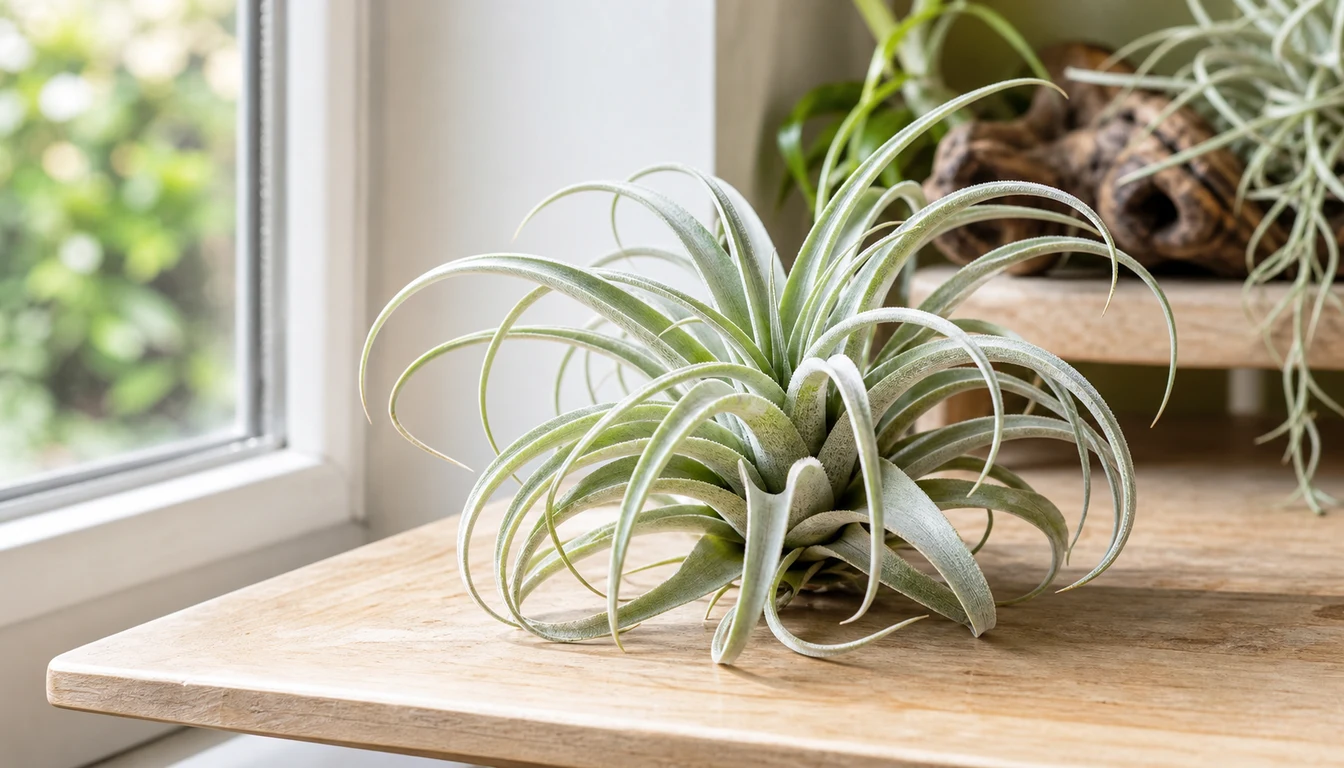
Air Plant
Air plants are living sculptures that thrive without soil, anchoring to driftwood, rocks, or shells while drawing…
Alocasia
Alocasias include compact, textured houseplants and large elephant ears that need substantial floor space.