
How to Grow String of Turtles and Protect Its Delicate Trails
Peperomia prostrata Piperaceae
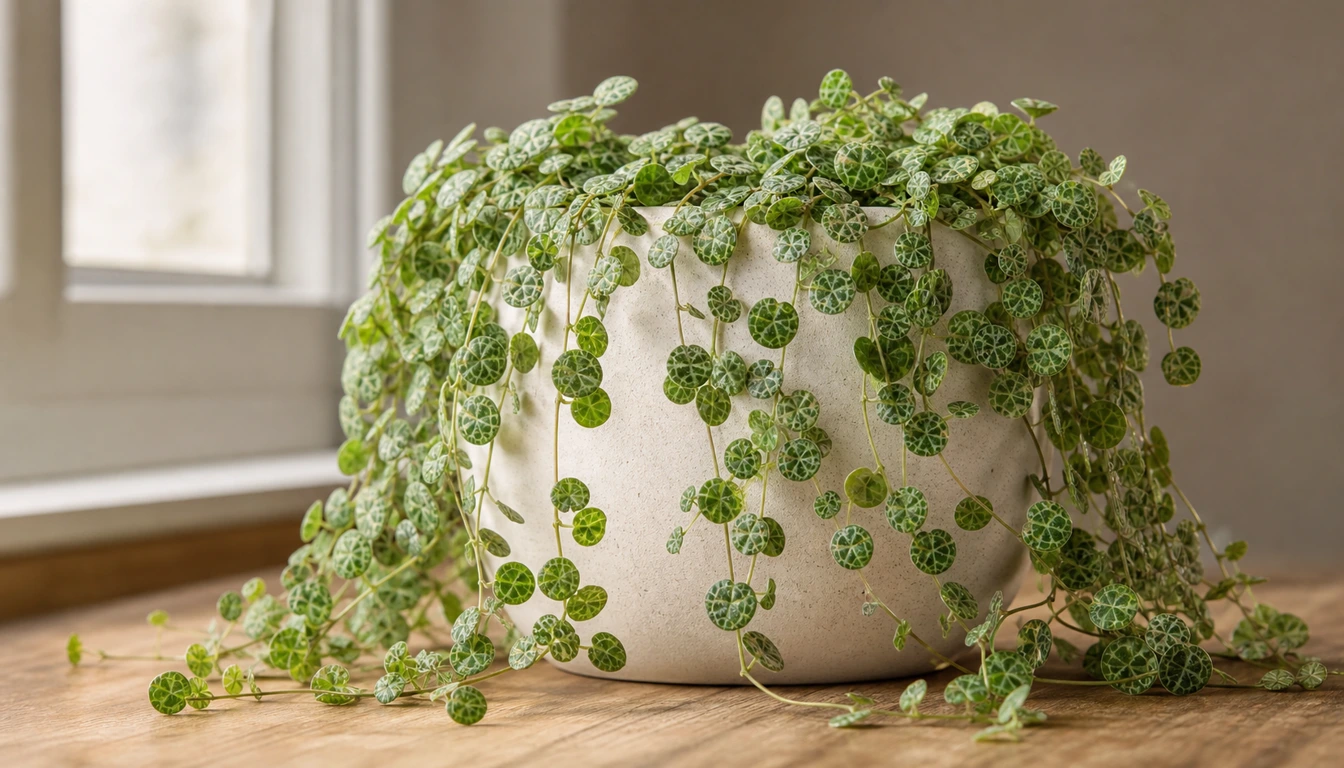
String of Turtles is Peperomia prostrata, a small trailing plant with rounded leaves marked like turtle shells. Bright filtered light, a porous root zone, and gentle handling suit its delicate stems.
Its fleshy leaves do not make it a desert plant. Drying, persistent wetness, and cold can all damage the display, while a plant name alone is not enough to settle pet safety.
Care snapshot
A Small Trailing Peperomia
String of Turtles belongs to the Piperaceae, or pepper family. Unlike upright Baby Rubber Plant or rosette-forming Watermelon Peperomia, it carries small rounded leaves along fine, trailing stems.
NC State identifies its native range as Ecuador. It comes from wet tropical habitat and grows as an epiphyte, using another plant for support. Fleshy leaves help store moisture between opportunities to take up water, but that does not turn it into a plant for prolonged drought.
Leaves are generally less than an inch across, with marbled or veined markings that resemble small shells. Their color can include darker and lighter greens, sometimes with silver or white. Leaf age and growing conditions affect the appearance.
NC State describes a slow-growing plant with trailing stems around 12 inches long. That is a useful scale for choosing a shelf or hanging pot. The actual display depends on age, growing conditions, and trimming.
Tiny, brownish, tail-like flower spikes may appear, though flowering indoors is uncommon. They are normal plant structures. Removing a spent spike is optional and does not determine the watering schedule.
Light Needs to Reach the Top of the Pot
Bright filtered light supports the foliage without exposing it abruptly to strong direct sun. A hanging plant needs light at the top of the pot as well as on the trailing stems. A high shelf can leave the crown in shadow even when the hanging tips appear bright.
NC State notes that the plant can tolerate lower light, though its color may be less vivid. Window size, nearby buildings, season, and distance from the glass change the light it receives.
- Foliage near the rim becomes sparse
- Review light reaching the crown, moisture, and stem condition
- New stems become stretched
- Compare growing conditions before attributing the change to one cause
- A pale or dry patch follows strong sun
- Reduce harsh exposure and inspect for other signs of injury
The pattern alone is not a light meter. A single unusually pale leaf may differ because of age or injury, while repeated changes in new growth give more useful context. Existing damaged tissue will not regain an undamaged surface after the pot moves.
RHS recommends brighter winter placement as seasonal light weakens. That needs adjustment to the actual room, not a fixed distance from a window. A grow light can supplement a dim position when its placement and operating instructions suit the plant.
Moisture Below the Leaves Decides Watering
NC State describes evenly moist culture with a risk from overwatering, while RHS advises moderate summer watering and less in winter. Together, those recommendations favor a moist but aerated root zone, with some drying between waterings, rather than either constant saturation or repeated drought.
Leaf firmness alone is unreliable. A thick leaf can remain firm while the mix stays wet, and soft foliage can follow root damage, cold, or other stress. The first check is moisture in the pot, not a calendar interval or a squeeze of every leaf.
- Lift the same pot to compare its weight with earlier wet and partly dry conditions.
- Check below the surface where possible without tearing fine roots or stems.
- Look for standing water inside a cover pot or saucer.
- Water when the mix is beginning to dry, then let excess escape and empty the runoff.
Thorough watering wets the root zone more evenly than frequent small splashes. The next watering follows the mix and the plant. Pot material, root volume, light, and temperature can change the interval substantially.
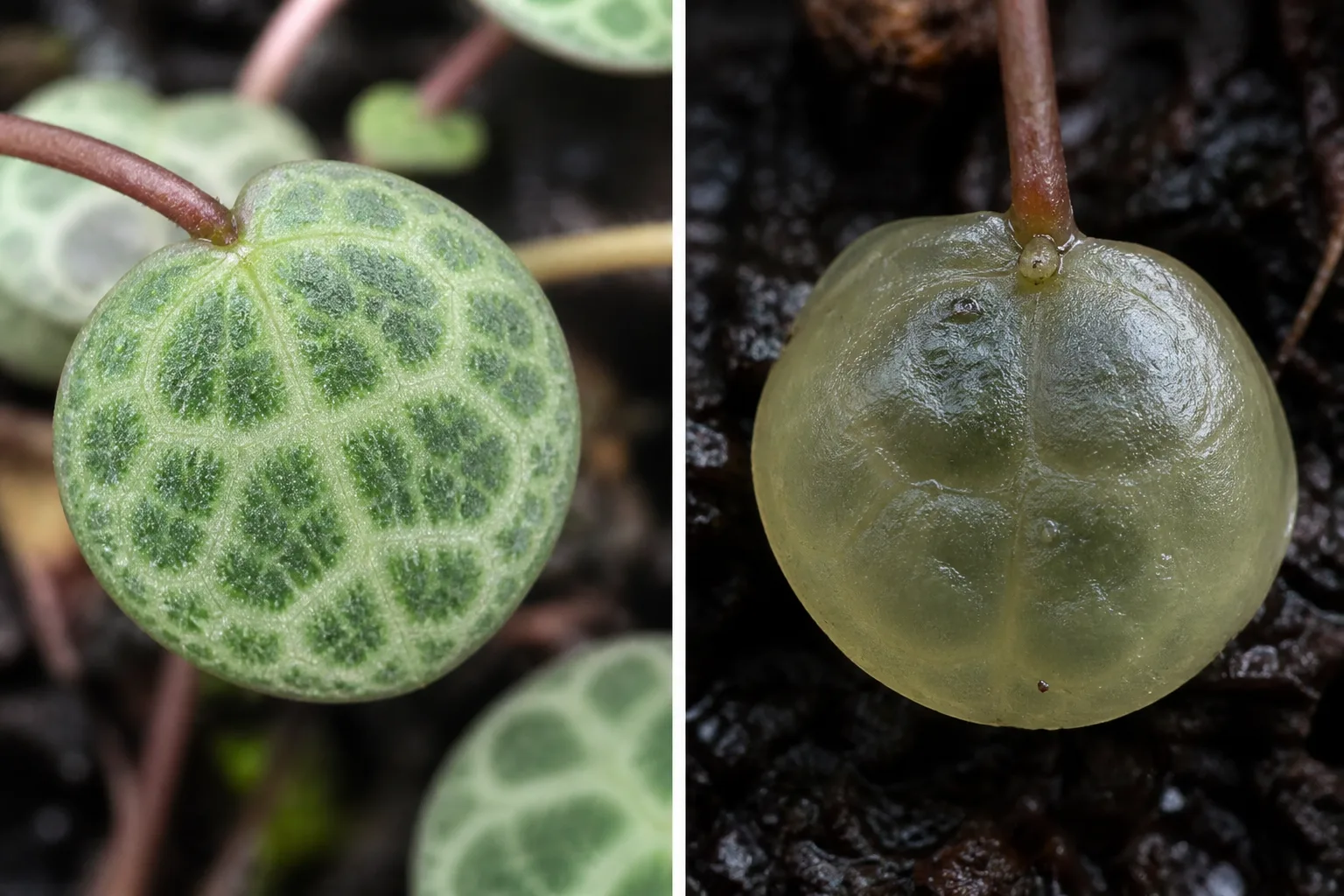
When decline occurs in wet mix, drainage and the stem base need checking before more water is added. Soft, deteriorating tissue may justify a closer root inspection. Diagnosis starts with the least disruptive observations, and pale or firm roots are not a complete health clearance.
A Pot That Supports Fine Roots and Stems
A loose houseplant mix that retains some moisture while draining freely suits this tropical peperomia. Coarse aerating ingredients can help, but no single soil, perlite, and bark ratio works identically in every pot or room.
Container size follows the actual root ball. An oversized pot holds a larger volume of damp mix, while a very small pot may dry too quickly. A shallow basket can suit a shallow root system, but the trailing habit alone does not establish root depth.
Drainage holes provide an exit for excess water. A decorative outer pot still needs checking after watering, because runoff left inside can keep the inner pot saturated. A hanger must support the wet weight of the pot without crushing stems at the rim.
NC State notes that String of Turtles does well when pot-bound. It can stay in a close-fitting pot when watering remains manageable, without unnecessary repotting. Crowded roots, deteriorated mix, or difficulty watering provide better reasons to repot than a fixed month count.
When moving or repotting, supporting the trailing stems reduces pulling at their attachments. A plant with bare stems near the rim may need improved conditions and selective trimming, rather than an automatic move to a larger basket.
Rooting a Stem Cutting Without Damaging the Vine
RHS lists summer stem cuttings as a propagation method for String of Turtles. NC State also lists leaf cuttings. The stem method described here preserves visible nodes and existing foliage.
A node is the point on the main stem where a leaf attaches through its short stalk. It differs from the stalk of a detached leaf. Following the fine stem between leaves makes the material easier to identify before cutting.
- Select a growing stem without visible pests, collapse, or spreading damage.
- Cut a section that retains nodes and leaves, using a clean, sharp tool.
- Remove only the foliage that would be buried or submerged, handling the thin stem gently.
- Place the lower stem in moist, porous rooting medium, with the remaining leaves above it.
- Keep the cutting in warm filtered light and maintain moisture without saturating the container.
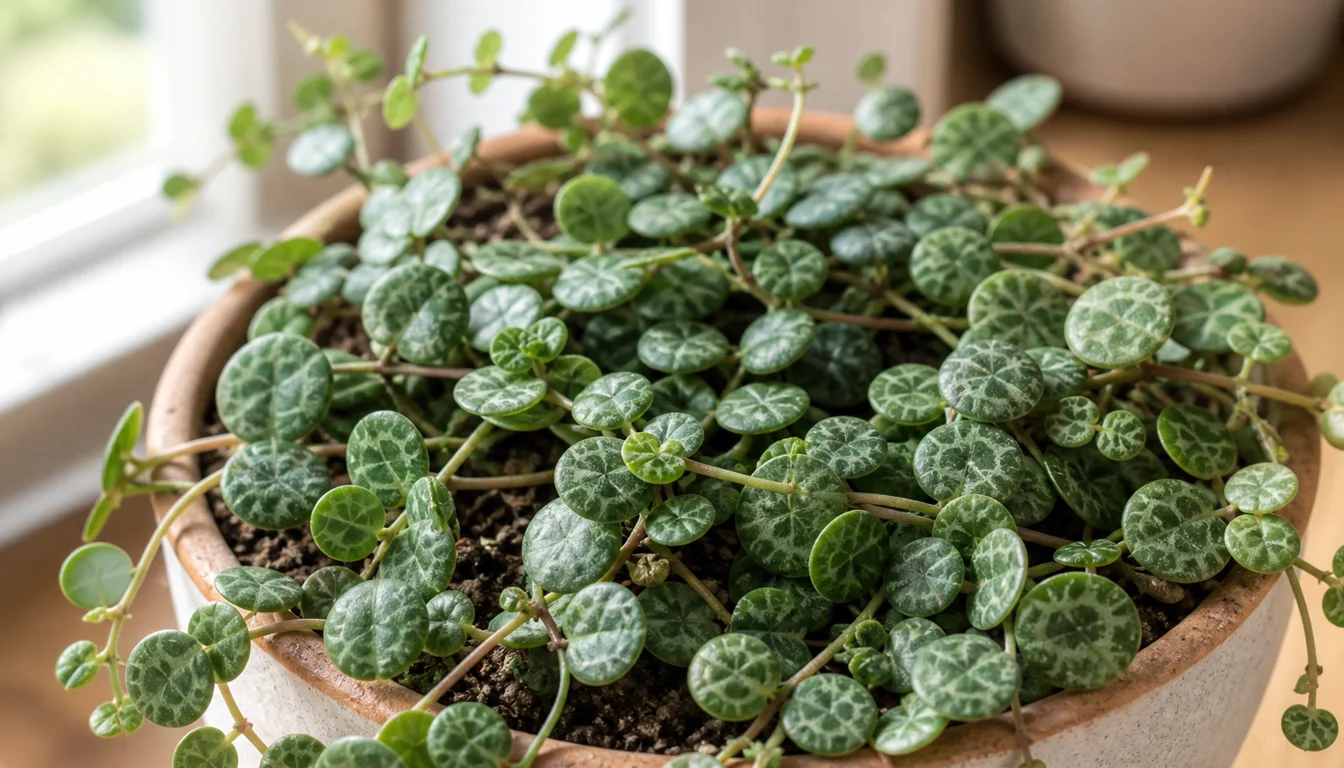
The close view below shows the stems connecting the leaves across a pot. Those connections are the landmarks for selecting a stem cutting. A detached round blade by itself is different material and needs a leaf-cutting method suited to the species.
A humidity cover can slow drying around a cutting, but it does not justify saturated mix or a sealed pot in direct sun. New growth and developing roots help show establishment. A cutting that remains green has not necessarily rooted, and there is no reliable promise that water or mix will finish the job in a particular number of weeks.
A rooted cutting can fill a gap or start another small pot once it can be handled without losing its developing roots. Material from a diseased or infested plant may carry the same problem, so propagation is not a way to certify a clean replacement.
Separating Pests From Other Leaf Damage
Mealybugs, mites, aphids, scale, and whiteflies are among the pests NC State lists for this plant. Tight leaf attachments can conceal them. Actual insects, waxy deposits, webbing, or sticky honeydew provide more useful clues than faded patterning alone.
- Cottony material at a joint
- Inspect closely for mealybugs rather than treating every pale mark
- Fine webbing and pale feeding marks
- Check leaf undersides for mites
- Soft or translucent tissue
- Review moisture, temperature, and stem condition before choosing a treatment
- Bare or stretched stems
- Consider crown light, lost leaves, and root condition together
Separating a suspected infestation from neighboring plants reduces contact while it is identified. Pest treatment needs to match the organism and a product labeled for indoor ornamental use. Fine foliage can also be injured by treatment, so stronger is not automatically better.
A single wipe or spray cannot be assumed to clear hidden insects or later-emerging stages. Subsequent inspection follows the identified pest and product directions. Clean-looking new growth alone is not enough to declare an infestation finished.
Moisture problems and pests can occur together. A plant with limp leaves and insects still needs its root-zone moisture checked, and a wet pot does not make every mark an overwatering symptom. Unexplained, progressing collapse may require help from a local extension diagnostic service.
Growth and Care Change With the Room
Longer days and suitable warmth often bring more active growth, while dimmer winter conditions can slow water use. Indoor heating, grow lights, and local climate can alter that pattern, so the plant does not follow the same monthly schedule in every home.
NC State recommends steady temperatures around 68 to 75°F and avoiding cold drafts. A room reading away from a window can differ from the temperature at the leaves. A brief dip to a lower temperature is not a promise of safe exposure for a wet or recently moved plant.
RHS recommends a balanced liquid fertilizer monthly during spring and summer. Feeding follows active growth, while a struggling plant needs poor light or root damage addressed first. Product directions and nutrients already in the mix still matter.
Average to higher humidity suits this species. A room humidifier can provide steadier moisture in dry air, while misting briefly wets the leaves. Neither humid air nor wet foliage substitutes for water at the roots.
Shriveling in winter deserves a moisture and temperature check. Likewise, mushy tissue needs investigation instead of a calendar-based watering reduction. Outdoor Zones 10 to 12 describe regional hardiness, not an indoor temperature guarantee.
What Is Actually Known About Pet Safety?
ASPCA has a non-toxic listing for Trailing Peperomia that names dogs and cats, but the scientific name on that record is Peperomia prostata. The botanical name used by NC State and RHS for String of Turtles is Peperomia prostrata.
The reviewed sources do not explicitly resolve that spelling difference. Until the identity is confirmed, this page does not treat the record as an exact-species safety clearance. That uncertainty is not a toxic classification.
Even an applicable non-toxic listing would not make the plant edible or establish safety for potting materials, fertilizers, pesticides, or extracts.
String of Hearts and String of Pearls belong to other genera. Their safety cannot be inferred from a similar trailing appearance. A stable placement that prevents chewing also protects these delicate vines from being pulled off the pot.
Similar Names Can Mean Different Plants
The botanical label is more useful than a string-of nickname when choosing a plant or looking up its care. Round leaves and trailing stems occur in several genera, and a common name does not establish a cultivar.
- Peperomia prostrata
- Small, rounded, patterned leaves on fine trailing stems
- Peperomia rotundifolia
- Another trailing peperomia with plainer rounded leaves
- Watermelon Peperomia
- Larger silver-striped leaves on red stalks in a compact rosette
- String of Hearts
- A different genus with heart-shaped leaves
The wider Peperomia group provides several display choices, but their care details are not interchangeable. A low striped rosette can suit a desk, while String of Turtles needs room for its stems to hang or spread without being caught during watering.
A sales label such as String of Coins needs checking against a botanical name. It is not enough evidence to assign a faster growth rate, larger leaves, or a safety result to a supposed String of Turtles cultivar.
Sources & References
- Peperomia prostrata - NC State Extension Plant Toolbox
- Peperomia prostrata hort. - RHS
- How to grow peperomia - Royal Horticultural Society
- Trailing Peperomia - ASPCA
- Purdue Extension - Indoor Plant Care
- University of Maryland Extension - Diagnose Indoor Plant Problems
- Peperomia - NC State Extension Plant Toolbox
Related Plants
String of Pearls
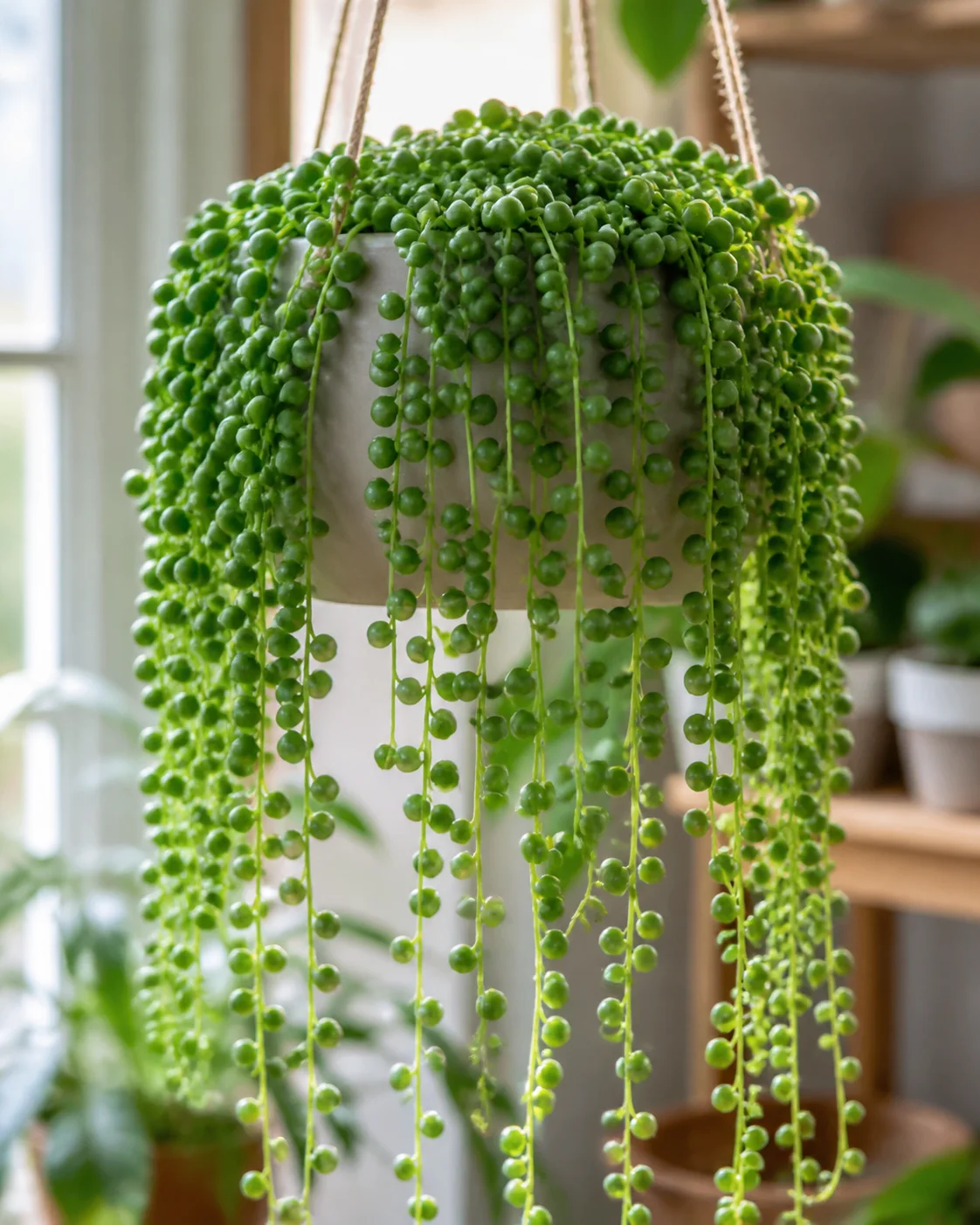
Bead-shaped leaves provide a different trailing display. This is a different genus with its own care and safety…
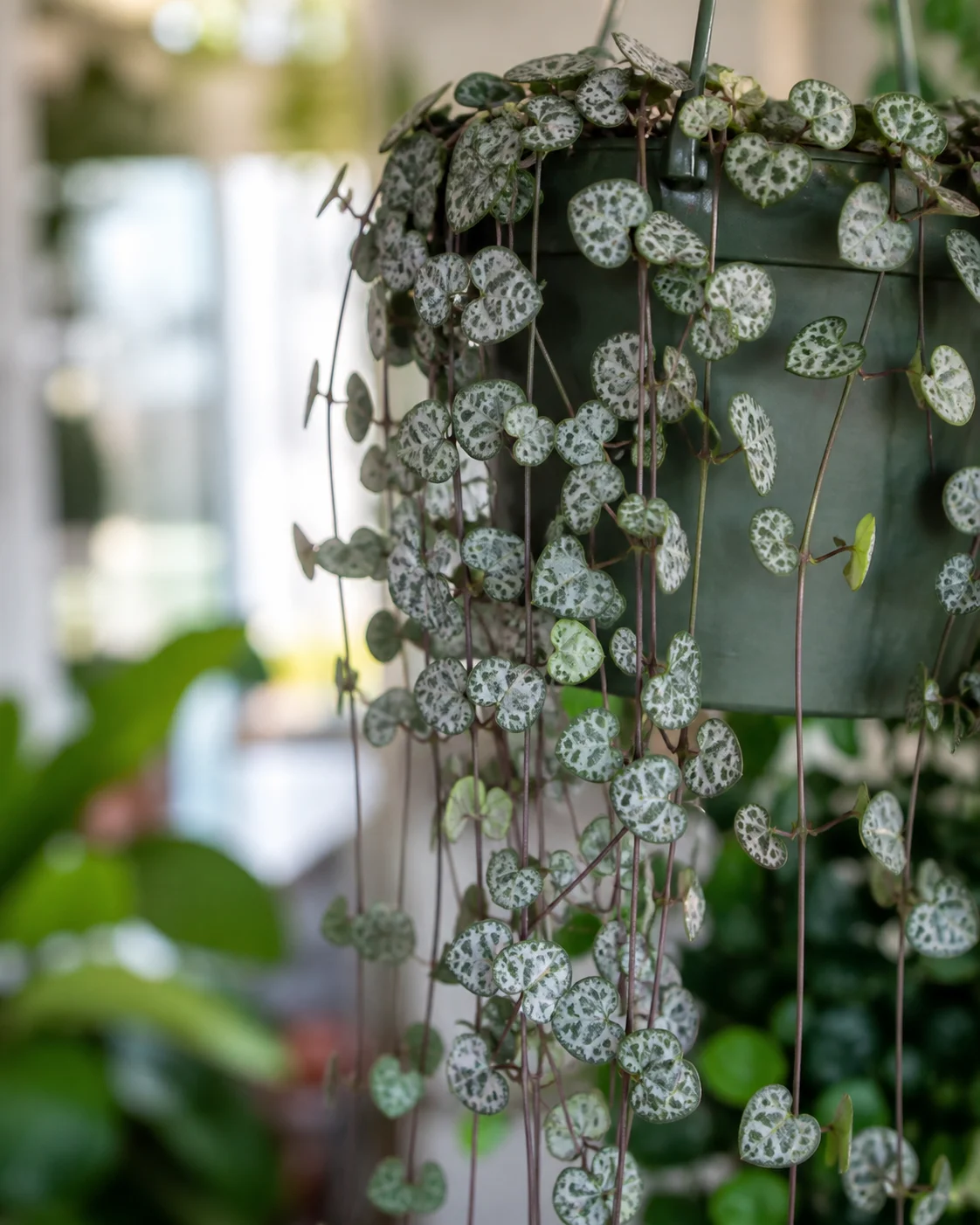
String of Hearts
Heart-shaped leaves grow along slender trailing stems, with separate care and safety evidence.
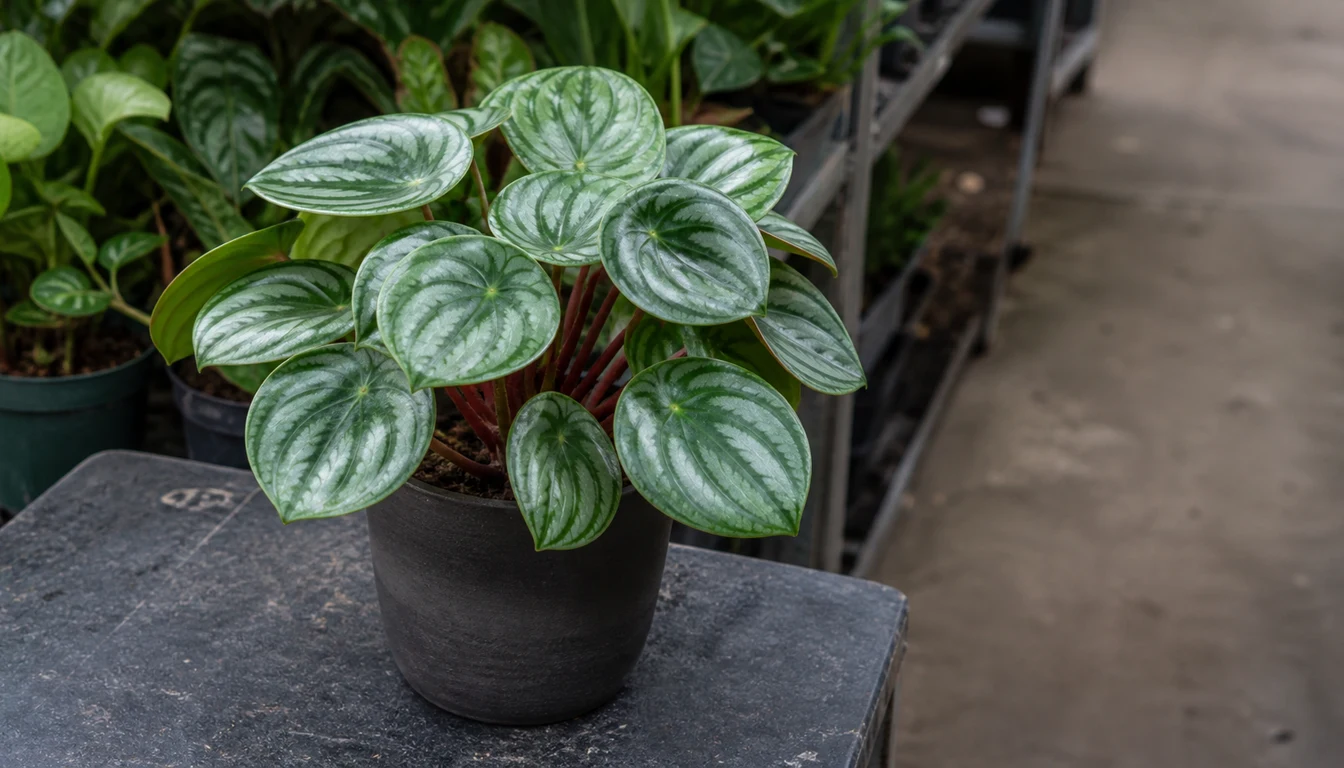
Watermelon Peperomia
Larger striped leaves form a compact rosette rather than hanging vines.
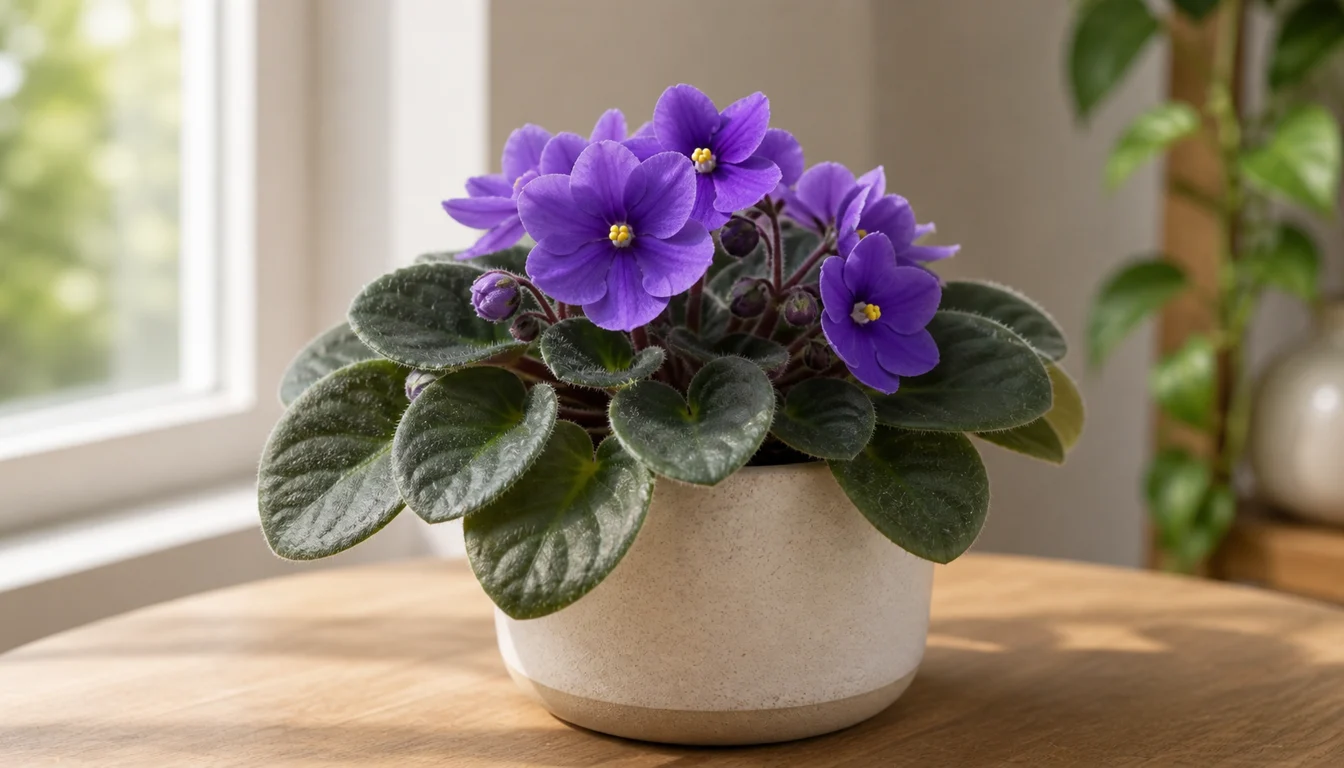
African Violet
African Violet is a windowsill bloomer that rewards steady, small-pot care.
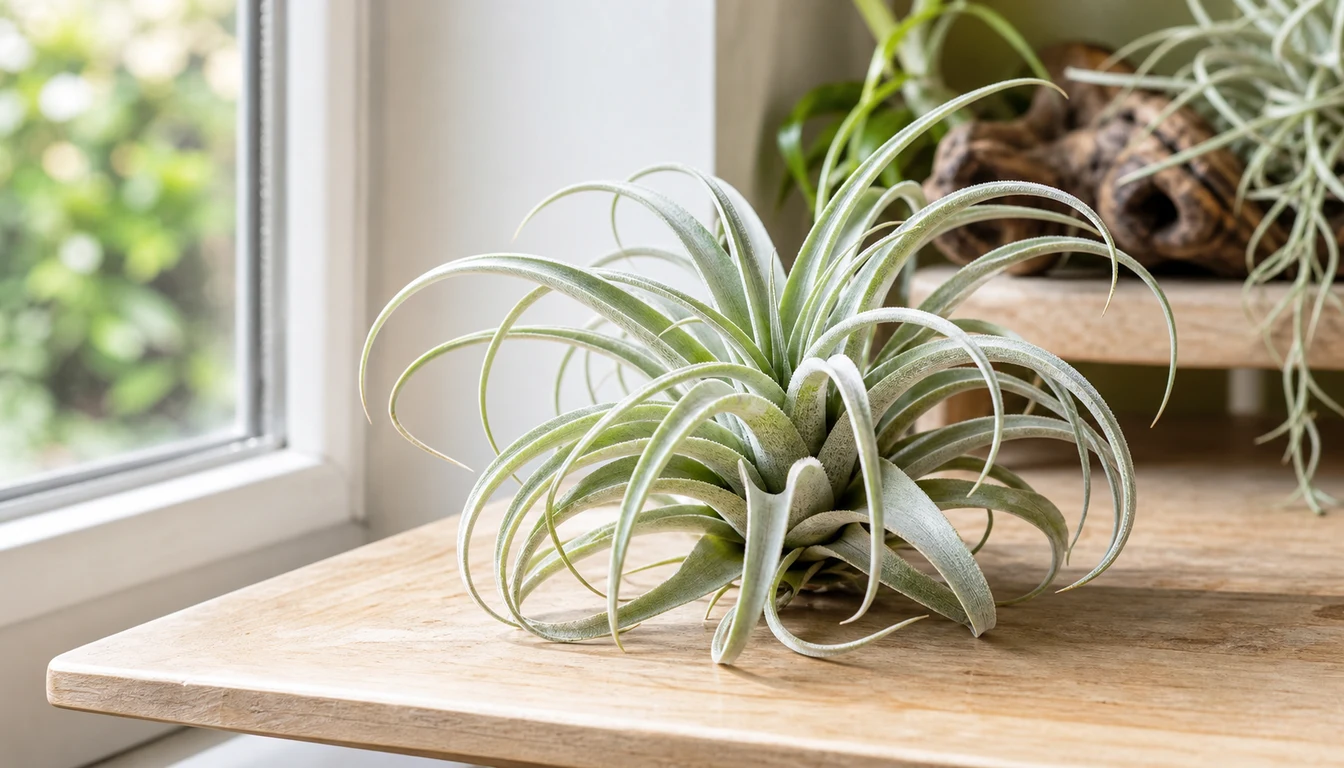
Air Plant
Air plants are living sculptures that thrive without soil, anchoring to driftwood, rocks, or shells while drawing…
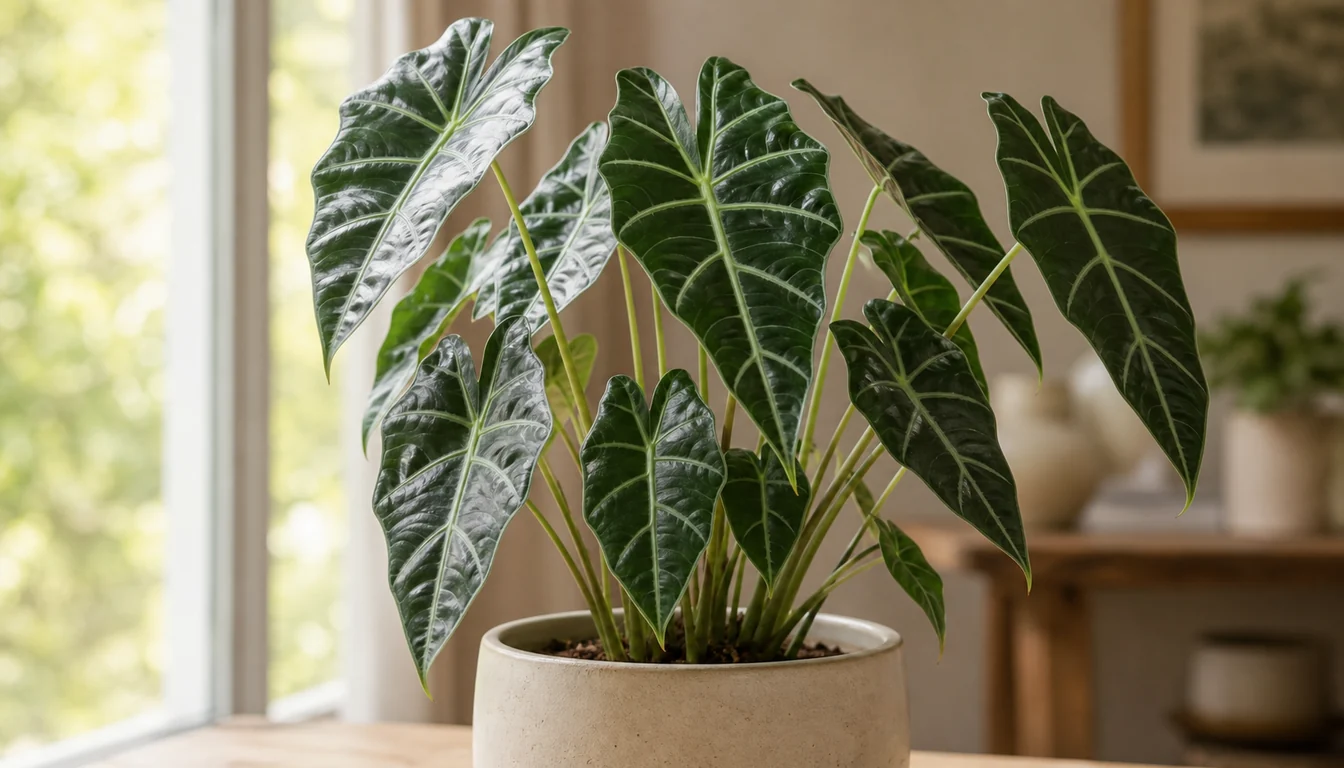
Alocasia
Alocasias include compact, textured houseplants and large elephant ears that need substantial floor space.