
How to Grow Watermelon Peperomia and Keep Its Small Roots Healthy
Peperomia argyraea Piperaceae
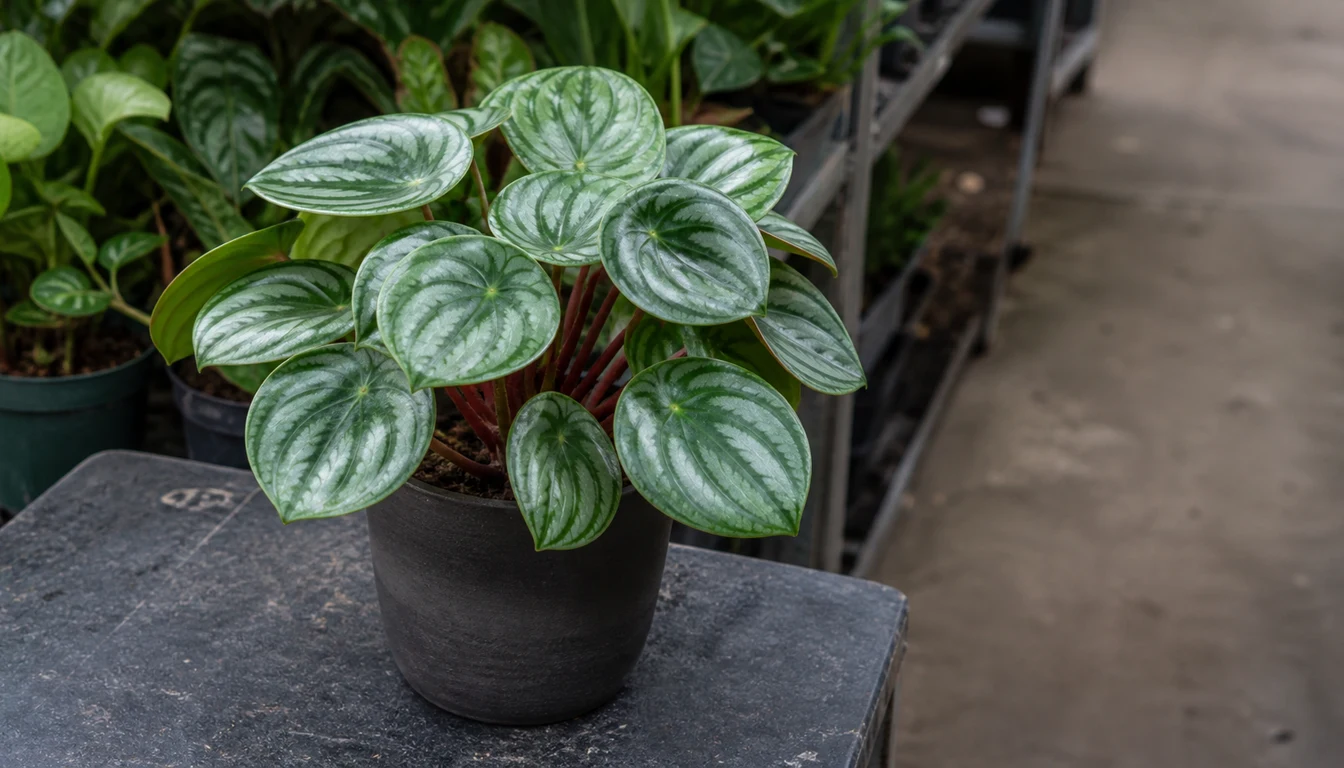
Watermelon Peperomia forms a low rosette of round leaves striped silver and dark green above red petioles. Bright filtered light and a modest pot help the pattern stay clear without leaving its small root system wet.
Care snapshot
The Striped Rosette and Its Red Leaf Stalks
Watermelon Peperomia is a Brazilian tropical perennial in the pepper family. Its low rosette carries round leaves with silver and dark green bands, while red petioles hold the blades above a short central stem. NC State describes an indoor plant about 8 inches tall, so its pattern is easiest to appreciate at close range on a shelf or desk.
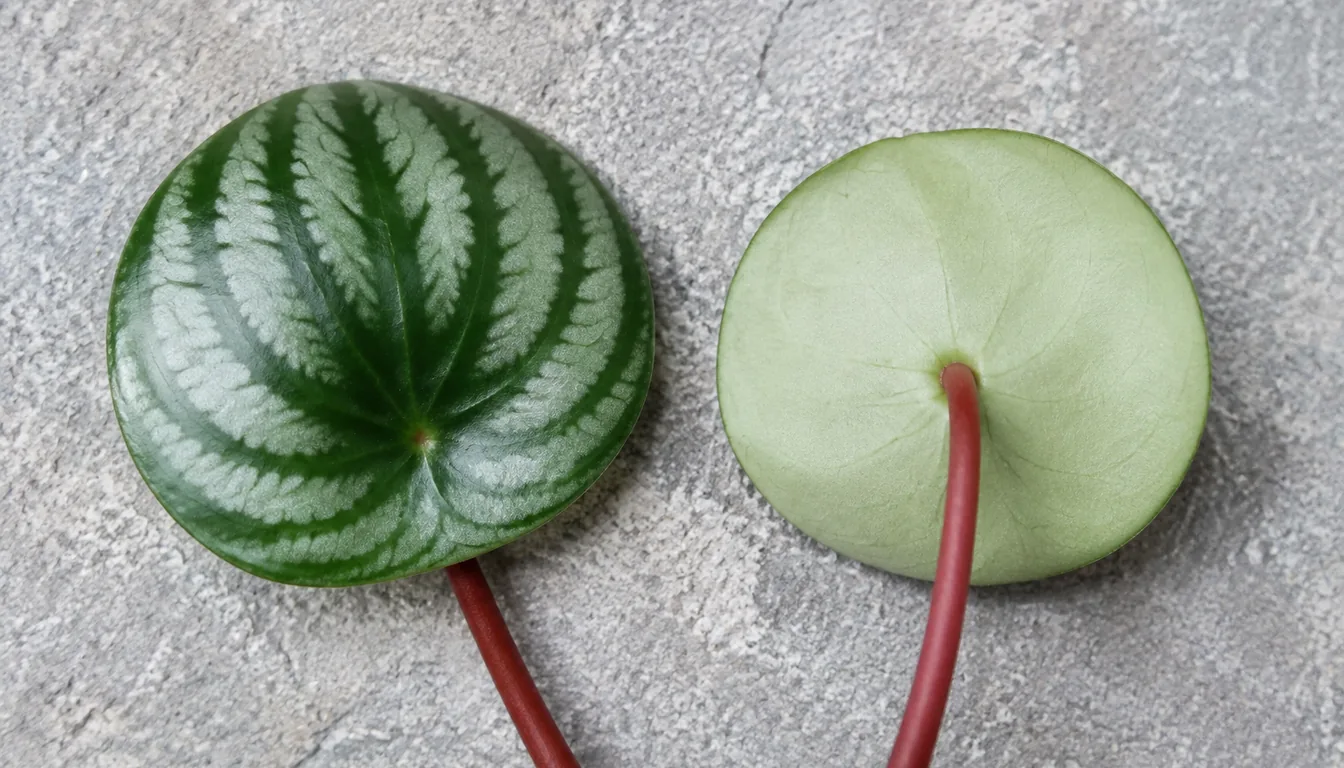
A peltate leaf has its stalk attached inside the underside of the blade rather than at the edge. That attachment distinguishes this plant from many round-leaved houseplants and helps you identify the parts used for a whole-leaf cutting.
The petioles can reach about 5 inches, according to NC State. Their length creates space between the blade and the crown, but an individual tilted stalk is not enough to diagnose poor light or weak roots.
- Leaf blade
- Round, fleshy and striped silver and dark green
- Petiole
- Red leaf stalk attached inside the blade underside
- Crown
- Compact center from which new leaves and their stalks emerge
- Flower spike
- Slender structure carrying tiny flowers above the foliage
At a nursery, a view beneath the lowest leaves is more useful than judging the top alone. A compact canopy can hide standing water, damaged petiole bases or insects at tight joints. Firm foliage and attractive bands are desirable, but they do not certify that the roots are healthy.
The species also appears under the older name Peperomia argyreia. NC State records that synonym, which matters when matching the plant to RHS care information and the ASPCA listing later in this article. A decorative trade name alone does not establish a different cultivar or different care needs.
Bright Light Without a Hot Window Beam
Bright indirect or filtered light suits Watermelon Peperomia. An east-facing window can provide that setting, while a stronger exposure may need a sheer curtain or a position out of the direct beam. The useful question is how much light reaches the whole rosette during the day, because the direction on a window label does not account for trees, buildings or the season.
A plant leaning consistently toward the window may benefit from occasional rotation so light reaches more of the crown. A single leaf can tilt around a neighbor, so that small movement alone does not call for a new position.
Damage concentrated on the window-facing side after a move into direct sun supports an exposure problem more strongly than pale foliage by itself. A filtered position reduces that exposure while you watch whether damage continues. Already scorched tissue will not become an undamaged leaf, so its persistence does not mean the new position has failed.
NC State also notes intolerance of cold temperatures. A bright shelf beside winter glass or an air-conditioning outlet can expose the plant to cold even when the room feels comfortable. Moving it away from that cold surface preserves light without making the roots sit in a chilled, slowly drying pot.
Humidity and wet foliage are different conditions. A humidifier can raise dry room humidity, while repeated misting gives only a short-lived change around the leaves. Water collecting among crowded petioles does not solve a dry-air problem.
Watering a Small Pot Without Drying It Out Completely
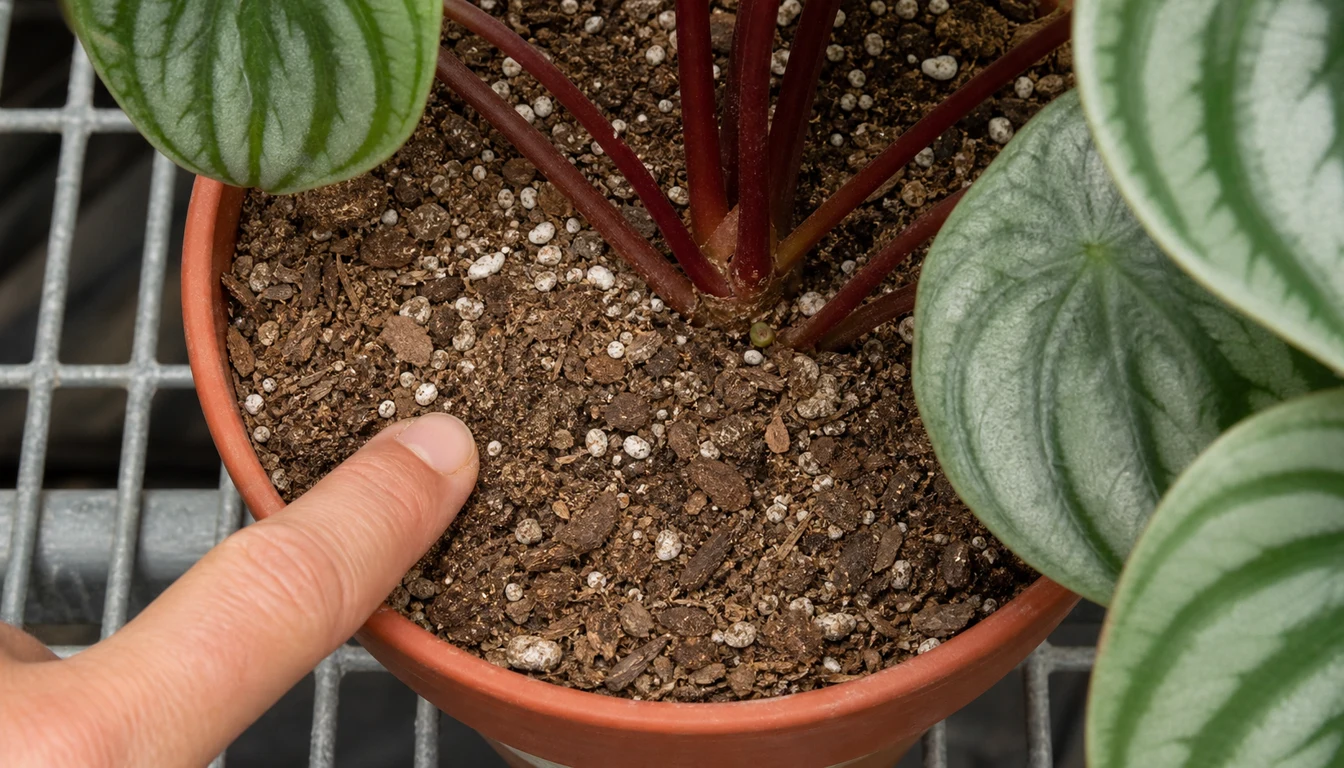
Watermelon Peperomia tolerates neither persistently wet nor very dry soil. NC State recommends allowing the top of the mix to dry between waterings. Surface dryness is a starting point, and the pot becoming lighter helps show that water has also left the container. A fixed one-inch depth is less useful across pots of very different sizes.
Fleshy leaves can remain firm while the lower mix is still wet. Conversely, drooping can occur when dry roots cannot supply water or when damaged roots cannot take it up. Leaf posture alone cannot set the watering day.
- Dry surface and a lighter pot
- Assess whether the root ball has dried enough for watering, without leaving it dry for a prolonged period.
- Dry surface but a heavy pot
- Moisture may remain deeper down. Confirm that the container drains before adding more water.
- Drooping while the mix stays wet
- Look for standing water, recent changes and tissue damage. More water is not a diagnosis or a remedy.
A thorough watering wets the root ball and lets excess water leave through the drainage holes. Emptying the saucer or decorative cover pot prevents the plant from sitting in the runoff. If dry mix has pulled away from the container, water can bypass its center, so a wet saucer does not prove that the root ball received water evenly.
An indoor potting mix needs to retain some moisture while allowing drainage and air around the roots. A modest pot keeps the volume of wet mix in proportion to the plant. A much larger container can stay wet around a small root ball even when the exposed surface looks dry.
Repotting makes sense when roots have crowded the container or the mix no longer wets and drains effectively. Unusually fast drying can be a clue, but a warm position or a change in pot material can also explain it. The next pot only needs enough extra space for growth, with the crown at its previous soil level.
Unglazed clay loses moisture through its walls as well as its surface, while plastic and glazed containers usually retain it longer under similar conditions. Light, heat and active growth also change the interval. RHS recommends less water in winter, but the plant and its actual conditions still determine when another watering is due.
What the Flower Spikes Mean for Feeding
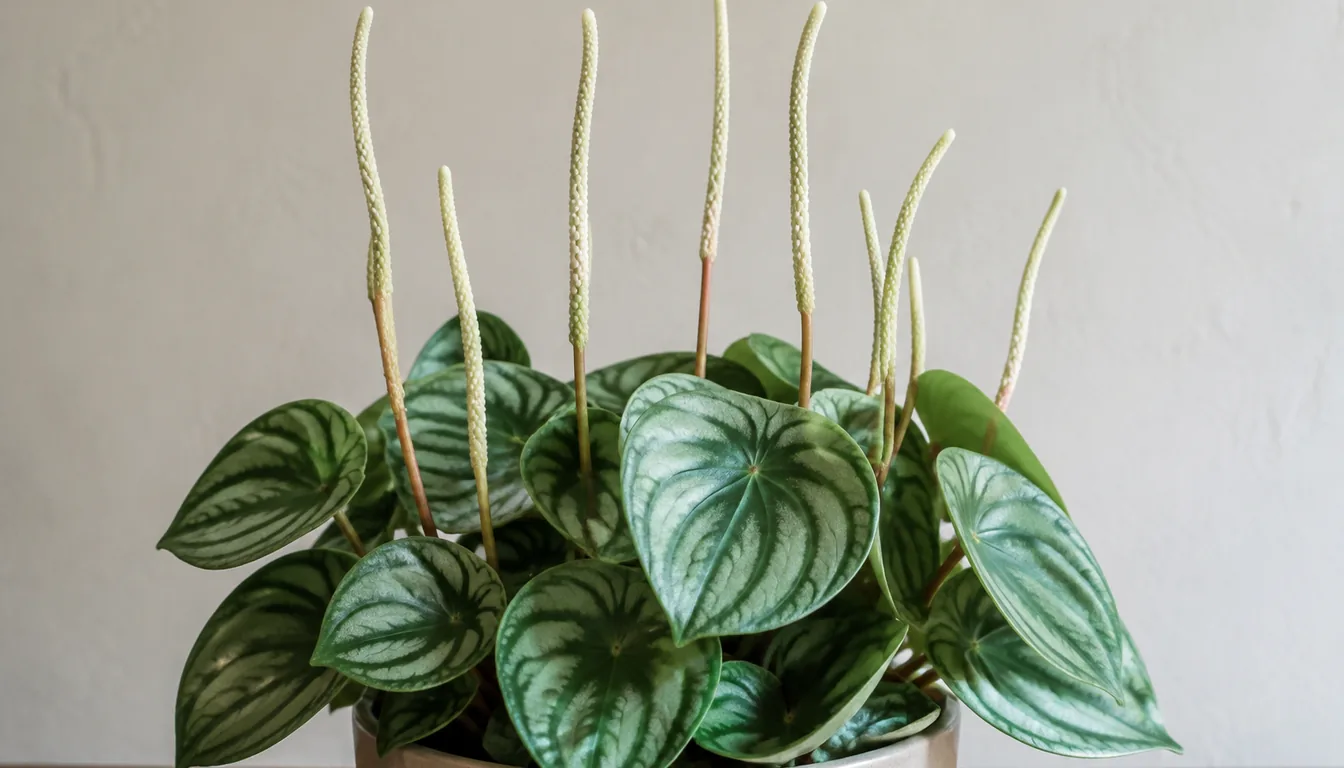
The upright pale spikes are normal inflorescences. NC State describes spikes about 2 to 4 inches long with minute flowers bearing two stamens and no petals. They look very different from the conspicuous blooms of many flowering houseplants, but they are not pests or diseased leaves.
Flowering by itself does not show a nutrient shortage. Fertilizer supplies minerals, but it cannot replace light or restore roots damaged by prolonged wetness. A plant making smaller leaves or declining after watering needs those conditions assessed before feeding becomes the assumed solution.
A balanced houseplant fertilizer used according to its label suits active growth. RHS describes monthly feeding in spring and summer for peperomias, with reduced feeding as growth slows. That seasonal advice needs to follow the conditions in your home rather than a calendar date alone.
The spikes can remain as part of the display or be removed with clean scissors if you prefer the foliage. Their removal is a cosmetic choice. A fresh potting mix may already contain fertilizer, so its label also matters before another feed is added.
Leaf Cuttings and Rooted Divisions
Watermelon Peperomia can be propagated by leaf cuttings or division. A division starts with an existing rooted part, while a leaf cutting must develop new growth. That difference explains why dividing an established cluster gives a more developed starting plant, without promising a fixed rooting time for either method.
For a whole-leaf cutting, the red petiole supplies the part that enters the propagation mix while the blade remains above it. The following steps describe that whole-leaf method.
- Select a mature leaf without visible pests, soft tissue or extensive damage. Cut its petiole with a clean tool.
- Insert enough of the petiole into a small container of moist, well-drained propagation mix to hold the cutting steady. Keep the blade above the mix.
- Place the cutting in warm, filtered light. Keep the mix moist without leaving the container standing in water.
- Allow plantlets to develop their own roots before separating them. Keep any roots attached when moving a young plant into its own small pot.
A small container makes it easier to moisten the rooting area without surrounding the cutting with a large volume of wet mix. The original leaf may remain unchanged while new growth develops, so the absence of a new blade immediately after planting is not a failure test.
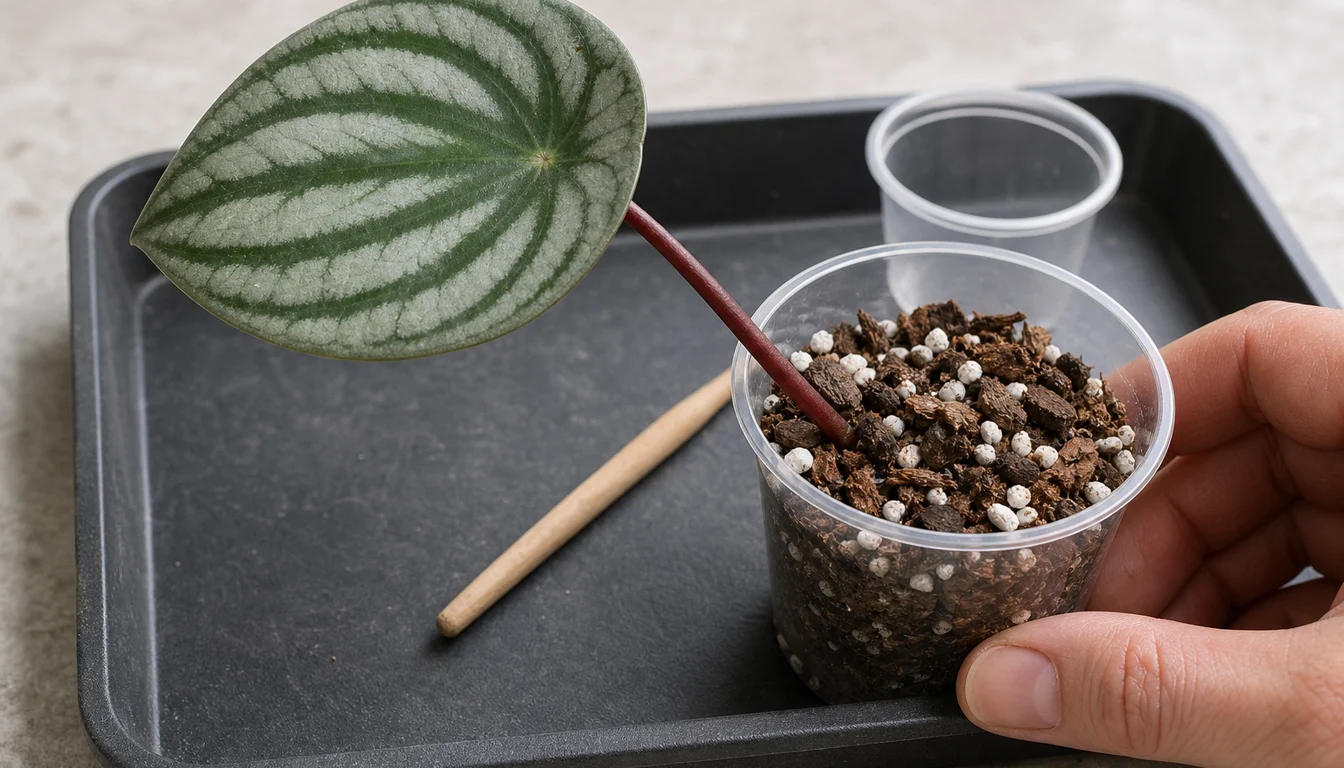
A clear propagation cover can reduce moisture loss, but direct sun can overheat an enclosed container. Wet foliage and collapsing tissue call for an assessment of moisture and ventilation rather than leaving a sealed cover in place regardless of conditions.
Division is appropriate when a clump contains separable portions with roots. Pulling individual petioles from an undivided crown is not the same operation. A rooted section needs its roots and growing point intact, and neither a leaf cutting nor a division is guaranteed to be free of disease just because it looks firm.
Drooping or Dark Petioles Need More Than One Clue
A drooping rosette describes the loss of support in leaves or petioles, not its cause. Pot moisture, the timing of a move or watering, and the location of damage help narrow the possibilities. The least disruptive first observations are the pot weight, drainage, visible tissue and leaf undersides.
Whole rosette droops
- Compare surface moisture and pot weight
- Check for standing runoff
- Note when the change began
Dark or soft petiole base
- Look for damage at the crown
- Note whether nearby tissue is affected
- Seek help if collapse continues
Pale exposed patch
- Compare shaded and exposed leaves
- Review recent sun or cold exposure
- Watch whether new damage appears
Sticky joints or stippling
- Inspect leaf undersides and stalks
- Look for actual insects or mites
- Identify the pest before treatment
If the mix is dry through the root ball, thorough watering may relieve water shortage. The same droop in persistently wet mix calls for a different response. Removing standing water and checking drainage comes before another watering, and continued decline may justify gently examining the roots or contacting a local Extension service.
Dark, soft tissue is concerning, but it does not identify a pathogen. Injury and decay need to be distinguished in context, especially when damage is spreading or the crown is collapsing. Repeatedly cutting into the crown to search for a diagnosis can damage the remaining plant.
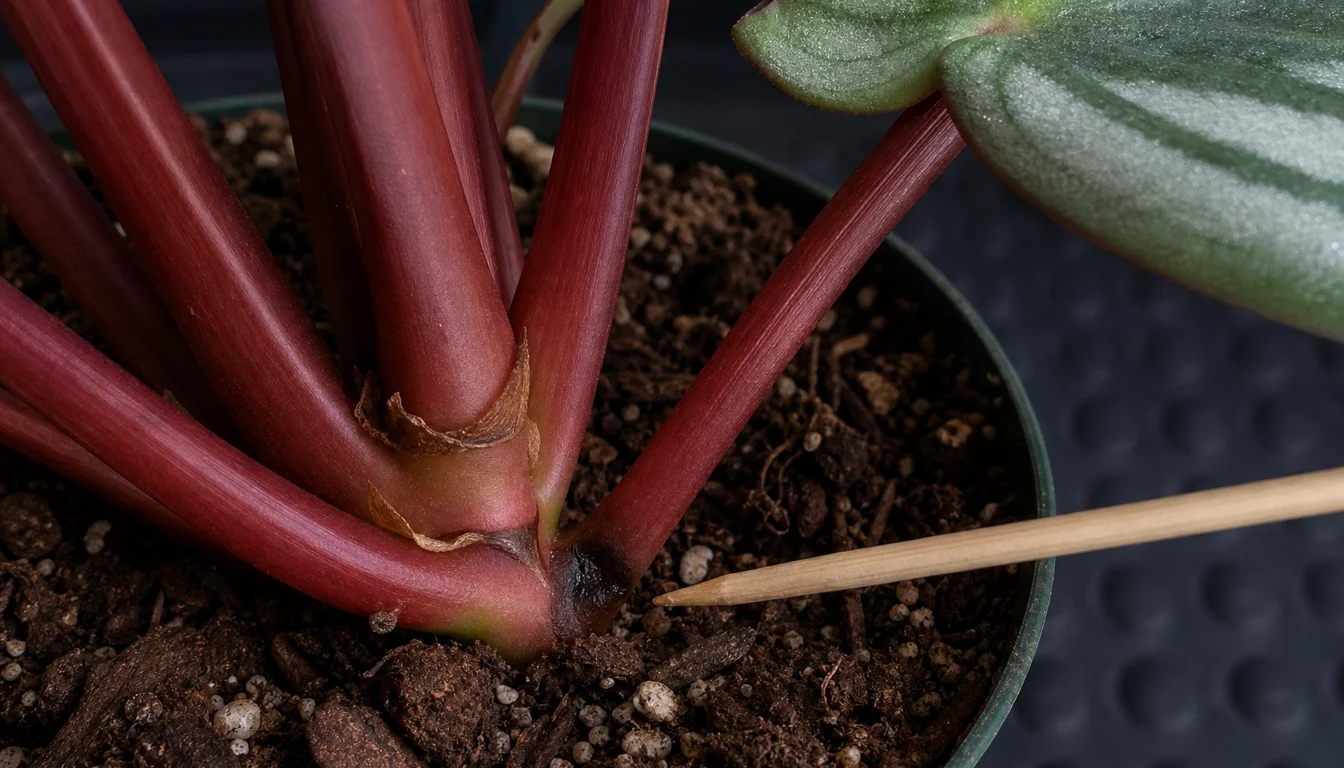
A leaf that looks firm is not automatically clean propagation material from a declining plant. When the cause is unknown, keeping it separate from healthy plants and obtaining help with identification is more useful than assuming that saving a leaf has removed the problem.
Dry margins can have several causes, including water stress, excess fertilizer salts or damaging exposure. Maryland Extension emphasizes combining symptoms with growing conditions. Brown edges alone do not justify flushing a pot that is already waterlogged or applying pesticide.
Mealybugs, scale and spider mites are among the pests reported on peperomias. Cottony material, attached bumps or fine stippling give inspection targets, but actual insects or mites provide stronger evidence than a leaf symptom alone. Treatment needs to match the identified pest and the product label.
After a correction, the useful observations are whether damage continues and whether new growth develops normally. Old injured areas may remain visible. One new leaf does not prove that a pest infestation is gone or that every root has recovered.
Pet Safety and the Limits of Outdoor Growing
ASPCA lists Watermelon Peperomia as non-toxic to dogs and cats under the name Peperomia argyreia. NC State records that name as a synonym of Peperomia argyraea, so the listing can be matched to this species. The record does not list horses.
Placement still matters because a paw can snap a petiole or overturn a small pot. A stable shelf beyond routine chewing protects both the animal and the rosette without turning a non-toxic listing into a promise that ingestion will cause no problem.
NC State lists outdoor hardiness in Zones 10a through 12b. That describes an outdoor climate range, not the temperature of an indoor shelf, a humidity target or a safe date for moving the pot outside. This tropical plant remains sensitive to cold.
A sheltered outdoor position in warm weather needs gradual adjustment to brighter light, with protection from harsh direct sun and standing rainwater. A pot that dried predictably indoors may behave differently in wind, warmth or prolonged cloudy weather, so its moisture needs to be checked in the new setting.
Before a return indoors, inspecting the leaf undersides and crowded crown can reveal pests that would otherwise travel with it. The local forecast and the plant’s exposure matter more than assuming that every garden in the same hardiness zone has a safe night temperature.
Sources & References
- Peperomia argyraea - NC State Extension Plant Toolbox
- Peperomia argyreia - RHS
- Watermelon Peperomia - ASPCA
- Peperomia (Peperomia spp.) Indoor Plant Care and Growing Guide, Clemson Cooperative Extension
- How to grow peperomia - Royal Horticultural Society
- Purdue Extension - Indoor Plant Care
- University of Maryland Extension - Diagnose Indoor Plant Problems
Related Plants
Peperomia
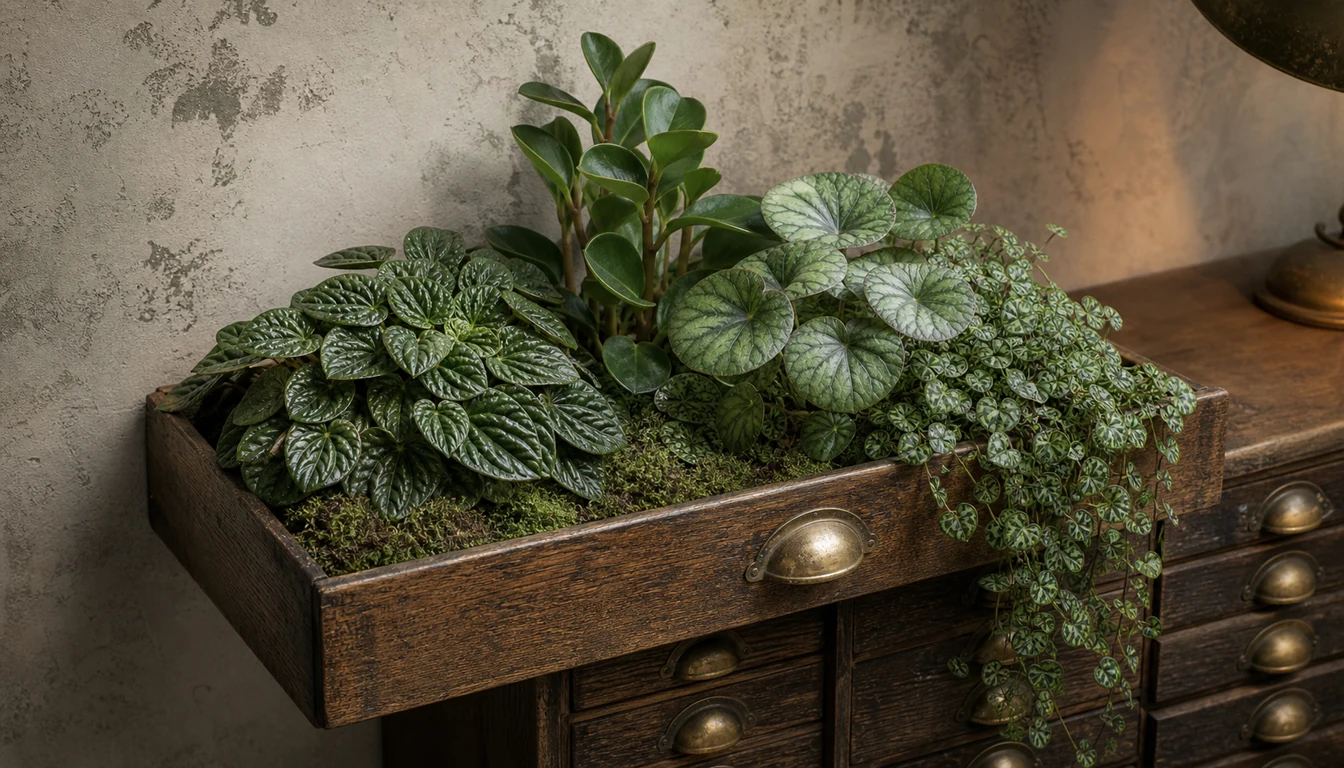
Compare leaf shapes and growth habits across the wider Peperomia group.
Baby Rubber Plant
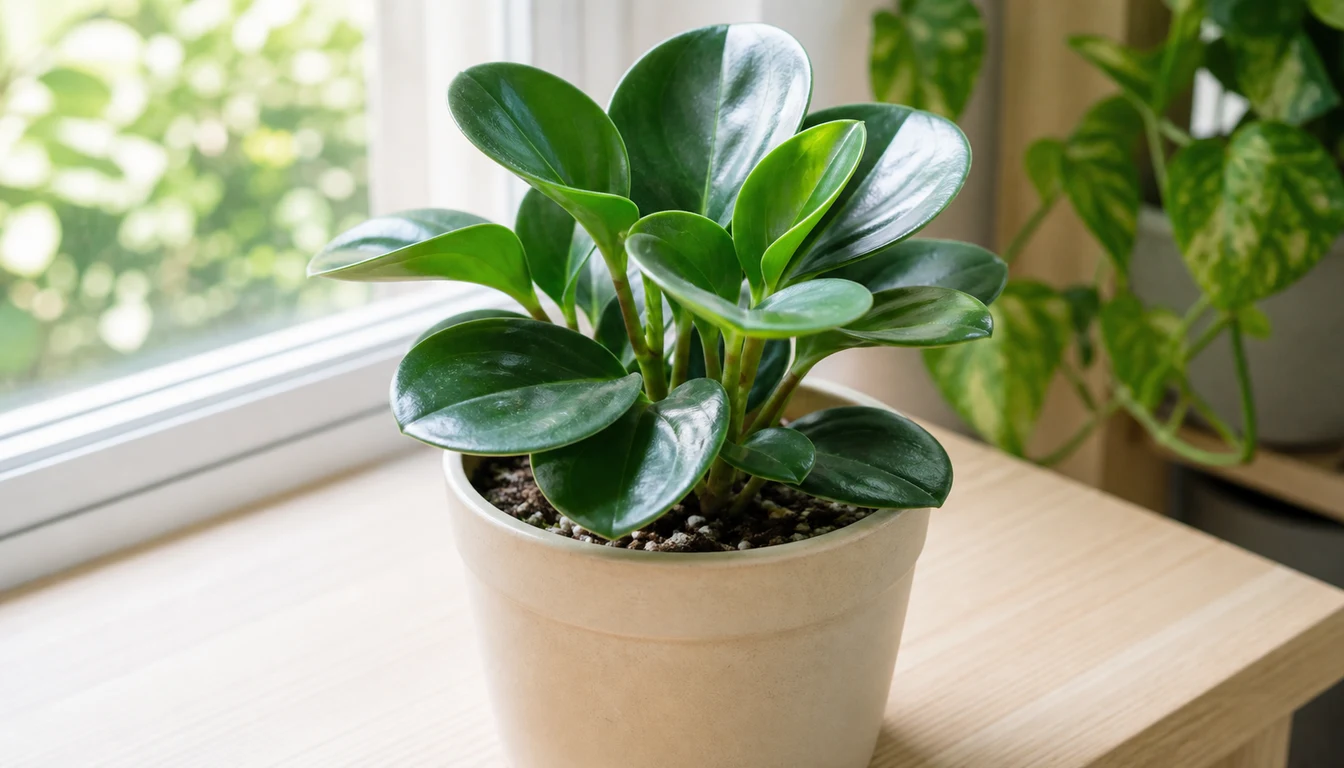
Glossy oval leaves grow on branching stems instead of a low striped rosette.
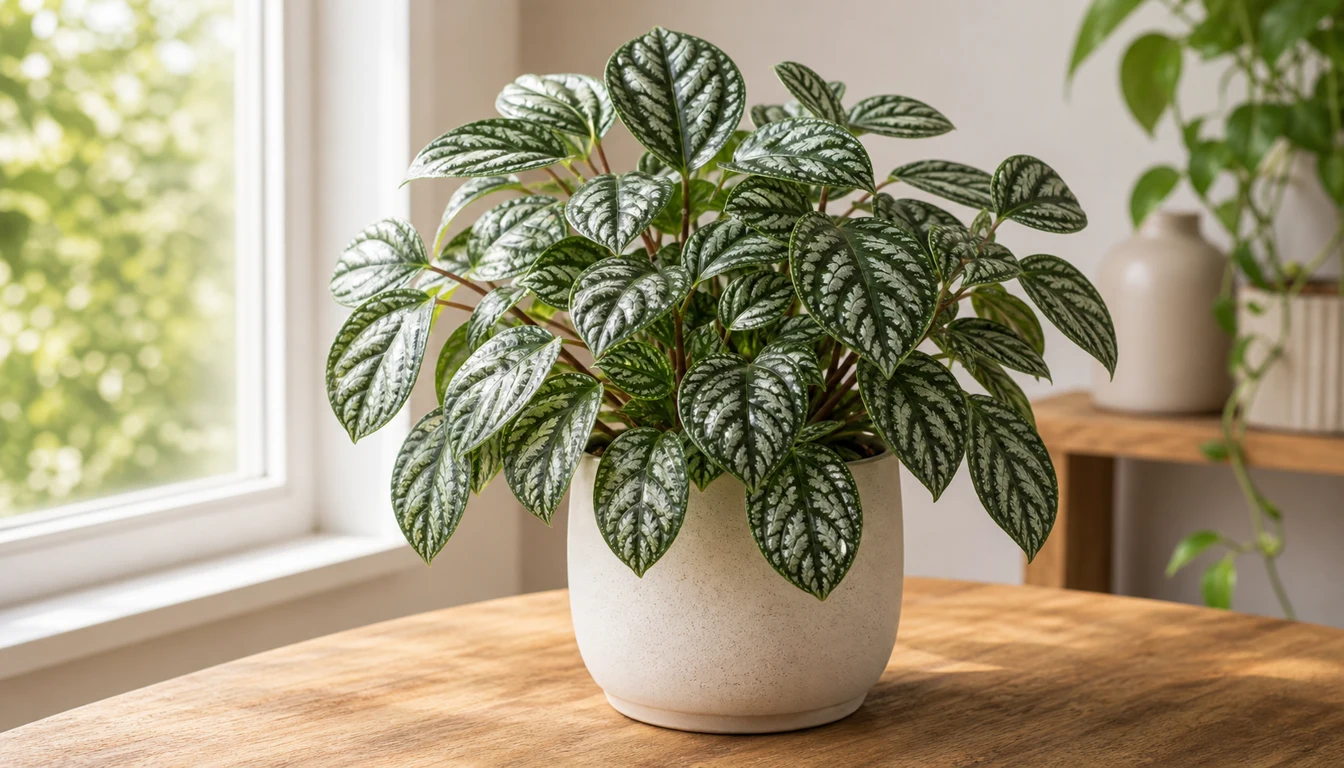
Pilea Cadierei
Silver patches appear on branching stems instead of round leaves rising from a low crown.
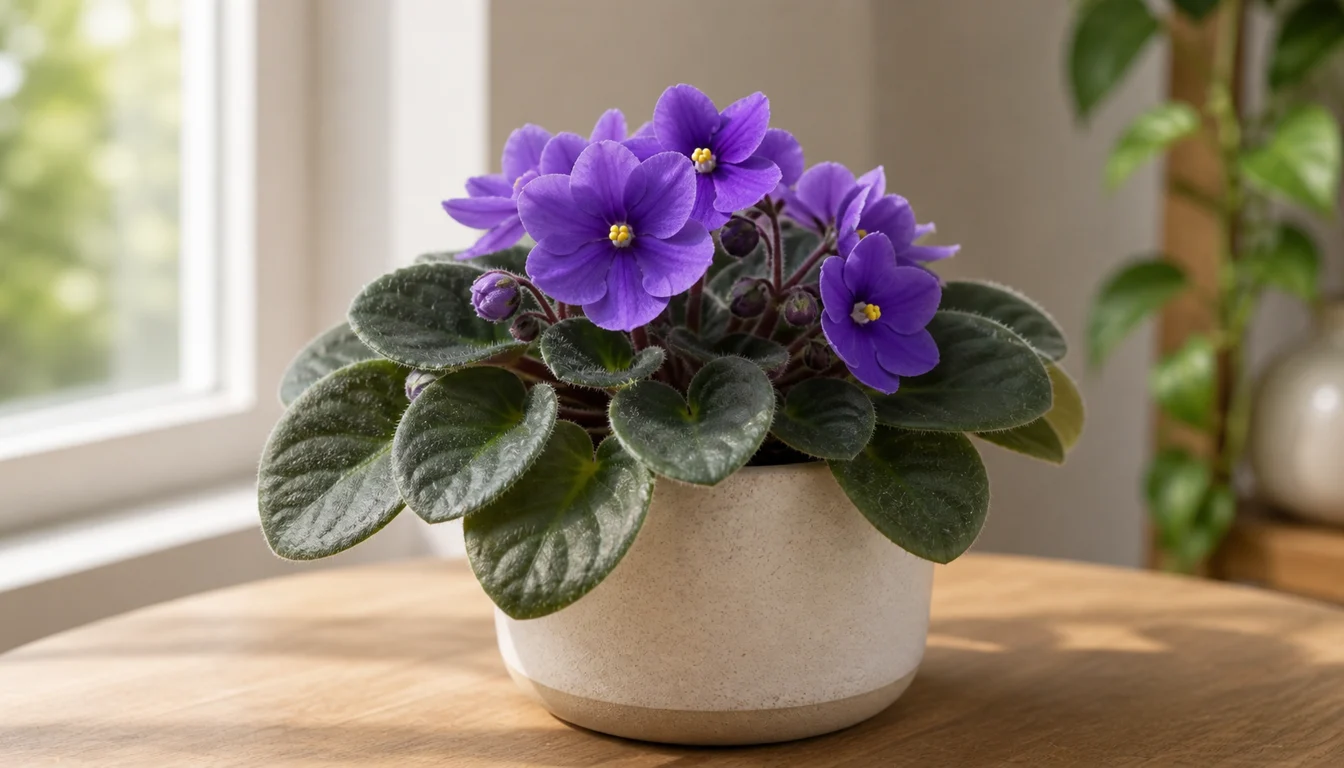
African Violet
African Violet is a windowsill bloomer that rewards steady, small-pot care.
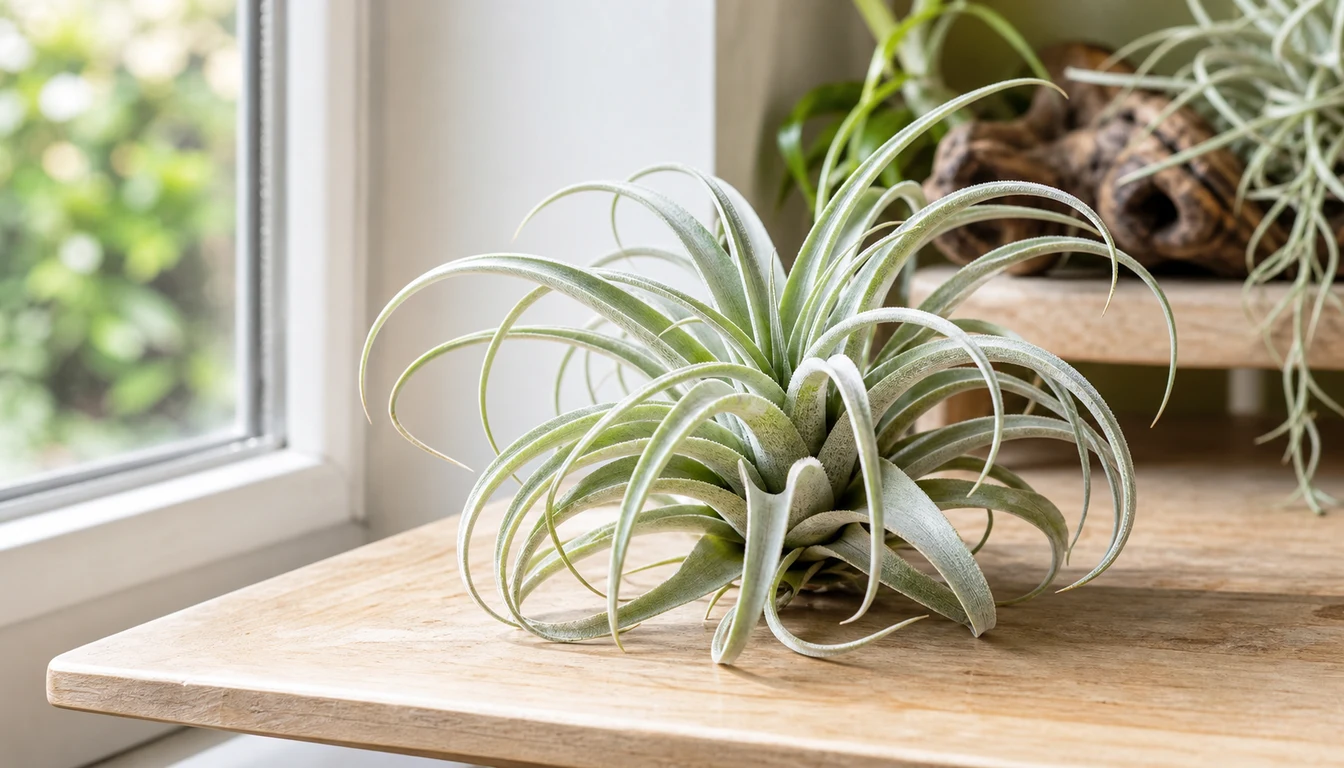
Air Plant
Air plants are living sculptures that thrive without soil, anchoring to driftwood, rocks, or shells while drawing…
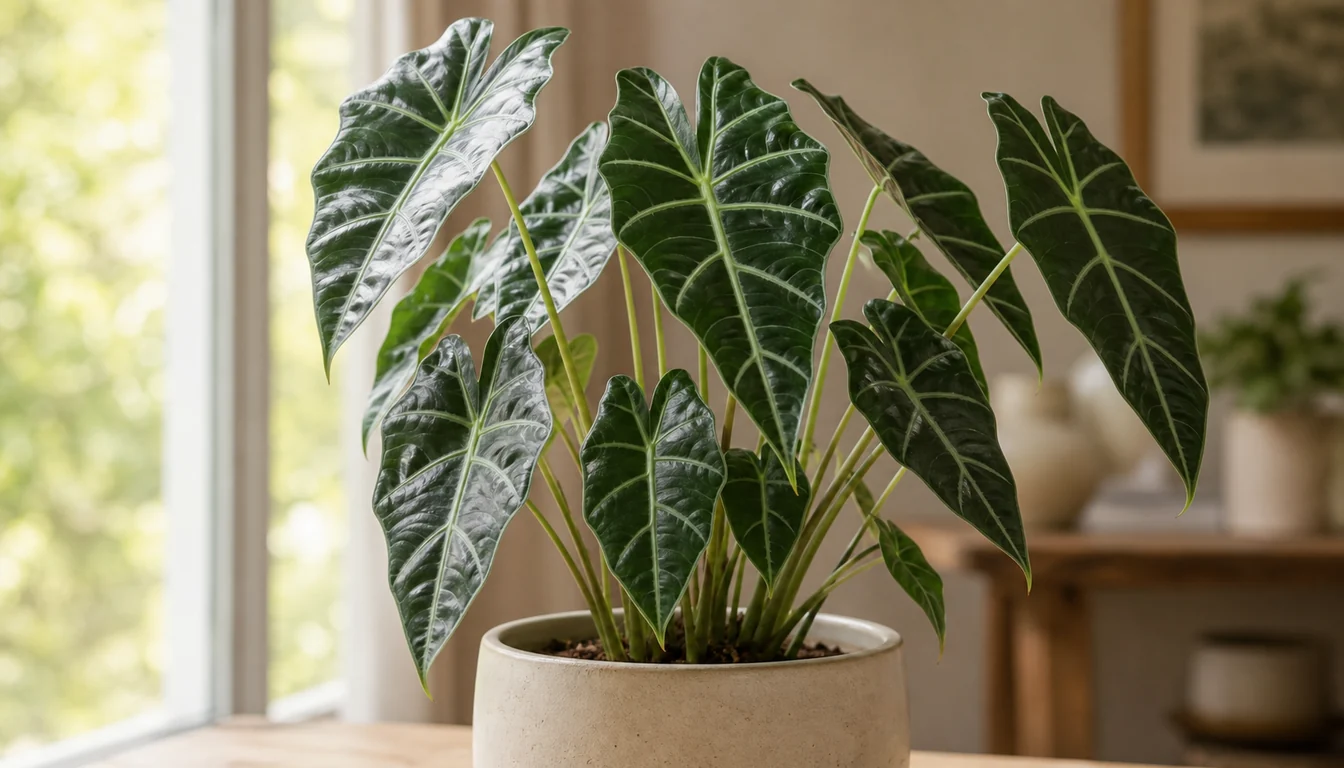
Alocasia
Alocasias include compact, textured houseplants and large elephant ears that need substantial floor space.