
How to Grow Rex Begonias Without Losing Their Painted Leaves
Begonia rex-cultorum Group Begoniaceae
Rex Begonias are rhizomatous foliage plants grown for asymmetric leaves patterned in silver, green, pink, burgundy, and red. Their best care protects the surface rhizome while balancing filtered light, root moisture, humidity, and airflow.
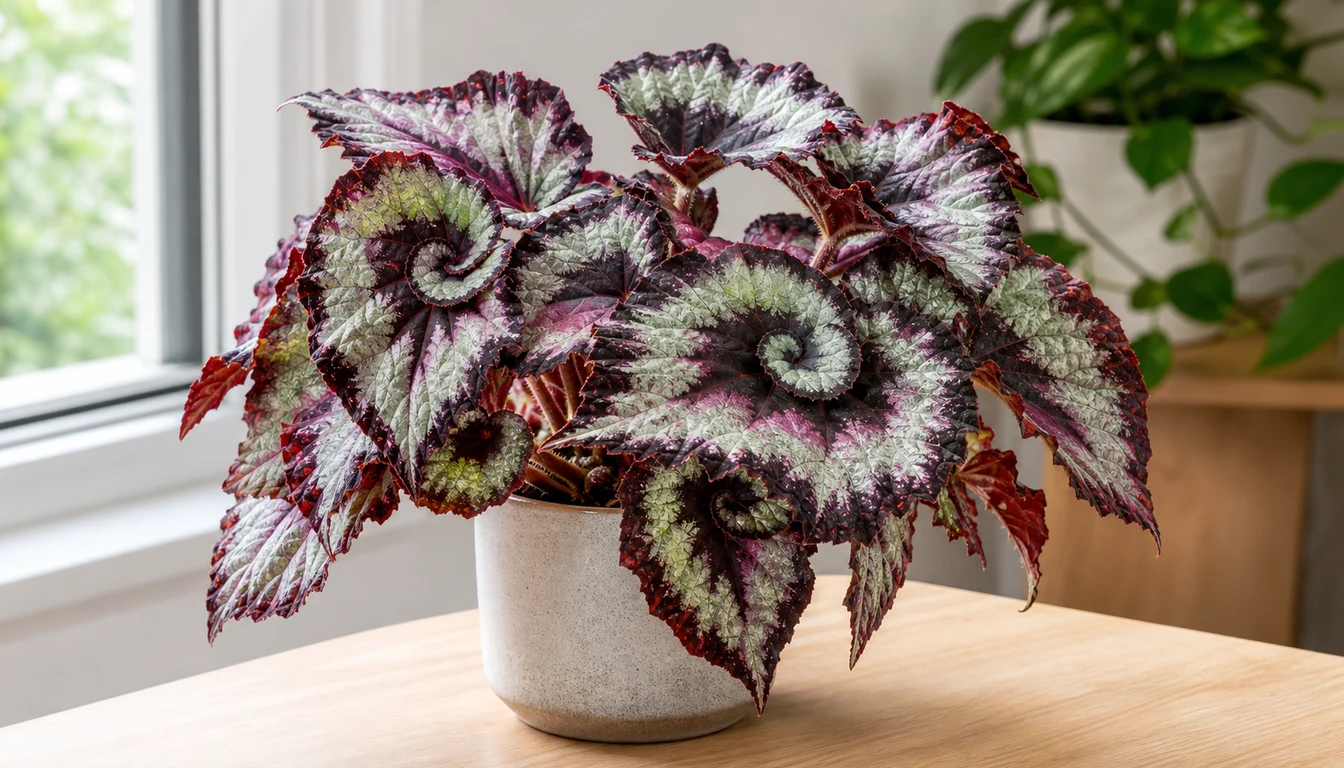
Care snapshot
Know the Rhizome Beneath the Painted Leaves
Most plants sold as Rex Begonia are hybrids in the Begonia rex-cultorum Group. The wild Begonia rex is one ancestor, while breeding with other begonias produced the huge range of spirals, metallic bands, ruffles, and dark margins now sold under cultivar names.
The shared structure matters more than the label.
A thick rhizome travels across the potting surface and sends leaves upward on individual petioles. It is not an upright cane, a bulb, or a buried crown.
Protecting that horizontal stem explains the shallow pot, porous mix, careful watering, and unusual leaf-propagation methods that suit this plant.
The ASPCA lists Begonia species as toxic to cats and dogs and identifies the underground parts as the most toxic. Keep the plant and loose rhizome pieces away from pets.
Contact a veterinarian or animal poison service promptly when an animal chews the plant and develops vomiting or salivation.
- Rex Begonia
- Horizontal rhizome with a mound of patterned foliage
- Cane Begonia
- Upright jointed canes with leaves along the stems
- Wax Begonia
- Compact bedding form usually grown for repeated flowers
- Care Consequence
- Keep the Rex rhizome near the surface and out of persistent wetness
Use New Leaf Color to Set the Light
Judge the light from the next leaves, not from permanent marks on old ones. Bright filtered light supports strong contrast and a dense mound.
Weak light produces smaller, duller new leaves and longer petioles as the plant reaches toward the source. Hot direct sun causes a different pattern.
Bleached or dry patches develop on the exposed side of the blade, and a scorched area will not recolor.
Reduce the hottest exposure with a sheer curtain or a gradual move, then watch whether undamaged new leaves open with clear color and firm edges. Light arriving from one direction can pull the mound off center.
Rotate the pot a small amount after a new leaf has oriented rather than moving it between radically different sites.
Stable filtered light makes the plant easier to read than repeated large changes.
Water the Roots Without Softening the Rhizome
Water when the surface of the mix is approaching dry and the pot has lost much of its just-watered weight.
Do not wait for the entire root ball to become hard and dusty, but do not add water because a fixed number of days has passed.
A warm bright plant and a cool resting plant use moisture at different rates.
Apply water to the mix around the root zone and let the excess leave through the drainage hole.
Avoid leaving water pooled against the horizontal rhizome or trapped in the leaf bases. Bottom watering can be useful, but it is a technique rather than a requirement.
Remove the pot after the root zone has wicked moisture and let it drain.
A dry Rex Begonia may droop and develop crisp margins while the rhizome remains firm.
A rotting plant often has wet mix, yellowing or collapsing petioles, and a rhizome that feels soft or dark.
Check that stem before assuming every wilt needs another drink.
When rot is limited, a clean firm rhizome section with a viable bud can recover.
Let cut surfaces dry briefly before setting the piece against an airy medium. Keep it lightly moist while new roots form instead of recreating the saturated condition that caused the loss.
Raise Humidity Without Trapping Wet Air
Rex Begonia leaves lose moisture quickly in dry heated air, but wetting the foliage is not the same as raising room humidity.
A humidifier can slow edge drying without coating the thin blades.
Misting creates short-lived surface water and can leave spots while changing the surrounding air very little.
Humidity becomes dangerous when air sits still around wet leaves and decaying debris.
Rex begonias are susceptible to powdery mildew and botrytis.
Give the plant space from its neighbors, remove fallen tissue, and maintain gentle room air exchange without placing it in a cold or drying draft. An enclosed cabinet can work when it has ventilation and the leaves remain dry.
Open the enclosure or use a small circulation fan when condensation persists.
The goal is stable humid air, not a sealed wet chamber. Read the damage before changing the setup.
Dry margins with firm tissue fit low humidity or a root ball that became too dry. White powder suggests mildew.
Gray fuzzy growth or soft wet lesions call for isolation, removal of affected tissue, and better drying around the foliage.
- Crisp Margin
- Check room dryness, root moisture, and hot light before increasing humidity.
- White Powder
- Isolate the plant, remove affected tissue, and improve air movement.
- Gray Fuzzy Growth
- Remove decaying material and keep leaves dry while improving circulation.
- Wet Expanding Spot
- Isolate, avoid splashing, and remove badly affected leaves with clean tools.
Use a Shallow Pot That Follows the Rhizome
A wide shallow pot fits a Rex Begonia better than a deep container filled with unused wet mix.
Let the horizontal rhizome sit at or just above the surface while roots enter the mix below.
Burying the whole stem removes air from tissue that is prone to rot.
Use a porous mix that absorbs water evenly and regains air after draining.
Fine indoor potting mix may need coarse perlite or bark to prevent collapse. The useful result matters more than one recipe.
Water should pass through the container while the mix retains enough moisture that thin leaves do not wilt the next day.
Repot when the rhizome has crossed the pot, roots and mix no longer wet evenly, or an old bare section needs renewal.
A slightly wider pot may suit horizontal growth.
Extra depth does not help.
A bare firm rhizome can also be shortened, divided, and rooted instead of moving the entire plant into a much larger container.
- The pot is wider than it is unnecessarily deep.
- An open drainage hole clears excess water.
- The rhizome remains visible at the surface. The mix stays airy after repeated watering.
- The new container closely follows the live root and rhizome spread.
Turn One Veined Leaf Into New Plantlets
Use rhizome division when you want a faster established clone.
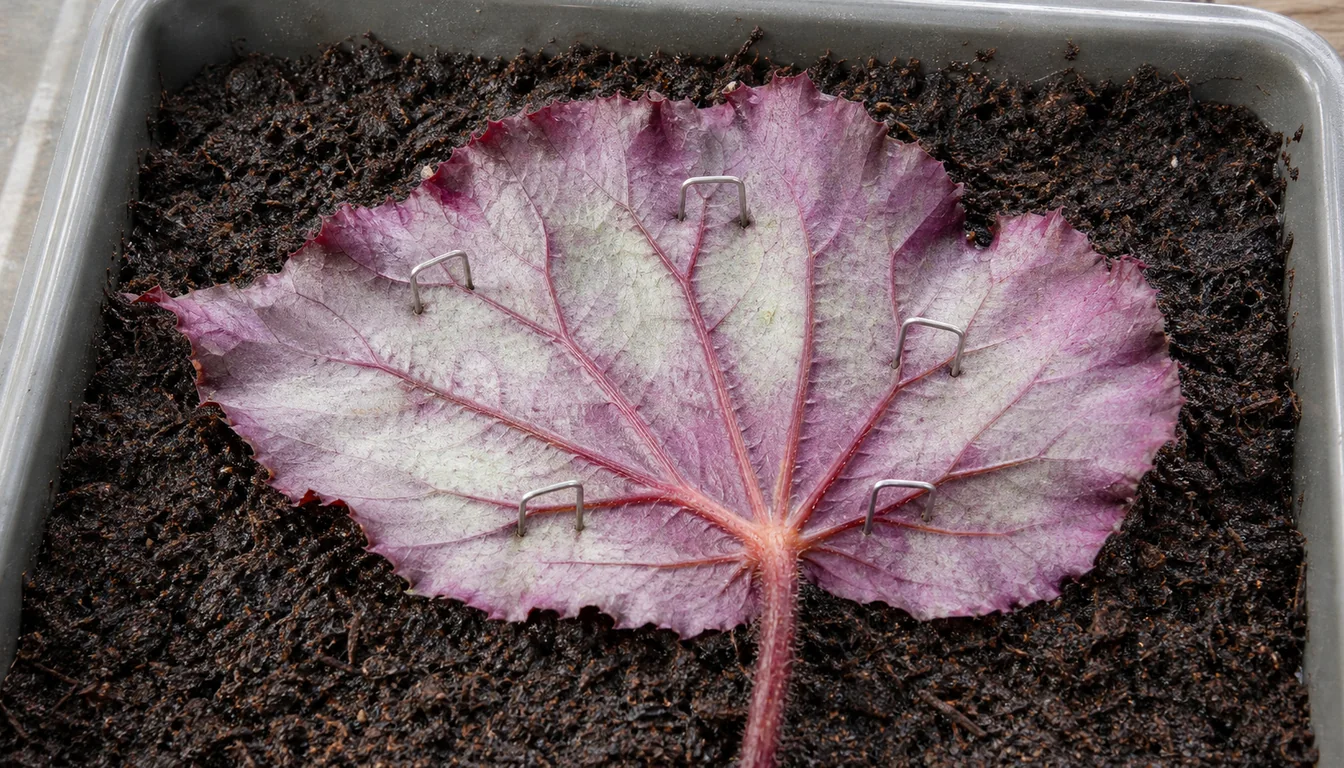
Use leaf propagation when one healthy blade should produce several plantlets. Both methods suit the Rex growth form, while a cane-style stem cutting is not the only route available.
Choose a mature undamaged leaf and trace the strongest veins from the petiole toward the margin.
New plantlets can form where cut vein tissue stays in contact with a clean, airy medium.
Every piece needs part of a main vein.
Decorative blade tissue without that connection is a poor candidate.
- Cut a clean leaf into sections that each retain a main vein, or score major veins on the underside of a whole leaf. Set the cut vein surfaces firmly against lightly moist propagation mix.
- Hold the leaf flat without burying the entire blade. Cover loosely to slow moisture loss while preserving regular air exchange.
- Separate plantlets only after each has roots and enough leaves to support the move.
A clear cover reduces moisture loss from a leaf that has no roots, but heavy condensation and stale air encourage decay. Vent the cover and remove any piece that turns soft.
Bright filtered light supports growth without heating the enclosed leaf.
Separate each plantlet after it has formed roots and two or three leaves of its own, not as soon as the first tiny leaf appears.
For division, cut the rhizome only through firm tissue and keep a viable growth point with each piece.
Lay each section against fresh mix at the same shallow depth as the parent.
New leaf growth is the sign that the piece has re-established, not a preset number of weeks.
Decide Whether a Damaged Rex Begonia Can Recover
Begin with the rhizome.
A firm stem with a viable bud can survive the loss of old leaves.
A soft stem that remains discolored after cutting cannot. This check prevents both discarding a resting plant and trying to revive rotten tissue with more water or fertilizer.
Some Rex cultivars slow sharply or shed foliage when winter light drops. Keep a firm resting rhizome lightly moist rather than feeding it for growth it cannot support.
Resume normal watering only as new leaves and stronger light increase water use.
Pests need visible evidence.
Mealybugs leave waxy material near petioles and the rhizome.
Mites can create stippling and fine webbing.
Isolate the plant, confirm the organism, and choose a treatment that can reach the leaf undersides without leaving the foliage wet for long periods.
When the base is failing but a leaf or rhizome tip remains firm, propagate the clean material away from the old mix. Recovery means preserving viable tissue and correcting the moisture or airflow problem.
Keeping every damaged leaf is not the goal.
- Bare Firm Rhizome
- Maintain light moisture and wait for a viable bud to move.
- Soft Dark Rhizome
- Cut back to firm tissue or salvage a clean leaf and discard decay.
- Stipple and Fine Webbing
- Isolate and confirm mites before treating leaf undersides.
- Waxy Petiole Clusters
- Confirm mealybugs and remove them from protected joints.
- Winter Leaf Loss
- Check rhizome firmness and light before increasing water or fertilizer.
Frequently Asked Questions
How often should I water a Begonia Rex?
Water as the surface approaches dry and the pot loses much of its watered weight.
The interval changes with light, temperature, pot depth, and growth.
Keep water from pooling against the surface rhizome.
Why are my Rex Begonia leaves losing color?
Dull new leaves and long petioles usually point toward weak light.
Bleached dry patches on the exposed side point toward hot direct sun.
Adjust filtered light gradually and judge the next leaf because old damage will not recolor.
Is Begonia Rex safe for cats and dogs?
No.
The ASPCA lists Begonia species as toxic to cats and dogs and says the underground parts are most toxic.
Keep pets away and contact a veterinarian or poison service when ingestion causes symptoms.
Can a Rex Begonia grow back after losing all its leaves?
A firm rhizome with a viable bud may produce new leaves after a seasonal slowdown or temporary stress. A soft dark rhizome is rotting and must be cut back to firm tissue or replaced with a clean propagated piece.
Sources & References
Related Plants
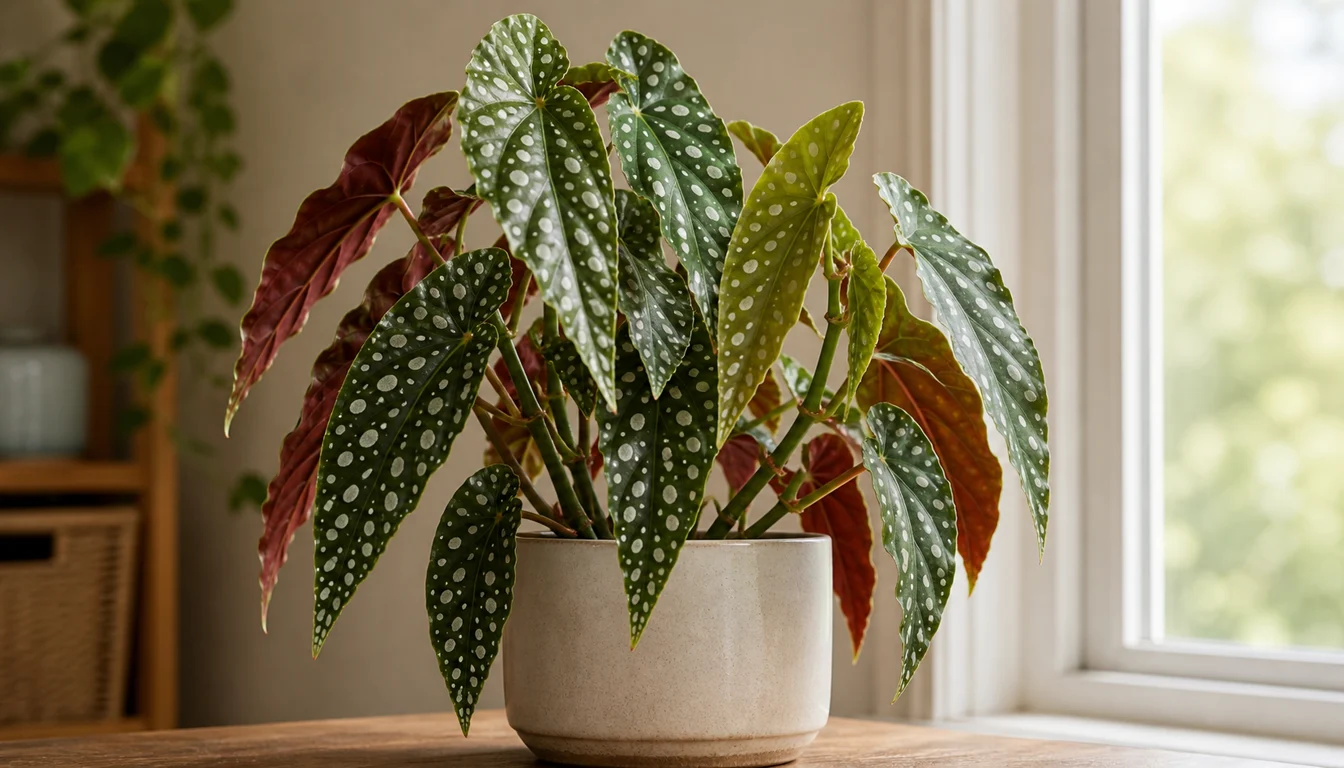
Begonia Maculata
A cane begonia with silver-spotted leaves and an upright branching form.
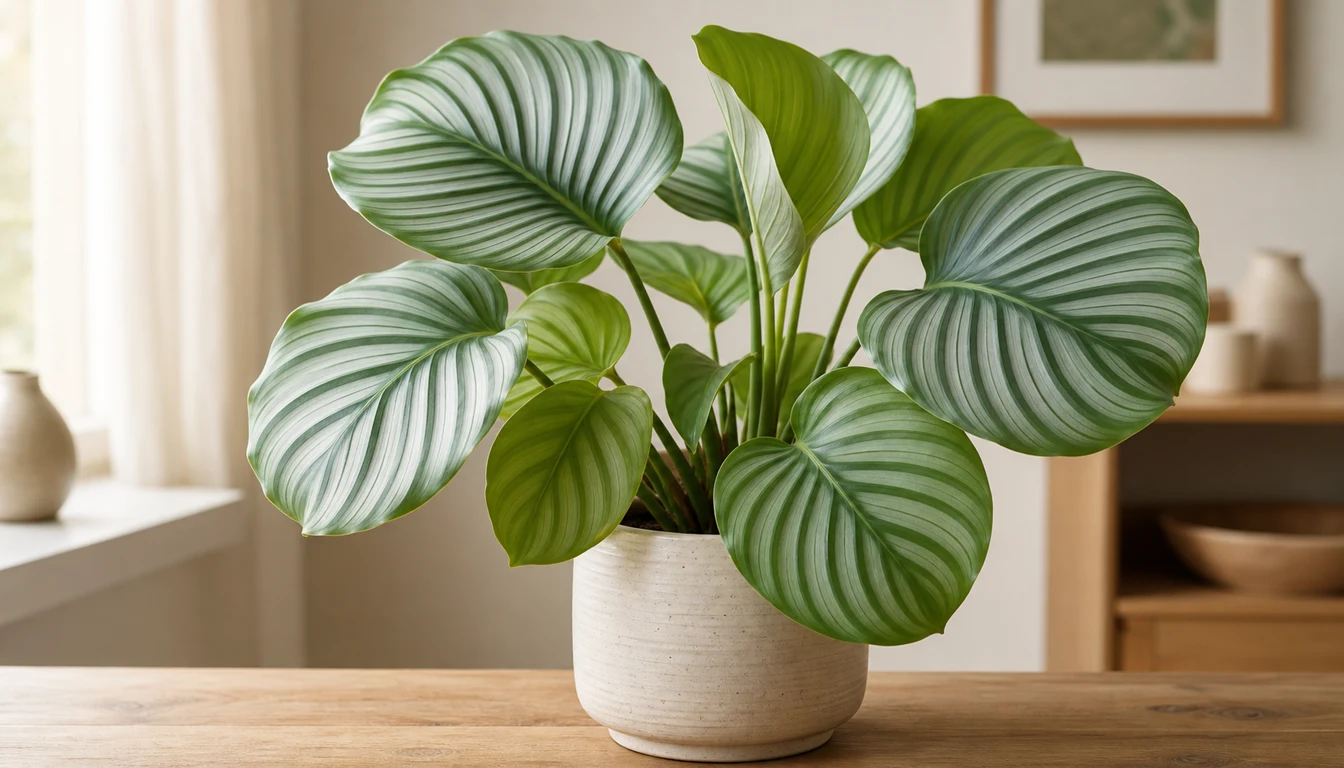
Calathea Orbifolia
A pet-safe foliage plant with broad striped leaves and its own humidity needs.
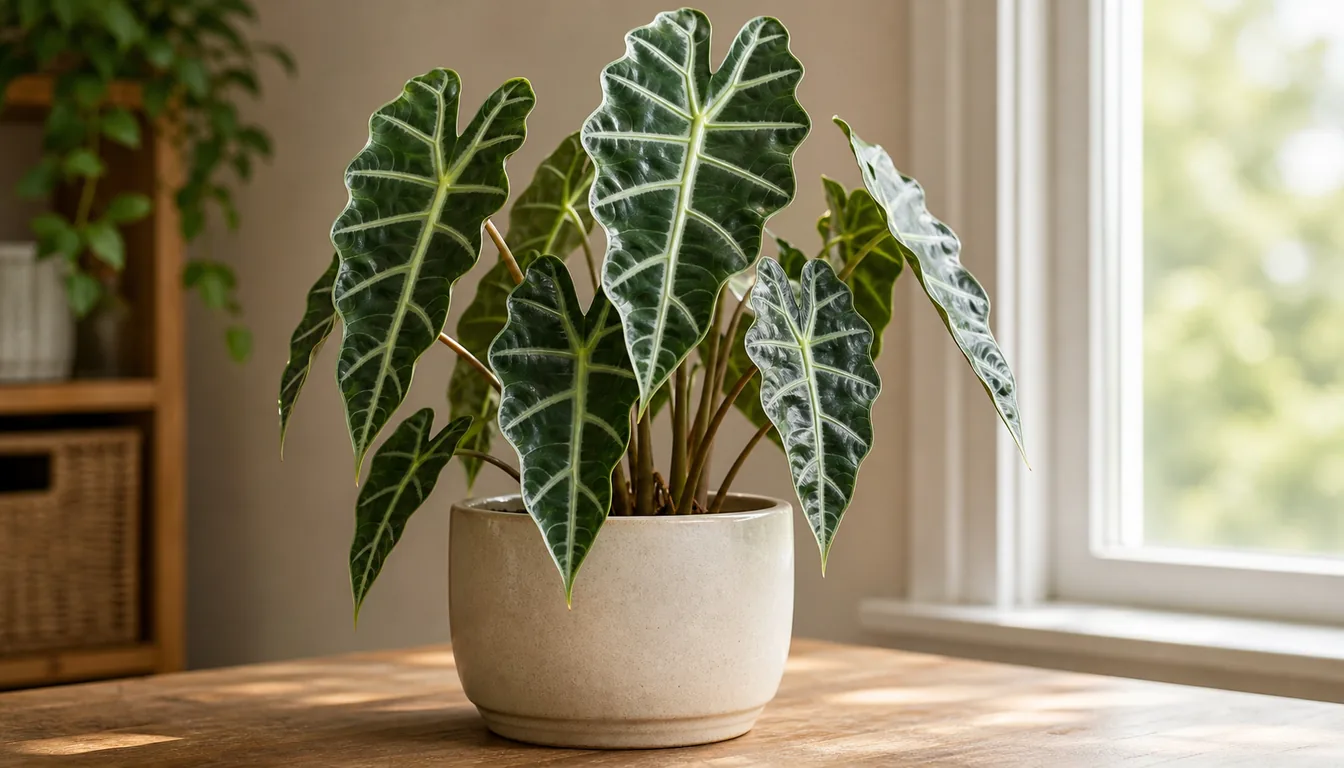
Alocasia Polly
A dramatic tropical with arrow-shaped leaves that also needs careful moisture and light.
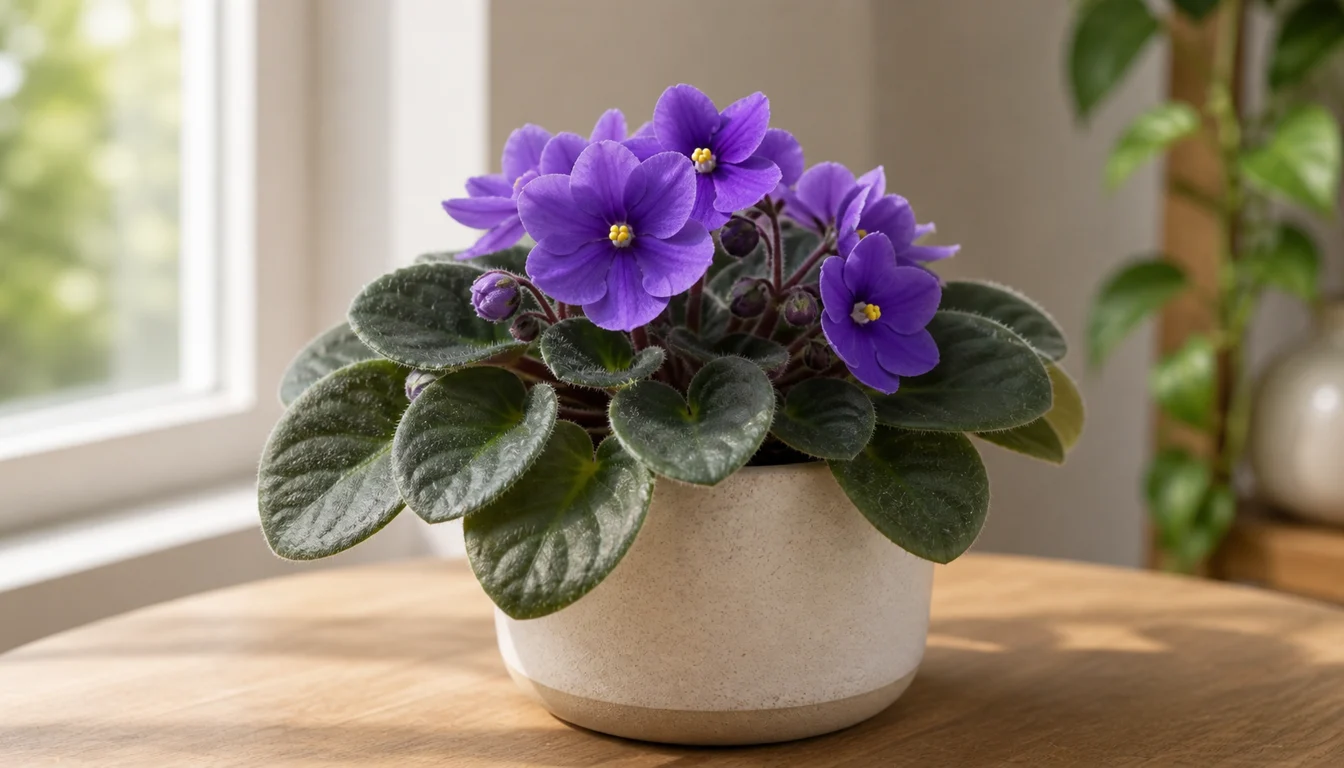
African Violet
African Violet is a windowsill bloomer that rewards steady, small-pot care.
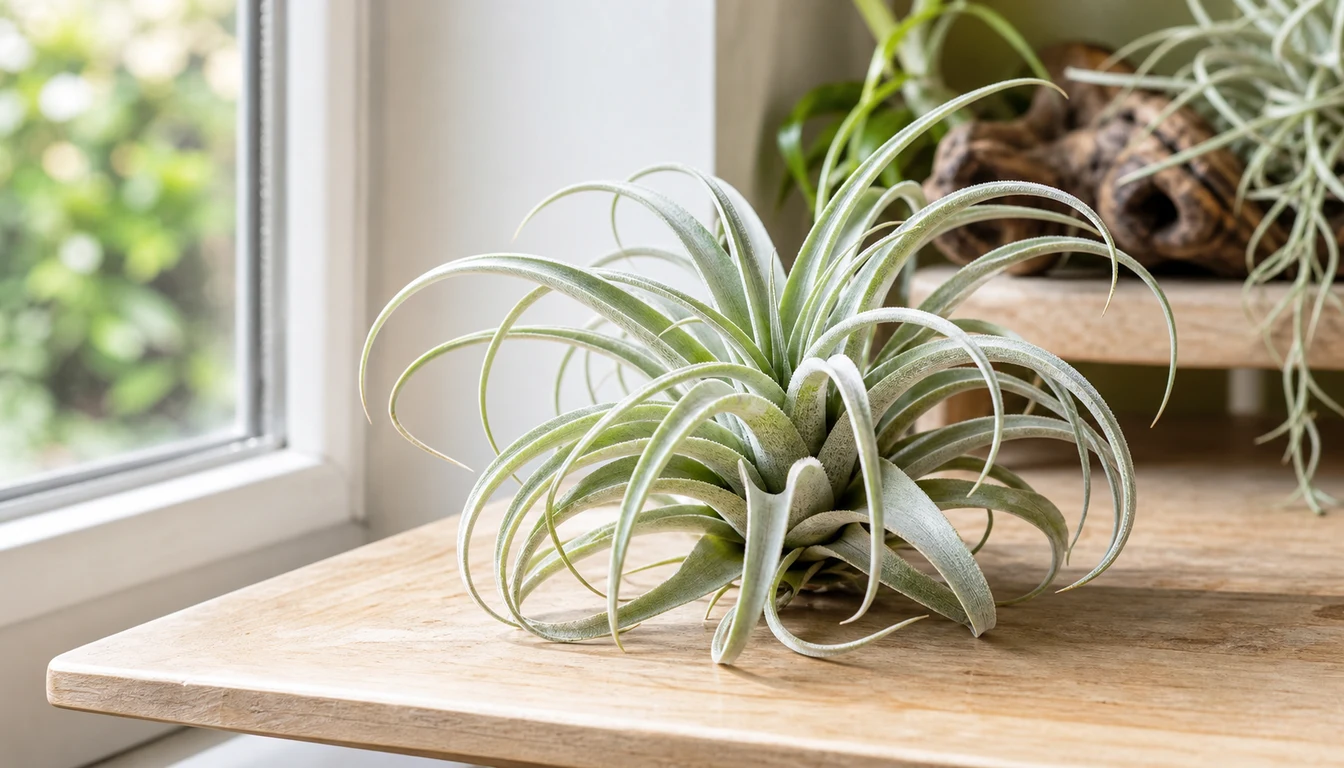
Air Plant
Air plants are living sculptures that thrive without soil, anchoring to driftwood, rocks, or shells while drawing…
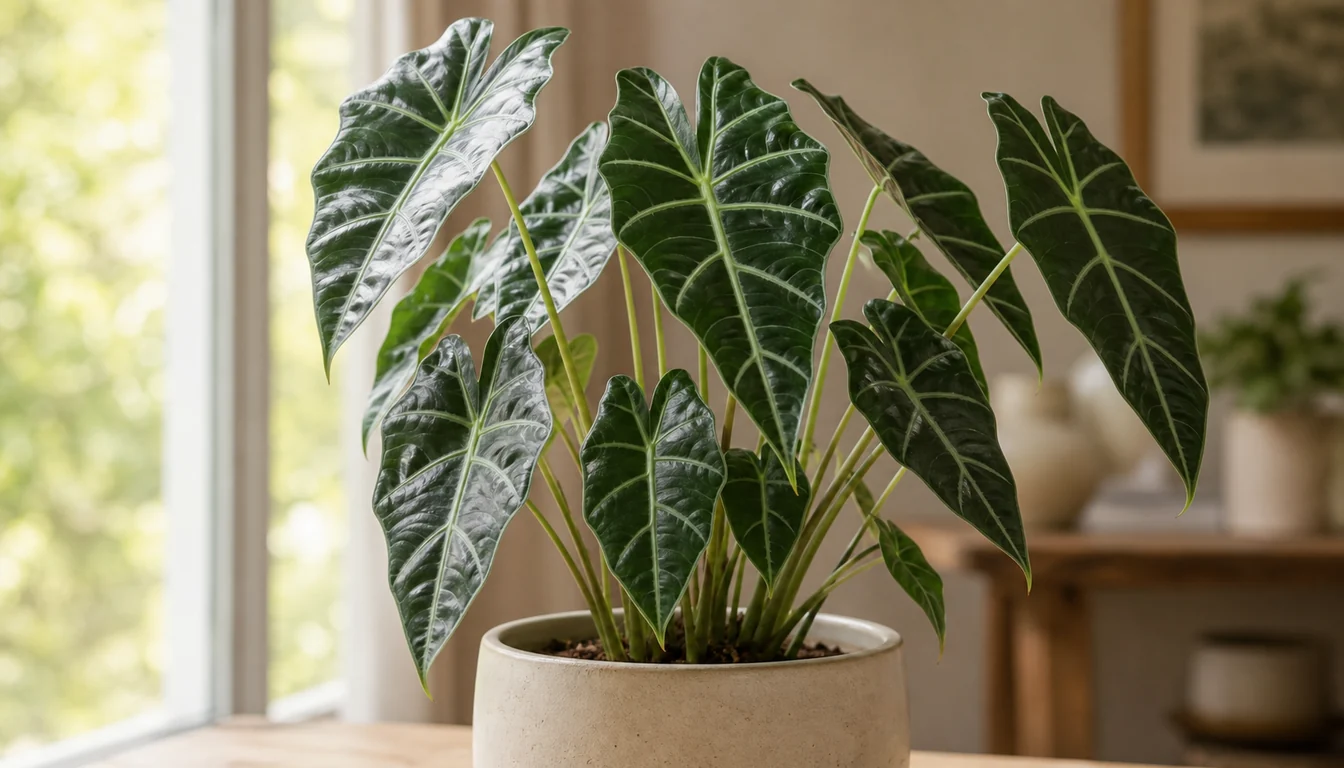
Alocasia
Alocasias include compact, textured houseplants and large elephant ears that need substantial floor space.