
What Is Begonia Maculata and How Do You Grow It Indoors?
Begonia maculata Begoniaceae
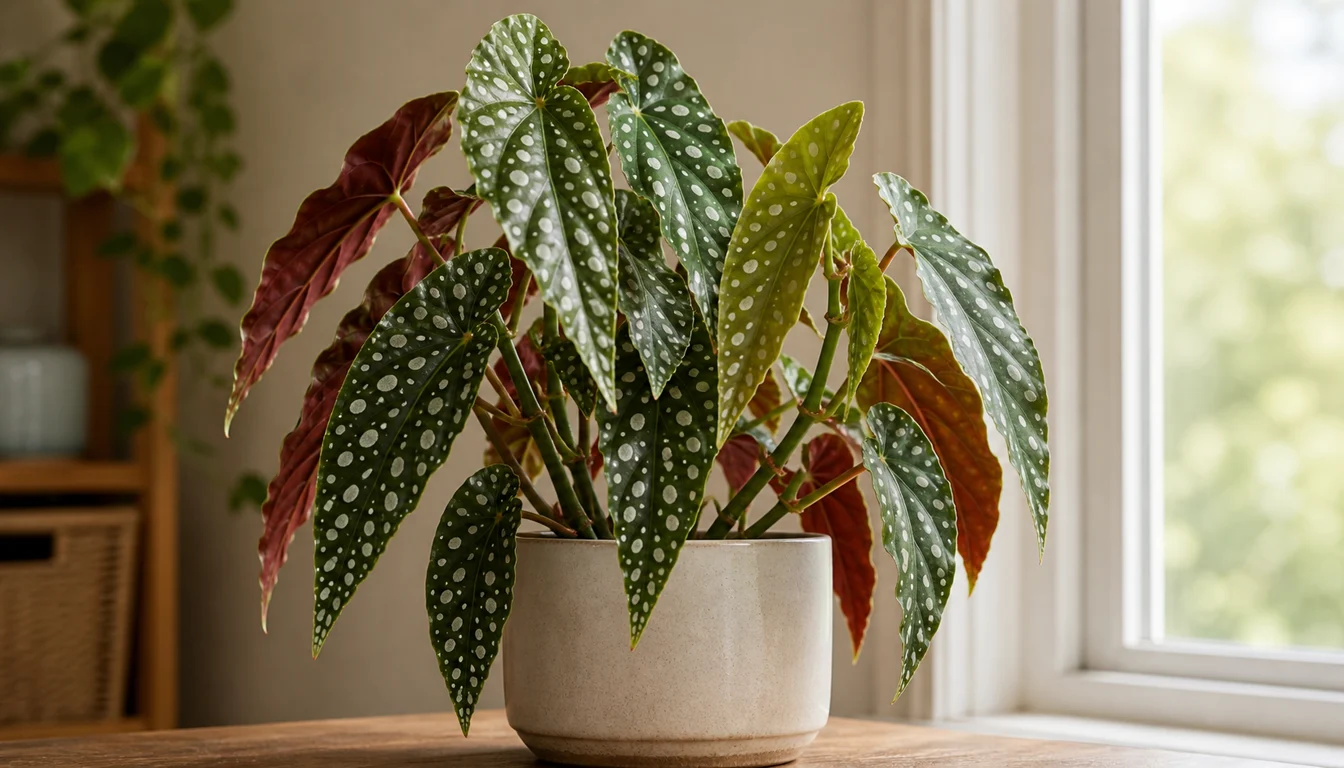
Begonia Maculata is the spotted cane begonia people buy for dark wing shaped leaves dotted with silver white spots and backed by red undersides.
It can look dramatic indoors. It is still a cane plant that punishes wet leaves, stale air, and a soggy pot.
Care snapshot
Recognize the Cane Before the Spots Sell You
Begonia Maculata is an accepted Begoniaceae species, often sold as polka dot begonia because the dark leaf blades carry clear silver white spots, but the upright cane habit matters more for care than the spots.
Unlike Begonia Rex, which sits lower from a rhizome and is grown as a painted leaf rosette, Begonia Maculata makes upright stems that can become bare near the base and heavy near the top. That growth habit changes how you place, rotate, prune, stake, and propagate it.
Choose a plant with firm canes, clean leaf undersides, new growth near the tips, and a pot that does not smell sour, and skip plants with soft stem bases, many yellow lower leaves in wet mix, sticky new growth, or powdery patches on the leaves.
- Plant identity
- Upright cane begonia with silver spotted leaves and red toned undersides
- Indoor display
- A bright stand, table, or floor spot where tall canes can rise without leaning into traffic
- Bloom bonus
- White flower clusters may hang from healthy canes when light and warmth are steady
- Reject at the shop
- Sour mix, soft lower stems, sticky tips, mildew patches, or a plant already flopping from weak light
Give the Spotted Leaves Filtered Light, Not Harsh Sun
Begonia Maculata looks best in bright filtered light, such as an east window, a bright north window, or a south or west room where the plant sits back from hot glass. The goal is firm canes and strong new leaves.
A blast of sun on thin foliage is too much.
If the room is too dim, new leaves usually come in smaller, the canes lean toward the window, and the pot stays wet longer after watering. If light is too harsh, pale scorched patches can appear where afternoon sun hits the spotted surface.
Use the pot as your light meter.
When warm soil still feels wet for a full week, move the plant brighter before you change fertilizer.
When leaves feel hot near the window, add a sheer curtain or move the pot back before the next clear afternoon.
Water the Rootball, Not the Leaves
The hard part of begonia maculata care is keeping the rootball lightly moist without letting it sit airless, so water when the top layer has dried and the pot feels lighter, then let water run through the drainage holes before the plant returns to a cover pot.
NC State warns that begonias are susceptible to root rot when overwatered and says watering at the base helps avoid wet leaves. That advice fits Begonia Maculata especially well because the leaf surface is part of the show and fungal marks are easy to see.
Do not solve every limp leaf with more water.
A dry, light pot with curling leaf edges asks for a drink.
A heavy pot with yellow lower leaves, sour mix, or a soft stem base asks for air around the roots.
- Feel the top inch of mix before you lift the watering can.
- Lift the pot and compare the weight with a freshly watered pot.
- Water the mix at the soil line and keep droplets off the leaves.
- Empty the saucer or cachepot after the rootball drains.
Raise Humidity While Air Keeps Moving
Begonia Maculata appreciates humid air, but wet leaves are not the same thing as humidity, and misting often leaves the spotted surface damp in a still room.
The better setup raises moisture around the plant while the air still moves. A small humidifier several feet away, a group of tropical plants, or a pebble tray under the pot can help without keeping the canes soaked.
If you use a cabinet or tight shelf, open it often and watch the newest leaves.
Clean new leaves with firm texture mean the balance is working.
Fuzzy white patches, gray spots, or a stale smell mean humidity has outrun airflow.
Humidifier
- Best for dry heated rooms
- Keep the stream away from leaves
- Clean the tank often
Plant Group
- Easy beside other tropical plants
- Leave space between leaf surfaces
- Rotate the pot so canes do not lean
Pebble Tray
- Useful for a small stand
- Keep the pot above standing water
- Expect modest help only
Cabinet
- Good for stable humidity
- Needs venting or a small fan
- Check mildew first
Prune Tall Canes Before They Lean
A healthy Begonia Maculata can become top heavy indoors because the canes keep reaching upward while older lower leaves naturally thin out, and waiting until the plant falls over makes every cut feel like emergency surgery.
Prune during active growth when the plant is pushing leaves and the room is warm.
Cut a tall cane just above a node.
Keep at least a few healthy leaves on the remaining stem and remove weak side shoots that crowd the center.
Pinching a soft growing tip makes the plant branch earlier, while cutting a long mature cane can reset height and give you propagation material. Stake a heavy cane before it creases because a bent cane rarely returns to a clean upright line.
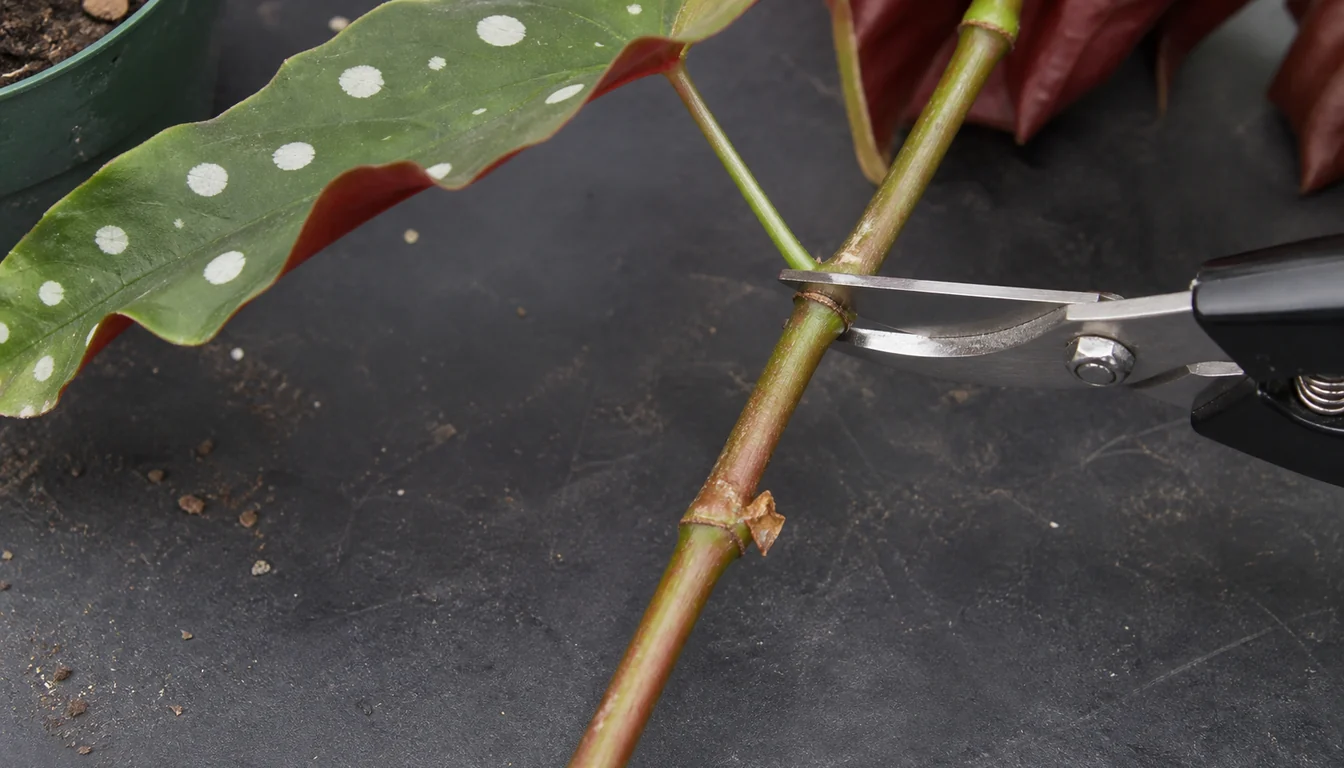
- Cut above a node, not through a bare internode.
- Remove no more than one third of the plant at once unless you are saving a failing pot.
- Turn the pot after pruning so new shoots do not all face one window.
- Keep the best cut stems if you want backups.
Repot Into Airy Mix Only When Roots Ask
Begonia Maculata needs a mix that holds some moisture but still lets oxygen reach the roots, because a peat heavy mix that collapses into paste can keep the top looking dry while the center stays wet.
Use a pot with drainage holes and move up only one pot size when roots fill the current container. For most indoor plants, the better direction is a chunky houseplant soil blend with bark, perlite, or other coarse material rather than a huge decorative pot.
Repot when water races around a tight rootball, roots circle thickly at the bottom, or the plant dries so fast that healthy leaves wilt between normal checks.
A dark winter week is different.
Do not repot just because the plant dropped a few leaves.
- Pot without holes
- Move to a nursery pot with holes, then use the decorative cover as a sleeve
- Oversized pot
- Downshift or wait because excess mix stays wet around small roots
- Dense old mix
- Blend in coarse material so water moves through and air returns
- Saucer stays full
- Use drainage holes and empty collected water after each soak
Root Stem Cuttings From a Real Node
Begonia Maculata is best propagated from stem cuttings with nodes, because a single pretty leaf blade may look promising in a vase but it does not give you the same reliable growing point as a cane section.
Take a healthy stem tip or mid cane section with at least one node and one or two leaves.
Remove lower leaves that would sit in water or mix.
Shorten a very large leaf if it wilts faster than the cutting can hydrate.
Water propagation lets you watch roots form, while airy propagation mix makes the move to a pot smoother. The broader houseplant propagation decision is useful here because cane begonias sit between easy water cuttings and plants that hate wet stems.
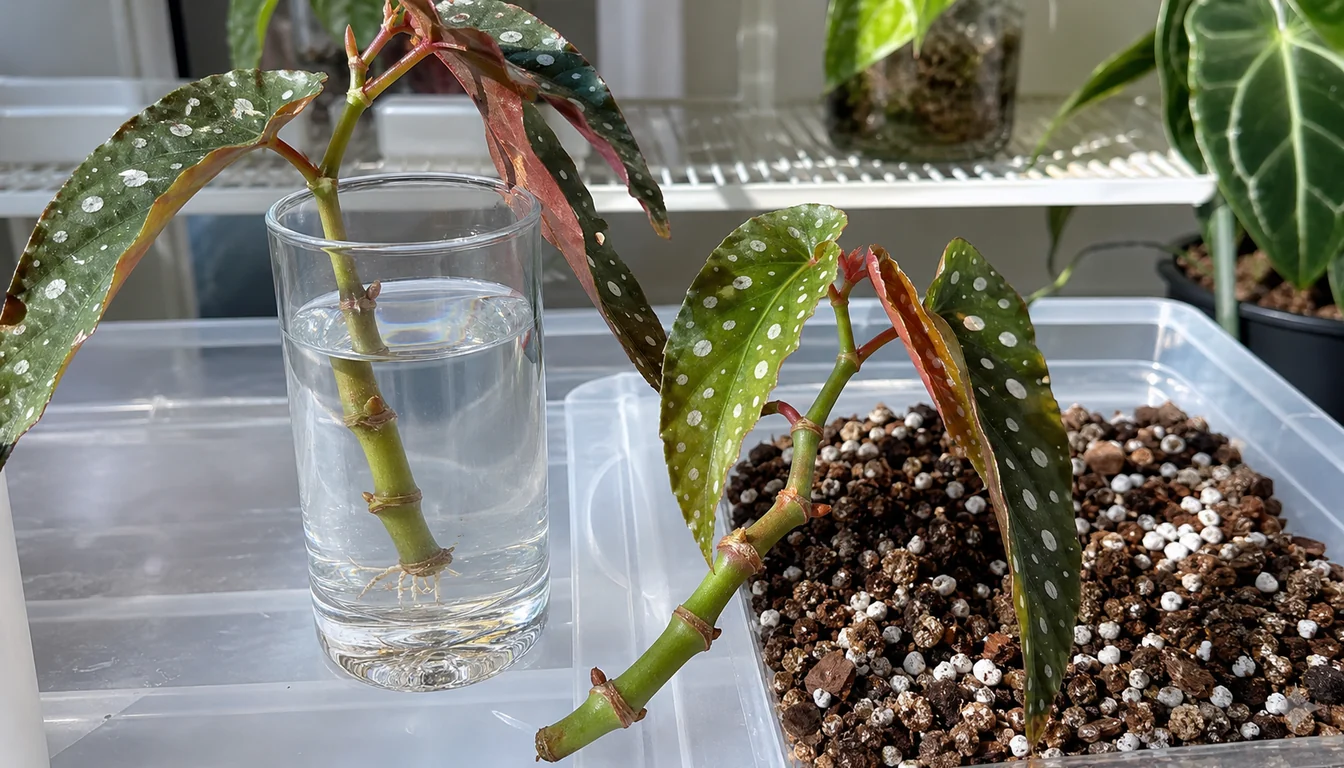
- Cut a healthy cane section with a visible node.
- Remove leaves that would sit below the water line or mix surface.
- Place the node in clean water or barely moist airy mix.
- Keep the cutting warm in bright filtered light.
- Pot it once roots are long enough to anchor the stem.
Separate Leaf Drop, Crisping, Mildew, and Pests
The same sad Begonia Maculata can tempt opposite fixes because crispy edges push people toward more water, yellow lower leaves push people toward fertilizer, and mildew pushes people toward wiping leaves without changing the room.
Start with pot weight, stem firmness, leaf undersides, and airflow, because those four checks tell you whether the first move is waiting, watering, washing pests, pruning, or moving the plant.
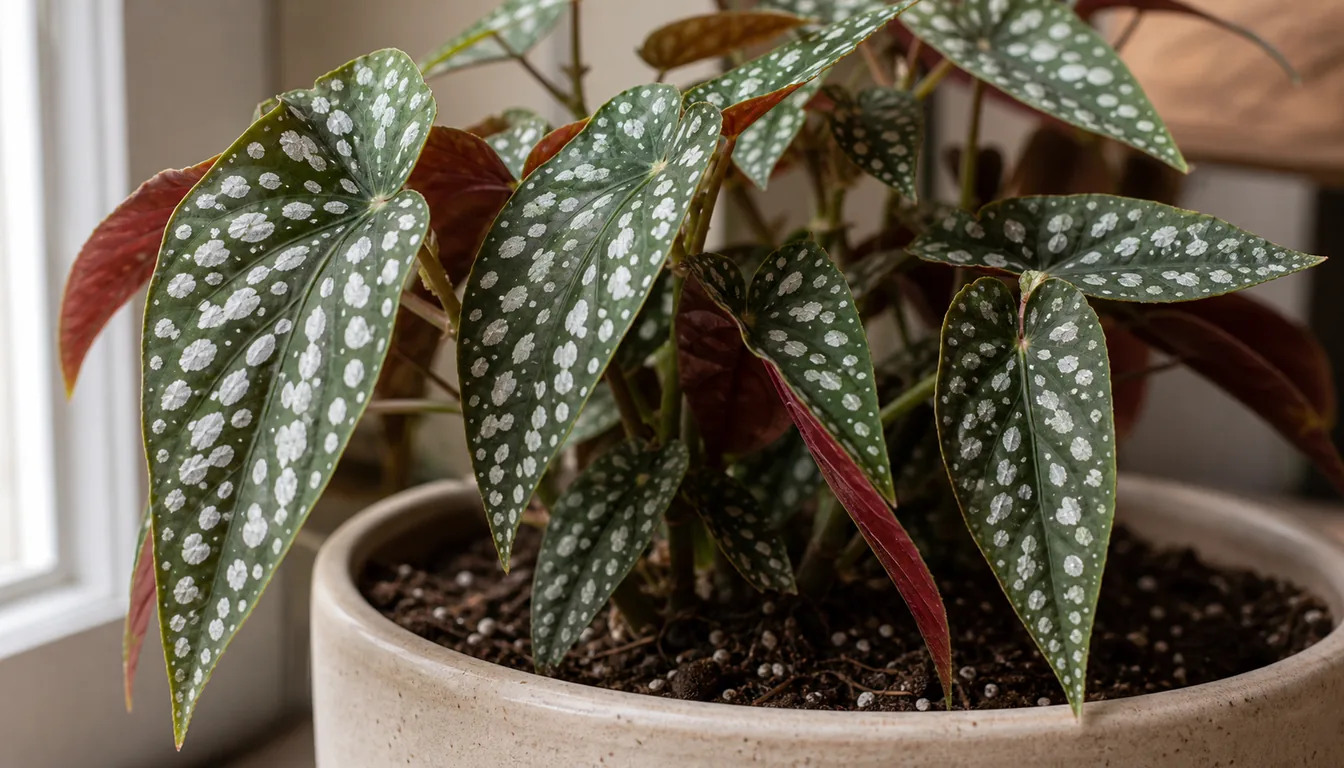
White speckles that belong to the leaf pattern are flat, regular, and present on healthy leaves.
New powdery patches, fuzzy growth, or random pale marks belong in a different diagnosis, especially if humidity is high and air is still.
A separate guide to white spots on plant leaves helps when the marks are not part of the normal pattern.
- Yellow lower leaves and heavy pot
- Pause watering, check roots, and improve drainage before feeding
- Crispy edges and light pot
- Water thoroughly and raise room humidity without wetting the leaves
- Powdery white patches
- Increase airflow, keep leaves dry, and remove badly affected leaves
- Sticky tips or distorted new leaves
- Inspect for mealybugs, thrips, whiteflies, scale, and spider mites
- Bare lower canes with firm tips
- Prune and rotate if the plant is otherwise healthy
- Soft cane base
- Treat it as possible rot and inspect the rootball right away
Slow Winter Care Before the Plant Stalls
Begonia Maculata often slows in winter because indoor light drops and rooms cool near glass, and the roots use water more slowly even when the plant still looks leafy.
Reduce watering frequency, stop chasing rapid growth with fertilizer, and keep the pot away from cold drafts. NC State notes that begonias do not tolerate temperatures below 55 F, which is a useful floor for a windowsill plant at night.
If you add a grow light, use it to keep steady leaf production, not to force wet soil to dry after overwatering.
Stronger light helps only when the rootball still has air.
The room also needs to stay warm.
Keep It Away From Pets and Tight Rooms
ASPCA lists Begonia as toxic to dogs and cats, with soluble calcium oxalates as the toxic principle and the underground parts as the most toxic part, so keep Begonia Maculata out of reach of pets that chew plants or dig in pots.
Space matters too.
A young plant can sit on a shelf.
A happy cane begonia wants vertical room, a stable pot, and enough distance from foot traffic that brittle leaves and flower clusters are not brushed every day.
If you want spots with less height, compare it with Polka Dot Plant. If you want patterned foliage and a pet safer shortlist, start with pet safe houseplants instead of trying to train a cat around a begonia.
- Begonia Maculata
- Best when you want upright spotted leaves and can manage pruning, humidity, and pet distance
- Begonia Rex
- Better for low, painted leaf display, but it has different rhizome care and similar pet concerns
- Polka Dot Plant
- Better for a small spotted pot, though it needs pinching and does not have cane structure
- Peperomia
- Better for compact shelves and lower drama if you want an easier small houseplant
Frequently Asked Questions
Is Begonia Maculata hard to care for?
Begonia Maculata is moderate rather than beginner easy, and it grows well when light is bright, watering waits for the top mix to dry, and humidity rises without keeping leaves wet.
How often should I water Begonia Maculata?
Water when the top inch of mix dries and the pot feels lighter, then drain it fully. In winter or dim rooms, the same pot may need much longer between waterings.
Can Begonia Maculata grow in low light?
It can survive in lower light for a while, but the canes usually lean, leaves get smaller, and the pot stays wet too long. Bright filtered light is the better target.
Why is my Begonia Maculata dropping leaves?
Lower leaf drop can come from age, low light, dry air, or a wet rootball. Check pot weight and cane firmness first because watering more can make rot worse.
Can I propagate Begonia Maculata from a leaf?
Use stem cuttings with a node instead because a single leaf blade is not the reliable method for this cane begonia.
Is Begonia Maculata toxic to cats and dogs?
Yes. ASPCA lists Begonia as toxic to cats and dogs, and the underground parts carry the strongest warning.
Sources & References
Related Plants
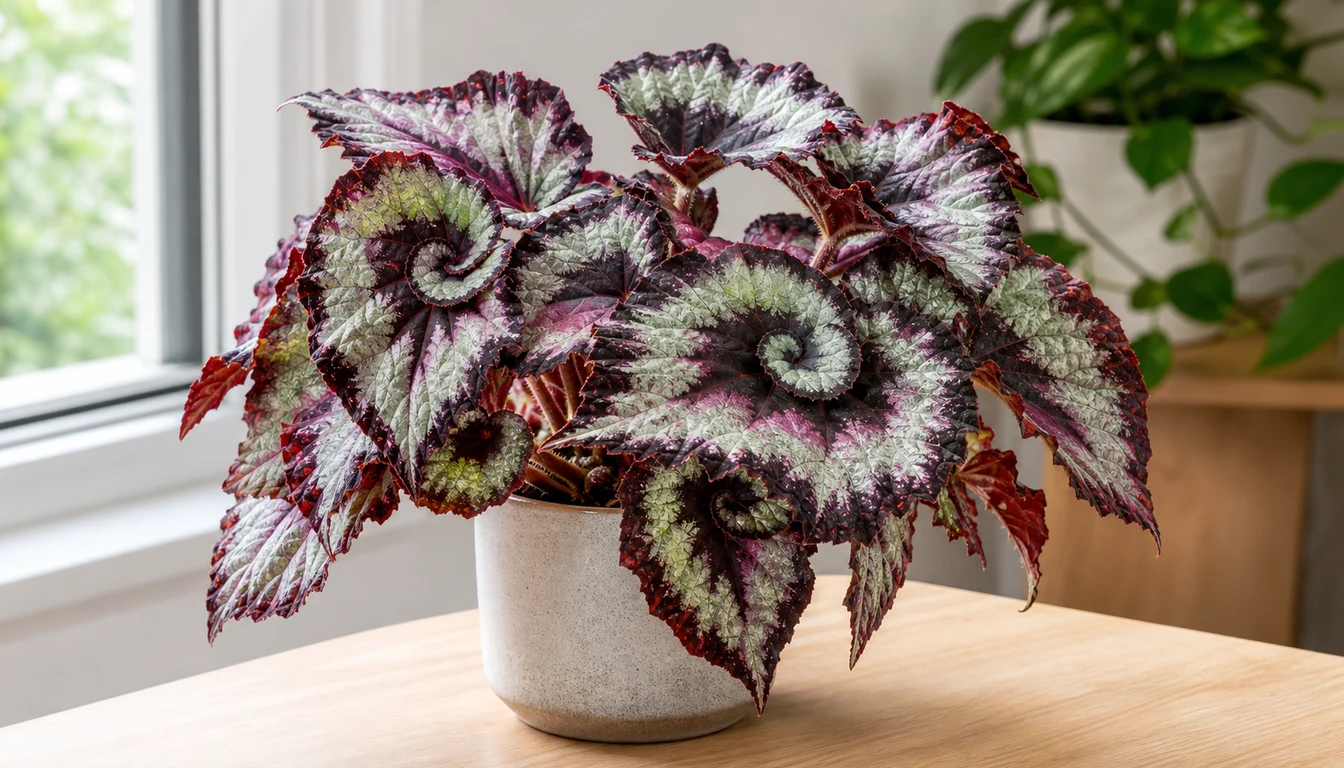
Begonia Rex
Patterned begonia with a lower rhizome habit and very different propagation choices.
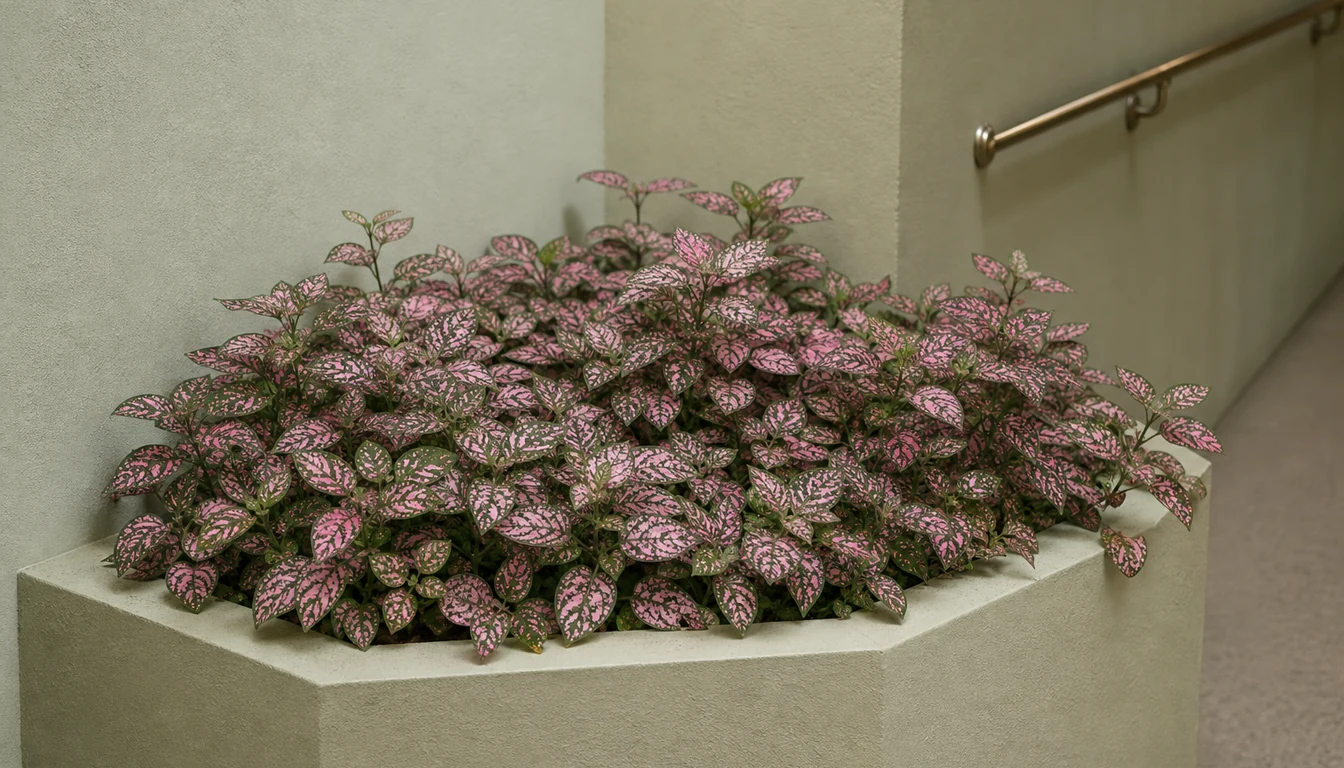
Polka Dot Plant
Spotted foliage in a smaller, softer plant that needs regular pinching.
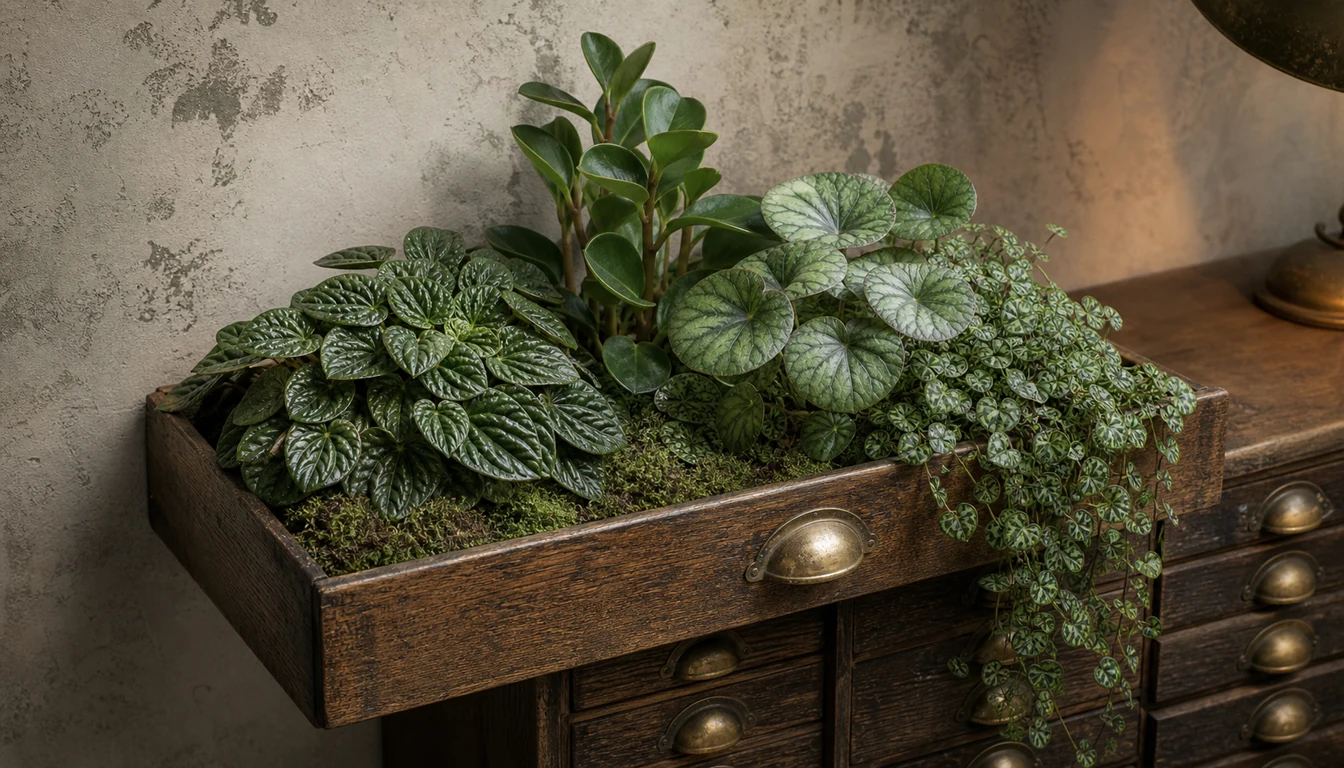
Peperomia
Compact houseplant group with many leaf shapes and lower space demands.
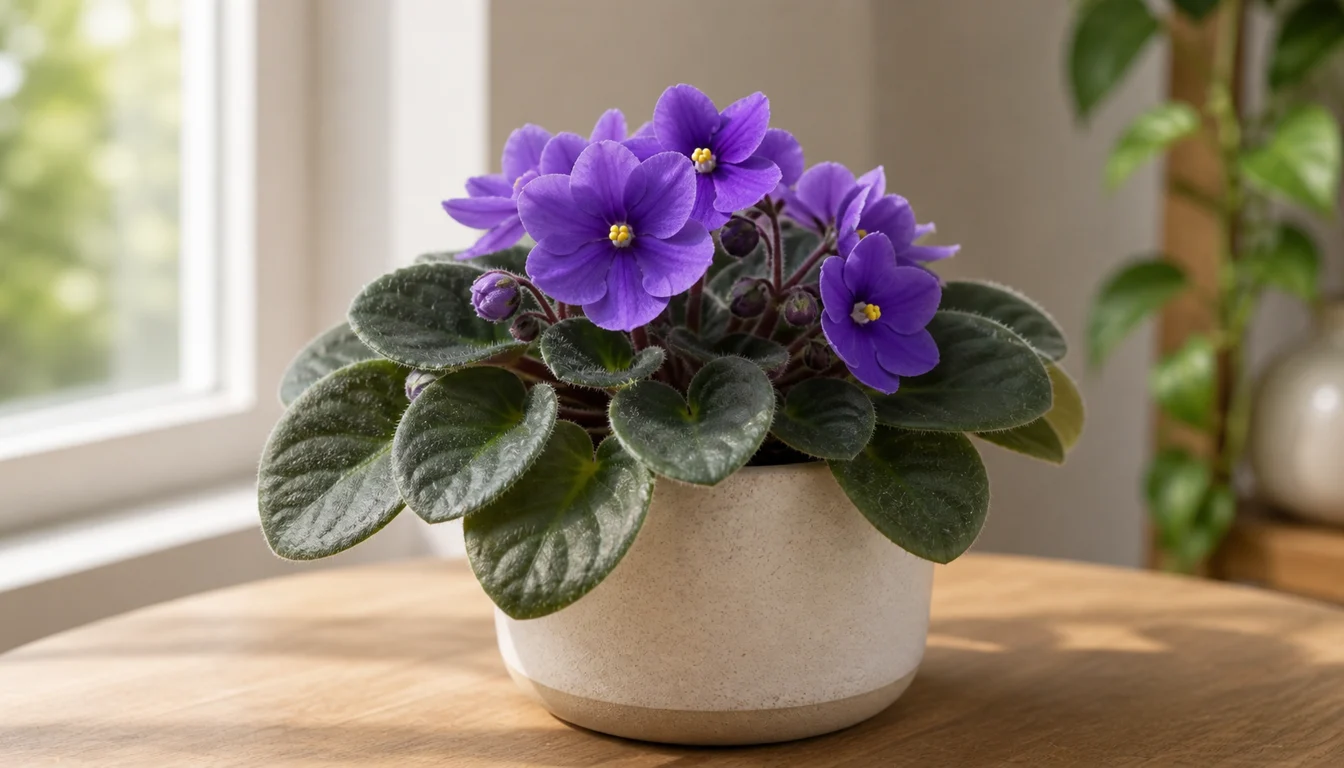
African Violet
African Violet is a windowsill bloomer that rewards steady, small-pot care.
Air Plant
Air plants are living sculptures that thrive without soil, anchoring to driftwood, rocks, or shells while drawing…
Alocasia
Alocasias include compact, textured houseplants and large elephant ears that need substantial floor space.