
What Is the Worst Time to Water Plants?
Late evening is the worst time to water, and only if you are wetting the leaves.
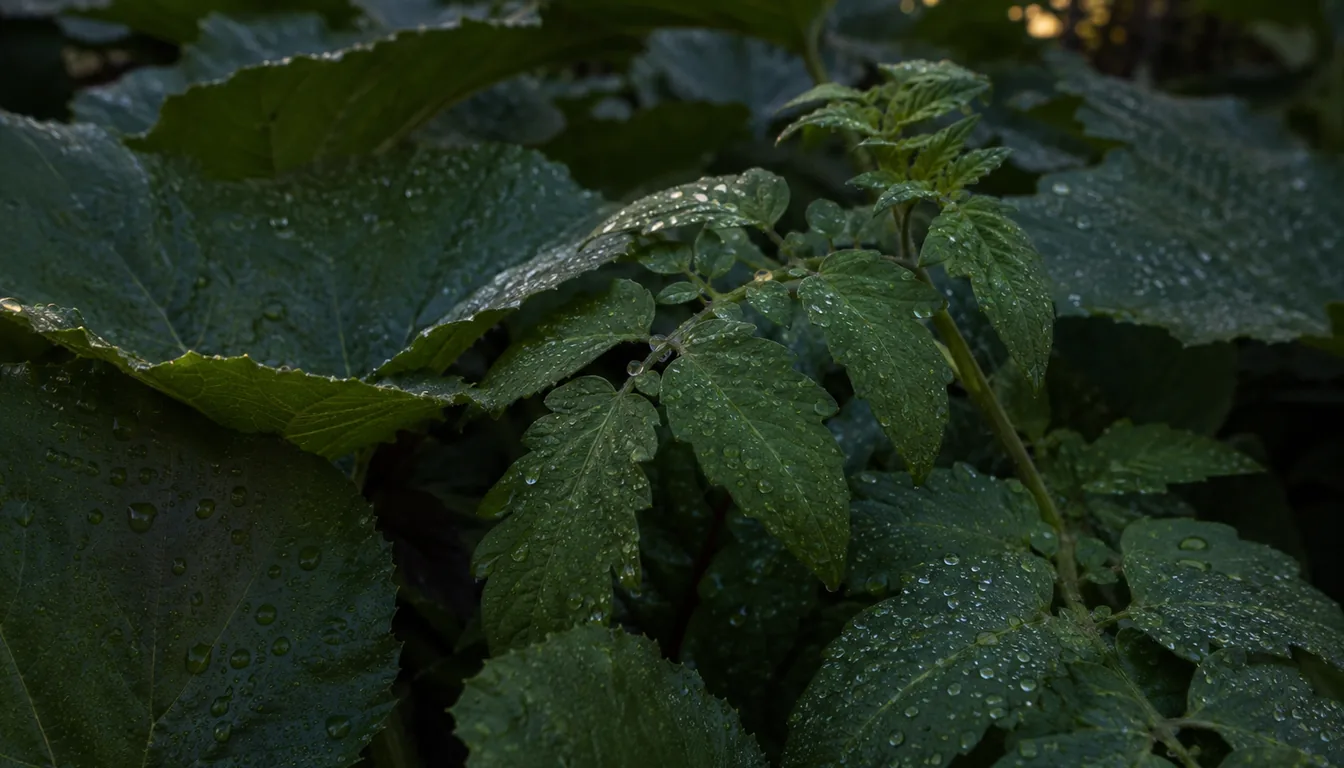
Water sitting on foliage overnight gives fungal spores the long period of leaf wetness they need to establish, and nothing dries it until the sun comes back.
Midday is the other answer people give, and it is wrong for a different reason. Midday wastes water to evaporation without adding much disease risk.
Early morning avoids both, which is why extension guidance keeps landing on 6 to 8 am. How much you apply is a separate question, covered in the deep watering guide.
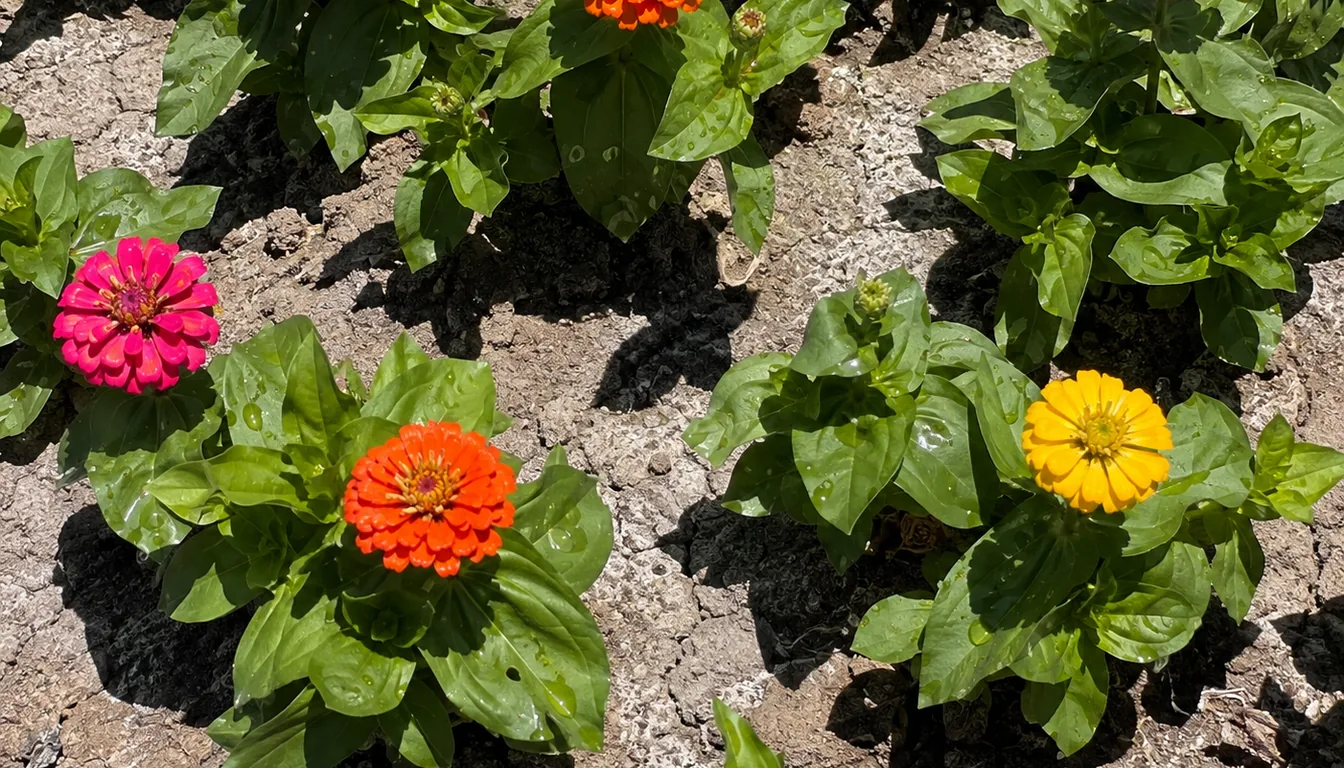
At a glance
What Is the Worst Time to Water Plants?
Late evening, with a sprinkler or a hose over the top of the plant.
That combination leaves foliage wet through the coolest, dampest hours of the day. Nothing evaporates it, dew adds to it, and the leaf can stay wet for ten hours or more.
The hour is only half the problem. The other half is whether water lands on leaves at all, which is why the same clock time can be fine or damaging depending on the method.
- Worst
- Late evening, overhead
- Wasteful but not risky
- Midday, high sun and heat
- Best
- Early morning, roughly 6 to 8 am
- What decides it
- Whether the foliage gets wet, and how long it stays wet
- Safe in the evening
- Soaker hose or drip, which never wets a leaf
Why Wet Leaves Overnight Cause Disease
Fungal spores need liquid water on a leaf surface to germinate, and they need it for a sustained stretch rather than a moment.
Penn State puts the practical version plainly. Plants prone to leaf disease are far more likely to be infected when the foliage stays wet overnight.
Evening watering does not create the problem on its own. It extends a window that dew was going to open anyway, turning a few hours of natural leaf wetness into most of the night.
Morning watering does the opposite. The sun gets the rest of the day to dry the surface, so the wet period ends hours before spores can do much with it.
Powdery mildew, downy mildew, leaf spot and early blight all respond to this. It is why the same tomato bed behaves differently under two watering schedules with identical volumes.
Is Midday Watering Actually Bad?
It is inefficient rather than dangerous, and the difference matters when you only have one free hour.
Heat and sun pull water off the soil surface before roots take much of it, so a larger share of what you apply evaporates before it is used. University of Maryland Extension puts the loss at up to 40 percent during the heat of the day, compared with an early watering.
The common warning about droplets scorching leaves through a lens effect does not hold up on typical garden foliage.
Midday is the compromise rather than the catastrophe. If the plant is stressed now then water it now, and shift the routine earlier once the emergency passes.
Why Early Morning Wins
Morning is the only slot that solves both problems at once.
Temperatures are low enough that evaporation loss is small, so most of what you apply reaches the root zone.
Wind is usually calm at that hour, which matters more than people expect with a sprinkler. A breeze can carry a noticeable share of the spray off the bed entirely.
The sun that follows then dries the foliage within a couple of hours rather than leaving it wet until dawn.
Roughly 6 to 8 am is the window extension guidance keeps returning to. Any time before the sun is high does most of the same work.
How You Water Changes When You Can Water
This is the part most timing advice leaves out.
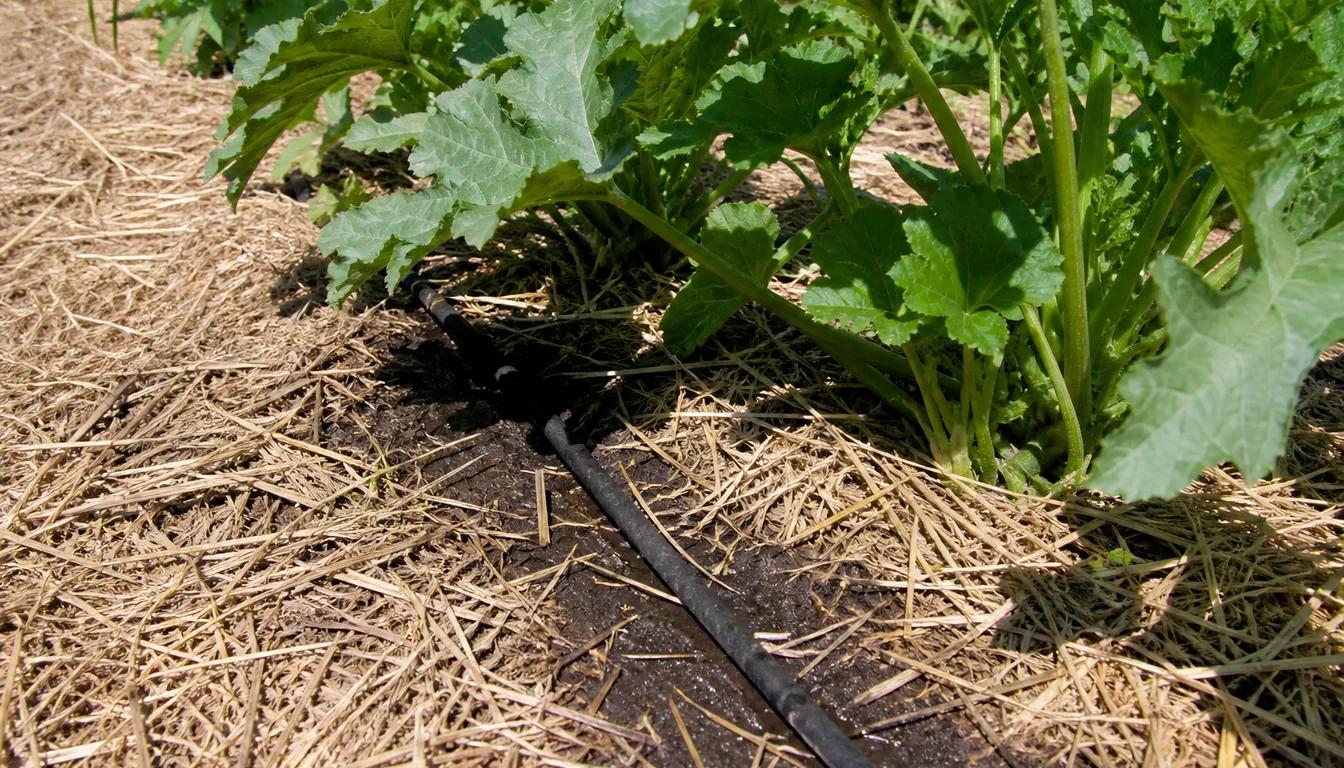
A soaker hose or drip line delivers water at soil level and never wets a leaf, which removes the only real objection to evening watering.
If your beds are on drip, the evening is genuinely fine, and in a hot climate it is arguably better because less is lost between the emitter and the root.
| Method | Morning | Midday | Late evening |
|---|---|---|---|
| Overhead sprinkler | Best | Wasteful | Worst, leaves stay wet |
| Hose over the plant | Good | Wasteful | Poor, same wet-leaf problem |
| Soaker hose or drip | Best | Wasteful | Fine, foliage never gets wet |
| Hand watering at the base | Good | Wasteful | Fine if the leaves stay dry |
Container plants sit outside this table. A pot dries from every side and may need water twice on a hot day regardless of the hour, and the water goes to the mix rather than over the foliage.
Lawns are the one place where evening watering is worst of all. Turf holds moisture at the crown and the canopy is dense enough to stay damp, which is the same ground the signs of an overwatered lawn cover.
A timer removes the hardest part of all this, which is being awake and available at the right hour.
Set it for the pre-dawn hours and the beds get the best slot every day without anyone getting up for it, which is the single change that fixes timing permanently for most gardens.
A soil moisture sensor takes it further by watering on what the ground reads rather than on the calendar. That matters most in a mixed bed where a timer will otherwise treat a shaded corner the same as a sunny one.
Soil and Mulch Change How Much the Hour Costs
The same watering time is not equally risky in every bed, and the reason is how long the ground stays wet afterward.
Heavy clay holds water against roots for a long stretch, so an evening watering there keeps the root zone saturated well into the next day.
Sandy or raised beds do the opposite. They drain fast enough that an evening soak is largely gone by morning, which makes the hour matter less and the interval matter more.
That flips the usual advice on its head for a raised bed. The worst schedule there is not a bad hour but a gap that is too long, because a bed that drains in six hours cannot wait two days.
Germinating seed is the clearest case. A row of carrots or lettuce needs the surface kept damp through emergence, so morning watering every day beats a deep soak twice a week.
Mulch shifts the whole equation again.
A 2 to 3 inch layer slows evaporation from the surface, so you water less often but go deeper each time. That is the change most people forget to make after mulching, and they carry on with the old frequency until something drowns.
Thick mulch plus late watering is the combination to avoid outright. The mulch stops the surface drying, the night stops evaporation, and the crown of a perennial sits wet until morning.
| Soil or surface | What it does to the water | What that means for timing |
|---|---|---|
| Heavy clay | Holds moisture for a long time | Morning only, and go slower so it soaks rather than runs off |
| Sandy or raised bed | Drains within hours | The hour matters less, the interval matters more |
| Bare soil in sun | Loses the most to evaporation | Morning, and mulch it if you can |
| Mulched bed, 2 to 3 inches | Holds moisture far longer | Water less often but deeper, and never late |
| Seedbed during germination | Dries at the surface first | Light and daily in the morning until emergence |
Slope belongs in the same conversation. Water applied fast to a clay slope runs off before it soaks, so the fix is a slower rate rather than a different hour.
What Bad Timing Looks Like on the Plant
The damage from bad timing arrives slowly, which is why it rarely gets blamed on the schedule.
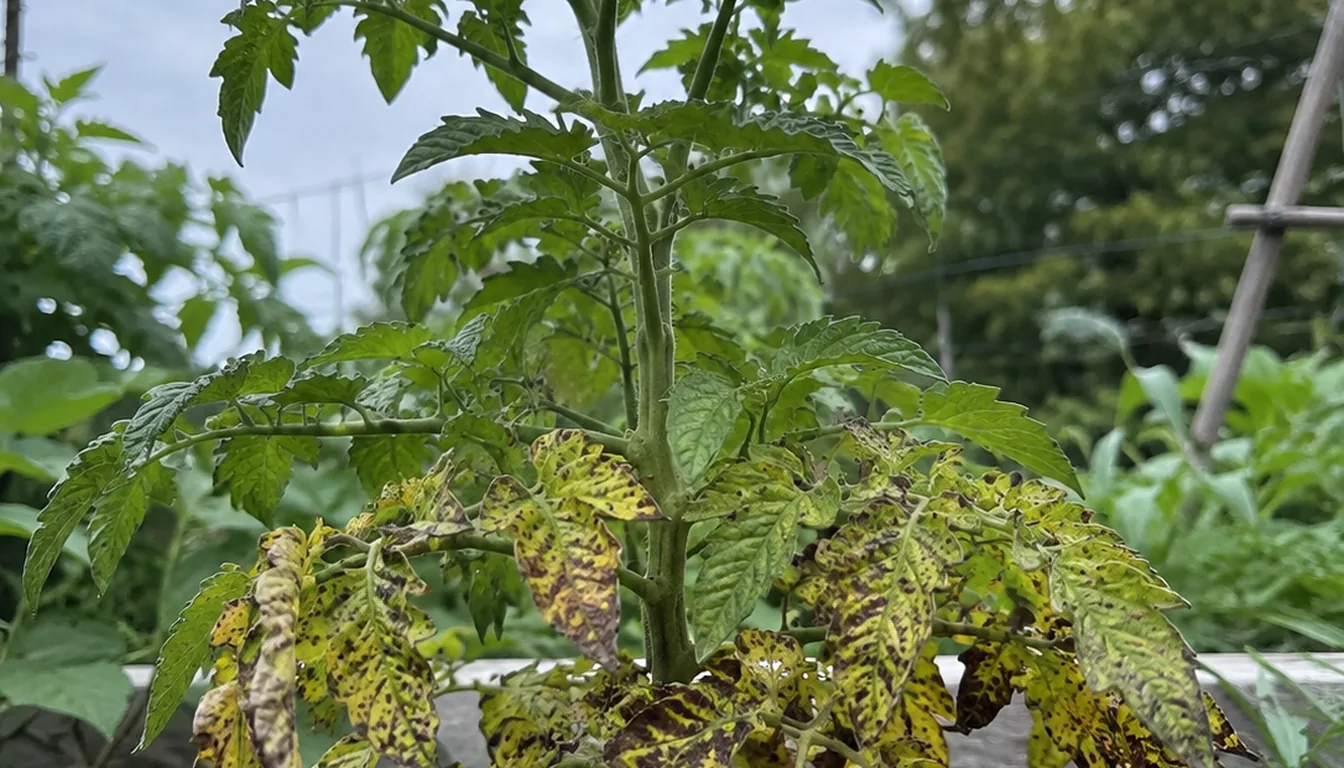
Look for spotting that starts on the lower leaves and works upward, because those are the leaves that stay wet longest and sit closest to splashing soil.
Powdery mildew shows as a dusty white coating rather than a spot, and it favors the same still, humid conditions a wet canopy creates overnight.
A lawn watered late often shows patchy dieback rather than distinct spots, and it stays damp underfoot in the early morning when neighboring turf is dry. On tomatoes the same pattern is one cause among several behind yellowing leaves.
- Move the next watering to early morning and keep it there
- Switch the bed to a soaker hose if overhead is the only option you have
- Thin crowded foliage so air moves through the canopy and dries it faster
- Clear fallen infected leaves rather than leaving them to splash back up
- Water the soil, not the plant, whenever you are hand watering
- Stop watering on a fixed schedule and check the soil first
What to Do After a Badly Timed Watering
One late watering rarely kills anything. What matters is whether the next day undoes it or repeats it.
If you watered over the top of the plants at night, the job in the morning is airflow.
Shake standing water off large leaves where you can reach them, and open the canopy a little by removing any leaf that is already yellowing at the bottom.
Indoors, a small fan running for a few hours does more than anything else available. Moving air dries a leaf surface far faster than warmth alone.
If the mistake was midday, the plant probably got less water than you think.
Check the soil at a finger's depth rather than trusting the surface, and plan a proper soak at the next cool morning rather than topping it up in the same heat.
For a container that has been overwatered, lift the pot before doing anything else.
A pot that feels far heavier than usual is still holding free water, so tilt it to drain and empty the saucer rather than adding anything.
- Move the next watering to early morning and leave it there
- Run a fan indoors, or open the canopy outdoors, until the foliage is dry
- Check soil at a finger's depth before deciding the plant needs more
- Empty every saucer, since a pot standing in water cannot drain
- Remove leaves that are already spotted so they do not splash spores upward
- Stop watering on a fixed day and start watering on what the soil reads
Repeat exposure is what causes real damage. A plant that sits wet overnight once will usually shrug it off, and one that does it every night through a humid August will not.
Do the Same Rules Apply Indoors?
Mostly not, because the two mechanisms that make outdoor timing matter are both missing.
There is no dew indoors and no midday sun on the soil surface, so neither the disease window nor the evaporation loss behaves the same way.
What replaces them is airflow and temperature. A room that is cool and still overnight dries a pot slowly, so a late watering leaves the mix damp for far longer than the same watering at midday.
That damp mix is what fungus gnats breed in, which is the indoor equivalent of the outdoor disease problem.
Late morning to midafternoon suits most heated homes. The plant gets the warmest, brightest part of the day to use the water before the room cools.
How much that matters depends on what the plant is.
Tropical foliage tolerates a late watering reasonably well, provided the room is warm and bright the next morning. The mix is meant to stay lightly moist anyway.
Succulents and thick-leaved plants are the opposite. Cold, wet mix overnight in a cool room is the fastest route to soft stems and root rot, and those plants are storing water in their tissue rather than drawing it steadily.
Humidity-loving foliage sits between the two. It wants the mix damp and the leaves dry, which usually means a morning or early afternoon watering rather than a misting at night.
Cold water is the other indoor timing mistake. Water straight from a cold tap slows uptake in winter, so letting it stand until it reaches room temperature is worth the wait.
Pot size cuts across all of it. A small pot in a bright window may need water twice on a warm day regardless of the hour, and a large one in low light may go a fortnight.
How the Best Time Shifts Through the Year
The morning rule holds all year. What changes is how much the alternatives cost you.
In spring the evaporation penalty at midday is small, so timing matters mostly for disease as new foliage comes in.
Summer is when the midday loss becomes real and the evening disease risk peaks at the same time, which leaves morning as the only good answer.
Autumn brings shorter days and heavier dew, so foliage is already wet for longer each night before you add anything.
That makes late watering worse in autumn than in midsummer, even though the weather feels gentler.
Winter reverses the logic outdoors. Water in the middle of the day so the soil is not holding free water at the surface when temperatures drop overnight, and read the season against overwatering and underwatering before cutting back too far.
Pro Tips
- Late evening is only the worst time when water lands on the leaves.
- Aim for early morning, roughly 6 to 8 am, before the sun is high.
- A soaker hose or drip line makes evening watering safe, because foliage stays dry.
- Midday wastes water but does not scorch leaves. Water a wilting plant now.
- Lawns suffer most from late watering, since a dense canopy holds moisture at the crown.
- Indoors, water late morning so the mix is not damp through a cool, still night.
- Let cold tap water stand to room temperature before watering houseplants in winter.
- Mulched beds need watering less often but more deeply than bare soil.
- On a raised bed the wrong interval costs more than the wrong hour.
- Set a timer for the pre-dawn hours so the best slot happens without you.
Frequently Asked Questions
What is the worst time of day to water plants?
Late evening, when water is applied over the top of the plant. Foliage then stays wet through the coolest hours with nothing to dry it, which is the condition leaf diseases need to establish.
Is it bad to water plants in the middle of the day?
It is inefficient rather than harmful, because heat and sun take a larger share of the water before roots reach it. A wilting plant should still be watered immediately rather than left until evening.
Can water droplets burn leaves in the sun?
Not on typical garden foliage. The lens effect people describe does not reliably scorch leaves, and avoiding a needed watering because of it trades a real problem for an imagined one.
Is evening watering ever acceptable?
Yes, when the water goes in at soil level. A soaker hose or drip line never wets the foliage, which removes the only genuine objection to watering after the sun goes down.
Does the same timing apply to houseplants?
No, since there is no dew and no midday sun on the mix. The indoor concern is a pot left damp through a cool, still night, which is what fungus gnats breed in, so late morning suits most heated homes.
Does soil type change the best watering time?
It changes how much a bad hour costs you. Heavy clay holds water against roots long after an evening soak, while a sandy or raised bed drains within hours, so there the interval between waterings matters more than the hour you choose.
Should I water less often after mulching?
Yes, and deeper each time. A two to three inch layer slows surface evaporation considerably, so carrying on with the pre-mulch frequency is a common route to a permanently soggy root zone.
Sources & References
Related Guides
A Drought Tolerant Plant Is Not Drought Tolerant Yet
Colorado State puts it in one sentence. Drought tolerant plants are not drought tolerant until…
11 min read
An Overwatered Tree Hides It for a Year, Then Thins
A tree gives you almost no warning. Colorado State says the symptoms of root problems may appear…
12 min read
Best Time to Water Flowers for Stronger Blooms
Watering flowers at the wrong time does more damage than skipping a day.
10 min read
Best Time to Water Indoor Plants: Morning or Evening?
Morning is the better default for watering indoor plants.
6 min read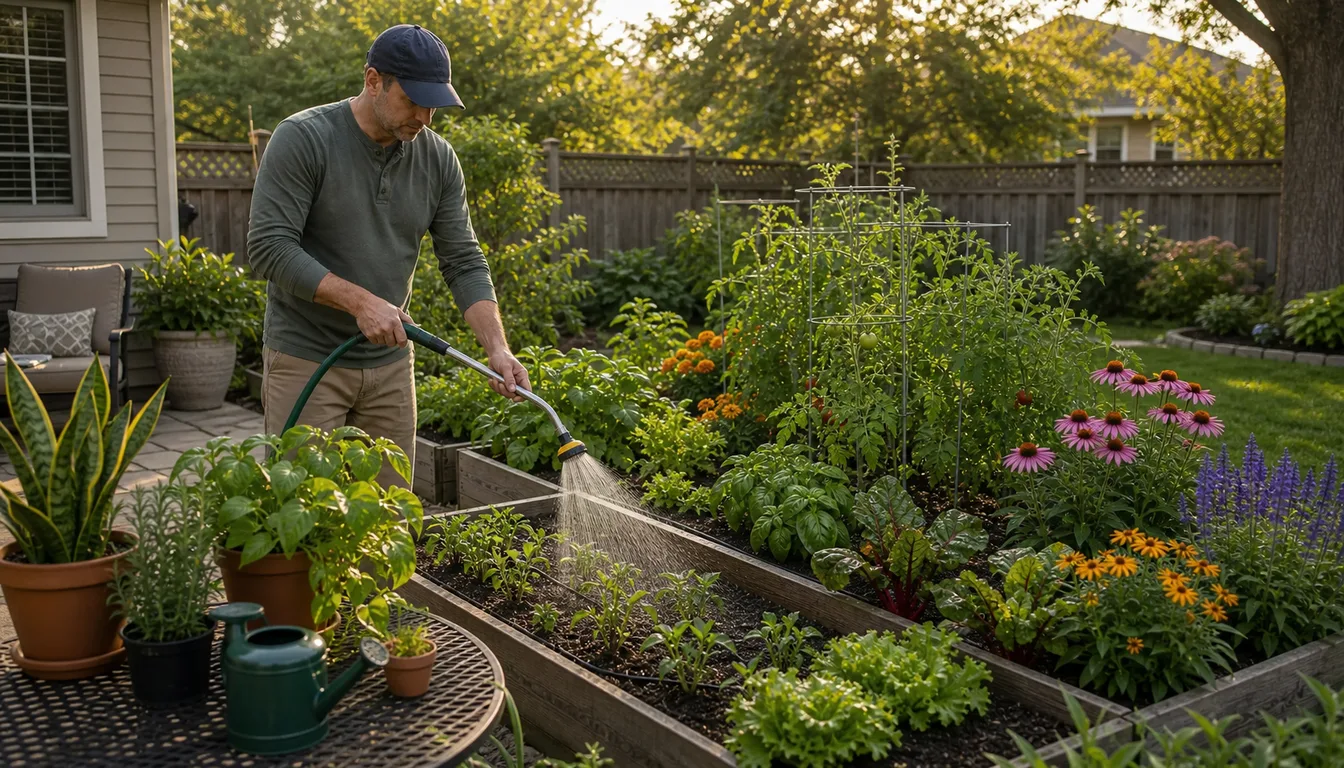
Best Time to Water Plants for Healthier Roots
Watering at the wrong time wastes water and stresses plants, even if you are generous with the…
11 min read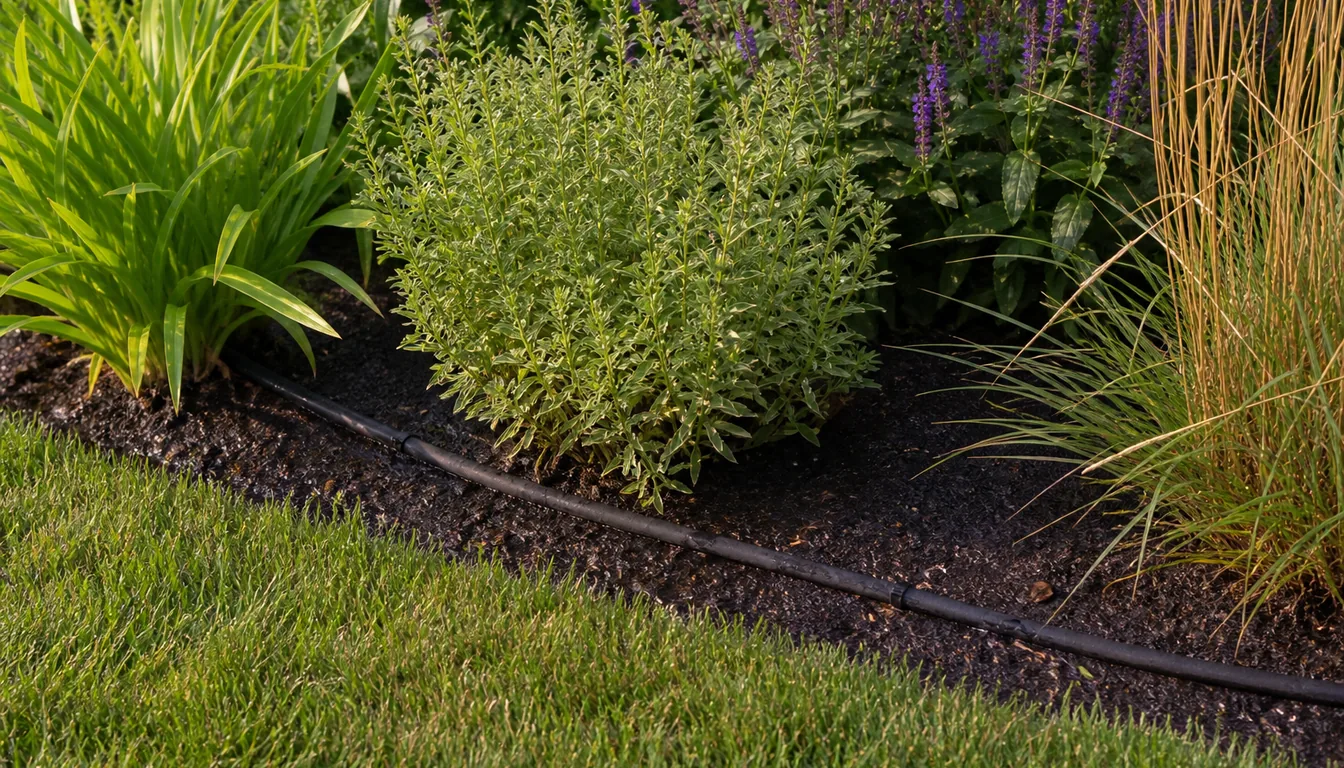
Deep Watering vs Frequent Watering: What Roots Need
Deep watering usually serves established lawns, vegetables, trees, and shrubs better than repeated…
17 min read