
How to Tell a Marigold Bud From a Spent Flower
The tricky part of deadheading marigolds is not the cut, it is telling a spent head from a fat new bud, because on a marigold they look almost the same. Clip the wrong one and you remove tomorrow's flower.
This guide starts with that ID problem, then shows the finger-pinch that needs no tools and how to let a few heads dry down for seed. The same quick habit keeps bed partners like coneflower covered in color too.
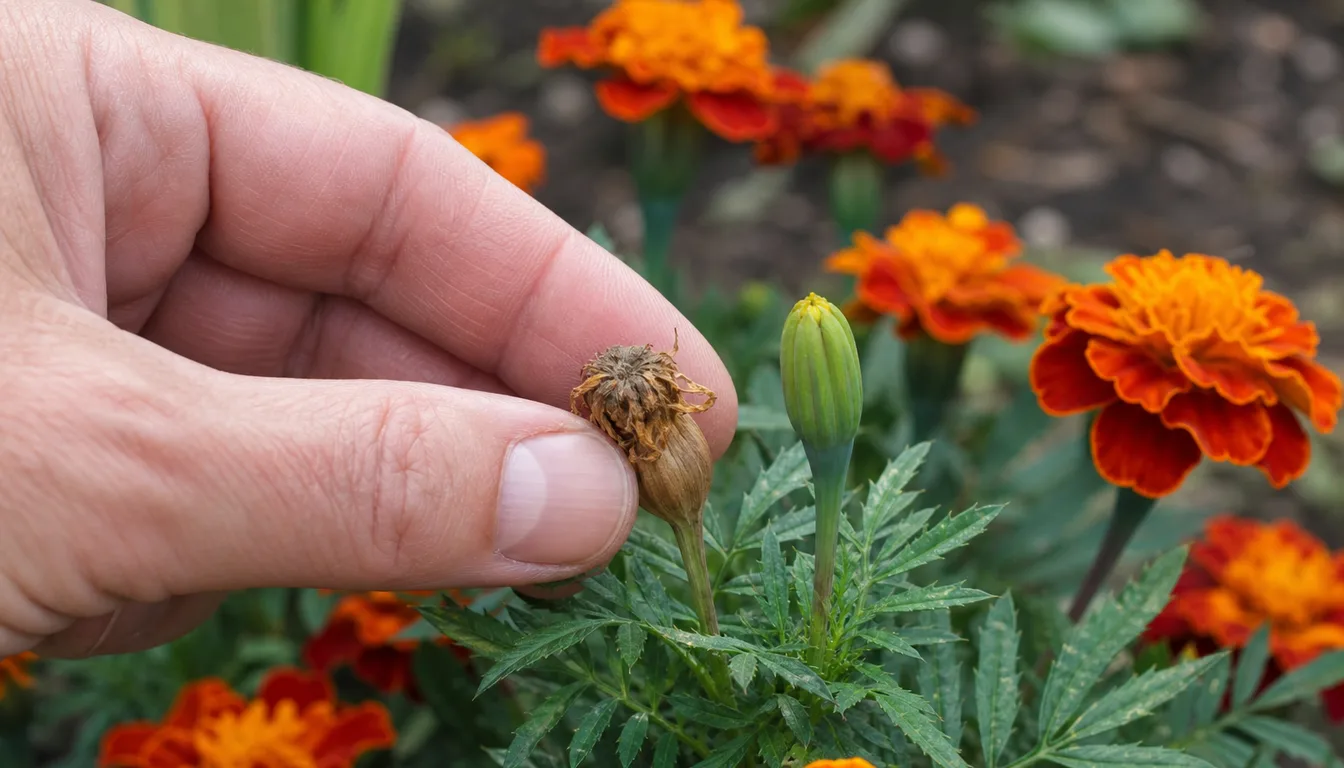
Spent Head or New Bud? How to Tell Them Apart
Telling a finished bloom from a coming one is the whole skill with marigolds, because both sit closed and upright on the stem. Get this right and every later step is easy.
A fresh bud is tight and firm, with green outer bracts wrapped snugly and a rounded, slightly soft tip. A spent head feels papery and loose, the petals have dulled and pulled inward, and behind it sits a swollen pod where seeds are forming. When you are unsure, roll it gently between two fingers. A bud is springy, a finished head is dry and hollow.
The cost of guessing wrong runs one way. Leaving a slightly unripe head on for a few extra days does no harm, while clipping a real bud removes a flower you were waiting for.
- Fresh bud: firm, bright green bracts, springy tip, no pod behind it
- Spent head: dull papery petals curled inward, dry to the touch
- Ready to save seed: brown, crisp, and rustling with loose seeds inside
- When unsure: wait a few days rather than risk cutting a bud
You Only Need Your Fingers to Deadhead Marigolds
No tool beats a thumb and forefinger on a marigold. The stems are soft enough to pinch, just like tip-pinching a pot of basil, and pinching above a leaf set makes the plant branch into two new shoots instead of one tired stalk.
Steady the stem with your other hand so it does not tear when you pinch, which matters most in a container where the whole plant can lift. Reach for small bypass snips only on the thick, woody stems of an older plant, and angle that cut slightly so water does not pool on the surface.
Work down to the first full pair of leaves rather than nipping the head alone, since a bare stub browns and collects moisture. Leaving at least two strong leaves on the cut stem keeps it fed while the new shoots form.
- Find the first full pair of leaves below the spent head.
- Hold the stem steady with your free hand.
- Pinch through just above that leaf pair, taking the head and pod.
- Check that two good leaves remain on the stem you cut.
Deadhead or Let Them Seed? You Can Do Both
Few flowers make seed-saving as easy as a marigold, and it sits comfortably alongside your normal deadheading. You simply treat a few heads differently and let them finish.
Pick the healthiest, heaviest-blooming plants as your seed parents, the way you would choose a strong daylily clump to divide. On each, leave three to five of the best heads uncut and keep deadheading the rest as usual. Those chosen heads fade, brown, and dry into papery pods full of long, quill-like seeds with a dark tip and pale base.
Snip dry heads into a paper bag, never plastic, which traps moisture and molds the seed. Spread the seeds on a plate indoors for a day or two before you store them somewhere cool and dark.
Remember that most bedding marigolds are hybrids, so saved seed may not come back exactly like the parent. That is fine if you are after color rather than an exact match.
- Choose parents: only save from plants that bloomed heavily and stayed healthy
- Leave to dry: 3 to 5 heads per plant, uncut, until brown and crisp
- Store dry: paper envelopes in a cool, dark spot until spring
How Often to Pinch, From Spring to Frost
Cool late spring keeps blooms on the plant longer, so early passes are light and you spend more time shaping than deadheading. Pinch tall stems back a little harder now to keep them from flopping over shorter neighbors like a compact Shasta daisy.
Summer heat speeds the cycle, so a pinch every few days keeps color steady. Pots along a border of lavender cycle faster than the same plants in open ground. By late summer the choice tips toward whether you want flowers or seed, and leaving every head to seed now invites a mat of weak volunteer seedlings in the paths next spring.
Containers run faster than beds all season. A pot on a hot patio dries and cycles blooms quicker, so expect to pinch it more often than the same marigolds in open ground.
Late spring: Pinch weekly, shape floppy tall stems while you go.
Peak summer: Check every 2 to 3 days as heat speeds the cycle.
Early fall: Pick seed plants, keep pinching the rest for color.
Near frost: One last tidy pass a week or two before your first frost.
Still Pinching but Getting Few New Buds?
If the old heads keep coming off and fresh color still lags, look past the deadheading. Marigolds need full sun, at least 6 hours for a heavy show, and anything less gives lanky stems and thin bloom no matter how clean you keep them.
Soil at the extremes stalls buds too. Ground that stays soggy feels cool and heavy two inches down and yellows plants from the base, while dry, starved soil leaves small blooms and buds that seem stuck, a problem that shows up faster in pots. Overfeeding with high nitrogen pushes leaves over flowers, the same way it does on an overfed tomato.
Pests can ride in on the heat. Aphids cluster on new tips much as they do on rose buds. From there they often spread to fragrant neighbors like mint. Spider mites leave fine webbing and speckled leaves in hot, dry spots against a wall.
- Lanky stems, few flowers: count real sun hours, aim for six or more
- Yellowing from the base, heavy wet soil: improve drainage, ease off water
- Small stuck buds, dry pot: water more evenly and deeply
- Sticky tips or fine webbing: aphids or mites, rinse and treat before cutting more
Keeping Container Marigolds in Bloom
A pot on a hot patio is the hardest place to keep a marigold flowering, so it rewards the most attention. Faded heads show at eye level and the tight mix dries fast, which cycles blooms quicker than a garden bed.
Pinch potted plants right after watering, when the stems are firm and less likely to tear. Water deeply at the soil line so moisture reaches down several inches, then let the top inch dry before the next soak to keep the crown from rotting. In a mixed pot, match the thirstiest crop like a pepper and let mulch even out the swings.
A light feed helps, but keep it gentle. Use a balanced flower food at half the label rate every couple of weeks, since heavy nitrogen in a small pot pushes soft foliage and few buds. Mulch even a container lightly, leaving a bare ring around the stem so the base stays dry.
Pro Tips
- Roll a questionable head between two fingers, a springy one is a bud and a hollow papery one is spent.
- Pinch container marigolds right after watering, since firm stems tear less than dry ones.
- Leave three to five heads on your best plant to dry if you want seed, and keep deadheading the rest.
- Dry saved seed on a plate indoors for a day or two, then store it in paper, never sealed plastic.
- Combine each pinching pass with a quick check for aphids on new tips and webbing under leaves.
- If a plant goes leggy, cut whole stems back by a third rather than nipping single heads.
- Compost healthy spent heads, but bin any showing mold so it does not spread through the pile.
Frequently Asked Questions
How do I tell a spent marigold head from a new bud?
A fresh bud is firm and springy with tight green bracts and no pod behind it. A spent head feels papery and hollow, its petals curl inward, and a swollen seed pod sits just below. If you are unsure, wait a few days, since leaving a head slightly too long is harmless but cutting a bud costs you a flower.
Do I need tools to deadhead marigolds?
Usually not. Marigold stems are soft enough to pinch with your thumb and forefinger above a leaf pair. Reach for small bypass snips only on the thick, woody stems of older plants, and steady the stem with your free hand so it does not tear.
How do I save seed from marigolds while still deadheading?
Leave three to five of the best heads on your healthiest plants uncut and keep deadheading everything else. Let those heads dry to brown and crisp, snip them into a paper bag, and break them open for the long seeds. Store the dried seed in paper somewhere cool and dark.
Will marigolds keep blooming if I never deadhead?
They keep flowering, but the show slows once many seed heads form and the plant shifts energy to seed. Regular pinching keeps that energy going into buds instead, so you get fuller, more frequent flushes through the season.
When should I stop deadheading marigolds for the year?
About two to three weeks before your average first frost you can ease off. Do one last tidy pass for neatness, or let a few heads go to seed on your best plants if you want to save seed or allow some volunteers next spring.
Sources & References
Related Guides
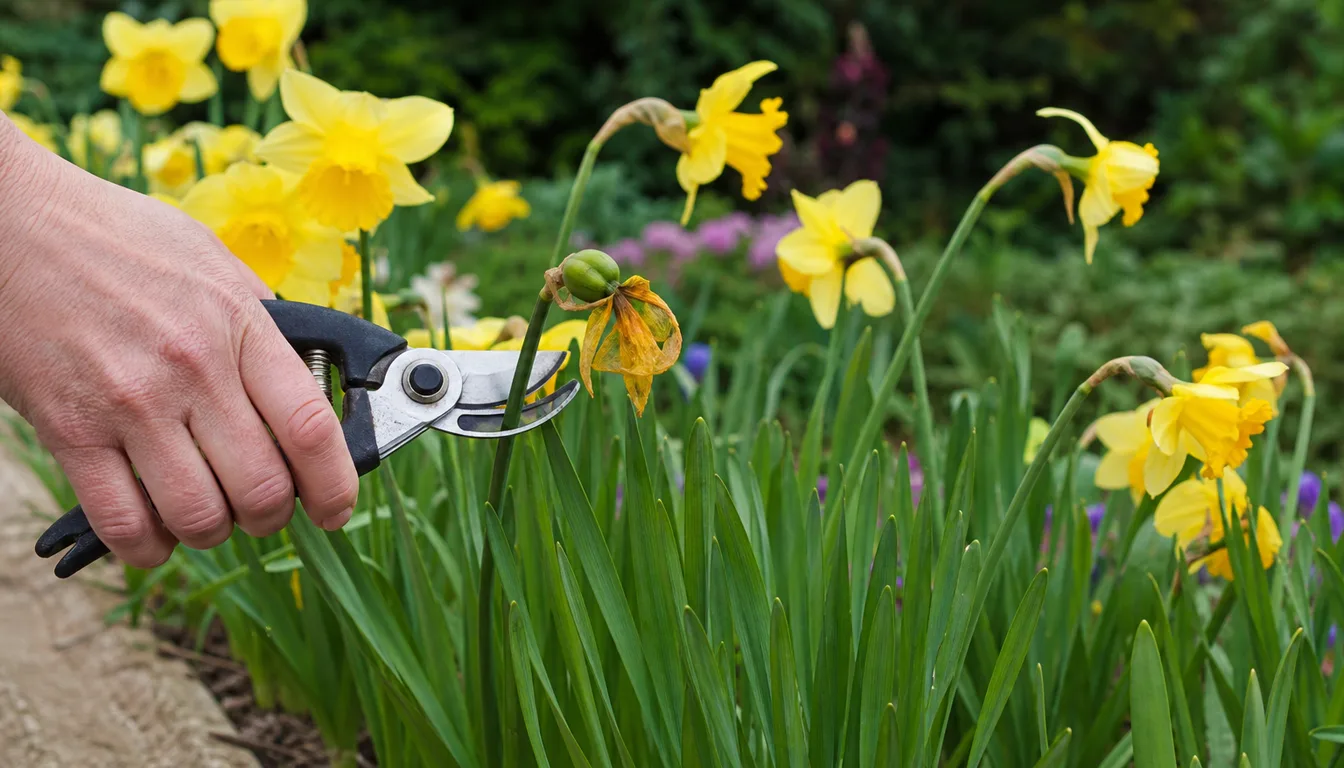
Deadheading Daffodils While Leaving Foliage to Recharge
Deadheading a daffodil is really two jobs that look like one. You take off the spent flower and the…
8 min read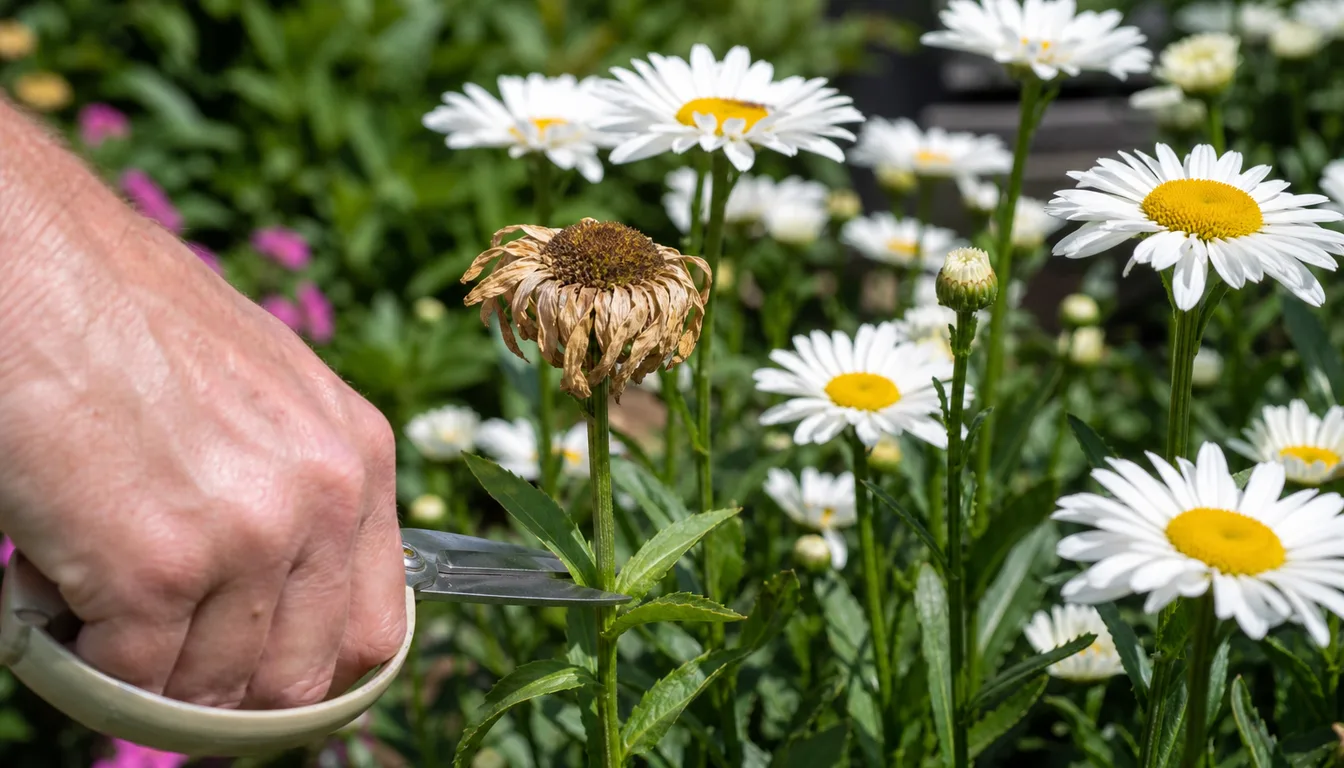
Deadheading Daisies: Why the Cut Depends on the Type
The word daisy covers a dozen unrelated plants, and the cut that keeps one blooming can waste your…
9 min read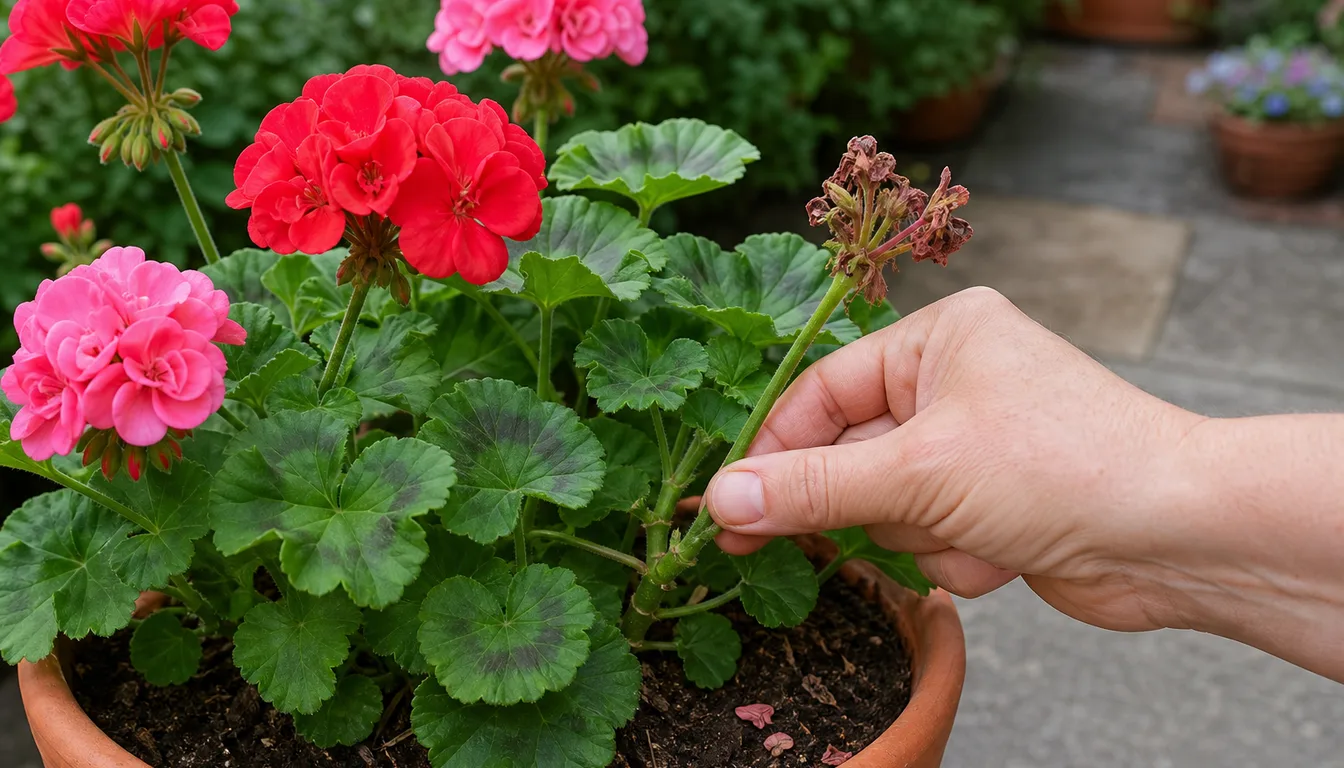
Deadheading Geraniums: Snap the Whole Stalk, Not the Petals
A geranium carries its flowers in a rounded cluster on top of a long bare stalk, and that shape is…
10 min read