
How to Germinate Old Seeds After a Quick Viability Test
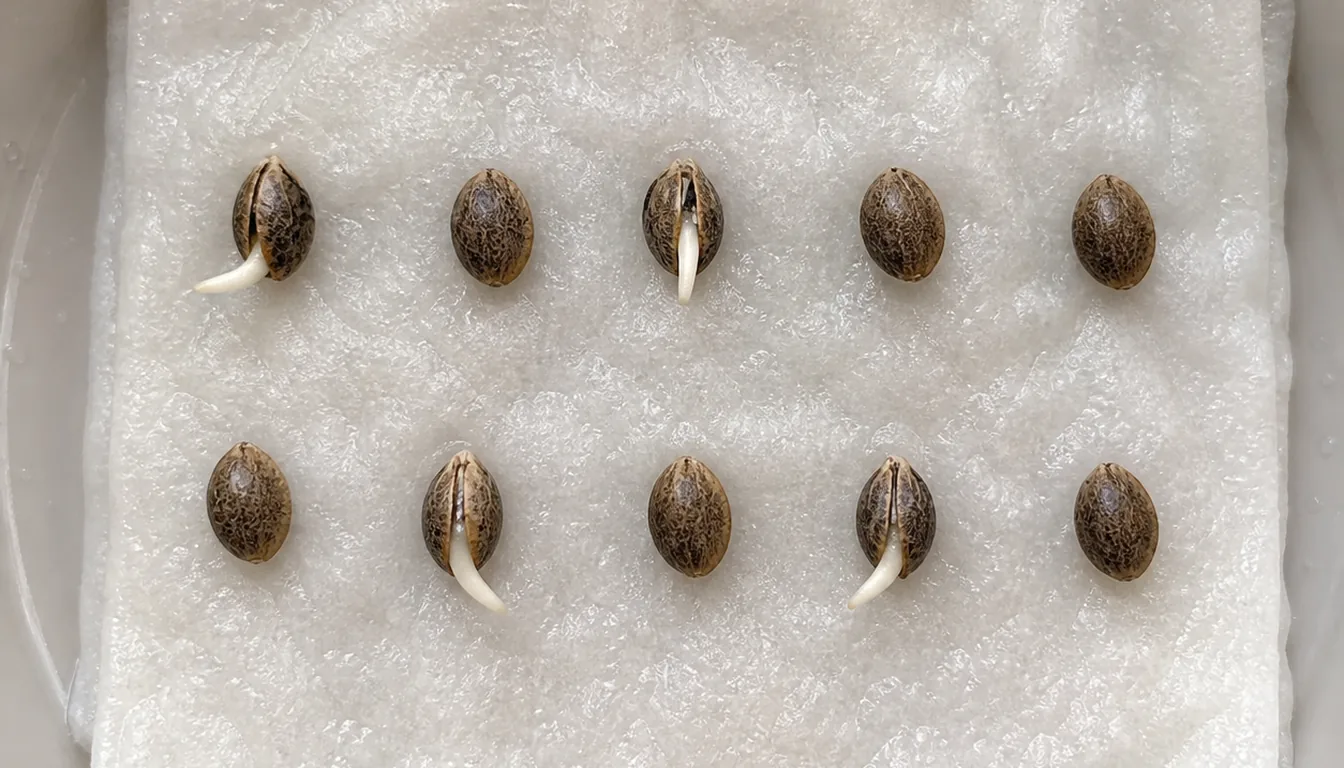
Old seed is worth planting when a small test shows most of it still sprouts. Put 10 to 20 seeds on a damp paper towel in a warm spot for about a week, then count. Iowa State University Extension treats 90% or better as very good and 50% or lower as too low to be worth sowing, and Illinois Extension draws its replace-the-packet line at six sprouts out of ten.
Age alone does not decide the result. Onion, parsley, and parsnip seed often fade after a single year, while cucumber and radish seed stored cool and dry can last about five. And no soak or scratch brings back a seed whose embryo has died. Those treatments help only seeds that are alive but dormant, which old vegetable seed usually is not.
At a glance
How Long Common Vegetable Seeds Stay Viable
Seed lifespan varies widely by crop. Two extension tables give approximate figures, and they agree on most crops. Where they differ, the difference is a reminder that these are typical lifespans, not dates when seed stops working.
| Crop | Illinois Extension | Iowa State University Extension |
|---|---|---|
| Onion | 1 year | 1 year |
| Parsley | 1 year | Not listed |
| Parsnip | 1 year | Not listed |
| Sweet corn | 2 years | 2 years |
| Pepper | 2 years | 2 years |
| Leek | 2 years | Not listed |
| Bean | 3 years | 3 years |
| Pea | 3 years | 3 years |
| Carrot | 3 years | 3 years |
| Spinach | 3 years | 5 years |
| Broccoli | 3 years | 5 years |
| Beet | 4 years | 4 years |
| Tomato | 4 years | 4 years |
| Squash | 4 years | 4 years |
| Cucumber | 5 years | 5 years |
| Radish | 5 years | 5 years |
| Lettuce | 6 years | 5 years |
Iowa State notes that its numbers assume ideal storage, that germination still drops a little each year inside the range, and that seed much older than the listed span is not worth the time of a test. That makes the table a sorting tool. A three-year-old packet of onion or parsley seed is past its usual span and is a candidate for replacement, while a three-year-old tomato packet is well within it and only needs a test.
Parsley is the crop where this catches people most often, because its seed is slow to sprout even when fresh. The parsley seed-starting timeline explains how long a healthy sowing takes, so a slow tray is not mistaken for a dead one.
Why Storage Matters More Than the Packet Date
Two conditions age seed fastest. Illinois Extension identifies seed moisture and storage temperature as the most important factors, and says the drier the seed is when it goes into storage, the longer it lasts.
The storage advice from the sources is consistent. Illinois Extension recommends storing seed below 45°F in a sealed jar or bag in the refrigerator, and simply keeping it cool and dry if there is no room. NC State Extension recommends tightly sealed containers kept around 40°F at low humidity, and Iowa State suggests a sealed glass jar in a cool closet, root cellar, or refrigerator, which also keeps out mice and insects.
One step is easy to miss. Illinois Extension advises letting a cold jar come to room temperature before opening it, so moisture from warm air does not condense on cold seed.
This is why a packet from a hot garage or a humid shed can fail early while the same variety kept in a refrigerator stays good for years. For seed saved from your own garden, Iowa State describes drying it in a sealed jar beside an envelope holding an equal amount of silica gel for one to two weeks, then removing the gel before storage.
Running a Germination Test Before You Sow
A germination test answers the only question that matters about an old packet. Iowa State recommends running it about a month before planting, which leaves time to buy fresh seed if the result is poor.
The two sources differ on sample size. Illinois Extension uses 10 seeds, which makes the math easy. Iowa State asks for at least 20, and says 50 is better and 100 is best, since each seed in a sample of ten moves the result by a full 10 percentage points. Ten is fine for a quick read on a common packet, and a larger sample is worth it when the seed is valuable or the result is borderline.
- Count out seedsPick 10 to 20 seeds at random from the packet.
- Wrap themSpread them on a damp paper towel so they do not touch, then fold or roll the towel around them.
- Hold the moistureSlide the towel into a plastic bag or container so it does not dry out.
- Label itWrite the crop, the packet year, the start date, and the days to germination from the packet.
- Keep it warmIowa State gives 70 to 80°F. Light is not needed for this test.
- Check and countLook after two or three days and then daily for about a week, counting a seed as sprouted when a root or seed leaf pushes through the coat.
Slow crops need the full window printed on their packet, so a parsley or pepper test runs longer than one for radish or squash. Iowa State notes that sprouted test seeds can be planted if handled very carefully, which is worth doing when the packet is a variety you cannot replace.
Reading the Result and Adjusting How Much You Sow
The germination rate is the number of sprouted seeds divided by the number tested. What to do with it depends on where it lands.
| Result | What the sources say | What to do |
|---|---|---|
| 90 to 100% | Very good for most species, according to Iowa State | Sow at the normal rate |
| 70 to 89% | Illinois Extension says to increase the number sown, and Iowa State calls 70 to 80% acceptable for small or abundant seed | Sow more seed to make up the difference |
| 51 to 69% | Illinois Extension recommends buying new seed below seven of ten | Replace the packet unless the variety is hard to find |
| 50% or lower | Too low to be worth using for nearly all species, according to Iowa State | Buy fresh seed |
Adjusting the seeding rate is simple arithmetic. Divide the number of plants you want by the germination rate. A tray that needs 20 seedlings from a packet that tested 80% needs 25 seeds, and the same tray from a 70% packet needs about 29.
There is a limit to how far thicker sowing can stretch a weak packet. Illinois Extension explains that a seed's strength and vigor decline before its germination rate does. So when only a few seeds in a test sprout, the ones that do are less likely to grow into strong plants. Sowing three times as much seed from a packet that tested 30% buys more seedlings but not better ones, which is why both sources draw a line where fresh seed becomes the better value.
Dead, Dormant, or Just Slow
A seed that does not sprout is not always dead. NC State Extension's propagation handbook separates three cases, and each one calls for something different.
A seed can be viable but held back by its environment. Without enough moisture, the right temperature, oxygen, or light for the species, it waits. This is the case a germination test rules out, because it supplies warmth and steady moisture.
A seed can be dormant because of its own coat or tissues. Seed coat dormancy comes from a hard coat that water cannot get through, and NC State describes scarification by filing, rubbing with sandpaper, or a hot water soak made by bringing water to a boil, taking it off the heat, adding the seeds, and leaving them until the water cools. Internal dormancy needs a period of moist chilling, called cold stratification, or moist warming, and the length depends on the species. Some tree and shrub seeds need both treatments, scarification first and then stratification.
Or the seed can be dead, with an embryo that is no longer alive. No treatment changes that.
This sorting matters because of what NC State says about vegetables. The shallow dormancy many vegetable seeds show disappears with dry storage and needs no treatment. An old packet of lettuce or beans that fails a warm, moist test is most likely dead rather than dormant, and soaking or scratching it will not help. Scarification and stratification belong to species that need them even when fresh, such as many perennials, trees, and shrubs, and a reference for that species gives the method and timing.
Sowing a Packet That Tested Weak
A packet in the middle range still has a use when it is sown with the test result in mind.
For transplants, sowing an extra seed or two per cell and snipping the extras once seedlings appear gives the same number of plants without leaving empty cells. The indoor seed-starting setup covers the trays, light, and timing those cells need.
For crops sown directly in the garden, such as carrots, beets, and beans, the arithmetic above sets how much thicker to sow, and thinning afterward brings the row back to normal spacing.
Because the seedlings from a weak packet tend to be less vigorous, keeping a few spare plants or a fresh packet on hand is cheap insurance for the crops that matter most. A weak packet is best used where a gap in the row costs little, and fresh seed goes where every plant counts.
Pro Tips
- Write the year on every seed packet you open, since the year is what tells you whether a test is worth running.
- Let refrigerated seed jars warm to room temperature before opening them so moisture does not condense on the seed.
- Test old seed about a month before sowing, which leaves time to order fresh seed if the packet fails.
Frequently Asked Questions
How long do vegetable seeds stay viable?
It depends on the crop and how the seed was stored. Onion, parsley, and parsnip seed often last about one year, pepper and sweet corn about two, tomato and squash about four, and cucumber and radish about five when kept cool and dry.
What germination rate is too low to bother planting?
Iowa State University Extension calls 50% or lower too low for nearly all species. Illinois Extension recommends buying new seed when six or fewer of ten seeds sprout.
Do old seeds grow weaker plants?
They can. Illinois Extension explains that seed vigor declines before germination rate does, so when only a few seeds in a packet sprout, those seedlings are less likely to grow strong.
Will soaking old seeds help them germinate?
Not if the seed has died. Soaking and scarification help seeds with hard coats that block water. Many vegetable seeds lose their dormancy in dry storage, so an old vegetable seed that fails a warm, moist test is usually dead.
What is the best way to store leftover seeds?
Keep them dry and cool in a sealed jar or bag, ideally in a refrigerator below about 45°F. Let the container warm to room temperature before opening it so moisture does not condense on the seed.
Sources & References
Related Guides

Best Butterfly Garden Plants for a Complete Habitat
The best butterfly garden plants do two different jobs. Host plants feed caterpillars, while nectar…
15 min read
Best Fall-Blooming Flowers for Color Near Frost
A bed that still carries flowers in October usually was planned before temperatures fell.
9 min read
Best Fast-Growing Trees for Shade and Privacy
The best fast-growing tree is the one whose mature crown, roots, climate range, and maintenance…
16 min read
Best Fragrant Flowers for Every Yard and Season
The best fragrant flowers depend on climate, light, space, and the hours you use the yard.
15 min read
Best Full-Sun Perennials for Hot, Bright Beds
The best full-sun perennials are the ones that match the bed's soil moisture and drainage, local…
14 min read
Best Ground Cover Plants for Sun, Shade, and Slopes
The best ground cover is a plant that survives the site and performs the job without escaping into…
18 min read