Fertilizingschedule10 min read
When to Fertilize Tomatoes for Bigger Harvests
Learn exactly when to fertilize tomatoes at each growth stage so you get strong plants, more flowers, and bigger fruit without burning roots or growing only leaves.
Fertilizing tomatoes is less about the brand on the bag and more about timing. Feed too early and you get tall, floppy vines. Feed too late and flowers drop instead of setting fruit.
The short version: each growth stage, so you know exactly when to start, pause, and boost feeding. You can use the same schedule for in-ground beds, raised beds, and large containers; only small tweaks change by setup. If you already fertilize your whole vegetable garden, this will help you fine-tune timing just for tomatoes.
ecoUnderstand Tomato Growth Stages First
Fertilizer timing makes sense once you break tomatoes into clear stages: seedling, vegetative growth, flowering, and heavy fruiting. Each phase wants a different balance of nitrogen, phosphorus, and potassium.
Seedlings you start indoors or buy as small transplants already sit in nutrient rich mix. For the first 3–4 weeks after germination, they rarely need extra food if you used a quality seed-starting mix.
Vegetative growth kicks in after transplant, when roots start exploring the bed or container. This is where a balanced or slightly higher nitrogen feed pushes strong stems and plenty of leaf surface to power fruit later.
Flowering shifts the focus underground and into blossoms. Here you want less nitrogen and more phosphorus and potassium so flowers hold and fruit sets instead of more leaves forming.
Heavy fruiting is that mid to late summer stretch where your vines look like they are covered in ornaments. This is the phase where consistent, light feeding pays off in bigger harvests, not giant one time doses.
Indeterminate varieties act like climbers that keep stretching and blooming, a bit like a vining cucumber plant. Determinate types behave more like a compact bush, closer to a small pepper plant, and finish their fruiting window faster.
You will time fertilizer for both types using these same stages, but indeterminates usually need an extra midseason boost because they just keep growing.
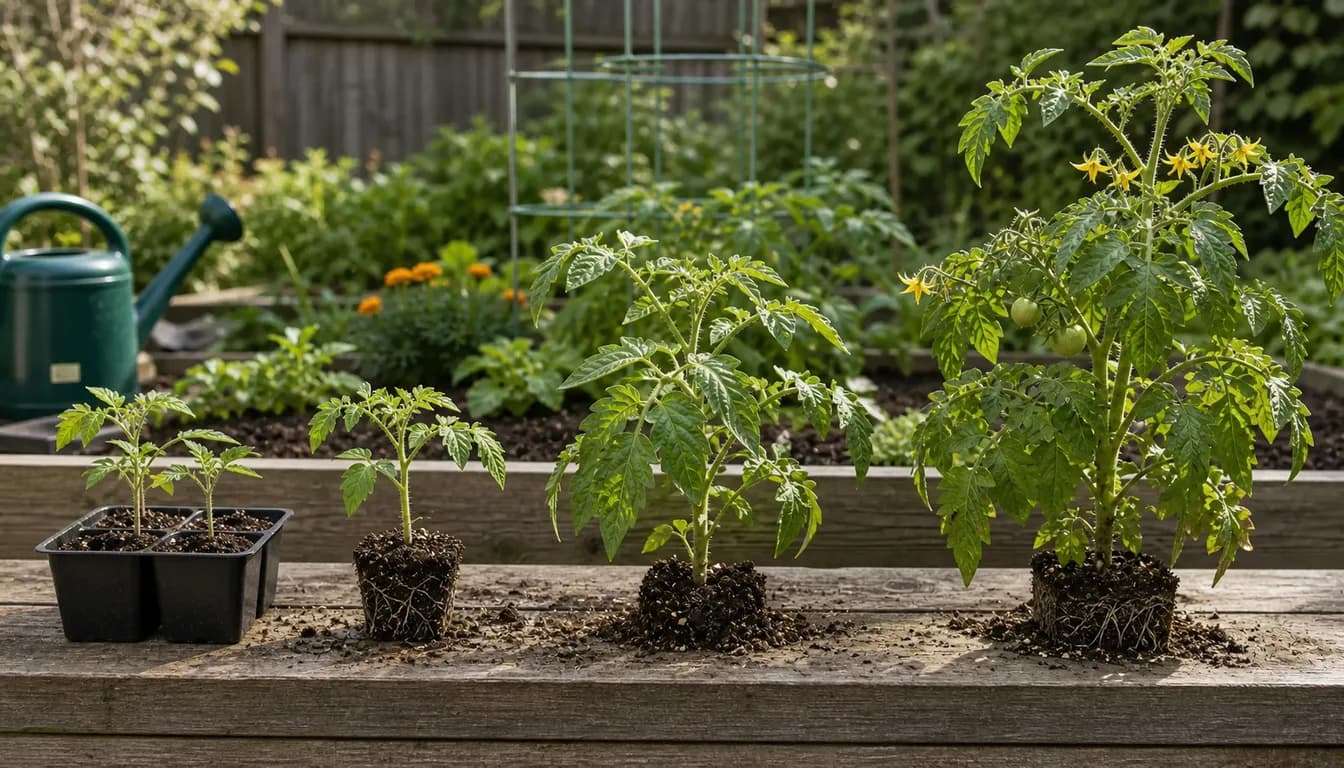
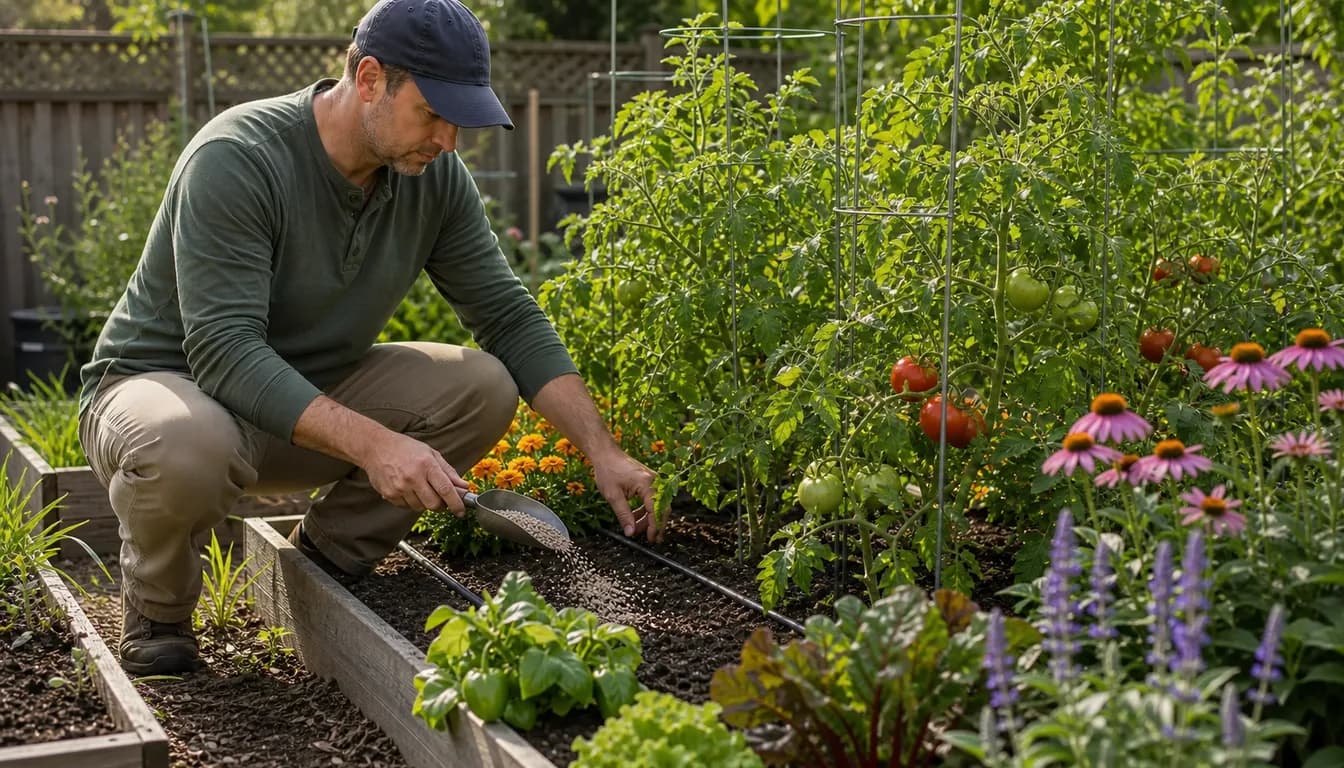
Fertilizer timing changes as tomatoes move from leafy growth into flowering and fruiting.
compostFeeding Seedlings and Fresh Transplants
Young tomato seedlings are easy to burn, so the first rule is go weaker than the label says. Once seedlings have 2–3 sets of true leaves, you can start a very dilute liquid feed.
Mix a balanced liquid fertilizer at ¼ strength and use it every 10–14 days on seedlings grown in flats. Water with plain water between feedings so salts do not build up in the cells or trays.
Transplants going into beds or containers should get their main feeding in the planting hole, not poured right on the stem. Work a slow release organic fertilizer into the top 4–6 inches of soil before planting.
Never drop strong fertilizer directly into the transplant hole touching the roots. Always mix it into the surrounding soil first.
Side dress with compost or a gentle organic fertilizer once, about 2 weeks after transplant, to help plants recover from transplant shock. This works especially well in raised beds where nutrients wash out faster.
If you tuck basil or other herbs at the base of your tomato vines, keep in mind they will share that fertilizer band. Slightly lighter doses keep herbs flavorful instead of overly lush and bland.
Container grown plants need this early feeding even more, since potting mix usually starts with limited nutrients compared to rich in ground beds.
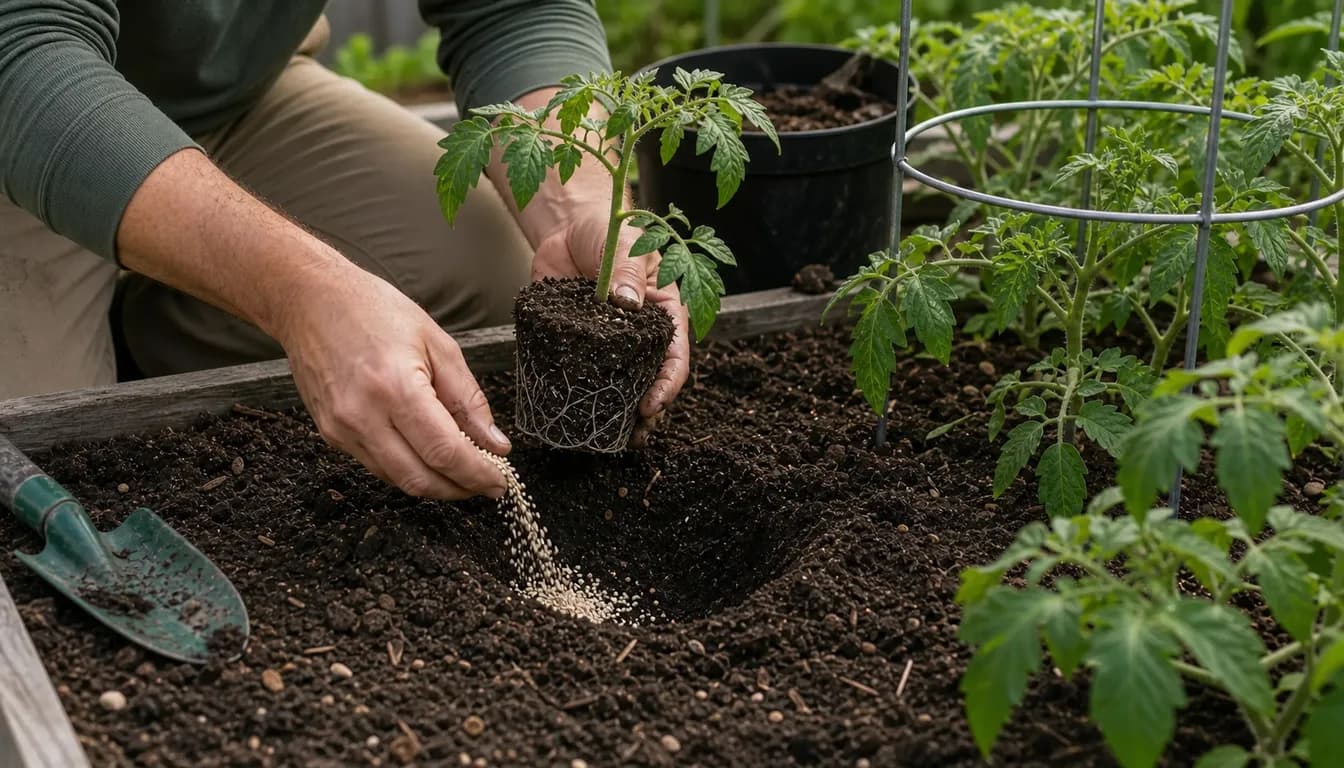
Gentle fertilizer at transplant helps tomatoes root quickly without burning tender roots.
Guide — See AlsoWhen to Apply Fertilizer to Your Vegetable GardenLearn exactly when to apply fertilizer to your vegetable garden by soil type, crop, and growth stage so you get steady h
chevron_rightcalendar_monthTiming Fertilizer During Flowering and Fruit Set
The most common timing mistake is heavy feeding right as first flowers appear. Big nitrogen hits at this point give you extra foliage but fewer clusters of fruit.
Switch to a lower nitrogen, higher phosphorus and potassium fertilizer as soon as you see the first yellow blossoms forming on your tomatoes. A label that reads something like 5-10-10 works well here.
Apply this bloom stage fertilizer every 3–4 weeks for in ground plants, and every 2–3 weeks for container grown vines, since nutrients leach out of pots faster when you water.
If you see lots of flowers dropping without setting fruit, stop all fertilizer for two weeks and focus on even watering.
Blossom drop also happens from heat stress, especially in Zone 8–11 summers. Linking your fertilizing to actual plant signals works better than sticking to a strict calendar date like you might with woody shrubs and trees.
Look for strong green leaves, plenty of open flowers, and no obvious nutrient deficiency. If everything looks balanced, lighter, more frequent doses will keep that going without shocking the root zone.
In cooler areas such as zone 5 gardens, flowering often starts later but the same rule holds, you feed lightly as blossoms appear and keep going through early fruit set.
Email Updates
Join the KnowTheYard update list
Zone-specific advice, seasonal reminders, and new plant guides — no filler.
thermostatMidseason Boosts and Late Season Cutoff
Midseason is where good feeding habits turn into noticeable yield. Once your tomato plants are loaded with marble sized fruit, they are pulling nutrients hard out of the soil.
Top dress with compost or a balanced organic fertilizer about 6–8 weeks after transplant. Scratch it into the top inch of soil out at the drip line, then water deeply so nutrients reach the active roots.
Container plants may need a light liquid feed every 7–10 days during peak production, similar to how you might keep a hungry cucumber in a pot going. Cut those labeled rates by half so you do not build up salts.
Stop all nitrogen heavy fertilizing about 4 weeks before your first expected frost. This tells the plant to finish ripening existing fruit instead of pushing out soft new growth that will just be killed.
In long season areas like zone 9 growers, you might plan two clear midseason boosts, once early summer and again in late summer if vines are still healthy.
Watch the foliage late in the year. A little yellowing on very old lower leaves is normal. Pale new leaves or stunted growth can signal that one last mild feeding will help remaining fruit size up before cold weather.
Guide — See AlsoWhen to Fertilize Your Garden for Real ResultsLearn exactly when to fertilize vegetable beds, flowers, fruit, and lawns so you feed plants at the right time instead o
chevron_rightcalendar_monthAdjusting Tomato Feeding by Season and Zone
Fertilizer timing shifts a lot between zone 3 and zone 10. Short seasons up north demand earlier soil prep and quicker feeding, while long seasons further south need more restraint to avoid nonstop foliage.
In cold regions like zone 3 gardens, we treat tomatoes almost like peppers in short seasons. Work fertilizer into the soil two weeks before planting, then focus on a strong starter dose at transplant and one light feeding as fruit sets.
Middle zones around zone 5–7 can support a full feeding schedule. That usually means pre-plant fertilizer, a transplant starter, one feeding at first flower, then a final light dose four weeks later if plants still look hungry.
Hot zones, especially zone 9 and zone 10 heat, grow tomatoes for many months. Here the timing goal is avoiding constant high nitrogen, which leads to vines like grape canes and very few tomatoes.
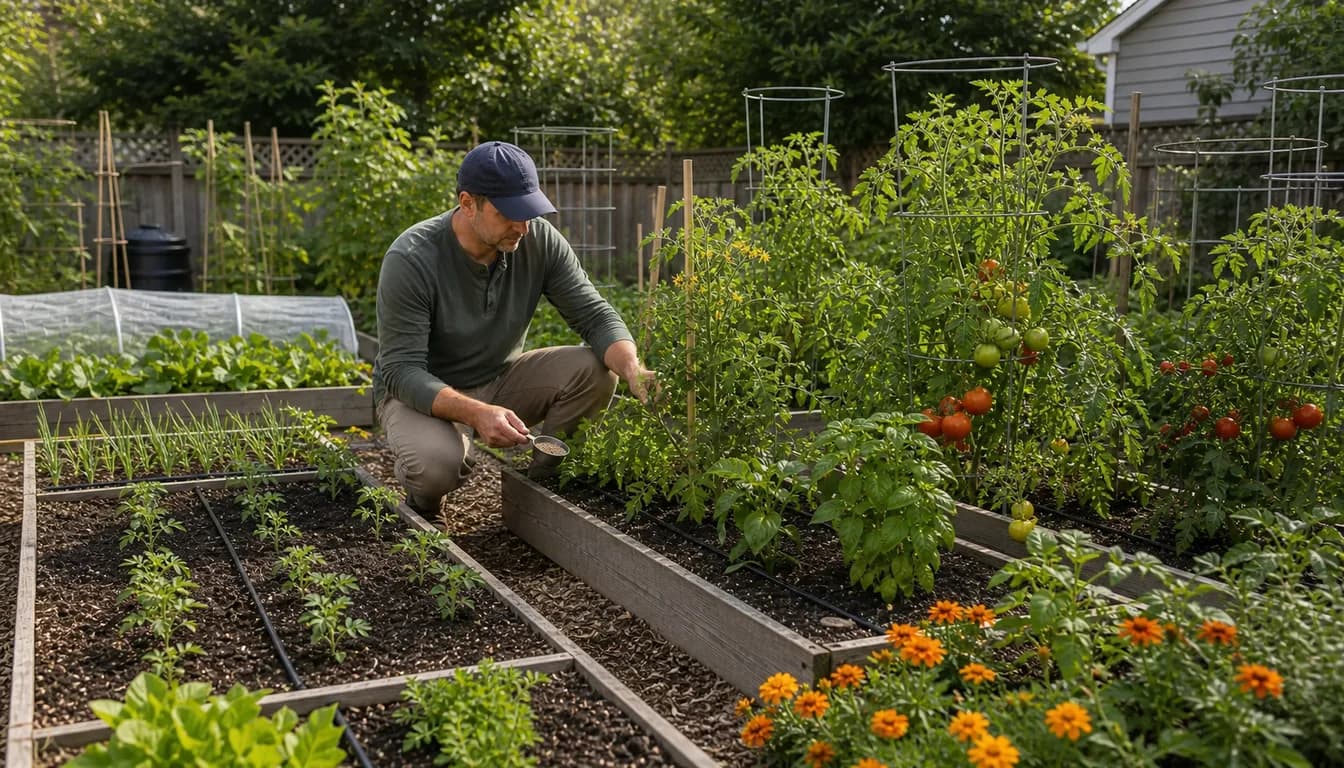
Match fertilizer timing to your growing season length for better tomato yields.
- fiber_manual_recordCool zones (3–5): Pre-plant fertilizer plus 1–2 light follow-up feedings
- fiber_manual_recordMild zones (6–7): Pre-plant plus 2–3 well-timed feeds through fruit set
- fiber_manual_recordWarm zones (8–10): Lower doses spaced 4–6 weeks apart, stopping earlier
- fiber_manual_recordVery hot spells: Pause high-nitrogen products during extended heat waves
quizSpotting Overfertilized vs Hungry Tomato Plants
Leaf color and growth speed often tell you when to fertilize tomatoes better than any calendar. Healthy plants carry medium green leaves, steady new growth, and set flowers without dropping them.
Too much fertilizer shows up as very dark, almost bluish leaves and thick stems. You also get lots of foliage, very few flowers, and sometimes curled leaf tips that mimic what peace lily leaves do in rich houseplant soil.
Underfed plants look washed out, with pale older leaves and slow growth. Flowers may be small and fall off early, like an overworked basil plant that has gone too long without a feed in a pot.
If you are unsure whether plants are overfed or hungry, skip fertilizer and water deeply first. Extra nutrients never fix dry roots.
Use the plant's pattern, not one leaf, before you feed again.
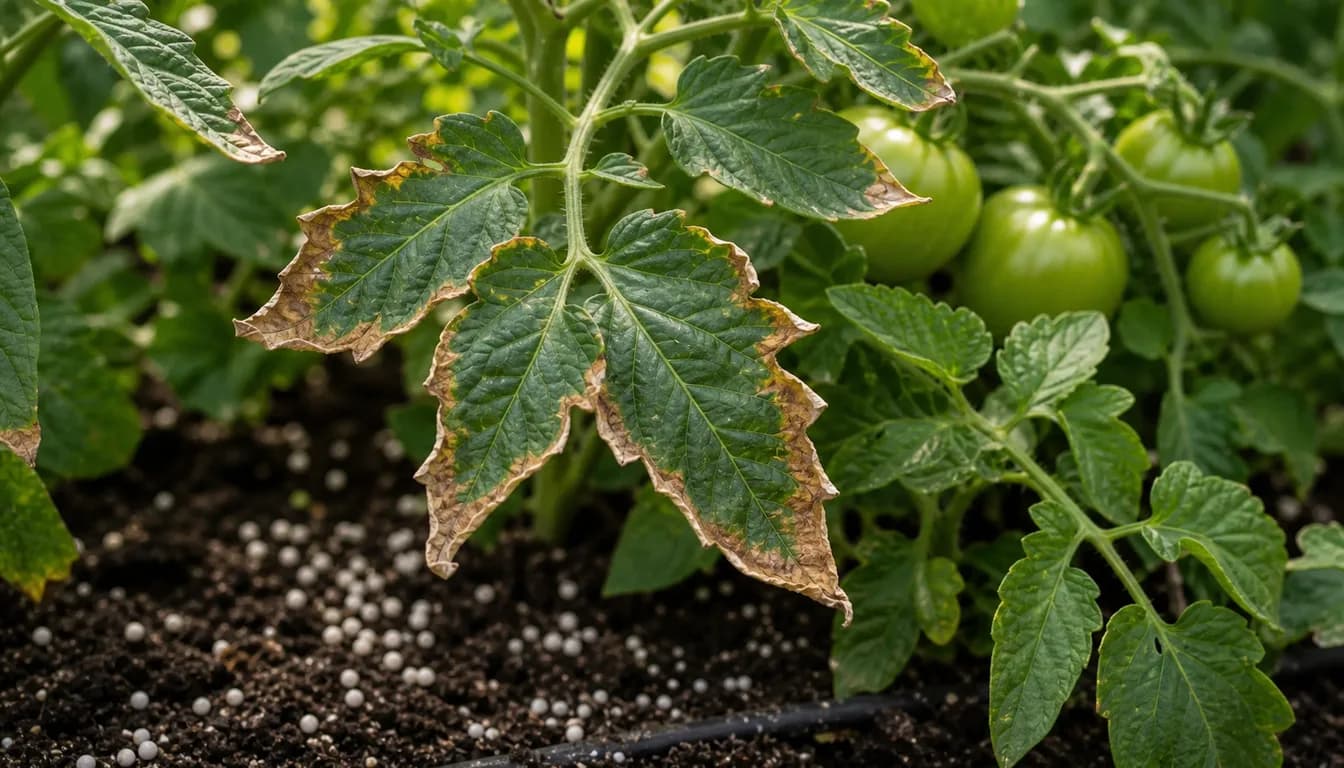
Crisp brown edges on lower leaves are a classic sign of fertilizer burn on tomatoes.
- fiber_manual_recordOverfed clues: Dark green leaves, thick stems, few fruit, crispy edges
- fiber_manual_recordHungry clues: Pale lower leaves, thin stems, slow growth, fewer flowers
- fiber_manual_recordSalt buildup: White crust on soil or pot rims, similar to overfed snake plant foliage
- fiber_manual_recordSafe response: Flush with plain water, then wait 7–10 days before deciding on more fertilizer
Guide — See AlsoMake Homemade Vegetable Fertilizer That Actually WorksLearn how to mix safe, effective homemade vegetable fertilizer from common ingredients, when to use each type, and how t
chevron_rightwater_dropCoordinating Watering and Fertilizer Timing
Water schedule can make a good fertilizer plan either shine or fail. Applying nutrients to bone-dry soil almost guarantees root burn, especially in containers or raised beds.
We treat tomatoes a bit like blueberry shrubs when feeding. The night before fertilizing, give plants a deep soak so roots are hydrated and salts dilute more evenly in the root zone.
Morning is the safest window for most feedings. Moist soil, cool temperatures, and leaves that dry quickly all reduce stress. Liquid feeds on hot afternoons can create the same problems you see in overwatered hydrangea borders.
The safest timing is slightly moist soil plus cool morning temps every time you fertilize.
- fiber_manual_recordDay before: Water deeply until the top 6 inches of soil are moist
- fiber_manual_recordFertilizer day: Apply liquid or granular in the cool morning hours
- fiber_manual_recordRight after: Lightly water again to wash nutrients into root depth
- fiber_manual_recordOngoing: Match feedings with your regular deep watering, not quick sprinkles
potted_plantFertilizing Tomatoes in Containers and Grow Bags
Tomatoes in pots behave more like hungry monstera vines than in-ground vegetables. Roots fill containers quickly, and frequent watering leaches nutrients out of potting mix much faster.
Because of that, timing shifts from big calendar events to regular small boosts. A slow-release fertilizer mixed into the potting soil at planting, plus light liquid feeds every 2–3 weeks, keeps container tomatoes productive.
Container tomatoes also dry out quicker than plants in beds. Any time you water daily, nutrients flush faster, similar to what happens with thirsty peace lily pots. You will usually fertilize more often, but with weaker solutions.
Reduce liquid fertilizer strength by half for container tomatoes, especially in smaller pots under 5 gallons.
Small pots punish overfeeding quickly, so keep this checklist conservative.
- fiber_manual_recordAt planting: Mix slow-release fertilizer into fresh potting mix
- fiber_manual_recordEarly growth: Start light liquid feeds when plants have 3–4 new leaf clusters
- fiber_manual_recordPeak fruiting: Maintain a 2–3 week liquid schedule, watching for pale foliage
- fiber_manual_recordLate season: Stop feeding 3–4 weeks before your expected final harvest
Guide — See AlsoComposting Facts That Actually Help Your GardenStraight answers on composting facts that matter for home gardens, from what to put in the pile to how long it really ta
chevron_rightwarningCommon Fertilizing Mistakes Tomato Growers Make
Most tomato problems we see come from timing mistakes, not brand choice. Too much nitrogen at the wrong stage can be worse than no fertilizer at all.
One big error is front-loading high nitrogen and never adjusting as plants shift toward fruit. That is how you get plants as leafy as hosta clumps with barely a tomato to show for it.
Another mistake is stacking products. People mix compost, granular fertilizer, and strong liquid feeds all in the same week. That combination can create salt levels that burn roots as badly as an overfed zz plant in a tight pot.
Never add a new fertilizer type without reducing something else you already use.
If you change one product, change the whole feeding week around it.
- fiber_manual_recordFeeding cold soil: Nutrients sit unused when soil is under 55°F, wasting product
- fiber_manual_recordIgnoring labels: Doubling doses rarely speeds growth, it just raises salt levels
- fiber_manual_recordLate heavy feeding: Strong nitrogen after fruit set delays ripening
- fiber_manual_recordSkipping soil tests: Guessing often leads to excess phosphorus or potassium buildup
tips_and_updates
Pro Tips
- check_circleMark transplant day on your calendar so you can time the 6–8 week midseason feeding accurately.
- check_circleUse weaker, more frequent feeds for container tomatoes to avoid salt buildup and root burn.
- check_circleWater deeply the day before fertilizing to protect roots and help nutrients move evenly through the soil.
- check_circleKeep fertilizer a few inches away from the stem so young tomato roots do not sit in a hot band.
- check_circleShake off any granules that land on leaves, since they can burn tissue when they get wet.
- check_circleSwitch to a bloom friendly formula at first flower, then stay consistent instead of bouncing between products.
- check_circlePair tomatoes with lighter feeding herbs so their fertilizer needs match in the same bed.
quiz
Frequently Asked Questions
How often should I fertilize tomatoes in raised beds?expand_more
For most raised beds, feed once at planting, again at first flowers, then one more light feeding about four weeks later. If you add compost yearly, you might skip that last feeding unless foliage looks pale.
Do tomato seedlings need fertilizer every week?expand_more
No. Seedlings in fresh seed-starting mix usually need their first half-strength feeding about two weeks after sprouting. After transplanting into larger pots, feed every 10–14 days instead of weekly to avoid leggy, weak growth.
Should I fertilize tomatoes right after transplanting?expand_more
Give tomatoes a diluted starter fertilizer at transplant, especially if soil is low in organic matter. Water well first, then apply a half-strength liquid or a small dose of starter fertilizer to reduce transplant shock and support root growth.
Can I use the same fertilizer for tomatoes and peppers?expand_more
Yes, most balanced vegetable fertilizers work for both tomatoes and garden peppers. Use similar timing and strength for each, but watch plants individually. Reduce nitrogen if either crop grows too leafy with poor flowering.
Is compost alone enough fertilizer for tomatoes?expand_more
Rich compost can carry a tomato crop in very good soil, but many gardens still benefit from a supplemental low-dose fertilizer. If growth stalls or lower leaves pale midseason, add a balanced or slightly higher phosphorus product to support fruiting.
menu_book
Sources & References
Related Guides
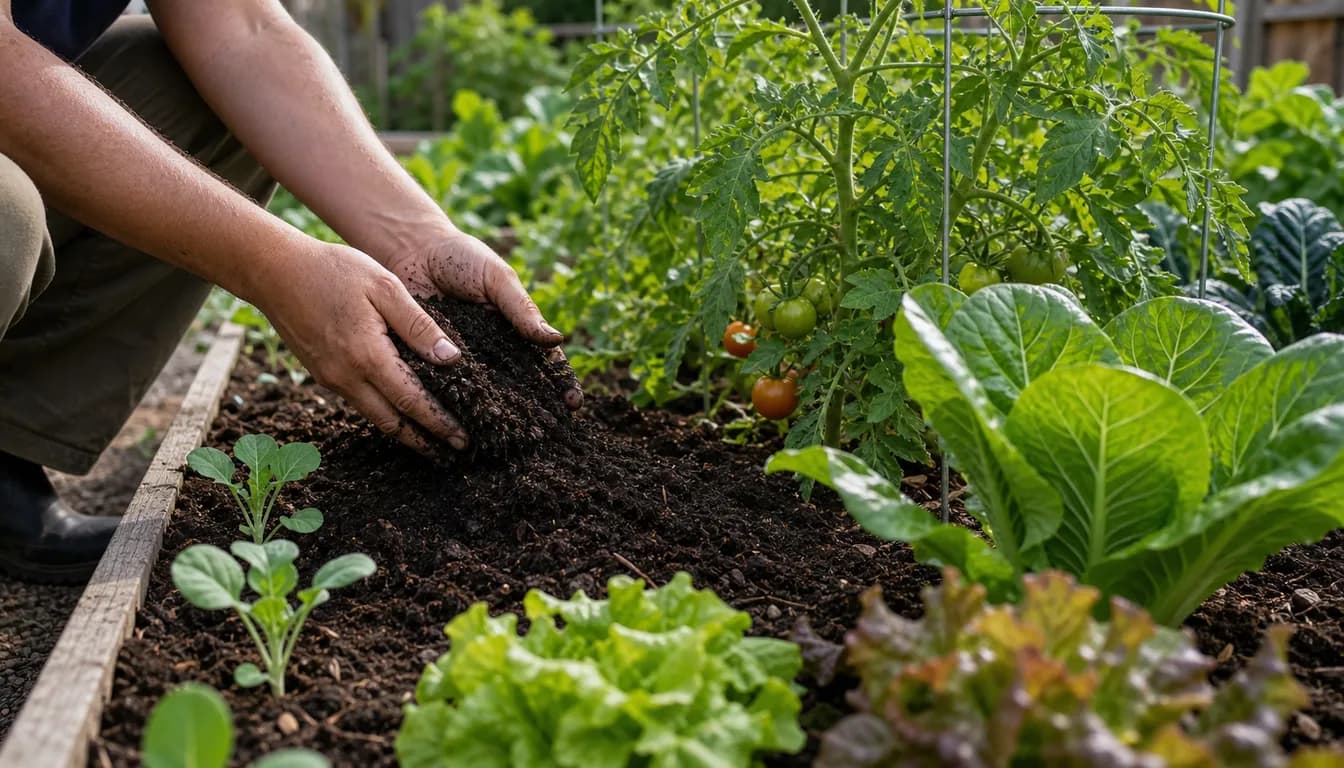
Benefits of Composting for Healthier Soil and Plants
Learn how composting turns kitchen scraps and yard waste into free fertilizer, improves soil, and boosts plant health in any size garden.
12 min read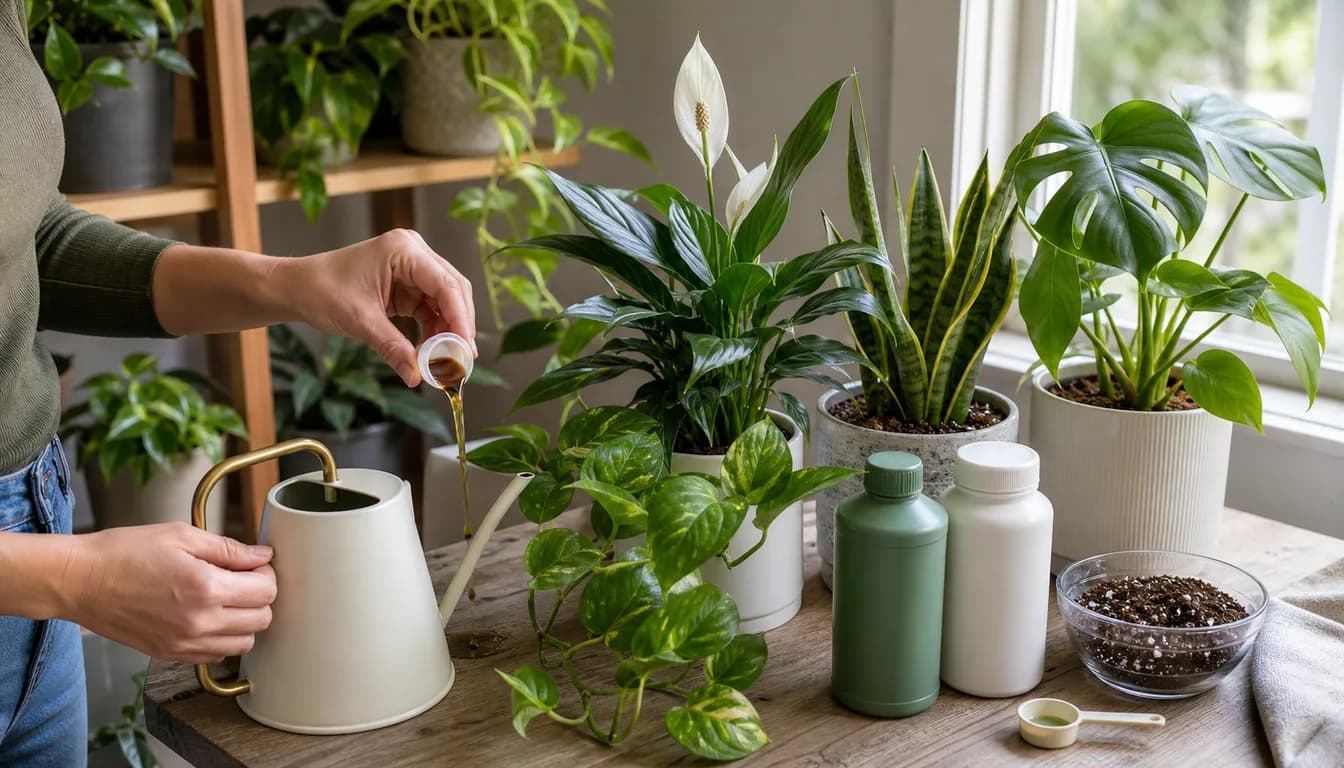
Best Fertilizer for Indoor Plants
Learn how to choose the best fertilizer for indoor plants by growth style, season, and pot size without burning roots or overfeeding slow growers.
14 min read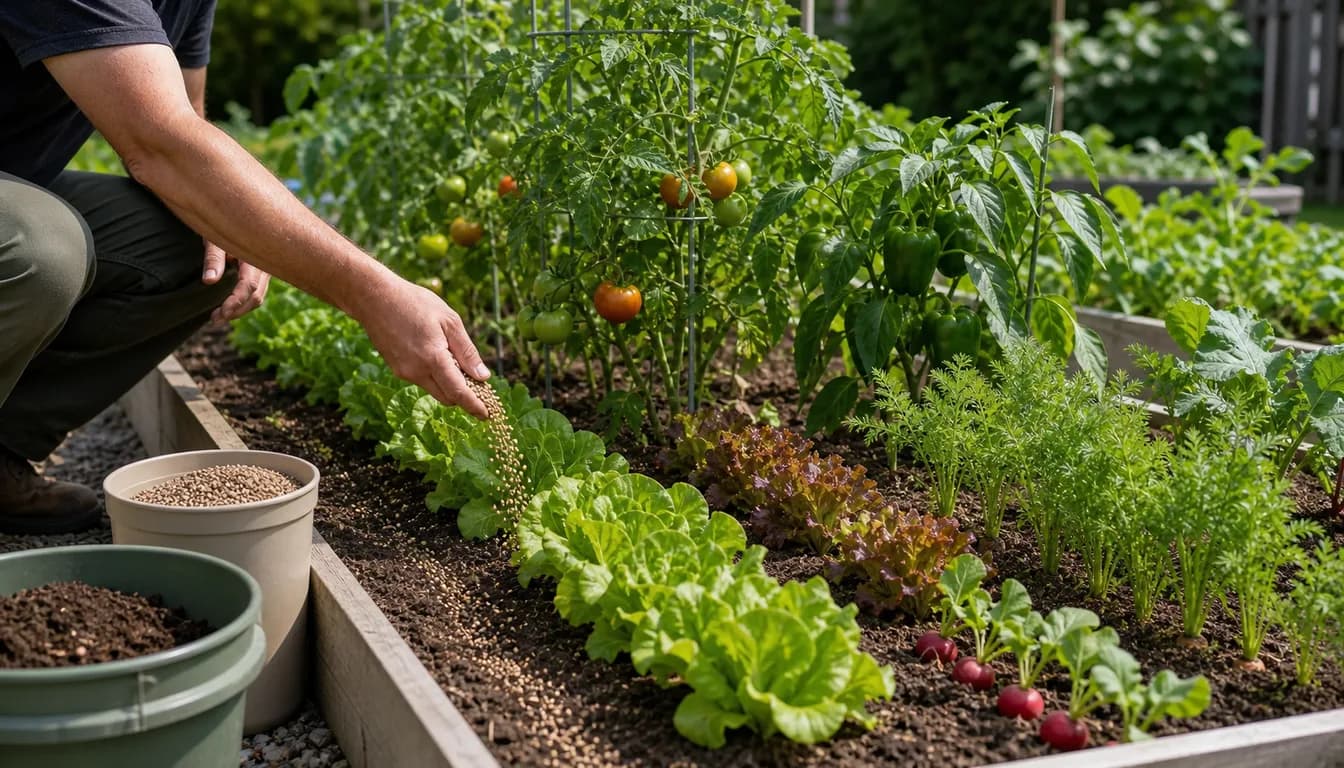
Best Fertilizer for Vegetables by Garden Type
Learn how to pick the best fertilizer for vegetables by crop group, soil condition, and garden setup so you feed beds, rows, and containers without wasting nutrients.
11 min read