
What Is English Ivy? Care for a Cool Trailing Houseplant
Hedera helix Araliaceae
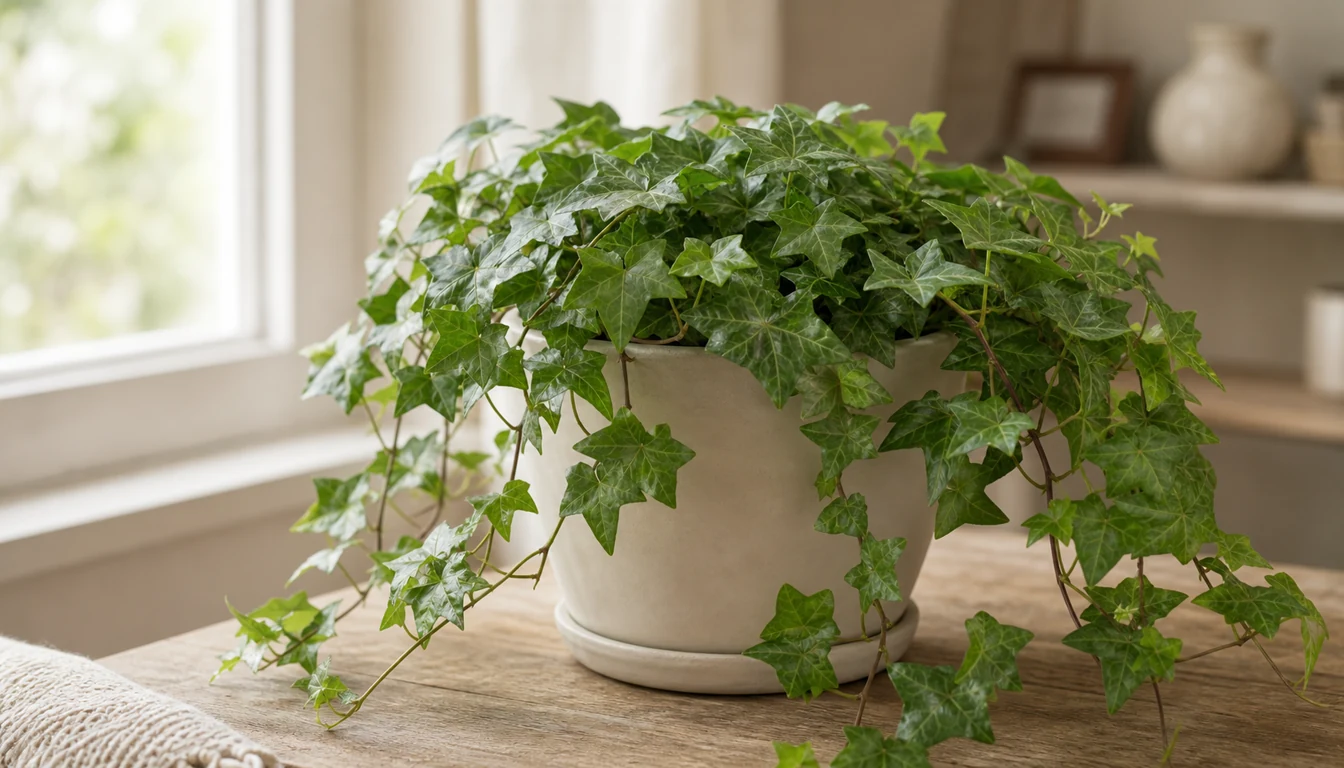
English Ivy is a cool-room trailing vine with small lobed leaves and woody stems. It can look crisp on a shelf or in a hanging pot, but it needs brighter light, cooler air, and more pest checks than many easy indoor vines.
Care snapshot
Understand English Ivy Before You Grow It Indoors
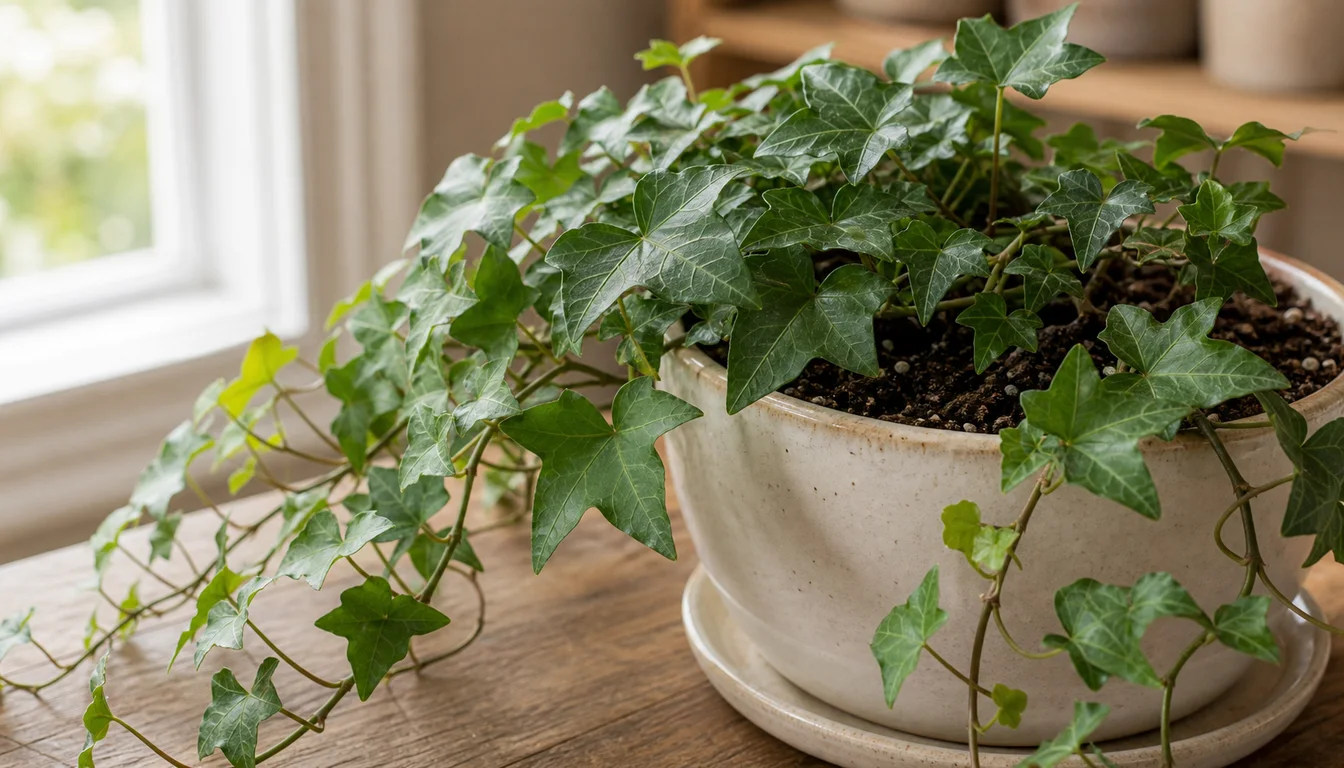
English Ivy is Hedera helix, a woody evergreen vine in the Araliaceae family that usually grows indoors in its juvenile form, with small lobed leaves and slender stems that trail from a pot or climb when they find support.
That vine habit is the reason English ivy care feels different from caring for Pothos or Heartleaf Philodendron. A soft tropical vine can often hang forgotten for a while, but English ivy gets harder to inspect and easier to stress when runners stretch too far through a warm dry room.
The same habit also explains why this plant can be beautiful indoors and troublesome outdoors. NC State describes Hedera helix as a vine with attachment roots, and those roots are useful on a small indoor hoop but risky when cuttings or old pots are moved into outdoor beds.
Choose English Ivy for a cool bright shelf, hanging pot, or small frame where you can rotate, rinse, and trim it, and skip it when you want a forgiving low-care vine, when pets chew leaves, or when the room stays hot and dry most of the year.
- Plant identity
- Woody evergreen vine grown indoors for juvenile trailing foliage
- Visible habit
- Small lobed leaves on stems that trail or attach to support
- Care consequence
- Needs pruning, washing, and inspection more than many easy vines
- Reject signal
- Hot dry room, chewing pets, or no space to control runners
Choose the Right Ivy or Pick an Easier Vine
The best indoor ivy is not always the fullest pot on the store bench, so look for a compact plant with several firm shoots, clean leaf undersides, and a leaf pattern you like enough to protect with good light.
Variegated English ivy gives the crisp cream, silver, or gold edges many people want, but it also shows weak light quickly. Clemson notes that variegated forms may turn green in low light, and RHS warns that all-green shoots can appear on variegated plants.
Remove reverted green shoots at the base if you bought the plant for variegation, because those shoots often grow more strongly than patterned ones and can slowly turn a variegated pot into a mostly green vine.
If the room is warm, the schedule is irregular, or you mainly want an easy trailing basket, Pothos or Heartleaf Philodendron is usually the kinder choice. Spider Plant is often a better hanging plant when pets are part of the room, because English ivy is not a pet-safe houseplant.
- Small variegated ivy
- Best for a cool bright shelf where leaf pattern matters
- Curled or ruffled ivy
- Good for close display, but inspect tight leaves often
- Plain green ivy
- More forgiving of weaker light, but still needs cool air
- Pothos or philodendron
- Better when the room is warm or care is irregular
- Spider plant
- Better when a pet safer hanging plant matters most
Place It Where Light Stays Bright and Air Stays Cool
English Ivy looks best in bright indirect light and cool to moderate room temperatures, and Clemson gives 50 to 70 F as a good daytime range, which is why a bright cool landing can work better than a hotter sunny sill.
A north window, an east window, or a few feet back from a filtered west window usually gives enough light without baking the leaves. Direct sun in a hot south-facing room is a poor trade because the pot can dry fast while leaf edges crisp.
Low light is not an instant failure, but it changes the plant you get as growth slows, spaces between leaves stretch, and variegated leaves become greener because the plant is making more chlorophyll to keep going.
Judge the placement by new growth instead of by the older leaves the plant arrived with, because tight new leaves with clear patterning mean the spot is working, while thin runners, fading color, and repeated crispy tips mean you should move the pot before adding fertilizer.
Water by Surface Dryness and Pot Weight
Water English Ivy when the top half inch of mix feels dry, then water thoroughly enough to moisten the rootball. Clemson uses that top-half-inch test because the plant dislikes both stale wet roots and a dry pot that leaves fine roots behind.
Pot weight gives a second check when the surface is misleading because a small ivy pot can feel dry on top while the lower mix is still heavy, especially in a cachepot, a cool room, or a pot that has too much fine peat.
Dry heat usually shows as crispy tips, light pot weight, and runners that wilt between waterings. Overwatering is more likely when yellow leaves arrive with a heavy pot, sour mix, blackened stems, or roots that stay wet for days after a soak.
Do not water again just because leaves are dropping, because English ivy drops leaves from mites, dry heat, root trouble, or long exhausted runners, so the next move should come from the pot and leaf clues together.
- Feel the top half inch of mix.
- Lift the pot and compare it with its weight after a full soak.
- Water slowly until the whole rootball is evenly moist.
- Let extra water drain through the pot holes.
- Empty the saucer or cachepot before the base sits in water.
Choose a Small Pot That Drains Before You Repot
The pot is a bigger English ivy care decision than it looks because a large decorative container can hold wet mix around a small rootball, and that slow drying is exactly where a trailing indoor vine starts losing stems from the base.
Use a pot with drainage holes and a mix that holds light moisture but lets air back into the root zone, such as a peat-free multipurpose mix or loam-based compost in a container that drains freely without burying the rootball in a much larger pot.
RHS says ivy can often stay in its original pot for a year or two, then move into a slightly larger pot when roots are dense or coming through the holes. That advice matters because repotting a stressed ivy too large can make the watering problem worse.
Repot when the plant dries too fast after a full soak, tips over from top growth, or shows a tight root mass when you slide it from the pot. Do not repot only because a few leaves dropped, because that symptom may come from mites, heat, or rot instead.
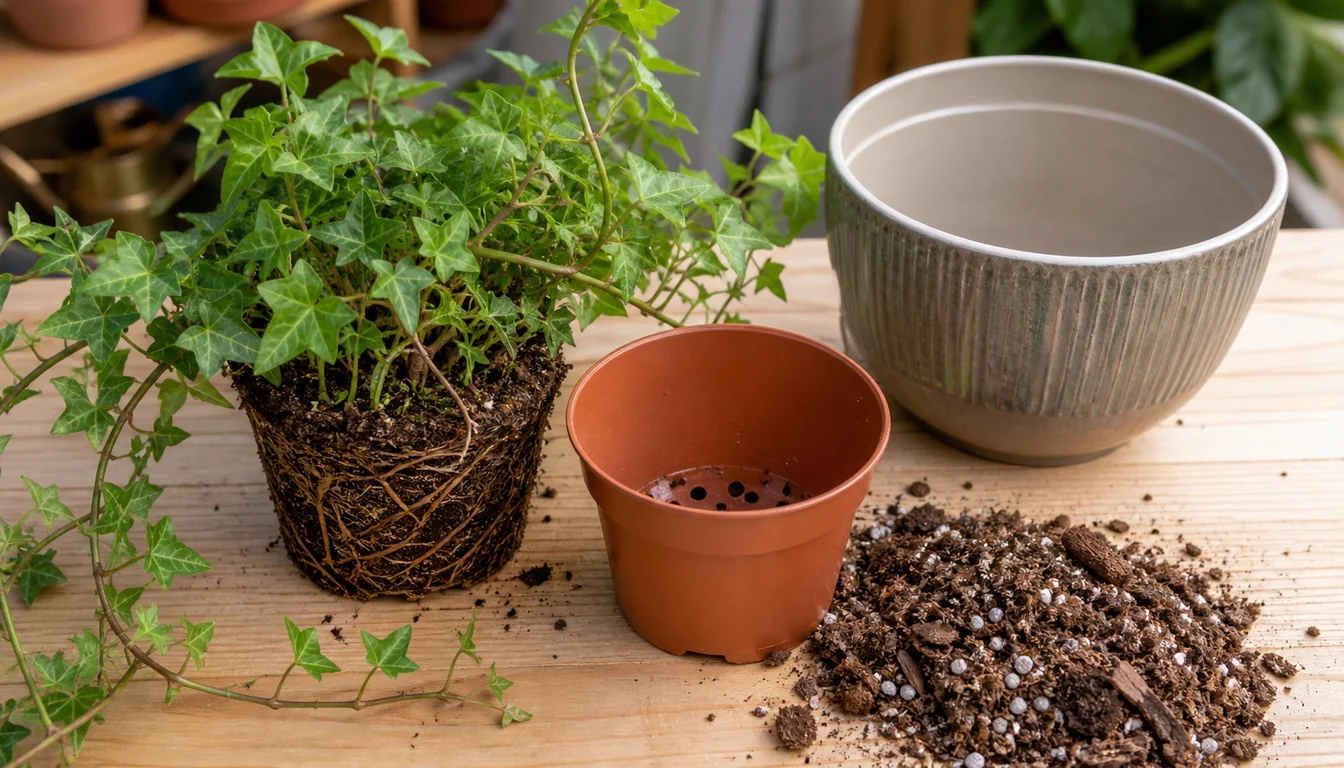
- Roots fill the pot
- Move up one pot size and keep drainage holes clear
- Pot dries in a day
- Check roots, then repot if the rootball is packed
- Pot stays wet for days
- Improve drainage and avoid a larger container
- Leaves drop after watering
- Inspect roots before adding more water or fertilizer
Train It Lightly or Let It Trail
English ivy can trail from a shelf, spill from a hanging pot, or grow around a small indoor hoop, and the best choice is the one that lets you reach the stems for washing, pruning, and mite checks.
If you train the vine, tie stems loosely as they lengthen and guide only flexible new growth, because tight ties cut into woody stems and older attached growth can break when you try to move it.
Avoid letting indoor ivy attach itself to painted walls, window trim, or furniture. The same attachment roots that help it climb outdoors can leave marks or make cleanup harder inside a house.
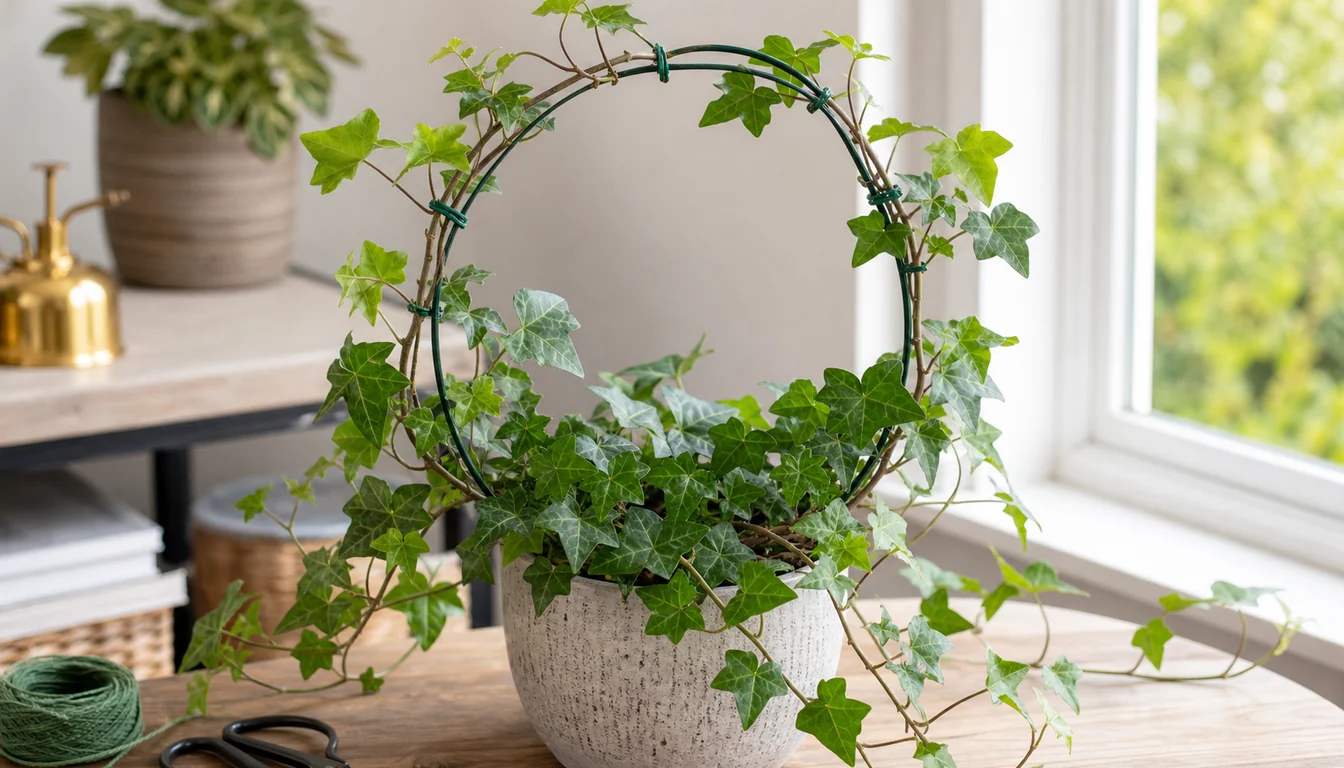
- Use a small hoop, frame, shelf edge, or hanging pot that you can reach.
- Tie only flexible stems and leave room for growth.
- Trim shoots that head behind furniture or into window trim.
- Turn the pot every week or two so one side does not thin out.
Prune Long Runners While They Still Have Good Tips
Prune English ivy before the pot becomes a curtain of bare stems with leaves only at the ends, while the runner still has healthy tips, visible nodes, and enough leaves to root or branch again.
RHS recommends trimming overly long shoots to keep ivy bushy. For variegated plants, cut fully green reverted shoots back at the base so they do not take over the patterned growth.
Use the healthiest tips as cuttings after you prune. English ivy can root from stem or tip cuttings, and houseplant propagation choices such as water, moist mix, or layering are easiest when the stem still has firm nodes.
Do not wait until a runner is long, leafless, and brittle, because that piece may still root but it is less useful for making the parent pot look full again.
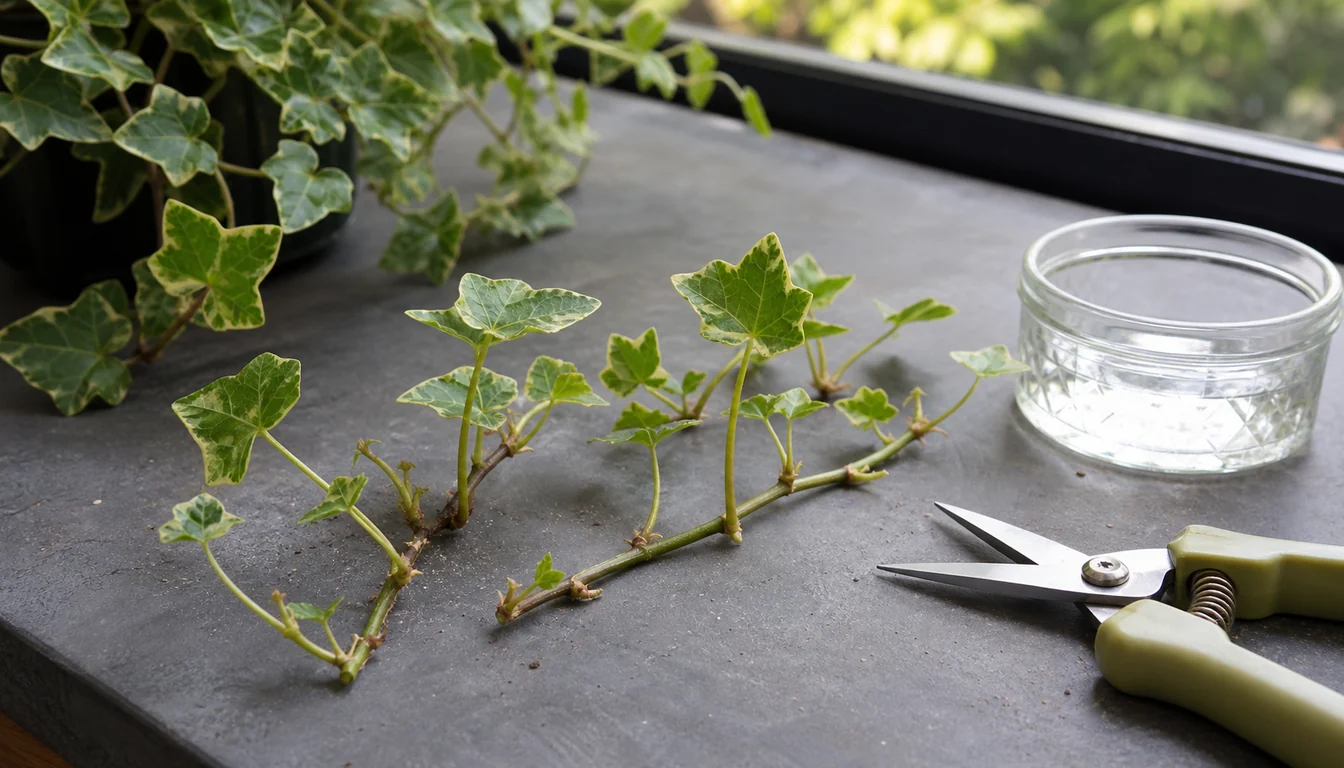
- Pick a firm green runner with several leaves.
- Cut a tip section with several visible nodes.
- Remove the lowest leaves so nodes can sit in water or mix.
- Root the cutting in water or moist potting mix.
- Keep the parent plant bright and evenly moist while side shoots form.
- Pinch new growth again once the pot starts filling in.
Diagnose Leaf Drop Before You Change the Care
Leaf drop on English Ivy is a clue, not a diagnosis, because the same sparse look can come from mites, dry heat, soggy roots, leaf spots, loss of variegation, or old runners that should have been pruned.
Start with the undersides of the leaves because RHS says red spider mites are more likely in warm dry conditions, and Clemson notes that periodic washing can help prevent many insect and mite problems on indoor ivy.
Fine stippling, dull leaves, and webbing point toward mites, especially when the pot is not dry. A heavy wet pot with yellowing stems points more toward root trouble, while faded variegation without webbing usually means weak light or reverted shoots.
Wash the foliage, isolate the pot, and correct the room before you feed the plant. Fertilizer will not fix mites, stale wet mix, or a vine that has been left too hot and dry.
- Fine webbing or stippling
- Inspect for mites, rinse foliage, and isolate the pot
- Crispy tips with light pot
- Water thoroughly and move away from dry heat
- Yellow leaves with heavy pot
- Pause watering and inspect roots before feeding
- Green shoots on variegated ivy
- Cut reverted growth back at the base
- Spotted or fuzzy patches
- Improve airflow and remove damaged leaves
- Leaves only at runner tips
- Prune long stems and root fresh cuttings
Slow Feeding When Growth Slows
English Ivy should be fed because it is growing, not because the calendar says it is time, and Clemson recommends monthly fertilizer during active growth and no fertilizer when growth stops in summer heat or cool conditions.
RHS describes ivy as not especially hungry, with feeding mainly useful when deficiency signs appear. That means pale growth should still be checked against light, mites, and root health before you reach for fertilizer.
A hot apartment can stall ivy even while tropical vines nearby keep pushing new leaves. A cool low-light winter room can also slow drying and growth, so both water and fertilizer should back off until new leaves return.
Keep It Away From Pets and Outdoor Beds
ASPCA lists English Ivy as toxic to dogs and cats, with triterpenoid saponins as the toxic principle, so if pets chew plants, start with pet safe houseplants instead of trying to train the room around ivy.
Containment also matters after pruning. NC State lists Hedera helix as invasive in North Carolina, and the same rooting habit that makes cuttings easy indoors can create problems when pieces are dumped outdoors.
Keep the pot where pets cannot chew leaves or fallen trimmings, and put unwanted cuttings in the trash where outdoor rooting is a concern instead of moving a tired indoor ivy pot into a yard as groundcover.
Frequently Asked Questions
Is English ivy easy to grow indoors?
English Ivy is moderate indoors. It needs bright cool light, a small draining pot, regular pruning, and mite checks, so it is less forgiving than pothos.
How often should I water English ivy?
Water when the top half inch of mix feels dry, then drain the pot fully. Water less when cool rooms or low light slow growth.
Can English ivy grow in low light?
It can tolerate lower light, but growth slows and variegated leaves may turn greener. Bright indirect light gives a denser trailing plant.
Should English ivy trail or climb indoors?
Either can work indoors. Let it trail when you want easy access for washing, or train young stems loosely on a small hoop where they cannot attach to walls.
Why is my English ivy dropping leaves?
Check leaf undersides for mites before you change watering. Leaf drop can also come from dry heat, soggy roots, leaf spot, faded weak growth, or runners that have grown too long.
Can I propagate English ivy from cuttings?
Yes. Use stem or tip cuttings with visible nodes, remove the lower leaves, and root them in water or moist potting mix.
Why is my variegated English ivy turning green?
Weak light can make new growth greener, and reverted all-green shoots can appear on variegated ivy. Move the plant brighter and cut reverted shoots back at the base.
Is English ivy toxic to cats and dogs?
Yes. ASPCA lists English ivy as toxic to dogs and cats, so keep the plant and trimmings away from pets that chew foliage.
Sources & References
Related Plants
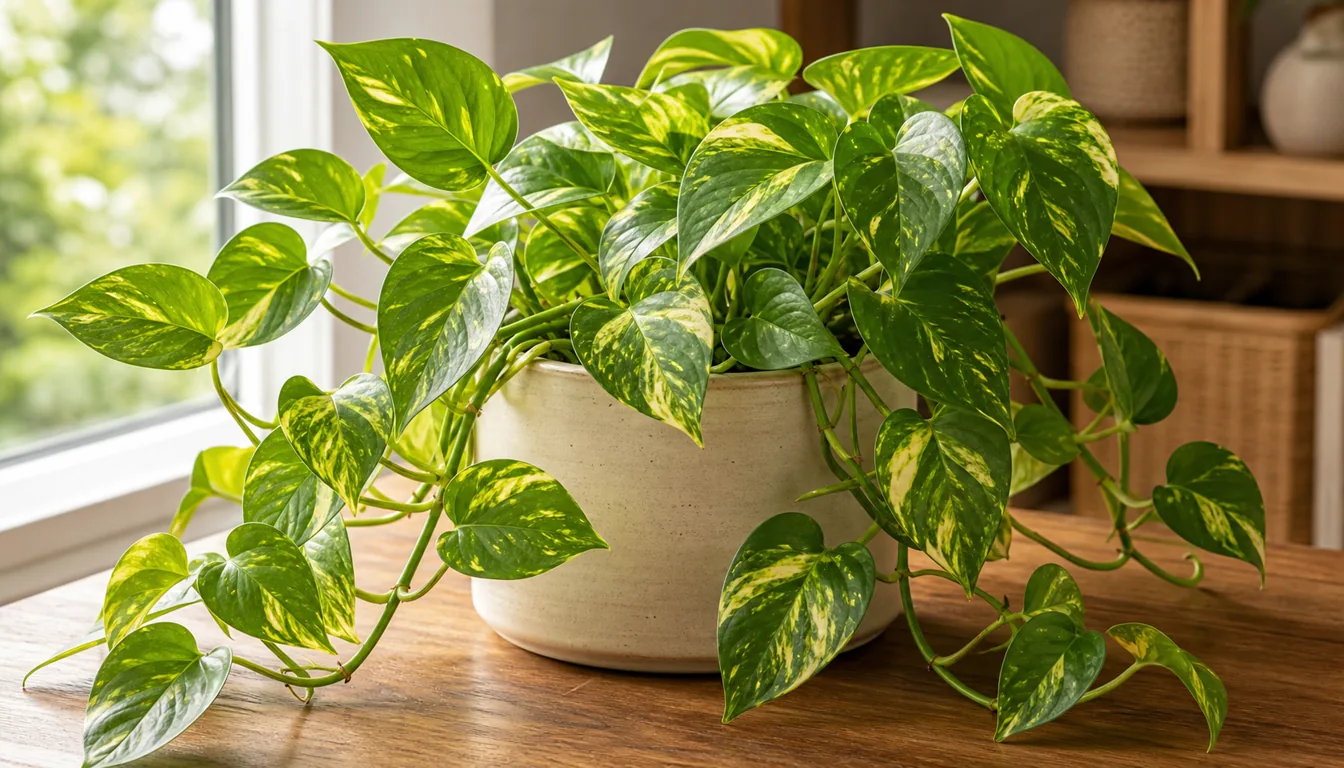
Golden Pothos
A more forgiving trailing vine for warmer rooms and missed watering cycles.
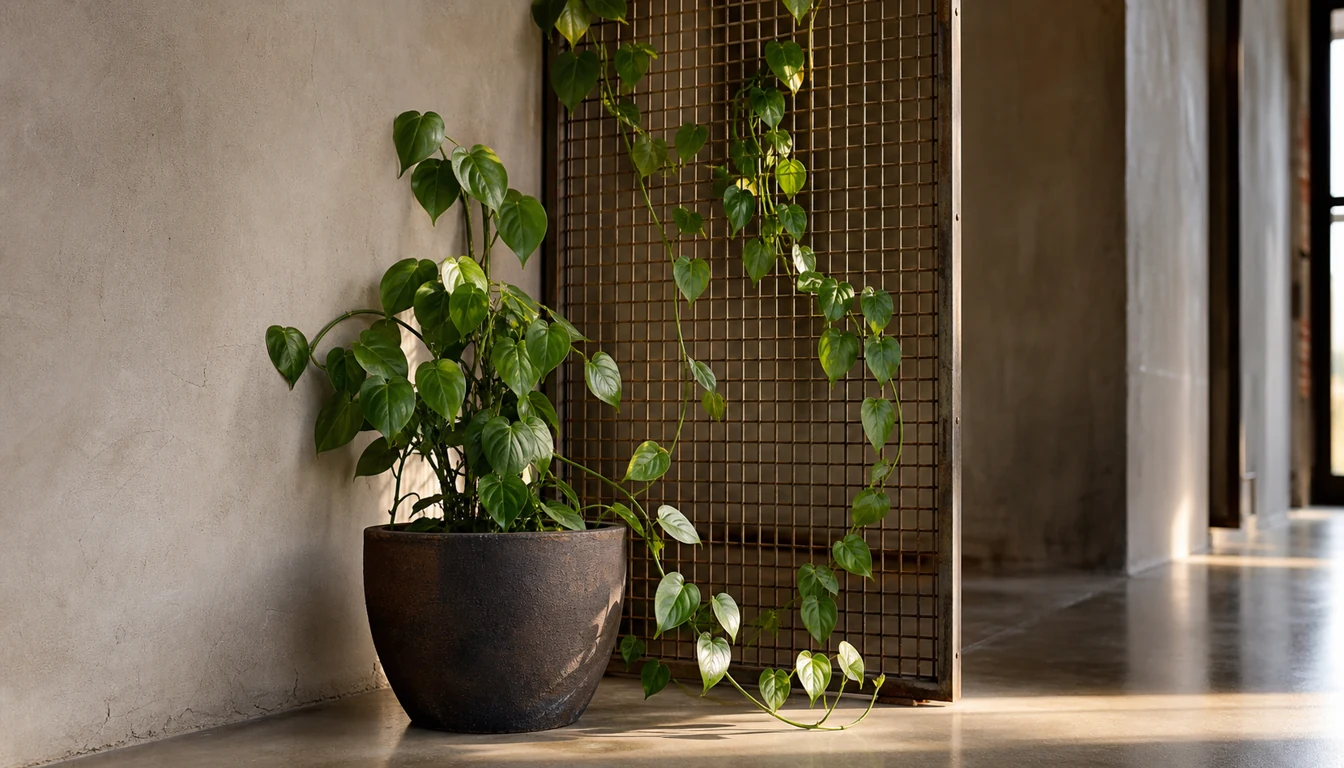
Heartleaf Philodendron
Soft trailing foliage with fewer mite checks than English ivy.
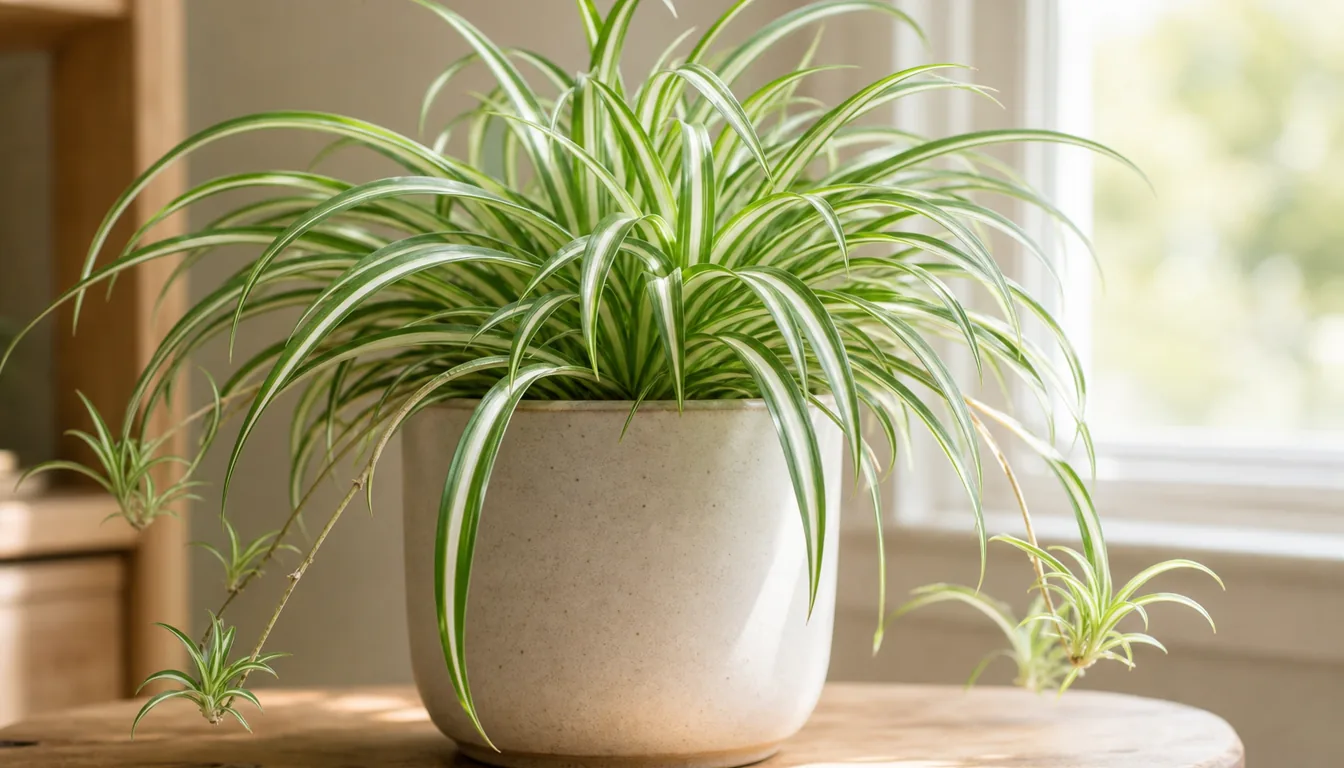
Spider Plant
A pet safer hanging choice with arching leaves and easy offsets.
African Violet
African Violet is a windowsill bloomer that rewards steady, small-pot care.
Air Plant
Air plants are living sculptures that thrive without soil, anchoring to driftwood, rocks, or shells while drawing…
Alocasia
Alocasias include compact, textured houseplants and large elephant ears that need substantial floor space.