Succulentsschedule10 min read
Best Low Water Succulents for Easy Care
Choose low-water succulents by water-storage habit, light strength, drought response, dry-down proof, seasonal rest, and whether the plant still looks good after missed watering.
A low-water succulent is not a plant that never drinks. It is a plant that can store water, use it slowly in strong light, and recover after the root zone dries before the next deep soak.
That makes this page different from the succulent container page. A container garden asks whether several plants can share one pot. This page asks whether one plant and one site can reduce watering work without sliding into neglect.
Sedum is the practical baseline because many types tolerate lean soil and missed watering. Aloe Vera can also work when light, pot depth, and drainage match its stored-water habit.
Jade Plant needs the same dry-down logic, but its woody weight makes pot stability part of the decision.
The short version: low water means a full soak after real dry-down, not tiny sips or permanent neglect. Bright light is the tool that lets the plant use stored moisture instead of sitting wet.
opacityJudge Water Storage Before Looks
The useful question is where the plant keeps reserve water. Thick leaves, swollen stems, waxy surfaces, compact crowns, and firm root systems all change how long a plant can wait between drinks.
Do not choose by the word succulent alone. Some succulents handle dry periods with little visible stress, while others wrinkle, drop leaves, or rot quickly if the site is dim.
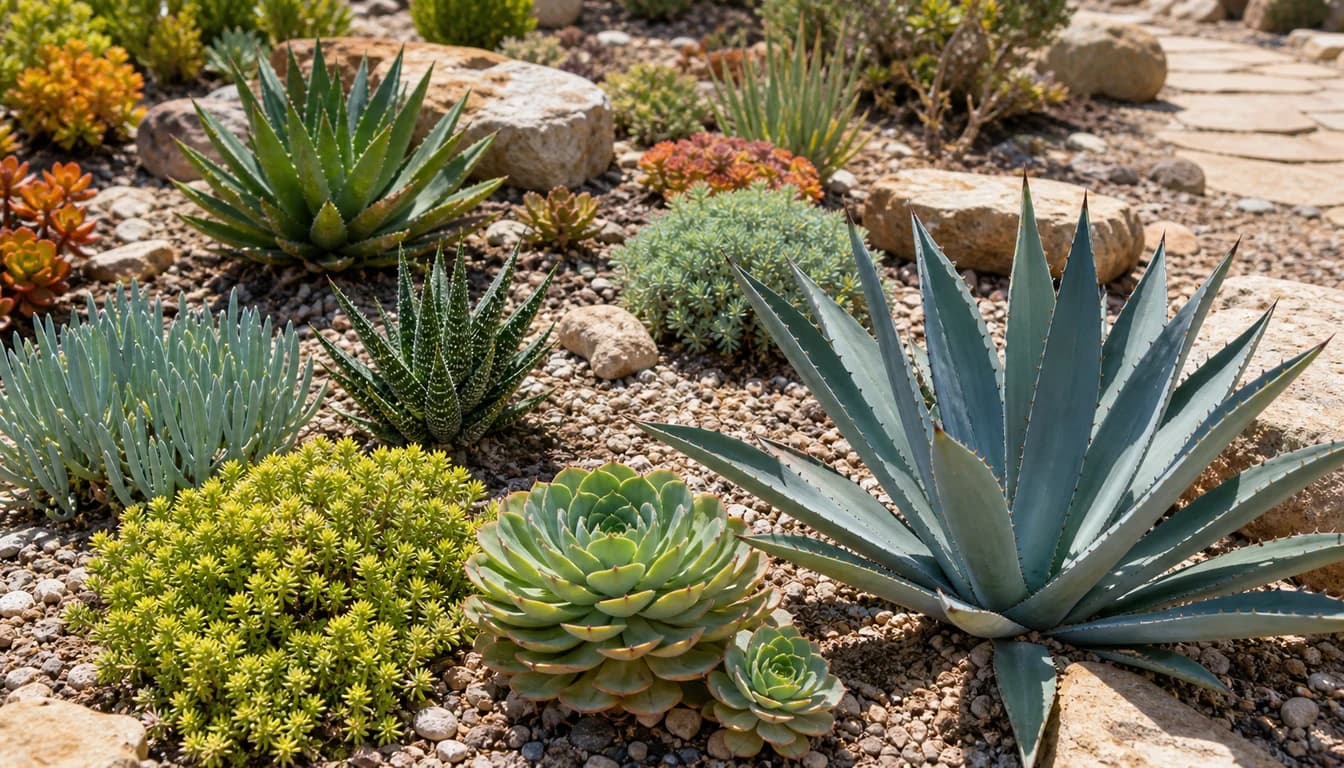
Low-water succulent choice starts with how the plant stores and releases moisture.
| Storage signal | What it usually means | What to watch | ||
|---|---|---|---|---|
| Thick leaves | longer pause between watering | sunburn in sudden heat | ||
| Woody stems | slower, steadier water use | heavy pots and root depth | ||
| Tight rosette | compact growth in bright light | trapped crown moisture | ||
| Trailing beads | stored leaves on thin stems | crown rot near soil surface | ||
| Mat-forming growth | fast recovery in lean soil | crowding and hidden damp spots |
Use storage as the first filter. Color and shape come after the plant proves it can handle the watering gap you want.
wb_sunnyBright Light Is the Water-Saving Tool
Low-water care fails in weak light because the plant stops using water quickly. The soil stays damp, growth stretches, and the same easy-care plant becomes a rot problem.
Stand where the pot or bed will sit. If the plant cannot see bright sky or direct sun for part of the day, choose low-light plant choices instead of forcing a dry-site succulent into a slow, wet room.
Outdoor light has its own limits. A hot wall can dry a pot fast enough to stress young roots, while a covered porch may keep the plant shaded and damp.
The best low-water site is bright enough for compact growth and airy enough for dry-down. Without that, the watering promise is marketing, not care.
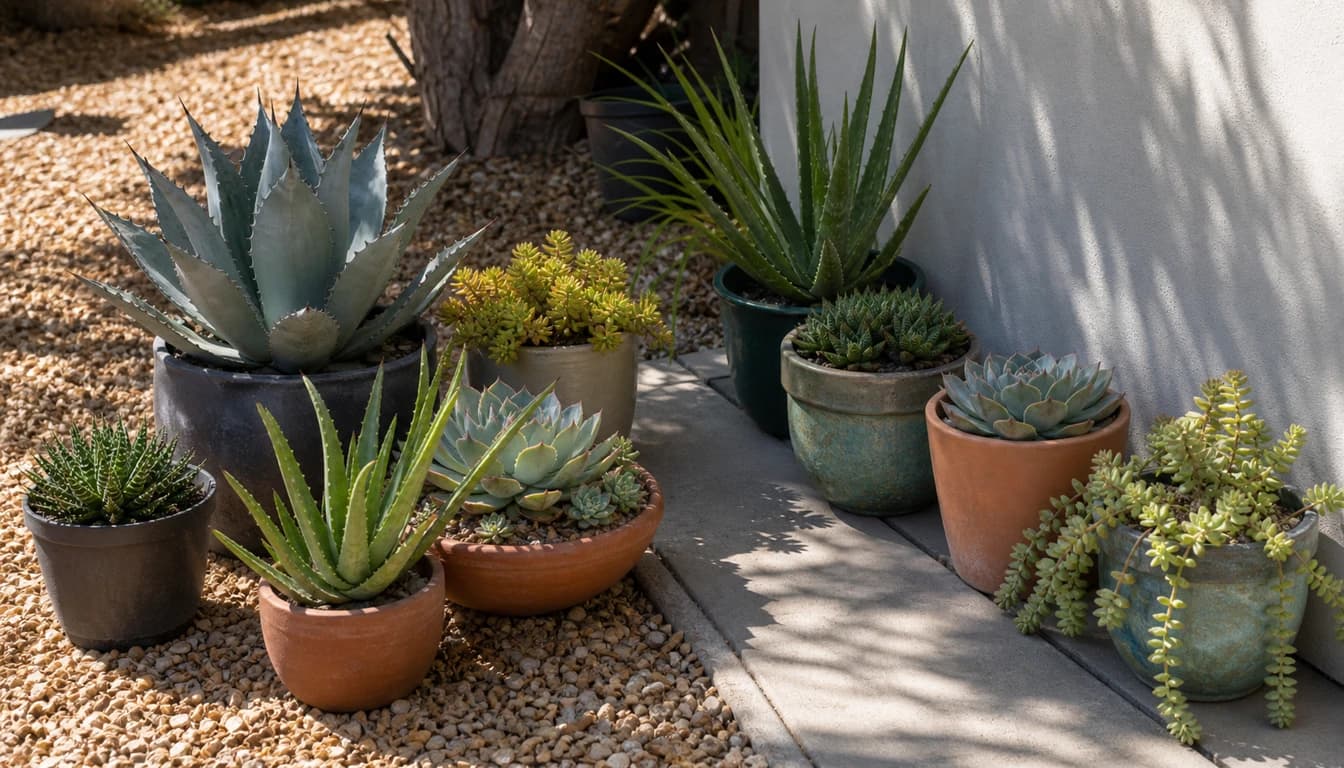
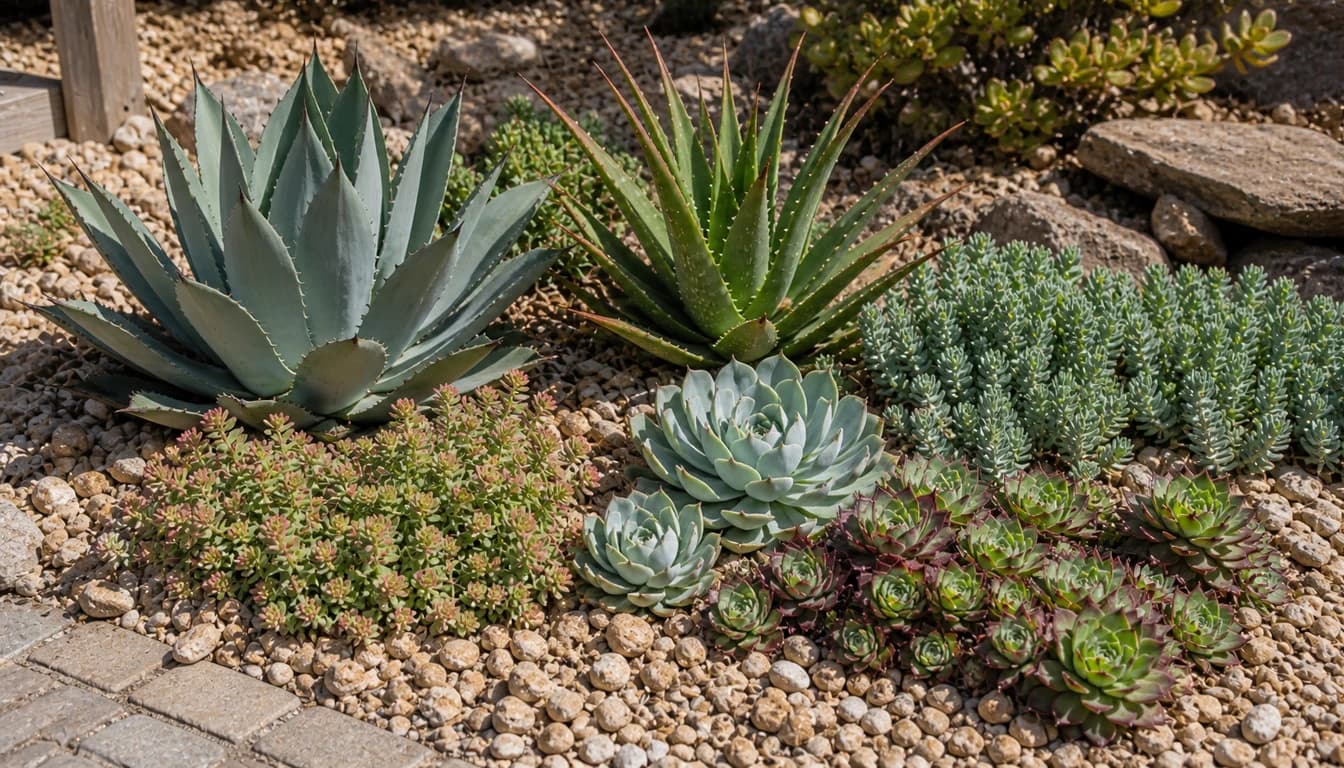
Low-water succulents need enough light to stay compact and use moisture correctly.
scheduleRun a Dry-Down Test Before Expanding
A low-water plant earns the label after a real test. Water deeply, let the root zone dry, then watch whether the plant firms back up after the next soak.
Use deep watering versus frequent watering as the rhythm: refill the root zone, then stop. Small repeated sips train shallow roots and keep the top layer damp.
Track three signs for one month: days until the pot lightens, leaf firmness before watering, and recovery within a day or two after watering. If the plant stays soft or the soil stays heavy, the setup is not low-water yet.
For containers, potted-plant watering guidance helps when pot depth makes dry-down hard to read. For beds, check below the mulch or gravel instead of judging the surface.
The test should make watering less mysterious; if you cannot tell when the root zone dries, do not add more plants.
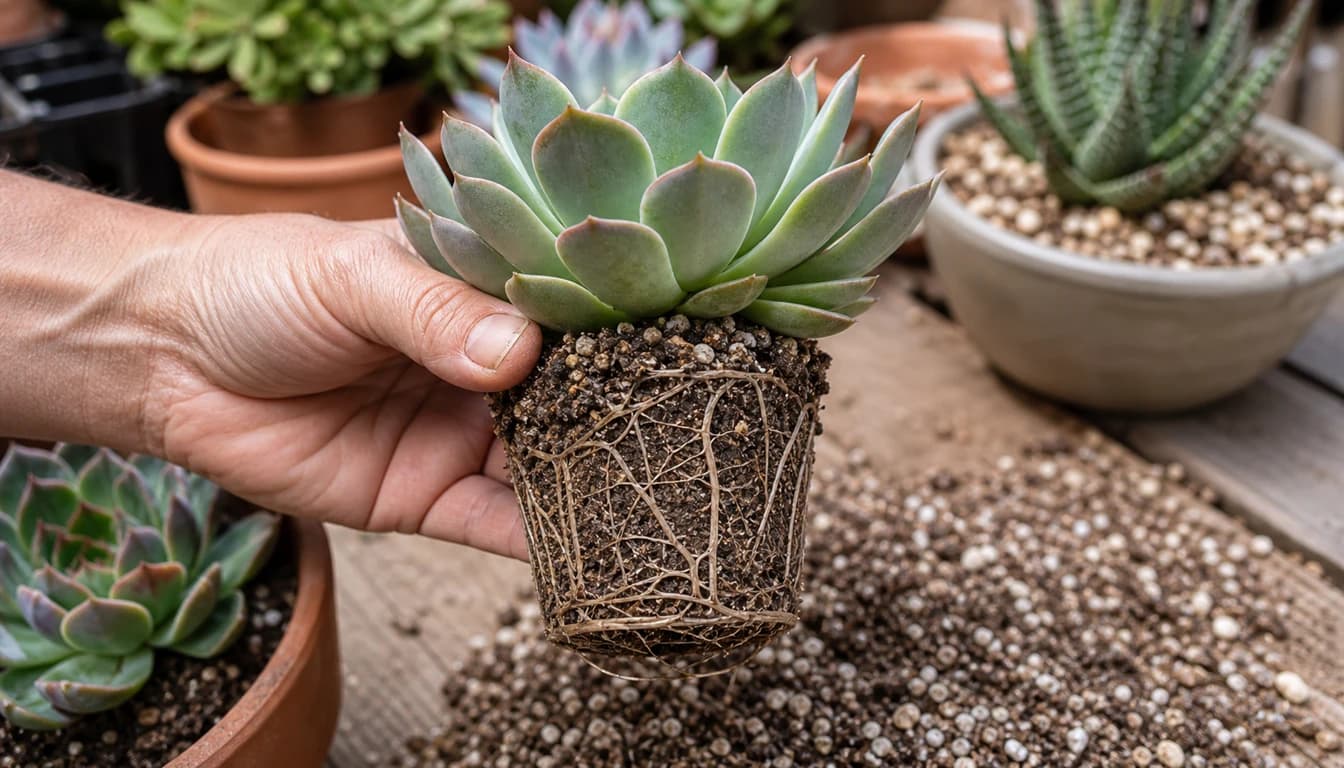
A dry-down test shows whether a low-water succulent can recover after a real pause.
Email Updates
Join the KnowTheYard update list
Zone-specific advice, seasonal reminders, and new plant guides — no filler.
verifiedChoose Plants by Drought Response
The best low-water plants show stress slowly and recover cleanly. That matters more than a perfect nursery shape.
Sedum works as a trial plant because many types tolerate lean soil and recover from dry gaps without much fuss. Yucca can suit bright dry interiors or warm outdoor pockets when its mature size has room.
Aloe Vera stores water in leaves but still needs a dry crown and enough light. Jade Plant stores moisture in leaves and stems, but a heavy woody plant needs a stable pot and careful root-zone drying.
Avoid plants that need rescue before the rest of the group. If one succulent wrinkles hard, drops beads, or stays soft while the others look fine, it does not belong in the low-water role for that site.
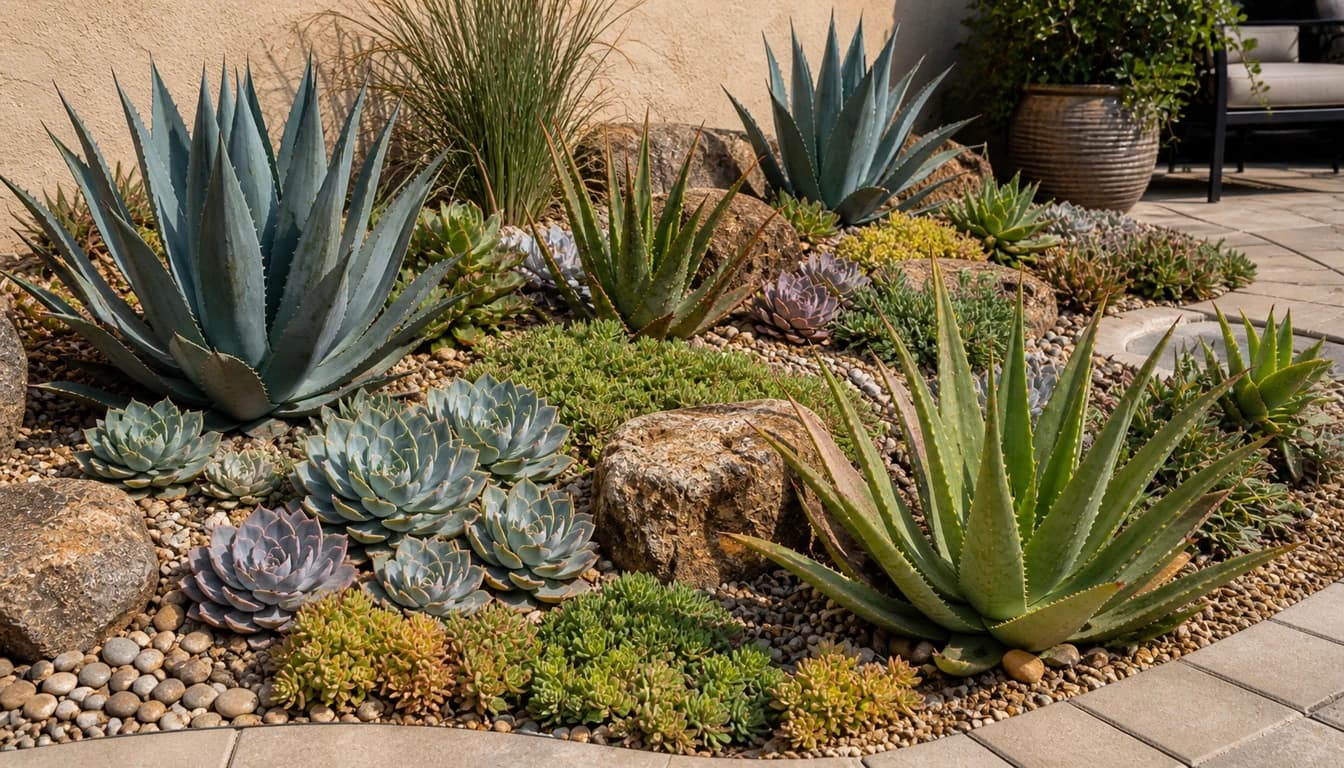
The best low-water succulents recover cleanly after dry periods.
warningDo Not Mistake Low-Light Rot for Easy Care
The most common low-water failure looks backwards: the plant was watered less, but it still rotted. That usually means the site was too dim or the mix held water too long.
Watch for translucent lower leaves, black crown tissue, sour-smelling roots, or a pot that stays heavy for days. Use overwatering signs before adding another drink.
Dense organic soil and sealed pots make the problem worse. Drainage holes matter because drought-tolerant roots still need oxygen after water passes through.
Low water should reduce work. It should not leave you guessing whether the plant is dry, wet, dormant, or dying.
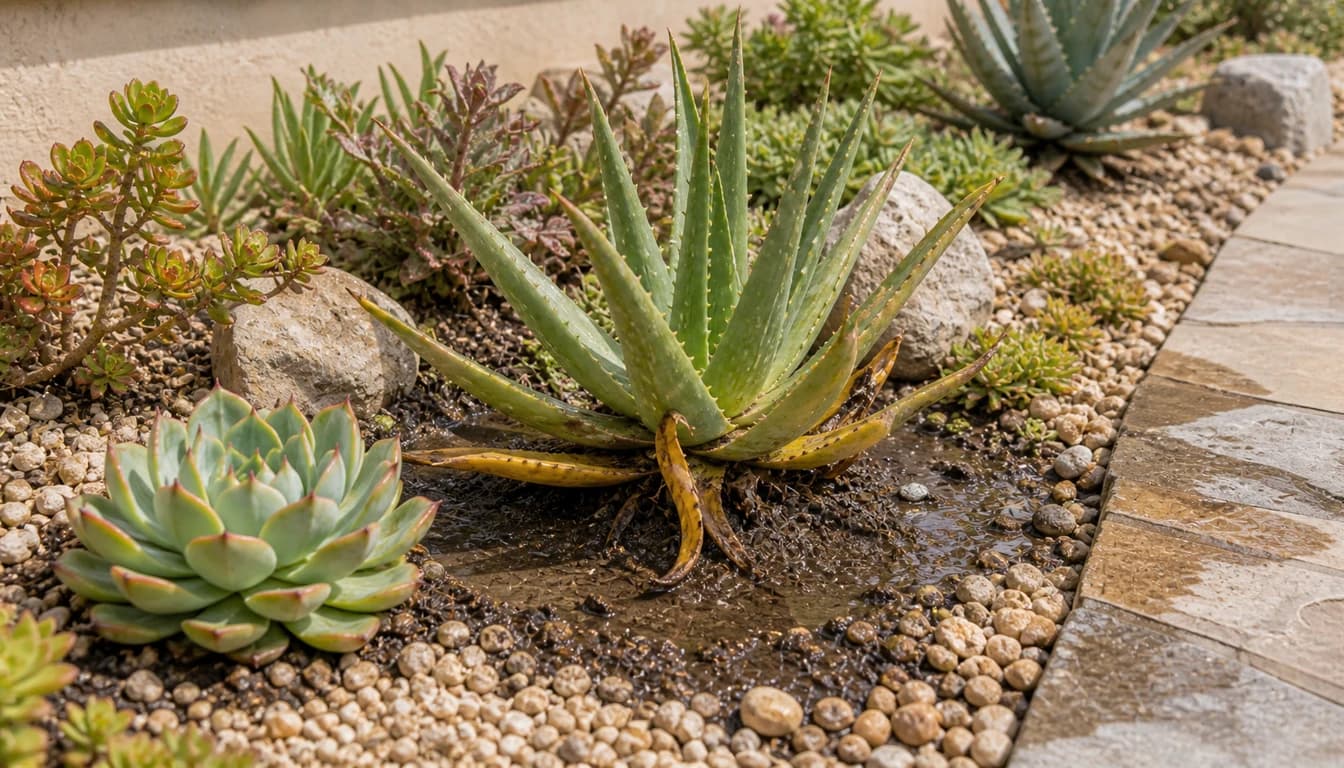
Many low-water failures come from damp soil in low light, not from true drought.
calendar_monthChange the Rhythm When Heat, Rain, or Rest Changes
Low-water care is not one setting all year. Heat, rain, indoor winter light, and active growth change how quickly stored moisture is used.
Outdoor plants may need a deep drink after a long hot spell, even if they are drought tolerant. A small patio pot beside concrete may dry faster than a larger bed with gravel mulch.
Rain is not always helpful. Cold rain can keep crowns wet when the plant is barely growing, while an eave can block every natural recharge.
Indoor winter care usually means brighter placement and slower watering. Use indoor plant care timing if plants move inside before cold weather.
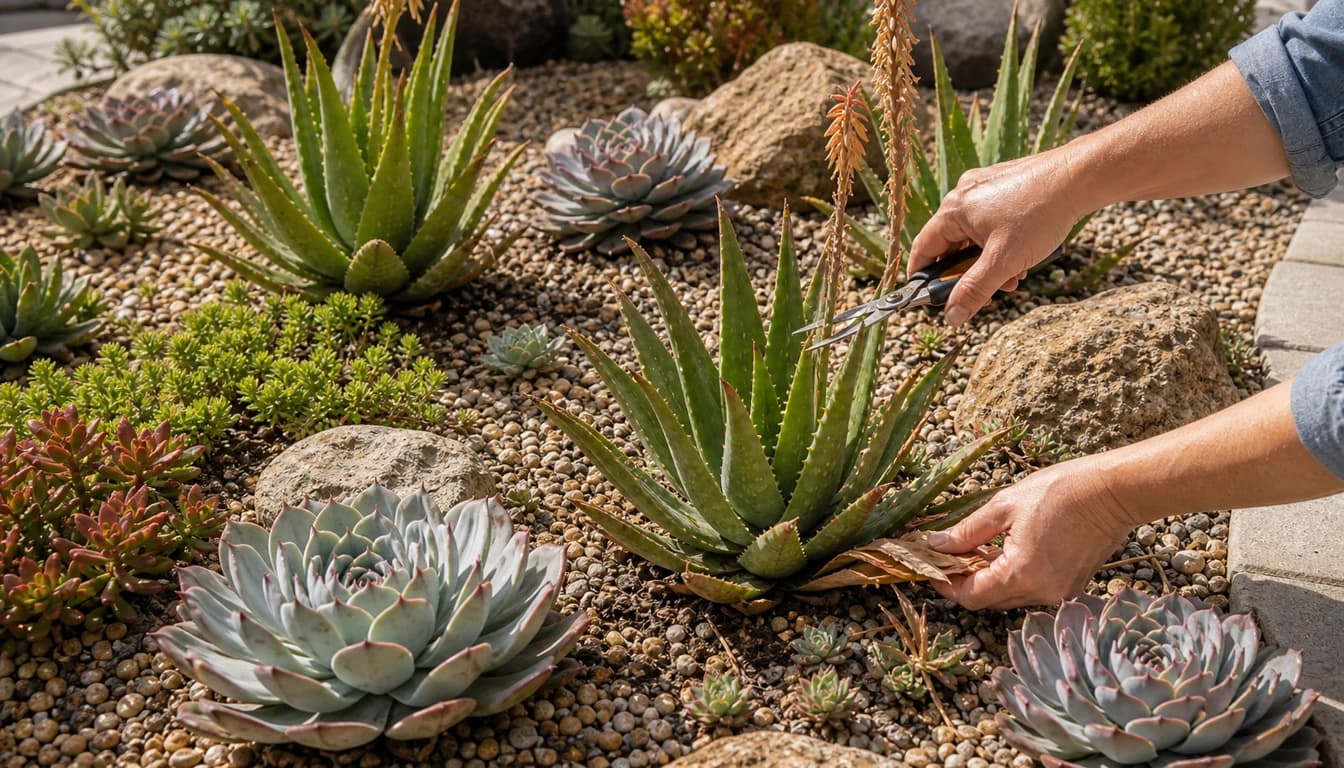
Low-water succulents need different timing during heat, storms, and slower winter growth.
buildExpand Only After Missed-Watering Proof
Expand the plant that survived your real life, not the plant that looked best at the nursery. Missed-watering proof is the honest test.
Keep notes on the longest dry gap, leaf firmness, stretch, scorch, and recovery after watering. Drought-tolerant plant guidance helps with the larger dry-garden idea, but your own site proof decides what to repeat.
Move a plant when its water habit is right but the light is wrong. Replace a plant when it needs a wetter pocket than the rest of the group.
A good low-water upgrade is usually brighter placement, faster drainage, fewer plant types, or a second dry bed for the plant that proved itself.
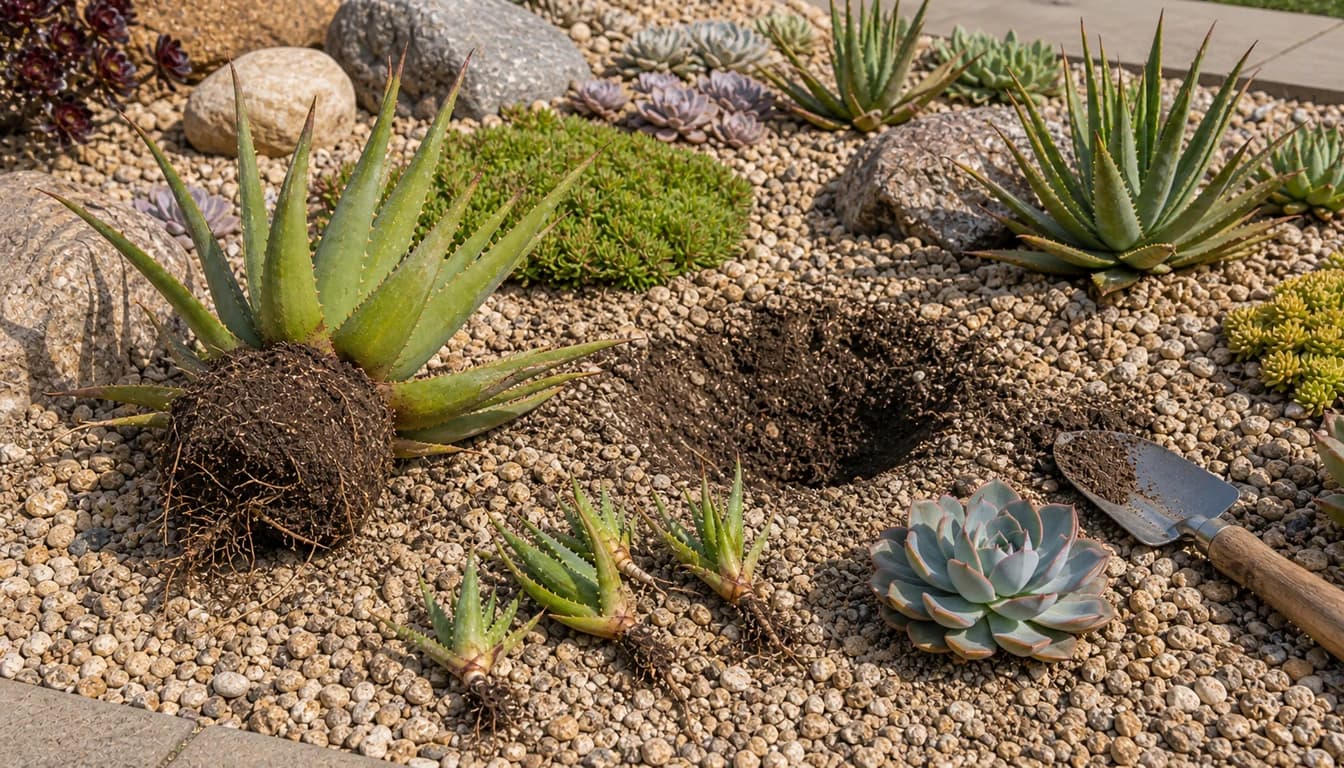
A low-water planting should expand from plants that handled a real missed watering.
tips_and_updates
Pro Tips
- check_circleLow water means deep watering after real dry-down, not permanent neglect.
- check_circleChoose by water-storage habit before leaf color or shape.
- check_circleBright light is what makes low-water care work.
- check_circleRun a dry-down test before buying more plants.
- check_circleTreat low-light rot as a site problem, not a drought problem.
- check_circleChange the watering rhythm during heat, rain, and winter rest.
- check_circleExpand only the plant that handled a real missed watering.
quiz
Frequently Asked Questions
What does low water mean for succulents?expand_more
It means the plant can go longer between deep waterings because it stores moisture. It does not mean the plant should receive tiny sips or no water at all.
Why do low-water succulents rot?expand_more
They often rot when light is too weak, soil stays wet, or the pot has poor drainage. Drought tolerance cannot protect roots that sit without oxygen.
Which succulent should I try first for low-water care?expand_more
Sedum is a useful starter because many types handle lean soil and missed watering. Aloe Vera, Jade Plant, and Yucca can also work when light and drainage are strong.
How do I know when to water low-water succulents?expand_more
Check pot weight, soil dry-down, and leaf firmness. Water deeply after the root zone dries, then wait until the plant and site show the next drink is needed.
Can low-water succulents grow in low light?expand_more
Usually no. Low light slows water use and increases rot risk. If the room is dim, choose true low-light plants instead of forcing succulents to survive there.