
What's Weigela? How to Prune Without Losing Spring Bloom
Weigela florida Caprifoliaceae
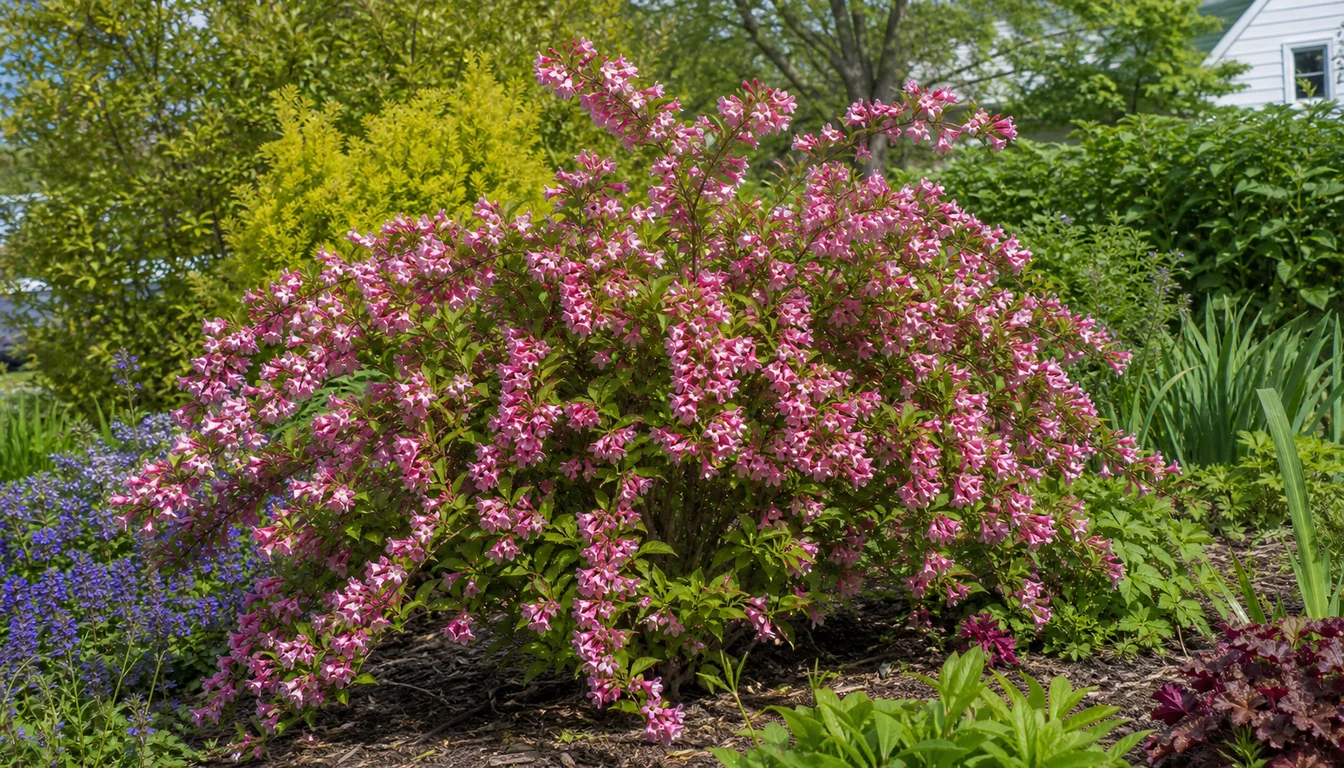
Weigela flowers in late spring on wood grown the year before, so the safe time for shaping cuts is right after the main bloom. Cultivars run from 18-inch mounds to shrubs 10 feet tall and 12 feet wide, and some newer ones rebloom into fall, which makes the tag size and bloom habit the first decision.
Care snapshot
What Is Weigela, and Which Wood Carries Its Flowers?
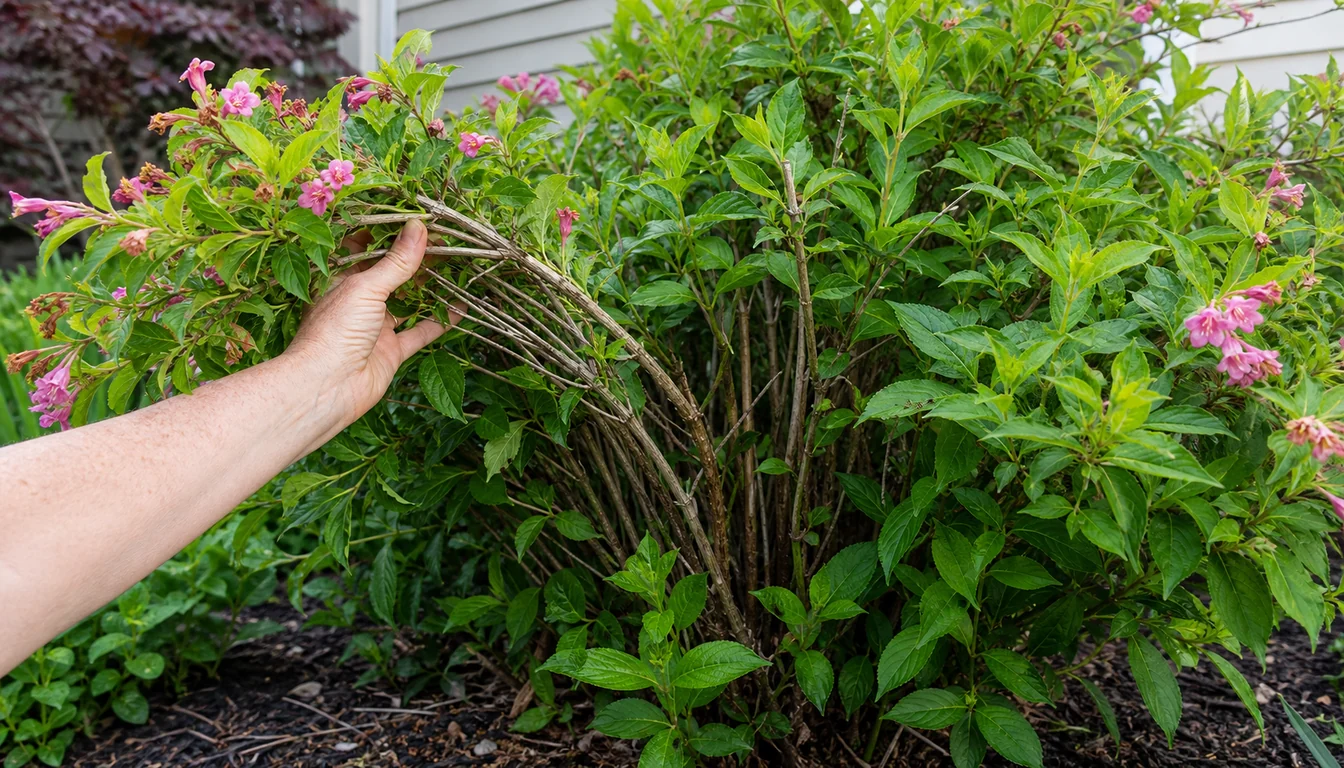
Weigela (Weigela florida) is a deciduous, multi-stemmed shrub in the honeysuckle family, Caprifoliaceae, with arching canes and tubular flowers in pink, red, burgundy, or white. NC State Extension describes a main display that covers the shrub for about two weeks in mid to late spring, followed by a sparser repeat in mid to late summer.
The spring flowers open on wood that grew the year before. NC State and Clemson Extension both say weigela blooms on old wood, and Clemson adds that late pruning reduces next year's flowers. Any cut made between midsummer and the following spring therefore removes some of the buds that would have opened.
Plant profile
- Family
- Caprifoliaceae, the honeysuckle family.
- Habit
- Deciduous multi-stemmed shrub with upright to arching canes.
- Species size
- 6-10 ft tall and 9-12 ft wide (NC State), cultivars mostly smaller.
- Hardiness
- USDA Zones 4-8.
- Bloom
- Mid to late spring on last year's wood, with a lighter repeat in summer.
- Wildlife
- Tubular flowers draw hummingbirds and butterflies (NC State).
Which Weigela Cultivar Fits the Space?
The species is large for a mixed border, and the cultivar sets most of the work that follows. Clemson's list shows how far the modern forms have moved from the old-fashioned shrub.
- Wine and Roses
- About 5 by 5 ft, dark purple leaves, rosy pink flowers in spring with more into summer (Clemson).
- Sonic Bloom Pink
- About 4 ft tall and 4-5 ft wide, flowering in spring and reblooming in late summer and fall (Clemson).
- Spilled Wine
- 2-3 ft tall and 3-4 ft wide, deep purple leaves, bright pink flowers (Clemson).
- My Monet
- About 1.5 by 2 ft, green and white variegated leaves, light pink flowers (Clemson).
- Older cultivars
- 'Red Prince' (dark red, very cold hardy), 'Pink Princess' and 'White Knight' (5-6 ft), 'Polka' (4 ft), and 'Minuet' (2 ft dwarf), per Iowa State.
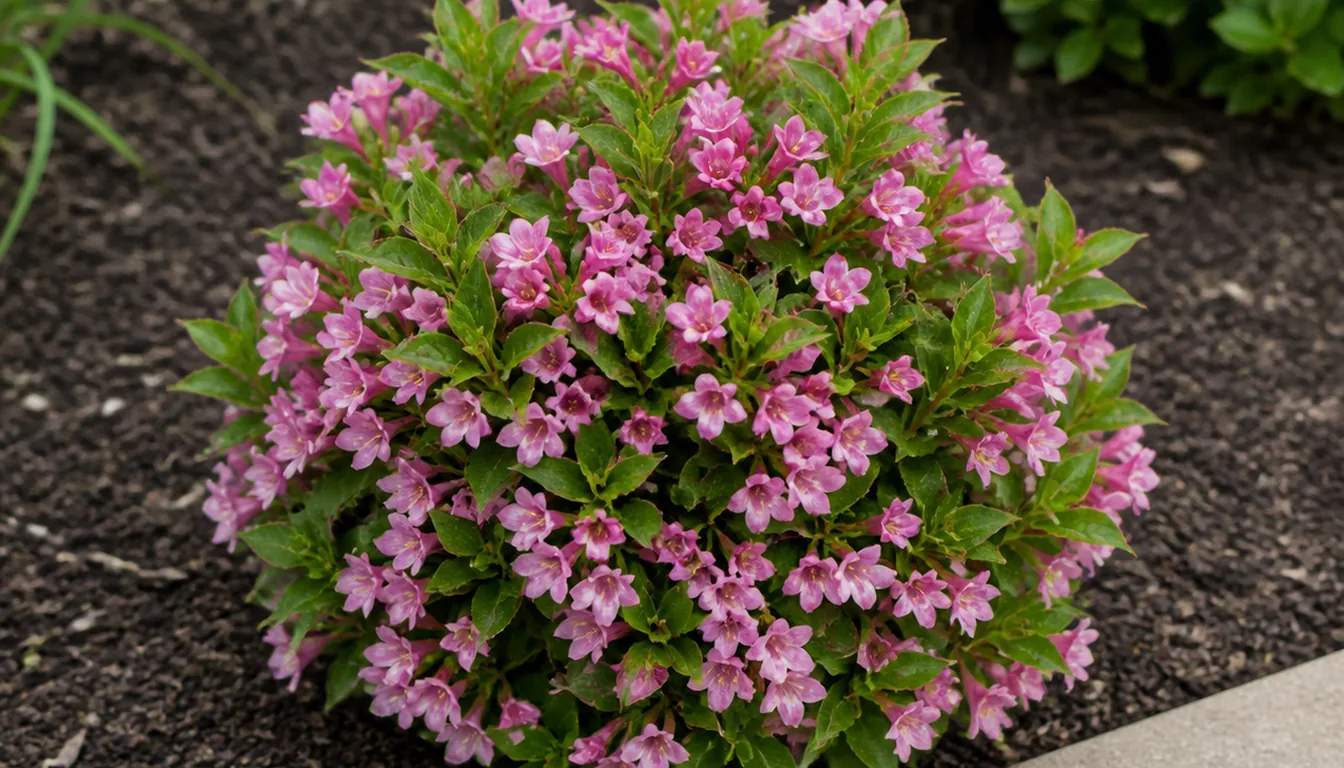
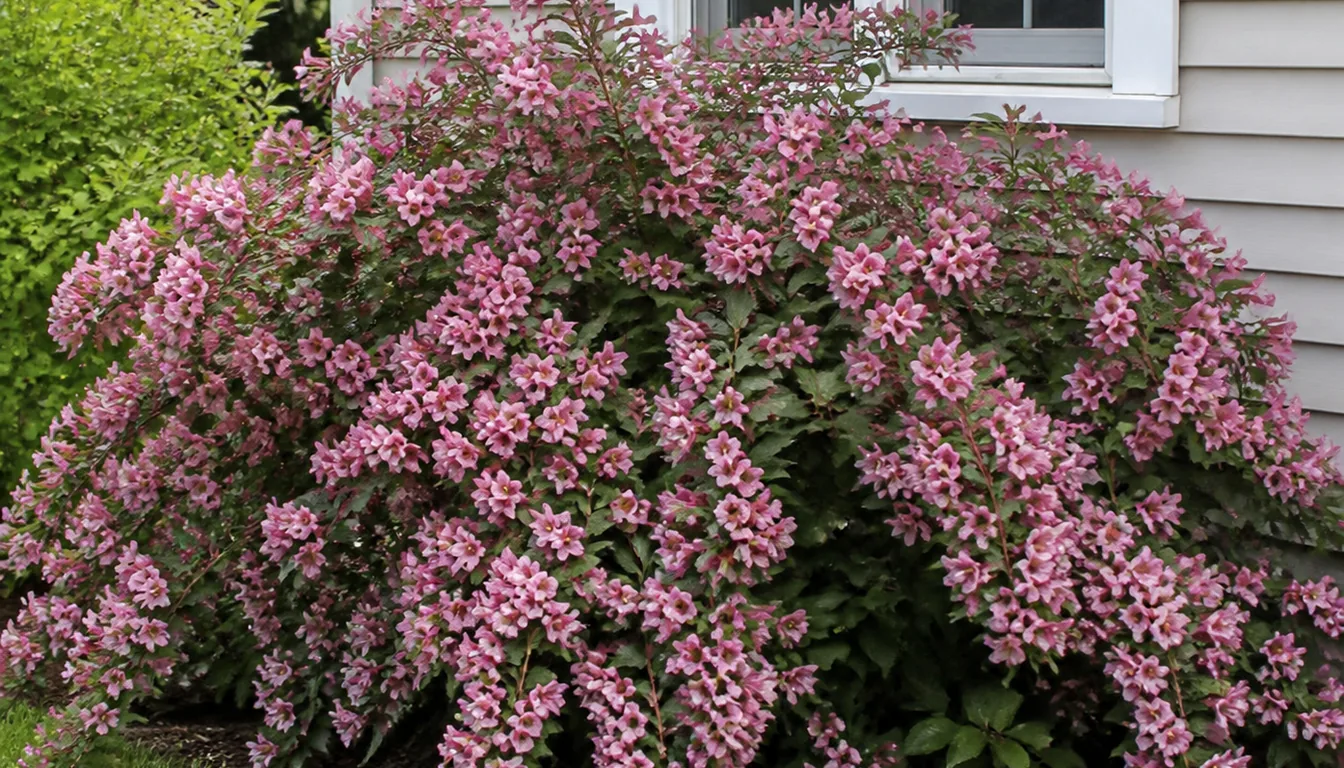
Rebloom changes the calendar, not the pruning rule. Clemson notes that traditional varieties bloom in spring while newer ones rebloom into summer and fall, and the spring flush on a reblooming cultivar still comes from the previous year's wood. Shaping right after that first flush keeps the main display and leaves the plant the rest of the season to grow more.
A small cultivar also removes the most common pruning mistake. A 10-foot shrub planted under a 4-foot window gets cut every year at whatever time it looks too big, and much of that cutting lands in fall or winter, when it removes next spring's buds. 'Spilled Wine' or 'My Monet' fits the same spot with no cutting at all.
How Much Sun and Soil Does Weigela Need?
Weigela flowers best in full sun. Clemson specifies six or more hours of direct sun, and Iowa State notes that plants in partial shade grow but do not bloom as heavily.
Soil is seldom the limit. NC State lists clay, loam, and sand, acid to alkaline pH, and drainage from good to moist. Well-drained soil is Clemson's one requirement, so a low spot where water stands after rain is the site to avoid.
If a bed only gets half a day of sun, shade shrubs will flower better there than weigela. For a longer flowering season in a sunny border, a summer bloomer such as butterfly bush or rose of Sharon picks up after the spring flush.
When Should You Prune Weigela, and How Much?
The sources give two windows, and both are correct for different cuts. Clemson and NC State say to prune immediately after spring flowering, the standard timing for old-wood flowering shrubs, which is the time for shaping and shortening because the plant has the rest of the season to grow next year's flowering wood. Iowa State recommends late winter for removing dead wood and cutting several of the oldest, largest stems to the ground.
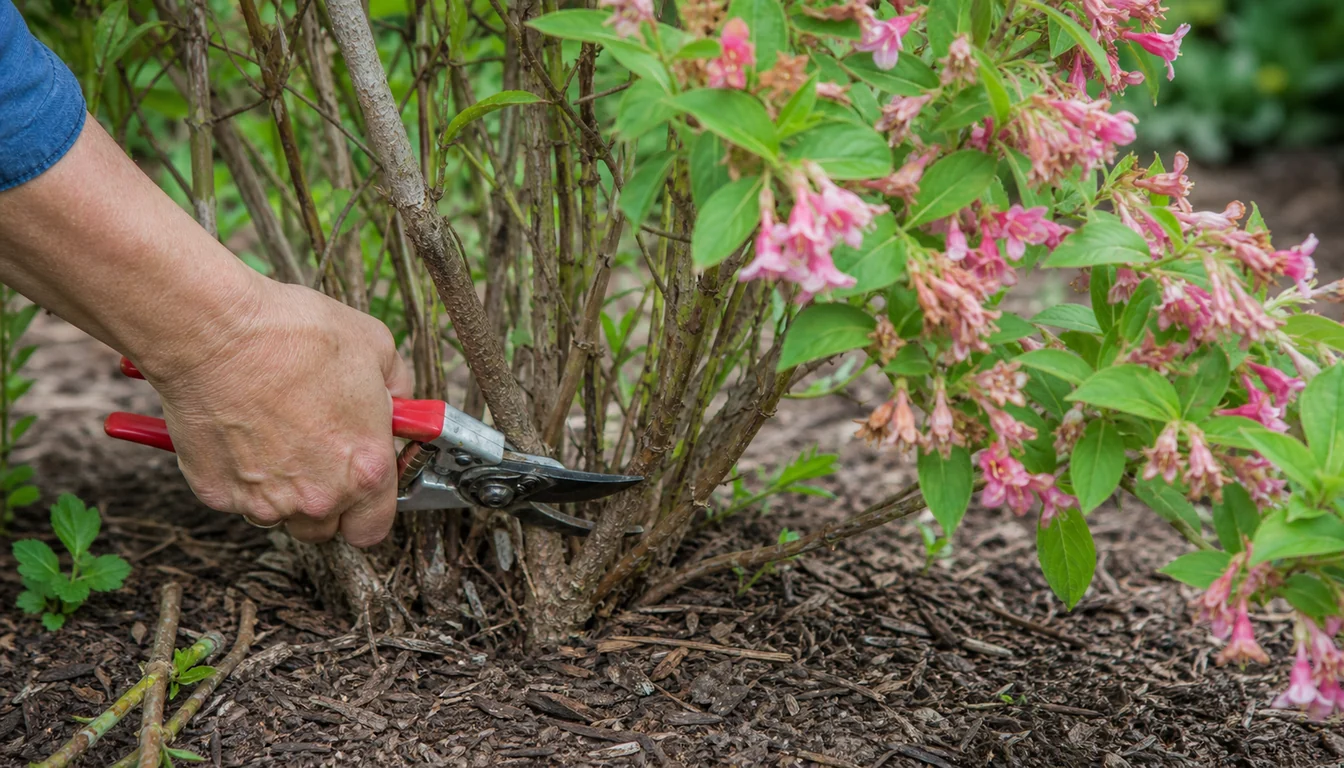
The difference is the kind of cut. Removing an entire old cane at the base in late winter costs only the flowers on that one cane, and it opens the plant for younger canes. Shearing the tips of every branch in late winter or fall cuts off buds across the whole shrub, which is the cut that ruins a spring display.
- In late winter, remove dead and broken wood, waiting until buds swell if it is unclear which tips are dead.
- Cut two or three of the oldest, thickest canes at ground level, either in late winter or right after bloom.
- Right after the spring flush, shorten any branch that blocks a path or window back to a side shoot.
- Leave the arching outline rather than shearing the outside into a ball.
An old, crowded shrub can be renewed over three years. Clemson's pruning guide removes about one-third of the old stems the first year, half of the remaining old stems the next, and the rest the third year, so the shrub keeps flowering while the old wood is replaced.
Why Is My Weigela Not Blooming?
Weak bloom on a healthy-looking weigela usually traces to one of four causes, and the pattern on the plant usually points to which one.
Too much shade
- Healthy leaves, few flowers.
- Flowers only on the sunny side of the shrub.
Pruned at the wrong time
- Good leaves but almost no spring flowers.
- Cut in late summer, fall, or winter the year before.
Old, crowded canes
- Woody center with few young canes.
- Flowers mostly at the outer tips.
Winter dieback
- Dead tips or whole canes in spring.
- Common in cold winters, Iowa State notes.
Fertilizer does not fix any of these. A shaded shrub needs more light, a mistimed cut needs a year of patience and better timing, and old canes need renewal. Iowa State points out that winter dieback is fairly common in northern Iowa and varies with the cultivar and the winter, which is why the very cold-hardy 'Red Prince' is the safer choice at the northern edge of the range.
Does Weigela Have Pest Problems, and Is It Safe for Pets?
Weigela is one of the less troubled flowering shrubs. NC State notes minimal insect and disease damage, with deer damage and occasional winter dieback as the usual problems, and Clemson lists flea beetles and mealybugs.
The two sources disagree on deer. NC State says weigela may suffer deer damage, while Clemson rates it deer resistant. In a yard with heavy browsing, that disagreement is a reason to protect young plants rather than count on the shrub being ignored.
The tubular spring flowers bring hummingbirds and butterflies, so any spray during bloom affects the visitors the plant was chosen for.
Its toxicity to pets is unknown. We found no ASPCA or other veterinary toxicity record for weigela, and NC State's entry gives no toxicity rating, so the plant has no documented safety listing in either direction.
Frequently Asked Questions
When should I prune weigela?
Shape it right after the spring bloom. Whole old canes can also be cut at the base in late winter, as Iowa State recommends, but tip-shearing in fall or winter removes next spring's flowers.
Why is my weigela not blooming?
The usual causes are too much shade, pruning in late summer, fall, or winter, old crowded canes, or winter dieback. Fertilizer rarely helps.
Does weigela bloom more than once?
The old-fashioned species gives a lighter repeat in summer. Newer cultivars such as Sonic Bloom rebloom into late summer and fall, according to Clemson Extension.
How big does weigela get?
The species reaches 6 to 10 feet tall and up to 12 feet wide. Cultivars such as Spilled Wine stay 2 to 3 feet, and My Monet about 18 inches.
Is weigela toxic to dogs?
We found no ASPCA or veterinary toxicity record for weigela, so its toxicity to pets is unknown.
Sources & References
- Weigela florida, NC State Extension Gardener Plant Toolbox
- How To Grow and Care for Old Fashioned Weigela, Clemson Cooperative Extension
- Growing Weigelas in the Home Landscape, Iowa State University Extension and Outreach
- Pruning Shrubs, Clemson Cooperative Extension Home & Garden Information Center
Related Plants
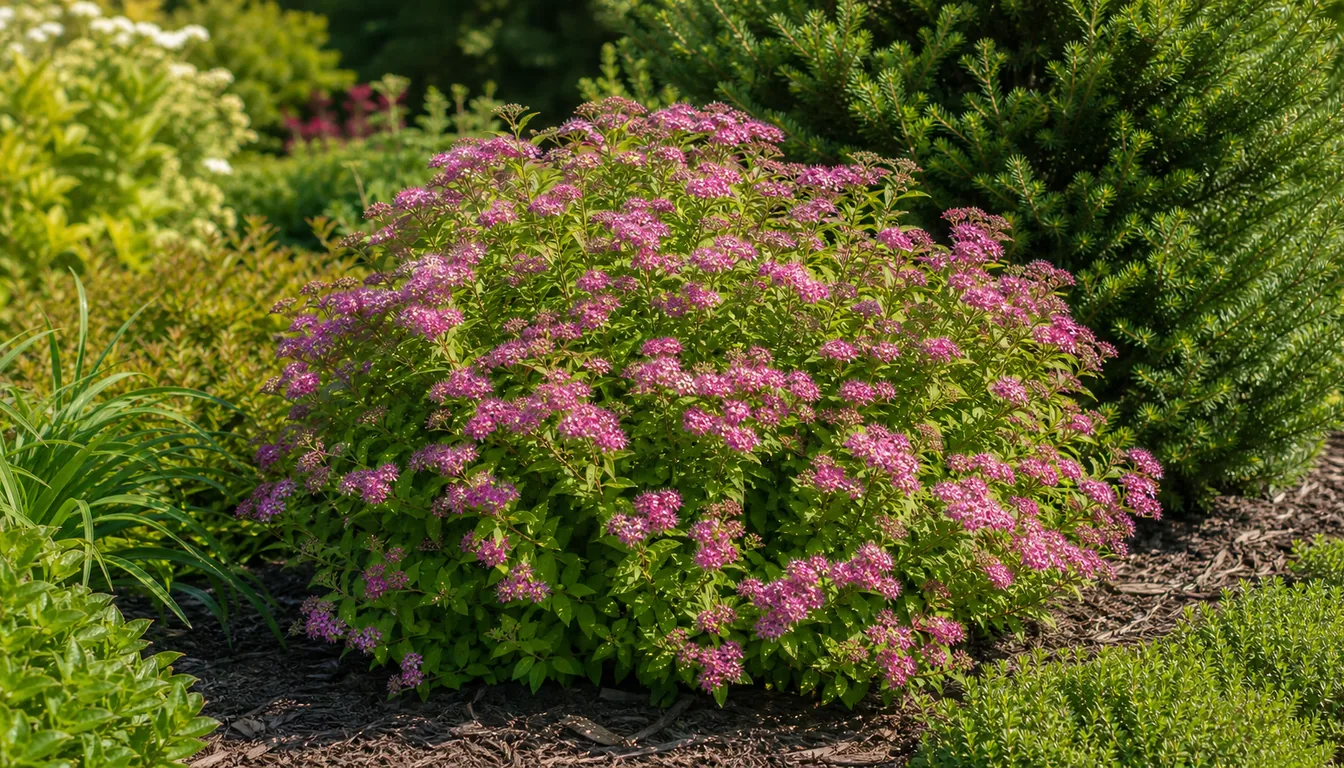
Spirea
A lower flowering shrub for smaller sunny spaces.
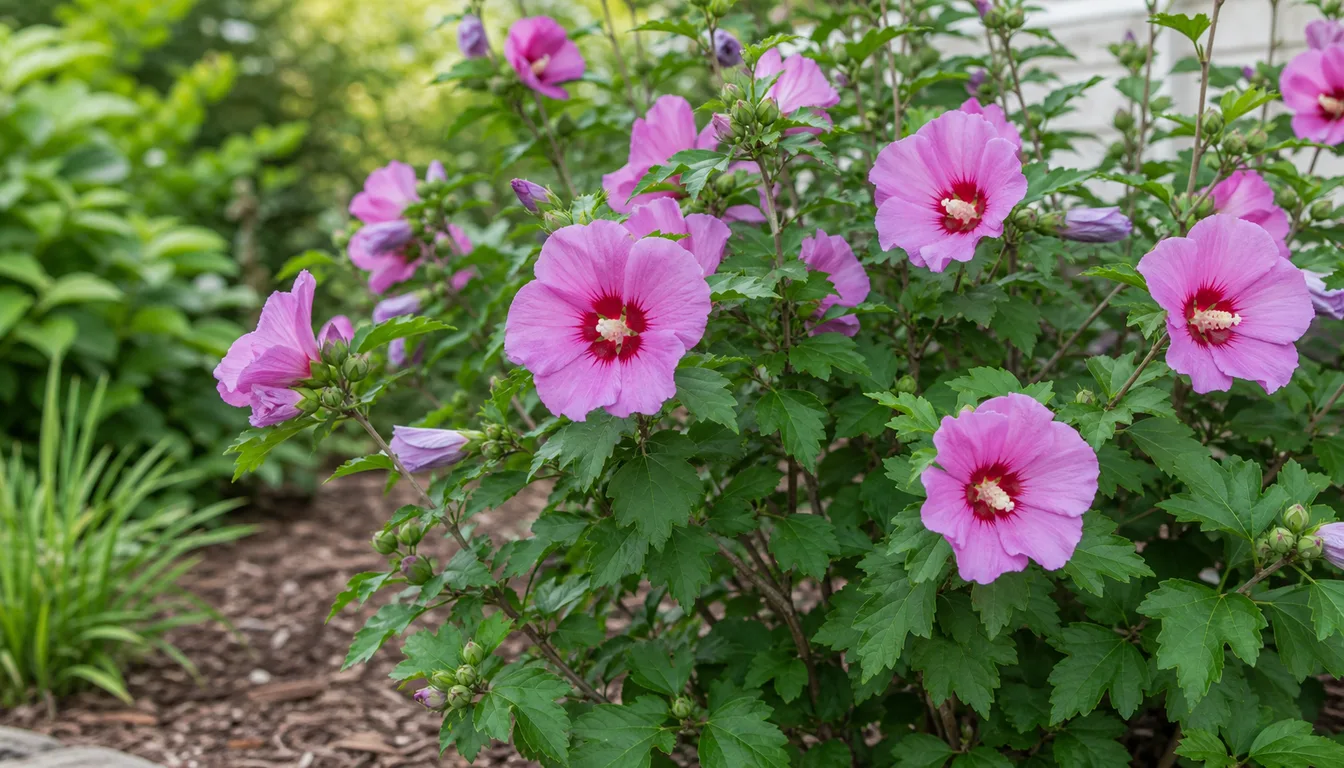
Rose of Sharon
A later-blooming shrub that handles pruning differently because it flowers on new growth.
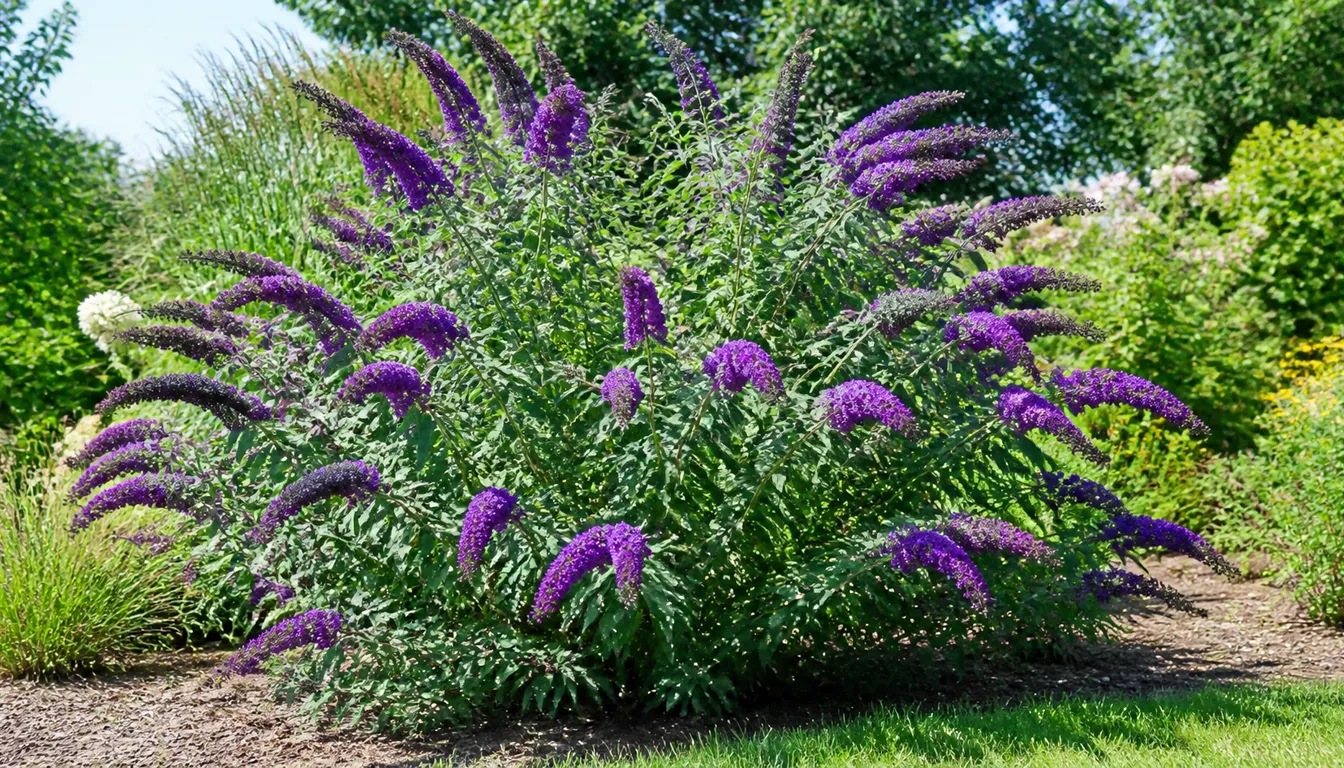
Butterfly Bush
A summer-flowering shrub that extends pollinator color after weigela finishes.
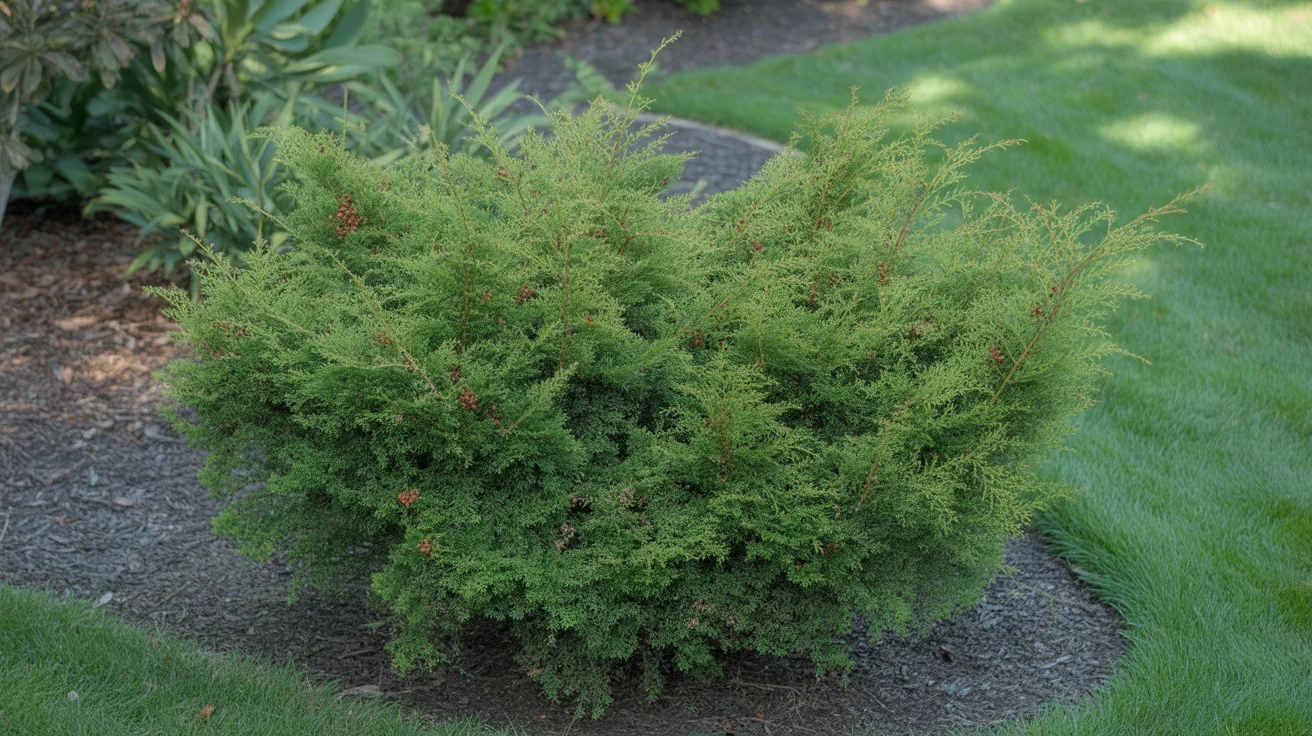
Arborvitae
Arborvitae can form a dense living screen where its mature width, exposure, and water needs fit the site.
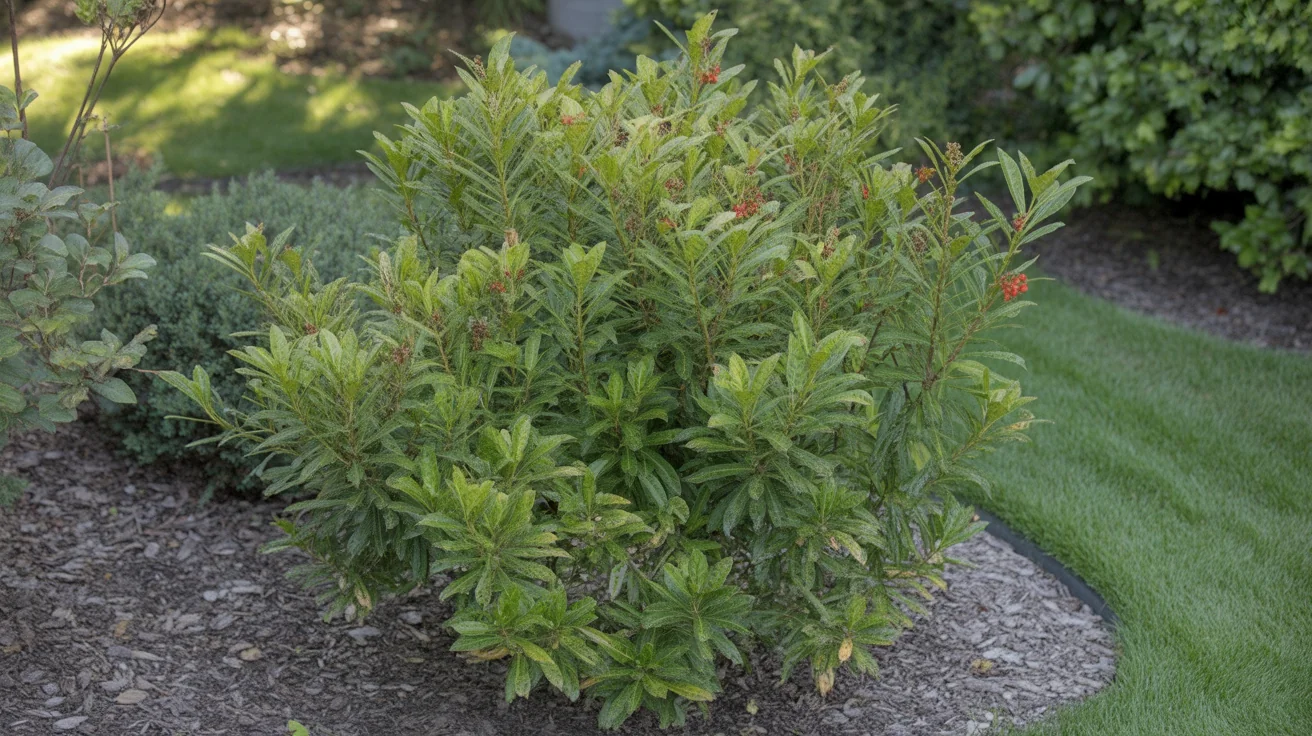
Aucuba
Aucuba is the shrub for bright shade with dry root competition. It keeps evergreen structure near north walls, porches…
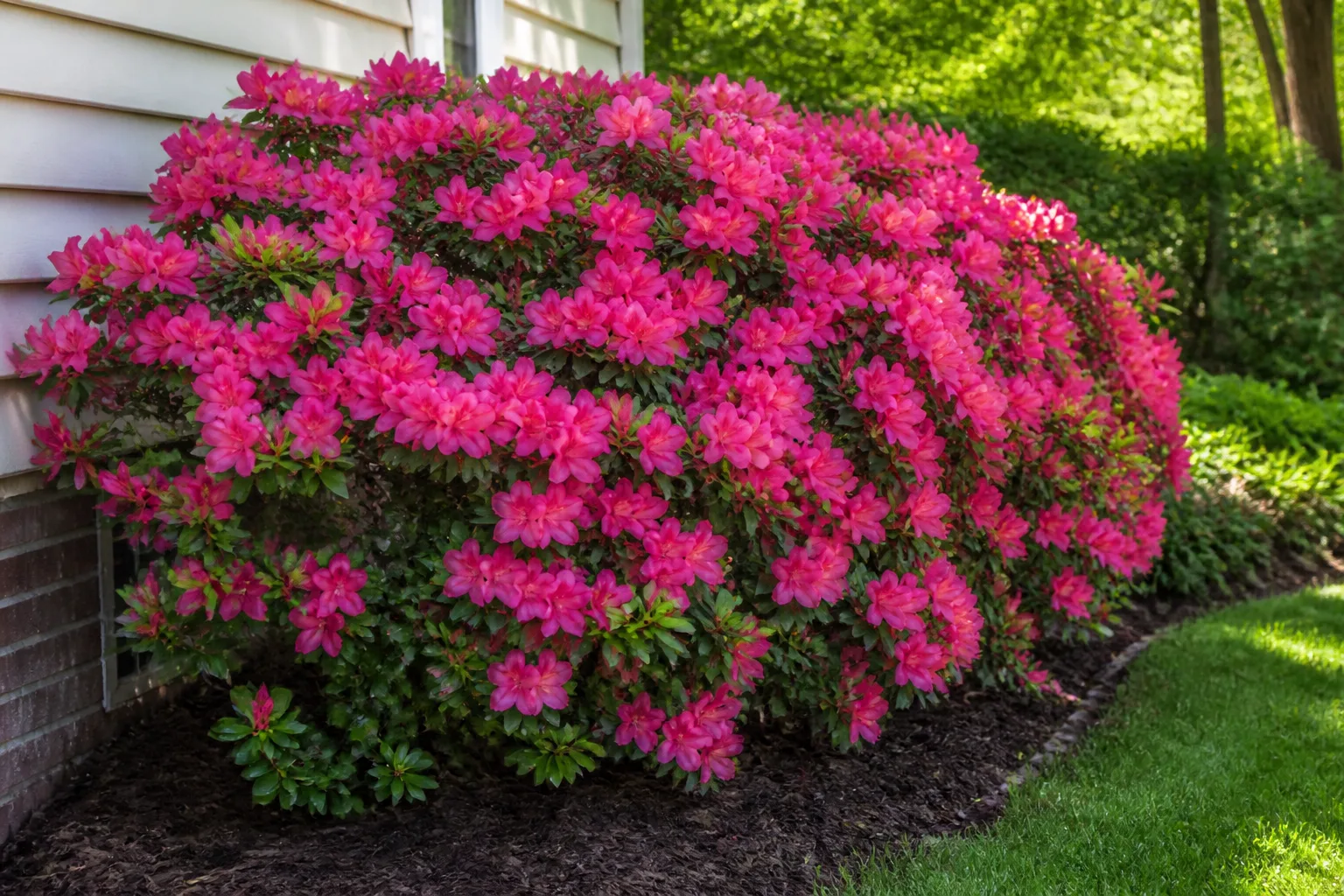
Azalea
Azaleas bring spring flowers, and some cultivars bloom again later in the year.