Boxwood vs Privet
A compact boxwood cultivar is usually the better starting point for a small formal hedge. Privet can fill a larger space quickly, but its exact species and local invasive status come first. Neither fast growth nor slow growth guarantees a low-maintenance planting.
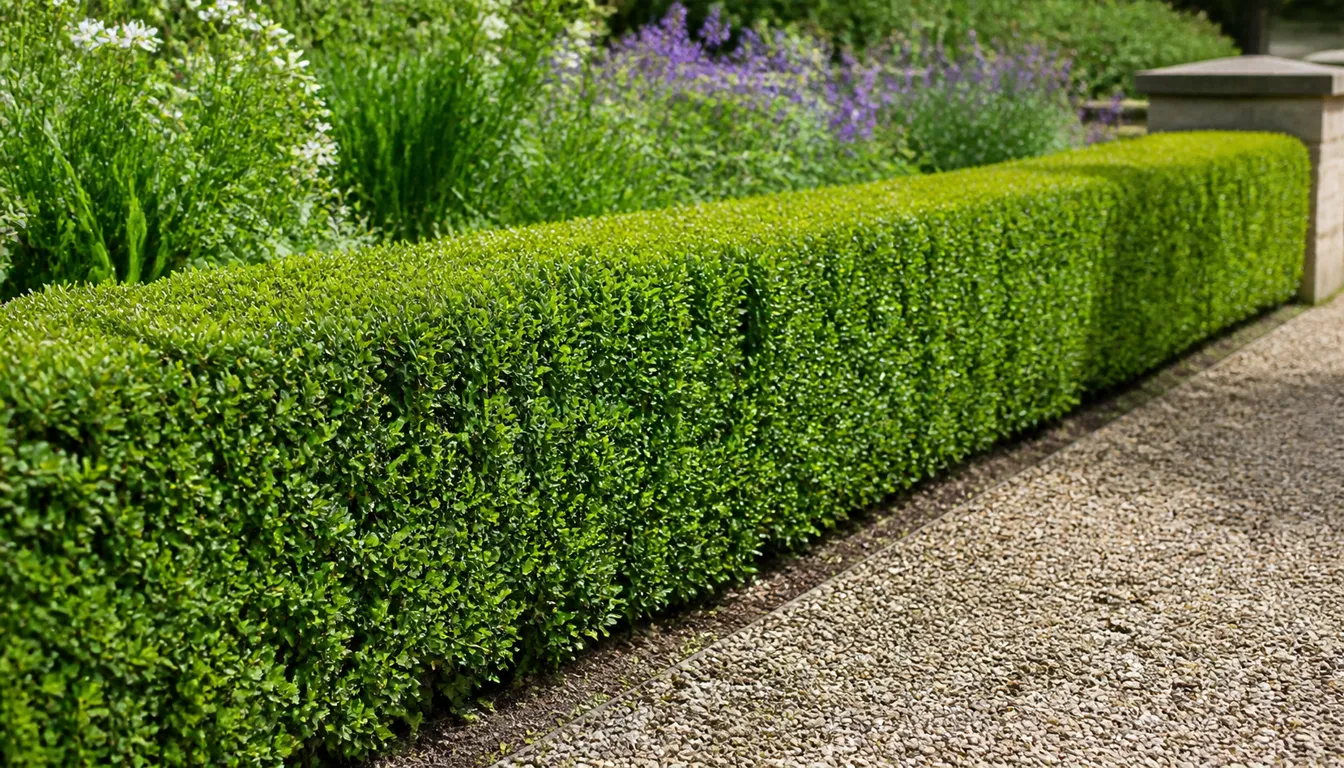
Boxwood
Buxus spp.
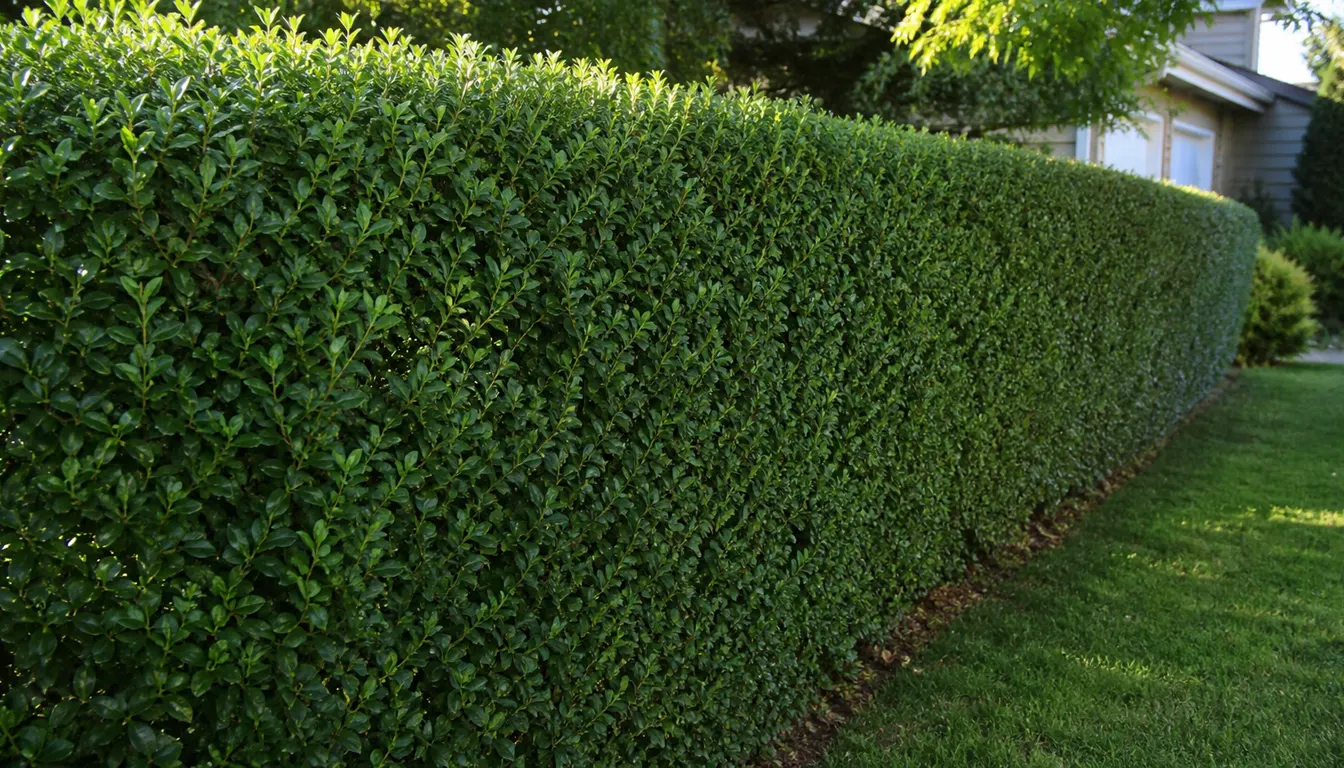
Privet
Ligustrum spp.
Boxwood and privet overlap as clipped hedges, so the choice is more specific than neat versus untidy. A vigorous privet can make a formal boundary, and some boxwoods grow far beyond the low edging seen beside a path. The useful comparison is between named plants at the height and width you actually have room for.
The strongest reason to rule out a privet may have nothing to do with its appearance. NC State discourages Chinese privet, Ligustrum sinense, because it spreads into natural areas. A healthy, fast-growing hedge can still be a poor new planting when its offspring escape beyond the property.
Specifications
Compare the traits that change the growing decision.
| Feature | Boxwood | Privet |
|---|---|---|
| Winter foliage | Evergreen | Evergreen to partly deciduous, depending on species and climate |
| Size and growth | Dwarf, rounded and upright cultivars differ | Common hedge species grow rapidly; final size is species-specific |
| Maintaining a clipped form | Selective thinning supports an open interior | Vigorous extension growth can increase clipping work |
| A major selection constraint | Boxwood blight, other pests and unsuitable drainage | Regional invasive status and spread beyond the hedge |
| Soil fit | Well-drained soil; pH suitability still matters | Japanese privet tolerates varied soils, but not constant wetness |
Best Use Cases
Choose by the job the planting needs to do.
A low border beside a path
A dwarf cultivar reduces the amount of growth that must be removed to keep the path open. The word boxwood alone does not establish a small mature size.
Well-drained soil and a location without severe winter exposure matter more than a promised number of trims.
A tall screen with limited maintenance
A large privet may reach the intended height sooner, but continued growth also adds work at the sides and top. Its permitted use and regional spread risk need to be settled before speed becomes an advantage.
If both proposed shrubs would need constant size reduction, a different hedge plant suited to the space is a better choice than forcing this pair to produce a winner.
The privet name is not enough to make the choice
Chinese privet can spread through seed and suckers. Birds that eat its fruit can carry seed outside the maintained hedge, where repeated clipping no longer controls the resulting plants. NC State describes its ability to form dense stands that displace other vegetation. That is a different problem from a few shoots growing over a sidewalk.
Japanese privet, Ligustrum japonicum, is evergreen and has thicker foliage. It also carries an invasive designation in North Carolina. A local invasive listing describes a plant’s environmental behavior, while a legal restriction is a separate question. A nursery offering it for sale does not answer either question for every location.
For a new planting where that species is invasive or restricted, a locally appropriate alternative is preferable. A cultivar marketed as non-fruiting needs evidence for that exact cultivar and local acceptance. Its marketing claim cannot be transferred to every privet with similar leaves.
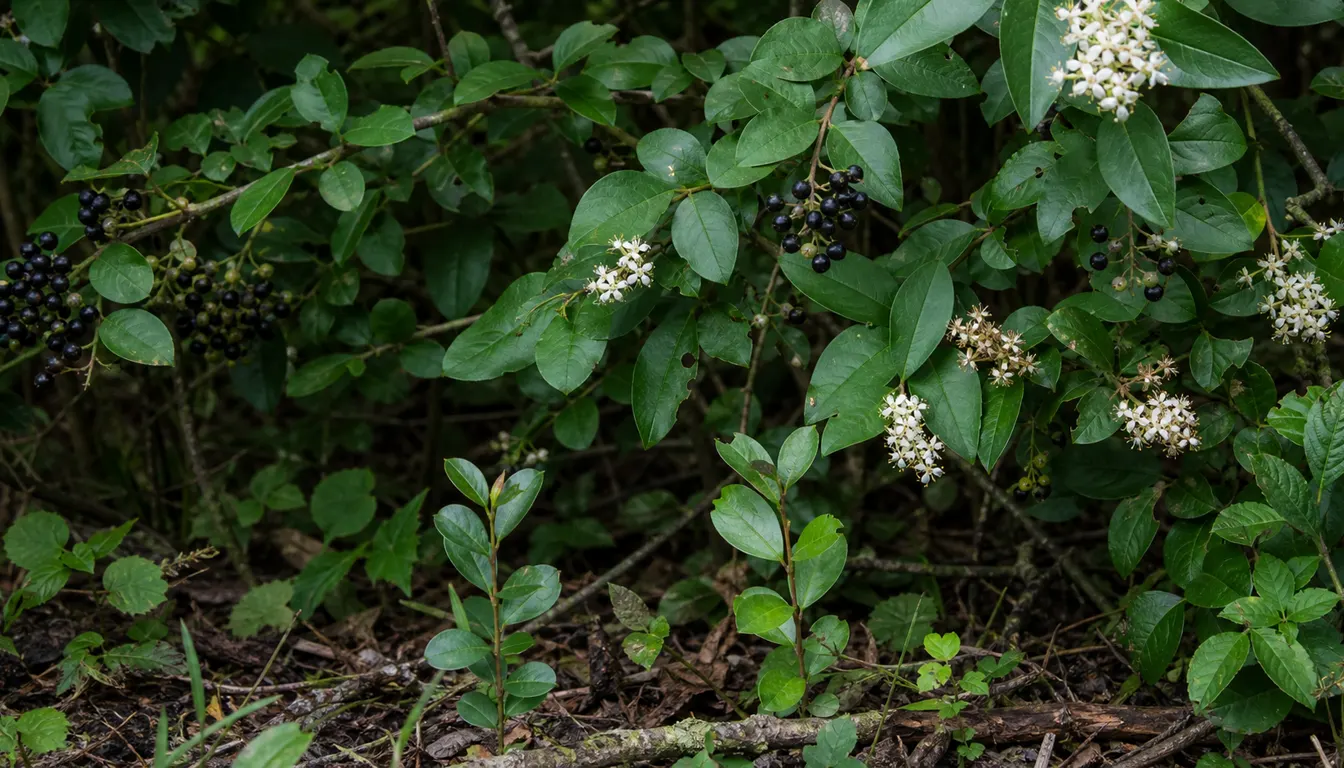
A small nursery plant does not define the finished hedge
Common boxwood, Buxus sempervirens, includes very different forms. NC State describes the narrow, upright cultivar ‘Dee Runk’ at up to about 8 feet tall, while ‘Vardar Valley’ is listed around 2–3 feet. A blanket claim that boxwood stays below a window would be wrong for the first and much more plausible for the second.
Japanese privet is described by NC State as a rapid-growing shrub or small tree reaching roughly 12 feet tall. A narrow bed cannot accommodate that growth indefinitely just because the plant tolerated its first haircut. The space required for mature branches and access to maintain both faces of a hedge belongs in the original choice.
Winter screening also depends on the privet species and local climate. A partly leafless hedge may still mark a boundary while failing to block a view. The evergreen appearance of a summer nursery display is not evidence of year-round coverage.
A clipped surface and a healthy interior are different jobs
Boxwood responds to shaping, but repeated surface shearing can leave a dense outer layer around a poorly lit interior. University of Maryland Extension favors selective thinning, which removes selected branches at their attachment points and lets light and air penetrate. Keeping a geometric outline may still involve shearing, but that does not replace attention to the inside of the shrub.
Privet’s rapid extension growth explains both its screening appeal and the work required to hold a fixed outline. The amount of clipping depends on the cultivar, growing conditions and how strict that outline must remain. A loose screen and a sharply clipped boundary are different maintenance commitments even when planted with the same shrub.
An existing oversized hedge needs an assessment of its condition before major renovation. Choosing a smaller cultivar for a new bed avoids relying on repeated severe cuts to compensate for a permanent mismatch in size.
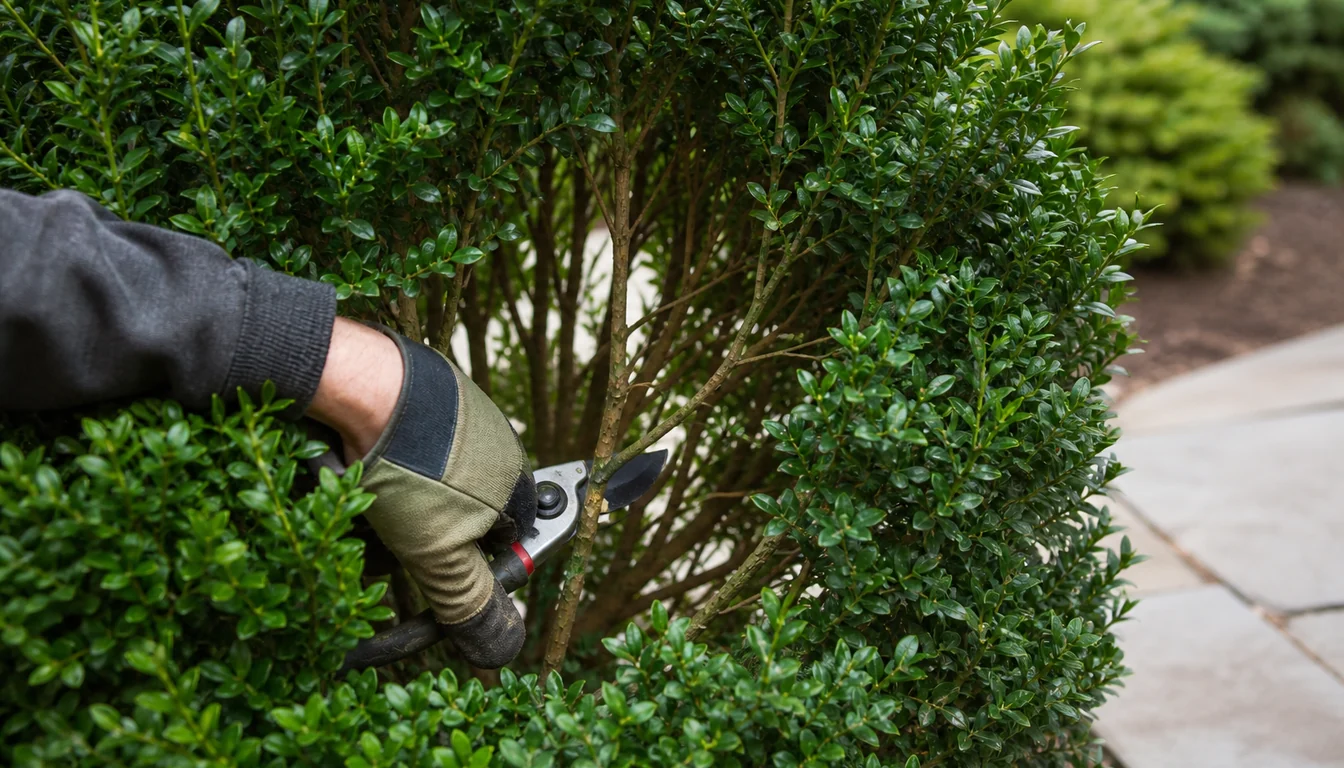
Disease history can outweigh the preferred appearance
Boxwood blight is a serious selection issue where a previous planting was affected. Fallen infected material can retain the pathogen, so removing a hedge does not automatically make the site suitable for another boxwood. A confirmed history is a reason to consider a non-susceptible replacement rather than assume a more resistant cultivar removes the risk.
Brown foliage alone does not establish blight. Winter injury, root problems and other diseases can resemble parts of the decline, and the response depends on the cause. A diagnosis matters before making a replacement decision or treating neighboring shrubs.
Poor drainage is another reason the apparent winner may fail. Boxwood does not suit constantly wet soil, and Japanese privet’s adaptability does not make it a solution for persistent saturation. Changing the plant without addressing the rooting conditions can repeat the loss.
Neither is a pet-safe hedge choice
ASPCA lists Buxus species and common privet, Ligustrum vulgare, as toxic to dogs, cats and horses. Those records identify their animal and taxon scope. They do not justify calling every possible exposure “mild” or declaring another privet species safe because it has not been checked here.
Clipped material also needs to stay away from animals that may chew or browse it. If ingestion is suspected, contact a veterinarian or an animal poison service promptly. Moving a hedge to a fence line does not by itself prevent access.