Care snapshot
- Light
- Full sun to light shade
- Water
- Moist, relatively drought tolerant once established
- Height
- 2 to 3 ft leaves, 5 to 6 ft plumes
- Zone
- Zones 3 to 9 (Wisconsin)
- Spread
- 1 to 2 ft wide
- Temperature
- Afternoon shade helps in hot summers
What Does Feather Reed Grass Look Like Through the Year?
Feather reed grass is a cool-season grass, hardy in zones 3 to 9 according to Wisconsin Extension, so its glossy green foliage appears early in spring. Warm-season grasses such as fountain grass wait longer, because they don't start growing each year until conditions warm considerably (Wisconsin).
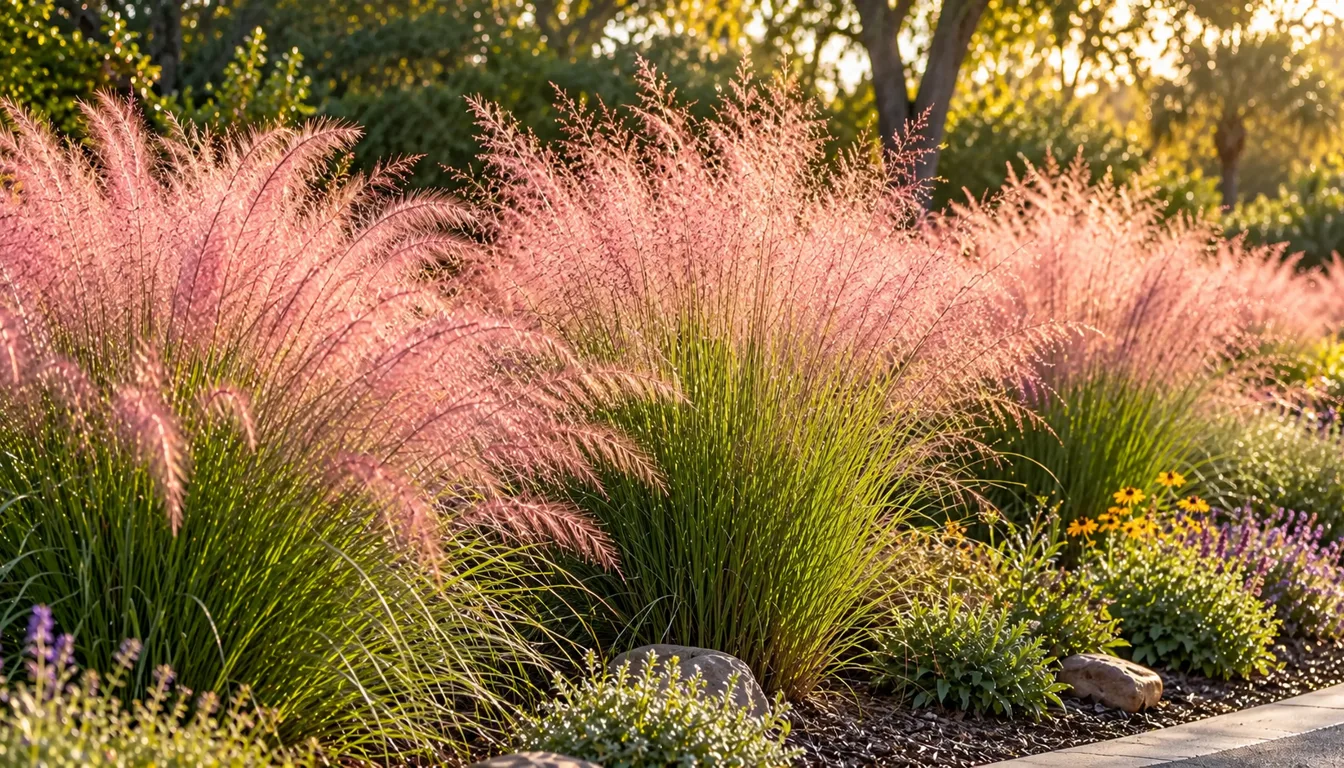
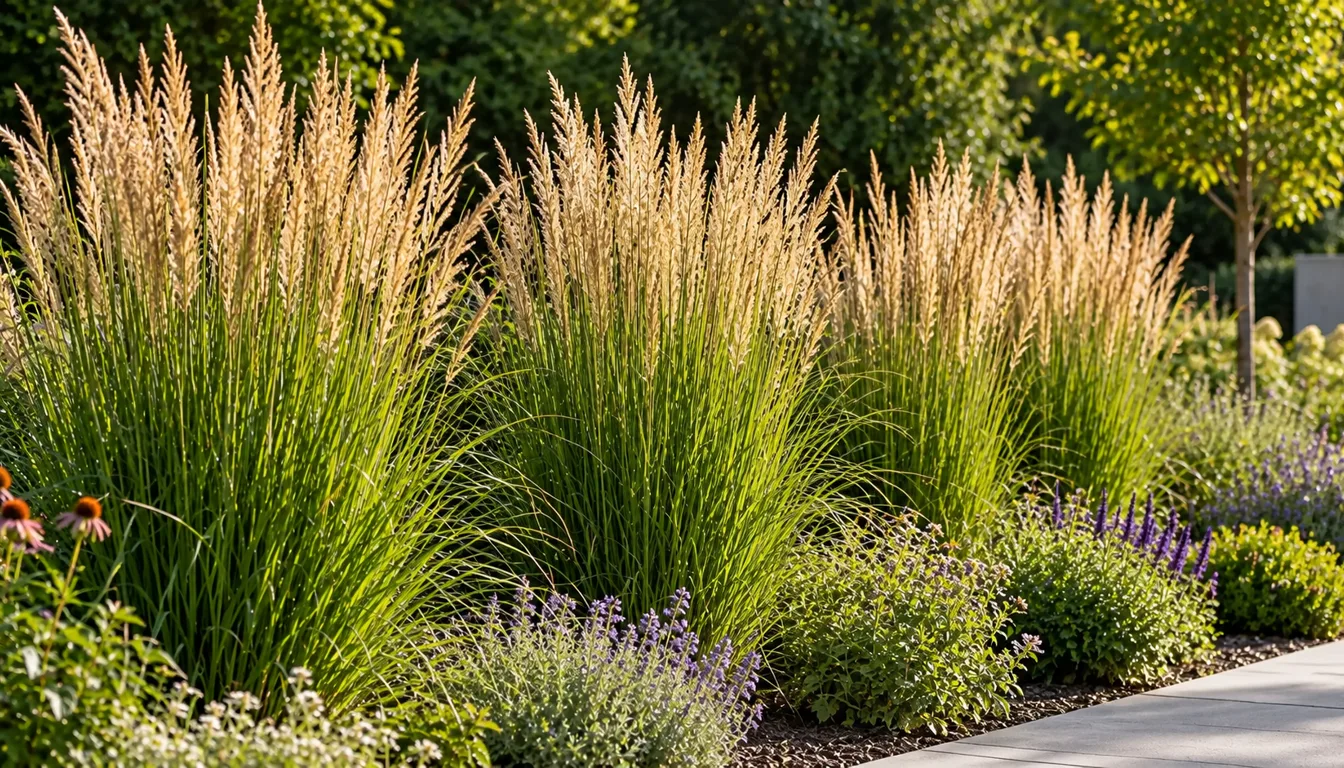
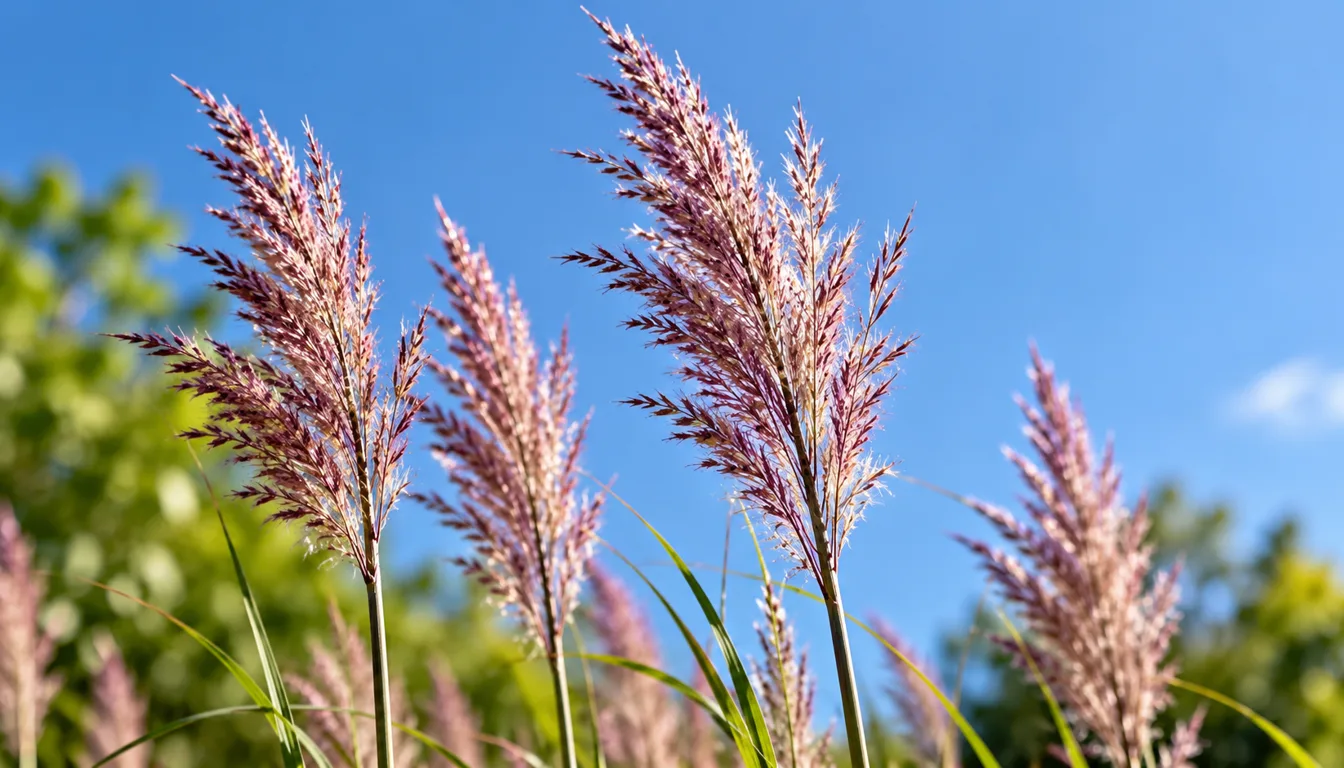
The clump stays narrow, 2 to 3 feet tall and less than 2 feet wide. In early summer the flower stems rise to 5 to 6 feet, although NC State measures them at up to 5 feet. The plumes open airy and rosy pink, turn dark maroon after a few weeks, then bronze, and finally narrow into golden-tan wands that stand upright through winter.
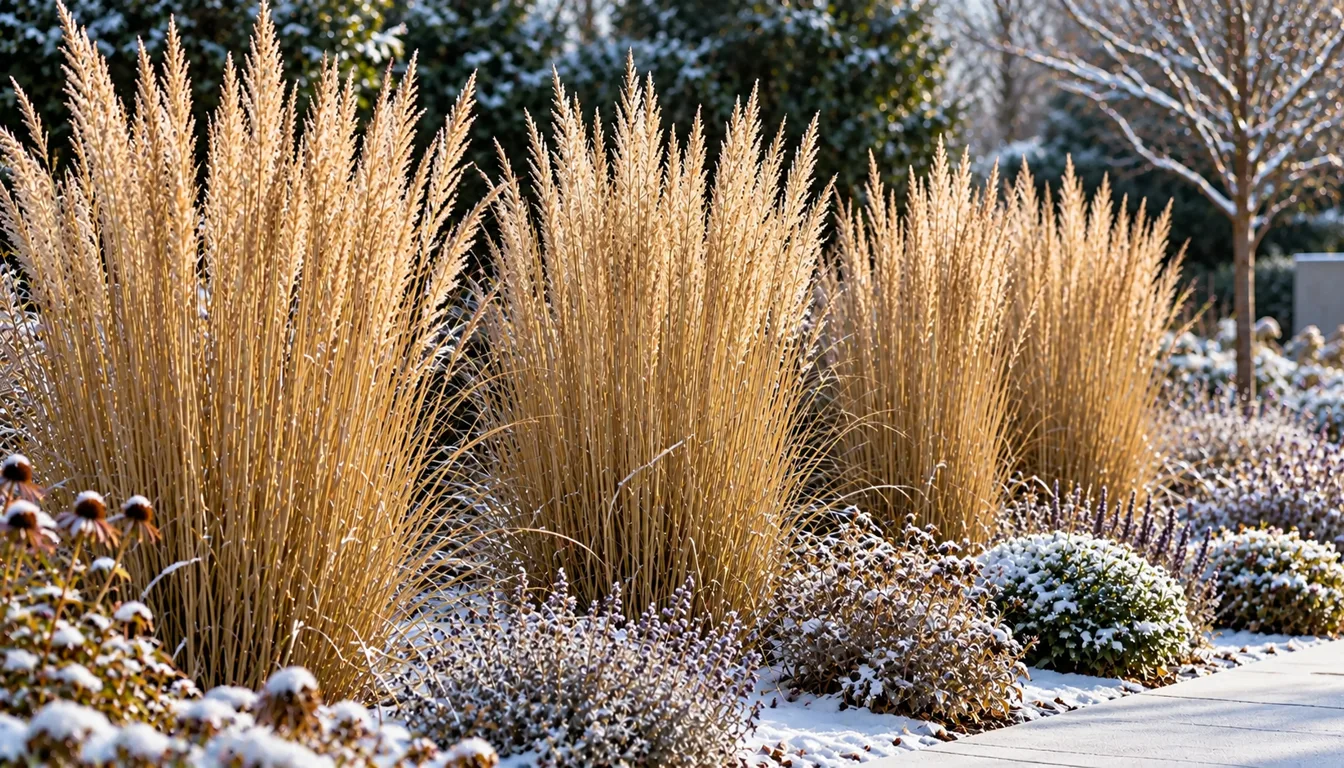
Stems cut before the flowers mature last for months in an arrangement and keep their golden tan color (Wisconsin).
Calamagrostis x acutiflora is thought to be a natural hybrid of two grasses, one native to Europe, Asia and Africa and the other to Eurasia, China and India, that occurred at the Hamburg Botanical Garden. German nurseryman Karl Foerster introduced it in 1950, it came into the United States from Denmark in 1964, and the Perennial Plant Association named ‘Karl Foerster’ its 2001 Perennial Plant of the Year.
- Season type
- Cool-season, early spring growth
- Plumes
- Early summer, pink to tan, persist into winter
- Form
- Erect, narrow clump
- Seed
- Karl Foerster is sterile and will not reseed (NC State, Wisconsin)
- Wildlife value
- Butterflies and songbirds
Will Feather Reed Grass Grow in Your Clay and Shade?
Feather reed grass grows best in full sun to partial shade. NC State says it blooms best in light shade, especially afternoon shade that eases hot summers, but that the flowers and the erect form of the foliage diminish as shade increases. Wisconsin adds that it may flop over in shade, and Iowa State says that in partial shade it may not flower as well and the normally erect stems may flop.
So afternoon shade eases a hot summer, at the cost of fewer flowers and a leaning clump as the shade deepens. Wisconsin suggests planting it where the afternoon sun shines on the seed heads, which makes them look almost golden.
The soil advice splits in two. Wisconsin describes moist, well-drained, fertile soil and calls the grass relatively drought tolerant once established, while Clemson says ‘Karl Foerster’ prefers rich, consistently moist soil. Unlike many ornamental grasses it does well in heavier clay, and in infertile soil Wisconsin says it may need fertilizer to reach its full height.
NC State lists these conditions it tolerates.
- Heavy clay to poor soil, and dry to wet sites
- Black walnut
- Erosion
- Pollution
Karl Foerster forms a narrow clump less than 2 feet wide, and NC State says it does well in narrow, vertical spaces. NC State also calls it a good container plant, and Wisconsin lists patio pots among its uses.
When Do You Cut Back and Divide Feather Reed Grass?
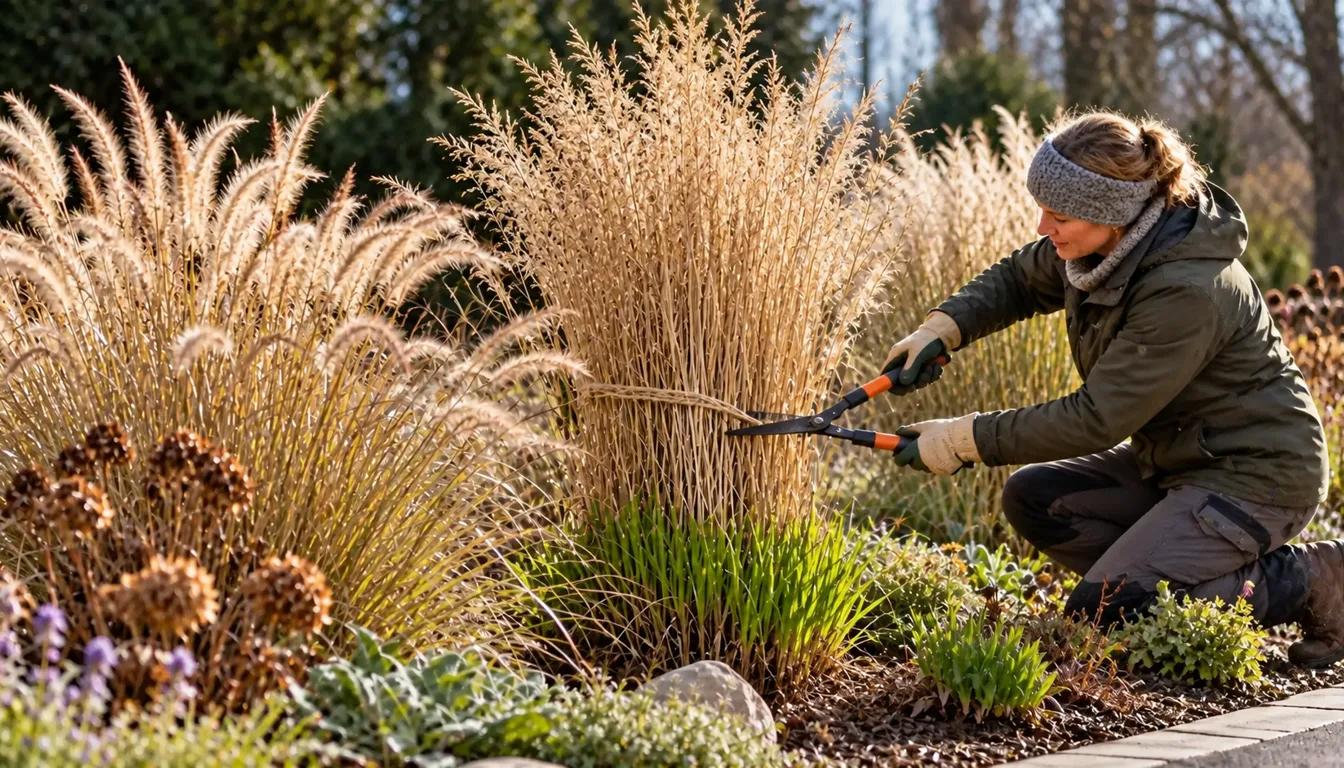
This grass starts growing early, so Wisconsin says to cut back the previous year's growth in late winter or very early spring to avoid damaging the new growth, down to about 6 inches. NC State's page for the species says to cut clumps to the ground in late winter. Its page for ‘Karl Foerster’ says to cut in early spring and leave about a third of the plant, because cutting the grass back harshly can be detrimental.
Cool-season grasses grow most in spring while temperatures stay below 75°F and grow very little in summer (NC State). Wisconsin times the cut before that spring growth so the new shoots are not damaged.
Division works in fall or spring. Wisconsin says a large clump divided in fall gives a good show of flowers the next spring, while smaller divisions need a second growing season to flower fully. Colorado State says to divide an ornamental grass when the center of the clump dies and leaves blades only around the edges, and that ‘Karl Foerster’ and ‘Overdam’ can be divided in late summer and fall in Colorado.
Colorado State gives these steps for dividing a clump of ornamental grass.
- Cut the foliage back to 4 to 6 inches.
- Dig the entire clump up from the ground.
- Cut through the core with a sharp spade, large knife or axe to halve the clump, then quarter it.
- Separate living divisions from dead or diseased tissue by hand, and make sure each division keeps a good root system.
- Replant as soon as possible, water well, and mulch up to 3 inches deep, because divisions without good fall and winter watering and mulch can dry out and die over winter.
Which Feather Reed Grass Should You Plant?
Clemson, writing for South Carolina, says feather reed grass grows best in the upper Piedmont, and NC State adds that in hot, humid or wet summers ‘Karl Foerster’ suffers and is susceptible to rust. For hotter areas, Clemson describes Korean feather reed grass, which tolerates hot summers better than C. x acutiflora and grows best in the South in light or part shade and moist, well-drained soil.
- 'Karl Foerster'
- 3 to 5 ft (NC State, Clemson) or 5 to 6 ft flower stems (Wisconsin), prefers rich, consistently moist soil, sterile, zones 4 to 7 (Clemson)
- 'Avalanche'
- Green and white variegated, 3 to 5 ft, medium to wet soil in full sun, zones 4 to 8 (Clemson)
- 'Overdam'
- White-striped leaves turning pink in cool weather, 2.5 to 3 ft, needs part shade and moist soil, zones 5 to 7 (Clemson)
- 'Stricta'
- Almost identical to ‘Karl Foerster’ and often confused by nurseries (Wisconsin), 1 to 2 ft taller and flowers about 2 weeks later (NC State), while ‘Karl Foerster’ does not self-seed (Wisconsin)
- Korean feather reed grass (C. brachytricha)
- A different species, 3 to 4 ft with pink fall plumes, tolerates hot summers better, zones 4 to 9 (Clemson)
Is Feather Reed Grass Safe for Dogs and Cats?
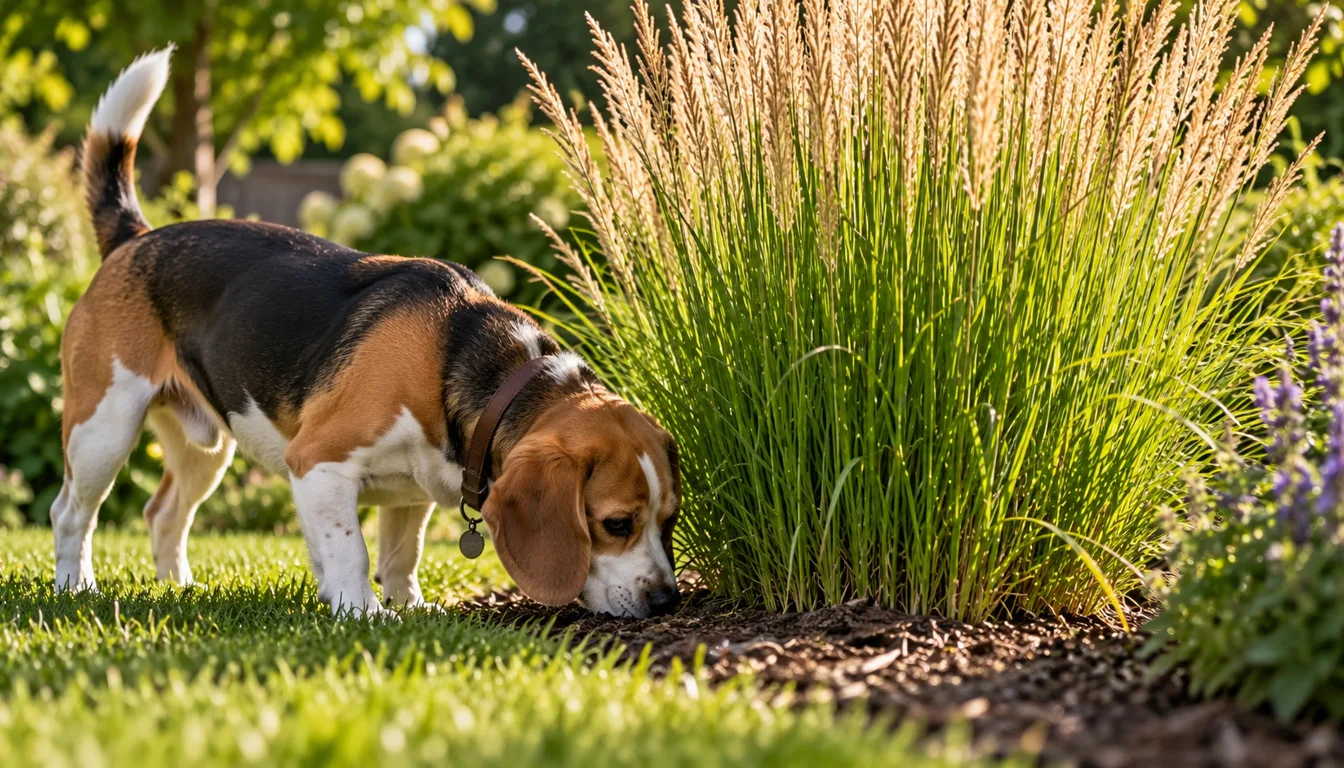
Feather reed grass does not appear on the ASPCA toxic or non-toxic plant lists, and NC State gives it no toxicity rating, so we list its pet safety as unknown. That is neither a safe nor a toxic classification.
NC State tags it for children's gardens, but neither NC State nor Wisconsin Extension addresses pets directly.
What Problems Does Feather Reed Grass Have, and What Grows Well With It?
NC State and Wisconsin Extension both report no serious insect or disease problems. Watch for rust, which NC State ties to prolonged rainy periods. NC State rates the grass resistant to deer and rabbits, and Wisconsin says deer do not favor it, so it is a deer-resistant choice.
Stems that lie down have two causes in the sources. In shade the grass may flop over (Wisconsin), and in heavy rain or wind the stems may flop in all directions but quickly return to vertical once the plant dries off.
Wisconsin suggests pairing it with perennials that bloom in late summer and fall.
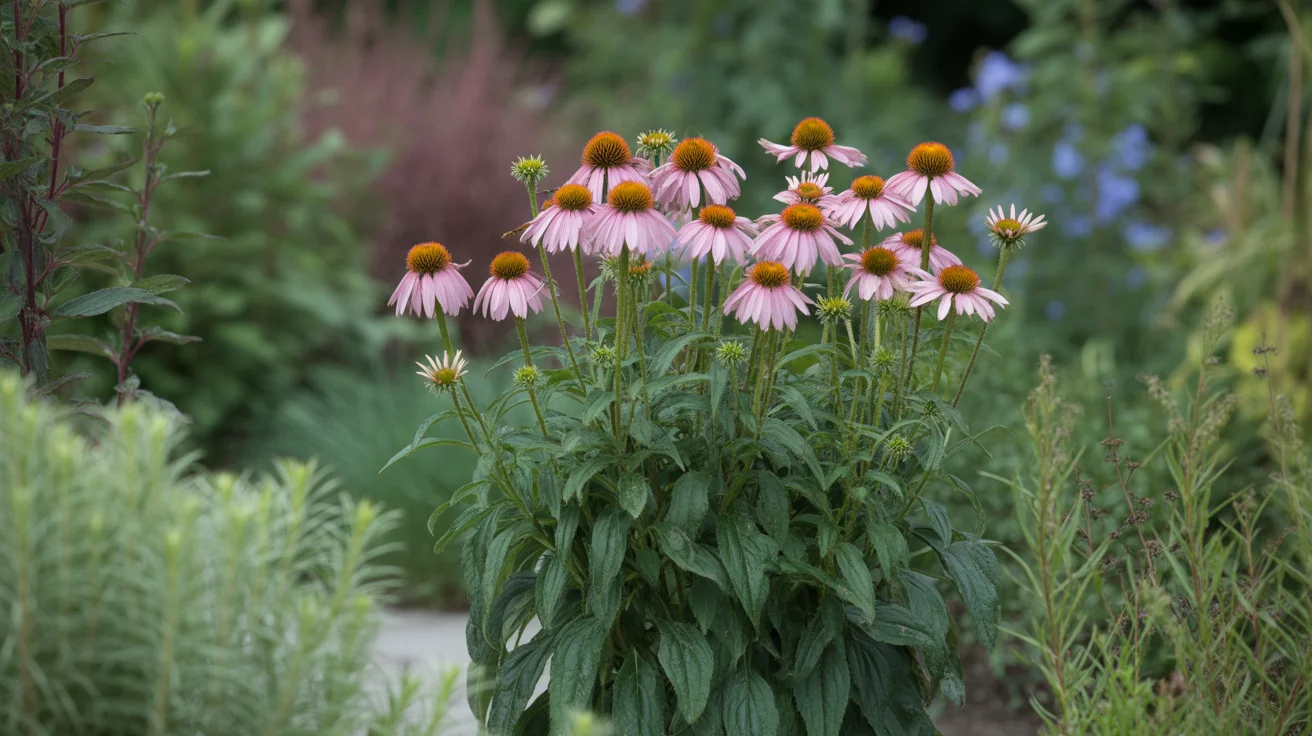
- Coneflower (Echinacea)
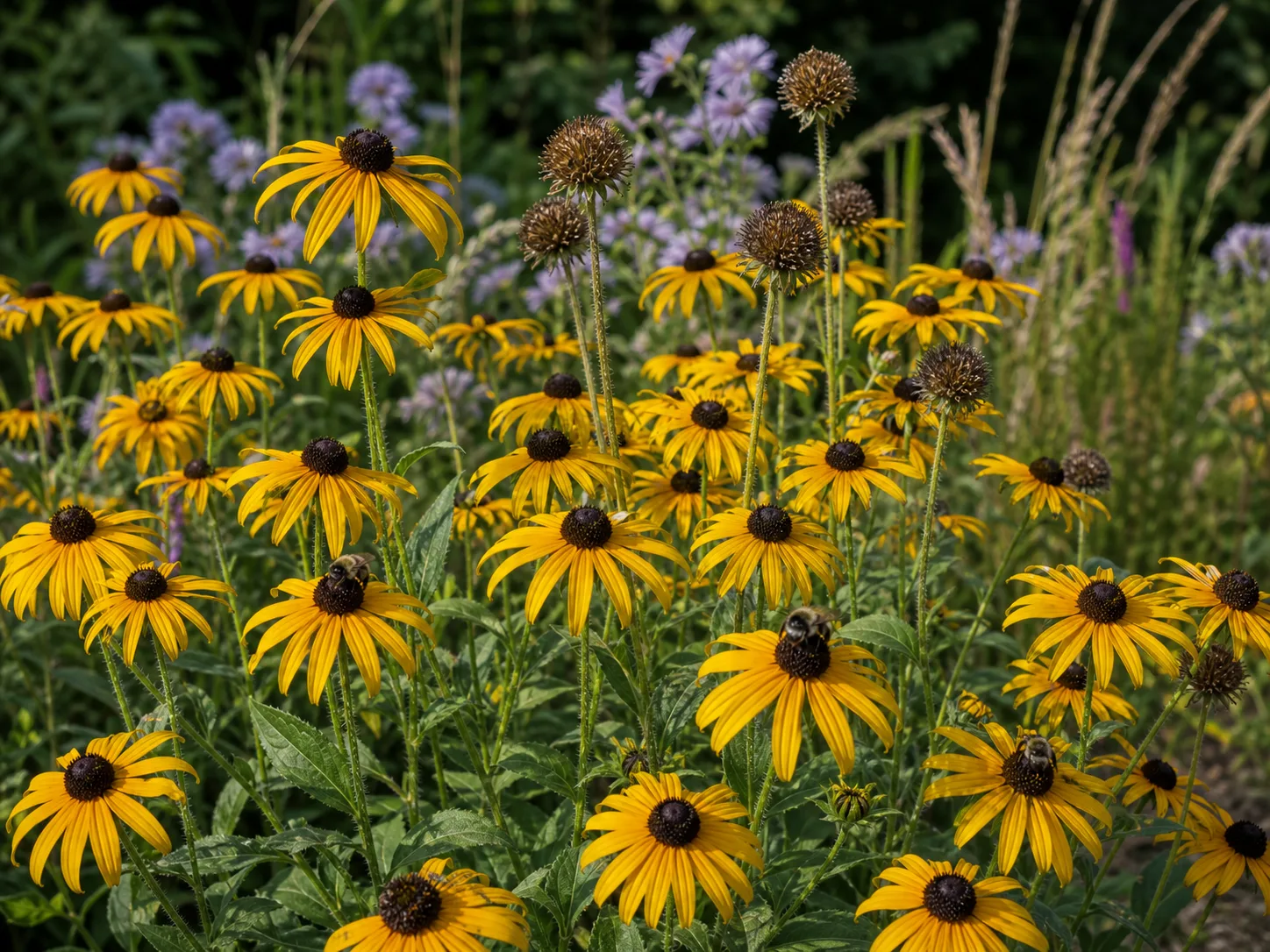
- Black-eyed Susan (Rudbeckia)
- Liatris and coreopsis
For other border grasses, see the ornamental grasses list.
Frequently Asked Questions
When should I cut back feather reed grass?
Cut it to about 6 inches in late winter or very early spring, because it starts growing early.
Does Karl Foerster feather reed grass spread?
Karl Foerster is sterile and will not reseed (Wisconsin). NC State adds that planted in the ground it does not produce viable seed and will not become invasive, and that it spreads slowly by rhizomes.
Is feather reed grass toxic to dogs?
It is not on the ASPCA toxic or non-toxic lists, and NC State gives it no toxicity rating, so its safety is unknown. Karl Foerster is sterile and will not reseed.
Can feather reed grass grow in clay soil?
Yes. It does well in heavier clay, unlike many ornamental grasses, and tolerates dry to wet sites.
How tall does feather reed grass get?
Expect a clump 2 to 3 feet tall with flower stems of 5 to 6 feet in early summer (Wisconsin). Shorter estimates run 3 to 5 feet (NC State).
Does feather reed grass grow in shade?
It takes partial shade, and afternoon shade helps in hot summers, but flowering and upright form diminish as shade increases.
How wide does feather reed grass get?
Karl Foerster forms a narrow clump less than 2 feet wide.
Which feather reed grass grows best in the South?
Korean feather reed grass, Calamagrostis brachytricha, tolerates hot summers better and grows best in the South in light or part shade, while Clemson rates Karl Foerster to zone 7.
Sources & References
- Calamagrostis x acutiflora, North Carolina Extension Gardener Plant Toolbox
- Feather Reed Grass, Wisconsin Horticulture Extension
- ASPCA Toxic and Non-Toxic Plants List
- Ornamental Grasses and Grass-like Plants, Clemson Cooperative Extension HGIC
- Dividing Ornamental Grasses, PlantTalk Colorado, Colorado State University Extension
- Ornamental Grasses for Iowa, Iowa State University Extension
- Calamagrostis x acutiflora 'Karl Foerster', North Carolina Extension Gardener Plant Toolbox
- Fountain grass, Cenchrus (Pennisetum) alopecuroides, Wisconsin Horticulture