
What's a Scindapsus Treubii? How to Keep Its New Leaves Silver
Scindapsus treubii Araceae
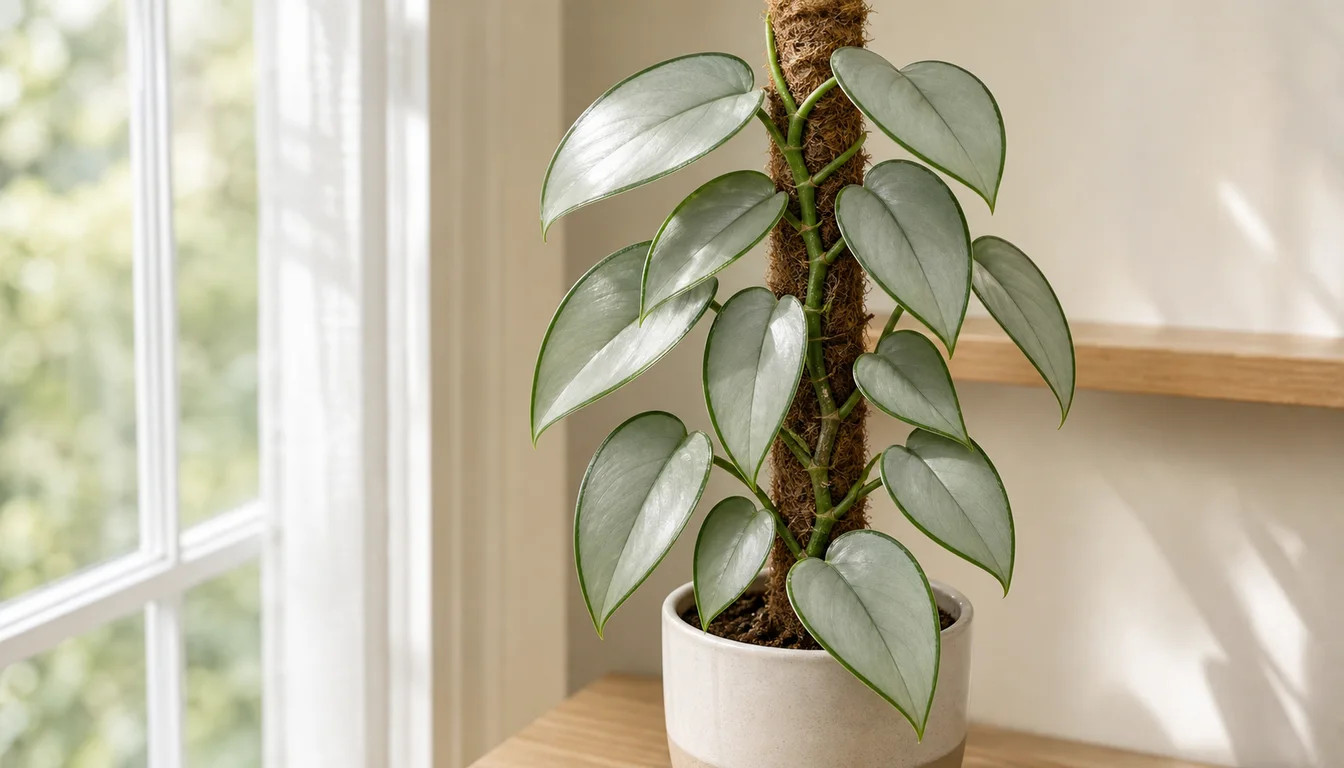
Scindapsus treubii is a slow wet-tropical climber with thick glossy leaves. Let it attach to a support, judge filtered light by the next leaf and node, and water only after much of the pot has dried.
Care snapshot
Is It Really Scindapsus Treubii, or Satin Pothos?
Scindapsus treubii is an accepted species from Peninsular Malaysia, northwestern Borneo, and Java. Kew records it as a climber of wet tropical habitat.
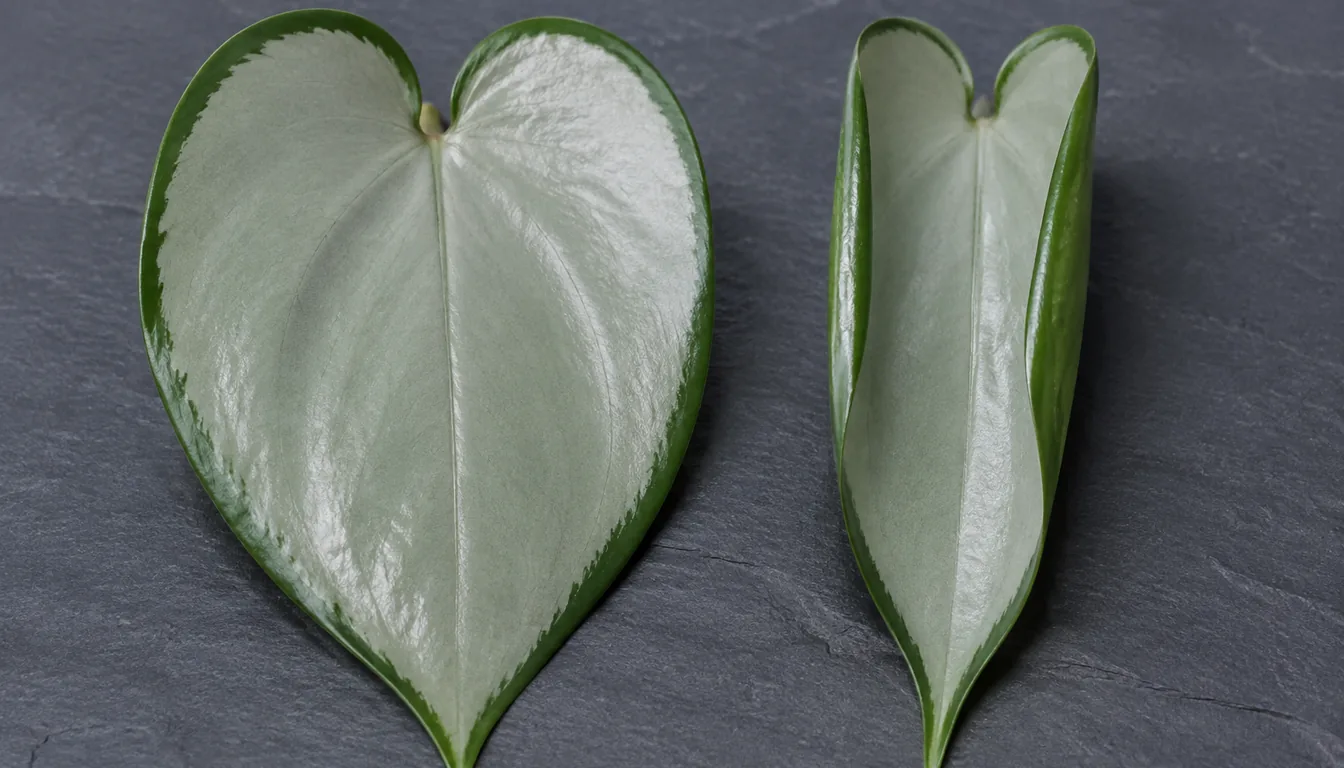
The houseplant forms keep that vining structure, but their thick leaves make them look and behave differently from the more familiar satin pothos. A true 'Moonlight' leaf has a broad, smooth milky silver-green surface with a defined darker green edge.
The blade feels thick and glossy rather than thin or papery.
A young leaf may open greener and harden to its finished color, so judge a plant from several mature leaves instead of one fresh tip.
'Dark Form' keeps the same substantial leaf shape but matures to glossy deep green that can appear nearly black.
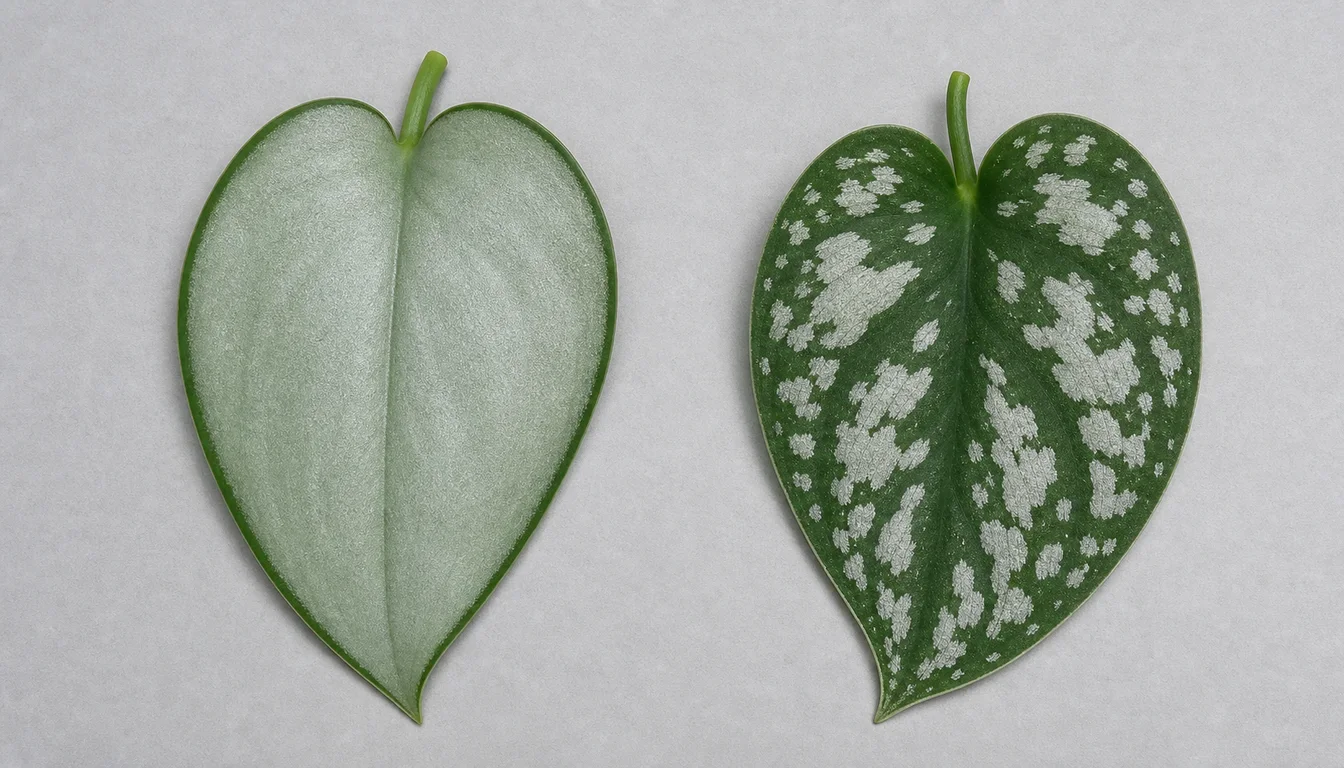
Scindapsus pictus, sold as satin pothos, usually shows separate irregular silver patches across a dark green blade. That spotted surface is not the standard Moonlight pattern.
There is a third form on sale under the same species. Sumatra carries dark green leaves with silver markings, which puts it visually between Moonlight and Dark Form and makes an unlabelled cutting harder to place than a two-way comparison suggests.
Use the comparison below before buying an unlabeled cutting. Leaf surface, thickness, edge color, and the stem attached to it offer better evidence than a seller's use of words such as silver, rare, or pothos.
- Treubii 'Moonlight'
- Thick glossy blade with a mostly continuous milky silver-green surface and a green margin.
- Treubii 'Dark Form'
- Thick glossy blade that matures deep green to nearly black, without a silver-spotted field.
- Scindapsus pictus
- Dark green blade with separate mottled silver patches. Open its own profile for species-level care.
A Support Changes More Than the Direction of the Vine
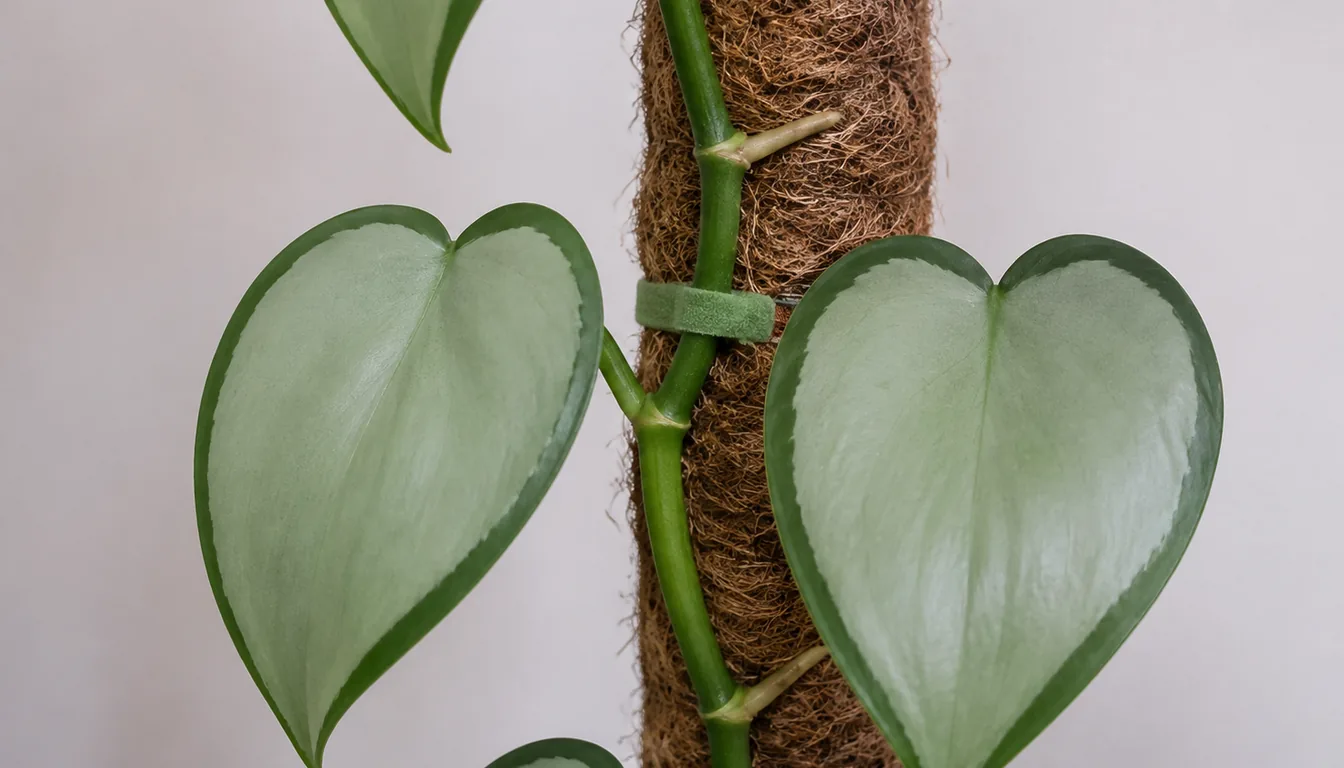
A firm support gives the small aerial roots a surface to enter instead of leaving each node suspended.
Bring the vine against coir, a rough plank, or another moisture-safe support and fasten the stem loosely between nodes. Do not tie across a petiole or press a new leaf against the support.
Climbing keeps the leaves facing outward and makes the slow vine read as one deliberate column.
Trailing works when you prefer a shelf or hanging display, but the unsupported stem may make smaller leaves and longer bare intervals as it searches.
Horizontal growth across a mantle or low trellis is a useful middle choice when vertical space is limited.
A support is helping when new aerial roots meet it and the next nodes remain compact.
If the stem repeatedly pulls away, move the attachment point or change the light angle rather than tightening the ties.
The goal is contact and orientation, not forcing a stiff vine flat.
Why Are the New Leaves Greener and Further Apart?
Bright filtered light supports compact new growth, but an old leaf cannot tell you whether yesterday's move worked. Watch the next leaf open and the stem segment formed before it.
A smaller blade, a longer bare segment, or a greener Moonlight surface suggests that the vine needs more useful light.
Move the plant closer to filtered daylight in stages and keep the support facing the source.
The next one or two nodes should tighten before you decide again.
Old stretched stem will not shorten, and an old green leaf will not repaint itself silver, so improvement belongs to new growth.
Moonlight is naturally pale.
Sun damage looks different because tissue bleaches unevenly or becomes tan, crisp, and fixed in place.
Shield the vine from hot direct sun and keep it in ordinary warm-room conditions.
Cold glass or a draft can stall a root system that is already slow.
Warm is narrower than it sounds. Room temperatures of 65 to 75F suit it, which means a conservatory in summer and an unheated hallway in winter are both outside the range even though neither feels extreme.
Wait Until Much of the Pot Has Dried
Test below the surface before watering.
Push a wooden skewer through the deeper mix and lift the pot. Wait while the skewer returns damp or the container still carries most of its watered weight.
Soak when at least half of the root zone has dried and the pot feels clearly lighter.
The thick leaves provide a buffer during that dry-down, while the slow roots are vulnerable when dense mix stays saturated.
NC State advises allowing the soil to become half dry to almost completely dry and identifies root rot as an overwatering problem.
A dry top inch alone is therefore not enough evidence.
When the plant is ready, wet the entire root ball and let the excess drain.
A supported vine, a cooler room, lower light, or a larger container can each change how long that takes.
Recheck after any of those changes instead of carrying the old interval into the new setup.
Use a rich, airy mix that drains freely, but match the mix to the roots and room instead of following one recipe.
Repot when roots occupy the container or the mix has collapsed, not because twelve months passed.
Feed lightly only while the vine is making new leaves.
Extra fertilizer in a stalled pot adds salts without fixing light or roots.
A Treubii Cutting Needs the Node, Not Just the Leaf
Find the swollen stem joint where a petiole and small aerial-root nub meet the vine. That node can make a new shoot and roots.
A leaf blade with only its petiole may stay green for a time, but it lacks the stem bud needed to build another vine.
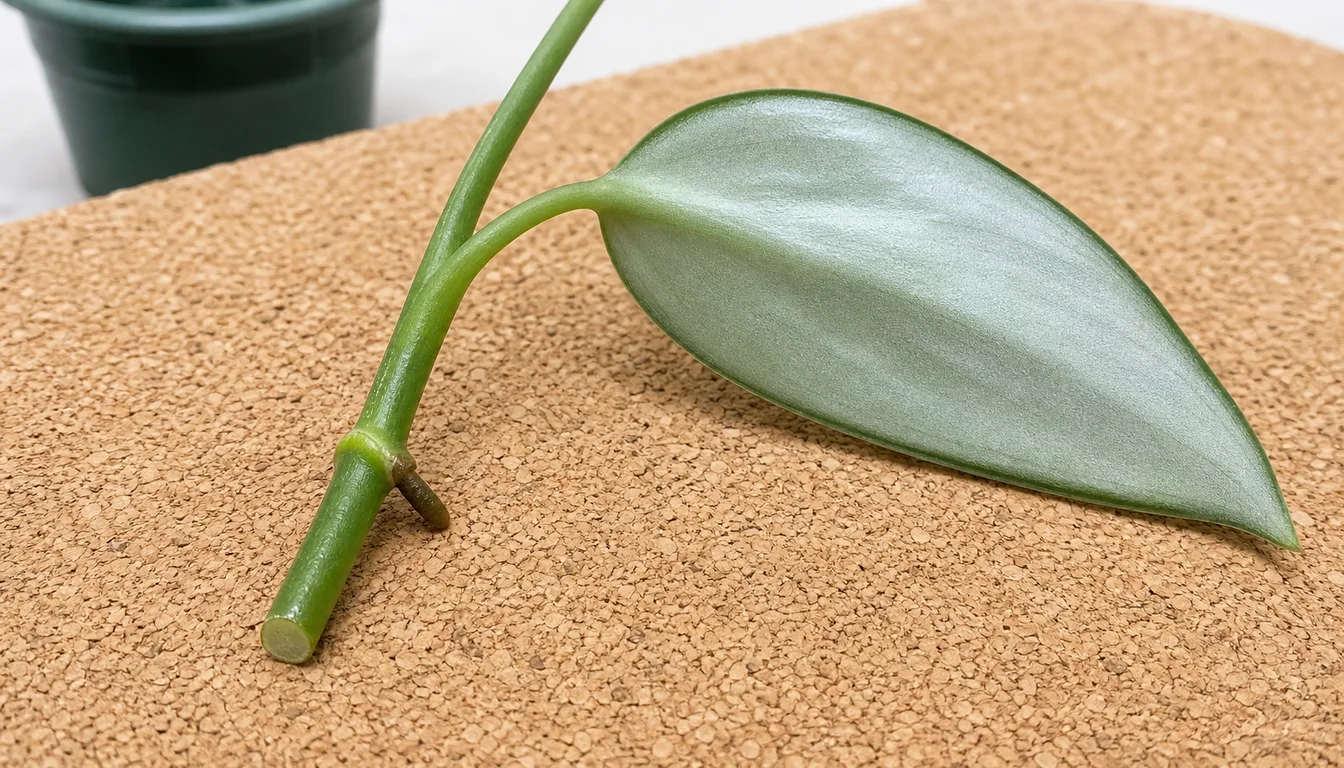
Cut through firm stem below the chosen node with a clean blade. One-node pieces conserve material, while a longer tip cutting keeps more stored energy and an active growing point.
When dividing a leafless length, mark its original top before cutting so each piece keeps the correct orientation. Set the node against a warm, airy rooting medium and keep it lightly moist rather than saturated.
A clear cover can slow moisture loss, but open it for fresh air and remove any piece that softens.
Water rooting also works, provided the node sits in water while the leaf remains above it.
Layering keeps a slow vine attached to the parent while the selected node roots.
Pin one node against lightly moist mix in a small second pot, leave the leaf and stem tip exposed, and cut between the pots only after the node resists a gentle lift and has made roots. This method sacrifices less stored energy than removing an unrooted cutting at the start.
Move the cutting when several roots have begun to branch, not on a promised day.
A single new white root proves that rooting started.
A small network gives the cutting more contact points when it enters potting mix.
The houseplant propagation guide compares this stem-cutting method with division and offsets.
- Clean the blade and locate a firm node with its aerial-root nub. Cut below the node and mark the top of any leafless section.
- Place the node in water or against a lightly moist airy medium.
- Keep the leaf above the wet medium and remove soft tissue.
- Pot after roots branch, then keep the small root zone evenly monitored while it adjusts.
What Do Curling, Yellowing, and Fading Silver Mean?
Texture and pot moisture narrow the problem faster than color alone.
A soft yellow leaf beside wet mix points back to roots and excess water.
A firm leaf curling inward while the pot is light calls for a full soak and a check for a root ball that has pulled away from the pot edge.
A greener new Moonlight leaf with a longer stem segment is a placement signal, especially when the tissue remains firm.
Move the vine toward stronger filtered light and judge the next growth.
Tan crisp patches on the window side suggest direct-sun damage instead, and that dead tissue will not recover.
Inspect the sheltered side of every node and petiole before applying a pesticide.
Mealybugs leave cottony deposits, aphids cluster on soft new growth, and mites add stippling or fine webbing. Isolate an affected plant and treat the pest the evidence supports.
Humidity alone is not a control plan.
Soft yellow leaf and wet pot
- Pause watering
- Inspect roots and stem firmness
- Correct drainage or oversized potting
Firm curl and light pot
- Soak the whole root ball
- Check whether water bypassed dry mix
- Reassess after the leaf rehydrates
Greener leaf and longer node gap
- Increase filtered light gradually
- Keep the support facing the source
- Judge only the next growth
Cotton, clusters, stippling, or webbing
- Inspect nodes and leaf undersides
- Isolate the vine
- Treat the identified pest
Is Scindapsus Treubii Toxic to Cats and Dogs?
NC State lists calcium oxalate crystals in Scindapsus treubii leaves, stems, roots, and sap.
Chewing can cause oral discomfort, drooling, swelling, vomiting, reduced appetite, and difficulty swallowing. Place both climbing and trailing stems beyond reach and collect every cut piece during propagation.
The severity is rated medium rather than mild, and the reason matters. Beyond the mouth symptoms, ingestion by a pet can lead to kidney damage or death, which puts this well above the nuisance category most oxalate houseplants sit in.
After suspected chewing, remove access and save the plant name or a photo.
Contact a veterinarian, physician, or poison service for advice that matches the person or animal and the symptoms.
Do not induce vomiting or rely on a houseplant page for a dose or home treatment.
Frequently Asked Questions
How do I identify Scindapsus treubii Moonlight?
Look for a thick glossy leaf with a mostly continuous milky silver-green surface and a darker green margin. Scindapsus pictus usually carries separate silver patches on a darker blade.
How often should I water Scindapsus treubii?
Do not use a fixed interval. Water after at least half of the deeper mix has dried and the pot feels much lighter, then soak fully and drain the excess.
Should Scindapsus treubii climb or trail?
Both forms work. A support gives aerial roots contact and presents the leaves upright, while trailing suits a shelf or basket but may produce longer searching stem between leaves.
Can I propagate Scindapsus treubii from one leaf?
The cutting needs a piece of stem with a node. A leaf and petiole alone lack the stem bud that produces a new vine.
Is Scindapsus treubii safe for cats and dogs?
No.
The calcium oxalate crystals cause oral pain, drooling, swelling, vomiting and difficulty swallowing, and ingestion by a pet can go as far as kidney damage or death.
Keep the vine and every cutting inaccessible and contact a veterinarian after suspected chewing.
Sources & References
Related Plants
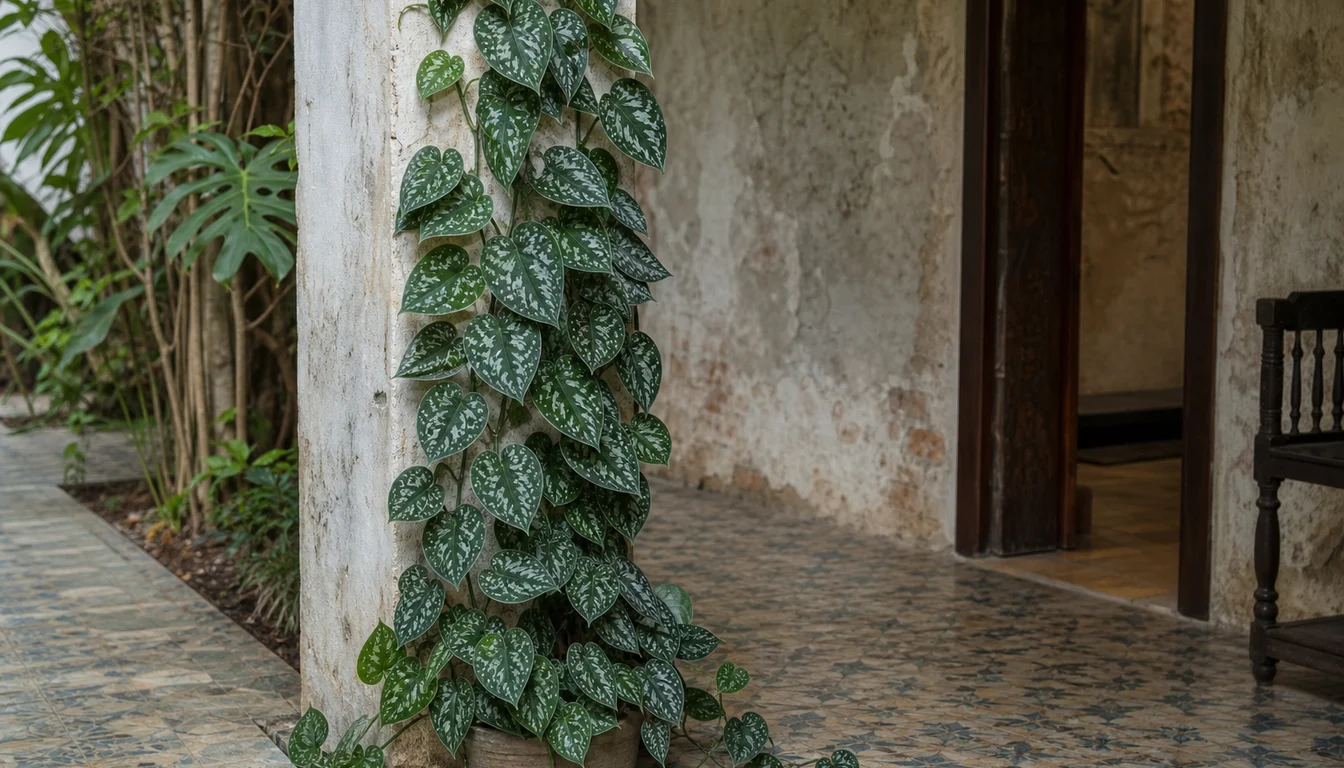
Satin Pothos
A faster Scindapsus with thinner dark leaves and separate silver patches rather than a continuous Moonlight surface.
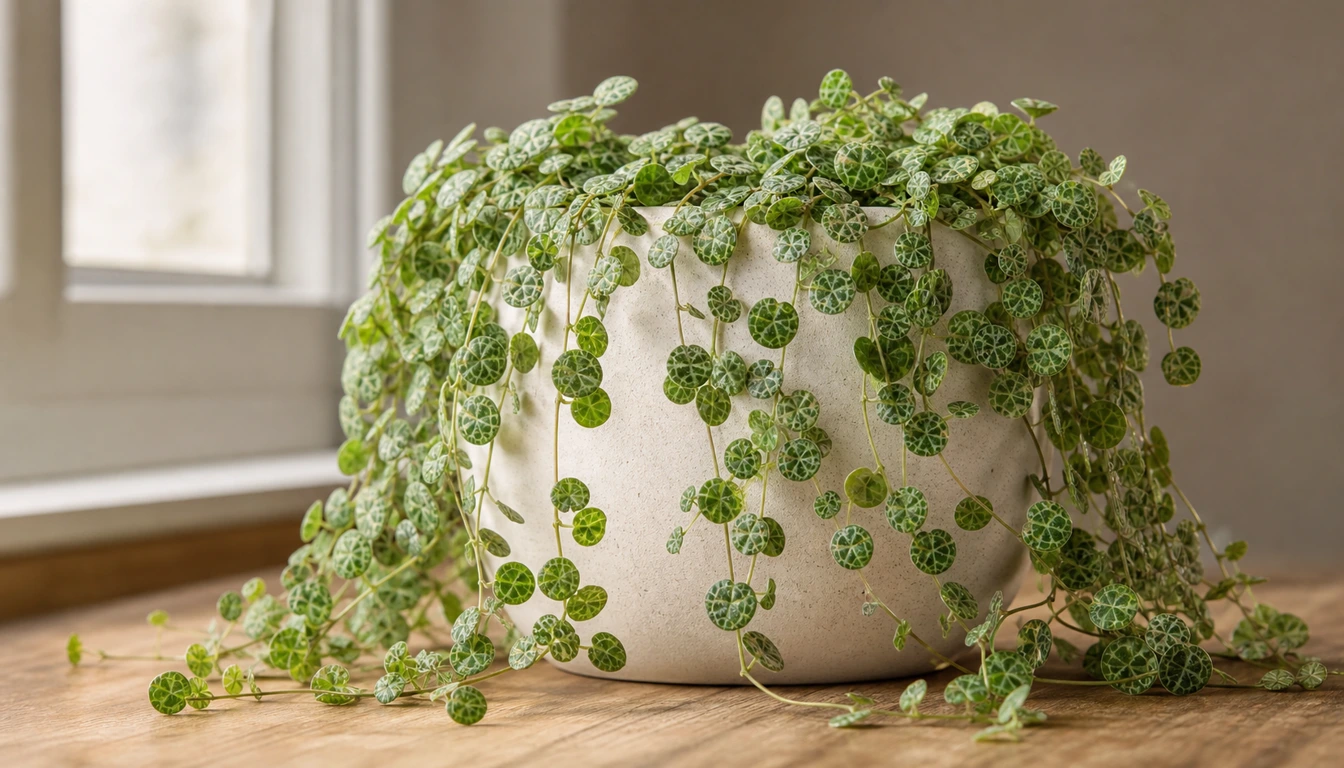
String of Turtles
A small trailing plant with patterned round leaves and a different growth and watering pattern.
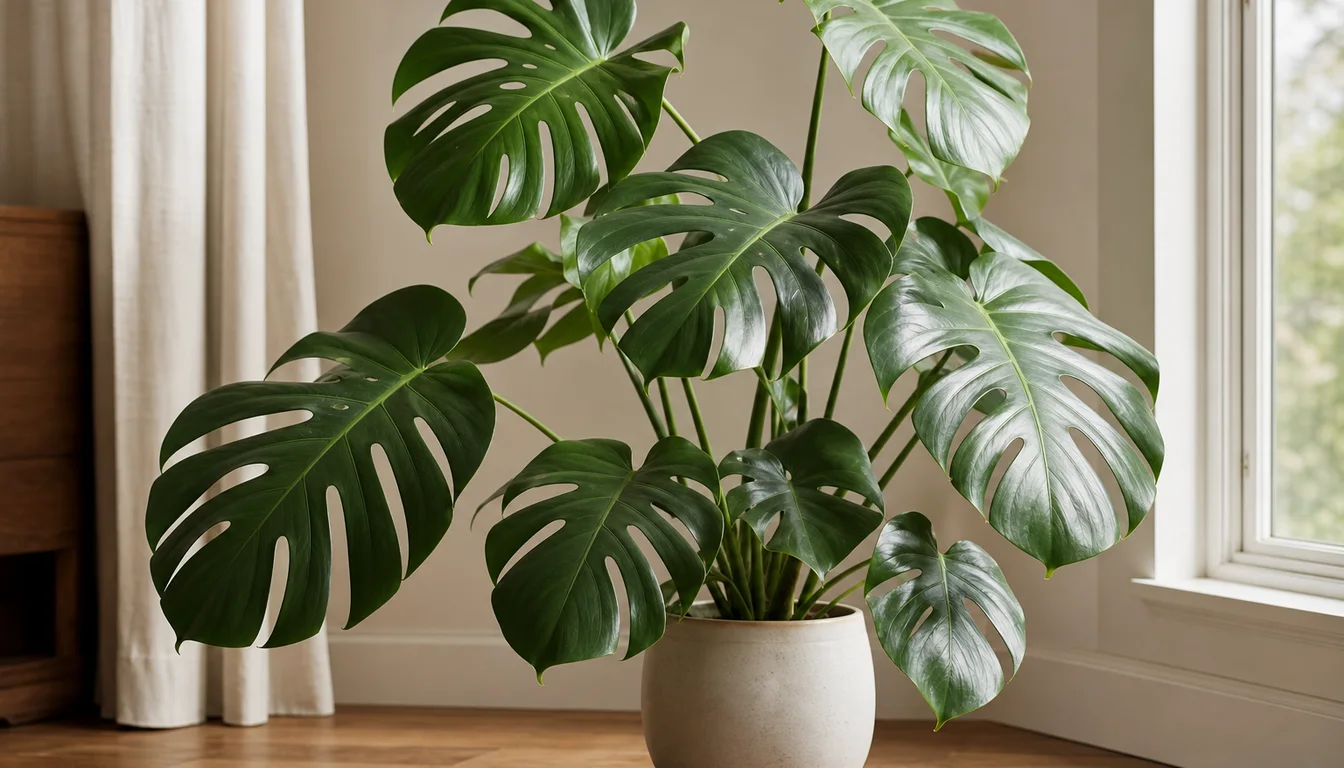
Monstera
A much larger climbing aroid whose support response is easier to see but needs more room.
African Violet
African Violet is a windowsill bloomer that rewards steady, small-pot care.
Air Plant
Air plants are living sculptures that thrive without soil, anchoring to driftwood, rocks, or shells while drawing…
Alocasia
Alocasias include compact, textured houseplants and large elephant ears that need substantial floor space.