verifiedSource Reviewed
Rattlesnake Plant
Calathea lancifolia
Family: Marantaceae
wb_sunnyLight
Medium indirect light; tolerates low light
water_dropWater
Moderate; keep soil evenly moist
heightHeight
1-2 ft tall and wide
publicZone
Outdoors in Zone 11-12; indoors anywhere
petsPet Safety
Pet Safe
airAir Quality
Air Quality Note
Native Region
Brazil (Atlantic Forest)
wavesThe Wavy Leaves Report Stress Fast
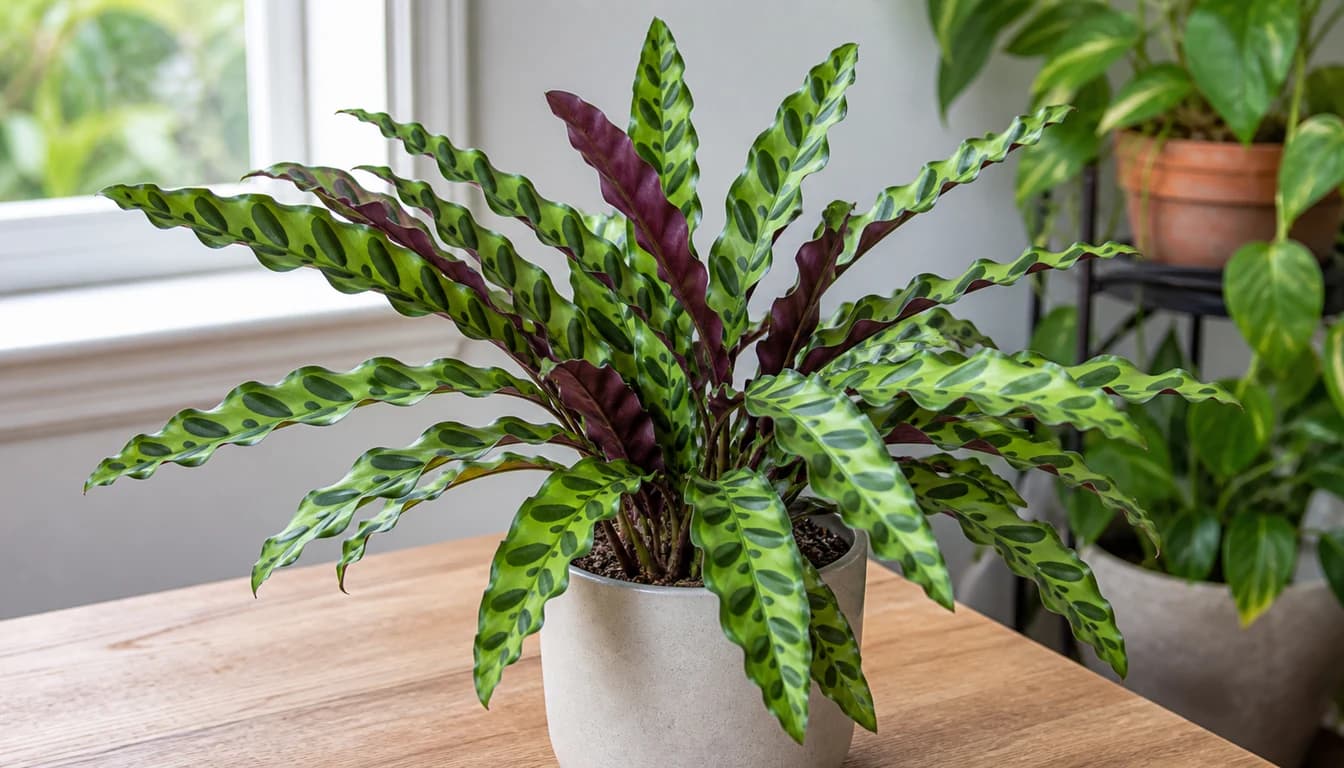
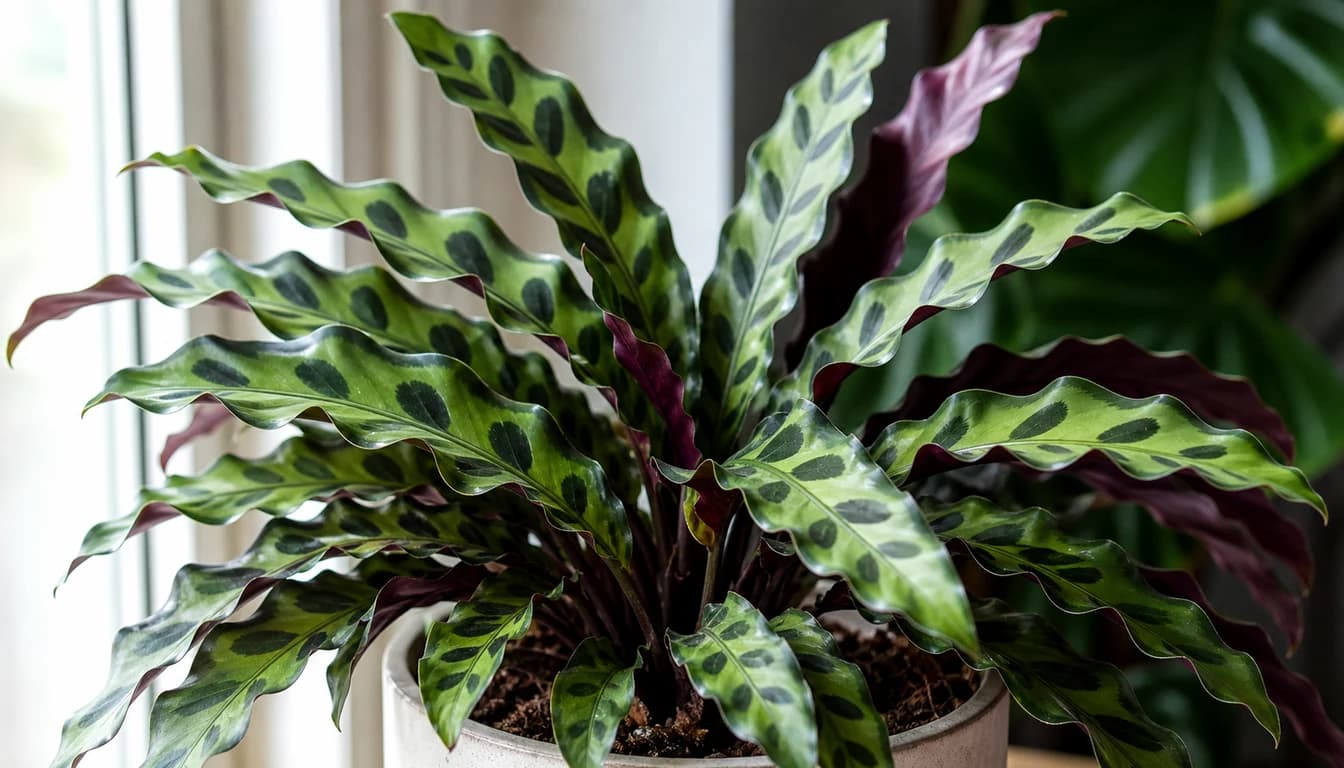
Long narrow leaves make Rattlesnake Plant easier to read than many calatheas. When the leaf edges lift, curl, or crisp, the plant is telling you the surface is losing water faster than roots can replace it.
The purple underside is part of the show, but it also hides mites and early damage. Lift leaves during checks instead of judging only the patterned top.
infoRead leaf shape first
A slight night lift is normal. Tight daytime rolling, crispy rims, or dull speckling means the care setup needs attention.
This is not the same reader job as Prayer Plant. Both move, but Rattlesnake Plant is more about narrow-leaf rolling and humidity control than low creeping growth.
manage_searchBuy Clean Leaf Backs and Firm Crowns
Most shops sell the standard form, so selection matters more than cultivar hunting. Pick the plant with the cleanest leaf backs and the firmest central crowns.
- check_circleTurn leaves over and look for mites, webbing, or pale stippling.
- check_circleReject pots with many cut leaf tips; that often hides chronic edge burn.
- check_circleChoose several upright crowns, not one loose plant in a large wet pot.
This check matters more than the printed cultivar name because most nursery pots are the same plant sold under simple retail labels.
lightbulbNew leaves should open clean
A few imperfect older leaves are fine. New leaves should emerge rolled, unfurl cleanly, and hold their wavy shape without brown rims.
For a calathea with broader leaf drama, Calathea Orbifolia has a different display problem: big round leaves show blemishes from across the room.
wb_twilightUse Side Light, Not Window Heat
The best spot is bright enough to show the pattern but soft enough that the leaf edges stay cool. Aim for medium to bright indirect light near an east window or beside a brighter window, not pressed against hot glass.
Direct sun dries the narrow edges first. Low light causes slow growth and wet soil, which then looks like a watering problem even when the real issue is weak energy.
If the plant leans hard toward the window, rotate it a quarter turn every week. If leaves curl on the window side only, pull it back before changing the watering schedule.
For room placement choices, best indoor plants by room is useful only after you accept that this plant wants filtered brightness, not a dark corner.
lightbulbPlacement test
Your hand should cast a soft shadow near the plant in the brightest part of the day. A sharp shadow usually means the leaves need filtering.
Guide — See AlsoAir Purifying Plants for Cleaner Indoor AirLearn how to pick, place, and care for air purifying plants so they help your indoor air instead of just looking pretty.
chevron_rightEmail Updates
Join the KnowTheYard update list
Zone-specific advice, seasonal reminders, and new plant guides — no filler.
water_dropWater Before the Leaves Roll Hard
Do not wait for a full collapse. Water when the top layer is just starting to dry and the pot is no longer heavy, because hard rolling means the leaves have already lost too much surface moisture.
Use room-temperature water and drain the pot fully. Cold water, standing water, and dry-air stress can all show up as curled leaves, so the whole routine matters.
- fiber_manual_recordSoft roll near evening: often normal movement.
- fiber_manual_recordTight roll in daytime plus dry mix: water now.
- fiber_manual_recordCurling plus heavy pot: check roots and light before adding water.
The broader watering frequency advice still applies, but this plant needs closer observation than sturdy foliage plants.
scienceClean Water Matters as Much as Mix
Calathea leaves are quick to show mineral stress. If tips brown while moisture seems steady, try filtered water, rainwater, or water left out overnight before you rebuild the whole setup.
The mix should stay lightly moist and airy. Standard indoor mix with perlite and fine bark works better than dense soil that turns sour around the crown.
If the edge damage looks like a calathea-wide pattern, compare it with Calathea brown tips before you blame fertilizer.
Water issueMany tips brown evenly across otherwise firm leaves
Mix issuePot stays wet, lower leaves yellow, crown feels loose
Humidity issueEdges crisp fastest near vents or dry windows
When symptoms overlap with other calatheas, Calathea crispy leaves is the right problem page to compare against.
call_splitDivide Only a Full Clump
Wait for a crowded pot before you think about making more plants. A small clump has too little root mass to spare.
warningNo leaf-cutting shortcut
Leaf cuttings do not work here. Propagation means dividing a mature clump so each piece leaves with roots and at least a few active leaves.
Small divisions struggle because they lose water through long leaves while the reduced root system catches up. Wait until the pot is genuinely crowded.
warningDivision is a setback
Even a good division may pause and mark a few leaves. Do it in warm growth, keep light soft, and skip fertilizer until new leaves open.
If you want a plant that propagates easily from cuttings, Pothos is a better learning plant than Rattlesnake Plant.
Guide — See AlsoBest Herbs to Grow Indoors for Real Harvests, Not Spindly PotsChoose indoor herbs that can actually produce in your light, temperature, and container setup, then match each one to th
chevron_rightbug_reportMites Hide Under the Purple
Spider mites are the pest to check first because they like dry indoor air and hide under the leaves. The first sign is often dusty speckling, not obvious webbing.
Edge burn from dry air is cleaner and follows the rim. Mite damage breaks up the leaf surface in tiny pale dots, especially along the underside midrib.
- check_circleUse a flashlight under the leaves once a week in winter.
- check_circleRinse both sides of leaves before treatment.
- check_circleKeep the plant away from dusty heat vents.
Do not run the same four-pest routine on autopilot. For this plant, mite pressure and humidity failure deserve the first inspection.
humidity_percentageWinter Humidity Owns the Routine
Winter is when otherwise decent care falls apart. Heated rooms lower humidity, windows get colder, and the pot dries unevenly.
Group humidity-loving plants, use a tray with pebbles, or run a small humidifier near the plant. Keep leaves away from cold glass at night.
The indoor plant care calendar helps with timing, but this plant's winter priority is still leaf-surface moisture.
Spring is the time to repot or divide if needed. Summer can support stronger growth, but only if the plant stays out of direct sun.
lightbulbSeasonal priority
In winter, protect leaf surface moisture. In spring, protect roots during any repotting or division.
petsPet-Safe, But Fussy About Air
Rattlesnake Plant is commonly treated as non-toxic to cats and dogs, which is one reason people choose it over many dramatic foliage plants.
Use it where the patterned leaves can be seen from the side and where the air stays calm. If your room is dry and busy, Snake Plant will handle that neglect better.
eco
Keep Exploring
Related Plants
 Houseplants
Begonia Maculata
Begonia Maculata is the polka dot begonia — dark green, angel-wing shaped leaves splashed with silver dots on top and painted deep crimson underneath. It's
 Houseplants
Tradescantia Nanouk
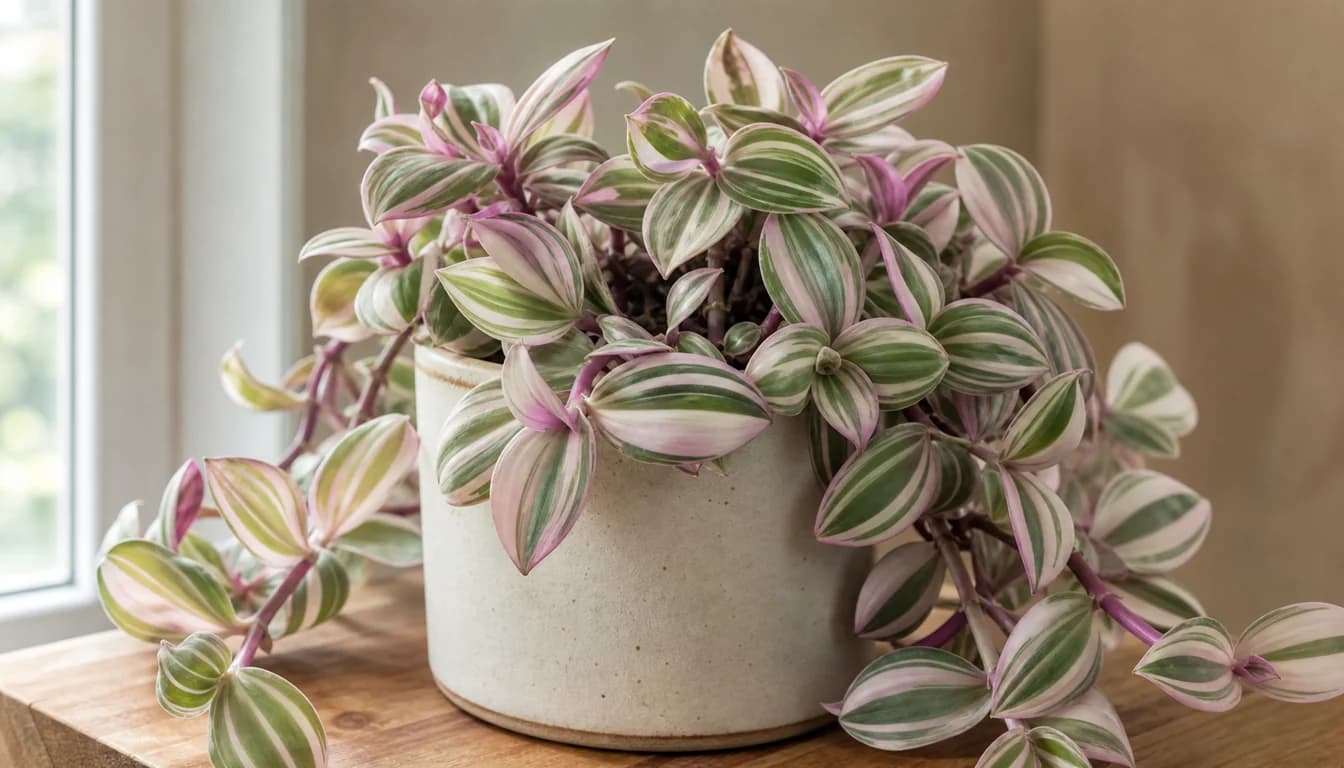
Tradescantia Nanouk is the candy-colored trailing plant that grows absurdly fast — thick, succulent stems with pink, purple, and cream stripes that intensif
 Houseplants
Peperomia
Peperomia is a compact houseplant group for desks and shelves, but its care depends on small roots and thick leaves. Keep the pot modest, the light bright b
quiz
Frequently Asked Questions
Why are Rattlesnake Plant leaves curling?expand_more
Daytime curling usually means dry mix, dry air, hot light, or root stress. Check pot weight and leaf surface before adding more water.
Does Rattlesnake Plant need distilled water?expand_more
It does not always need distilled water, but filtered or rainwater helps if tips brown despite steady moisture.
Can Rattlesnake Plant grow in low light?expand_more
It can tolerate medium-low light, but too little light slows growth and keeps the soil wet too long.
How do I propagate Rattlesnake Plant?expand_more
Divide a mature clump during warm active growth. Do not try to root a single leaf cutting.
Is Rattlesnake Plant pet safe?expand_more
Yes, it is commonly listed as non-toxic, but place it where pets will not batter the leaves.