Pothos vs Philodendron (heartleaf)
These two look-alike vines get swapped at the register all the time. The tells are in your fingertips and the new growth: a Pothos leaf feels thick and waxy, while a Heartleaf Philodendron leaf is thin, soft, and pushes out reddish new growth from a papery sheath.
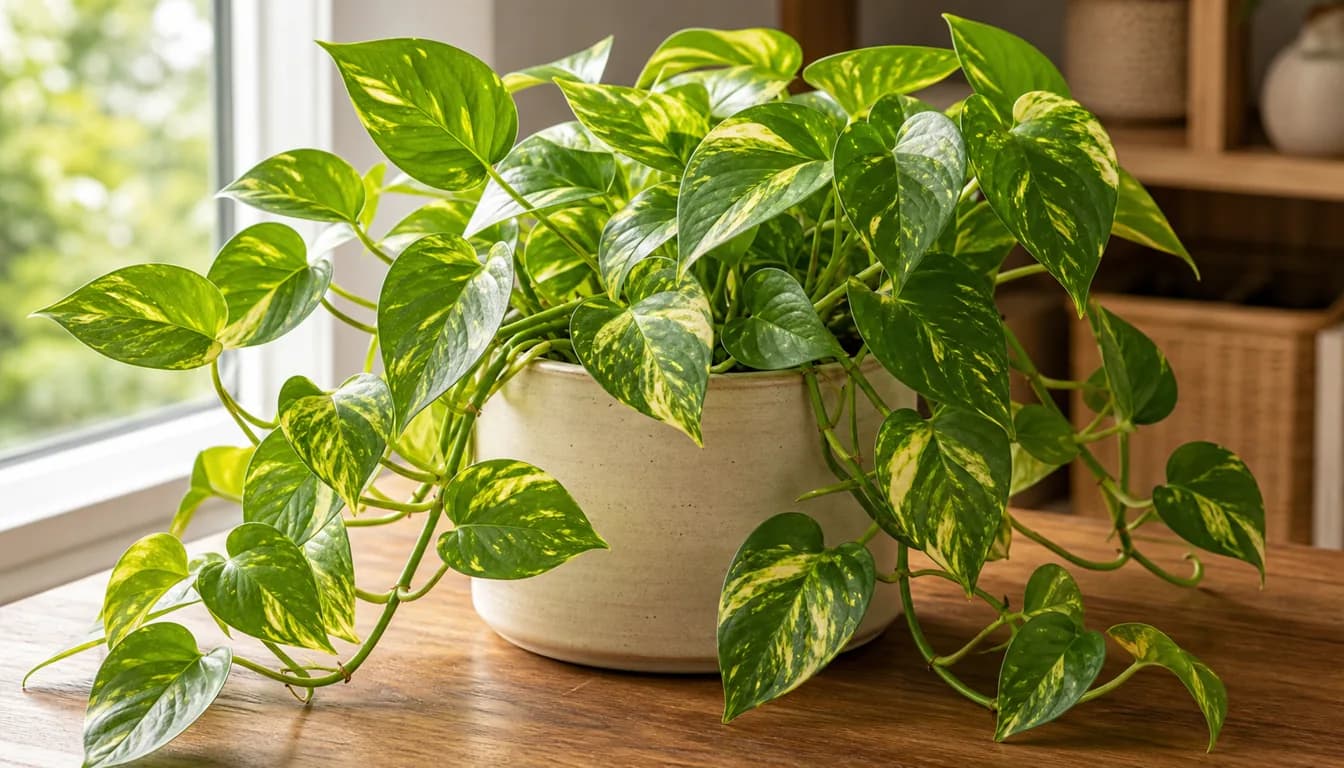
Philodendron scandens and related trailing types

ruleDecision Summary
Walk into most plant shops and the Pothos and Heartleaf Philodendron tags are often on the wrong pots. The leaves are close enough in shape that even staff mix them up, so plenty of people get one home without knowing which vine they actually own. That matters more than it sounds, because the two want slightly different things.
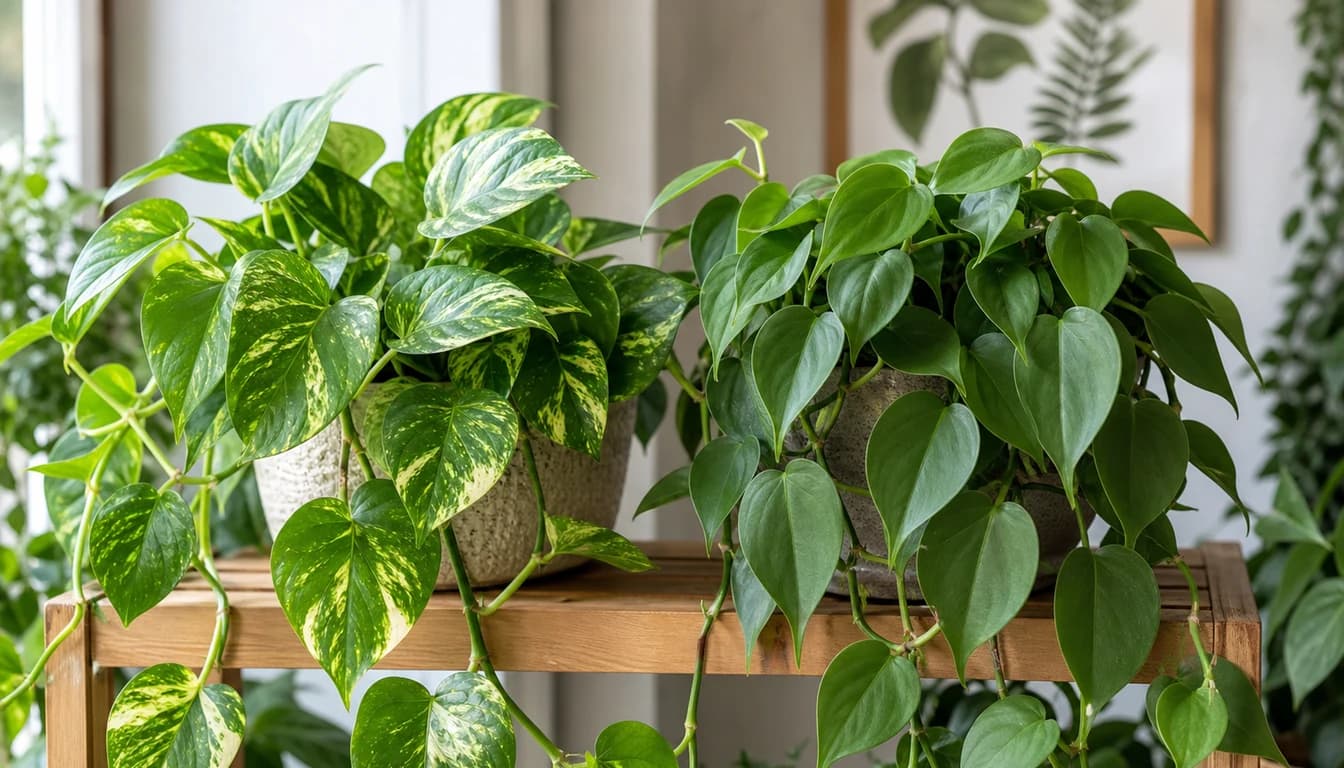
The fastest way to tell them apart is to touch a leaf and watch the new growth. A Pothos leaf is thick, waxy, and has a faint ridge down the middle, and a fresh leaf simply unrolls from an older one with no wrapper. A Heartleaf Philodendron leaf is thinner, softer, and more evenly heart-shaped, and each new leaf pushes out bronze or reddish, wrapped in a thin papery sheath called a cataphyll that dries and drops off.
You can keep either one alive on a windowsill without thinking hard. The ID only becomes a real decision in two spots: a dark corner where fading variegation shows up fast, and a cool or drafty room where a chilled Pothos starts to sulk. For those two rooms, knowing which vine you bought saves you a sad plant.
How to Use This Guide
Match your primary use case first, then review the side-by-side specs table. The use-case cards explain where one option has a practical advantage; if your situation is different, let the specs and tradeoffs guide the choice.
Before you pay, touch a leaf and check the new growth. Thick, waxy, and bare new leaves mean Pothos; thin, soft leaves with reddish growth in a papery sheath mean Heartleaf Philodendron. From there it is a small gap: Pothos gives you more drought and low-light slack, while Heartleaf Philodendron recovers faster from a cutback and holds up better in dimmer, cooler rooms. Set either beside a climber like Monstera and it still reads as the low-fuss option. It looks easier yet next to a thirstier classic like English ivy.
KnowTheYard Editorial Team
Source-backed editorial note
compare_arrowsSpecific Use Cases
The following use cases focus on scenarios where the tradeoff actually matters. Each card names the stronger fit for that situation and explains the catch.
A winner only applies when that scenario matches your conditions. If neither scenario fits, check the side-by-side specs for the more relevant constraints.
Telling them apart at the store
Leaf feel and new growthWinner: Check the leaf
Pinch a Pothos leaf and it feels thick, stiff, and slightly waxy, with a faint groove running down the center. Look at the newest leaf and it just unfurls straight from an older leaf with no wrapper around it. That thicker leaf and bare new growth is the giveaway before you ever read the tag.
A Heartleaf Philodendron leaf feels thin and soft, more matte, and lands on a cleaner heart shape. Its new leaves come out bronze or reddish and unroll from a papery sheath that dries up and falls off. If you see that little wrapper on new growth, you are holding the Heartleaf Philodendron.
The darkest corner in the house
Which one holds up in gloomWinner: Philodendron
Pothos survives a dim corner, but it pays for it. A variegated golden or marble Pothos slowly loses its cream and yellow in low light and drifts back toward plain green, and the vine stretches with wide gaps between leaves. It stays alive, it just stops looking like the plant you bought.
Heartleaf Philodendron holds its shape and its solid green color better in the same dark spot. Since it has no variegation to lose, a dim shelf or a hallway with borrowed light suits it better. Pick it when the brightest thing nearby is a lamp.
Bright variegation hunting
When you want painted leavesWinner: Pothos
Pothos is where the loud variegation lives. Marble Queen, golden, neon, and snow-splashed cultivars are common and cheap, and in a bright-indirect spot they keep those white and yellow splashes strong. If you want a vine that reads as two-tone from across the room, this is the easy pick.
Heartleaf Philodendron variegation exists, but it is subtler and the standout forms like Brasil or variegated types cost more and turn up less often. Its charm is a clean, uniform heart, not bold paint. For maximum color per dollar, Pothos wins.
Reviving a bald, leggy vine
Filling in a stretched-out plantWinner: Philodendron
A stretched Pothos can be cut back and rerooted, but its firmer stems are a little slower to fill back in, and regrowth can look sparse for a while. It recovers, it just takes its time before the pot looks full again.
Heartleaf Philodendron is the better rescue plant. Its soft stems root fast at nearly every node, so you can chop, tuck the cuttings back into the same pot, and get dense regrowth quickly. Keep the media evenly moist while it reroots and follow a steady watering rhythm and it bounces back.
Cool or drafty rooms
Cold floors and winter windowsWinner: Philodendron
Pothos wants warmth, especially while it roots, and cold is where it struggles. Keep Pothos above 55°F or it sulks, drops leaves, and soggy cold soil can tip it into root rot. A chilly tiled floor or a drafty winter window is the wrong home for it.
Heartleaf Philodendron shrugs off a cool room more gracefully and keeps rerooting even when temperatures dip. For an entryway, a basement setup, or a spot near a leaky window, it is the safer of the two look-alikes.
paymentsCost & Upkeep
Long-term cost extends beyond the purchase price. Factor in ongoing inputs, replacement risk, equipment, and time so the cheaper option at checkout does not become the more expensive one to keep.
For Pothos and Philodendron (heartleaf), the real cost difference usually shows up after purchase: water, soil, fertilizer, pruning, replacements, and how easily the plant or system recovers from mistakes.
ecoPothos
- check_circlePlain green and golden Pothos are cheap and stocked almost everywhere, so the entry cost is small.
- check_circleCuttings root freely in water or soil, so one plant becomes many at no cost.
- cancelNamed variegated cultivars like snow or highly variegated forms carry a real markup.
- cancelThe hidden cost is buying it for a cold or dark spot, watching it fade or rot, and replacing it.
ecoHeartleaf Philodendron
- check_circleCommon green heartleaf types are just as cheap as basic Pothos and easy to find.
- check_circleIt reroots at almost every node, so refilling a pot or gifting cuttings costs nothing.
- cancelSought-after forms like Brasil or variegated types are pricier and harder to track down.
- cancelThe main waste is paying for the wrong tag twice because the store mislabeled the pot.
ecoResource Fit
The real waste with these two is not the plant itself, which is cheap, but the mislabeled repurchase. Someone buys a fading vine, decides it is the wrong plant, and grabs another pot with a different tag, when the first one only needed a brighter or warmer spot.
Both vines make that easy to avoid because they propagate for free. A Pothos or Heartleaf Philodendron cutting roots in a jar of water on the counter, so you can rebuild a leggy plant or share one instead of buying more. Keeping the vine you already have alive is almost always cheaper and greener than a trip back to the houseplant aisle.
Pothos leaves feel thick and waxy. Heartleaf Philodendron leaves feel thin and soft, so one touch usually settles it.
New Heartleaf Philodendron leaves unfurl reddish from a papery sheath. Pothos leaves just unroll bare and green.
Keep Pothos above 55°F or it sulks and can rot. Heartleaf Philodendron copes with cooler rooms more calmly.
Heartleaf Philodendron holds its green in low light, while variegated Pothos slowly fades toward plain green.
Heartleaf Philodendron roots quickly at nearly every node. Pothos reroots too, just a touch slower to fill in.
Pothos offers bold marble, golden, and neon forms. Heartleaf Philodendron stays subtler, with pricier standout types.
table_chartSide-by-side Specs
Most of the differences trace back to one thing you can feel: leaf thickness. A Pothos leaf is thick, waxy, and slightly grooved, and it unfurls bare from an older leaf. A Heartleaf Philodendron leaf is thin, soft, and matte, and its new growth comes out reddish inside a papery cataphyll that later drops. Touch the leaf and check for that wrapper and you have your answer.
That thick Pothos leaf stores more water, which is why it forgives a missed watering and coasts through a dry week. The thinner Heartleaf Philodendron leaf wilts sooner when the soil dries out, but the same soft, thin stems reroot fast at every node, so it recovers from a hard cutback quicker than Pothos does. One buys you drought slack, the other buys you recovery speed.
Source Notes
Metrics summarize published care ranges and common cultivar behavior. Individual performance varies by cultivar selection, microclimate, and management intensity. Consult our methodology for source standards and update practices.
| Metric | Pothos | Philodendron (heartleaf) |
|---|---|---|
| eco Leaf feel / thickness | Thick, waxy, slightly ridged down the center | Thin, soft, matte to the touch |
| palette New-leaf color | Emerges green, matching mature leaves | Emerges bronze or reddish, then greens up |
| spa Leaf-unfurl style | Unrolls from an existing leaf, no sheath | Unfurls from a papery cataphyll that drops off |
| wb_sunny Lowest usable light | Survives low light, but variegation fades | Holds shape and green color in dimmer light |
| ac_unit Cold tolerance floor | Keep above 55°F or it sulks and can rot | Handles cool, drafty rooms more calmly |
| water_drop Drought slack | Thick leaves coast through a missed watering | Thinner leaves wilt sooner when soil dries |
| content_cut Node / aerial-root recovery | Reroots from cuttings, a bit slower to fill in | Roots fast at nearly every node for dense regrowth |
| palette Variegation range | Many bold cultivars: marble, golden, neon, snow | Subtler variegation; standout forms cost more |
| warning Pet toxicity | Toxic to pets and humans if ingested | Toxic to pets and humans if ingested |
| eco Propagation | Roots easily from stem cuttings in water or soil | Roots at almost every node, prefers moist media |
| trending_up Growth habit | Vigorous trailer, firmer stems, waxy leaves | Softer, faster-filling trailer with tidy hearts |