verifiedGarden Guides
Pruning
Pruning is controlled wounding with a purpose: directing growth, improving structure, increasing yields, and removing disease vectors. These guides teach proper timing by species, correct cut placement, and the biology behind why pruning works.
menu_book19Guides
potted_plant60Plants Covered
schedule11 minAvg Read Time
help95FAQs Answered
Pruning Guides
19 Guides Availableinfo
About This Hub
Pruning is controlled wounding with a purpose: directing growth, improving structure, increasing yields, and removing disease vectors. These guides teach proper timing by species, correct cut placement, and the biology behind why pruning works. These guides are maintained from published references, practical garden context, and internal editorial review.
science
Why Pruning Works
Plants grow from meristematic tissue at branch tips. When you remove a terminal bud, the plant redirects growth hormones (auxins) to lateral buds below the cut, causing branching. This is how pruning creates fuller, more compact growth.
Without pruning, most plants grow vertically with minimal branching. Apical dominance — the tendency for the topmost bud to suppress lateral growth — produces tall, leggy specimens.
Understanding this biology helps you predict the result of each cut. Cutting above an outward-facing bud directs new growth outward. Cutting above an inward-facing bud directs it toward the center.
calendar_month
Timing by Plant Type
Spring-blooming shrubs (lilac, forsythia, azalea) bloom on last year's wood. Prune immediately after flowering. Pruning in fall or winter removes next spring's flower buds.
Summer-blooming shrubs (butterfly bush, crape myrtle, hydrangea paniculata) bloom on new wood produced in the current season. Prune in late winter before growth starts.
Fruit trees are pruned during winter dormancy when branch structure is visible and the tree isn't actively transporting sap. Late winter (just before bud break) is optimal for most species. Avoid fall pruning — it stimulates tender growth that freezes.
content_cut
The Three-Cut Method for Branches
Removing branches larger than 1.5 inches in diameter requires the three-cut technique to prevent bark tearing. A single cut from the top allows the branch weight to rip bark downward, creating a wound that extends into the trunk.
Cut 1: An undercut 12–18 inches from the trunk, sawing upward through one-third of the branch diameter. Cut 2: A top cut 1–2 inches beyond the undercut, sawing downward until the branch falls cleanly. Cut 3: A final clean cut just outside the branch collar.
The branch collar — the slightly swollen area where branch meets trunk — contains specialized cells that seal wounds. Cutting flush with the trunk removes this tissue and prevents proper healing.
potted_plant
Pruning Houseplants
Indoor plants benefit from pruning to maintain shape, encourage branching, and remove declining growth. Leggy pothos, stretched-out succulents, and bare-stemmed ficus all respond well to corrective pruning.
Most houseplants should be pruned in early spring when increasing light levels support rapid recovery and new growth. Avoid heavy pruning in winter when reduced light limits the plant's ability to photosynthesize and heal.
For trailing plants like pothos and tradescantia, pinching stem tips regularly (removing the last 1–2 inches of each vine) promotes branching and creates fuller, bushier growth without removing significant plant mass.
calendar_monthSeasonal Pruning Tips
local_floristSpring
Prune spring-blooming shrubs immediately after flowers fade. Prune houseplants now to take advantage of increasing light that supports strong new growth.
wb_sunnySummer
Limit pruning to deadheading spent flowers, removing water sprouts, and light corrective cuts. Heavy summer pruning stresses plants during peak heat and drought.
parkFall
Avoid major pruning in fall — it stimulates tender new growth that won't harden off before winter. Exception: remove dead, damaged, or diseased branches anytime.
ac_unitWinter
This is the primary window for structural pruning of deciduous trees and summer-blooming shrubs. Bare branches reveal structure clearly, and dormancy minimizes stress.
 Pruning
How to Prune Overgrown Crepe Myrtle Without Ruining It
Step‑by‑step guide for taming an overgrown crepe myrtle without butchering it. Learn when to prune, what to remove, and how to reshape trees that have been topped in the past.
schedule11 min readsignal_cellular_altAll Levels
Read Guide arrow_forward Pruning
Over Pruned Apple Tree: How to Help It Recover
Clear, practical steps to rescue an over pruned apple tree, from assessing the damage to shaping safe new growth over the next few seasons.
schedule11 min readsignal_cellular_altAll Levels
Read Guide arrow_forward Pruning
How to Prune Houseplants to Keep Them Full and Healthy
Learn exactly how to prune common houseplants so they stay compact, full, and healthy instead of leggy and bare.
schedule11 min readsignal_cellular_altAll Levels
Read Guide arrow_forward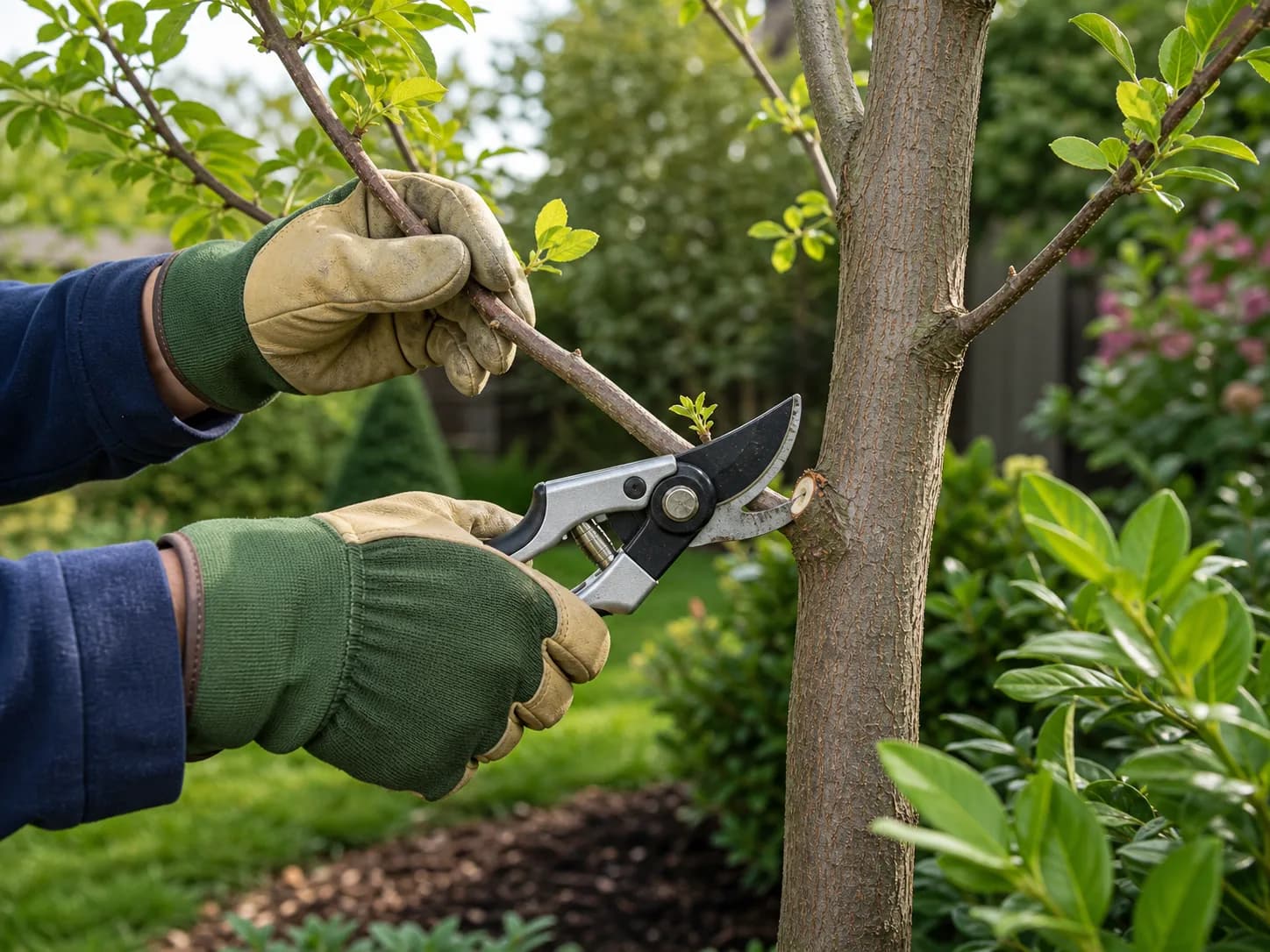 Pruning
When to Prune Shrubs and Trees Without Losing Flowers or Forcing Weak Growth
Learn when to prune shrubs and trees, how timing changes for flowering shrubs, evergreens, and shade trees, and what seasons to avoid for heavy cuts.
schedule10 min readsignal_cellular_altAll Levels
Read Guide arrow_forward Pruning
How to Prune French Lavender for Bushy Growth
Learn exactly when and how to prune French lavender so it stays compact, blooms heavily, and avoids turning into a woody, split mess.
schedule10 min readsignal_cellular_altAll Levels
Read Guide arrow_forwardhelpFrequently Asked Questions
When is the best time to prune most trees?expand_more
Late winter to early spring, just before bud break, is optimal for most deciduous trees. The tree is dormant (minimizing sap loss), branch structure is visible, and spring growth quickly seals wounds. Avoid pruning during active fall growth.
Should I seal pruning cuts with wound paint?expand_more
No. Research from multiple universities confirms that wound sealants do not prevent decay and can actually slow the tree's natural compartmentalization process. Clean cuts made at the branch collar heal best when left exposed to air.
How much can I prune at once?expand_more
Never remove more than 25–30% of a tree's canopy in a single season. For shrubs, removing up to one-third of the oldest stems annually (renewal pruning) maintains vigor without shocking the plant. Houseplants tolerate heavier pruning if done during active growth.
Why is my plant leggy and how do I fix it?expand_more
Leggy growth means the plant is stretching toward insufficient light. First, improve the light situation. Then prune back to a node where you want branching to occur. The plant will produce 2–3 new shoots below each cut, creating denser growth.
Do I need to sterilize pruning tools?expand_more
Yes, between plants and especially when pruning diseased specimens. Wipe blades with 70% isopropyl alcohol or a 10% bleach solution. Dirty tools spread bacterial and fungal pathogens between cuts. Clean, sharp tools also make cleaner cuts that heal faster.
What's the difference between heading cuts and thinning cuts?expand_more
A heading cut removes part of a branch, stimulating dense regrowth below the cut. A thinning cut removes an entire branch at its origin, opening up the canopy without triggering excessive regrowth. Use thinning cuts for structural work and heading cuts for shaping.