yard
KnowTheYard

databasePlant Database

Browse by category

potted_plant

Houseplants

Indoor & tropical species

nutrition

Vegetables

Edible garden crops

spa

Herbs

Culinary & medicinal

local_florist

Flowers

Ornamental blooms

water_drop

Succulents

Drought-tolerant species

park

Trees

Arboreal species

forest

Shrubs

Bushes & hedges

nature

Perennials

Garden flowers

grass

Lawn Grasses

Turf varieties

local_dining

Fruits

Fruit-bearing plants

Best Indoor Plantsarrow_forwardBest Shade Plantsarrow_forward

menu_bookGarden Guides

Step-by-step guides by task type

grass

Lawn Care

Seasonal checklists and year-round maintenance guides for a championship lawn.

yard

Planting

When, where, and how to plant — from seed to transplant for every garden type.

water_drop

Watering

Deep-watering techniques, schedules by plant type, and drought management.

compost

Fertilizing

Feeding schedules, NPK ratios, and organic vs synthetic options by plant.

pest_control

Pest Control

Identify, prevent, and treat common garden pests without harming beneficial insects.

content_cut

Pruning

Pruning timing, techniques, and tools for trees, shrubs, and flowering plants.

Popular Guides

parkFall Lawn Carelocal_floristSpring Lawn Carecalendar_monthFull Calendar
All Guidesarrow_forwardLawn Care Hubarrow_forward
ToolsCompareRegional GuidesPlant ProblemsPet SafetyAbout
searchPlant Finder
yardKnowTheYard

Published plant profiles, practical care guides, problem diagnosis pages, and side-by-side comparisons for home gardeners.

chatphoto_camera

databaseBrowse Plants

  • arrow_forwardHouseplants
  • arrow_forwardVegetables
  • arrow_forwardHerbs
  • arrow_forwardFlowers
  • arrow_forwardTrees

menu_bookResources

  • arrow_forwardGarden Tools
  • arrow_forwardRegional Guides
  • arrow_forwardPlant Problems
  • arrow_forwardPet Safety
  • arrow_forwardCare Calendar
  • arrow_forwardPlant Finder

infoCompany

  • arrow_forwardAbout Us
  • arrow_forwardOur Team
  • arrow_forwardMethodology
  • arrow_forwardEditorial Policy
  • arrow_forwardContact Us

mailEmail Updates

Join the list for new guides, seasonal notes, and launch updates.

No spam. Request removal anytime.

fact_check

Reviewed Pages

77 pages currently attributed to public review lanes

public

USDA Zone Coverage

Zone-aware recommendations and regional growing context

database

230 Published Plant Profiles

555 public pages across profiles, guides, comparisons, and problem pages

© 2026 KnowTheYard. All rights reserved.

Privacy PolicyTerms of ServiceContactSitemap
Home/shrubs/Azalea Shrubs for Four-Season Foundation Color/Yellow Leaves
scienceEditorial DiagnosisUpdated Feb 20, 2026

Azalea Yellow Leaves

Yellowing leaves on **azaleas** (Rhododendron spp.) most often signal chlorosis caused by iron or other micronutrient deficiencies made worse by high soil pH, poor drainage, or root stress. This guide helps you distinguish between iron chlorosis, water-related problems, and drought stress, shows how to test and correct soil pH, and gives targeted watering, mulching, and feeding steps so you can recover plants and prevent recurrence.

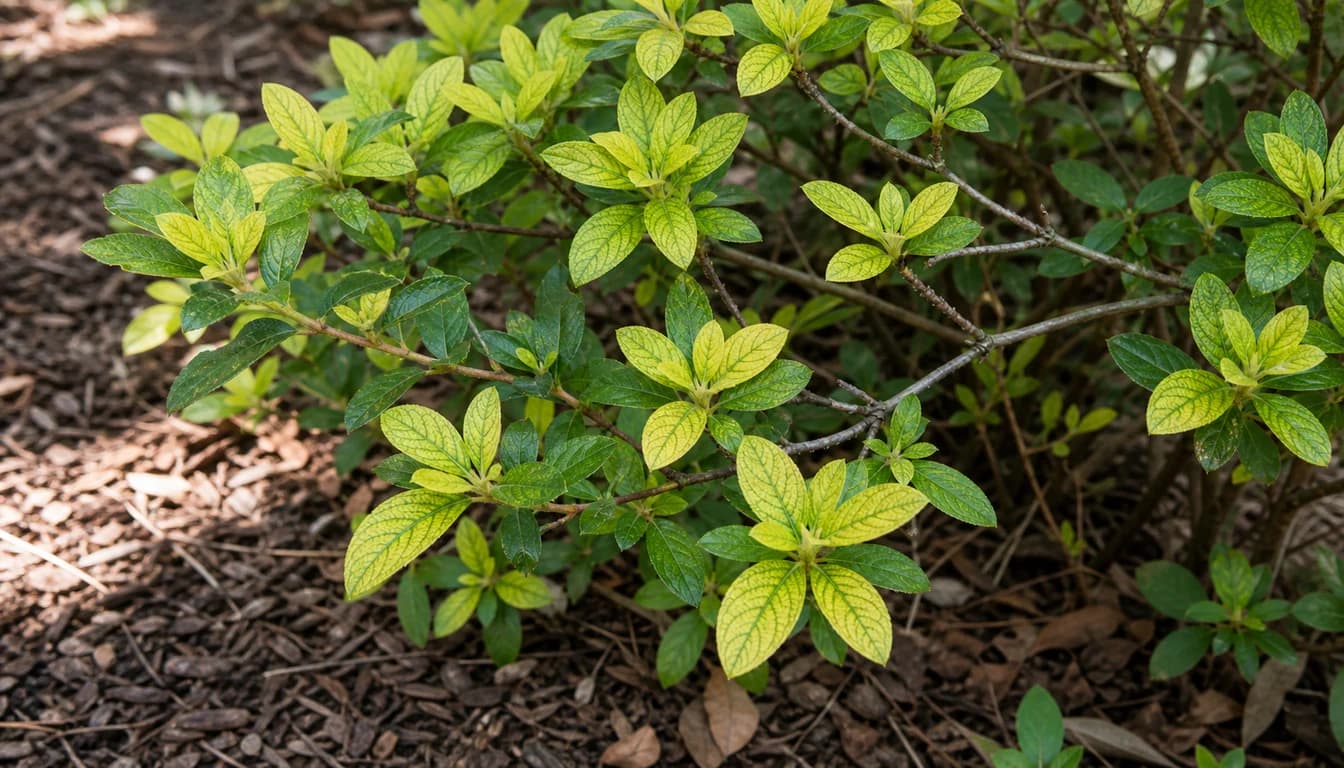
Azalea shrub with pale yellow new leaves and green veins beside darker older foliage in a mulched garden bed.

Azalea shrub with pale yellow new leaves and green veins beside darker older foliage in a mulched garden bed.

lightbulb
bolt

Quick Diagnosis

Most Likely Cause: Iron chlorosis from high soil pH or poor iron availability.

If new growth is pale yellow with green veins while older leaves stay greener, iron deficiency (chlorosis) is likely; you can also compare how these shrubs show nutrient stress versus root problems by looking at how azaleas and rhododendrons show stress differently early in the season. If the whole plant wilts, has muddy roots, or older leaves yellow first, look at drainage/overwatering or root rot and inspect the root collar for soft, dark tissue.

Jump to fix steps arrow_downward

Azaleas (Rhododendron spp.) thrive in acidic, well-drained soil rich in organic matter and are commonly grown in zones 4-9. They prefer partial shade and consistent moisture - not soggy or bone-dry conditions. Because they rely on available iron and other micronutrients at the root zone, changes in soil chemistry or moisture quickly show up as yellow leaves.

In spring you will often first notice chlorosis as pale new leaves while older foliage looks normal; that timing is a useful diagnostic clue. Seasonal yellowing that appears with new flushes of growth usually points to nutrient uptake problems, while yellowing during hot, dry spells or after heavy rains suggests a moisture or root health issue.

Start diagnosis with three simple checks: a soil pH test, an assessment of surface and subsurface drainage, and a quick root inspection for softness or rot. Home pH kits or a lab test will tell you whether the soil is above the safe range for azaleas.

Azaleas do best with soil pH between 4.5 and 6.0; problems often show when pH rises above 6.0. If you need a refresher on consistent watering basics, check guidance on the best time to water plants and plan irrigation accordingly with timing your waterings to avoid midday stress.

pest_control
Plant Problem - See AlsoAzalea No Blooms
chevron_right
psychology

Understanding Azalea Chlorosis and Yellowing

Chlorosis is a symptom (poor chlorophyll function) not a disease itself - most often caused by iron being chemically unavailable in alkaline soils. Azaleas are adapted to low-pH soils and cannot efficiently take up iron when the root-zone pH drifts upward.

Water management is the other major factor; both waterlogged roots and drought-stressed roots fail to absorb nutrients. Overwatering can mimic chlorosis because damaged roots cannot take up iron even if it is present.

Correcting leaf yellowing usually requires both a quick symptom treatment (iron chelate spray or drench) and longer-term fixes (lowering pH, improving drainage, changing irrigation). Without addressing the root cause you will see symptoms return after a season or two.

thermostat

Environmental Baseline

Before diagnosing specific failures, confirm your Azalea Shrubs for Four-Season Foundation Color's environment matches its core care requirements.

forestAzalea Shrubs for Four-Season Foundation Color Care Needs

  • Light: ==**part shade, filtered sun**==; some full sun in cool climates
  • Water: ==**moderate; consistently moist, never soggy**==
  • Temp: Prefers cool roots and mild summers

homeTypical Indoor Home

  • Humidity: 30-50% (Low)
  • Temp: 65-72°F variable
  • Light: Often too dim or direct
biotech

Possible Causes

Sorted by likelihood

1. Iron chlorosis (nutrient uptake blocked by high pH)

Likelihood: High

Iron is present in most soils but becomes unavailable to azalea roots when pH climbs above about 6.0. The classic sign is yellowing of new leaves while veins remain darker green (interveinal chlorosis). Clay or alkaline soils, recent lime application, or alkaline irrigation water increase risk.

Identification

  • remove_circle_outlineNew leaves are pale yellow but leaf veins stay relatively green - classic interveinal chlorosis.
  • remove_circle_outlineSymptoms first appear on the youngest growth in spring and persist through new flushes.
  • remove_circle_outlineSoil test shows pH consistently above 6.0 or a lab report lists low available iron.
  • remove_circle_outlinePlant otherwise shows little leaf drop; growth may be stunted if untreated.

The Fix

  1. 1Test soil pH with a home kit or send a sample to a lab; target pH 4.5-6.0 for azaleas.
  2. 2If pH is high, lower it with soil sulfur (follow label rates) or use acidifying iron sulfate for faster short-term correction.
  3. 3Apply a chelated iron foliar spray or soil drench labeled for woody acid-loving shrubs for quick symptom relief, then correct pH for long-term fix.
  4. 4Switch to an acid-loving fertilizer after bloom and follow label rates to avoid overfeeding; repeated small doses are safer than one heavy application.
  5. 5Retest pH in 3-6 months after amendments before repeated treatments.

2. Poor drainage and root rot (including Phytophthora)

Likelihood: Medium

Waterlogged soil suffocates roots and invites fungal pathogens such as Phytophthora, which causes yellowing followed by wilting, dieback, and mushy brown roots. This pattern is more likely in heavy clay, low spots, or beds with compacted soil and poor surface runoff.

Identification

  • remove_circle_outlineWhole-plant yellowing with wilting and leaf drop, not limited to new leaves.
  • remove_circle_outlineSoil stays wet long after rains and the site is in a low or compacted area without good surface drainage.
  • remove_circle_outlineOn inspection, roots are brown/black and soft rather than white and firm.
  • remove_circle_outlineNearby plants in the same bed show similar decline - a sign of site drainage issues or pathogen spread.

The Fix

  1. 1Lift the shrub and inspect roots: prune away obviously rotted roots and cut back dead top growth to reduce stress.
  2. 2Improve drainage by amending the bed with coarse compost and sharp sand or by planting on a raised berm or ridge to raise the root zone.
  3. 3Avoid fungicide band-aids unless a lab confirms Phytophthora; focus on drying the site and improving soil structure.
  4. 4Stop watering until the surface dries, then resume a consistent, moderate schedule so the root zone remains moist but not saturated.
  5. 5Replace severely infected plants; sterilize tools and avoid replanting azaleas in the same spot without major soil remediation.

3. Underwatering or seasonal drought stress

Likelihood: Medium

Azaleas need even moisture; prolonged dry spells cause older leaves to yellow and drop, and new growth to scorch. Drought stress often affects older leaves first, and leaves may become crispy along edges.

Identification

  • remove_circle_outlineYellowing begins on older foliage and progresses upward; leaves may become brown and dry at the edges.
  • remove_circle_outlineSoil is dry several inches down and the plant wilts during hot afternoons but perk up in cooler parts of the day.
  • remove_circle_outlineMulch layer is thin or missing and roots may be near the surface, exposed, or in hot soils.
  • remove_circle_outlineSymptoms improve quickly after deep watering if roots are healthy.

The Fix

  1. 1Deep-soak the root zone with a slow garden hose or drip system until soil is moist 6-8 inches deep, then allow surface to dry before next irrigation.
  2. 2Apply a 2-3 inch layer of organic mulch, keeping mulch a few inches away from the trunk to preserve moisture and moderate temperature.
  3. 3Switch to a slow, deep watering schedule rather than short frequent sprays; use a soak-and-wait approach.
  4. 4Monitor soil moisture with a probe or finger test and adjust irrigation with seasonal heat or rainfall.
  5. 5Consider temporary shade cloth in extreme heat spikes to reduce transpiration demand.
menu_book
Guide - See AlsoAir Purifying Plants for Cleaner Indoor Air
chevron_right
potted_plant

Root Health Examination

A direct inspection of the root system distinguishes root rot from drought stress - saving weeks of guesswork.

check_circleHealthy Roots

  • Firm to the touch
  • White or light tan color
  • Earthy, pleasant smell

cancelCompromised Roots

  • Mushy or slimy texture
  • Dark brown or black color
  • Sour, rotting odor

Inspection Step: Gently slide the pot off while supporting the base of the stems. The outer root ball gives sufficient clues without disturbing all the soil.

gpp_bad
warning

When to Worry

A few yellow leaves are normal. If more than 20% of foliage turns yellow within a week, or new growth is affected, act immediately - check the roots first.

timeline

Recovery Protocols

Recovery takes time. Once the root cause is corrected, implement a 30-day stabilization window.

0-2 weeksImmediate steps and short-term relief

Apply a chelated iron foliar spray to the top growth for visible leaf color improvement within one to two weeks. Stop or reduce watering if soil is saturated; mulch and reduce additional stressors like pruning until the plant stabilizes.

3-12 weeksRoot zone corrections and response

Correct soil pH with sulfur or iron sulfate according to package rates and improve drainage if needed; root recovery and new green growth typically begin in 4-12 weeks as roots regain function and new shoots form.

12+ weeksFull recovery and monitoring

Expect full recovery over a growing season for mild cases after pH correction and improved watering. Severe root rot may not recover and could require plant replacement; monitor with periodic soil pH tests and continue acid-loving fertilizer after bloom.

menu_book
Guide - See AlsoBest Herbs to Grow Indoors for Real Harvests, Not Spindly Pots
chevron_right
shield

Preventing Future Issues

Prevent recurring yellowing by keeping soil pH between 4.5-6.0, maintaining a 2-3 inch mulch layer to stabilize moisture, watering deeply but infrequently, and feeding azaleas with an acid-loving fertilizer after bloom; use the linked notes on a reliable post-bloom feeding schedule for azaleas to time applications and avoid late-season fertilizer that can interfere with hardening. Test pH every 1-3 years, correct high pH quickly with sulfur or an acidifying fertilizer when needed, and watch drainage in low or compacted spots to prevent waterlogging. Observation tip: check if new leaves are the ones yellowing with green veins to suspect iron chlorosis; older leaves yellowing may point to other issues like drought or disease.

menu_book

Related Reads

pest_control
Plant ProblemAzalea No Blooms
chevron_right
menu_book
GuideAir Purifying Plants for Cleaner Indoor Air
chevron_right
menu_book
GuideBest Herbs to Grow Indoors for Real Harvests, Not Spindly Pots
chevron_right
menu_book
GuideBest Indoor Plants for Every Room and Light Level
chevron_right
Azalea Shrubs for Four-Season Foundation Color (Rhododendron spp.) - full care guideRhododendron spp.

Azalea Shrubs for Four-Season Foundation Color

Ericaceae Family

wb_sunny

Light

==**part shade, filtered sun**==; some full sun in cool climates

water_drop

Water

==**moderate; consistently moist, never soggy**==

thermostat

Temp

Prefers cool roots and mild summers

yardFull Care Guide

On This Page

boltQuick DiagnosispsychologyUnderstandingthermostatEnvironment CheckbiotechPossible Causespotted_plantRoot ExamwarningWhen to WorrytimelineRecovery PlanshieldPreventionmenu_bookRelated Reads