Arborvitae vs Juniper
Choose Arborvitae for dense vertical privacy and a cleaner screen silhouette. Choose Juniper when drought, lean soil, wind, and lower water use matter more than a uniform green wall.
Thuja spp.
Arborvitae

Juniperus spp.
Juniper

ruleDecision Summary
Arborvitae and Juniper both live in the evergreen privacy conversation, but they win under different site pressure. Juniper is the tougher answer for a harsher site. Arborvitae is the cleaner answer for a soft green wall.
That means you should judge the location before the look. A sheltered yard with steady moisture usually supports Arborvitae better. A dry, exposed, sandy, or wind-beaten site usually pushes the decision toward Juniper.
So this compare is about uniform screening versus site toughness. Once that call is clear, pruning, shape, and maintenance become much easier to predict.
How to Use This Guide
Match your primary use case first, then review the side-by-side specs table. The use-case cards explain where one option has a practical advantage; if your situation is different, let the specs and tradeoffs guide the choice.
This is a site-pressure compare; Arborvitae wins comfort sites, Juniper wins hard sites.
KnowTheYard Editorial Team
Source-backed editorial note
compare_arrowsSpecific Use Cases
The following use cases focus on scenarios where the tradeoff actually matters. Each card names the stronger fit for that situation and explains the catch.
A winner only applies when that scenario matches your conditions. If neither scenario fits, check the side-by-side specs for the more relevant constraints.
Privacy screen
Tight property linesWinner: Arborvitae
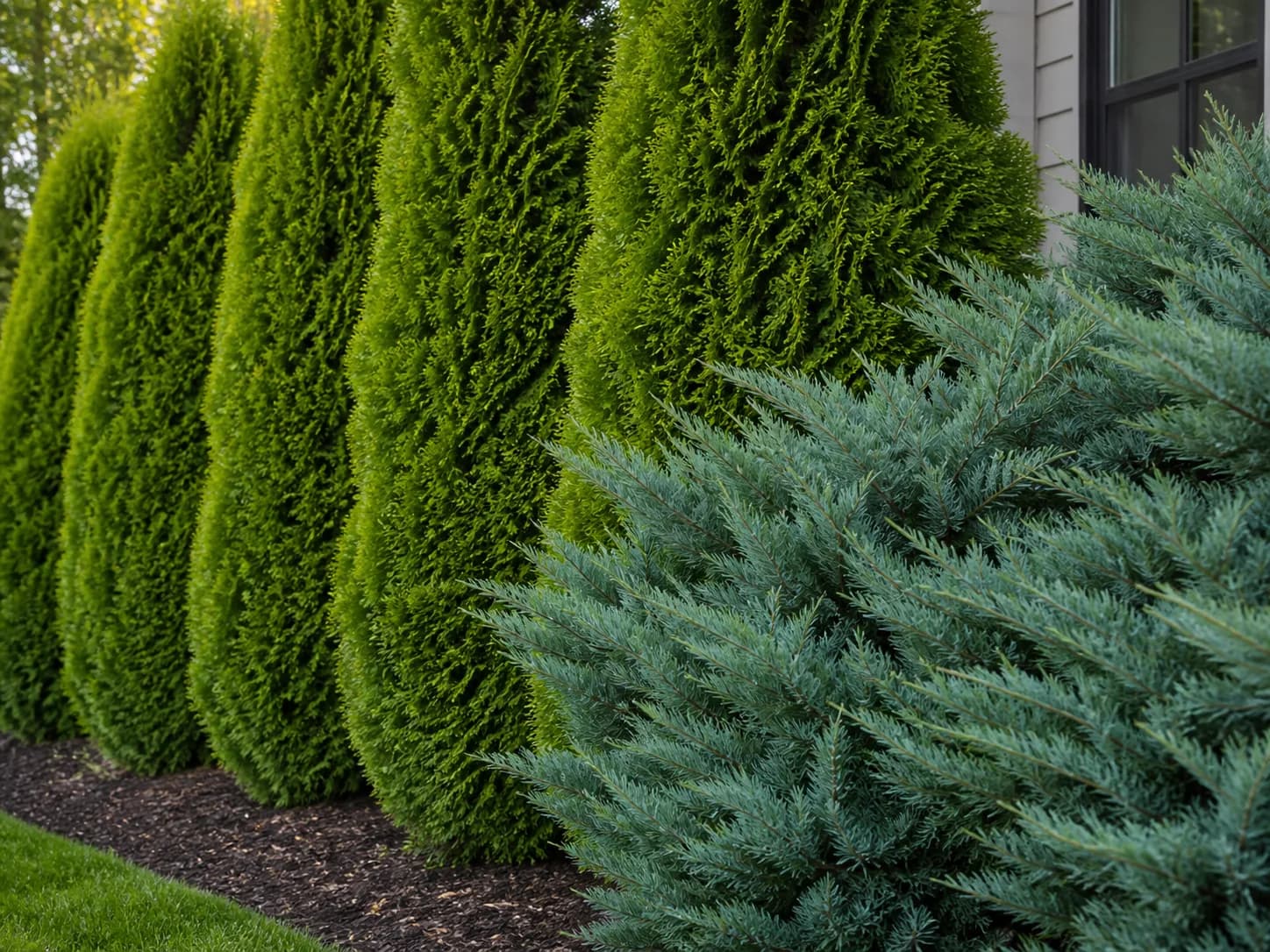
Arborvitae is built for the classic living wall. Narrow upright cultivars stack into a dense screen quickly, and the foliage closes visual gaps faster than most junipers. When the goal is a neighbor block, a driveway edge, or a green backdrop behind patio seating, Arborvitae does the job with less explaining.
Juniper can screen, but many forms stay looser, broader, or more irregular. It works better when you want an informal evergreen line rather than a clipped wall. If you expect perfect green privacy in a tight strip, Juniper usually feels too open unless you choose very specific forms.
Hot, dry, exposed sites
Wind and lean soilWinner: Juniper
Arborvitae struggles when the site runs hot, windy, and chronically dry. Even healthy plants start showing interior browning or thin tips if watering and soil depth are not consistent, especially where reflected heat cooks one side of the hedge.
Juniper is much more comfortable in those conditions. It handles the same kind of exposure that favors Russian Sage or dry-slope planting better than Arborvitae does, which is why it often wins on banks, roadside edges, and open front yards that do not get pampered.
Foundation and mixed beds
Near entries and cornersWinner: Depends on the shape you need
Arborvitae suits formal entries, corners, and repeated vertical rhythm. It pairs cleanly with shrubs and perennials where the design needs a green column or a strong back wall behind Hydrangea and other broad-leaved plants.
Juniper fits mixed beds when you want texture, lower water use, or spreading forms that knit soil together. In a more relaxed planting, it often works better than Arborvitae because it does not insist on reading like a hedge.
Low-maintenance water use
After establishmentWinner: Juniper
Arborvitae can become low effort once established in a good site, but it still asks for more regular moisture, especially in its first years and in dry spells. Let the hedge dry too hard too often, and recovery is slow.
Juniper is simply tougher on the water side. In the right sun and soil, it stays stable with less correction, which makes it the better fit for owners who want an evergreen presence without a steady irrigation habit.
Pruning expectations
Keeping the shape cleanWinner: Arborvitae
Arborvitae responds better to light, regular shape maintenance when you respect its green outer growth. For formal screens, that predictability helps, especially if you already maintain other structure plants and follow seasonal pruning timing.
Juniper is less forgiving if it is cut back hard into older bare wood. That makes it a tougher match for people who want to renovate shape aggressively after letting the plant overgrow its spot.
paymentsCost & Upkeep
Long-term cost extends beyond the purchase price. Factor in ongoing inputs, replacement risk, equipment, and time so the cheaper option at checkout does not become the more expensive one to keep.
For Arborvitae and Juniper, the real cost difference usually shows up after purchase: water, soil, fertilizer, pruning, replacements, and how easily the plant or system recovers from mistakes.
paymentsArborvitae
- check_circleA well-spaced Arborvitae row creates privacy fast, so you often need fewer years of waiting to get the screen you wanted.
- cancelWatering costs and replacement risk climb if the site is dry, windy, or too narrow for the mature plant.
- check_circleUniform cultivars are easy to plan in repeated spacing, which keeps layout decisions simple on new screens.
paymentsJuniper
- check_circleJuniper often reduces irrigation demand after establishment, which matters on large sunny properties and exposed slopes.
- cancelSome forms spread wider or stay looser than new owners expect, so using the wrong cultivar can waste space and correction time.
- check_circleTougher site tolerance usually means fewer replacements where heat, drought, or wind would thin a softer screen plant.
ecoResource Fit
Juniper often has the lighter resource footprint because it tolerates drought, leaner soils, and less irrigation; that reduces rescue watering and replacement risk on exposed sites.
Arborvitae can still be durable in the right setting, but it usually asks for steadier moisture and more protection from desiccating wind if you want a clean, dense wall.
The efficient evergreen is the one matched to the pressure of the site, not the one that only looks right on planting day. Site fit beats screen fantasy.
Both plants want strong sun to stay dense, but Juniper holds quality better when the site is dry and exposed.
Arborvitae generally needs more even moisture, while Juniper usually carries itself with less irrigation once rooted in.
Arborvitae is the better formal wall; Juniper offers more forms, from low spreaders to taller structural plants.
Both can anchor a site for years when matched to the right space, which matters more than whichever one looked fuller in the nursery pot.
table_chartSide-by-side Specs
The most important rows are mature form, water demand, pruning expectations, and drought tolerance. Those explain why one plant reads as a privacy wall while the other reads as a tougher structural evergreen.
If your site is dry or exposed, the water and wind rows should outweigh the beauty rows. That is where most poor evergreen-screen decisions start.
Source Notes
Metrics summarize published care ranges and common cultivar behavior. Individual performance varies by cultivar selection, microclimate, and management intensity. Consult our methodology for source standards and update practices.
| Metric | Arborvitae | Juniper |
|---|---|---|
| park Primary role | Formal privacy screen | Tough evergreen structure |
| light_mode Sun tolerance | Full sun, dislikes heat stress when dry | Full sun, handles exposure well |
| water_drop Water demand | Moderate and steady | Lower after establishment |
| straighten Typical habit | Upright and narrow to broad | Spreading, mounded, or upright by cultivar |
| home Best fit | Tight screens and formal edges | Dry slopes, exposed beds, informal evergreen planting |
| content_cut Pruning tolerance | Handles light shaping predictably | Less forgiving of hard cutback |