
Signs of Grubs in Lawn and How to Confirm Them
Random brown patches do not always mean grubs, which is why so many of us waste money on grub killers we did not need. This guide covers the reliable signs of grubs and how to double-check before treating. Do not treat for grubs until loose turf and actual larvae both show up in the same area.
You will learn how grub damage looks different from drought, dog urine, and fungus, plus a simple way to inspect the soil for larvae. We will also touch on how different grasses like warm season bermuda or cool-season fescue lawns show damage at different times of year.
What Grubs Are Doing Under Your Lawn
White grubs are the C-shaped larvae of beetles like Japanese beetles and June bugs. They live in the top few inches of soil and chew on grassroots, which cuts off the plant's ability to pull water.
Once enough roots are gone, the grass cannot stay anchored. That is why heavy grub damage feels like loose carpet and why patches suddenly brown out even if your watering routine looks fine.
Cool-season lawns such as Kentucky bluegrass yards usually show grub issues late summer into fall. Tall fescue turf usually follows the same pattern. Warm-season lawns like zoysia turf or St. Augustine turf tend to show damage a bit earlier as soils warm.
Grub damage always starts below ground in the root zone, not on the blades themselves. That detail separates them from many leaf diseases, which start as spots or lesions on the grass tips.
Never apply insecticide just because a neighbor did. Confirm actual grubs in the soil first so you do not wipe out beneficial beetles and soil life for no reason.
Brown Patches That Point To Grubs
Grub damage often shows up as irregular brown or gray patches that do not match your sprinkler coverage pattern. The edges are usually uneven, not a neat circle like dog urine spots.
These patches usually appear in late summer or early fall when grubs are bigger and hungrier. In hot weather, the damage looks similar to drought, which is why so many people misdiagnose it.
One quick test is the tug test. Grab a handful of grass in the brown area and pull straight up. If the sod lifts easily with very little resistance and almost no roots attached, grubs are a prime suspect.
Healthy turf, even slightly dry turf, resists that pull and tears at the blades instead of rolling back. This applies to perennial rye lawns in cooler zones.
Drier regions with prairie style buffalo grass can still show loose turf when roots are badly chewed.
If the grass does not peel back but blades are brown, check for fungus or heat stress before assuming grubs.
Use the surface clues below as a filter before you dig.
- Patch shape: Irregular, often merging, not perfect circles
- Season seen: Late summer to early fall in most regions
- Blade condition: Entire plant brown and dry, no green at the base
- Root check: Few or no white roots attached to the lifted sod
Spongy, Loose Turf Underfoot
A lawn with heavy grub feeding can feel oddly soft, almost like stepping on a wet sponge. The soil itself is not mushy; the looseness comes from missing roots that normally bind the soil and thatch together.
You notice this most when walking from a healthy area into a damaged zone. Your foot suddenly sinks a bit deeper, and the turf may wrinkle in front of your shoe.
The peel-back test is the most reliable way to confirm this. Use a flat shovel or spade to cut three sides of a square about 12 inches across, then gently lift the flap like carpet and check underneath.
If you see more than five to ten grubs per square foot, the population is high enough to damage most cool-season lawns. Warm-season lawns such as bahia grass or centipede grass can sometimes tolerate slightly higher counts because they root more aggressively.
The combination of spongy feel plus many visible grubs under the flap is your strongest confirmation. Without grubs under the sod, the softness likely comes from thatch or poor soil structure, not insects.
Check a few nearby spots before you decide the problem is widespread.
- Step feel: Bouncy or hollow compared to nearby healthy turf
- Lift test: Sod peels in a sheet with almost no roots holding it
- Grub threshold: Over 5-10 larvae in a one-square-foot sample
- Next step: Repeat checks in a few spots to confirm it is widespread
Animal Damage And Birds Digging
Skunks, raccoons, and some birds see grub‑filled lawns as an all‑night buffet. They flip sod pieces, claw divots, or peck holes hunting the larvae just under the surface.
This damage often appears overnight, especially after rain when the soil is softer. It may look worse than the actual grub feeding, because animals are not gentle when they dig.
Crows and other birds will also flock to grub hotspots. If you regularly notice flocks congregating in the same area of the yard, walk over and perform a quick soil check there.
Do not assume every dug‑up spot is grub related. In some yards, animals dig for earthworms or buried acorns, especially near mature oak trees or other nut‑bearing trees.
Before spreading insecticide to stop animal digging, peel back a few damaged sections and count actual grubs. You might simply need to repair the turf and manage wildlife access.
Animal activity is a clue, not proof, so pair it with the same soil check used for brown patches.
- Skunk or raccoon signs: Torn sod flaps and cone shaped holes
- Bird activity: Repeated pecking in the same bare patches
- Confirming cause: Visible grubs in the top 2–3 inches of soil
- If few grubs: Focus on patch repair and discouraging animals
Seasonal Timing Of Grub Damage
Soil temperature drives grub activity more than the calendar does. In cool-season lawns like Kentucky bluegrass lawns and tall fescue stands, damage usually shows up in late summer through early fall.
Warm-season grasses such as bermuda grass and zoysia often hide damage until late spring when they try to green up and thin patches stay brown.
Fall is peak feeding time for many white grub species. You will see brown, irregular patches even when temperatures are mild and watering has been steady.
In spring, grass often looks weak and slow to green in strips where grubs chewed roots the previous fall, especially if you skipped seasonal lawn maintenance.
That seasonal timing matters because it helps you separate grub injury from winter kill or a missed watering cycle.
- Late summer: Fresh brown spots that expand quickly despite watering
- Early fall: Turf lifts easily in sheets in worst areas
- Early spring: Weak green-up and thin grass where snow mold is not present
- Mid spring: Birds still pecking at soil even after earthworms retreat deeper
Checking Roots And Soil For Confirmation
Digging a few test holes tells you more than any guess from the surface. Use a flat shovel and cut three sides of a square about 6 inches on a side to peel back the turf.
Healthy turf has dense, white roots reaching 2 to 3 inches into the soil. In grub-damaged spots, roots look chewed off, brown, or missing, and the soil crumbles away from the sod.
Count the grubs you see in the top 2 inches of soil. Curl-shaped, white larvae with brown heads and six legs clustered near the head are the typical lawn-feeding culprits.
Most pros use a threshold of 8 to 10 grubs per square foot before recommending treatment. If you only see one or two per sample, focus on watering and mowing instead of pesticides.
- Tool choice: A sharp flat shovel or edging spade cuts clean flaps
- Sample depth: Check to 4 inches if soil is sandy or very dry
- Sampling pattern: Test both healthy and damaged areas for comparison
- Photo record: Take pictures before backfilling so you can show a local extension office
How Grub Damage Differs From Other Problems
Several lawn issues copy the look of grub damage, which is why root checks matter. Drought stress, fungal disease, and dog urine can all leave brown spots across otherwise green turf.
Drought-stressed grass usually stays anchored to the soil. Blades may gray or curl, and watering deeply following deep watering practices often perks it up within a few days.
Diseases form more defined rings or patches with darker edges, especially in thick perennial rye mixes. Fine fescue blends often show blade symptoms before the turf turns loose underfoot. Grass may also feel slimy or show spotting on the blades rather than loose sod.
Pet damage from dogs leaves small, very bright green centers with straw-colored outer rings in otherwise healthy lawns, not large irregular sheets of dead turf that roll up.
Do not apply grub killer just because you see brown patches. Confirm grubs first so you are not dumping insecticide on an unrelated problem.
- Grub clue: Sod peels up like a loose carpet
- Drought clue: Soil under brown area is cracked and powder dry
- Disease clue: Distinct circles or patterns, often with spotting on leaves
- Pet clue: Small, scattered spots near walkways or fences
What To Do After You Find Grubs
Treatment choice depends on how many grubs you find and what time of year it is. Small numbers in a thick buffalo grass lawn or hardy bahia turf often do not justify chemicals at all.
In late summer and early fall, curative products containing chemicals like carbaryl or trichlorfon target actively feeding larger grubs. Apply, then water them in with 0.5 to 1 inch of irrigation so they move into the root zone.
Preventive products with active ingredients such as imidacloprid are best applied in late spring when newly hatched grubs are tiny. Your local extension office can match product type and timing to your region and grass species.
Rake out dead thatch after grubs die, then overseed with compatible seed. More perennial ryegrass works for quick cover in cool-season yards, while thin zoysia spots can be patched once soil is warm.
Wait about two weeks, then dig another small plug so you can confirm the population really dropped.
- Spot treatment: Focus chemicals only where counts exceed threshold
- Water-in: Irrigate the same day to drive product into the root zone
- Mowing: Skip mowing right after applying liquid products to avoid tracking
- Recheck: Dig another test plug in 10-14 days to confirm grub death
Preventing Future Infestations And Common Mistakes
Thick, deep-rooted turf handles some feeding without showing much damage. Following a basic schedule like balanced fertilizing for lawns and mowing at the correct height helps grass outgrow minor root loss.
Overwatering keeps soil soft and roots shallow, so grubs can sever them more easily. Aim for 1 to 1.5 inches of water per week from rain plus irrigation, and adjust for soil type and your mix of tall fescue clumps or warm-season grasses.
Many homeowners spread preventives too late in the season. Products aimed at young grubs do little against large, late-summer larvae, so always check the timing chart on the label.
Skipping reseeding after a bad infestation is another mistake. Bare soil invites weeds instead of healthy grass, whether you favor Kentucky bluegrass blends or more drought-tolerant centipede grass lawns.
Never apply multiple grub treatments back to back "just in case." Extra applications increase chemical load without improving control and can harm soil life.
- Mow height: Keep cool-season lawns near 3 to 4 inches tall
- Thatch level: Dethatch if the layer exceeds 0.5 inch
- Aeration: Core aerate compacted soil in fall for better rooting
- Recordkeeping: Note product, rate, and date for every treatment
Pro Tips
- Use a flat shovel to cut neat inspection squares so they fold back easily and re‑seat well.
- Check at least three different patches in the yard before deciding on grub treatment.
- Water lightly the day before digging inspection squares so soil lifts without crumbling.
- Keep a small bucket handy to drop any grubs into if you plan to dispose of them.
- Take photos of damage and soil findings so you can compare progression over a few weeks.
- Mark inspected spots with small flags so you do not recheck the same square by accident.
- Combine grub checks with your regular lawn care calendar to catch issues before they spread.
Frequently Asked Questions
How many grubs per square foot is too many?
Most extension offices consider 8 to 10 grubs per square foot the action threshold. Fewer than that in a healthy, thick lawn usually does not need chemical treatment, especially if damage is minimal.
Can a lawn recover from grub damage on its own?
Mild grub feeding often recovers if you improve watering, mowing height, and fertilizing. When sod peels up in sheets and large areas are dead, you will need to reseed or resod those spots after controlling the grubs.
Do grubs come back every year in the same spots?
Grubs are the larval stage of beetles, and adults may return to favored lawns to lay eggs again. Thick turf, proper watering, and well-timed preventive treatments reduce how many survive and limit repeat damage in the same areas.
Are birds digging in my lawn always a sign of grubs?
Birds and skunks dig for many soil insects, including earthworms. Persistent digging focused on thin or browning patches is more suspicious, but you should still confirm by checking roots and counting grubs in several sample plugs.
Should I treat the whole lawn or just spots with grubs?
Curative products are usually best for clearly damaged areas where grub counts are high. Preventive treatments can be applied more broadly if your entire yard had heavy pressure last year, but spot treating keeps chemical use lower.
Sources & References
Related Guides
Companion Planting Pest Control for Any Garden
Most gardens rely on sprays once bugs show up. Companion planting flips that around so the plants…
11 min read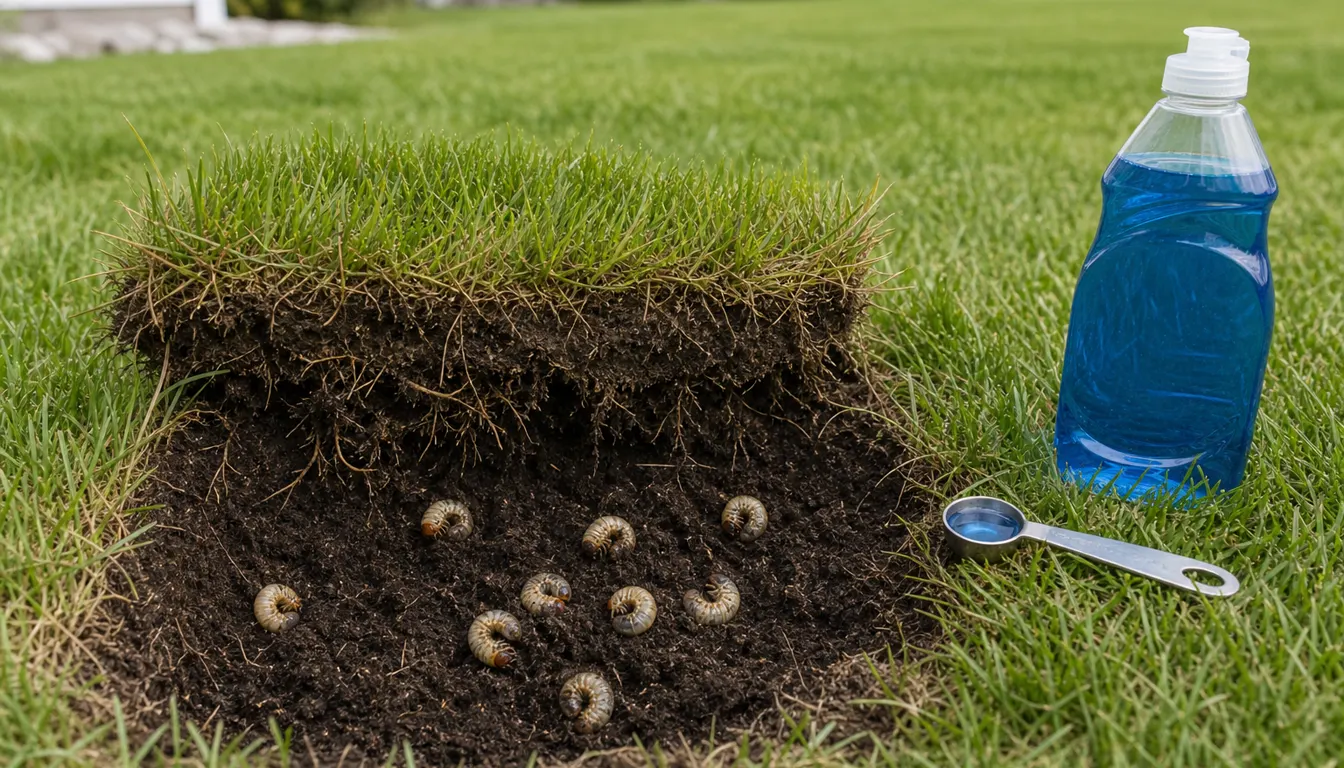
Dawn Dish Soap for Grubs: What Actually Works
Soap solutions can help you spot-check for grubs and knock back a few pests, but they are not…
10 min readDo Marigolds Keep Squirrels Away From Your Garden?
Squirrels can strip a bed of seedlings or freshly planted bulbs in a single morning. Plenty of…
11 min read