
Lawn Careschedule12 min read
Dethatching vs Aerating: Which Your Lawn Needs First
Learn whether your lawn needs dethatching, aeration, or both, how they work, and the right timing and tools so you do not waste money or stress the grass.
Bare spots, spongy patches, or water that just sits on the lawn usually trace back to either thatch or compaction. Fixing those means choosing between dethatching and aerating, and many of us guess wrong.
The details that move the needle: how each method works, what problems they solve, and the signs your yard shows when it needs one or the other. We will also flag when to pair them with overseeding and how they fit into a yearly schedule alongside broader lawn care planning, so you know where to spend time, rental money, and effort for the biggest payoff.
grassThatch vs Compaction: What You Are Actually Fixing
A spongy, bouncy lawn usually points to thatch, while puddles and rock‑hard soil scream compaction. Knowing which problem you have is the whole dethatching vs aerating decision.
Thatch is a layer of dead stems, roots, and clippings sitting between soil and grass blades. A thin layer, about 0.25–0.5 inches, helps hold moisture and cushion foot traffic.
Once thatch gets thicker than 0.5 inch, roots sit in that layer instead of the soil. Water and fertilizer stay near the surface, and shallow roots dry out fast in summer.
Compaction is different. Foot traffic, pets, and mowers press soil particles together so there is little air space. Water runs off instead of soaking in.
You can have both problems at once, especially on heavy clay lawns under kids, dogs, and weekly mowing. Most cool‑season lawns benefit from both dethatching and core aeration every few years.
Lawns in clay soils with cool‑season grasses like deep‑rooted fescue types usually suffer more from compaction than thatch. Warm‑season lawns, for example dense bermuda turf, tend to build thatch faster.
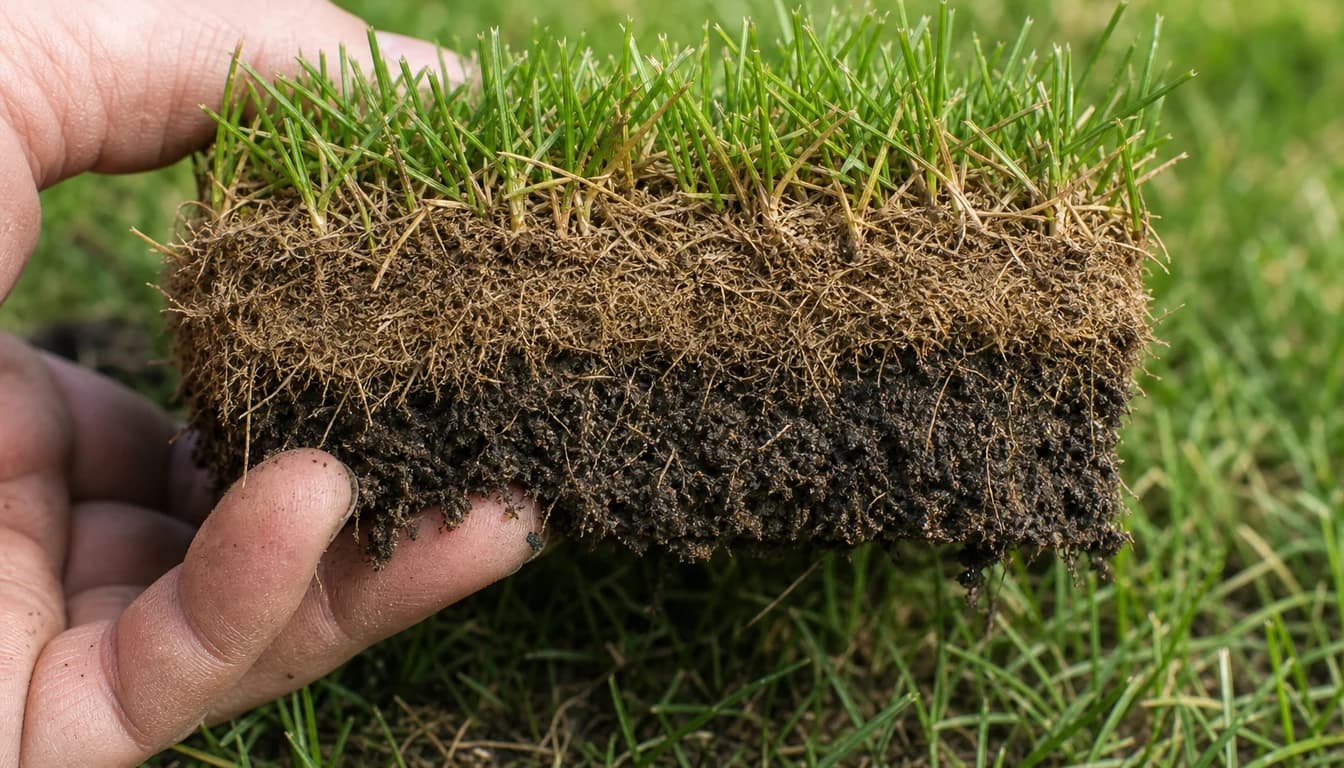
Peel back a small section of sod to see how thick your thatch layer has become.
- fiber_manual_recordThatch layer: Spongy feel, brown mat at soil line, mower wheels sink slightly
- fiber_manual_recordCompaction signs: Puddles, cracked soil in drought, hard to push a screwdriver 3 inches
- fiber_manual_recordBoth present: Spongy in some areas, rock‑hard in others, uneven green color across the yard
quizHow to Tell If You Need Dethatching or Aeration
Before renting machines or hiring help, spend ten minutes testing your lawn. Simple checks with a shovel, screwdriver, and hose will tell you which project helps.
Start with a thatch check. Cut a 4 inch by 4 inch square of turf and peel it back. Measure the brown layer between green shoots and soil with a ruler.
If that layer is under 0.5 inch, dethatching is not urgent. Focus on aeration and feeding, using something like gentle lawn fertilizer timing to push deeper roots.
Next, test compaction. Push a long screwdriver or tent stake into moist soil. It should slide in to 3–4 inches with steady pressure.
If you have to lean your full weight on it, soil is compacted and aeration rises to the top of the list. That is especially true for play areas, dog runs, and where cars have ever parked on the grass.
Watch how water behaves. Run a sprinkler for 15 minutes, then shut it off and see what happens over the next half hour.
Fast runoff, standing puddles, or water spilling onto sidewalks point at compaction first. Slow soaking but yellowing grass on top of a spongy feel suggests a thick thatch layer.
Do these tests after a normal watering or light rain, not bone‑dry soil. Extremely dry soil can feel hard even when it is not badly compacted.
Match the machine to the symptom you actually found.
- fiber_manual_recordChoose dethatching: Thatch thicker than 0.5 inch, spongy underfoot, mower scalping on small hills
- fiber_manual_recordChoose aeration: Hard to penetrate soil, pooling water, heavy traffic areas look thin
- fiber_manual_recordDo both: Old lawns, mixed symptoms, or yards that have never been mechanically treated
Guide — See AlsoWhen to Cut Grass After Overseeding Without Killing New SeedLearn exactly how long to wait before mowing after overseeding, how tall new grass should be for the first cut, and mowe
chevron_rightcontent_cutDethatching: What It Does and How To Do It Safely
Dethatching scrapes out that thick, woody layer so air, water, and nutrients can reach the soil again. It is more aggressive than aeration and can shock grass if you get the timing or depth wrong.
Plan dethatching for active growth, not stress. Cool‑season lawns like Kentucky bluegrass or tall fescue lawns respond best in early fall or early spring. Warm‑season lawns such as slow‑growing zoysia sod or St. Augustine turf handle it in late spring once fully greened up.
You can use a manual thatch rake for small patches or a power dethatcher for full yards. Set tines so they just touch soil and pull out debris without gouging deep roots.
Set the machine conservatively on the first pass. You can always make a second, but you cannot glue ripped stolons back together.
Collect all loosened thatch by raking or bagging with the mower. Measure again in a few spots; the remaining thatch should sit at or below 0.5 inch.
After dethatching, the lawn often looks rough and thin. That is normal. Pairing the job with overseeding and light feeding helps it fill back in.
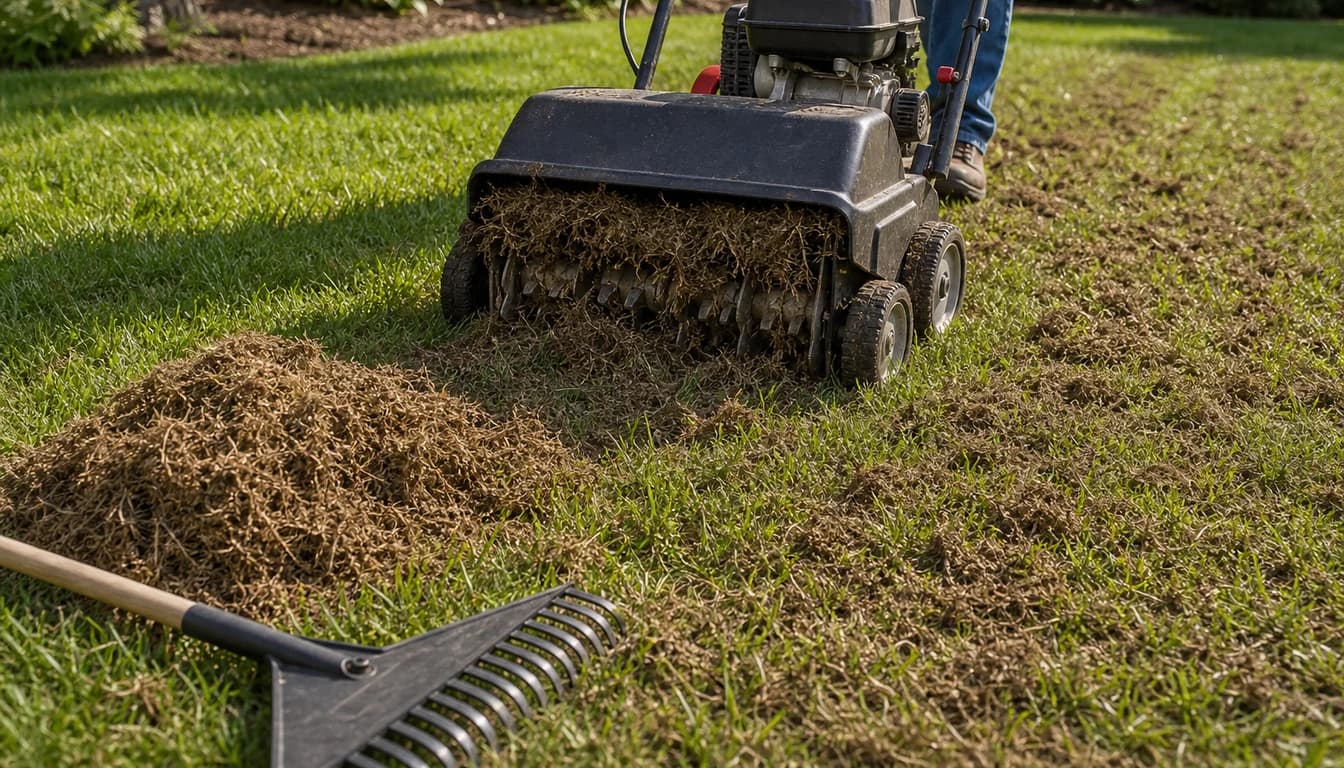
Power dethatchers pull up surprising amounts of brown material in a single pass.
- fiber_manual_recordBest timing: Active growth, mild weather, soil above 50°F for cool‑season and warmer for warm‑season
- fiber_manual_recordTool choice: Manual rake for small areas, power dethatcher or vertical mower for full yards
- fiber_manual_recordAftercare: Water deeply, overseed thin areas, avoid heavy traffic for 2–3 weeks
Email Updates
Join the KnowTheYard update list
Zone-specific advice, seasonal reminders, and new plant guides — no filler.
ecoCore Aeration: Relieving Compaction and Helping Roots
Core aeration pulls plugs of soil from the lawn, opening channels for air and water to move down to the root zone. It is gentler than dethatching and something most lawns benefit from on a regular cycle.
Plugs are typically 2–3 inches deep and about 0.5 inch wide. Leaving those plugs on the surface lets them break down and feed soil biology.
Compact clay soils and high‑traffic yards, especially ones with kids, pets, or sports, gain the most. Grasses like common Kentucky bluegrass and perennial rye overseeds respond with thicker, deeper roots after aeration.
Schedule aeration when grass is actively growing, and skip periods of heat or drought. Cool‑season lawns do best in early fall, which also pairs nicely with full‑yard overseeding projects.
Warm‑season lawns can be aerated in late spring through early summer once fully green. Avoid doing it right before winter for any grass type.
Never aerate frozen or waterlogged soil. You will either just punch shallow dents or smear holes that close right back up.
On very compacted soils, especially older neighborhoods or construction fill, two passes in different directions help most. Space holes about 2–3 inches apart for meaningful improvement.
- fiber_manual_recordFrequency: Every 1–3 years depending on traffic and soil type
- fiber_manual_recordPlug depth: Aim for at least 2 inches to reach the main root zone
- fiber_manual_recordGreat combo: Aerate, then topdress with compost and overseed the same day
Guide — See AlsoGrow Strong St Augustine Grass in Shady YardsPractical steps to keep St Augustine grass thick and healthy in partial shade, including light limits, pruning, watering
chevron_rightcalendar_monthBest Timing by Season and Grass Type
Soil temperature, not the calendar, tells you when to schedule these jobs. Cool season lawns like fescue stands and Kentucky bluegrass yards bounce back fastest when dethatched or aerated in early fall or early spring.
Warm season lawns such as bermuda in full sun and zoysia carpets handle stress best once they are fully green and growing strongly. For most yards that means late spring through mid summer, while soil is warm and nights are mild.
Winter or peak heat are the worst choices. Cutting into a dormant lawn, or one already stressed by heat, can thin turf and open space for weeds. If grass is not actively growing, hold off on both dethatching and aeration.
Match timing to your big annual projects. Aerating right before fall overseeding work on cool season turf or before a light feeding with balanced lawn fertilizer lets seed and nutrients drop into those fresh holes for better results.
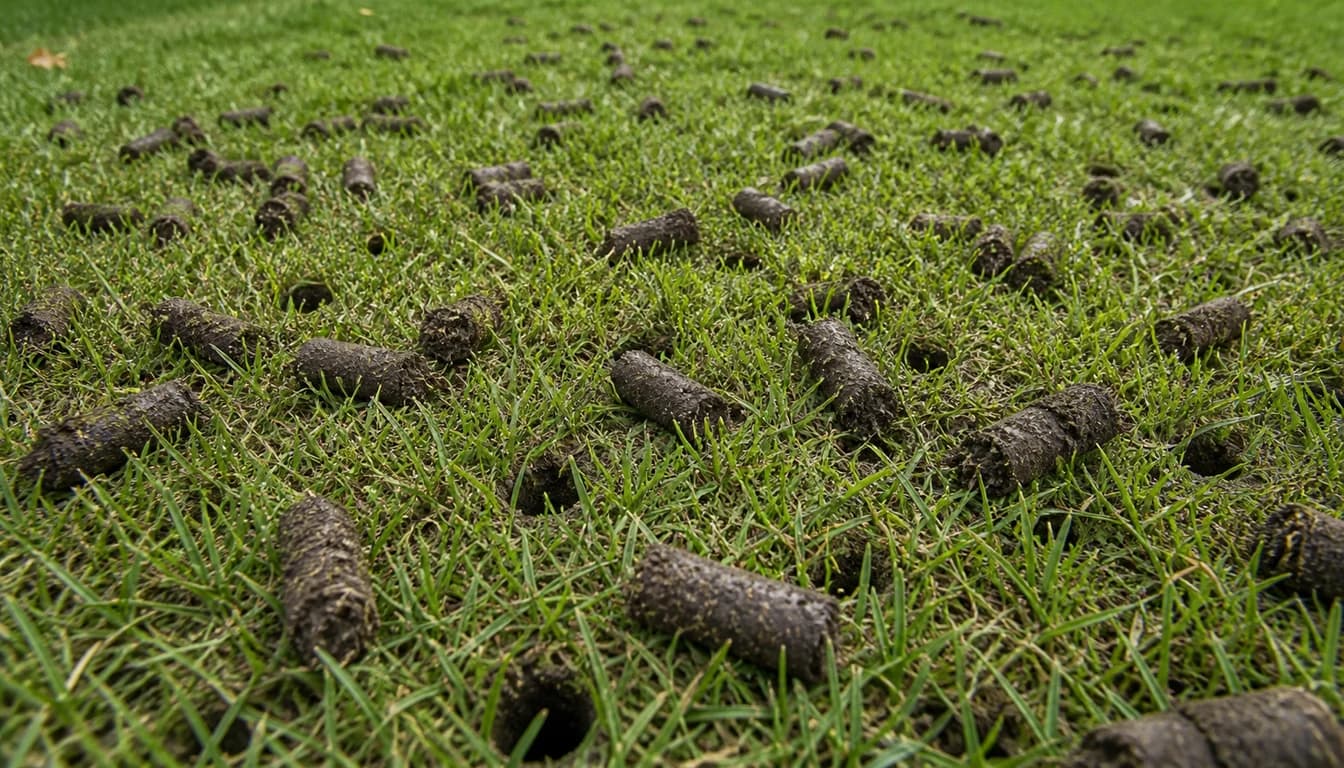
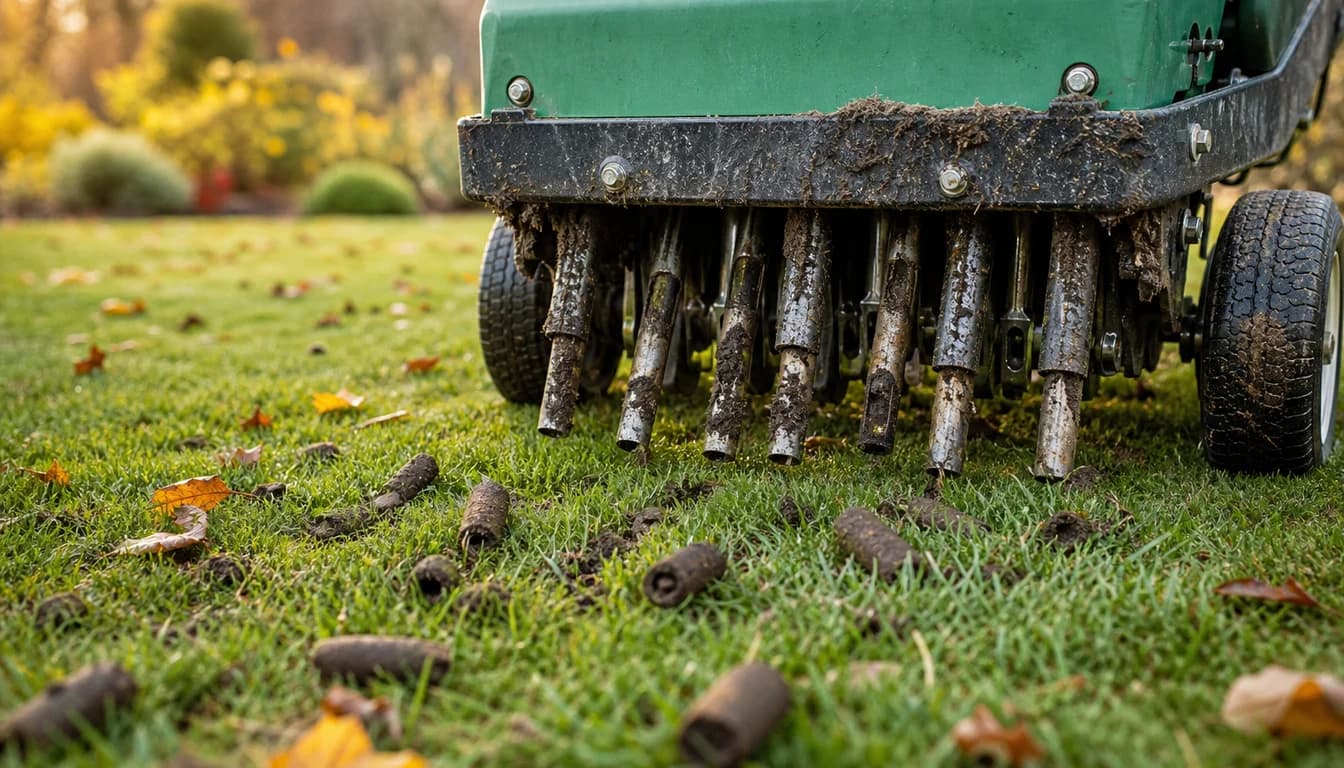
Aeration plugs on a cool season lawn in early fall are a good sign.
water_dropWhat To Do Right After Dethatching or Aeration
The day you dethatch or aerate, your lawn is stressed but wide open for improvements. Light watering, cleanup, and optional seeding all fit into this same window, and the order you do them in matters.
Right after a pass with a dethatcher, rake or bag up the debris. Leaving heavy piles smothers grass and can cause yellow patches. You can compost the clean material or spread a thin layer in beds around flowering azaleas or other shrubs as mulch.
Core aeration leaves plugs scattered across the yard. Do not rush to remove them. They break down in a week or two and top dress the soil surface. If the look bothers you, one pass with a mower helps chop them smaller.
This is prime time for upgrades. Many of us overseed cool season lawns immediately after core aeration, then follow with a starter feeding similar to what you would use on a new vegetable bed of tomatoes. Water lightly once or twice a day for the first week so seed and cores do not dry out.
Heavy watering right after dethatching or aeration can cause runoff and move seed or soil into sidewalks and drains. Aim for short, gentle cycles that only moisten the top inch.
If you are not seeding, one deep soak is enough. The goal is to help roots recover and pull oxygen deeper, similar to the benefits outlined in deep watering strategies. Resume your normal mowing schedule once the lawn stands upright again, usually within a week.
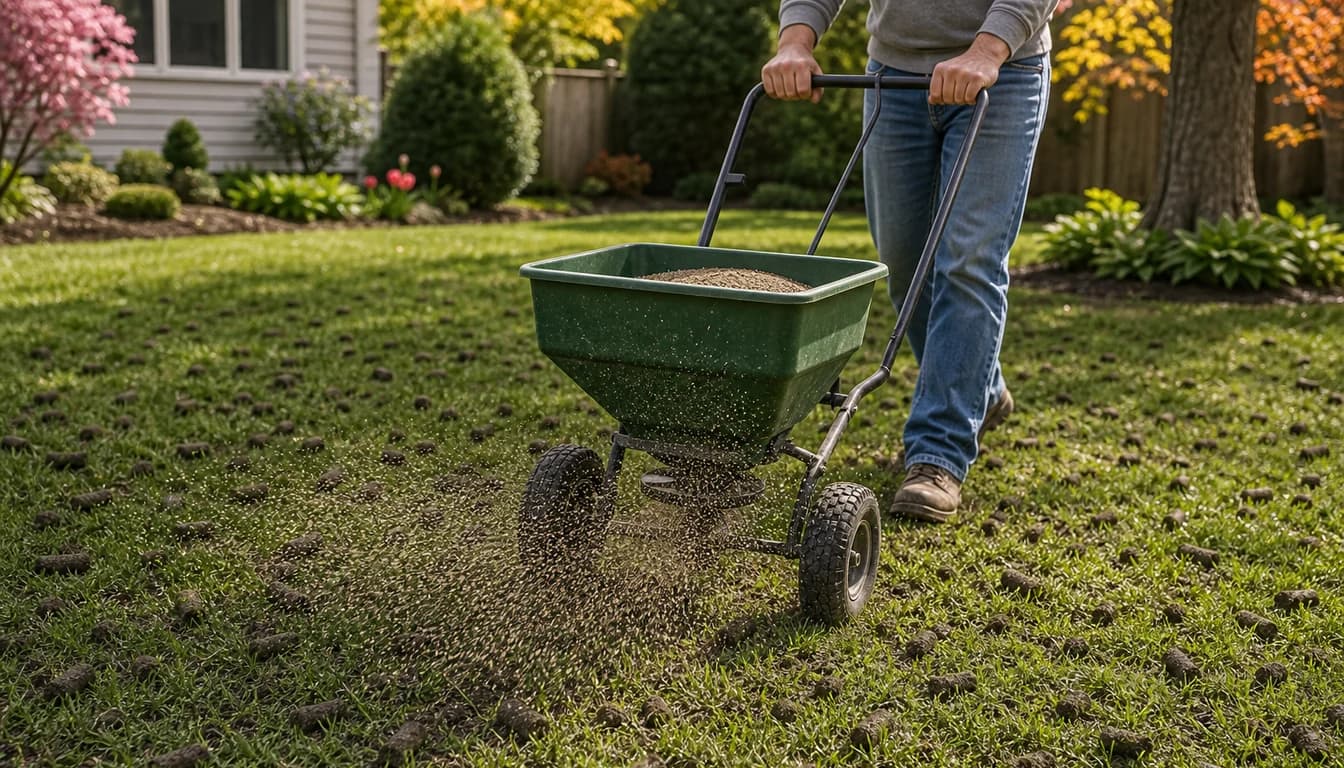
Overseeding immediately after aeration helps seed contact soil in the open cores.
Guide — See AlsoWhen to Aerate a Lawn in Ohio for Thick, Green GrassPractical timing tips for when to aerate a lawn in Ohio, plus how to match aeration to your grass type, soil, and overse
chevron_rightecoCombining Dethatching, Aeration, Overseeding, and Fertilizing
Stacking projects on one weekend can either jump‑start a lawn or push it over the edge. The order and intensity you pick should match how thin or healthy the turf is going in.
On a beat‑up cool season lawn, many homeowners run dethatching, core aeration, overseeding, and fertilizing as a single renovation. Done carefully in early fall, this can rebuild turf density faster than spreading tasks across months.
A simple sequence that works for most yards looks like this:
- fiber_manual_recordStep 1: Mow low: Cut one notch below your usual height so equipment reaches more thatch without scalping crowns.
- fiber_manual_recordStep 2: Dethatch lightly: Make one pass in each direction. Stop if you see lots of bare soil or crowns.
- fiber_manual_recordStep 3: Core aerate: Pull true cores, not just poke holes. Overlap passes for tight, compacted spots.
Once the soil is open, switch from mechanical work to recovery work.
- fiber_manual_recordStep 4: Overseed bare areas: Broadcast seed, focusing on thin zones. Match species to existing turf.
- fiber_manual_recordStep 5: Fertilize modestly: Use a starter or slow‑release product at label rate, never more.
- fiber_manual_recordStep 6: Water in: Keep the top half inch of soil evenly moist while seed germinates.
For already thick lawns, scale this back. You might skip dethatching entirely on healthy buffalo grass lawns and just aerate plus fertilize, because these low‑thatch species often stay open on their own.
If you already have a full season plan, tie this work into it. For example, many of the dates in the annual lawn calendar line up nicely with aeration and overseeding windows. Just adjust intensity to your grass type and climate so you are not repeating stressful tasks too often.
warningCommon Mistakes That Hurt More Than They Help
Most horror stories about dethatching vs aerating come from overdoing a good thing. The tools are not the problem; it is depth, timing, and how often people run them.
Running a power dethatcher every year on a lawn with thin thatch can strip away crowns and topsoil. You often see this on newer zoysia lawns where thatch has not yet built up but homeowners treat it like fifty‑year‑old turf.
Core aerators can also be misused. Extremely wet soil turns cores into smeared holes that compact again when they dry. Extremely dry soil can resist tines and leave you with shallow pokes that do very little to relieve compaction.
If your footprints still show in the lawn after several minutes, compaction or excess thatch is likely, but do not jump straight to the most aggressive setting.
A few habits help avoid damage:
- fiber_manual_recordCheck first, then act: Measure thatch thickness and try a screwdriver test for compaction before renting anything.
- fiber_manual_recordRespect recovery time: Give at least a full growing season between aggressive dethatching passes.
- fiber_manual_recordAvoid scalping the lawn: Do not set your mower or dethatcher lower than necessary to reach the problem layer.
The remaining mistakes are mostly timing mistakes, not equipment mistakes.
- fiber_manual_recordSkip steep slopes in drought: Removing cover on dry hillsides can speed erosion and make bare spots tough to fix.
- fiber_manual_recordTime around weed control: Do not core aerate right after using pre‑emergent products, or you will punch holes in the barrier.
If you are building a new lawn or repairing big bare patches, it can be smarter to compare sod versus seed choices first. Sometimes starting over on the worst sections is easier than torturing thin turf year after year.
Guide — See AlsoUse Frost Date by Zip Code to Time Lawn and Garden TasksLearn how to use frost dates by zip code to time seeding, planting, and lawn care, and why averages are only a starting
chevron_rightthermostatHow Often to Repeat Dethatching and Aeration
Frequency is where lawns quietly get over‑treated. Thatch and compaction do not build at the same pace in every yard, so copying your neighbor's schedule rarely works.
On most cool season grasses, core aeration every one to three years is plenty. High traffic yards with kids or dogs, or clay soils that hold water, are closer to every year. Looser loam soils, or lawns near the structure of a mature oak shade tree with light traffic, might stretch to every third year.
Thatch removal runs even lighter. We rarely dethatch more than every three to five years except on aggressive thatch‑prone species. Some warm season grasses, like older St. Augustine turf, can need more frequent attention if you feed heavily and bag every clipping.
A quick at‑home checklist helps decide whether it is time:
- fiber_manual_recordThatch thickness: More than 1/2 inch when you cut a plug means dethatching is on the horizon.
- fiber_manual_recordPenetration test: A screwdriver that will not push in by hand signals compaction and aeration needs.
- fiber_manual_recordWater behavior: Puddles and runoff before you hit 1 inch of water point toward soil that needs opening.
- fiber_manual_recordRoot depth: Unearthed roots shorter than 2 inches suggest both compaction and shallow watering habits.
If you are also managing trees, shrubs, and beds, line this work up with tasks like seasonal pruning schedules. You will already have tools out and can read the yard as a whole instead of treating the lawn as a separate project.
tips_and_updates
Pro Tips
- check_circleCheck thatch thickness in several spots, not just one, since low areas often build it faster.
- check_circleRun irrigation the day before aerating so soil is moist but not soggy and plugs come out clean.
- check_circleUse a mowing height chart for grasses like low‑growing buffalo lawns to avoid scalping after dethatching.
- check_circlePair fall aeration with overseeding and a balanced feed instead of heavy early spring fertilizer.
- check_circleFlag sprinkler heads and shallow utility lines before running a dethatcher or core aerator.
- check_circleFocus dethatching on thatchy warm‑season lawns and lean more on aeration for tight clay with cool‑season turf.
- check_circleOn small lawns, a manual thatch rake and a simple step‑on core tool often beat renting big machines.
- check_circleIf you are also feeding shrubs or trees, coordinate with proper woody plant fertilizing timing to avoid nutrient overload.
quiz
Frequently Asked Questions
Should I dethatch and aerate on the same day?expand_more
You can, as long as the lawn is actively growing and not already stressed. Dethatch lightly first, then core aerate, then overseed or fertilize and water. Very weak or drought‑stressed lawns do better if you split the work across seasons.
Is dethatching or aeration better for heavy clay soil?expand_more
Core aeration usually helps clay soil more than dethatching because it physically removes plugs and opens channels. Repeating aeration every year or two, plus adding organic matter, improves structure much more than scraping thatch alone.
Can I rent a power dethatcher for a thin lawn?expand_more
You can, but go very gently and confirm you actually have more than 1/2 inch of thatch first. Many thin lawns only need core aeration and better watering habits, not aggressive dethatching that can scalp crowns and worsen bare spots.
How soon can I mow after core aeration?expand_more
Wait until the grass blades stand upright again, usually five to seven days. Mowing sooner can flatten cores into the holes and stress recovering roots. Keep blades sharp to avoid shredding the turf while it heals.
Will aeration or dethatching fix every brown spot?expand_more
No. These tools help with compaction and thatch, not disease, pet damage, or grubs. If brown patches do not improve after better watering and soil work, check for pests or consider targeted pest control steps instead.
menu_book
Sources & References
Related Guides
Best Time to Aerate and Overseed for a Thicker Lawn
Learn when to aerate and overseed your lawn by season and grass type so every pass of the machine leads to thicker, greener turf instead of wasted seed.
11 min read
Best Time to Overseed a Midwest Lawn for Thick Turf
Learn the best time to overseed a Midwest lawn based on soil temperature, grass type, and hardiness zone so your new seed fills in thin spots.
11 min read
Best Time to Overseed a Northeast Lawn for Thick Turf
Learn exactly when to overseed cool-season lawns in the Northeast, how soil temperature and frost dates affect timing, and what to do before and after seeding for a thicker, greener yard.
11 min read