
Lawn Careschedule11 min read
Grow Strong St Augustine Grass in Shady Yards
Practical steps to keep St Augustine grass thick and healthy in partial shade, including light limits, pruning, watering, and repair strategies.
Shade is where St Augustine grass can shine compared to other warm-season lawns, but it still has limits. Thick oaks, tight side yards, and north-facing fronts all test those limits.
Use the specifics here to judge how much shade St Augustine can really take, how to measure the light it gets, and what to change with mowing, pruning, and watering; the goal is knowing whether those thin, crunchy spots are fixable or need a different plan.
light_modeKnow How Much Shade St Augustine Can Handle
Partial shade is fine for St Augustine grass, but deep shade is not. As a rule, it needs 4–6 hours of direct sun or a full day of bright filtered light to stay reasonably thick.
Tree canopies change this fast. A yard that looked sunny when the sod was laid can drift under the limit once branches fill in, just like a flower bed that outgrows its shade perennial neighbors.
Grab your phone and note where sun hits the lawn. Check at 9 a.m., noon, and 3 p.m., then add up true direct sun hours, not just “it seems bright.”
Thin St Augustine in shade usually starts with too little light, not bad fertilizer or soil. You can pour in products and still lose that battle.
If you are under 3 hours of direct sun, no amount of care will keep St Augustine dense in that exact spot.
Use the light ranges below to decide whether maintenance changes are worth trying.
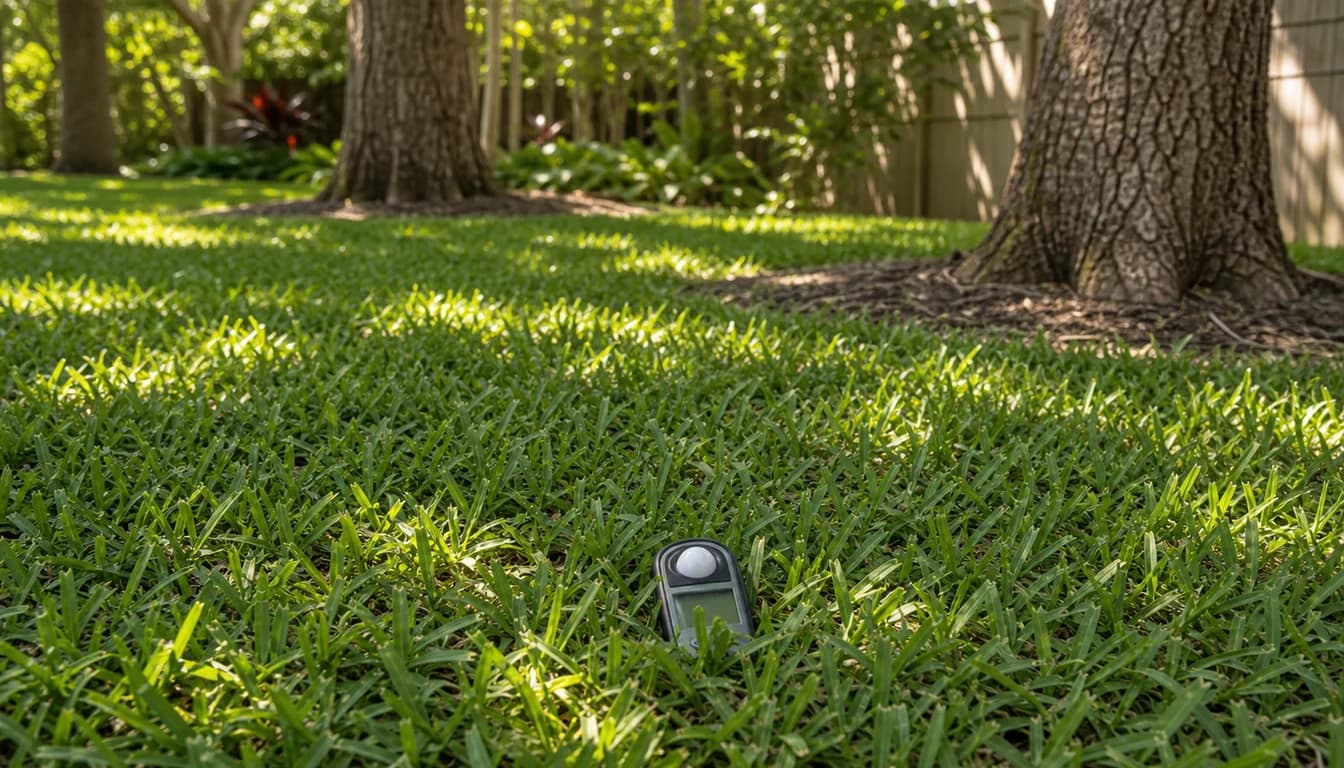
Measuring actual hours of sun is more accurate than guessing from memory.
- fiber_manual_recordIdeal light: 6+ hours direct sun, or light shade under high, open trees
- fiber_manual_recordBorderline: 4 hours direct sun, or bright dappled light all day
- fiber_manual_recordFail zone: Less than 3 hours sun, or solid shade from buildings and evergreens
- fiber_manual_recordQuick check: If moss grows better than grass, light and drainage are both working against your turf
quizThin, Leggy, or Patchy? Reading Shade Stress Signs
Shade stress on St Augustine shows up very differently from drought. You see long, floppy blades, weak runners, and soil shining through the canopy.
In our yards, shady corners rarely dry out first. They stay damp and cool, so people often assume watering is fine and miss the real issue, just like folks misdiagnose yellowing pothos leaves indoors.
Look closely at the runners, not just color. In low light, internodes stretch, so each joint on the stolon is farther apart. That means fewer leaves per square foot and bare dirt between strings of grass.
You may also notice more weeds that like shade, such as dollarweed, sedges, or broadleaf invaders, sneaking in where the turf has opened.
Do not blanket-spray herbicides over failing shade patches until you figure out why the grass is weak. You risk killing what little cover you have.
Compare symptoms before you treat; shade, drought, and disease call for different fixes.
- fiber_manual_recordShade damage: Leggy runners, wide gaps, soft blades that lay flat
- fiber_manual_recordDrought damage: Crunchy tips, gray-blue color, footprints that remain visible
- fiber_manual_recordDisease hint: Spots or patches with distinct edges, often from moisture plus low light
- fiber_manual_recordWeed signal: More broadleaf weeds in one area usually means turf is losing the competition there
Guide — See AlsoHow to Level a Sloping Yard for Safer, Flatter SpaceStep‑by‑step guide for homeowners on how to level a sloping yard without ruining drainage, hurting trees, or wasting mon
chevron_rightcontent_cutOpen the Canopy and Redirect the Sun
Tree pruning is often the cheapest "fertilizer" for st augustine grass shade areas. Raising the canopy or thinning interior branches can add 1–3 extra hours of sun without removing the tree.
Aim to lift low limbs so you can walk under with head clearance, about 7–8 feet in front yards and more where kids play. This lets morning or late-day light slip under the canopy and hit the turf.
If you are not comfortable pruning larger limbs, bring in an arborist and be clear that your goal is more lawn light, not just a tree haircut like shaping formal shrubs. Ask for selective thinning instead of topping.
On the house side, light paint colors on fences or siding can bounce a bit more brightness to narrow side yards. It is not magic, but every bit helps.
Never remove more than about 25% of live growth from a mature tree in a single year, or you risk stressing it badly.
Focus pruning where it changes morning or late-day light; random thinning rarely helps the turf.
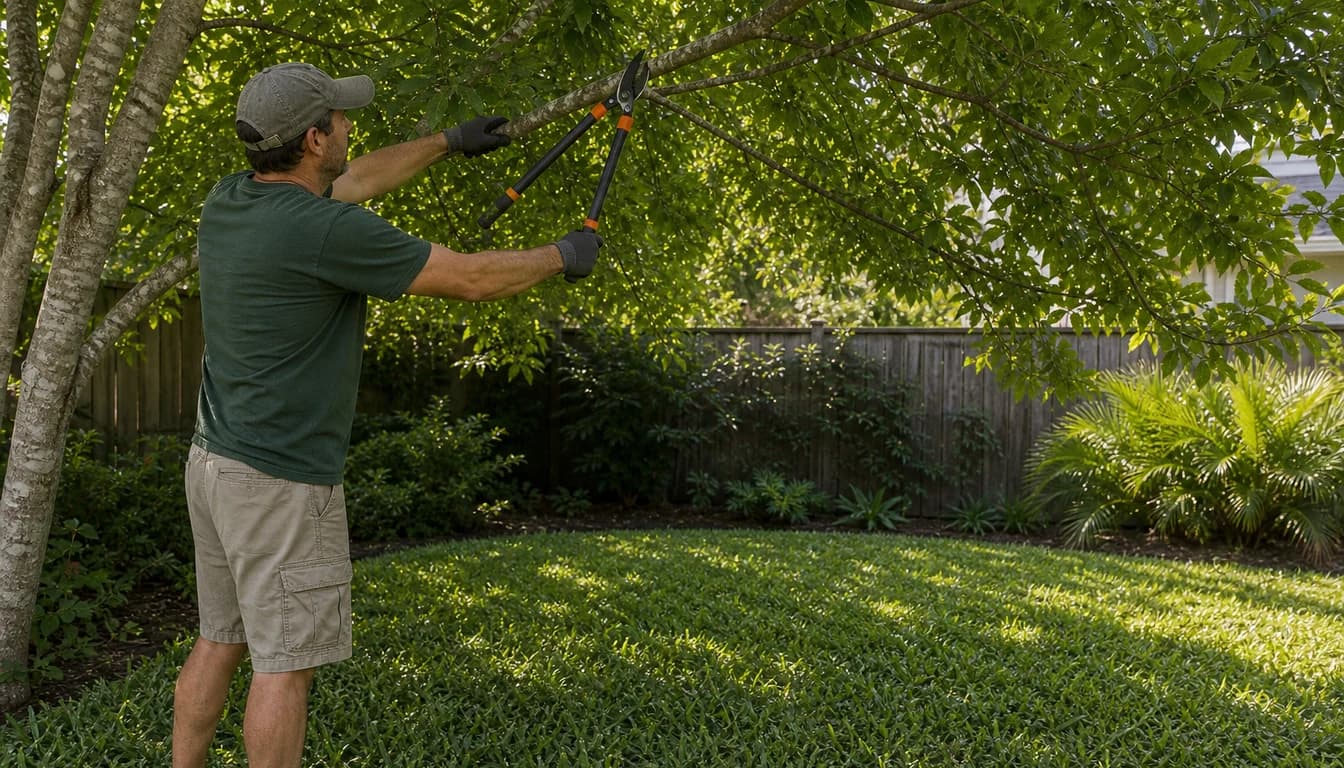
Raising the canopy a few feet can add hours of usable light for turf.
- fiber_manual_recordRaise low branches: Focus on limbs blocking morning or afternoon sun paths
- fiber_manual_recordThin crowded interiors: Remove crossing or duplicated interior branches
- fiber_manual_recordPrune on cycles: Light work every 3–5 years beats one heavy cutback
- fiber_manual_recordPair with cleanup: Remove lower shrubs that cast extra afternoon shade on tight strips
Email Updates
Join the KnowTheYard update list
Zone-specific advice, seasonal reminders, and new plant guides — no filler.
water_dropAdjust Mowing and Watering for Shaded Turf
In shade, blade surface is your solar panel. Taller mowing gives each plant more leaf to grab what light is available, just like taller stems help border perennials reach over neighbors.
Set St Augustine in shade at 3.5–4 inches, and stay consistent. Cutting it shorter to “let in more light” removes the very tissue the plant uses to photosynthesize.
Watering also needs a tweak. Shady turf uses less water, and the soil takes longer to dry out, especially near walls and big trees. That is why fungus and root rot show up there first.
Follow a deep-and-rare schedule, but treat shaded zones like a different lawn than your sunny front.
Overwatering a shady St Augustine patch is one of the fastest ways to trade thinning grass for full-blown disease.
Set the mower and sprinklers for the shaded strip itself, not for the sunniest part of the yard.
- fiber_manual_recordMowing height: 3.5–4 inches for shaded areas, slightly shorter in full sun
- fiber_manual_recordBlade sharpness: Sharpen at least every 4–6 weeks in the growing season
- fiber_manual_recordWater depth: Aim for 1 inch per week total, then cut back to 0.75 inch in dense shade
- fiber_manual_recordZone control: Use separate valves or sprinkler adjustments so shaded strips are not soaked like open, sunny turf
Guide — See AlsoWhen to Mow New Grass Without Killing ItLearn exactly when new grass from seed or sod is ready for its first mowing, so you thicken the lawn instead of scalping
chevron_rightcompostFertilizing Shaded St Augustine Without Overdoing It
Fertilizer behaves differently in shade, because the grass grows slower and uses nutrients more slowly. Feeding a shaded St. Augustine area like a sunny front lawn is an easy way to get thatch and disease.
Aim for the low end of your product's annual nitrogen range on shaded turf. If a bag suggests 3–4 pounds of nitrogen per 1,000 square feet per year, stay closer to 3 or even 2.5 for dense tree shade.
Skip fast-release "green up" products in low light. Slow-release or organic blends keep growth steady instead of forcing soft, weak blades that invite fungus. Check labels and choose something with at least 30–50% slow release nitrogen.
Avoid pushing fertilizer in the heat of summer when shade and humidity trap moisture. Late spring and very early fall, timed with your overall lawn calendar, are much safer windows for shaded areas.
Use the lower end of the range when tree shade is dense or disease has shown up before.
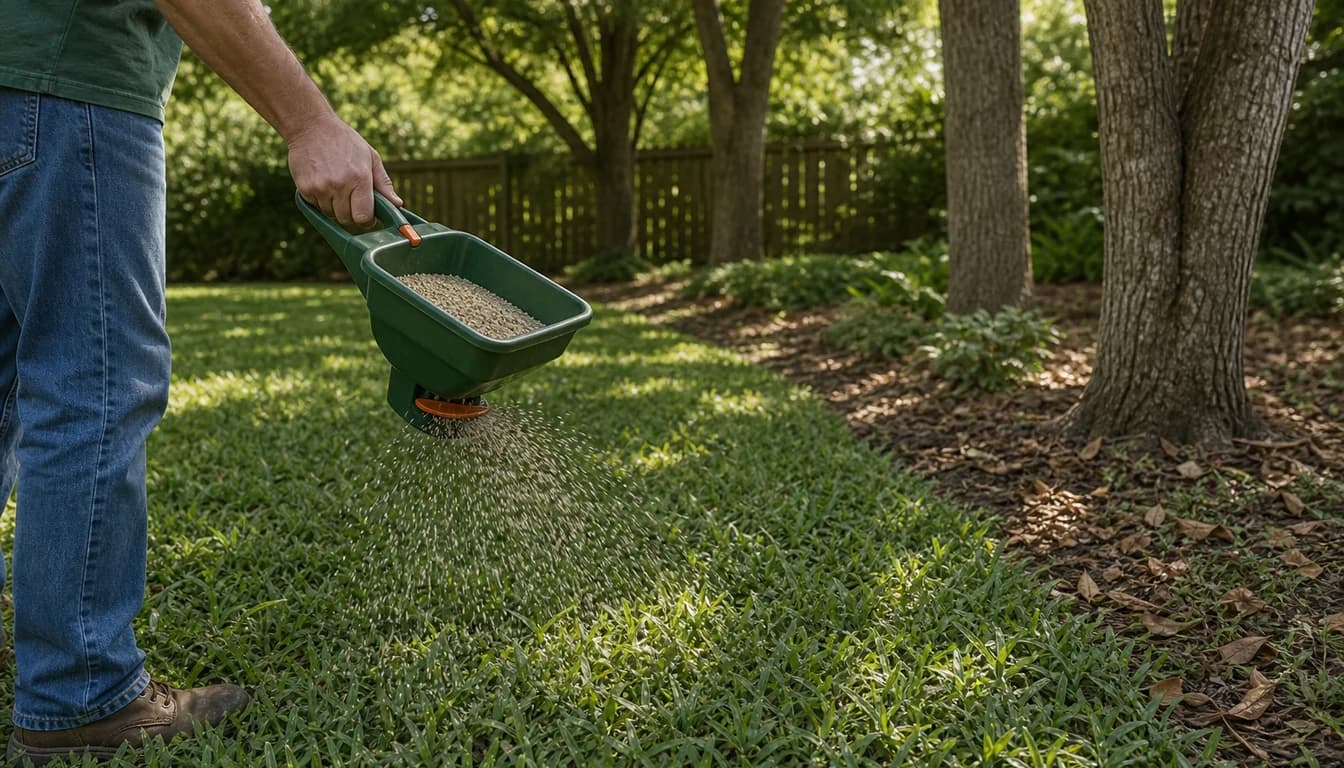
Cut fertilizer rates under trees so shaded St Augustine does not outgrow the light it receives.
- fiber_manual_recordAnnual nitrogen goal: 2–3 lbs per 1,000 sq ft in shade
- fiber_manual_recordPreferred type: Mostly slow-release or organic nitrogen sources
- fiber_manual_recordSummer feeding: Light or skipped in dense tree shade
- fiber_manual_recordUnder trees: Reduce rate another 20–30% vs open areas
That restraint matters because shaded turf cannot use nutrients as quickly as sunny turf.
Overfertilizing shaded St. Augustine is a top reason people fight brown patch and thick thatch even when mowing looks correct.
If the rest of your yard is a different warm-season grass like bermuda in full sun, you can still use one product. Just walk faster or close the spreader more over shaded St. Augustine so it receives less fertilizer per pass.
yardRenovating Bare Spots in Heavy Shade
Some shade is simply too deep for thick turf, even for St Augustine, which handles shade better than bahia grass options. Where you do have a fighting chance, you need a different renovation plan than for sunny patches.
Late spring, once soil is warm and growth is active, is the best time to rehab shaded spots. The grass can spread faster and recover from light disruption. Avoid aggressive work in very early spring or late fall when growth slows.
Start by raking or lightly dethatching only the damaged area. Remove soft, rotted stolons and matted debris so light can hit the soil. You want firm soil with a thin scratch on top, not deep tilling that buries remaining healthy runners.
Add a half inch of compost or a compost and sand blend to improve drainage. Replant using plugs or small pieces from a healthy St. Augustine section or new sod squares cut into 2–4 inch blocks.
Treat this like a small plug repair, not a full lawn renovation.
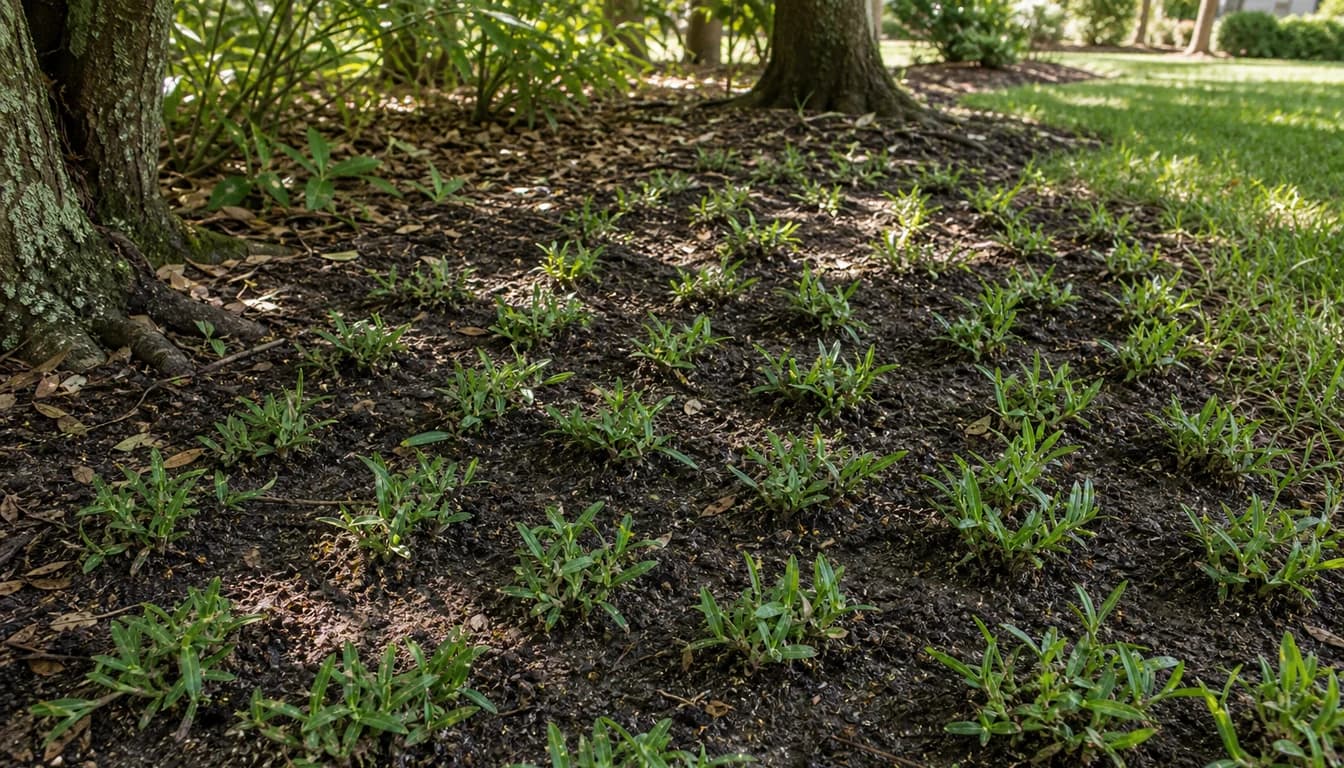
Use closely spaced St Augustine plugs in partial shade so runners can close gaps before fall.
- fiber_manual_recordSpacing for plugs: 6–8 inches apart in moderate shade
- fiber_manual_recordTopdressing depth: 0.25–0.5 inch of compost max
- fiber_manual_recordTraffic: Keep pets and kids off until runners knit together
- fiber_manual_recordWatering: Light, frequent sprinkles first 10 days, then taper
Plug crowns need air and light at the surface while the roots settle.
Do not bury the crowns of new plugs with soil or mulch. If the growing point sits below the surface, those plants likely rot instead of rooting.
Check fill-in over 6–8 weeks. If runners do not close gaps by then, the light may still be too low and you might be better switching that strip to groundcovers from the groundcover category instead of fighting the grass every year.
Guide — See AlsoDethatching vs Aerating: Which Your Lawn Needs FirstLearn whether your lawn needs dethatching, aeration, or both, how they work, and the right timing and tools so you do no
chevron_rightcalendar_monthSeasonal Shade Shifts and Timing Work
Shade under trees and beside houses is not fixed all year. As the sun angle changes, the same St. Augustine area can see bright morning sun in spring, then deep afternoon shade in midsummer.
Most big projects for st augustine grass shade should land when growth is strongest. For warm-season turf, that is late spring through early summer in zones 8–10, and closer to mid-summer in cooler transition zones.
Spring: Focus on cleanup and small corrections. Remove leftover leaves, thin low branches with help from tree pruning timing, and watch how early-season light hits shaded corners.
Summer: This is prime time for canopy tweaks and plug planting because soil is warm and St. Augustine spreads faster. Just pair any pruning with irrigation so the lawn does not stress during hot spells.
Plan heavy work for warm growth; save cleanup and observation for the shoulder seasons.
- fiber_manual_recordSpring tasks: Debris cleanup, light branch trimming, note changing shade
- fiber_manual_recordEarly summer: Plug bare spots, topdress thin patches, adjust irrigation
- fiber_manual_recordLate summer: Taper heavy work, only minor touch-ups and disease watch
- fiber_manual_recordFall: Leaf management and gentle aeration near but not through tree roots
Late-season restraint protects both the lawn and the tree roots above it.
Heavy aeration or deep root cutting near trunks in late fall can shock trees and turf at the same time. Stick to surface work late in the season.
Think of shaded St. Augustine like shade perennials under trees. They look best when you plan tasks around how the light moves, not just what month your calendar says.
warningCommon Shade Mistakes That Kill St Augustine
Most unhappy St. Augustine in shade suffers more from human habits than from the actual lack of sun. Fixing these patterns often helps faster than any product.
The first big mistake is treating a shady backyard exactly like a sunny boulevard strip. Same mowing height, same fertilizer rate, same watering time is a recipe for disease and thinning.
Another one is repeatedly reseeding with other grasses over St. Augustine. Seed from cool-season mixes or rye might sprout in spring shade, then burn out once heat hits, leaving an even patchier lawn.
Overwatering because "it looks dry" is also common in tree shade. Soil there already stays wetter due to limited evaporation. More shaded St Augustine dies from soggy roots and fungus than from actual drought.
The pattern is usually easy to spot once you compare the shaded strip with the sunny lawn.
- fiber_manual_recordAvoid: Broadcasting cool-season seed into St Augustine shade
- fiber_manual_recordAvoid: Heavy nitrogen in summer on thin shaded turf
- fiber_manual_recordAvoid: Cutting shorter to "get more light" to the soil surface
- fiber_manual_recordAvoid: Daily watering cycles that never let soil dry
Those mistakes often look like disease, but the setup is usually the real cause.
If you are constantly fighting gray leaf spot or brown patch in shade, step back and check mowing height, water frequency, and nitrogen rate before buying another fungicide.
Compare your shade plan to how you care for shade-loving plants like azaleas under trees. They get lighter feeding, careful watering, and more pruning of overhead branches, not heavier doses of everything.
Guide — See AlsoHow to Grow Parsley From Seed Without GuessworkStep‑by‑step instructions for how to grow parsley from seed, including soil mix, light, watering, timing by zone, and wh
chevron_rightecoWhen To Switch From Grass to Beds or Groundcovers
There is a point where grass just is not the right answer. Dense north-side shade or yards boxed in by tall oak trees often push past what St. Augustine can handle long term.
If you are mowing dirt and moss more than blades, consider carving out a new planting bed or using shade-tolerant groundcovers instead of forcing turf. This can make the remaining grass look better by reducing the area you push too hard.
Plants like hostas give you texture in these spots. Shade ferns can also work if they are available locally.
Low shrubs from the shade shrub group fill these spots without resenting the low light. A simple mulch path through that bed also cuts mud issues.
The time to pivot away from grass is when you have renovated a spot twice in two years and it still thins out each summer.
You can keep a defined edge where healthy St. Augustine meets the new bed so mowing stays clean. In many yards, the best st augustine grass shade strategy is 70% tough turf and 30% smart planting beds instead of 100% struggling lawn that never quite fills in.
tips_and_updates
Pro Tips
- check_circleMark where shade hits the lawn every two hours on a sunny day so you know the real sun total.
- check_circleRaise St Augustine mowing height first before blaming fertilizer or soil in thin shade spots.
- check_circleAsk an arborist to thin interior branches instead of topping, which harms trees and adds little lawn light.
- check_circleDial back sprinkler runtimes 20–30% in the shadiest zones to cut down on fungus pressure.
- check_circleUse a hand hose to spot-water dry sunny patches instead of overwatering the entire shaded yard.
- check_circleTest a small area with extra sun and good care for one season before you re-sod the whole shaded lawn.
- check_circleIn spots with under 3 hours of sun, plan for mulch or shade plants instead of endless re-sodding attempts.
quiz
Frequently Asked Questions
How many hours of shade can St Augustine grass tolerate?expand_more
Most St Augustine lawns handle around 4–6 hours of direct sun plus bright filtered light the rest of the day. In spots with less than 3 hours of sun, expect thinning and consider plugs, canopy pruning, or switching to beds and groundcovers.
Will St Augustine grass grow under pine or oak trees?expand_more
It can grow under open pines or high-limbed oaks if you thin lower branches and limit competition from tree roots. Keep mowing around 3.5–4 inches, fertilize lightly, and water deeply but less often to give turf a fair chance.
Why does my St Augustine look fine in spring but thin out by late summer?expand_more
Spring sun angle often gives more light to shaded lawns. As the sun shifts higher, tree canopies cast deeper shade and humidity rises, so weak blades stretch and disease shows. Adjust watering, raise mowing, and improve light early each summer.
Is there a St Augustine variety that does better in shade?expand_more
Some cultivars are marketed as more shade-tolerant, but none thrive in full, dense shade. Even improved types still need several hours of sun or bright dappled light. Canopy management and mowing height usually matter more than the exact variety.
Should I use seed to thicken St Augustine in shade?expand_more
No, St Augustine is usually established by sod, plugs, or runners, not seed. Mixing in seeded grasses often gives a quick spring fix that dies back in summer, leaving a patchy lawn. Use plugs from healthy St Augustine to fill shaded gaps instead.
menu_book
Sources & References
- 1.Texas A&M AgriLife Extension, St. Augustinegrass for Texas Lawnsopen_in_new
- 2.University of Florida IFAS Extension, St. Augustinegrass for Florida Lawnsopen_in_new
- 3.Clemson Cooperative Extension, Carolina Lawns: St. Augustinegrassopen_in_new
- 4.University of Georgia Extension, Shade and Turfgrassopen_in_new
Related Guides
Best Time to Aerate and Overseed for a Thicker Lawn
Learn when to aerate and overseed your lawn by season and grass type so every pass of the machine leads to thicker, greener turf instead of wasted seed.
11 min read
Best Time to Overseed a Midwest Lawn for Thick Turf
Learn the best time to overseed a Midwest lawn based on soil temperature, grass type, and hardiness zone so your new seed fills in thin spots.
11 min read
Best Time to Overseed a Northeast Lawn for Thick Turf
Learn exactly when to overseed cool-season lawns in the Northeast, how soil temperature and frost dates affect timing, and what to do before and after seeding for a thicker, greener yard.
11 min read