
Lawn Careschedule11 min read
When to Cut Grass After Overseeding Without Killing New Seed
Learn exactly how long to wait before mowing after overseeding, how tall new grass should be for the first cut, and mower settings that protect fragile seedlings.
Overseeding went well and the lawn finally shows that green haze of new blades, then the mower question hits. Cut too soon and you suck seedlings right out of the soil. Wait forever and the yard turns shaggy and weak.
The method, start to finish: timing, height, and mower setup so your first few cuts help the lawn thicken instead of thinning it again. We will touch on cool season favorites like Tall Fescue mixes and warm season types such as bermuda in full sun, with adjustments for different zones.
grassKnow Your Grass Type and Germination Speed
How fast you can mow after overseeding starts with what you seeded. Cool season lawns in zones 3-7 are usually blends of fescue, Perennial Ryegrass, and Kentucky bluegrass.
Perennial Ryegrass often shows in 5-7 days, while Kentucky bluegrass seedlings can take 14-21 days just to appear. If you mow based only on the first fast sprouters, the slower species are still germinating and easy to rip up.
Warm season lawns, like zoysia or bahia in hotter zones, grow best in zones 7-11 and usually establish once soil is warm. Their germination can stretch to 21-30 days or longer.
Your mower schedule must follow the slowest grass in the mix, not the fastest. This is why reading the seed tag matters more than following a generic calendar rule.
If you are not sure what you have, compare a clump you know to be Perennial Ryegrass with one labeled as fine fescue types. Blade width, texture, and color give clues so you can look up typical germination ranges.
Never schedule that first mow by days alone. Always pair seed type with actual blade height before touching the lawn with a mower.
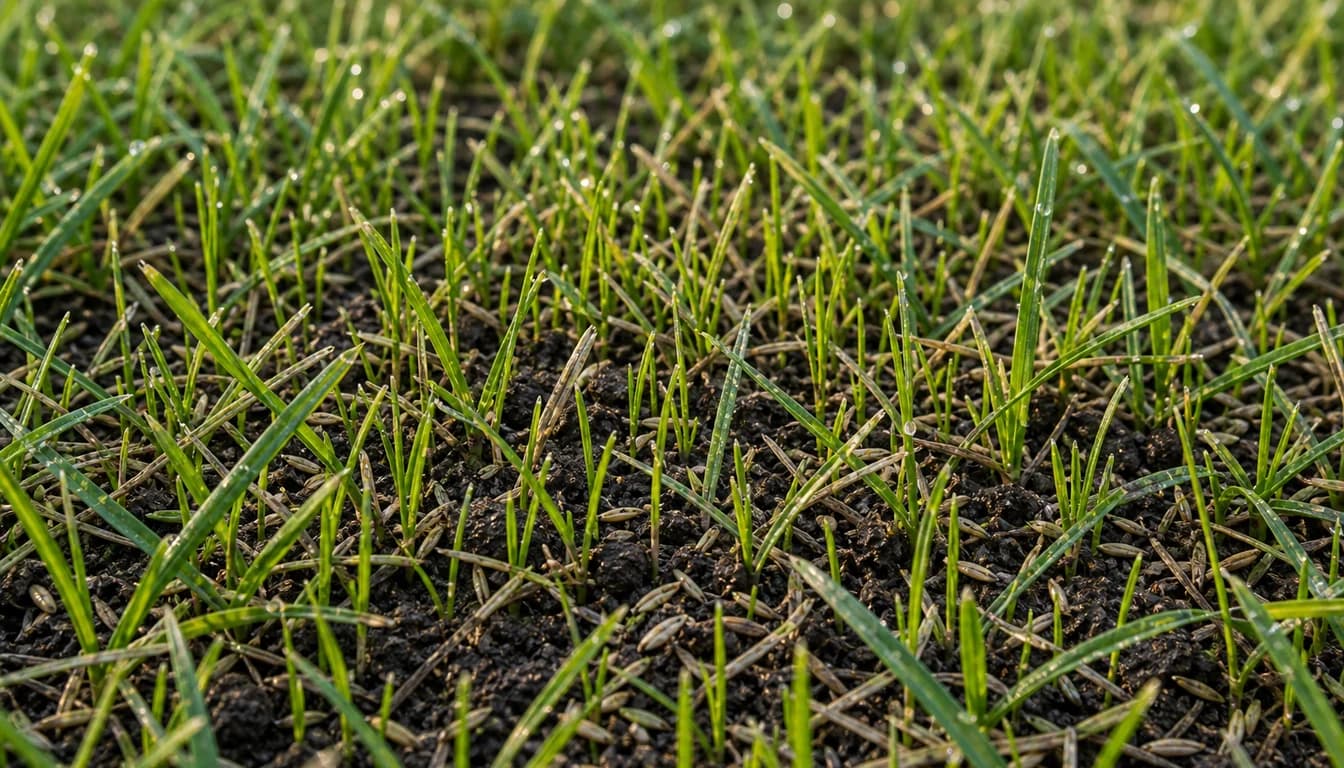
Different grass species sprout at different speeds, which changes when you can safely mow.
calendar_monthGeneral Timeline: How Long To Wait Before Mowing
Most lawns should not see a mower for at least 2-3 weeks after overseeding, and often closer to 4 weeks. That range widens if you have slower germinating species or cooler soil.
For cool season blends in zones 4-6, a common pattern is light germination around week 2, thicker coverage by week 3, and first real mow somewhere in weeks 3-4. In zones 7-8, warmer soil can compress that by a few days.
Warm season seed like buffalo grass or centipede in sandy soil usually needs extra patience. Expect first mowing closer to 4-6 weeks after seeding once coverage is even and blades reach target height.
Calendar timing also depends on when you seeded. Overseeding in line with a regional schedule, such as the lawn care calendar by month, keeps soil temperature in the sweet spot and shortens the wait.
If you still see bare seed on the surface or many tiny one-leaf seedlings, you are too early. Waiting another 5-7 days is almost always safer than rushing the first cut.
Use the timeline as a rough guide only. The real green light for mowing is blade height and how well the seedlings are anchored in the soil.
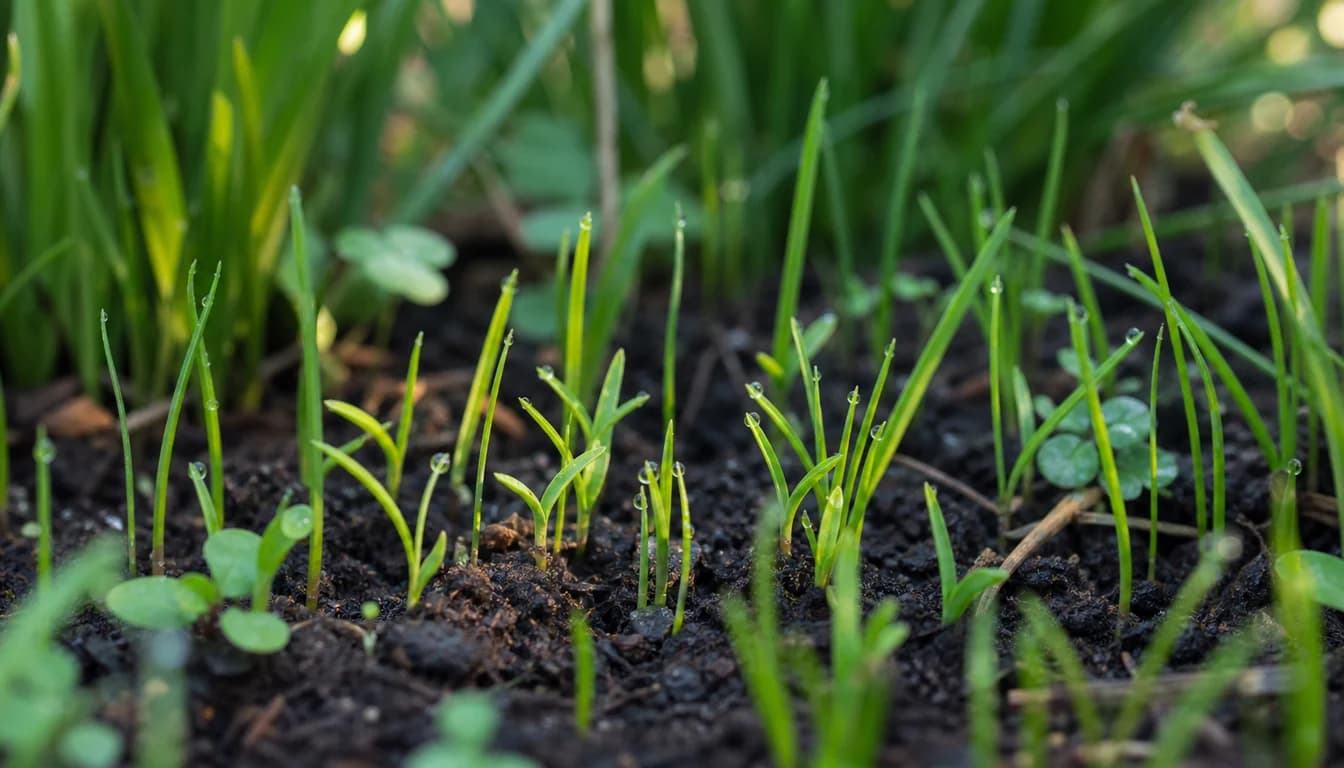
Soil temperature and germination speed give you a better mowing window than the calendar alone.
Guide — See AlsoIs Overseeding Worth It For Your Lawn Or Not?Honest look at whether overseeding is worth it for your lawn, including cost, effort, timing, and how it compares to opt
chevron_rightheightTarget Grass Height For The First Few Cuts
Height, not days, is your real mowing trigger. New grass should reach about 3-3.5 inches tall before the first cut, no matter what species you planted.
On that first mow, set the mower to remove no more than one-third of the blade. That usually means cutting new cool season grass back to around 2-2.5 inches, a touch higher if you are in a hotter summer area.
For shade or stress-prone lawns, like Tall Fescue in partial shade, many of us keep blades closer to 3 inches even after mowing. Taller grass shades soil, holds moisture, and helps seedlings outcompete weeds.
Warm season lawns such as St. Augustine in coastal zones often live shorter, but the first 2-3 cuts after overseeding or sprigging should still respect that one-third rule and avoid scalping.
Use a ruler rather than guessing. Slide it down to the soil, measure a few random spots, and average them. You will be surprised how easy it is to misjudge height just by sight.
If you ever look across the yard and think "it is finally looking full," you are usually about 3-5 days away from safe mowing height, not right on it.
Email Updates
Join the KnowTheYard update list
Zone-specific advice, seasonal reminders, and new plant guides — no filler.
content_cutSet Up The Mower To Protect New Seedlings
The way you set up and run the mower matters as much as timing. Freshly overseeded lawns need gentle passes, sharp blades, and a higher deck setting.
Start by raising the deck one notch above your usual setting. If you normally cut cool season grass at 2.5 inches, bump it to 3–3.25 inches for the first 2–3 mows after overseeding so you barely skim the tips.
Make sure blades are sharp enough to slice, not tear. Ragged cuts lose more moisture and stress seedlings. Many of us sharpen at the same time we plan to fertilize the lawn so everything is tuned for that key season.
If possible, use a lighter push mower instead of a heavy garden tractor for the first cut. Heavy machines can leave ruts or compress still‑soft soil over new roots.
Bag or mulch? For the first mow, bagging clippings is often safer. You avoid clumps that smother new shoots and keep an eye on whether seedlings are lifting out.
Walk the lawn first. If you can tug gently on a clump and it stays rooted, you are in the safe zone to mow.
Use that tug test before you check the machine settings; weak roots matter more than a perfect deck height.
- fiber_manual_recordDeck height: 3–3.25 inches for first cuts
- fiber_manual_recordBlade condition: freshly sharpened this season
- fiber_manual_recordMower weight: lighter push mower preferred
- fiber_manual_recordClipping handling: bag the first cut, then mulch once turf is denser
Guide — See AlsoBest Time to Aerate and Overseed for a Thicker LawnLearn when to aerate and overseed your lawn by season and grass type so every pass of the machine leads to thicker, gree
chevron_rightwater_dropWatering Pattern Before And After The First Mow
Watering shifts a lot once you are close to mowing that new seed. Early on, you keep the top 0.5-1 inch of soil constantly damp so seed does not dry out.
Right before you plan to mow, you want the lawn on the dry side. Slightly dry soil lets your mower wheels and feet press less, which protects fresh roots.
After the first cut, pull back from light sprinkles all day long. Start watering deeper so moisture reaches 3-4 inches down instead of just wetting the surface.
Deeper watering trains roots to chase moisture instead of sitting near the top. That makes the whole lawn more tolerant of dry spells than many shallow rooted perennials like shade plants around beds.
Shift from light surface moisture to deeper root-zone watering as soon as mowing begins.
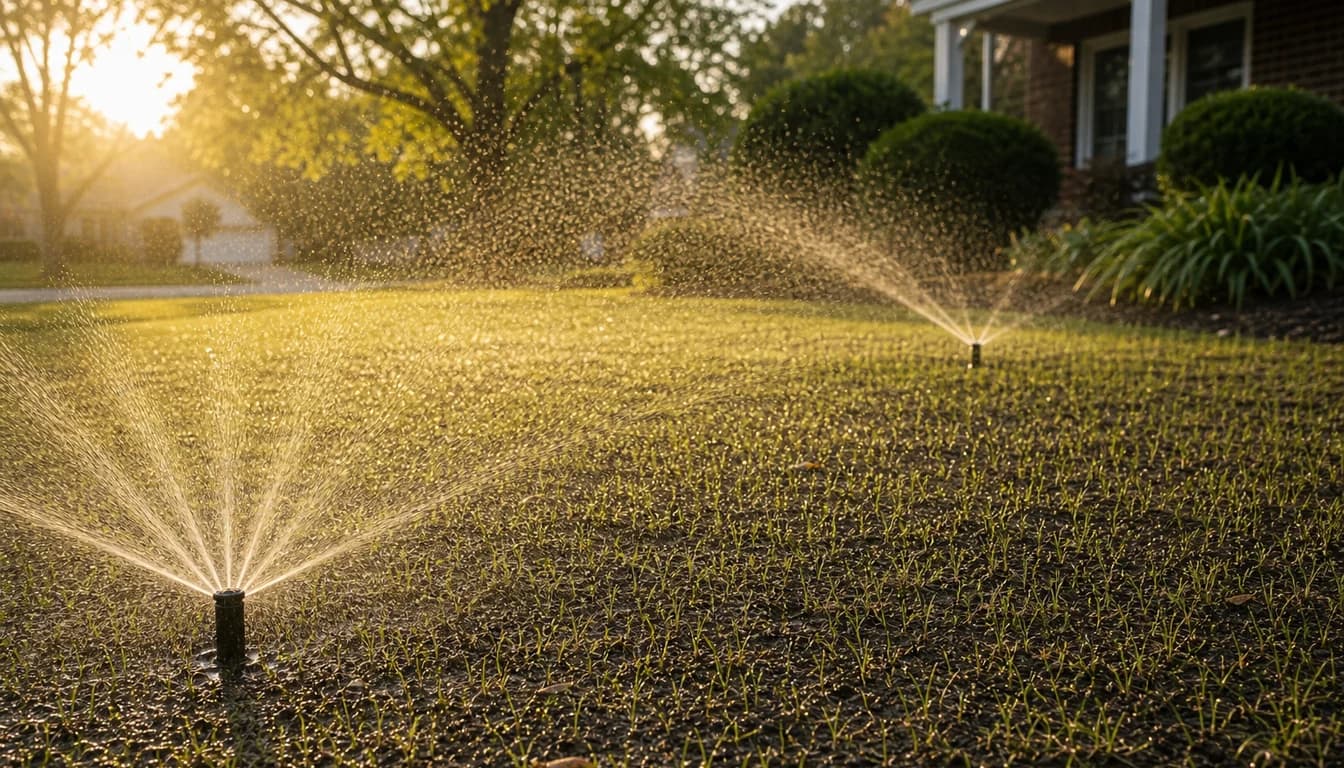
Gentle, frequent watering before germination shifts to deeper, less frequent cycles after your first mow.
- fiber_manual_recordPre-germination: Light, frequent watering to keep the seed bed evenly moist
- fiber_manual_recordPre-mow day: Skip irrigation for 24 hours so soil firms up
- fiber_manual_recordPost-mow week: Water to soak the top 3 inches every other day, weather allowing
- fiber_manual_recordLong term: One deep soaking per week in cool seasons, more often in summer
quizWatching For Stress After You Start Mowing
New seedlings tell you quickly if you started mowing too hard or too soon. Pale green patches that flop over or thin out after mowing are a warning sign.
If you see wheel tracks turning yellow or bare, you are compacting soil. That squeezes air from the top 1–2 inches where fresh roots live.
Check how long grass clippings are the first few times. If your bag is stuffed with long, wet clumps, you either waited too long between cuts or set the deck too low for young turf.
Thin areas can be spot repaired with a light raking and a small sprinkle of the same seed mix you used to overseed, similar to how you might patch around a new boxwood hedge edge.
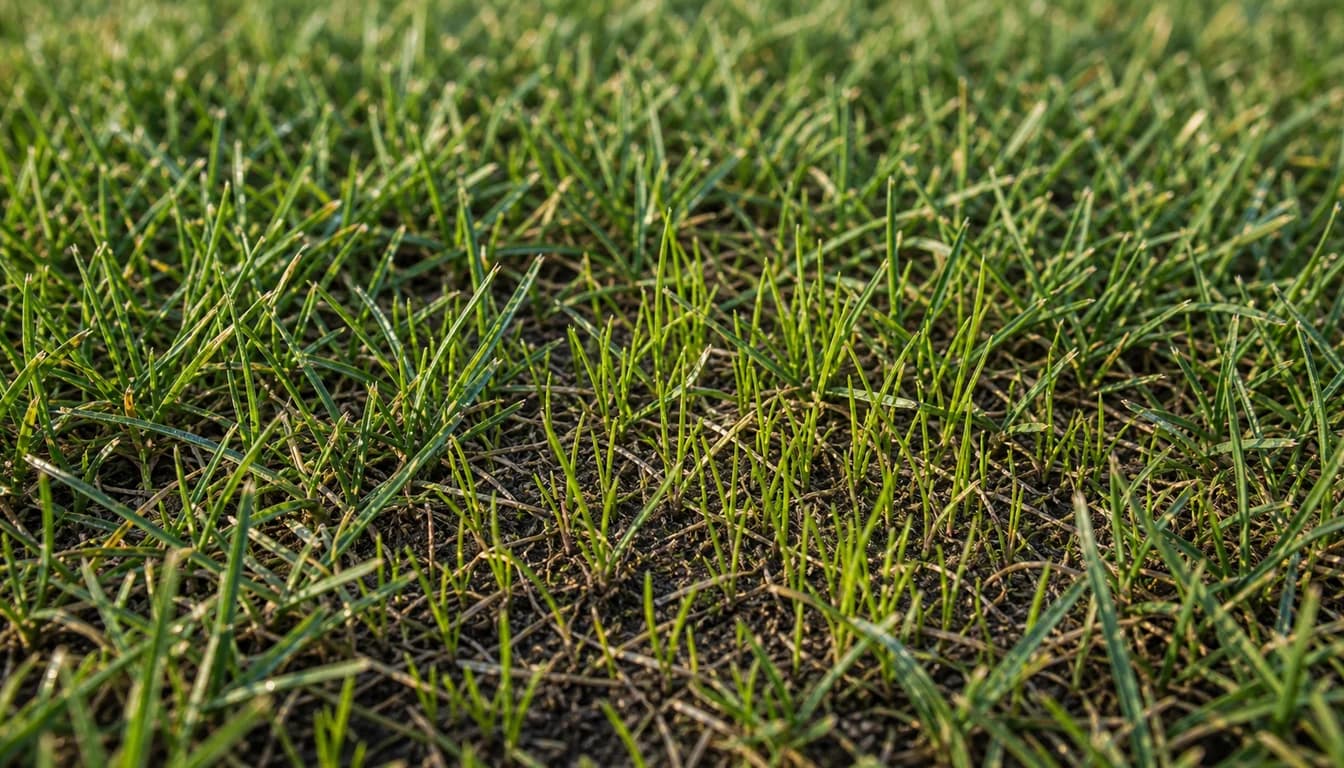
Thin, bright green blades mixed with older turf tell you the overseed is still establishing.
- fiber_manual_recordFlattened seedlings: Raise mowing height one notch and reduce turns on the lawn
- fiber_manual_recordWheel ruts or yellow lines: Stay off wet soil and lighten mower weight if possible
- fiber_manual_recordClumping clippings: Mow more often or sharpen the blade for cleaner cuts
- fiber_manual_recordBare streaks: Scratch soil lightly, add seed, and keep that strip moist again
Guide — See AlsoHow to Water New Grass Seed Without Washing It AwayLearn how often to water new grass seed, how long to run sprinklers, and when to shift from light misting to deeper wate
chevron_rightcalendar_monthSeasonal Timing: Fall Vs Spring Overseeding
Calendar timing changes how risky it is to mow after overseeding. Cool-season lawns in zones 4-7 usually handle fall overseeding and mowing better than spring jobs.
Fall soil stays warm while air cools, so seed germinates fast. You also fight fewer weeds then, so new grass competes mostly with existing turf instead of crabgrass.
In spring, you work around soil that stays cold, plus early weeds. Germination is slower, and mowing often starts while seedlings are still tender.
Warm-season lawns of bermuda or zoysia in zones 8-10 are often overseeded in fall with temporary rye. You will mow that rye differently from the base grass.
- fiber_manual_recordFall overseeding (cool-season): Usually the safest window for mowing new turf
- fiber_manual_recordSpring overseeding (cool-season): Add 7-10 extra days before first mow if temps stay cool
- fiber_manual_recordWarm-season with rye: Keep rye a bit taller to shade the warm-season base
- fiber_manual_recordSummer heat: Avoid overseeding when highs sit above 85°F, mowing stress stacks up too fast
compostCoordinating Mowing With Fertilizer And Weed Control
Fertilizer timing matters almost as much as mowing height after an overseed. Push growth too hard right away and you get tall, weak blades that fall over under the mower.
Most cool‑season lawns do best with a gentle starter fertilizer when you seed, then a second feeding 4–6 weeks later, after at least one or two mows.
Skip strong weed‑and‑feed products on top of young seedlings. Many broadleaf herbicides and crabgrass preventers will damage new grass until it has been mowed 3–4 times.
If you want to feed shrubs or trees at the same time, handle those separately with a timing guide like fertilizing woody plants by season so you are not tied to lawn herbicide schedules.
- fiber_manual_recordStarter fertilizer: Apply at seeding at the labeled new‑lawn rate
- fiber_manual_recordSecond feeding: After 2–3 mows, use a moderate nitrogen product
- fiber_manual_recordWeed killers: Wait for 3–4 mowings before using most herbicides
- fiber_manual_recordLabel check: Always read for "safe for new seeding" before applying any product
Guide — See AlsoBest Time to Overseed a Midwest Lawn for Thick TurfLearn the best time to overseed a Midwest lawn based on soil temperature, grass type, and hardiness zone so your new see
chevron_rightwarningCommon Mowing Mistakes That Kill New Seedlings
Most overseeds fail from mower habits, not bad seed. Knowing the usual mistakes saves you another season of thin turf.
Cutting when soil is soggy might be the biggest killer. If your shoes sink, your mower should stay parked. Wet ground turns to ruts and smears that uproot seedlings.
Dull blades rip instead of slice. Torn tips dry out faster and catch disease spores, similar to how ragged cuts invite issues on a pruned rose cane.
Fast turns and tight circles grind new roots loose. Treat young turf like a fragile carpet and make slow, wide turns on pavement or bare spots whenever you can.
If you see muddy tire tracks or clumps sticking to the deck, stop and reschedule the mow.
Most first-mow damage is visible while it is happening, so pause early instead of finishing a bad pass.
- fiber_manual_recordMowing wet: Wait until blades feel dry to the touch, even if soil is slightly damp
- fiber_manual_recordDull blade: Sharpen at least once each season, twice if you mow often
- fiber_manual_recordRacing the job: Walk at a steady, moderate pace so the blade has time to cut
- fiber_manual_recordSkipping clean‑up: Blow or rake clumps so they do not smother thin new areas
tips_and_updates
Pro Tips
- check_circleTest seedling anchoring by gently pinching a tuft; if it slides up easily, delay mowing another week.
- check_circleAvoid making tight turns or pivoting on one wheel, which can shear off shallow new roots at the soil surface.
- check_circleMow in the coolest part of the day so tender blades lose less moisture from fresh cuts.
- check_circleIf rain is forecast, mow a day before showers so wet soil does not rut under the mower weight.
- check_circleSkip stripes and fancy patterns until after three safe cuts; keep passes straight and simple at first.
- check_circleTrim edges with a string trimmer on a low throttle so you do not blast seedlings out of thin areas.
- check_circleAfter the first mow, water lightly to help clippings settle without creating soggy, disease‑friendly conditions.
quiz
Frequently Asked Questions
Can I mow if only part of the overseeded area has sprouted?expand_more
Yes, but raise the mower and be gentle. Wait until most of the area has seedlings at least 3 inches tall, then mow when the lawn is dry and use slow, straight passes to reduce damage in thinner patches.
Should I bag or mulch clippings after overseeding?expand_more
For the first couple of mows, bagging is safer so clumps do not smother small seedlings. Once the new grass thickens and you are only removing about one third of the blade, you can switch back to mulching clippings.
How soon after overseeding can I use a riding mower?expand_more
Hold off on a riding mower until you have mowed 3–4 times with a light push mower. The extra weight and turning radius of a rider can rut soft soil and tear out young roots, especially on damp ground or slopes.
Is it okay to edge or trim borders after overseeding?expand_more
You can trim along driveways and sidewalks once grass there reaches mowing height, but keep string trimmers off thin areas in the yard. A trimmer can scalp seedlings down to soil, so work slowly and keep the line just touching blade tips.
What if I accidentally mowed the new grass too short?expand_more
Raise the deck immediately for the next cut and water deeply to limit stress. Avoid any fertilizer or weed control for a couple of weeks and watch for brown or bare streaks. Thin strips can be scratched, spot seeded, and kept evenly moist again.
menu_book
Sources & References
Related Guides
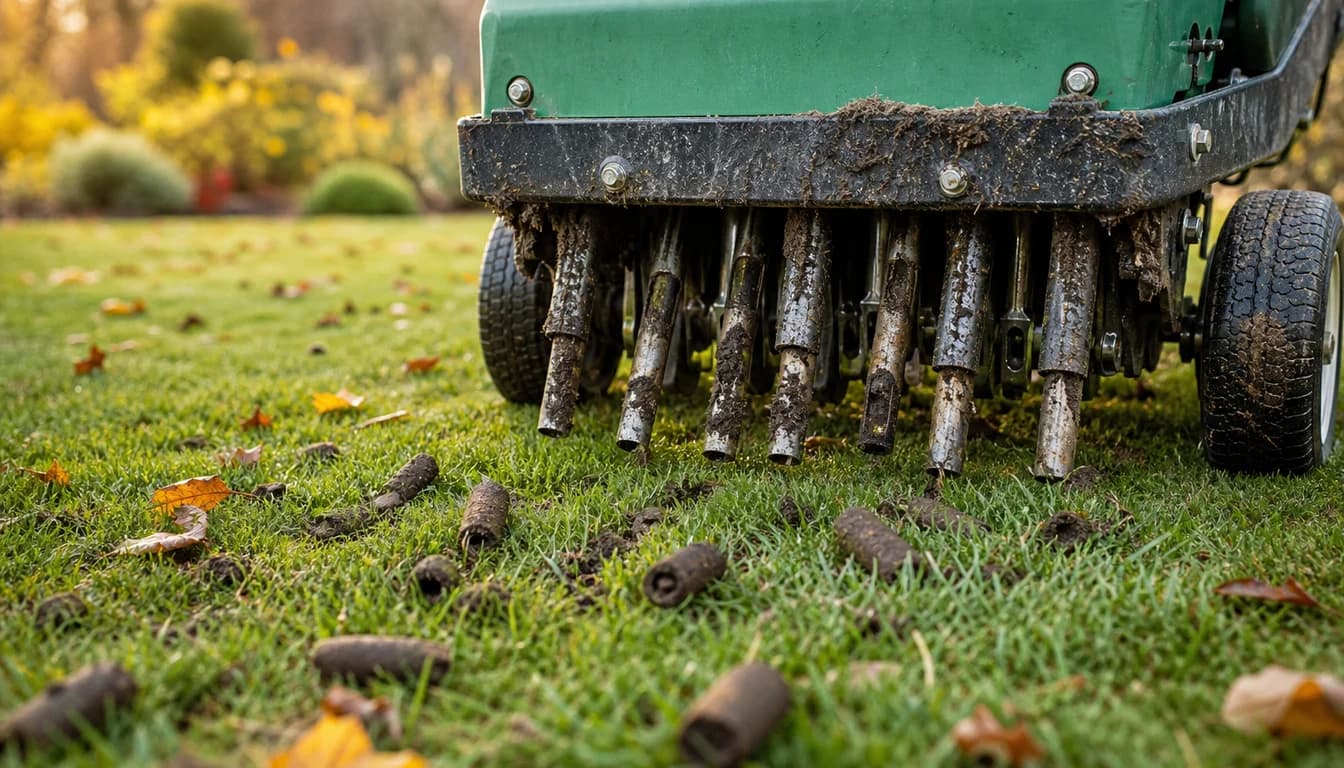
Best Time to Aerate and Overseed for a Thicker Lawn
Learn when to aerate and overseed your lawn by season and grass type so every pass of the machine leads to thicker, greener turf instead of wasted seed.
11 min read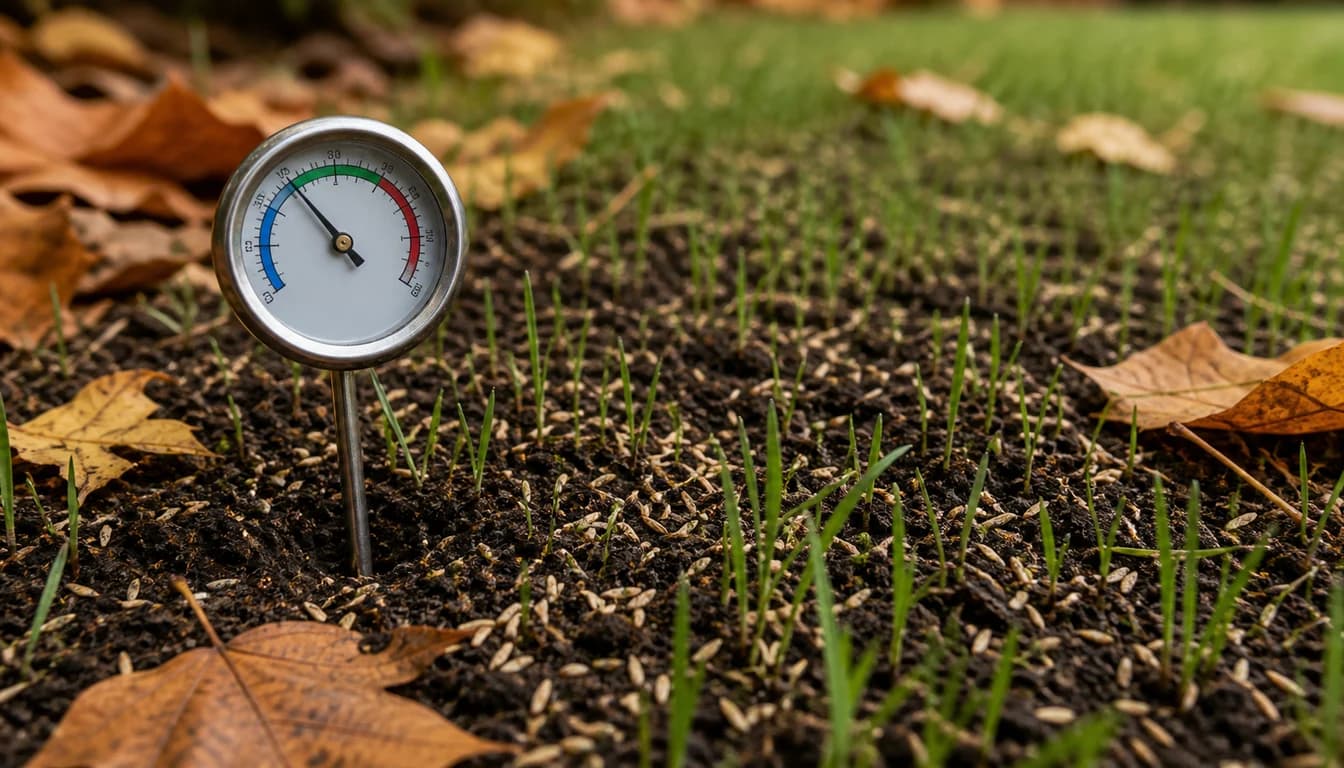
Best Time to Overseed a Midwest Lawn for Thick Turf
Learn the best time to overseed a Midwest lawn based on soil temperature, grass type, and hardiness zone so your new seed fills in thin spots.
11 min read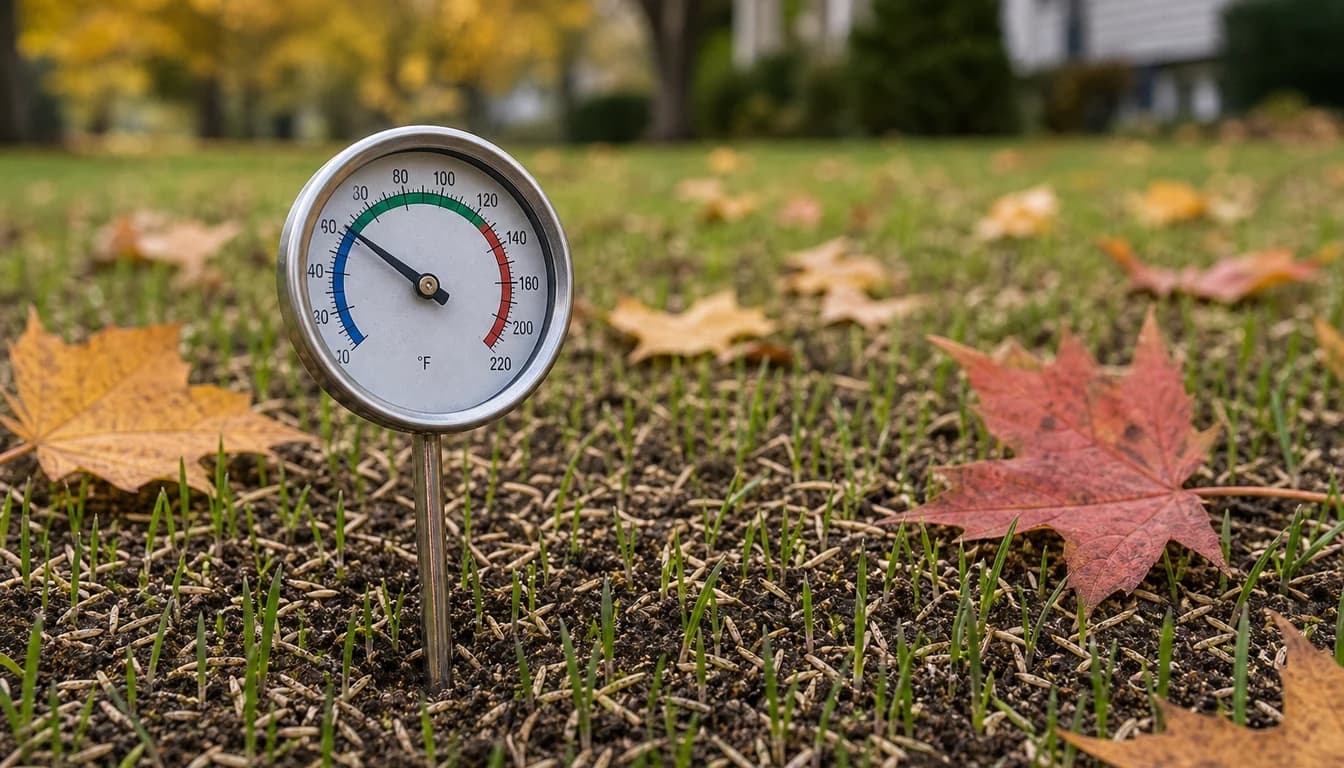
Best Time to Overseed a Northeast Lawn for Thick Turf
Learn exactly when to overseed cool-season lawns in the Northeast, how soil temperature and frost dates affect timing, and what to do before and after seeding for a thicker, greener yard.
11 min read