Fertilizingschedule11 min read
Can You Fertilize Wet Grass Without Damaging Your Lawn?
Learn when it is safe to fertilize wet grass, when to wait, and how moisture, product type, and weather affect burn risk and results.
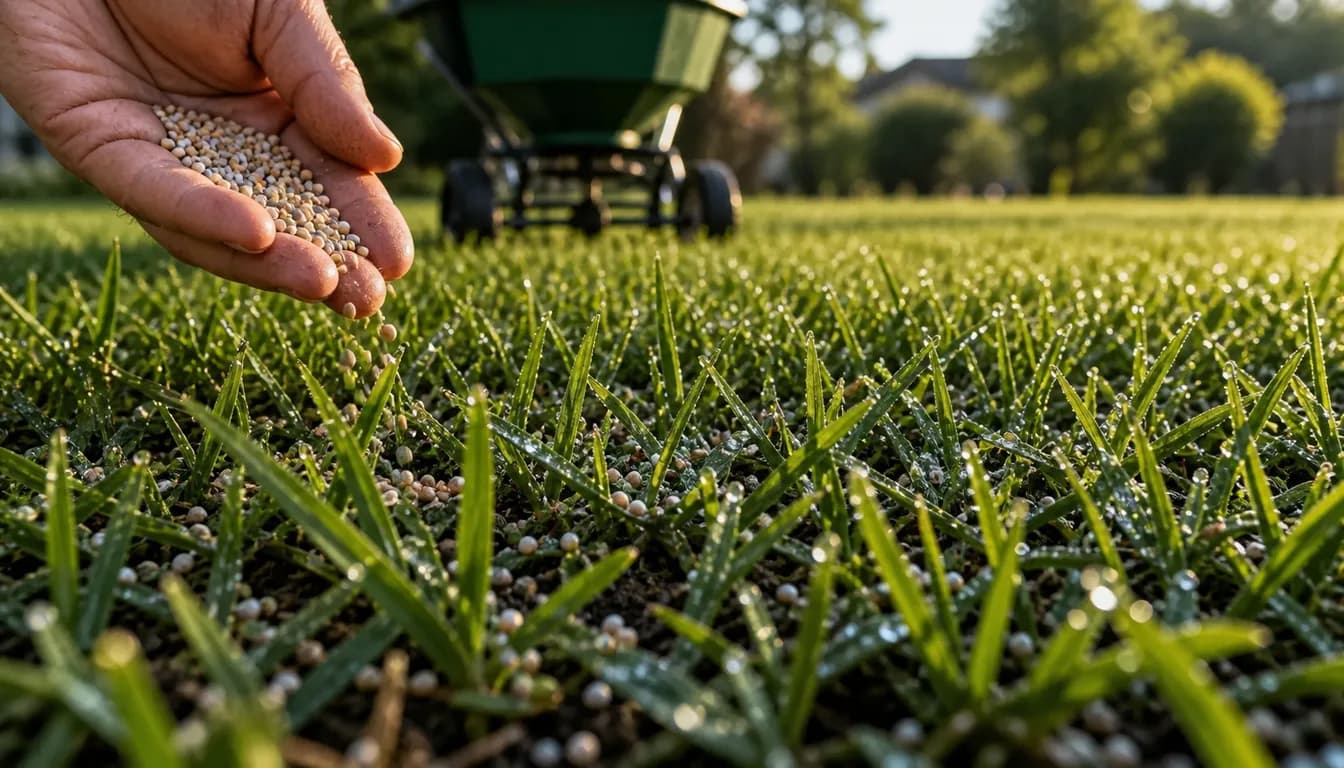
A wet lawn right when you planned to fertilize creates second thoughts fast. Light dew, overnight drizzle, or a full downpour all affect how fertilizer behaves on the blades and in the soil.
Wet-grass fertilizing depends on surface moisture, soil saturation, product type, and what the forecast does next; the same product can be safe at dawn and risky after a storm. Warm-season lawns like bermuda turf handle some damp feeding windows well. Cool-season fescue yards need more caution when blades stay wet.
grassWet Grass Basics: What Actually Changes
Moisture on the lawn changes how fertilizer behaves far more than most of us think. Water on the blades helps some products stick, but it can also dissolve salt-heavy blends right on the leaf surface.
If granules melt on the blades instead of washing into soil, they can scorch tips, especially on thin cool-season lawns like Kentucky bluegrass patches. That is where the horror stories of stripes and burn marks usually come from.
So the question is not just "is the grass wet" but "how wet" and "what happens next". A light dew that burns off in an hour is different from a lawn still squishing under your boots from last night’s storm.
Wet grass is only a problem when moisture and fertilizer stay on the leaf surface too long. If the forecast gives you a soft shower soon after spreading, the nutrients usually move into the soil safely where roots can use them.
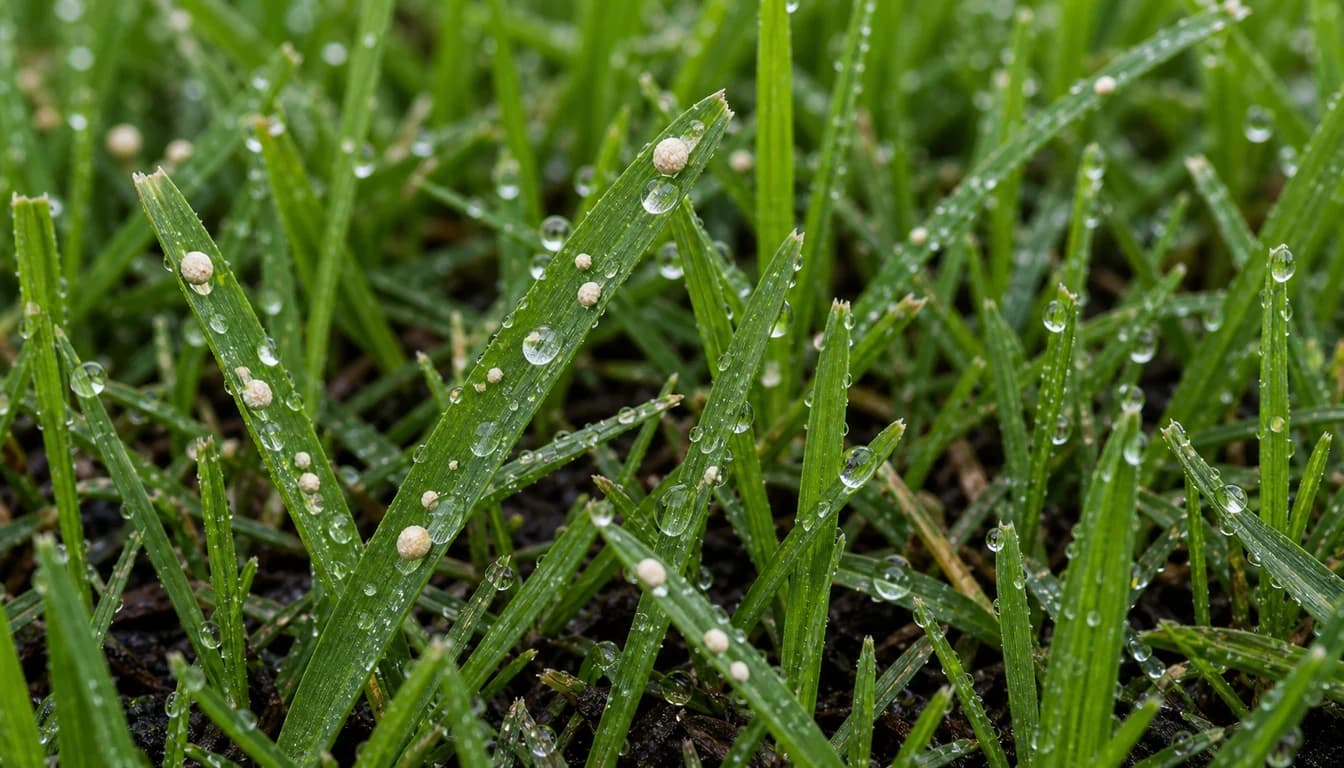
Moisture on blades changes how fertilizer granules stick, dissolve, and reach the soil.
wb_sunnySituations When Fertilizing Wet Grass Is Safe
A slightly damp lawn can work in your favor. Light dew or a sprinkle that ended several hours ago helps granules grip just long enough before sliding to the soil as things dry.
If you can walk the yard and your shoes stay mostly dry, you are in the safe zone for most granular fertilizers. Target a window where the surface is just tacky, then expect the next watering to finish moving nutrients into the root zone.
Slow-release, coated products are especially forgiving on a lightly wet lawn. Those prills dissolve slowly and are far less likely to cause leaf burn on a healthy stand of dense zoysia turf.
Here is where fertilizing on damp grass usually works fine:
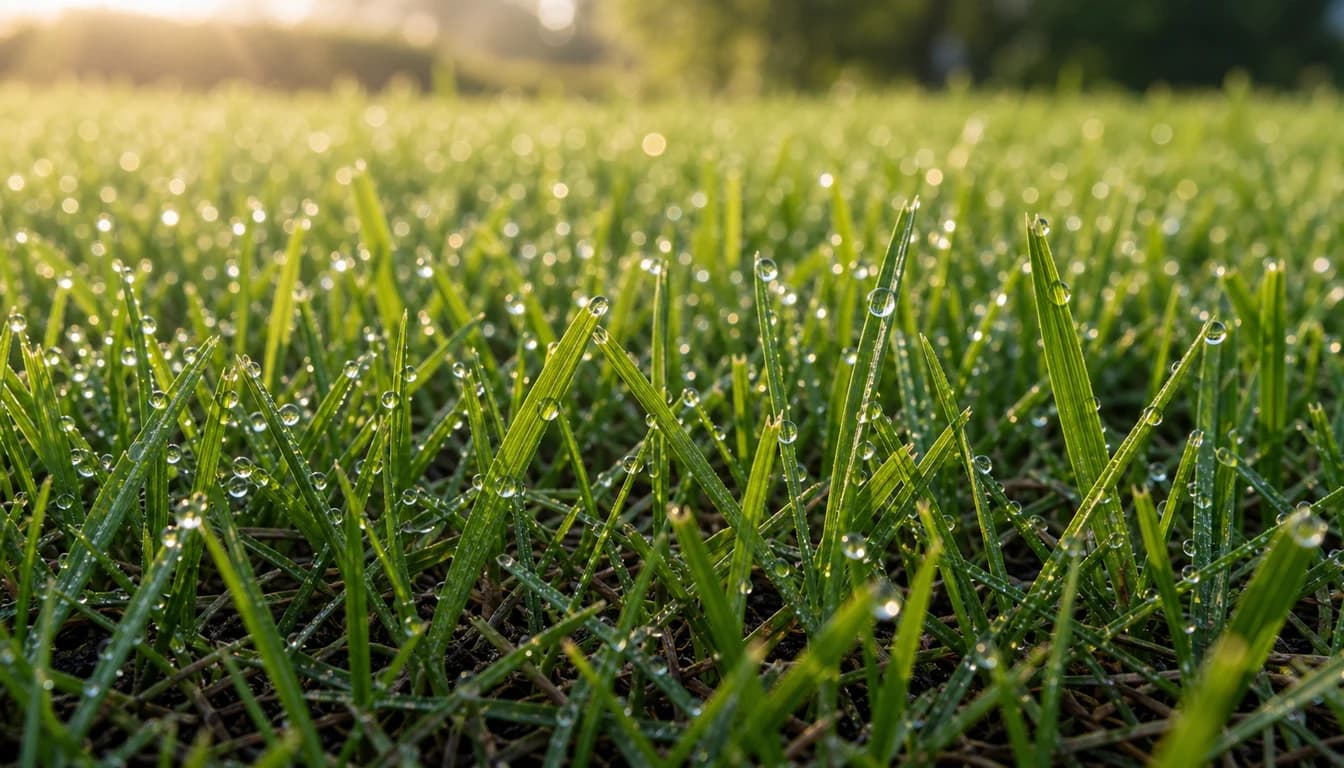
Light morning dew can actually help granules slide off blades once the sun dries the lawn.
- fiber_manual_recordLight morning dew: Grass tips feel cool but do not leave water beads on your hand.
- fiber_manual_recordSprinkle ended hours ago: Soil slightly moist, no puddles, footprints do not fill with water.
- fiber_manual_recordBefore irrigation cycle: Lawn is dry to slightly damp, and you control the follow-up watering.
- fiber_manual_recordCoated slow-release: Polymer or sulfur-coated blends labeled for lower burn risk.
Guide — See AlsoComposting Facts That Actually Help Your GardenStraight answers on composting facts that matter for home gardens, from what to put in the pile to how long it really ta
chevron_rightwarningTimes You Should Never Fertilize Wet Grass
Standing water and heavy saturation are where lawn fertilizer causes the most trouble. Nutrients either burn the grass, wash straight off, or both, which wastes money and risks nearby streams.
If your footprints fill with water or you see a sheen of moisture over the soil, park the spreader. Spreading in that state often gives you patchy, streaky color and can stress shallow-rooted lawns like newly seeded perennial ryegrass areas.
Avoid fertilizing saturated lawns or during active storms to prevent runoff and fertilizer burn.
There is also a runoff problem that goes way beyond cosmetics. On a fully soaked lawn, granules can float into driveways, sidewalks, and storm drains long before they ever reach roots.
Skip these situations every time:
- fiber_manual_recordActively raining: Granules bounce, clump, or wash away before they contact soil.
- fiber_manual_recordSoaked sponge feel: Footprints stay dark and spongy for more than a few seconds.
- fiber_manual_recordVisible puddles: Water standing in low spots or along curbs and sidewalks.
- fiber_manual_recordHeavy rain forecast: Strong storms expected within 24 hours of application.
Email Updates
Join the KnowTheYard update list
Zone-specific advice, seasonal reminders, and new plant guides — no filler.
compostHow Fertilizer Type Affects Wet-Lawn Safety
Not all fertilizers behave the same on wet grass. Some are gentle enough to tolerate surface moisture, while others are hot enough to scorch blades if they sit too long.
Granular slow-release lawn food is usually the safest choice on slightly damp turf. The coated prills break down over weeks instead of hours, which lowers the salt shock on thin lawns, especially in stressed heat zones outlined in many zone 8 watering guides.
Fast-release synthetic blends are far pickier about moisture. These classic high-nitrogen products dissolve quickly, so if they melt on the leaf surface, burning is much more likely, particularly on cool-season mixes with fine fescue in the blend.
Here is how common types behave on wet grass:
- fiber_manual_recordSlow-release granular: Safest on damp lawns, still avoid standing water.
- fiber_manual_recordFast-release granular: Only on dry to lightly dewy grass with planned irrigation.
- fiber_manual_recordLiquid hose-end fertilizers: Best on dry blades, then watered in if label allows.
- fiber_manual_recordOrganic meals or compost-based: Gentler, but still wasted on flooded turf.
The label is the contract for how much follow-up water each product expects.
Always follow the label’s watering instructions, which are written assuming specific moisture conditions.
If you are used to feeding container plants using products in the indoor plant fertilizer section, remember lawn products are stronger and far less forgiving on wet foliage.
Guide — See AlsoWhen to Fertilize Tomatoes for Bigger HarvestsLearn exactly when to fertilize tomatoes at each growth stage so you get strong plants, more flowers, and bigger fruit w
chevron_rightgrassWhat To Do Right After Fertilizing Wet Grass
The first hour after you fertilize wet grass decides whether you get an even green-up or patchy burn spots.
If the blades are very wet, nutrients can stick to them instead of soaking into the soil.
Light irrigation helps wash fertilizer off the leaves and into the root zone. Run sprinklers or a hose for 5–10 minutes max so you do not create runoff or puddles.
If rain made the grass wet in the first place, skip extra water unless the storm was a quick sprinkle.
Walk the yard and look for fertilizer clumps. Break up any piles with a gloved hand or rake so you do not overdose small areas.
Granules caught on pavement should be swept or blown back into the turf so they do not wash into storm drains.
Pets and kids should stay off a freshly treated lawn until it dries. That usually takes 24 hours in warm weather and longer when humidity is high.
Keep people and pets off the lawn until the fertilizer is fully dry to avoid tracking it onto patios, rugs, and into the house.
If you applied fertilizer before a forecast rain, watch how much you get. A gentle 0.25–0.5 inch of rain is perfect, but a gully washer can push nutrients past the root zone.
In that case, delay any reapplication until you see how the lawn responds over the next week.
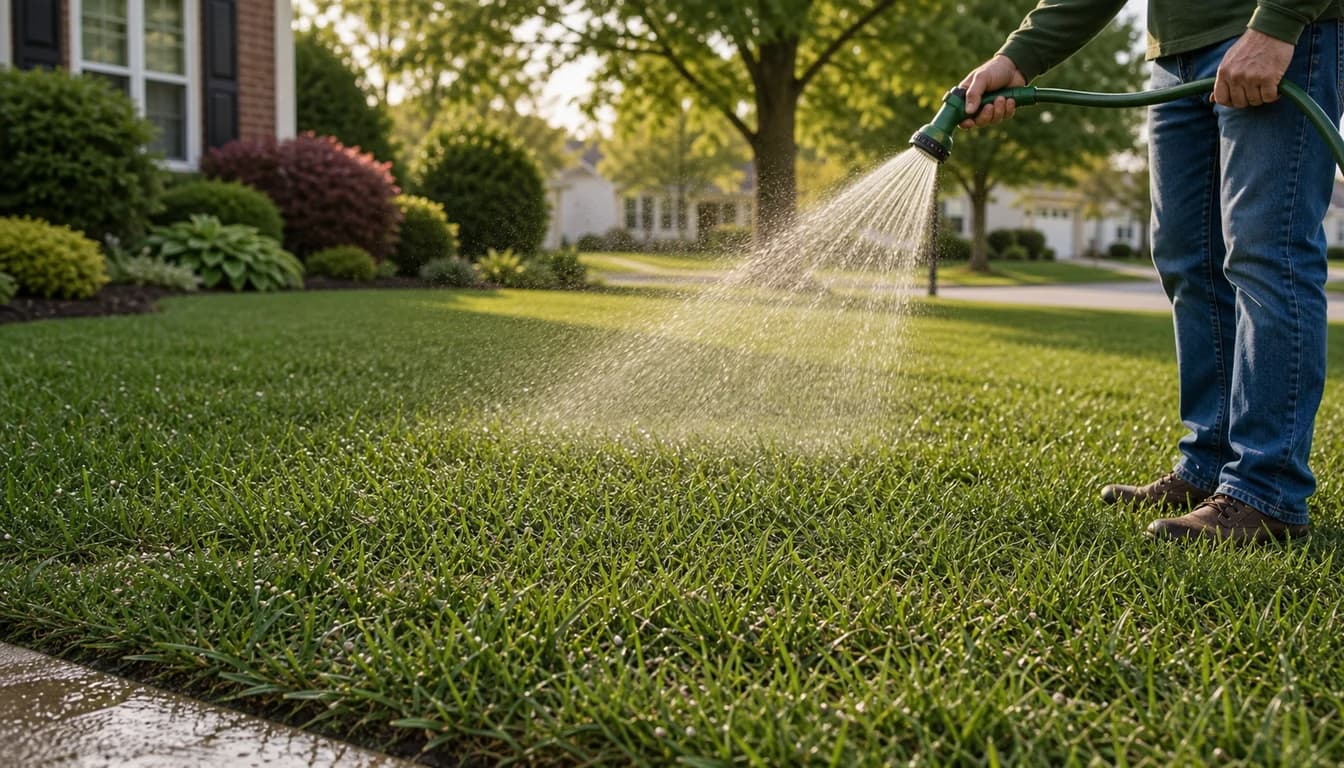
Gentle post-fertilizer watering helps move nutrients off the blades and into the soil.
warningHow To Fix Problems After Fertilizing Wet Grass
Yellow edges or crispy patches often show up a few days after you fertilize wet grass, especially in sunny spots near concrete.
Salt in quick-release products pulls moisture out of the blades and roots when too much stays on the leaf surface.
Start by leaching the area with water. Run a sprinkler for 20–30 minutes over the damaged zone, then repeat the deep soak again the next day to flush excess salts below the roots.
Fast, heavy watering in the first 24 hours is your best shot at reversing fertilizer burn.
Do not add more fertilizer even if the grass looks pale. Wait 4–6 weeks before the next feeding so roots can recover.
If you see random bright green stripes, your spreader pattern was uneven on the wet surface. Overlap passes by half the spreader width next time to reduce streaks.
Bare or dead-looking patches wider than a dinner plate might not bounce back. Rake out the dead thatch and overseed with a matching grass like cool-season fescue mix or warm-season bermuda areas once soil temps are right.
If the soil feels slimy or smells rotten where you overwatered, pause irrigation and let the top inch dry to avoid disease.
Watch for fungal issues such as leaf spot or dollar spot after heavy watering on wet grass. Brown circular patches with a tan center often mean disease, not fertilizer burn.
Cut back watering frequency and mow with a sharp blade, then follow your local extension's lawn disease advice before you blame the fertilizer.
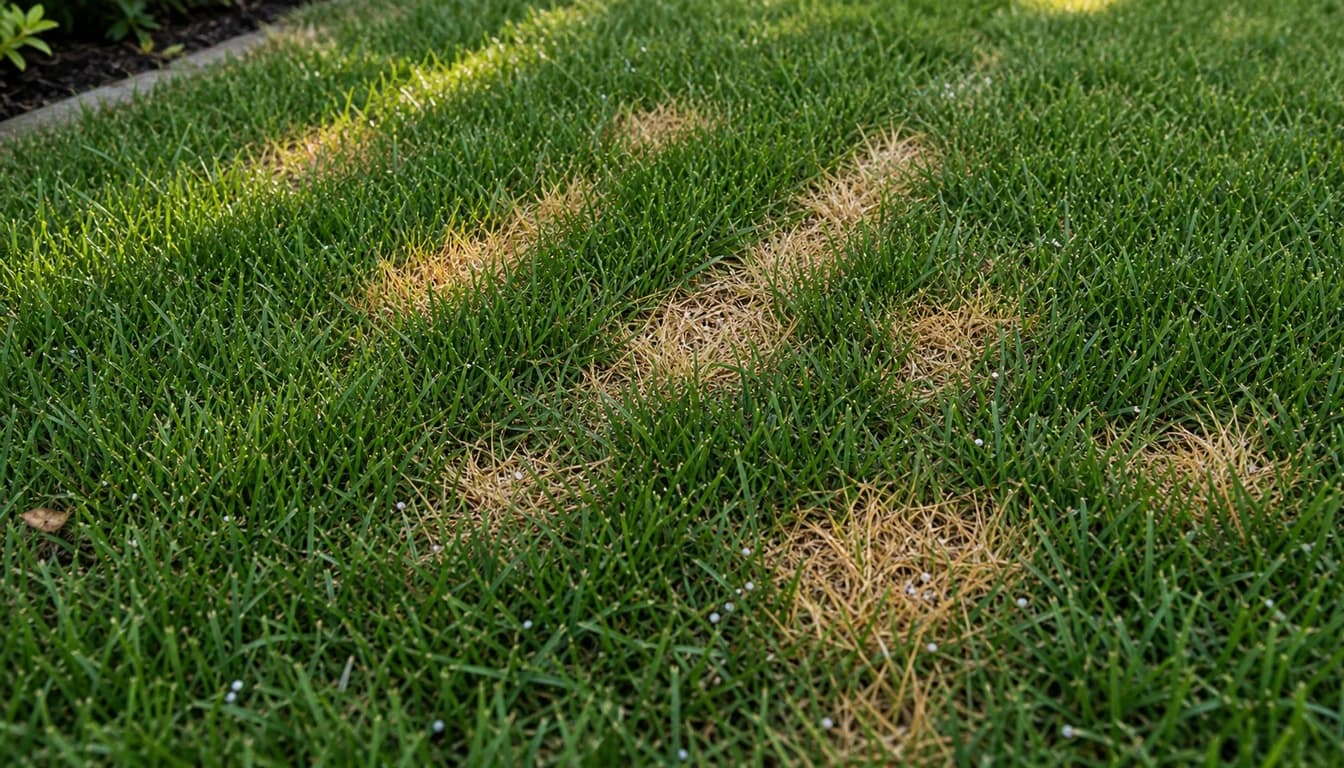
Salt burn from fertilizer usually shows as sharp-edged yellow or brown patches.
Guide — See AlsoWhen to Apply Fertilizer to Your Vegetable GardenLearn exactly when to apply fertilizer to your vegetable garden by soil type, crop, and growth stage so you get steady h
chevron_rightcalendar_monthSeasonal Timing: Wet Grass In Spring, Summer, and Fall
Rainy spring mornings, summer thunderstorms, and fall drizzle all change how safe it is to fertilize wet grass.
The right move depends on both your season and your grass type, not just how damp the blades look.
Cool-season lawns such as Kentucky bluegrass yards and tall fescue stands get most of their fertilizer in spring and fall. Light surface moisture in these cooler months is usually less risky.
Soil temperatures are lower, so nutrients move slower, and evaporation off the leaves is not as intense.
Summer heat is a different story, especially for cool-season turf. Wet blades plus high temps can magnify burn because the fertilizer solution is more concentrated as water evaporates.
If your lawn is already stressed or browning, wait for an overcast, dry-morning window or follow a reduced summer feeding plan from a zone-specific calendar.
Warm-season grasses like zoysia lawns and St. Augustine turf get their big feedings once soil is warm. A light dew at dawn is usually fine, but skip granular fertilizer right before a pounding afternoon storm.
Granular fertilizer on saturated summer soil is more likely to run off into sidewalks, driveways, and storm drains instead of feeding roots.
Fall fertilizing on damp grass helps cool-season lawns store energy for winter. Just avoid frozen or snow-covered turf, since nutrients cannot move into the soil and will wash away with the next melt.
Check regional timing from your state extension or use the guidance in lawn fertilizing schedules to pair wet-grass decisions with the right month.
tips_and_updatesAdvanced Tips For Fertilizing Wet Lawns Safely
Once you understand the basic risks, you can tweak your tools and products so wet grass days are less stressful.
Small upgrades in spreaders, nozzles, and formulations make more difference than most marketing labels.
Choose a quality broadcast spreader with a side-shield feature along driveways and patios. That way, even if the grass is damp, fewer granules land where water can sweep them straight into the gutter.
Walk at a steady pace and keep the handle height consistent so granules do not dump when you hit bumpy spots.
Consider slow-release or organic-blend fertilizers when you know your yard often stays damp from irrigation or shade. Products with 30–50% slow-release nitrogen release nutrients over time and are gentler on wet foliage.
Soil testing every 2–3 years keeps you from applying nutrients you do not need, which matters a lot when rainfall is unpredictable.
A recent soil test result is more valuable than any "one size fits all" lawn schedule printed on a bag.
In tricky areas like narrow side yards or around flower beds, switch to a battery spreader or even a scoop so you can drop fertilizer only where needed. Protect bed edges with a strip of non-fertilized turf near shrubs and perennials that dislike extra nitrogen.
If you use liquid fertilizer, match nozzle choice to your situation. Fan nozzles give a gentler spray on already wet leaves than jet patterns, and they help avoid overlap that causes stripes.
Rain sensors on irrigation systems help too. They keep sprinklers from soaking a lawn that is already wet from storms, so you do not unintentionally apply fertilizer onto standing water.
Guide — See AlsoHomemade Liquid Fertilizer for Healthier PlantsLearn how to make homemade liquid fertilizer from kitchen scraps and yard waste, with clear recipes, dilution rates, and
chevron_rightquizCommon Mistakes With Wet Grass And Fertilizer
Most fertilizer problems on wet lawns come from a short list of repeat mistakes, not from bad luck or bad products.
Avoid these and you will rarely ask yourself whether fertilizing wet grass was a mistake.
Spreading right before heavy rain is the biggest one. A quick shower that barely wets the blades is useful, but 1 inch of rain in an hour will move nutrients off-site before they ever reach roots.
Check a real forecast instead of guessing from clouds and skip treatment if storms are likely.
Another issue is doubling the dose because the lawn "never greens up." If you already fertilized wet grass once, stacking a second application too soon can burn roots and push top growth that your watering routine cannot support.
Stick to the label rate and respect the reapplication interval, which is usually 6–8 weeks for most homeowner products.
Ignoring overlap patterns on wet grass also causes trouble. Wet blades show granules more clearly, so people try to "fill in" light spots and end up tripling coverage in some paths.
Pick a pattern, such as north–south then east–west, and commit so you do not chase every shiny pellet you see.
Finally, folks treat every yellow patch as a fertilizer issue. Compacted soil, grubs, dog spots, or drought can all produce similar symptoms.
If you have repeated trouble in the same sections, consider aerating, checking for pests, or reseeding with a more suitable mix like fine fescue for shade instead of blaming wet-grass fertilizing every time.
tips_and_updates
Pro Tips
- check_circleUse the "shoe test": if your shoes come away soaked, wait to fertilize until the lawn dries.
- check_circlePair fertilizer day with a light irrigation cycle you control instead of gambling on storms.
- check_circleChoose coated slow-release products if your lawn often stays damp in spring and fall.
- check_circleBlow stray granules off sidewalks and driveways so they do not wash into storm drains.
- check_circleCut your application rate by 25 percent on stressed lawns coming out of summer heat.
- check_circleAvoid feeding new seed until after the first or second mowing so roots can anchor.
- check_circleKeep pet and kid traffic off freshly fertilized, wet grass until after it dries and you water.
quiz
Frequently Asked Questions
Can you fertilize grass right after it rains?expand_more
You can fertilize after a light or moderate rain if the soil is moist but not waterlogged and there is no more heavy rain expected. Avoid applying on saturated ground or when thunderstorms are forecast in the next 24 hours.
Is morning dew enough moisture for fertilizing?expand_more
Yes, light morning dew is usually safe for granular lawn fertilizer, especially in spring and fall. Dew helps granules start dissolving, but you should still plan on a light watering to move nutrients into the soil later that day.
Should I water again after fertilizing wet grass?expand_more
If rain or sprinklers already made the lawn soggy, skip extra water. If grass is just damp from dew or a brief shower, a short 5–10 minute irrigation cycle helps rinse fertilizer off the blades into the soil.
How long should I wait to mow after fertilizing wet grass?expand_more
Wait until the grass is fully dry and at least 24–48 hours have passed. Mowing too soon can blow or bag up fertilizer granules before they dissolve, reducing the benefit and increasing waste.
Can I use weed and feed products on wet grass?expand_more
Most weed and feed products work best on slightly damp leaves so herbicide sticks, but the soil should not be saturated. Always read the label, and avoid applying before heavy rain to keep chemicals from washing into storm drains.
Related Guides
Benefits of Composting for Healthier Soil and Plants
Learn how composting turns kitchen scraps and yard waste into free fertilizer, improves soil, and boosts plant health in any size garden.
12 min read
Best Fertilizer for Indoor Plants
Learn how to choose the best fertilizer for indoor plants by growth style, season, and pot size without burning roots or overfeeding slow growers.
14 min read
Best Fertilizer for Vegetables by Garden Type
Learn how to pick the best fertilizer for vegetables by crop group, soil condition, and garden setup so you feed beds, rows, and containers without wasting nutrients.
11 min read