
Lawn Careschedule11 min read
How to Overseed a Lawn Without Aerating or Heavy Equipment
Step-by-step guide to overseed your lawn without renting an aerator. Learn how to prep the turf, choose seed, and get good seed-to-soil contact so thin spots fill in.
Thin turf and bare patches do not always mean you need to rent an aerator. If your soil is not rock hard, you can overseed successfully with simple tools you already own.
The method, start to finish: how to overseed lawn without aerating, from mowing and dethatching to watering and aftercare. We will flag where clay-heavy yards in zone 5 and warmer areas with bermuda-style lawns might need extra effort so you know which shortcuts are safe and which are not.
Seed-to-soil contact matters more than fancy equipment when you skip core aeration.
thermostatDecide If Skipping Aeration Makes Sense
Soil condition decides whether you can safely skip aeration. If a screwdriver can push into the soil at least 2 inches after a good watering, you usually have enough looseness for seed roots to grab on.
Compacted clay that sheds water or stays puddled says otherwise. In those spots, overseeding without any loosening gives you green fuzz that dies fast instead of a real lawn.
Walk the yard and note where water sits after rain. Compare it to areas near beds with plants like hosta clumps where the soil often stays looser from mulch and roots.
If water runs off instead of soaking in, fix drainage or lightly loosen the top layer before throwing seed.
Use the quick split below to decide whether simple surface prep is enough, or whether a trouble spot needs hand loosening first.
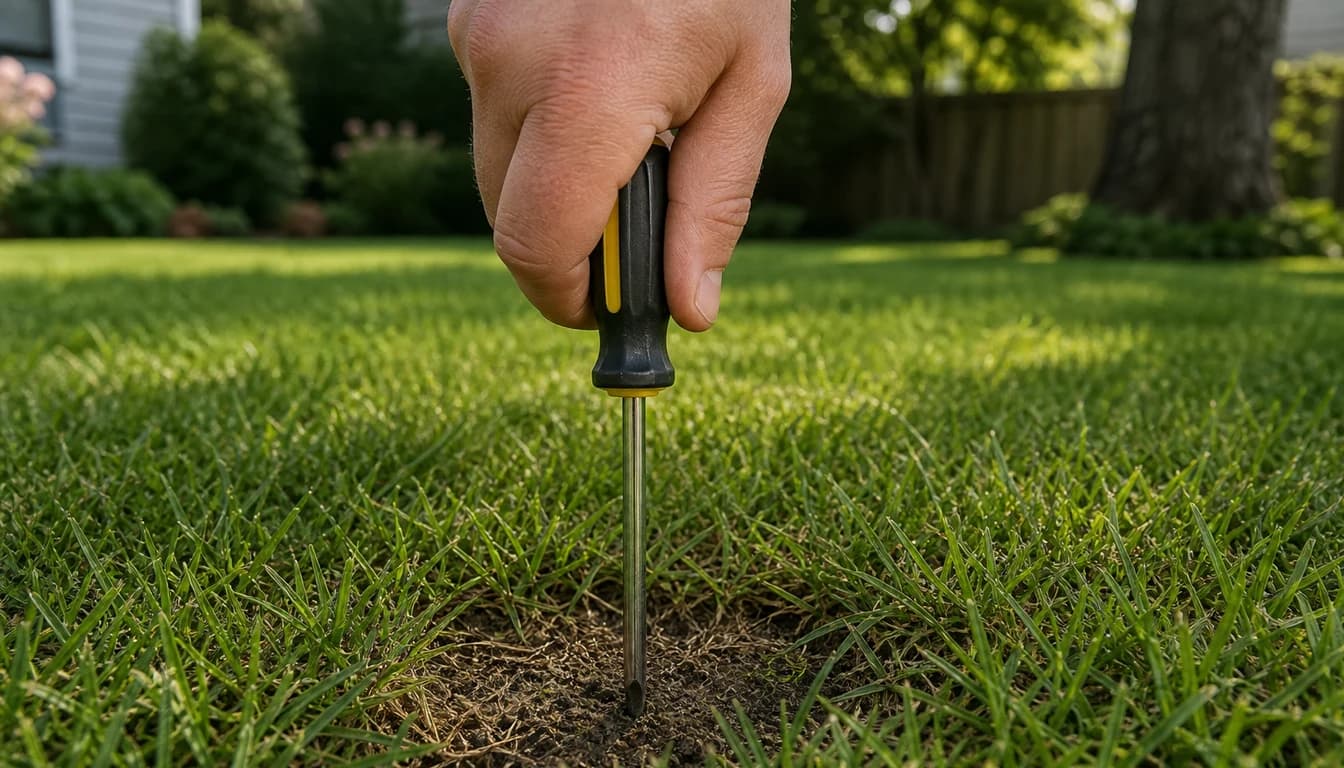
If a hand tool can reach two inches deep, you usually have enough looseness for overseeding without an aerator.
- fiber_manual_recordGood candidates: Thinning lawns with visible soil between blades, but no standing water
- fiber_manual_recordBorderline areas: Hard paths where dogs run or mowers always turn
- fiber_manual_recordBad spots: Low areas that stay soggy or feel like concrete even after rain
- fiber_manual_recordClay-heavy zones: Plan to rake more aggressively or spot-loosen by hand
If most of your lawn falls into the good or borderline group, overseeding without aeration can still give you a big bump in density.
grassPick the Right Grass Seed for Your Climate
Seed choice matters more than the brand label. Match your new grass to what survives best in your region and sunlight so the overseed sticks around.
Cool-season lawns in zones 3–6 usually rely on fescue types for toughness and shade tolerance.
Kentucky bluegrass mixes spread by rhizomes and knit thin turf together when they get enough sun.
Perennial ryegrass blends germinate fast, which helps when you need visible fill before cold weather.
Warm-season lawns in zones 7–11 lean on bermuda, zoysia, or St. Augustine.
Match shade tolerance too. A bluegrass mix that thrives in full sun will still thin out under the dappled shade of a large oak tree. If half your lawn is shaded, pick a mix labeled for shade or fine fescue.
- fiber_manual_recordCool-season lawns: Kentucky bluegrass, tall fescue, ryegrass blends
- fiber_manual_recordWarm-season lawns: Bermuda, zoysia, buffalo or centipede mixes
- fiber_manual_recordShade problem areas: Fine fescue or “dense shade” seed blends
- fiber_manual_recordHigh-traffic strips: Tall fescue or perennial rye with wear tolerance
Check whether your grass is annual or perennial. Cheap annual rye greens up fast then dies, which is why we prefer perennial blends on permanent lawns; the same tradeoff shows up in annual versus perennial choices elsewhere in the yard.
Guide — See AlsoDethatching vs Aerating: Which Your Lawn Needs FirstLearn whether your lawn needs dethatching, aeration, or both, how they work, and the right timing and tools so you do no
chevron_rightcontent_cutMow, Bag, and Dethatch for Better Seed Contact
Seed can not root through a mat of old clippings and thatch. Your goal is to expose bare soil in tiny gaps between existing grass without scalping the lawn.
Drop your mower to about 2 inches for cool-season lawns and roughly 1.5 inches for warm-season turf like low-cut bermuda. Bag or rake up clippings so seed does not sit high and dry on top of debris.
If you see more than ½ inch of thatch, use a dethatching rake or power rake on a light setting. Work in two directions across the yard. You want to scratch grooves into the soil surface, not strip everything down to dirt.
Do not dethatch stressed summer lawns during extreme heat. Wait for cooler weather or you risk burning patches beyond easy repair.
The prep checklist should leave the lawn roughened, not shaved down to exposed dirt.
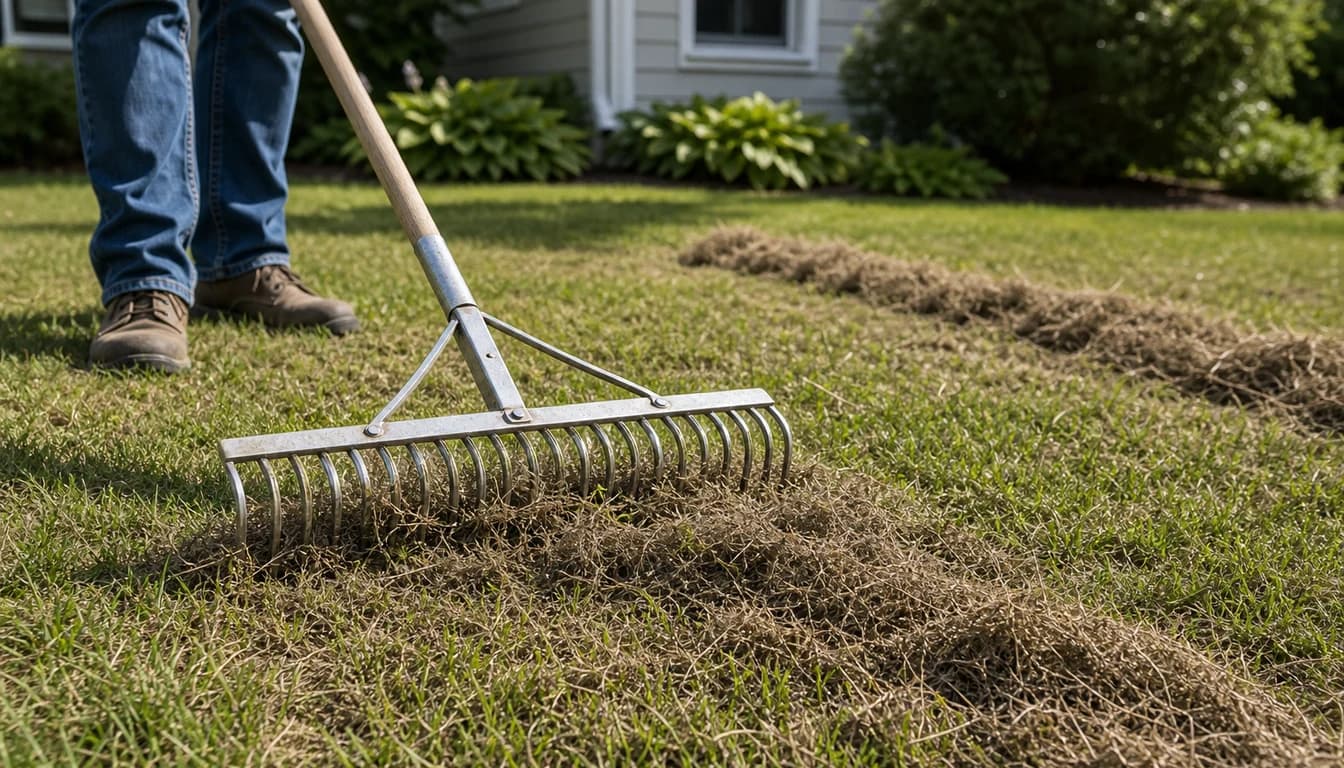
Light dethatching opens up the surface so grass seed can actually touch soil.
- fiber_manual_recordMow height: 30–40% lower than normal, without hitting dirt
- fiber_manual_recordBag clippings: Use mower bag or rake everything off
- fiber_manual_recordCheck thatch: Measure depth with a finger or screwdriver
- fiber_manual_recordRake aggressively: Pull up dead material until you see flecks of soil
A lawn that looks a little rough after this step is normal. Those small scars are what give new seed a place to land and root.
Email Updates
Join the KnowTheYard update list
Zone-specific advice, seasonal reminders, and new plant guides — no filler.
yardCreate Faux Aeration With Rakes and Soil Amendments
If you are skipping a core aerator, you can still mimic the effect on the top ½–1 inch of soil. That shallow loosening is enough for roots of cool-season grasses like tall fescue clumps to bite in.
Use a stiff garden rake held almost vertical and pull it toward you in short strokes. You are scratching grooves, not flipping sod. In heavy clay, go over compacted walk paths twice to rough up the surface.
A thin layer of compost, about ¼ inch deep, improves seed contact and moisture. Rake it into the top of the soil so you still see grass tips poking through, similar to how we top-dress beds around shrubs like evergreen boxwood hedges.
Avoid smothering the lawn with thick compost or topsoil. If you can not see green after topdressing, you added too much.
Keep the faux-aeration work shallow; the goal is seed contact, not tearing up living turf.
- fiber_manual_recordScratch depth: Aim for visible grooves ¼–½ inch deep
- fiber_manual_recordCompost layer: ¼ inch over the entire overseed area
- fiber_manual_recordClay soils: Focus raking on paths and high-traffic spots
- fiber_manual_recordSandy soils: Light scratching is enough, skip heavy raking
This combination of raking and compost is not the same as deep core aeration, but for many home lawns it is plenty to get seed anchored.
Guide — See AlsoWhen to Cut Grass After Overseeding Without Killing New SeedLearn exactly how long to wait before mowing after overseeding, how tall new grass should be for the first cut, and mowe
chevron_rightcalendar_monthTime Your Overseeding for Soil and Season
Soil temperature matters more than the date on the calendar. Cool season lawns like fescue and Kentucky bluegrass respond best when soil sits in the 50–65°F range for several weeks.
Warm season lawns such as bermuda and zoysia build coverage when nights stay above 60°F and soil holds 65–70°F. Overseeding outside those bands wastes seed and water.
Fall is prime time for cool season seed in zones 4–7, because weeds are slowing and soil still holds summer warmth. Spring seeding in these zones works, but summer heat can wipe out shallow roots if watering slips.
In zones 8–10, early fall and late winter give you the best window for cool season overseeding into warm season lawns. Many southern homeowners add perennial ryegrass color for green winter coverage over dormant warm season turf.
A $15 soil thermometer is more reliable than any "best date" you see online.
Use soil temperature as the decision point, then match the window to your grass type and zone.
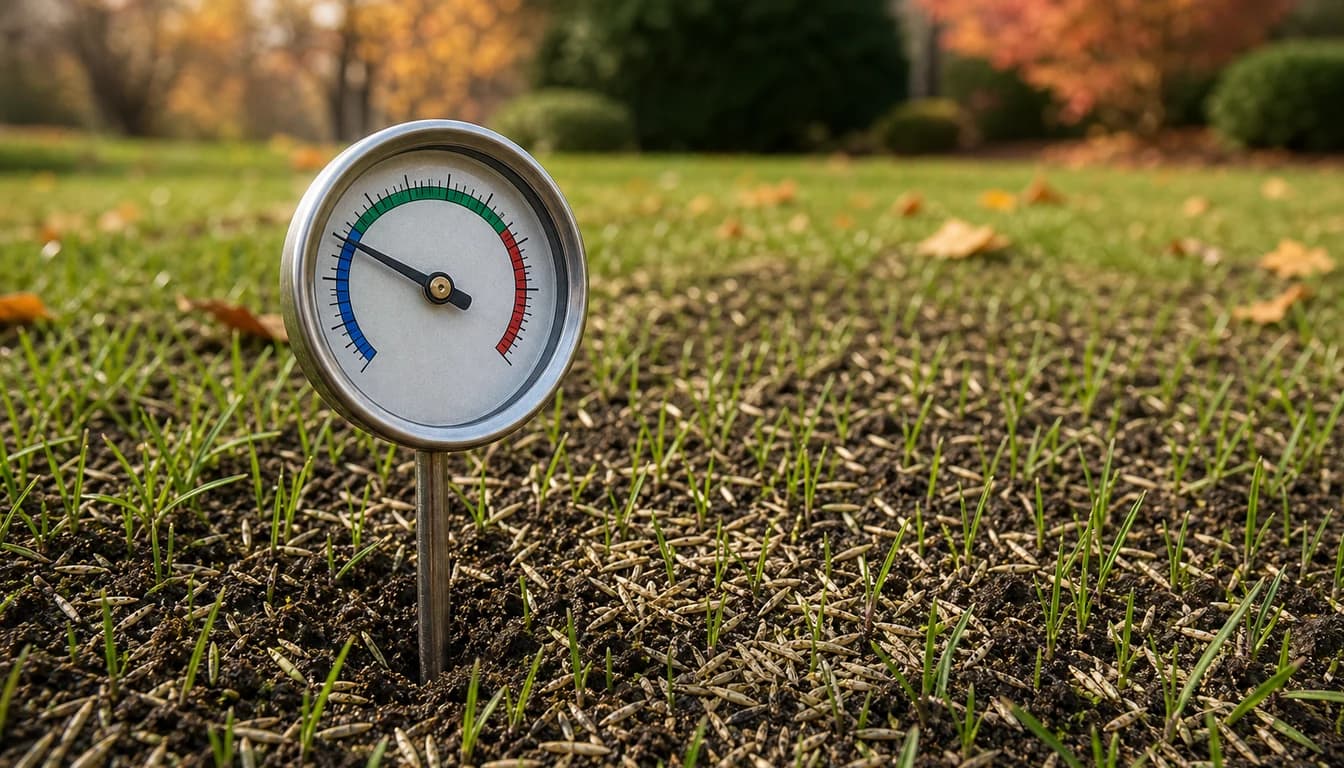
Check soil temperature at 2–3 inches deep to hit the sweet spot for seed germination.
- fiber_manual_recordCool season window: Soil 50–65°F, usually late August to early October in zone 5
- fiber_manual_recordWarm season window: Soil 65–70°F, often late spring in hotter zones
- fiber_manual_recordAvoid: Frozen ground, waterlogged soil, or triple digit heat
grassSpread Seed Evenly and At the Right Rate
Coverage starts with how you put seed down. Uneven spreading creates dark patches and thin spots that never quite catch up.
Use a broadcast or drop spreader for larger yards. Hand spreading sounds simple, but it almost always leads to streaks and bare bands that look like mower stripes turned wrong.
Follow the label rate, then dial slightly on the light side if you are overseeding, not starting from dirt. Many cool season mixes call for 2–4 pounds per 1,000 square feet for overseeding instead of the heavier new lawn rate.
Make two passes at half rate, one north–south and one east–west. This crisscross pattern evens out your coverage and hides any wobbles in your walking speed.
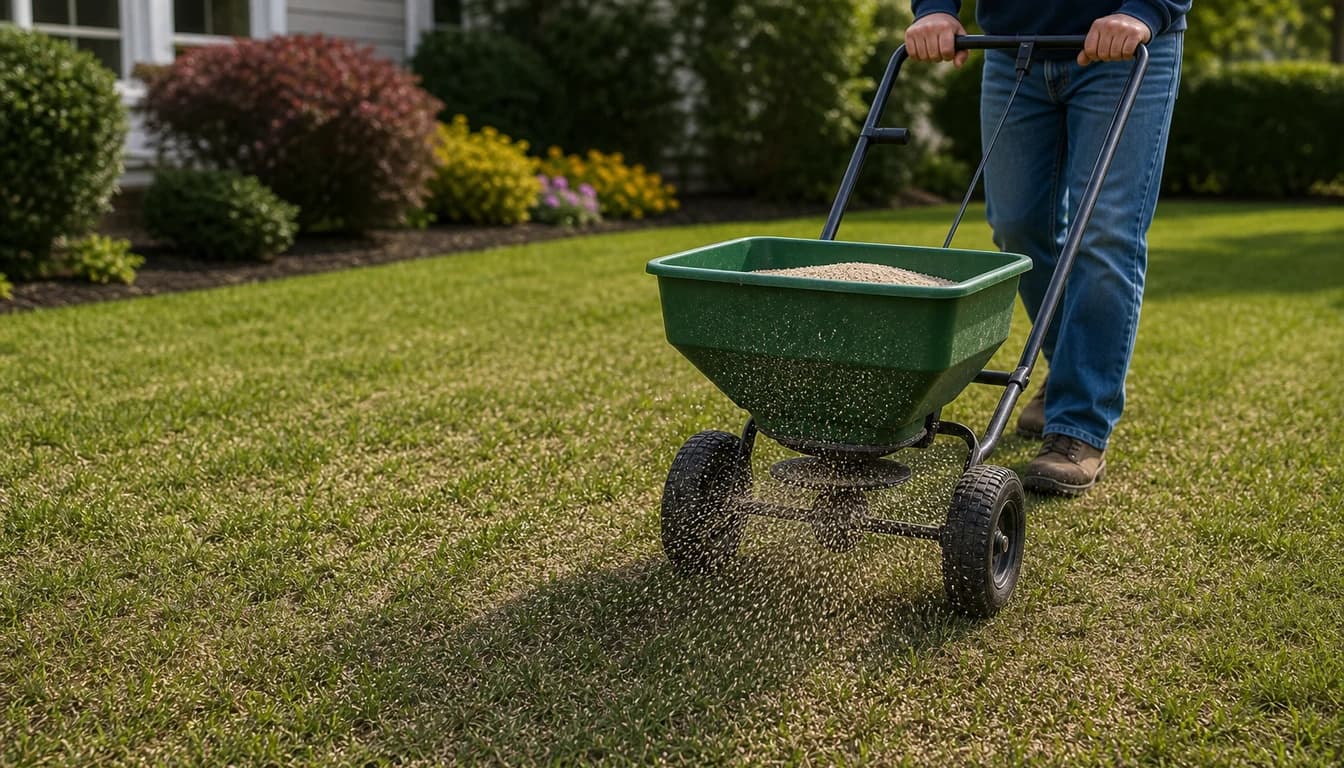
Two passes at half rate, in opposite directions, give much more even seeding than a single heavy pass.
- fiber_manual_recordCalibrate spreader: Test a small measured area and adjust settings before covering the whole lawn
- fiber_manual_recordUse half rates: Two lighter passes beat one heavy blast for even germination
- fiber_manual_recordCheck overlap: Watch your wheel tracks or a landmark so you do not double seed edges
Guide — See AlsoHow to Overseed a Lawn That Actually Fills InStep-by-step overseeding guide so new grass takes: timing by grass type, prep, seeding rates, and watering schedule for
chevron_rightwater_dropWater New Seed Without Drowning It
New seed needs constant surface moisture, not deep soaking at first. The top 0.5 inch of soil should stay damp, not muddy, until the majority of seeds sprout.
Set sprinklers to run short cycles, 5–10 minutes, two to four times per day depending on wind and sun. Hard city water pressure can wash seed into low spots, so you may need to throttle back valves or use finer nozzles.
After you see even green fuzz across most of the lawn, start cutting back on frequency. Switch to once per day, then every other day, while lengthening each watering so moisture reaches 3–4 inches deep.
Overseeding fails quickly when seed stays soggy; rot and fungus can erase good prep in a few wet days.
If water pools or footprints stay visible for more than a few minutes, you are watering too long.
Use the phase change below so you do not keep babying rooted seedlings with constant surface mist.
- fiber_manual_recordGermination phase: Keep surface moist with frequent light watering
- fiber_manual_recordRooting phase: Water less often but more deeply to train deeper roots
- fiber_manual_recordWindy days: Check shady corners and sun-baked edges, they dry at different speeds
yardMow and Traffic-Protect While Seedlings Establish
First mowing timing affects how thick your lawn ends up. Wait until new grass reaches about 3–3.5 inches, and blades look sturdy, not wispy.
Set mower height high for the first cut, taking off no more than the top one-third of the blade. A sharp blade matters here, because ragged tears stress young plants far more than mature turf.
Keep kids, pets, and wheelbarrows off newly seeded sections as much as you can for the first 3–4 weeks. Foot traffic compacts the top layer that you carefully loosened and presses seedlings flat.
Rake leaves gently with a leaf rake, not a stiff metal rake, so you do not yank up shallow roots. Wet leaves can smother seedlings faster than you expect in shady yards.
- fiber_manual_recordFirst mow height: Start at 3–3.5 inches, then adjust based on your grass type
- fiber_manual_recordBlade maintenance: Sharpen or replace mower blades each season for cleaner cuts
- fiber_manual_recordTraffic plan: Use temporary paths or boards across wet spots if you must cross them
Guide — See AlsoIs Overseeding Worth It For Your Lawn Or Not?Honest look at whether overseeding is worth it for your lawn, including cost, effort, timing, and how it compares to opt
chevron_rightcompostFeed and Weed Carefully After Overseeding
New grass likes a light feeding, but heavy nitrogen can push top growth faster than roots can support. Choose a starter fertilizer with low to moderate nitrogen and some phosphorus if your soil test allows it.
Many homeowners already use a schedule like the one in our lawn fertilizing routine, so coordinate overseeding with a lighter application. You can burn seedlings if you stack full-strength fertilizer on very young grass.
Skip traditional pre-emergent crabgrass preventers until seedlings are mowed at least three times. Those products work by stopping new roots, and they do not care whether the plant is a weed or your expensive grass seed.
If broadleaf weeds sneak in while your seed germinates, spot pull the worst offenders or wait until seedlings are mature. Most post-emergent herbicides list a waiting period on the label for use after seeding.
- fiber_manual_recordStarter fertilizer: Look for ratios like 10-12-10 instead of high-n blends
- fiber_manual_recordSoil testing: Base phosphorus use on local rules and a soil test, not guesswork
- fiber_manual_recordWeed control: Use spot treatment and patience, not blanket sprays in month one
quizFix Bare Spots and Common Overseeding Problems
Even with careful prep, some areas will not fill in on the first try. Shade pockets under large shade trees or compacted corners near driveways often lag behind the rest of the yard.
Thin or bare patches are easiest to fix within the first 4–6 weeks. Lightly rough up those spots with a hand rake, sprinkle a bit more seed, then press it in with your feet or the back of a rake and water like the original seeding.
If an entire section failed, ask what was different there. Sprinkler coverage, pet urine, standing water, or buried debris all cause patchy germination. Adjust watering patterns or fix grading issues before throwing more seed.
We also see fungus outbreaks when homeowners water late at night in humid weather. If you spot gray fuzz or slimy patches, shift watering to early morning and look at broader watering habits outdoors so you do not repeat the same problem.
Dark green stripes or blocks of thick grass often mean you overlapped or double-fed that area.
Match the fix to the pattern you see instead of reseeding the whole yard again.
- fiber_manual_recordUneven color: Check for fertilizer overlap or spreader skips, then correct next feeding
- fiber_manual_recordMuddy low spots: Top-dress lightly or regrade so water drains instead of pooling
- fiber_manual_recordHeavy shade: Consider adjusting to more shade-tolerant options like fine fescue mixes in those zones
Guide — See AlsoBlue Flowers: Plan Beds That Actually Look BlueLearn how to choose, place, and care for blue flowers so your beds read as blue in real life, not purple or gray, from z
chevron_righttips_and_updates
Pro Tips
- check_circleOverseed cool-season lawns when soil is 50–65°F, usually early fall, not midsummer heat.
- check_circleWater lightly 2–3 times daily right after seeding, then taper to deeper, less frequent watering as seedlings grow.
- check_circleUse a broadcast spreader for even coverage, then do a second pass at 90° to the first direction.
- check_circleSkip high-nitrogen fertilizer on seeding day and feed lightly a few weeks later, or follow a gentle lawn fertilizing plan.
- check_circleKeep mower blades sharp so first cuts on tender seedlings slice clean instead of tearing new growth.
- check_circleFlag sprinkler heads and shallow utilities before dethatching or deep raking to avoid damage.
- check_circleKeep kids and pets off newly seeded sections for at least 3 weeks while roots grab hold.
quiz
Frequently Asked Questions
Is overseeding without aeration worth it on compacted soil?expand_more
Yes, but you need extra prep. Deep dethatching, aggressive raking, and a thin compost top-dress help seed contact on compacted ground. If your screwdriver barely penetrates the soil, plan to add proper aeration on your next overseeding cycle.
How long before I see results after overseeding?expand_more
Most cool season grasses sprout in 7–14 days, while some warm season types take 14–21 days. You will see the lawn noticeably thicker in about a month, with full results often taking one full growing season of good care.
Can I overseed and use weed killer at the same time?expand_more
Avoid that combo. Many pre-emergent and post-emergent herbicides interfere with seed germination or root growth. Wait until new grass has been mowed three times, then introduce weed control following the product’s labeled timing for newly seeded lawns.
Do I need to top-dress with compost after overseeding?expand_more
Top-dressing is not required but helps especially when you skip aeration. A 1/4 inch layer of fine compost or screened soil improves seed-to-soil contact and moisture retention. Spread thinly, so existing grass tips still poke through the layer.
How soon after overseeding can I fertilize my lawn again?expand_more
If you used a starter fertilizer at seeding, wait 6–8 weeks before the next feeding. That gap lets seedlings develop roots without being pushed into weak, top-heavy growth. Match your follow-up feeding to a seasonal plan for your grass type and zone.
menu_book
Sources & References
Related Guides
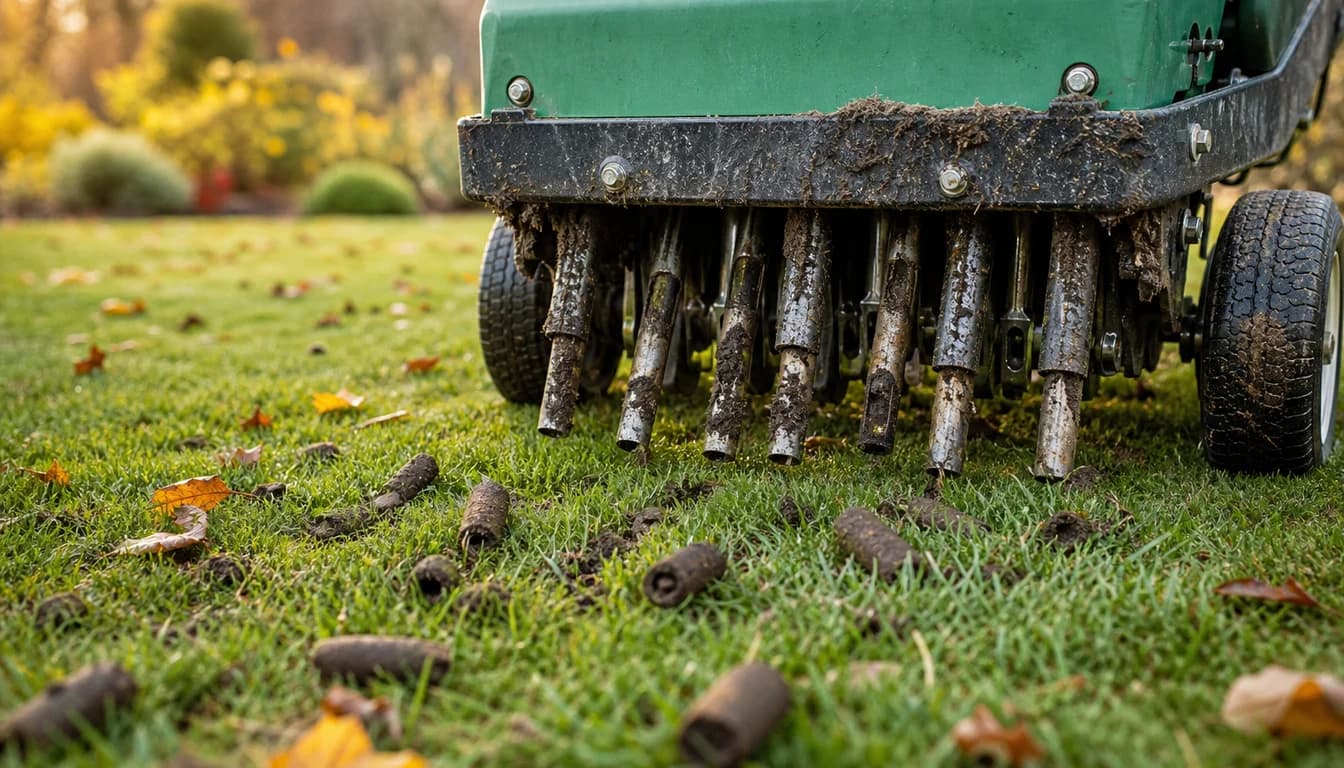
Best Time to Aerate and Overseed for a Thicker Lawn
Learn when to aerate and overseed your lawn by season and grass type so every pass of the machine leads to thicker, greener turf instead of wasted seed.
11 min read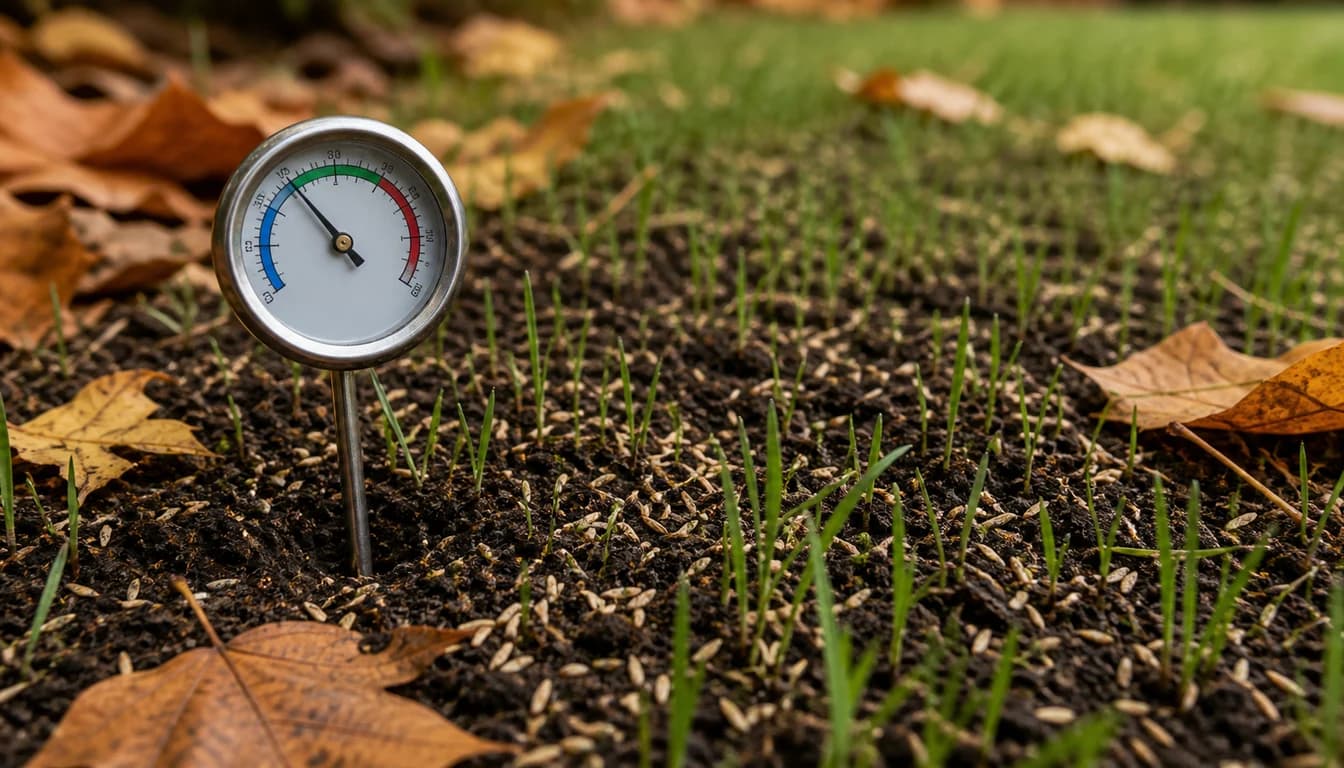
Best Time to Overseed a Midwest Lawn for Thick Turf
Learn the best time to overseed a Midwest lawn based on soil temperature, grass type, and hardiness zone so your new seed fills in thin spots.
11 min read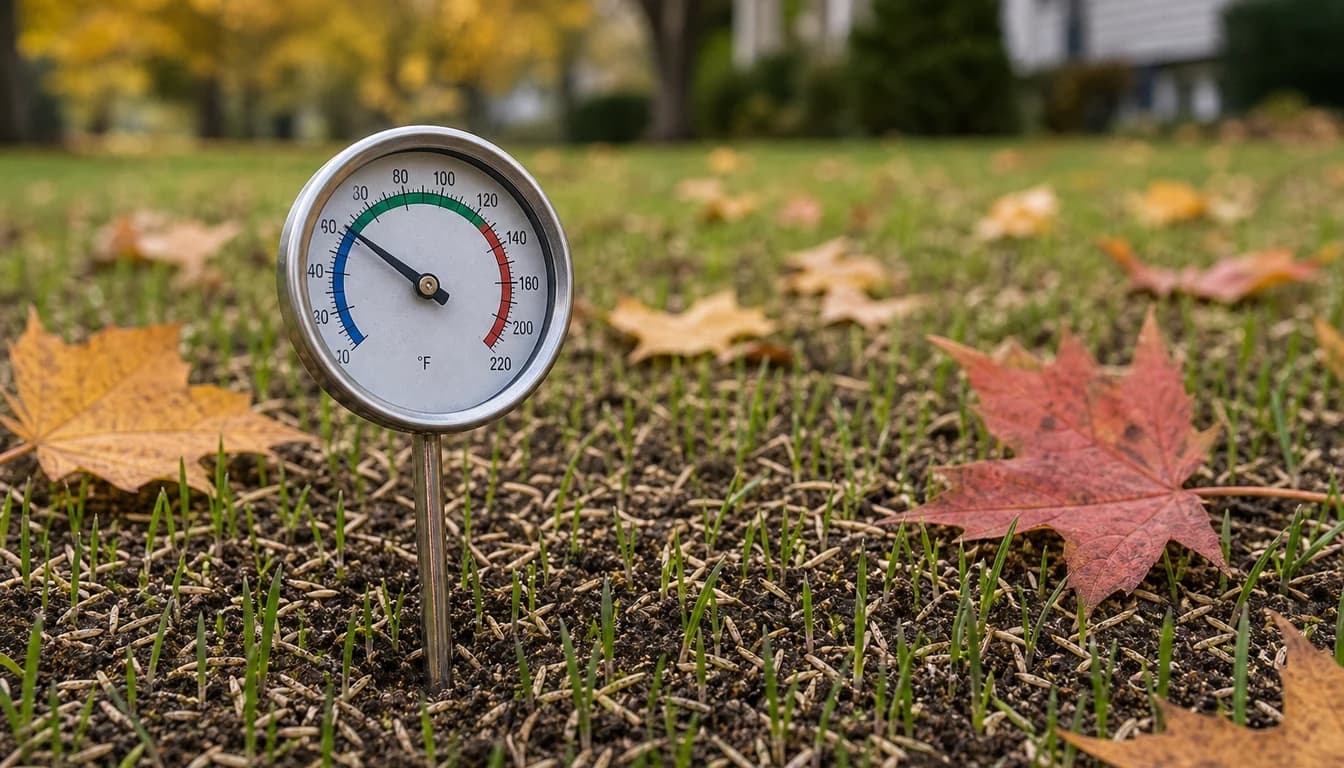
Best Time to Overseed a Northeast Lawn for Thick Turf
Learn exactly when to overseed cool-season lawns in the Northeast, how soil temperature and frost dates affect timing, and what to do before and after seeding for a thicker, greener yard.
11 min read