Pothos vs English Ivy
In a warm, dry, heated apartment, English Ivy almost always turns into a spider-mite magnet, while Pothos shrugs off dim corners and skipped waterings. Ivy only pulls ahead in a cool, bright room, or outdoors in a cold climate where you actually want it to spread.
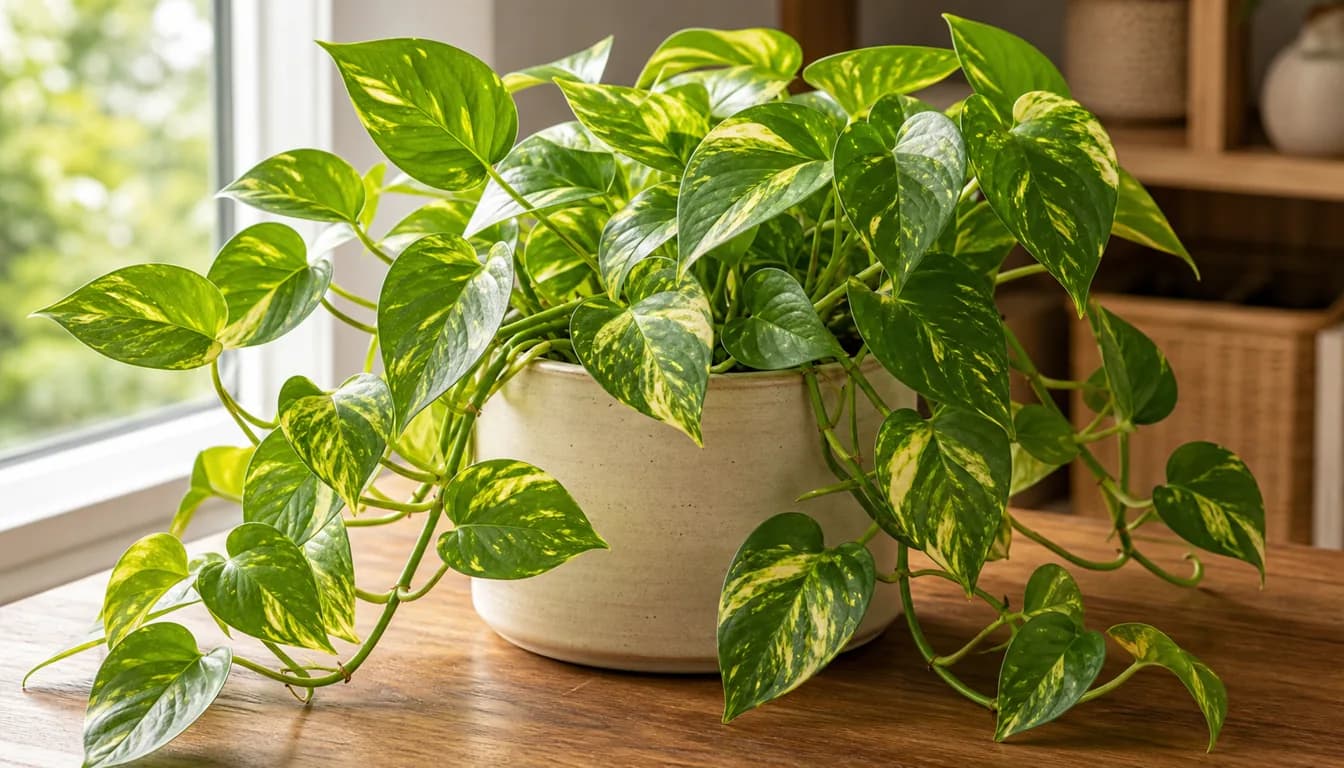
Hedera helix
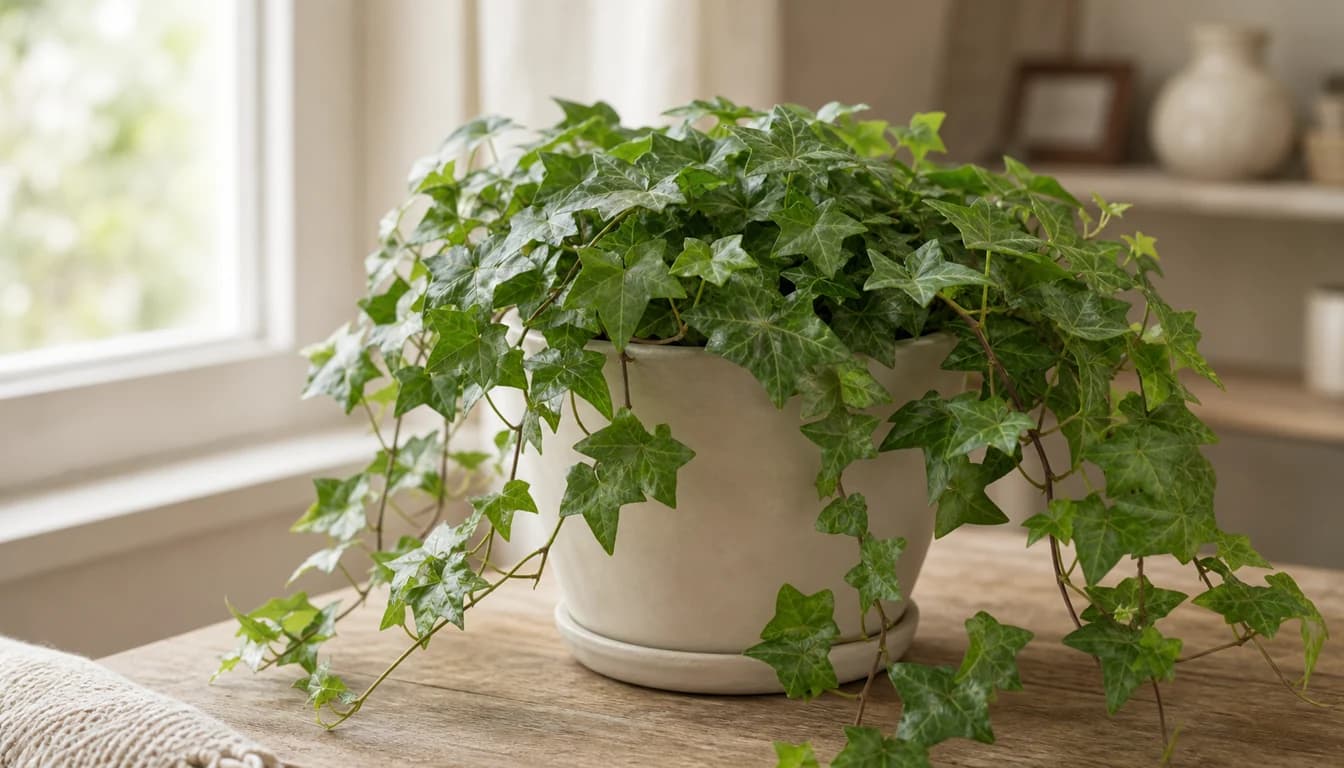
English Ivy
ruleDecision Summary
Pothos and English Ivy both trail over the edge of a pot, so shops sell them side by side. Indoors they behave nothing alike, and the reason is family. Pothos belongs to Araceae, a group of tropical aroids built for warm, humid, shady forest floors, so a dim living room feels close to home. English Ivy is Hedera helix in the Araliaceae family, a temperate climber that grew up in cool European woodlands.
That mismatch shows up fast in a heated apartment. Central heat in winter drops indoor humidity into the 20 to 30 percent range, and that dry warm air is exactly what spider mites love. On English Ivy they hide in the fine, lobed foliage and spread before you spot the faint stippling, which is why so many indoor ivy owners end up reading about spider mite treatment by month two. Pothos leaves are thick and waxy, so mites get far less traction.
Ivy still earns a spot in the right room. Give it a cool, bright sunroom that stays near 60°F and it grows dense and glossy with almost no mite trouble. It also takes shearing better than most vines, so it holds the clipped and topiary shapes that fans of English Ivy prize. Outdoors in a cold climate it will blanket a shady bank, though that same vigor becomes a problem where it escapes into wild ground.
How to Use This Guide
Match your primary use case first, then review the side-by-side specs table. The use-case cards explain where one option has a practical advantage; if your situation is different, let the specs and tradeoffs guide the choice.
For a normal heated apartment this is not a close call. Warm dry indoor air turns English Ivy into a spider-mite magnet, while Pothos keeps growing through dim corners and skipped waterings. Ivy is worth the trouble only in a cool bright room, or outdoors in a cold climate where you actually want it to spread.
KnowTheYard Editorial Team
Source-backed editorial note
compare_arrowsSpecific Use Cases
The following use cases focus on scenarios where the tradeoff actually matters. Each card names the stronger fit for that situation and explains the catch.
A winner only applies when that scenario matches your conditions. If neither scenario fits, check the side-by-side specs for the more relevant constraints.
Warm, heated apartments
Dry winter air, radiators runningWinner: Pothos
Pothos is a tropical aroid, so a room held at 65 to 85°F with dry winter air suits it fine. It keeps pushing new leaves right through the heating season and forgives a stretched watering schedule when the radiator dries the soil faster than usual.
English Ivy wants cool air, ideally under 70°F, so the same heated room stresses it. Warm dry conditions thin the foliage and invite pests, and most apartments simply cannot give ivy the cool nights it grew up expecting.
A history of spider mites
You have lost plants beforeWinner: Pothos
The thick, waxy leaf surface on Pothos gives spider mites little to grip, so an outbreak spreads slowly and rinses off in the shower without much drama. If you have already lost plants to mites, that resilience matters more than looks.
Fine, deeply lobed English Ivy foliage hides mites in every crevice, and a dry warm room lets them explode. Once webbing sets in, clearing spider mites off ivy means repeated sprays because the dense growth is so hard to coat evenly.
Cool, bright sunrooms
Steady light near 60°FWinner: English Ivy
Pothos will survive a bright cool sunroom, but it slows and sulks below 60°F and never looks its best there. It would rather sit in a warmer interior spot with softer light.
A cool, bright sunroom near 55 to 65°F is where English Ivy shines. Steady bright light keeps the leaves tight and glossy, cool air holds mites back, and the plant fills out into the full cascading curtain people picture when they buy it.
Clipped or topiary shapes
Trained forms and tidy linesWinner: English Ivy
Pothos grows in long, loose strands and will not hold a trained form. You can prune it back, but it always reads casual rather than sculpted, so it is the wrong plant for a tidy geometric shape.
English Ivy takes shearing well and trains onto wire frames, so it holds cones, spheres, and other topiary shapes for months. Its small leaves and flexible stems are why formal gardeners have shaped ivy for generations.
Outdoor coverage in cold climates
Groundcover where winters biteWinner: English Ivy
Pothos is not cold-hardy and only survives outdoors year-round in USDA zones 10 to 12. In most of North America a single frost kills it, so it is a summer-only patio plant at best, never a groundcover.
English Ivy is hardy from roughly zone 4 to 9 and will blanket a shady slope or wall. But it is listed as invasive in many regions, smothering native plants and climbing trees, so check local rules and plant it only where its spread is wanted and kept in check.
paymentsCost & Upkeep
Long-term cost extends beyond the purchase price. Factor in ongoing inputs, replacement risk, equipment, and time so the cheaper option at checkout does not become the more expensive one to keep.
For Pothos and English Ivy, the real cost difference usually shows up after purchase: water, soil, fertilizer, pruning, replacements, and how easily the plant or system recovers from mistakes.
ecoPothos
- check_circleStarter pots run $8–$18, and one healthy plant divides into a dozen free cuttings in a single season.
- check_circleA wide watering window means fewer plants lost to a missed soak, so you rarely pay to replace one.
- check_circleOngoing costs stay near zero: no miticide, no humidifier, and cuttings root in a plain glass of water.
- cancelFast growth means repotting every 1 to 2 years, so budget for fresh mix and the occasional larger container.
- cancelLeaves are toxic to cats and dogs, so a chewing pet can turn into a vet call.
ecoEnglish Ivy
- check_circleSmall ivy pots are cheap at $10–$20, so the plant itself is easy on the wallet up front.
- check_circleIn a genuinely cool room it grows slowly, which can stretch repotting to every 2 to 3 years.
- cancelIndoor mite pressure means recurring spending on insecticidal soap or miticide, sometimes several rounds a year.
- cancelDry heated air often forces a humidifier or pebble trays to keep the foliage from crisping.
- cancelPlanted outdoors it spreads, and pulling it back out later can cost hours of labor or a paid crew.
ecoResource Fit
Every miticide spray, replacement plant, and bag of potting mix carries a footprint, so the greener vine is the one that needs the fewest of them. Pothos tends to sit still for months. It shrugs off low humidity, bounces back from hard pruning, and rarely triggers a rescue, which keeps the churn low.
English Ivy indoors runs the other way. A heated room pushes it toward repeat mite treatments, and a plant that keeps declining often gets tossed and rebought within a year. Those spray cycles and do-over purchases add up faster than the low sticker price suggests.
If you want a vine you can buy once and keep for years, Pothos is the lower-maintenance pick for most houseplant collections. Save English Ivy for a cool bright room where it can thrive without the spray schedule.
Pothos stays happy in a normal heated home. English Ivy wants air under 70°F, so a warm apartment works against it all winter.
Central heat dries the air to this range, which is exactly what spider mites want on English Ivy. Waxy Pothos shrugs it off.
Indoor English Ivy needs a weekly look at leaf undersides for mites. Pothos rarely needs more than a monthly glance.
Outdoors English Ivy survives cold winters, while Pothos only lives in zones 10 to 12. In a cold climate, ivy wins outside.
Pothos holds up in a dim corner. English Ivy thins and stretches without medium to bright light.
Both vines can live 5 to 10 years or more when their needs are met, spreading the footprint of pots and soil across many seasons.
table_chartSide-by-side Specs
Most of the gap between these two traces back to family. Pothos sits in Araceae, the aroids, evolved for warm, humid, low-light tropics, so a dim heated apartment reads as normal to it. English Ivy is in Araliaceae and evolved in cool temperate woods, so it wants brighter light, cooler air, and steadier moisture than a typical living room offers.
Read the table with that split in mind. The rows on temperature, humidity, and spider-mite pressure all point the same direction, which is why Pothos lands alongside other easygoing aroids as a low-effort indoor vine while English Ivy only rewards a cooler, brighter, more watchful setup.
Source Notes
Metrics summarize published care ranges and common cultivar behavior. Individual performance varies by cultivar selection, microclimate, and management intensity. Consult our methodology for source standards and update practices.
| Metric | Pothos | English Ivy |
|---|---|---|
| biotech Family | Araceae (aroids) | Araliaceae |
| public Cold hardiness (USDA outdoors) | Zones 10–12 | Zones 4–9 |
| light_mode Lowest usable indoor light | Low, tolerates dim corners | Medium to bright only |
| device_thermostat Preferred room temperature | 65–85°F, likes warmth | 50–70°F, likes it cool |
| air Humidity need | Average, tolerates dry air | High, crisps in dry air |
| pest_control Spider-mite pressure | Low, waxy leaves resist | High in warm dry rooms |
| water_drop Watering slack | Forgives a missed week | Crisps after a few dry days |
| height Trailing look / texture | Loose, casual heart leaves | Tight, classic lobed leaves |
| content_cut Shearing / topiary tolerance | Stays loose, won't hold form | Shears and trains to shapes |
| warning Outdoor invasiveness | Not invasive, not cold-hardy | Invasive in many regions |
| pets Pet toxicity | Toxic if chewed | Toxic if chewed |
| account_tree Propagation | Very easy in water | Easy, slower to root |