
Boxwood Winter Bronzing and the Spring Recovery Test
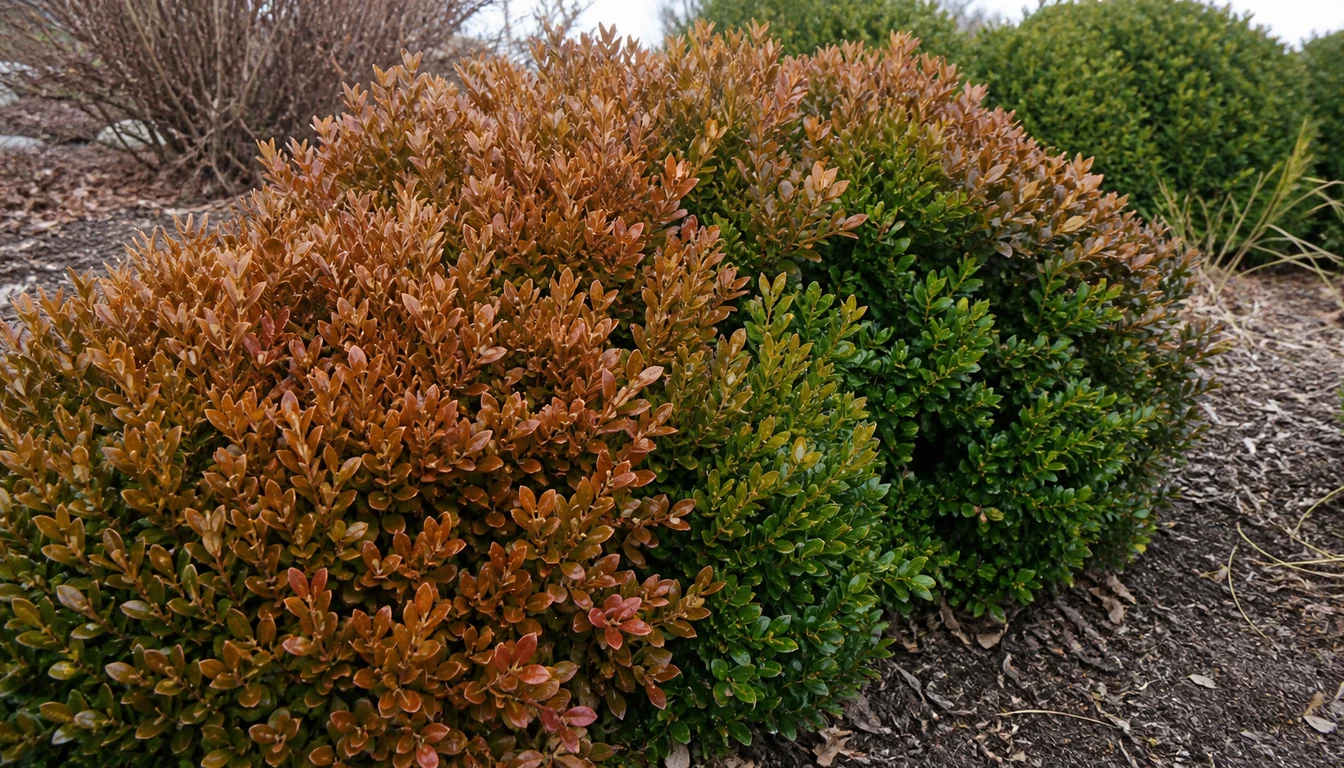
Copper or orange winter color on boxwood can be a temporary response from living foliage or a sign that leaves, buds, and twigs have died. Map the exposed side now, then wait for spring budbreak and check the tissue beneath a small bark scratch before pruning.
Quick diagnosis
Temporary bronzing when buds and stems remain alive
Look for a boundary between bronze and green.
Color across the south, southwest, west, or windward face while sheltered inner foliage stays green supports winter exposure, especially when leaves remain flexible and the shrub was green before cold weather.
Do not decide that a branch is dead from leaf color alone.
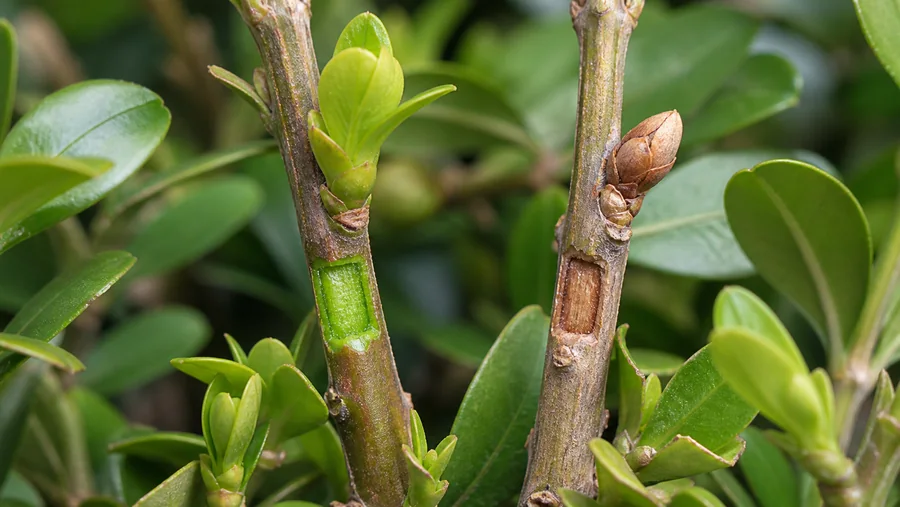
As buds swell in spring, open one bud scale gently and look for green tissue, then make a light scratch on a small questionable stem. Green beneath the bark means wait for growth, while brown dry tissue and dead buds mean that part suffered lasting injury.
Open the full diagnosisWhat You Are Seeing
Some boxwood cultivars take on a bronze or orange blush during winter and return green as temperatures rise. The response varies with genetics, weather, sun, wind, and moisture, so two cultivars in the same yard may finish winter with different colors while both remain alive.
Severe winter burn is different because tissue actually dies. Leaf margins brown first, entire leaves can become dry, and exposed shoot tips may fail to break bud after the roots were unable to replace water lost from evergreen foliage.
Direction and timing give the first useful evidence. Winter exposure follows the sunny or windward face and becomes obvious during winter or as snow melts, while disease spots, wet-soil decline, and individual cankers follow different patterns.
Wait until the shrub can show you its live buds before shearing. Cutting every bronze shoot during dormancy can remove living framework that would have greened or produced new leaves within weeks.
Common Causes
01 High likelihood when color is even and buds are alive
The cultivar changes color but the foliage stays alive
Winter color is a normal trait in some boxwood species and cultivars, especially during cold snaps and in bright exposed sites. Leaves shift from green to orange, copper, or bronze without developing discrete spots or dropping rapidly.
This is a pigment and stress response rather than proof of dead tissue. The shrub often returns green by mid-spring, although a cultivar that bronzes strongly may repeat the performance every winter in the same site.
How to identify it
- The shrub was green during the growing season and changed color after cold weather arrived.
- Bronzing is fairly even across exposed foliage rather than scattered among dead branches.
- Leaves remain attached and flexible rather than crisp and brittle.
- Buds are firm with green tissue inside as spring approaches.
- A light scratch reveals green tissue beneath the bark of questionable stems.
What to do
- Leave the foliage in place through dormancy and watch for spring color change and budbreak.
- Water during a winter thaw only when the soil is workable and genuinely dry.
- Avoid fertilizer because feeding does not correct seasonal pigment and can encourage poorly timed growth.
- Choose a cultivar known for stronger winter color if the bronze appearance is unacceptable in that location.
02 High likelihood on south, west, or windward faces
Winter sun and wind dried exposed leaves
Broadleaf evergreen foliage continues to lose water on sunny winter days. Frozen or dry soil limits what shallow boxwood roots can replace, and strong wind increases the loss until leaf edges and then whole leaves turn brown.
The pattern starts outside and progresses inward. Foliage under snow, behind a wall, or inside the hedge often stays greener, which creates a sharp exposure map on the same plant.
How to identify it
- Brown or bronze foliage faces south, southwest, west, or the prevailing winter wind.
- Leaf edges are drier and browner than protected inner leaves.
- Recently transplanted or shallow-rooted shrubs show more damage than established neighbors.
- The preceding fall was dry or the planting sits under eaves where rain misses the root zone.
- Damage became obvious as snow melted and spring temperatures rose.
What to do
- Wait for spring growth before deciding how much tissue died.
- During workable winter thaws, water a dry root zone slowly without leaving the soil saturated before a freeze.
- Install a freestanding burlap, canvas, or snow-fence barrier on the exposed side, leaving air space around the foliage.
- Do not wrap burlap tightly around the shrub because trapped ice and moisture can create new damage.
- Prune confirmed dead tips back to a live lateral bud or branch after new growth appears.
03 Medium likelihood after rapid temperature change
A sharp freeze killed buds or stem tissue
Warm spells reduce a plant's cold tolerance as winter ends, so a sudden return to severe cold can injure tissue that had begun to deharden. Leaves may bleach or blacken, buds remain dry, and shoot tips fail even when the root zone had enough moisture.
This injury can look scattered because stems warm and cool at different rates. It is more lasting than ordinary bronze pigment, and the evidence appears inside the bud and beneath the bark rather than in the old leaf color alone.
How to identify it
- Damage followed an abrupt freeze after mild late-winter weather.
- Buds are brown, dry, or hollow instead of green and moist inside.
- A light scratch reveals brown tissue beneath the bark of the shoot tip.
- Lower or sheltered buds remain alive while exposed tips fail.
- Bark may split where temperature changed rapidly.
What to do
- Mark dead-looking shoots and wait until nearby live buds begin growing.
- Cut back to the closest healthy lateral bud or branch instead of shearing the entire outer surface.
- Allow surviving interior growth to rebuild the outline over the growing season.
- Replace a shrub only when buds and stem tissue are dead throughout and no new growth appears.
04 Medium likelihood beside treated pavement
Deicing salt burned the road or driveway side
Salt spray and salty runoff can dry foliage and roots, making winter burn worse along roads, sidewalks, and driveways. Injury follows the splash or drainage path rather than the direction of winter sun alone.
Leaf margins often brown first on the lowest roadway-facing foliage, and repeated exposure can leave spring growth weak after ordinary bronzing elsewhere turns green.
How to identify it
- Damage is strongest beside a treated road, walk, driveway, or plowed snow pile.
- The injured band matches spray height or the route of salty runoff.
- Leaves show marginal scorch without blight spots or black stem streaks.
- Plants farther from pavement remain green despite the same sun and wind.
- Spring growth stays weak where contaminated snow melted into the root zone.
What to do
- Move future snow piles and salty runoff away from the root zone.
- Use a winter barrier that intercepts road spray while allowing air around the shrub.
- After the soil thaws and drains, water deeply to move soluble salts below the active root zone when local soil conditions allow.
- Use less damaging ice-control methods near the planting where safety rules permit.
- Replace severely exposed boxwood with a more salt-tolerant plant if the site cannot be protected.
05 Possible when foliage is spotted and dropping
Leaf spots and black stems point to boxwood blight
Boxwood blight does not produce one even copper face after cold weather. It begins with tan or brown leaf spots, adds narrow black streaks on young green stems, and can drop leaves rapidly from the lower canopy upward.
The disease is contagious and needs a different response from winter injury. Stop pruning and moving debris when the three-sign pattern appears, then arrange a laboratory diagnosis before removal or treatment.
How to identify it
- Round brown leaf spots enlarge and develop dark borders.
- Numerous narrow black streaks run along young green stems.
- Spotted leaves drop quickly and collect beneath the lower canopy.
- Symptoms advance during wet weather rather than following winter exposure direction.
- Protected inner foliage is not reliably greener.
What to do
- Stop work around the suspect shrub so tools, shoes, and loose leaves do not spread the pathogen.
- Use the separate boxwood blight diagnosis and follow its confirmation and containment steps.
- Do not compost material from a confirmed infection.
- Keep winter-burn pruning tools away from a spotted suspect plant until it has been diagnosed.
06 Possible in a slow-draining bed
Wet soil and dark roots point to root rot
Phytophthora root rot causes the whole shrub to lose color and vigor as fine roots die. Leaves can progress from yellow-green to purple-brown or straw, but the pattern follows saturated soil and root loss rather than the sunny or windward face.
Decline usually continues into the growing season. Rolled leaf margins, dark roots, discolored lower stem tissue, and top-down dieback make this a root problem even when winter exposure also occurred.
How to identify it
- Soil remains wet after rain or receives runoff from a downspout or low grade.
- The shrub declined gradually before or after winter rather than changing color only during cold weather.
- Leaf margins roll upward or inward.
- Fine roots are missing and larger roots are dark brown.
- The canopy fails to improve when neighboring bronzed boxwood greens in spring.
What to do
- Inspect roots and drainage before adding water or fertilizer.
- Follow the separate boxwood root-rot diagnosis when dark roots and saturated soil are present.
- Redirect runoff and correct the site before planting a replacement.
- Avoid moving wet soil from the affected root zone into other beds.
07 Possible on stressed branch tips
Attached straw leaves and pink structures point to Volutella
Volutella stem blight affects individual stressed branches and can become obvious before spring growth. Their leaves fade to straw color but remain attached for months, unlike old winter-burn foliage that gradually sheds as replacement growth appears.
Loose bark and a girdled section occur below the dead tip. During moist weather, salmon-pink fruiting bodies on leaves and stems provide a stronger sign than the color itself.
How to identify it
- Straw-colored leaves remain attached to one or several branch tips.
- Salmon-pink structures appear on affected tissue during moist weather.
- Bark is loose or girdled below the dead tip.
- The patch does not follow a sunny or windward exposure face.
- Narrow black stem streaks and rapid lower-canopy leaf drop are absent.
What to do
- Prune confirmed affected branches when the foliage is dry.
- Remove trapped old leaves from branch crotches and collect fallen debris.
- Thin selected stems to improve air movement rather than shearing the exterior.
- Correct drought, crowding, root injury, or another stress that weakened the branch.
Will Bronze Boxwood Turn Green Again?
Living leaves with temporary winter pigment can return green by mid-spring without the shrub replacing every leaf.
A leaf whose margins and surface have dried brown is dead tissue and will not regain color.
The shrub can still recover when buds and stems remain alive because new foliage replaces the damaged leaves over the growing season.
Wait for budbreak before pruning. Peel one bud scale gently on a questionable branch and look for green tissue, then make a shallow scratch on a small stem to see whether the layer below the bark is green and moist.
When the bud and stem are alive, leave that branch and let new growth reveal its shape. When both are brown and dry, trace the stem inward until you reach a live lateral bud or branch and make the cut there.
A fully brown shrub with dead buds and no green stem tissue has a poor outlook. Replacement becomes more practical when damage reaches the main framework or repeated winter injury leaves the plant unable to rebuild between seasons.
Recovery Plan
Protect and wait
Leave bronze foliage and questionable shoots in place. Water only during a thaw when the soil is workable and dry, and add a freestanding barrier if late wind or sun continues to strike the damaged face.
Check buds and stem tissue
Watch sheltered branches for the first growth, then inspect exposed buds and lightly scratch small stems. Green living tissue earns more time even when the old leaves remain bronze.
Prune only confirmed dead wood
Cut dead tips back to a live lateral bud or branch and avoid shearing the entire shell. New leaves may replace dead winter foliage gradually through the growing season.
Judge whether the site still fits
A partially injured boxwood can take more than one season to fill a thin area because growth is slow. Replace or relocate it when the same exposure causes major twig death each year or when no live framework remains.
Enter winter with a moist but well-drained root zone.
Water during dry fall weather until the soil freezes, use loose organic mulch to slow moisture loss and soil-temperature swings, and keep that mulch away from the stems.
Choose partial shade or a protected east or northeast exposure for sensitive boxwood.
Where an established hedge faces winter sun, wind, or road spray, place a freestanding burlap, canvas, or snow-fence barrier beyond the foliage and leave the top open instead of wrapping the shrub tightly.
Avoid late-summer pruning and quick-release nitrogen fertilizer that can encourage tender growth before cold weather. If the plant stays healthy but bronzes every year, choose a cultivar noted for better winter color when you replace it rather than repeating temporary treatments.