
Confirm Boxwood Root Rot Before the Hedge Comes Out
Yellow or thinning boxwood foliage does not confirm root rot. Compare fine roots and crown tissue, map where water collects, and rule out leaf spots, winter exposure, and stem cankers before removing a hedge or applying a disease treatment.
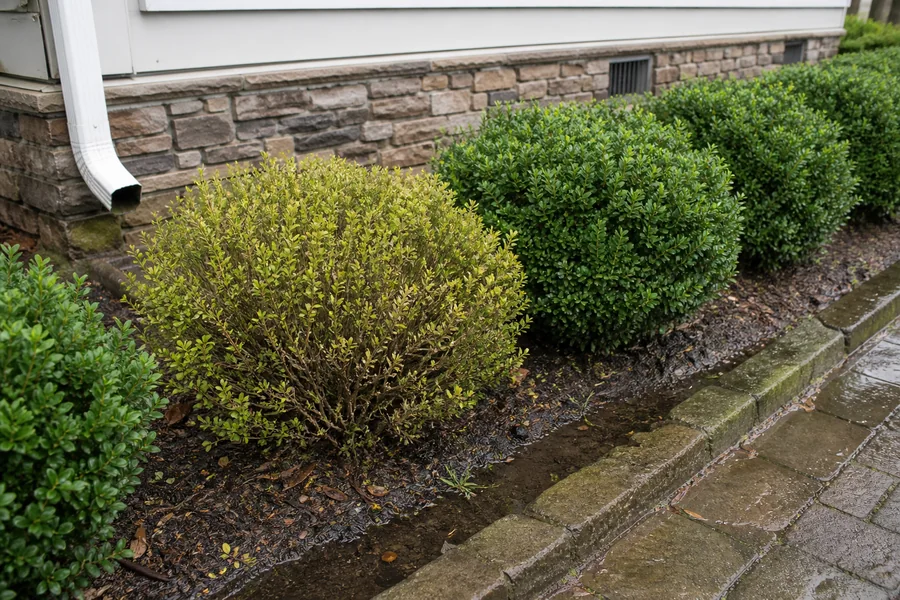
Quick diagnosis
Dark reduced feeder roots plus brown crown tissue in a wet-site pattern
Expose roots at the edge of the decline and compare them with roots from a nearby vigorous section. Firm, branching fine roots argue against advanced root rot; sparse dark roots that break easily, combined with brown tissue under the bark at the crown and a history of saturation, support a root or crown disease.
A diagnostic lab can determine whether Phytophthora is present.
Open the full diagnosisWhat You Are Seeing
Roots need both water and oxygen. When soil pores remain filled with water, boxwood roots lose oxygen, feeder roots die, and Phytophthora species can infect susceptible tissue.
An established hedge may decline after a downspout is redirected, a path changes runoff, fill soil buries the crown, irrigation leaks, or construction compacts the bed. Walk the water path before blaming the plant that happens to show symptoms first.
Do not carry soil, roots, or wet tools from a suspect plant through healthy beds. Keep removed material contained until the diagnosis and disposal plan are clear.
Common Causes
01 Needs root or lab evidence
Phytophthora infected roots and crown tissue
Phytophthora species produce swimming spores in wet soil and attack feeder roots. As the root system shrinks, foliage loses color, growth slows, branches wilt, and brown discoloration may extend into the crown above the soil line.
How to identify it
- Fine roots are sparse, dark brown, and dead rather than firm and well branched.
- The inner tissue of larger roots or the crown is brown to reddish brown.
- Foliage progresses from dull green to yellow-green, purplish brown, or straw color.
- Symptoms worsen in low or slow-draining parts of the bed.
- A plant diagnostic lab detects Phytophthora in a suitable root-and-crown sample.
What to do
- Submit roots from the advancing edge of decline with attached crown tissue and site history.
- Stop runoff or irrigation that keeps the root zone saturated.
- Remove plants with extensively dead roots and crown decay rather than pruning the top repeatedly.
- Contain roots and soil during removal and follow the diagnostic lab's disposal guidance.
- Do not rely on a fungicide to rebuild roots that have already rotted.
02 Common site driver
The root zone stayed saturated and lost oxygen
Roots can die in water-filled, compacted soil even when a pathogen has not been confirmed. The same condition then makes surviving roots more vulnerable to disease.
How to identify it
- A probe brings up wet, smeared soil long after surface water disappeared.
- Water collects in the planting pocket or flows into it from a higher surface.
- Decline follows the low contour rather than spreading from leaf contact.
- Roots are reduced but a lab sample does not confirm the suspected pathogen.
- Nearby plants with similar oxygen needs also struggle in the same wet zone.
What to do
- Trace roof, path, slope, irrigation, and underground leak sources during rain or a controlled water test.
- Redirect concentrated water beyond the bed without sending it onto neighboring property.
- Correct the grade or install a designed drainage outlet where water has somewhere safe to go.
- Keep equipment off wet soil and use compaction repair methods that protect shallow boxwood roots.
- Replant on a raised, well-drained grade when the existing pocket cannot be corrected.
03 Often overlooked
The crown and upper roots were buried
Fill soil, repeated mulch, or a root ball planted below the surrounding grade holds moisture against stem tissue and restricts oxygen near the upper roots. The visible shrub may appear correctly placed while its original root flare sits below the new surface.
How to identify it
- The stems enter the soil like posts with no visible upper root transition.
- Mulch or soil layers cover old bark above the original root ball.
- Crown bark beneath the fill is dark, loose, or decayed.
- New roots occur in the added surface layer while deeper roots decline.
- Damage is strongest where edging or grade work added material.
What to do
- Remove loose mulch from direct contact with stems without cutting shallow roots.
- Expose the crown gradually to find the original upper roots and assess tissue condition.
- Do not excavate a deep bowl that will refill with water.
- Have severely buried mature plants evaluated before lifting or regrading around them.
- Set replacement root balls with upper roots at the intended finished grade.
04 Check recent site changes
A new water path reached an established hedge
A boxwood can grow for years in a workable site and then decline when a downspout extension ends beside it, paving concentrates runoff, an irrigation valve leaks, or a neighboring grade sends water into the bed.
How to identify it
- Decline began after roofing, paving, irrigation, or grading work.
- The first affected shrub sits nearest a discharge point or low channel.
- A meter, pressure test, or exposed fitting confirms a buried supply leak.
- Soil is wetter along a narrow route than across the full hedge.
- Symptoms recur after specific irrigation cycles or storms.
What to do
- Observe the bed during the event that creates the wetness rather than days later.
- Repair leaks through the responsible irrigation or plumbing contractor.
- Extend downspouts to a lawful outlet that stays clear and does not erode soil.
- Reshape surface flow without piling new soil over boxwood crowns.
- Verify the corrected route through another rain or controlled test before replanting.
Root Rot Is a Belowground Diagnosis
Yellow leaves, wilt, and branch dieback describe lost function, not its cause.
A root diagnosis combines the distribution in the bed, recent water history, feeder-root condition, crown color, and laboratory evidence when the result changes treatment or replanting.
Phytophthora often remains associated with infected roots and moves with water or contaminated plant material.
Prevention and site correction matter because chemical products do not restore dead roots, and product choice without pathogen identification can miss the actual cause.
Multiple problems can occur together. Wet-root stress may invite secondary stem dieback, while winter injury or blight can reduce the foliage of a shrub whose roots are still healthy.
Open One Root Window Before Treating the Leaves
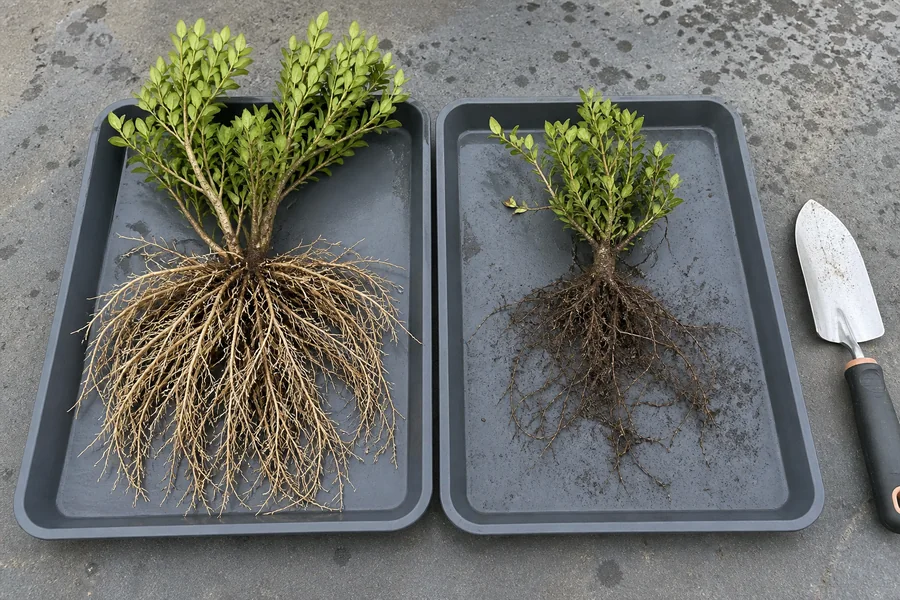
Choose a shrub at the advancing edge of decline, where some branches remain alive, and a vigorous comparison nearby. A completely dead plant may contain secondary decay that hides the earlier cause.
Use a hand tool to expose a limited window at the crown and outer root ball. Keep the root-and-soil relationship intact for photographs, then wash only the sample needed to see fine-root branching and inner tissue.
- Photograph the hedge pattern, grade, discharge points, and mulch depth.
- Trace one declining stem to its crown and expose the upper roots gently.
- Compare fine-root color, firmness, and branching with a vigorous section.
- Slice a small suspect root or crown sample to view the tissue beneath the bark.
- Package the lab sample as instructed and include recent weather, irrigation, construction, and symptom history.
- Backfill any diagnostic opening that is not being removed so roots do not dry.
A laboratory result is especially useful before applying a labeled disease product or replanting the same kind of shrub. Ask the clinic which plant parts and soil conditions produce a useful sample before shipping it.
Separate Root Failure From Leaf Damage
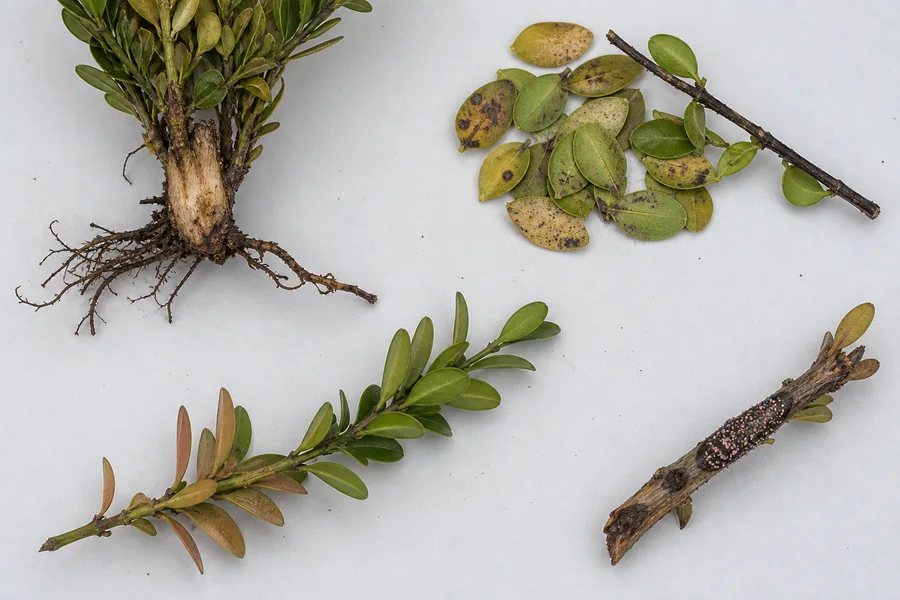
Let the roots create the first fork. Dark reduced roots and brown crown tissue keep root rot high on the list; firm branching roots shift attention to leaves, stems, exposure, drought, or physical injury.
- Root rot
- Reduced dark roots, crown discoloration, and a wet-site pattern. Submit roots and crown tissue when confirmation changes the plan.
- Boxwood blight
- Leaf spots, rapid defoliation, and black stem lesions while roots may remain firm. Follow the blight evidence and sanitation steps.
- Winter bronzing
- Bronze to reddish foliage concentrated on exposed sides after cold, wind, or frozen soil, with a firm crown. Compare winter bronzing patterns.
- Stem canker or Volutella
- Localized twig or branch death with a stem lesion and sometimes salmon-pink fruiting structures; trace the dead branch to its lesion.
- Drought or physical injury
- Dry soil, viable pale roots, gnaw marks, severed roots, or construction damage point away from wet-soil decay.
Do not move fallen leaves or pruning debris among beds until blight has been ruled out. Do not keep watering a wilted shrub until the root-zone moisture and root condition are known.
Decide From the Remaining Root System
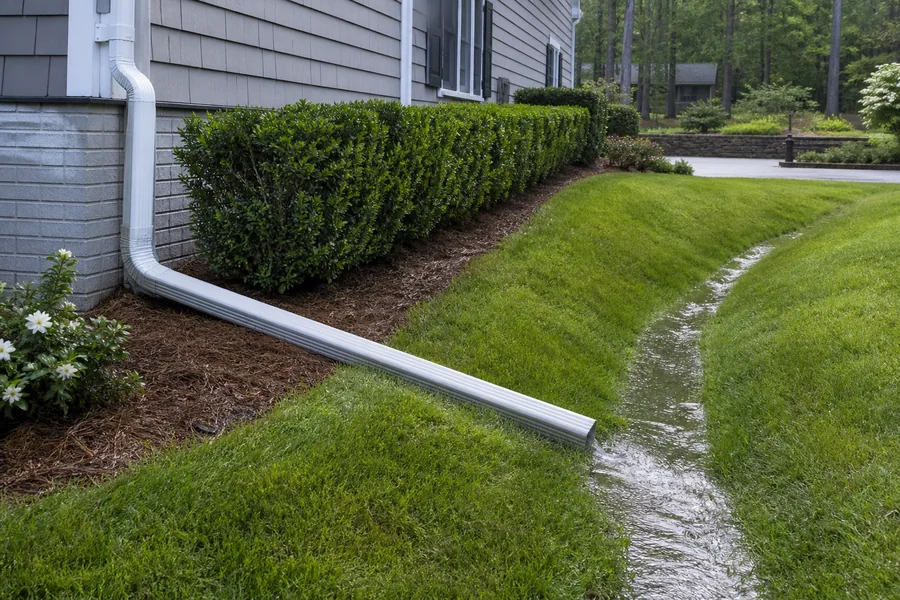
Retention is plausible when much of the root system remains firm, crown tissue is sound, the water source can be corrected, and decline has stopped advancing. Preserve living foliage and shallow roots while observing the plant rather than pruning it into a smaller version of the same unresolved problem.
Removal is more defensible when the root system is extensively dead, decay reaches the crown, the plant no longer anchors firmly, or the site cannot support a susceptible shrub. Contain the root ball and attached soil rather than dragging it through the hedge.
Before buying replacements, verify the bed through real rain or an irrigation test. Where Phytophthora is confirmed, follow local diagnostic guidance and consider a less susceptible plant instead of placing another boxwood into the same unchanged site.
Recovery Plan
Map water and sample the transition
Photograph the pattern, inspect a declining and vigorous root sample, stop unnecessary irrigation, and send suitable tissue to a diagnostic lab when confirmation changes treatment or replanting.
Verify drainage before judging foliage
Watch the repaired downspout, grade, leak, or irrigation zone during the next relevant water event. Soil should lose excess water without exposing roots or holding water against the crown.
Look for stable color and new extension
Retention is gaining ground when decline stops spreading, surviving roots remain firm, and healthy shoots extend. Continued crown discoloration or branch loss calls for another assessment rather than more watering.
Choose the site before the shrub
Confirm finished grade, crown height, runoff outlet, soil structure, and disease history. Use another location or a less susceptible plant when the original wet pocket cannot be made suitable.
Plant boxwood with its upper roots at finished grade, keep mulch off the stems, route roof and paving runoff beyond the bed, and check soil moisture before irrigation.
Review water need by soil and weather instead of running a fixed schedule through wet periods.