
What's Pittosporum Tobira? How to Build a Dense Hedge
Pittosporum tobira Pittosporaceae
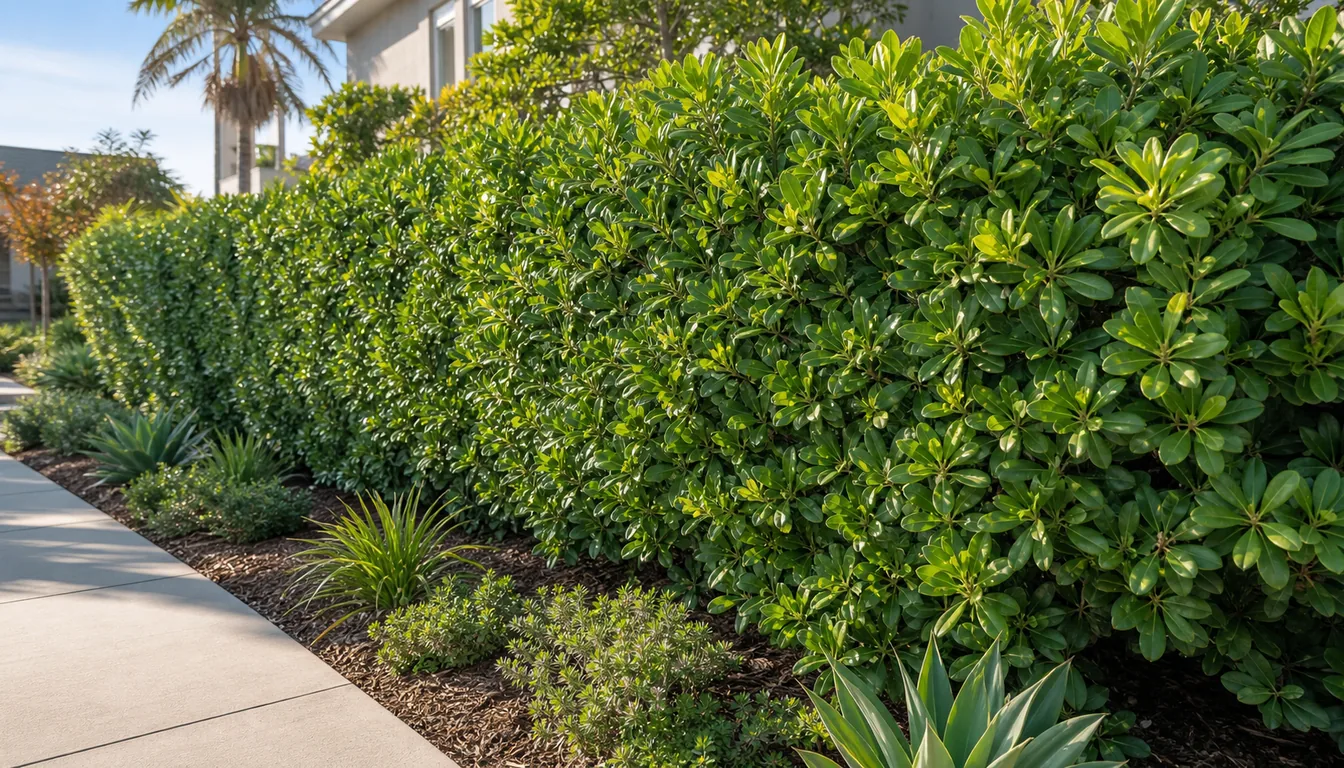
Japanese pittosporum (Pittosporum tobira) is a salt- and drought-tolerant evergreen for hedges and screens in Zones 8 to 10. The species grows 8 to 12 feet tall and can spread wider than it is tall, so the cultivar sets the pruning load, from 'Wheeler's Dwarf' at about 3 feet to full-size plants that need a 12-foot-wide bed.
Care snapshot
What Is Pittosporum Tobira, and Will It Survive Your Winter?
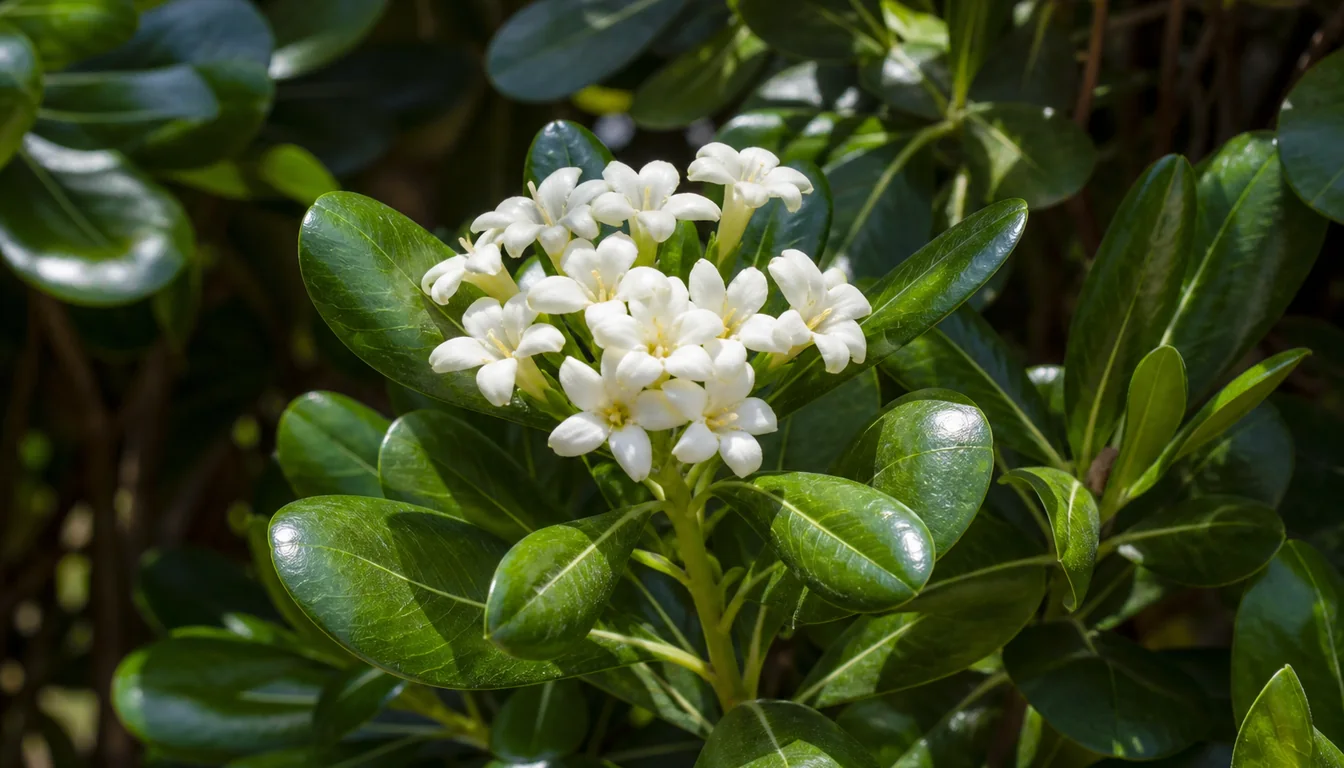
Pittosporum tobira, sold as Japanese pittosporum or mock orange, is a broadleaf evergreen in the family Pittosporaceae with dark green, leathery, rounded leaves. NC State Extension describes creamy white late-spring flowers in clusters at the shoot tips that smell like sweet orange blossoms and turn yellow once pollinated.
Winter is the first limit. NC State rates it for Zones 8a through 10b and Clemson Extension for Zones 8 to 11, and Clemson warns that plants in the upper Piedmont and mountains of South Carolina can suffer cold damage. That damage is more than cosmetic, because bark that splits in a freeze becomes more susceptible to fungal galls.
For a Zone 7 garden, the cultivar matters. Clemson lists 'Mojo' as hardy in Zones 7 to 10, and NC State describes it as more cold hardy than the species. A full-size green pittosporum hedge at the cold edge of its range is a bet on mild winters, while a hardier evergreen such as holly or boxwood removes that risk.
Which Pittosporum Size Fits Your Hedge?
The size range is wide, and the two extension sources describe the species differently. Clemson puts it at 8 to 12 feet or more tall with a 12- to 18-foot spread at maturity, while NC State lists 8 to 13 feet tall and 4 to 8 feet wide. The safer planning number for a full-size plant is the wider one, because a pittosporum given too little width gets sheared every year and thins at the base.
- Species
- 8-12+ ft tall, 12-18 ft wide (Clemson). A screen or background mass.
- 'Variegatum'
- 6-8 ft tall and wide, gray-green leaves edged in white (Clemson).
- 'Wheeler's Dwarf'
- About 3 ft tall and 4-5 ft wide, dark green (Clemson). A low foundation mound.
- 'Mojo'
- 2-3 ft tall and 3-4 ft wide, white-cream variegation, hardy to Zone 7 (Clemson, NC State).
- 'Cream de Mint'
- Eventually 2-2.5 ft tall and wide (Clemson).
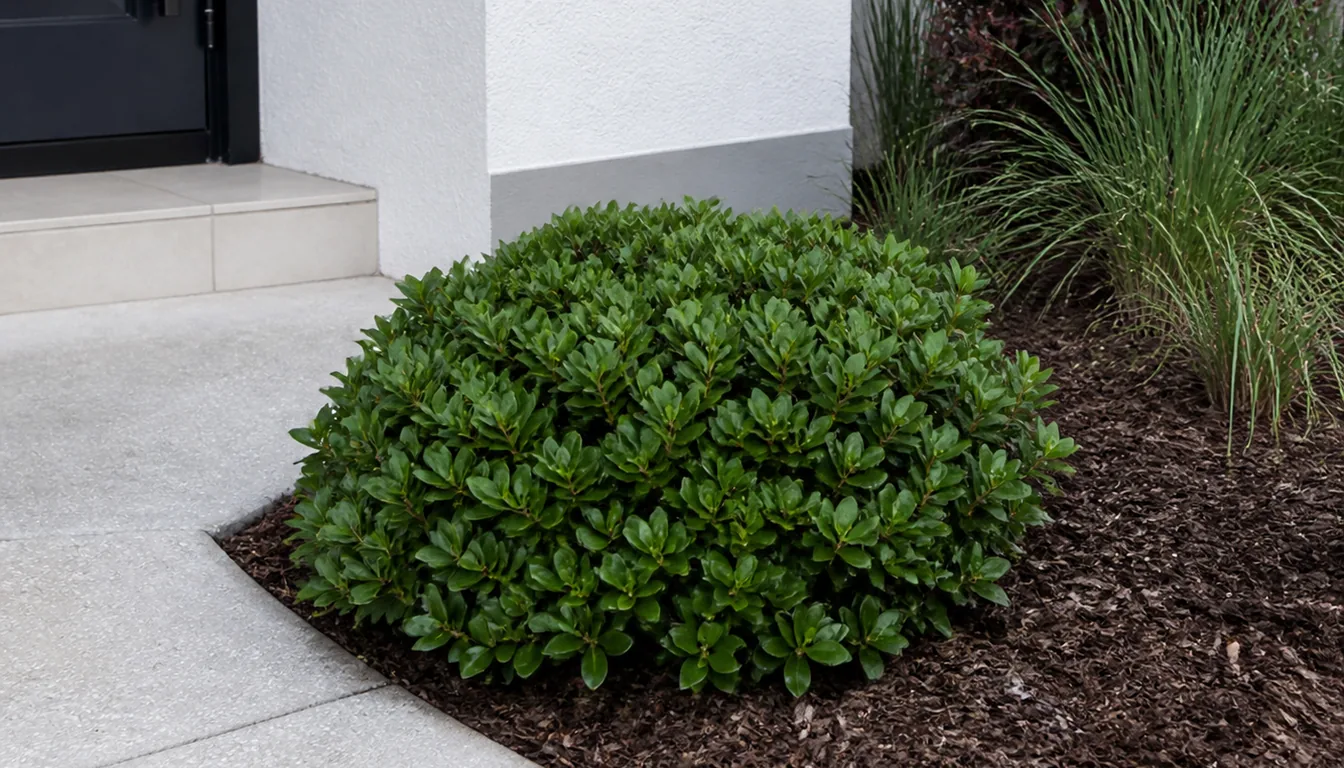
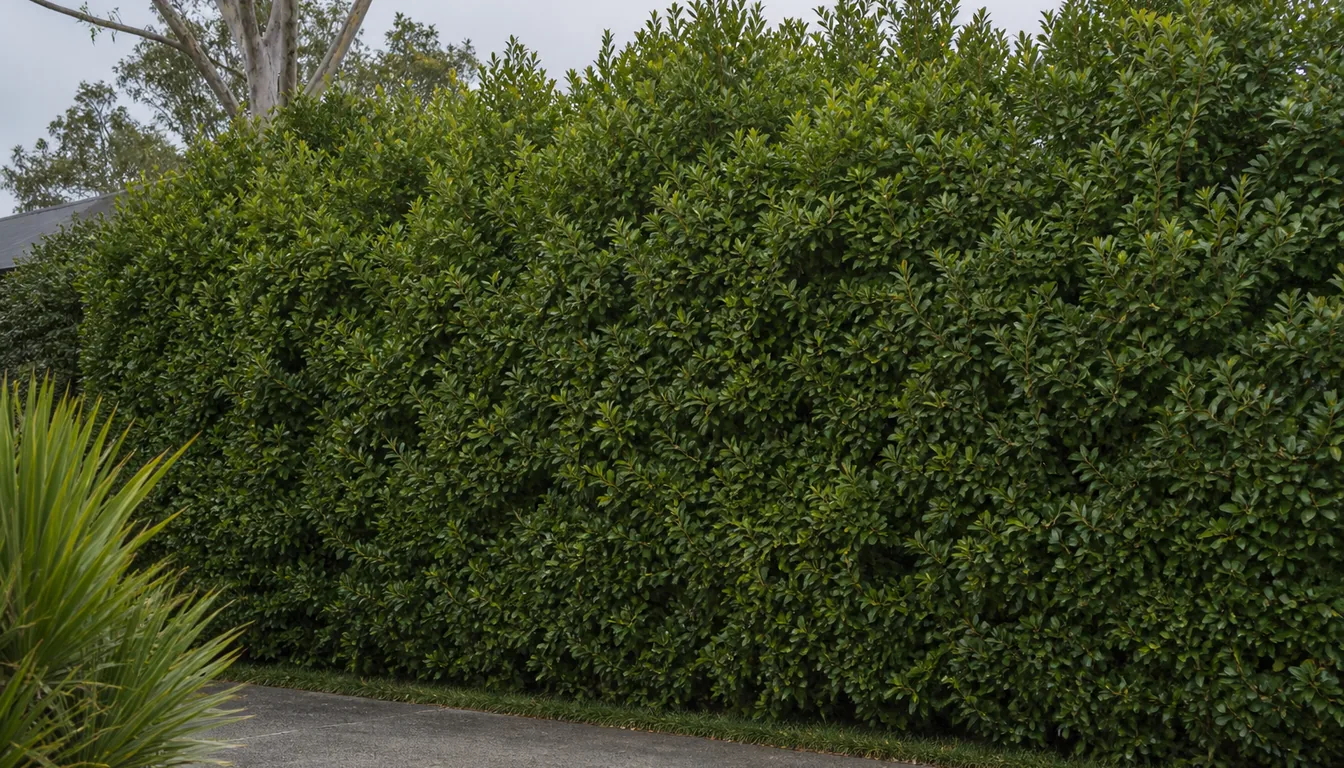
Spacing follows from those widths. A row of 'Wheeler's Dwarf', which spreads 4 to 5 feet, closes into a continuous low hedge when plants go in about 3 to 4 feet apart, and wider spacing leaves separate mounds. A full-size screen set at 6 feet will touch quickly and keep growing outward, so the bed needs depth in front of and behind the row for access.
A dwarf saves years of cutting. Next to a door, a walk, or under a window, 'Wheeler's Dwarf' or 'Mojo' does the job without shearing, and the full-size species belongs where it can spread.
How Well Does Pittosporum Handle Salt, Heat, and Shade?
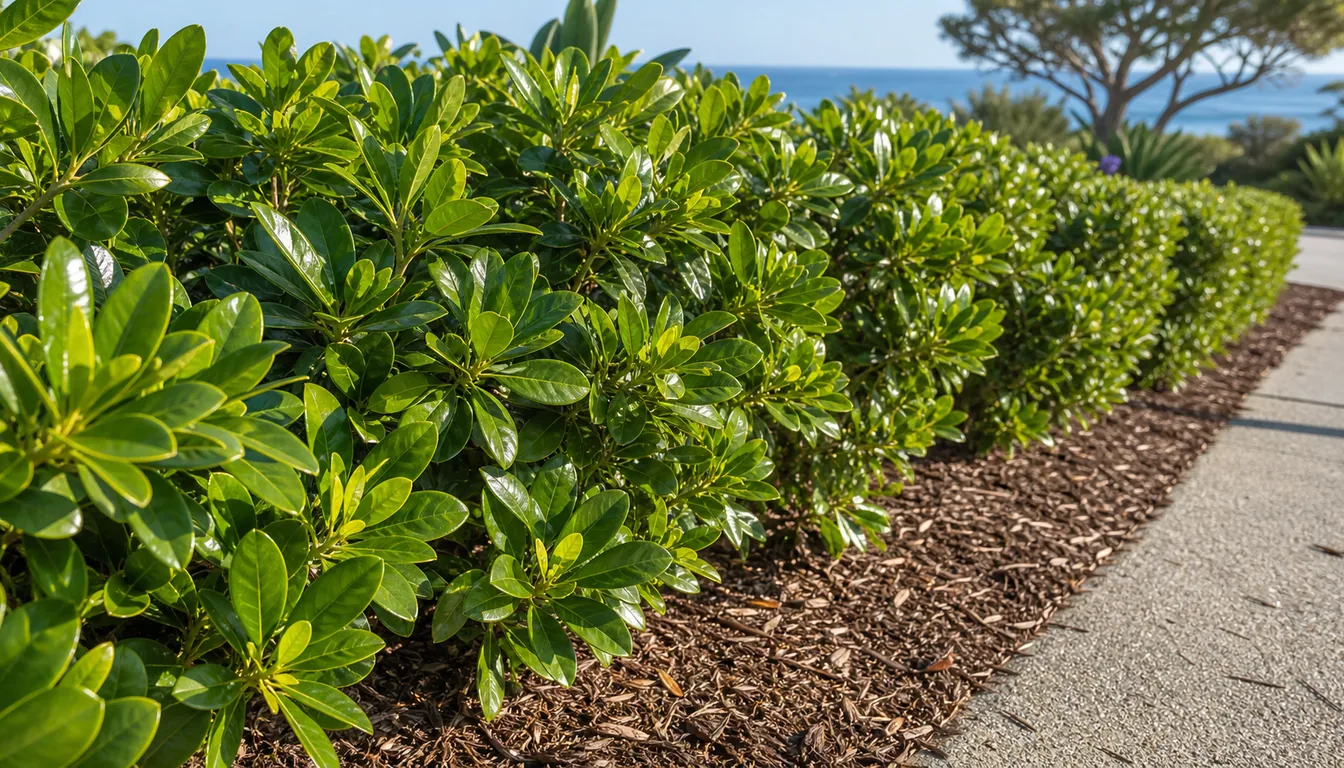
Exposure tolerance is the main reason to choose pittosporum for a coastal yard. NC State notes that it handles heat, drought, and salt spray, which makes it suited to sandy coastal sites, and that it grows in anything from full sun to heavy shade and in a wide pH range. Clemson's range is sun to partial shade.
Salt spray usually shows as browning on the face that takes the wind. If the inner leaves stay green while the windward side browns, the site is the cause rather than a disease, and the next planting can go a little farther back from the spray.
Deer are the exposure many gardeners do not expect. NC State notes the plant is frequently damaged by deer, so in a yard with regular browsing, a pittosporum hedge needs protection while it is young or a different shrub.
How Should You Water Pittosporum, and Why Does It Yellow?
Drainage decides more than watering does. Clemson lists root rot as lethal in poorly drained soil, and NC State adds that leaf spot and root rot occur in poorly drained conditions. Pittosporum tolerates many soil types as long as water moves through them.
Once established, the shrub is drought tolerant. Clemson adds that it looks best and stays healthiest with regular water, so a dry summer is survivable but a regular deep soak keeps a hedge full.
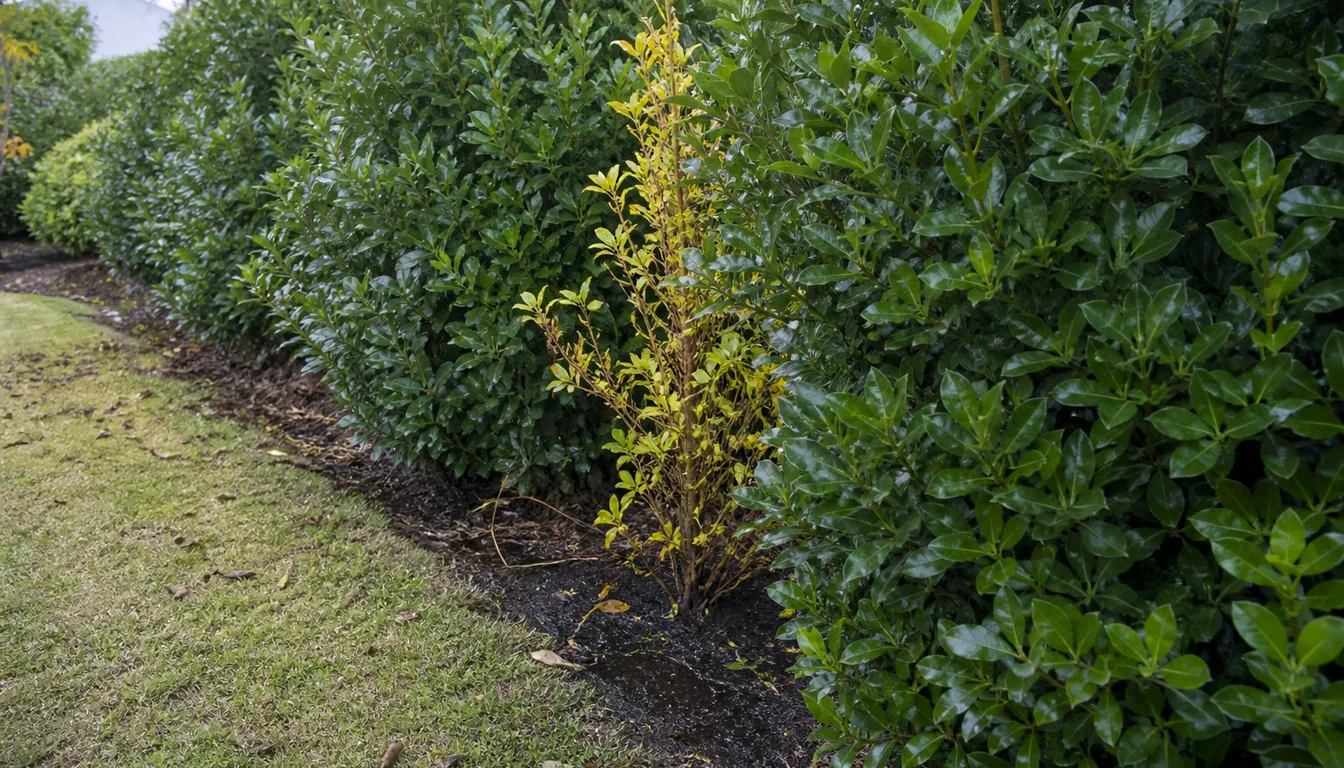
A single yellowing plant in an otherwise healthy row often points to a drainage pocket, a planting set too deep, or a leaking emitter, and fertilizer will not fix any of those. Checking how fast water drains at that spot after rain, compared with its neighbors, usually settles it.
How Do You Prune Pittosporum Without Hollowing It Out?
Timing depends on whether the flowers matter. Clemson says that if flowers are wanted, pittosporum should be pruned only immediately after flowering, since the late-spring flower clusters form at the shoot tips that shearing removes.
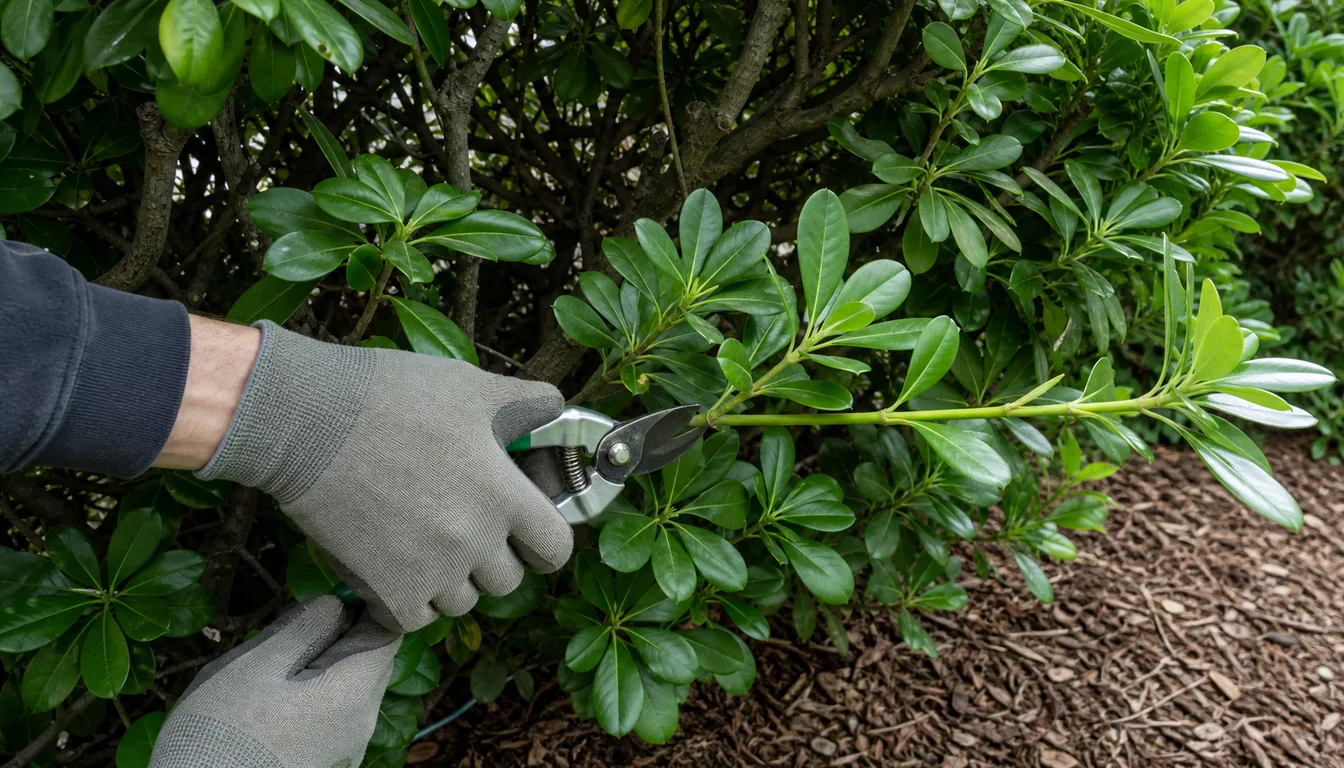
The cut itself matters as much as the timing. The University of Delaware's guide to pruning evergreens says to cut back to a side shoot and to avoid cutting too far into old wood, because new growth comes less readily from it. Shortening long shoots to a side branch inside the outline keeps leaves on the interior, while shearing every shoot to the same surface builds a green shell over bare stems.
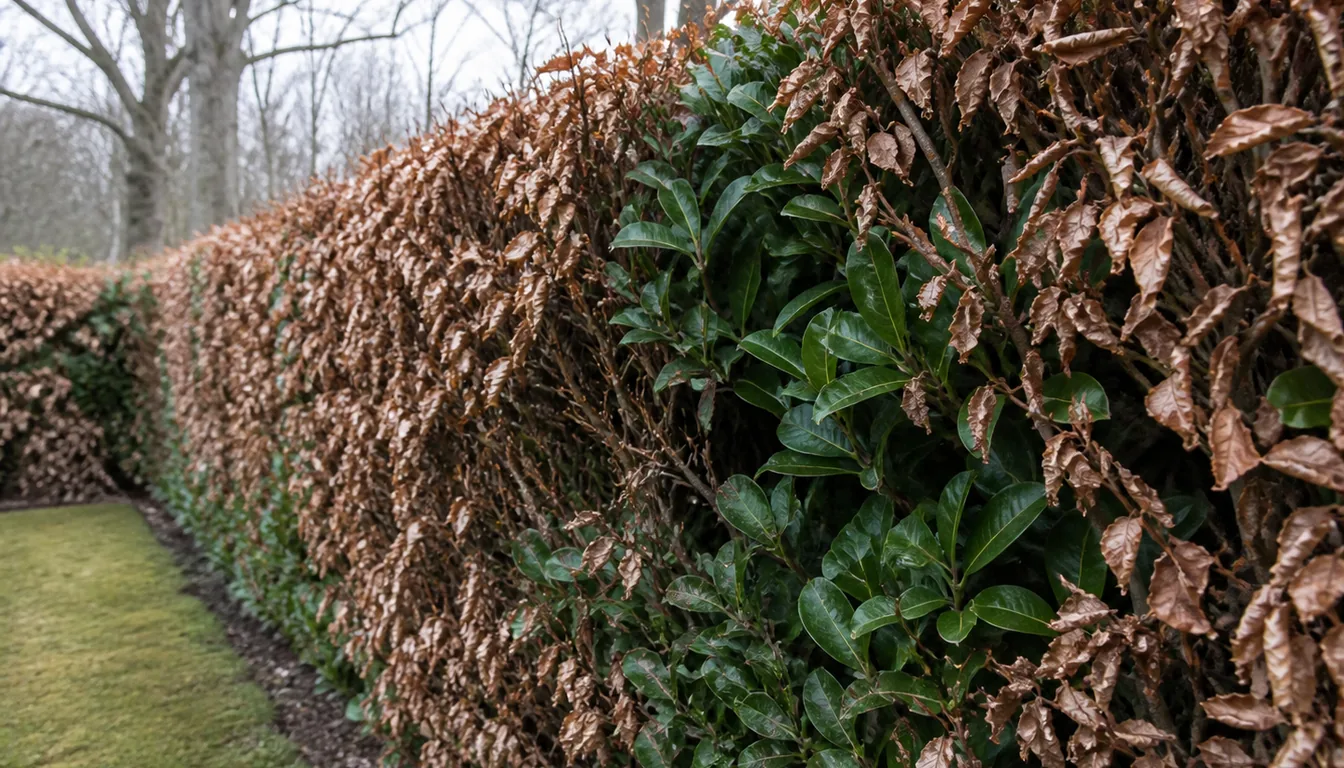
After a freeze, waiting is the useful step. Browned leaves can hide live stems, and the new spring growth shows which branches survived. Cutting back only to live growth at that point, and leaving the green interior, lets the hedge refill from the inside.
What Pests Cause Sticky, Sooty, or Spotted Leaves?
Clemson names cottony cushion scale, mealybugs, aphids, and the pittosporum psyllid as the main insect pests, and NC State adds whiteflies and root-knot nematodes. All of the sap feeders leave honeydew, which is what turns leaves sticky and then black with sooty mold.
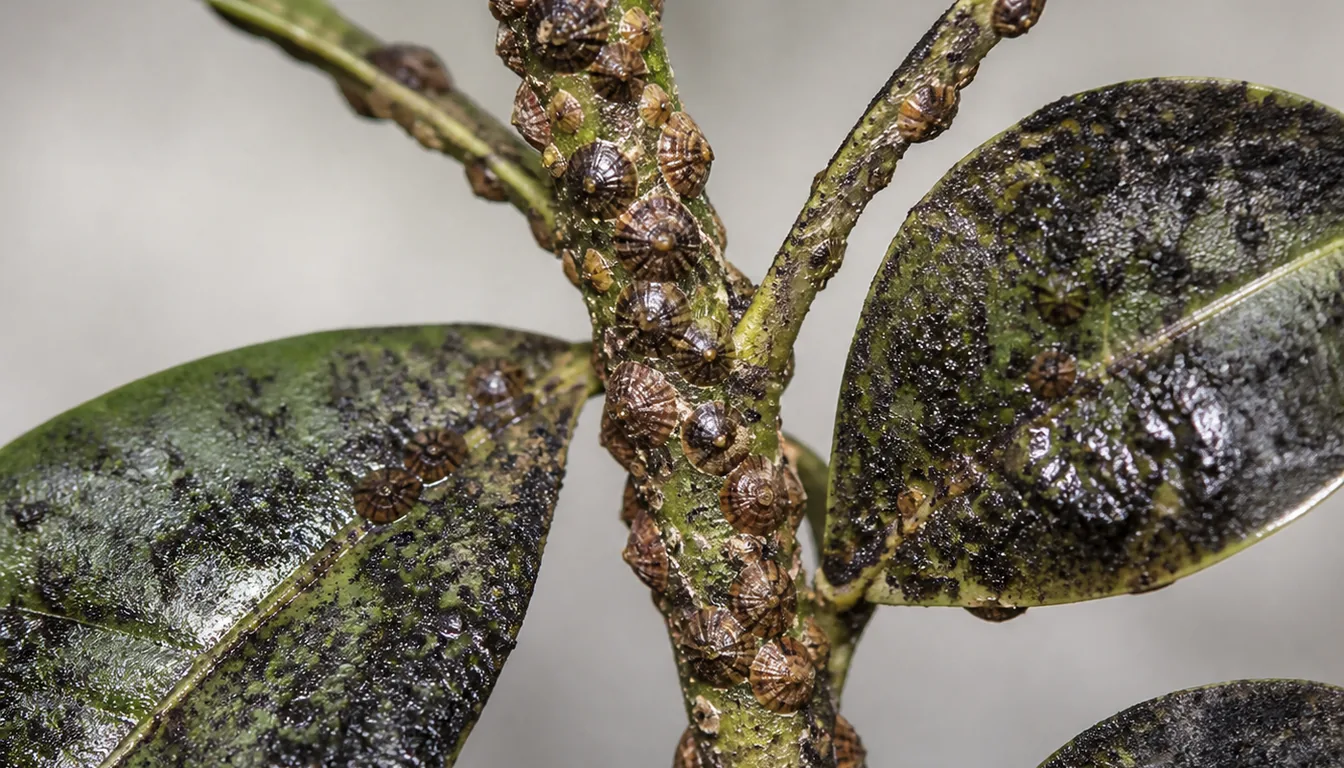
Sticky or black leaves
- Look for scale, mealybugs, aphids, or whiteflies on stems and leaf undersides.
- The black coating is sooty mold growing on their honeydew.
Spotted leaves
- Leaf spot is more likely in poorly drained, damp sites.
- Improving drainage and airflow helps more than spraying.
Slow yellow decline
- Check for root rot in wet soil first.
- NC State also lists root-knot nematodes, which attack roots.
Brown outer leaves after cold
- Cold or wind injury, which spring growth will sort out.
- Split bark after a freeze can lead to fungal galls.
Dense hedges hide the insects until an infestation is well along, so parting the branches and checking inner stems twice a year catches them earlier than looking at the outer face.
Where Does Pittosporum Work Best, and Is It Safe for Pets?
NC State lists pittosporum for specimens, hedges, screens, and containers, and even for bright rooms indoors. In a warm-climate yard it works as a privacy screen where there is room for its width, a foundation mass when a dwarf is chosen, or a coastal hedge where salt rules out other shrubs. The evergreen shrubs guide places it among the warm-zone screen options.
The ASPCA lists Japanese pittosporum as non-toxic to dogs, cats, and horses. That listing covers the plant itself. It does not cover a hedge recently sprayed or drenched with insecticide for scale, so the product label's re-entry and pet directions apply after any treatment.
Frequently Asked Questions
How big does Pittosporum tobira get?
Clemson Extension lists the species at 8 to 12 feet or more tall and 12 to 18 feet wide. 'Wheeler's Dwarf' stays about 3 feet tall and 4 to 5 feet wide.
How cold can pittosporum take?
NC State rates it for Zones 8 to 10, and Clemson warns of cold damage in the upper Piedmont. 'Mojo' is listed as hardy to Zone 7.
Why are my pittosporum leaves turning yellow?
Poorly drained soil is the first suspect, since Clemson lists root rot as lethal in wet sites. A single yellow plant in a row usually points to that spot's drainage.
When should I prune pittosporum?
Clemson says to prune immediately after flowering if you want the fragrant flowers. Cut long shoots back to a side branch rather than shearing.
Is Pittosporum tobira safe for pets?
The ASPCA lists Japanese pittosporum as non-toxic to dogs, cats, and horses. That does not cover insecticide-treated plants.
Sources & References
Related Plants
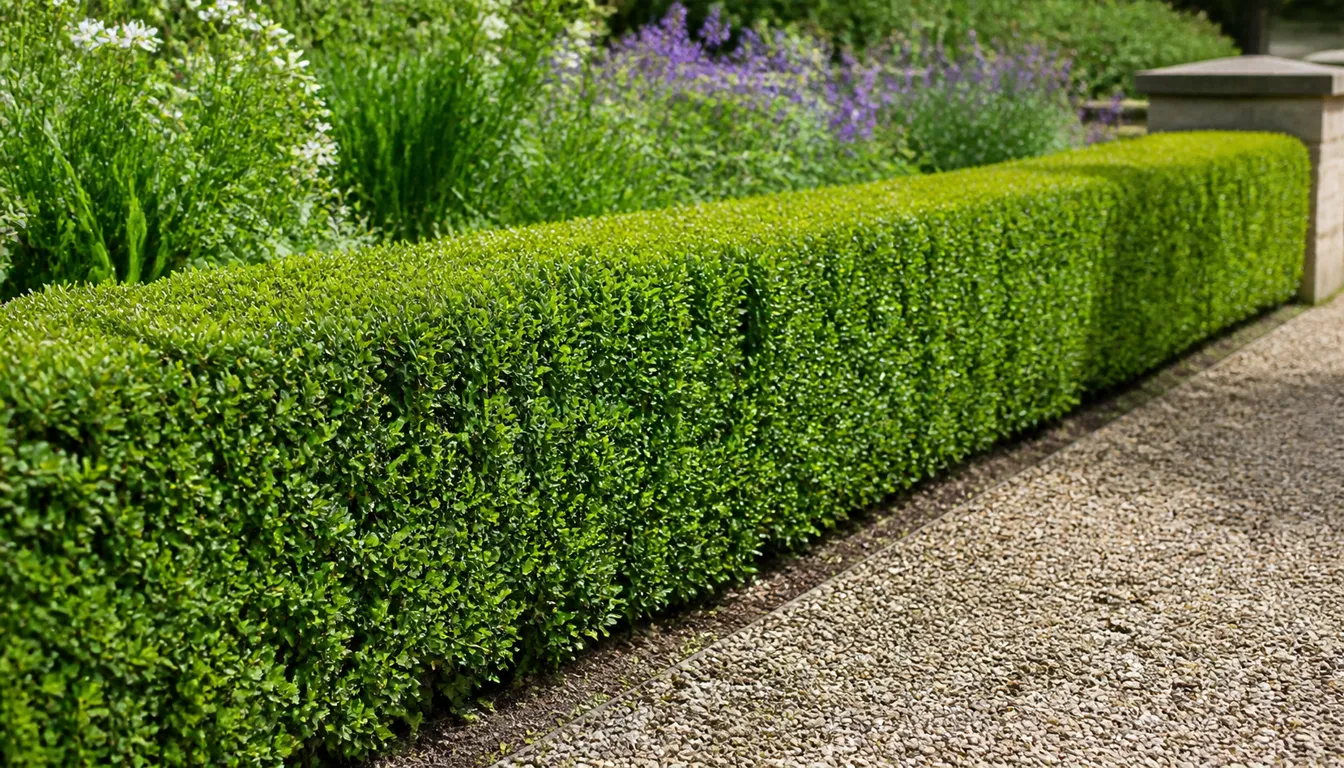
Boxwood
Fine-textured evergreen shrub for tighter formal edges and cooler hedge sites.
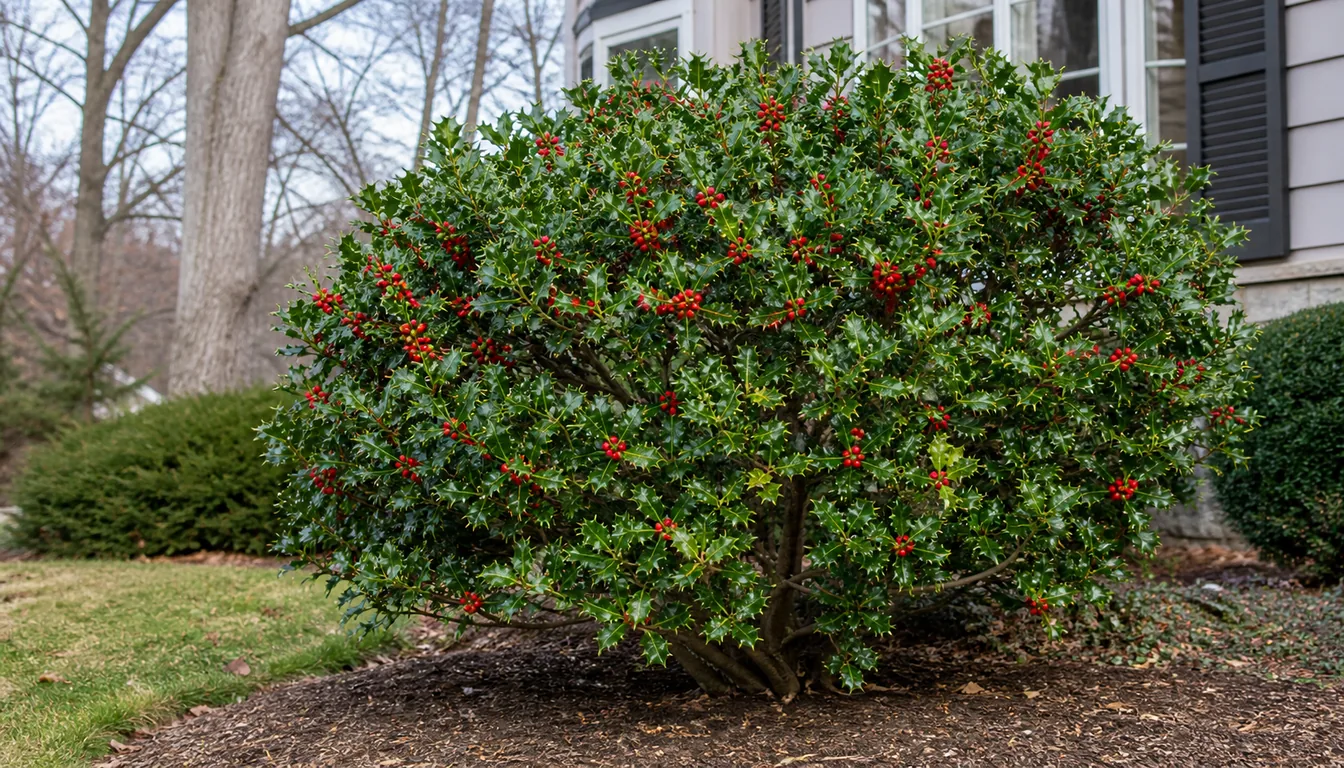
Holly
Evergreen screen shrub with berries, prickly structure, and broader cold usefulness.
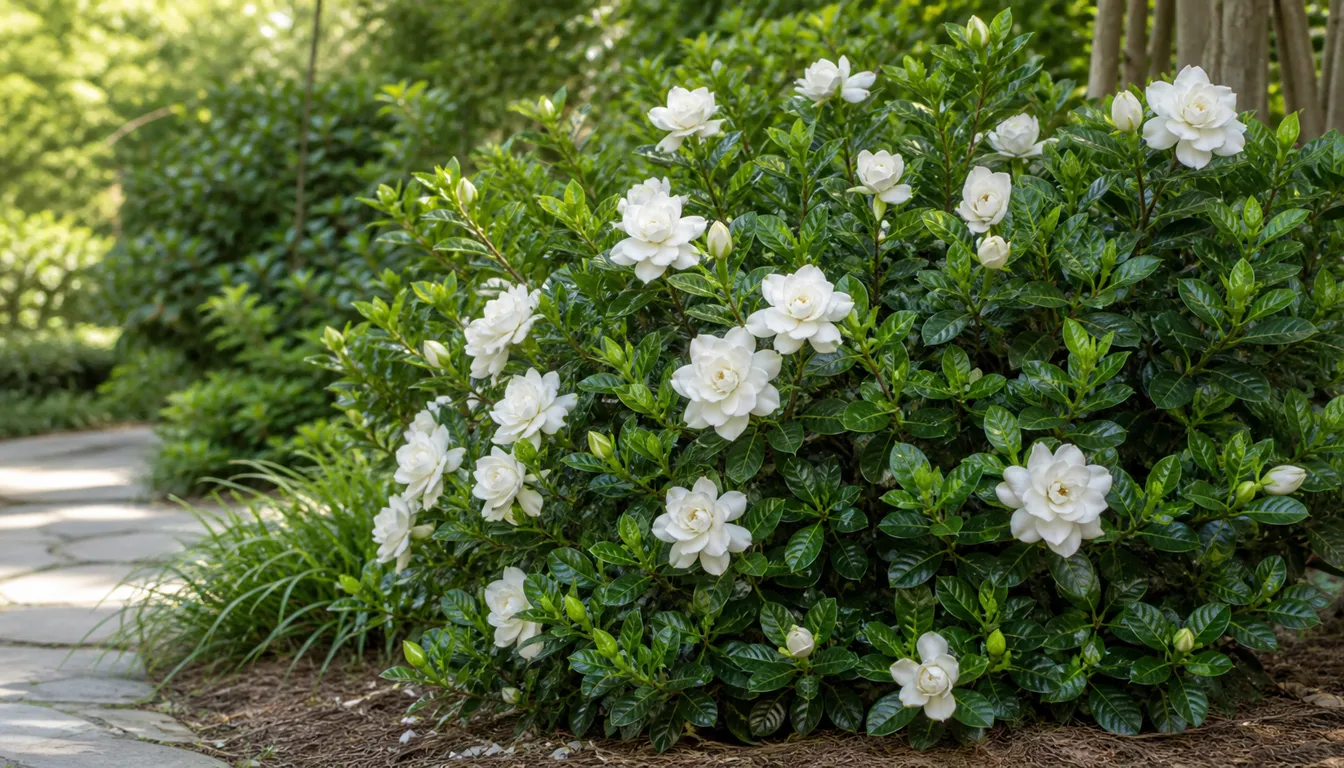
Gardenia
Warm-climate flowering shrub for fragrance where acid soil and moisture suit it.
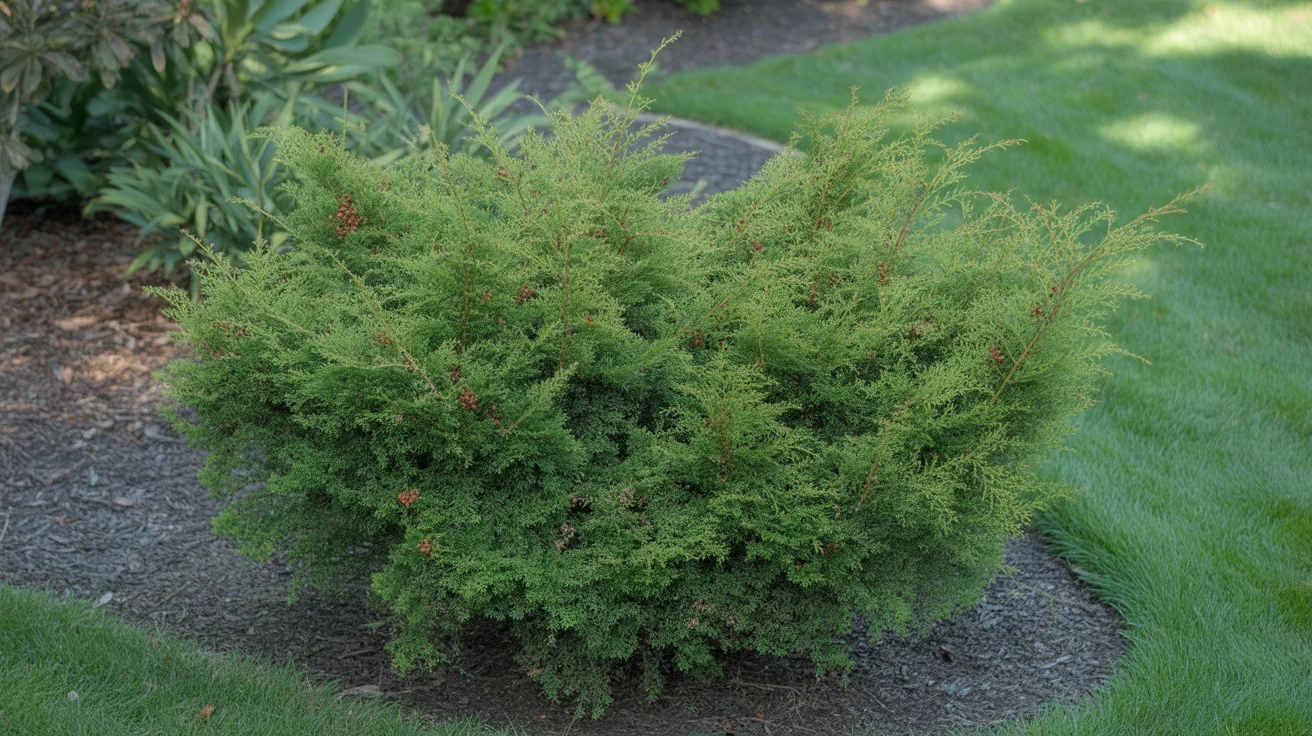
Arborvitae
Arborvitae can form a dense living screen where its mature width, exposure, and water needs fit the site.
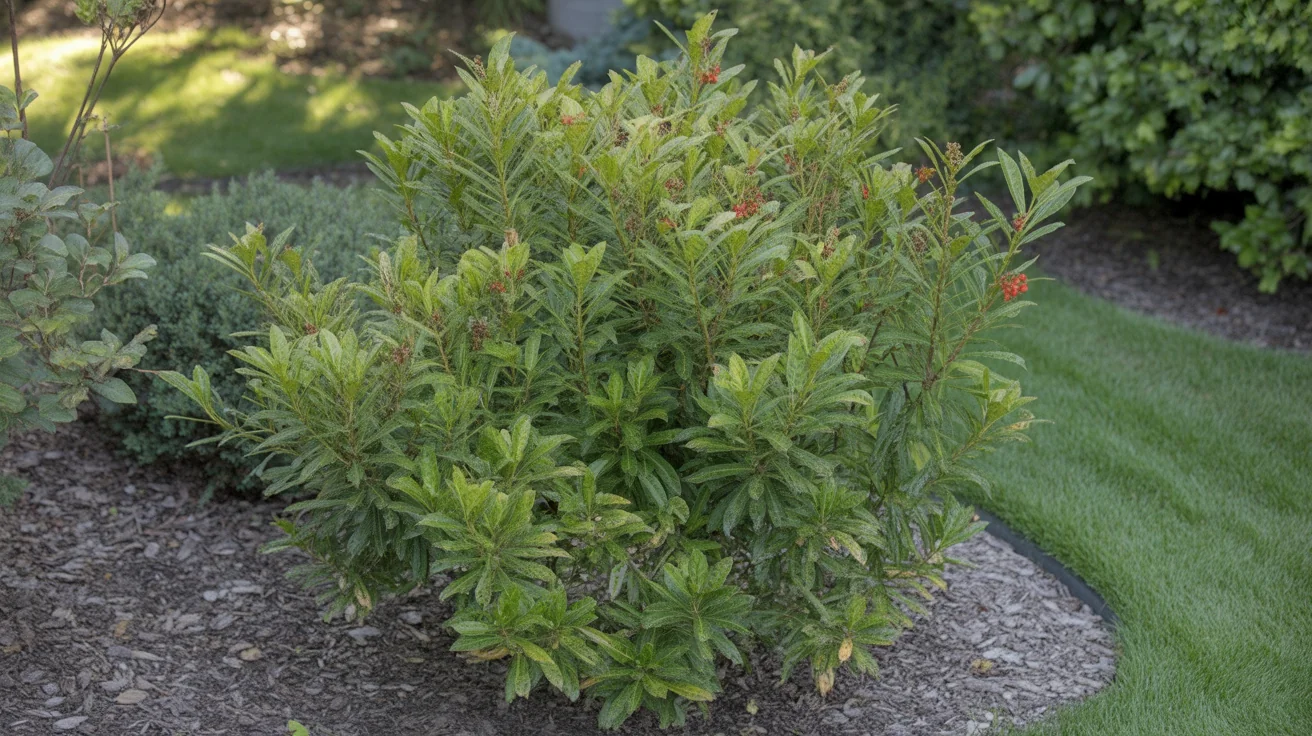
Aucuba
Aucuba is the shrub for bright shade with dry root competition. It keeps evergreen structure near north walls, porches…
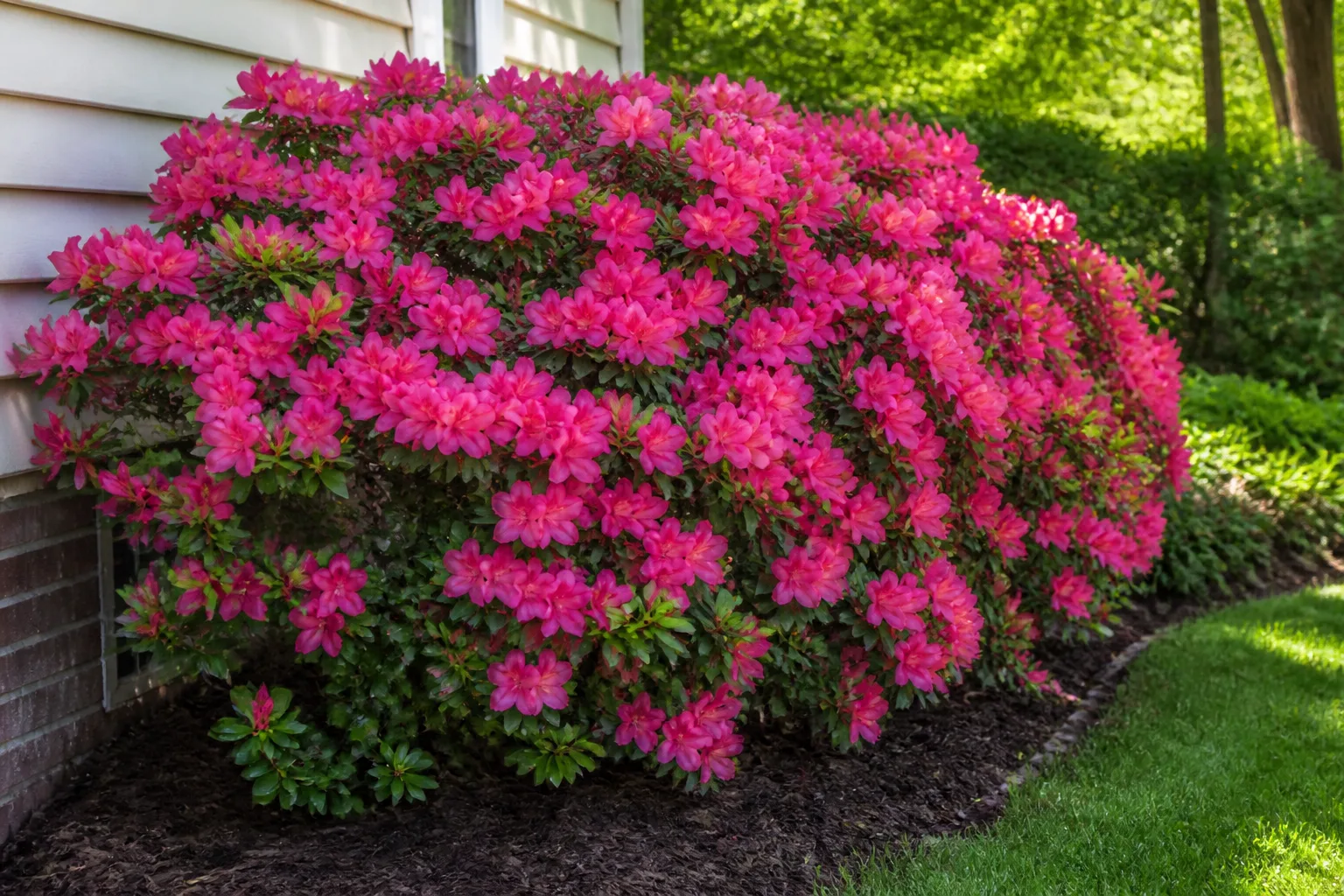
Azalea
Azaleas bring spring flowers, and some cultivars bloom again later in the year.