
Why Are My Boston Fern Fronds Turning Yellow?
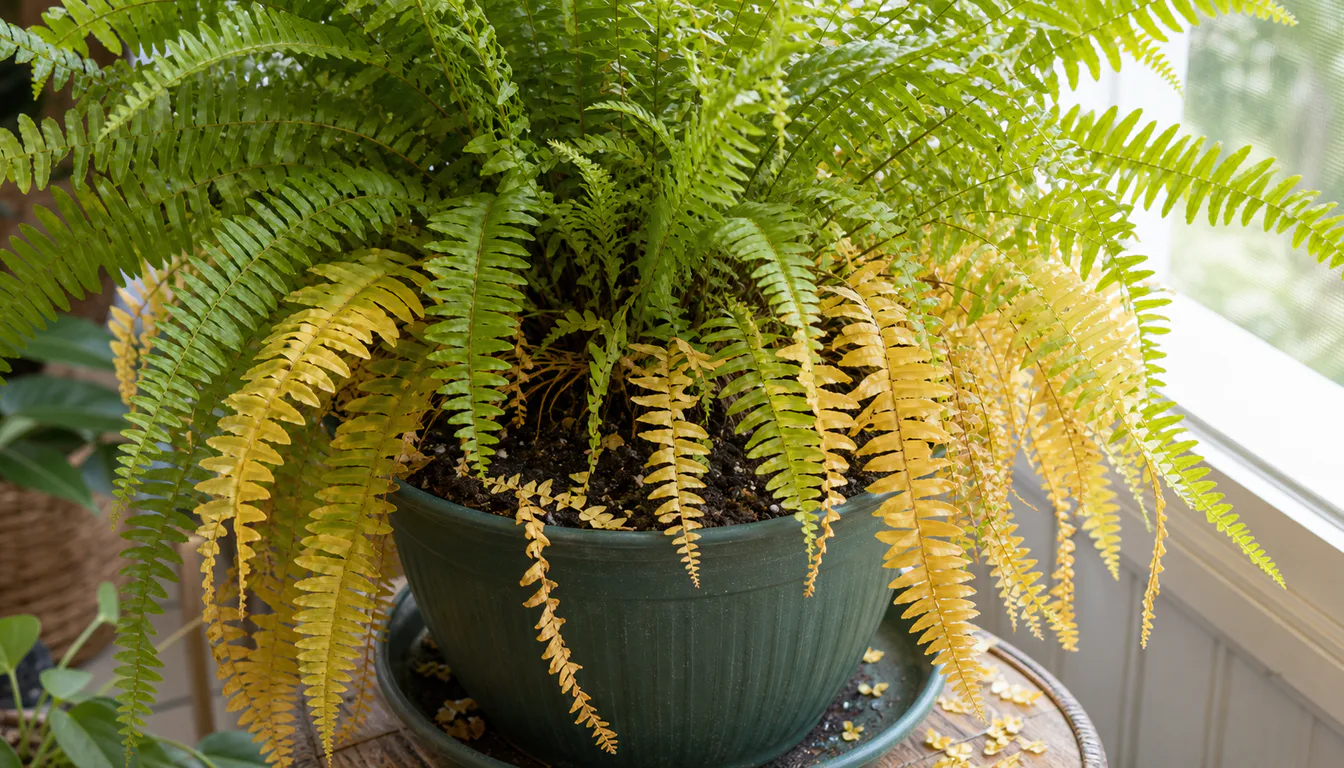
Yellow fronds on a Boston fern can follow root stress, changing conditions, pests, or normal loss of older growth. Comparing moisture below the surface with frond age and recent changes helps choose the next check. The color alone cannot establish a cause or justify fertilizer.
Quick diagnosis
Compare pot conditions, the age of affected fronds, and recent changes before choosing a response.
A heavy pot with persistently wet mix needs drainage assessment before more water. A light pot with a dry root ball supports watering, but neither observation identifies a pathogen.
Limited loss of older outer fronds can be normal when the rest of the plant stays stable. Yellowing in new growth, rapid spread, or a soft crown deserves closer inspection of roots, exposure and pest signs. Firm-looking roots or green new fronds cannot rule out a problem elsewhere in the clump.
Open the full diagnosisWhat You Are Seeing
Yellowing is called chlorosis. In a Boston fern, the useful distinction is whether it remains in old outer fronds or spreads into new growth, and whether other signs accompany it.
Dry mix can limit water supply while continuously saturated mix deprives roots of air. Both conditions may end in yellow foliage, so adding water based only on the leaf color can worsen the problem.
Frond age, root-zone conditions and actual insect signs provide different pieces of evidence. They work together rather than acting as independent tests that clear the rest of the plant.
Crisp brown margins and yellowing fronds can share causes. Their appearance helps organize the inspection without proving a separate diagnosis.
Common Causes
01 Check the evidence
Wet mix and impaired roots
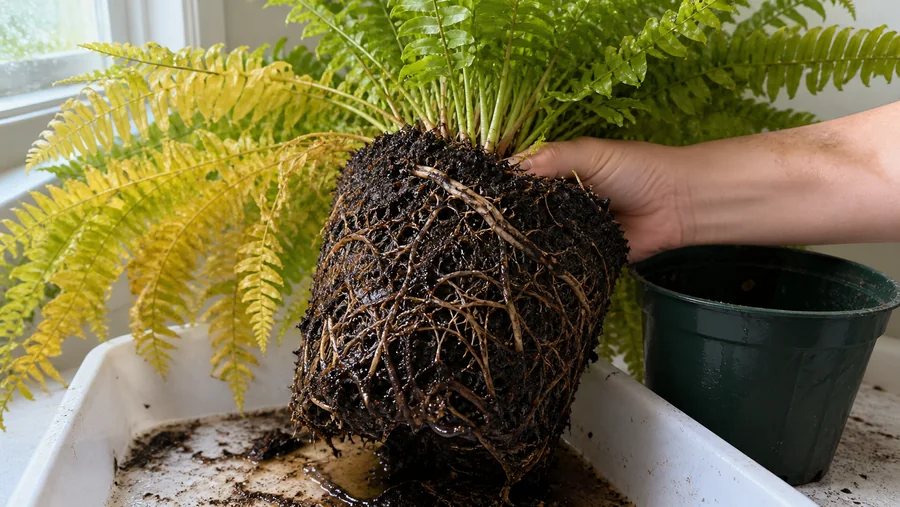
Persistently saturated mix leaves less air around the fern’s fine roots. A plant may become limp or yellow while the pot still contains plenty of water because those roots cannot function normally.
Root rot is not simply another name for overwatering. Penn State lists Pythium among fern root diseases with yellowing, stunting and wilt, but wet mix, dark roots or a sour smell cannot identify the organism. Infection and poor root conditions can occur together.
How to identify it
- The pot remains wet unusually long compared with its own previous drying pattern.
- Drainage is blocked, the inner pot stands in runoff, or much wet mix lies beyond the roots.
- Decline continues despite water being present.
- Collapsing root tissue, loss of its outer layer or soft crown tissue makes further inspection more urgent.
What to do
- Empty collected water and restore a clear drainage path.
- Allow excess moisture to decline without deliberately drying the fern root ball hard.
- Inspect the root ball gently if decline persists, the crown collapses or the mix has failed. Naturally dark roots are not automatically dead.
- When repotting is justified, match the container and fresh aerated mix to surviving roots. Remove clearly decayed tissue without using color as the only test.
- Seek a plant diagnostic service for persistent or rapidly progressing decay. A pathogen-specific treatment needs better evidence than yellow fronds.
02 Check the evidence
The root zone dries between waterings
A dry root ball can lead to wilting, shedding, browning or yellowing. An exposed basket may dry unevenly, and runoff can bypass a dry core rather than wetting it throughout.
The relevant evidence is current root-ball moisture and how water moves through it. A temporary improvement after watering supports a water-supply problem, but it does not prove that all roots are sound.
How to identify it
- The pot is lighter than its usual weight after watering and drainage.
- Accessible mix below the surface is dry in several places.
- Water runs through a gap while the center remains dry.
- Drying accelerated after more heat, airflow or light.
What to do
- Water a confirmed dry root ball slowly and allow excess to drain.
- Check that the center becomes moist rather than relying on the first runoff.
- Assess crowding or a mix that resists wetting if this remains difficult.
- Shelter the fern from excessive drying exposure while preserving useful indirect light.
03 Check the evidence
Older outer fronds are being replaced
An established fern gradually loses old foliage. Limited yellowing around the outside can fit normal turnover when the remaining fronds and new growth remain stable.
One or two yellow fronds are not a diagnostic cutoff. Old leaves may also show stress first, so the rate of change and the rest of the plant matter more than counting affected fronds.
How to identify it
- Yellowing stays in older outer growth rather than spreading through the clump.
- New fronds continue to develop without fresh injury.
- There is no accelerating decline or softening crown.
What to do
- Retain useful green tissue unless pests or decay give a separate reason to remove it.
- Cut fully dead fronds near their base with clean scissors rather than pulling at the crown.
- Keep observing the pattern. New yellowing or other signs justify reassessment rather than assuming all later damage is normal.
04 Check the evidence
Light no longer supports the same growth
Tropical indoor ferns grow poorly in very dim positions. Less light can slow growth and water use, so a watering interval that worked earlier may leave the pot wet longer.
Paleness or sparse growth alone does not measure light. The actual window, obstruction, season and distance help explain what changed, while roots and pests still need attention when their signs are present.
How to identify it
- A move, growing outdoor foliage or heavy curtains reduced the light reaching the fronds.
- Growth slowed and the pot now dries more slowly.
- The plant remains far from usable daylight or supplemental light.
What to do
- Provide brighter filtered light when the existing position is genuinely dim.
- Avoid an abrupt move into strong direct sun, which can injure shade-grown fronds.
- Reassess moisture as light and growth change instead of retaining a fixed watering interval.
05 Check the evidence
A recent exposure changed the conditions
Cold glass, a draft, an exposed journey or a sudden move can damage houseplant foliage. The timing and affected side help connect the change with the surroundings.
That history supports investigation of exposure, not exclusion of every other cause. Roots may remain impaired even when the visible crown looks firm.
How to identify it
- The change followed a move, delivery, heating change or cold exposure.
- Affected foliage faces a cold window, door or direct air stream.
- Protected and exposed fronds show different damage, alongside a matching exposure history.
What to do
- Remove the harmful exposure while keeping usable indirect light.
- Provide stable conditions and assess pot moisture separately.
- Avoid extra fertilizer as a response to a recent stress event. Continued decline needs reassessment even after the plant is moved.
06 Check the evidence
Nutrient supply or uptake needs investigation
A long period of active growth without adequate nutrients can leave a fern pale. Root damage, cold conditions and an unsuitable mix can also impair uptake, so adding fertilizer does not necessarily address the reason for the color change.
Patterns between veins may help a wider nutrient investigation, but they cannot identify a deficiency or prescribe a pH correction on their own. Product history, mix condition and relevant testing are more useful than choosing a supplement by leaf color.
How to identify it
- Pallor developed during active growth alongside limited feeding history.
- The mix or water supply changed, or deposits appeared after feeding.
- Root and environmental problems remain possible and need assessment.
What to do
- Review the existing fertilizer and its directions before adding more.
- If feeding is appropriate, use a suitable light rate for ferns during active growth and avoid applying concentrated fertilizer to dry mix.
- Do not add iron, acidifiers or a stronger feed solely because a frond is yellow. Persistent suspected nutrient problems may need mix or water testing.
07 Check the evidence
Pest feeding or another foliage problem
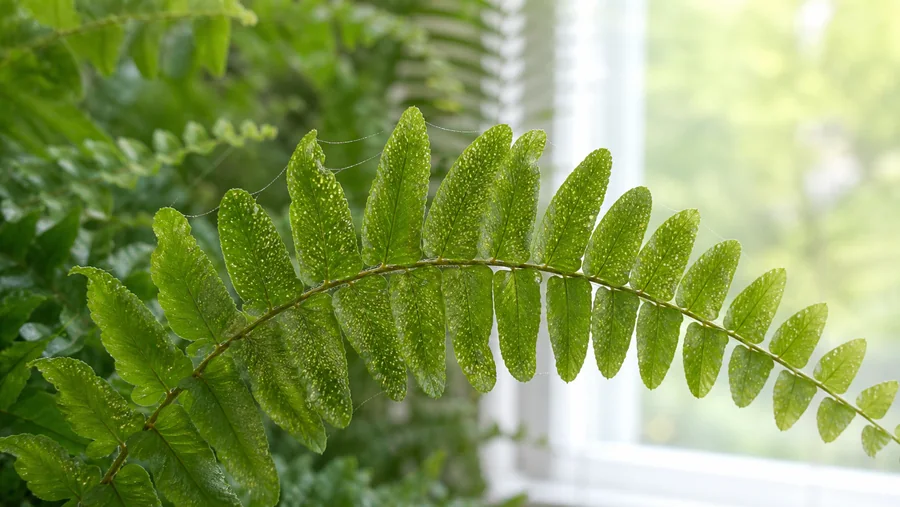
Mites and several sap-feeding insects can leave stippling, webbing, attached covers, cottony clusters or sticky residues. A closer view is useful because these signs are easily hidden in a dense fern.
Webbing alone is not a complete identification. Penn State also describes fern fungal blight with rapidly spreading brown lesions and threads between fronds. Actual pests and the pattern of damage need to agree before treatment.
How to identify it
- Fine stippling or visible mites accompany delicate webbing.
- Raised covers contain insects, or cottony clusters appear at sheltered joints.
- Damage and pest signs also appear on nearby plants.
- Rapidly expanding lesions or crown decline suggest the need for a broader assessment.
What to do
- Separate an infested plant while identifying the pest and inspecting nearby foliage.
- Gentle rinsing can remove some pests without repeated saturation of the pot.
- Choose treatment only after identification, with a label suitable for the pest, indoor setting and fern. Fern foliage can be sensitive to sprays.
- Follow label directions for testing and repeat treatments. Inspect for live pests and new damage rather than declaring the clump clear after one clean leaflet.
Which Fronds Can Recover?
Dead brown tissue will not regreen. Some mildly pale living tissue may change after conditions improve, but a heavily yellowed or deteriorating frond may be lost. There is no reliable color deadline for the whole plant.
Useful green tissue can remain while the cause is assessed. Fully dead or decayed fronds can be cut with clean scissors without pulling at the crown or damaging emerging croziers.
The direction of change matters. Less new injury and continuing growth suggest improvement, while yellowing young fronds or a softening crown calls for renewed inspection. Healthy-looking new growth does not identify the original cause or certify that every root has recovered.
Recovery Plan
Match the response to the evidence
Drain standing water, rewet a dry root ball, remove a harmful exposure or investigate actual pest signs. Several conditions may be involved, so the first observation is a starting point.
Compare new and old fronds
Track whether injury spreads into new growth and whether the pot wets and dries evenly. Light, season, remaining roots and the cause all influence the response.
Look beyond the first explanation
Continued yellowing, collapse or rapidly expanding lesions needs another assessment rather than a stronger feed or a fixed wait of several weeks. Extension or diagnostic help may be needed when the cause remains uncertain.
A fern benefits from a moist, aerated root ball and usable filtered light. The interval between waterings changes with the pot and surroundings, so the previous routine needs reassessment after a move or seasonal change.
Pest inspection and light feeding during suitable growth conditions address different needs. Neither a fertilizer dose nor a tidy crown can substitute for checking unexplained fresh damage.
Sources
- Nephrolepis exaltata, NC State Extension Plant Toolbox
- Growing tropical ferns indoors, University of Minnesota Extension
- Fern Diseases, Penn State Extension
- Leaf damage on houseplants, Royal Horticultural Society
- Chlorosis, Royal Horticultural Society
- Indoor Ferns, Clemson Cooperative Extension, HGIC 1505
- University of Minnesota Extension: Insects on Indoor Plants
- University of Georgia Extension, Growing Indoor Plants with Success, Bulletin 1318