
What Is a Staghorn Fern and Should You Mount It?
Platycerium bifurcatum Polypodiaceae
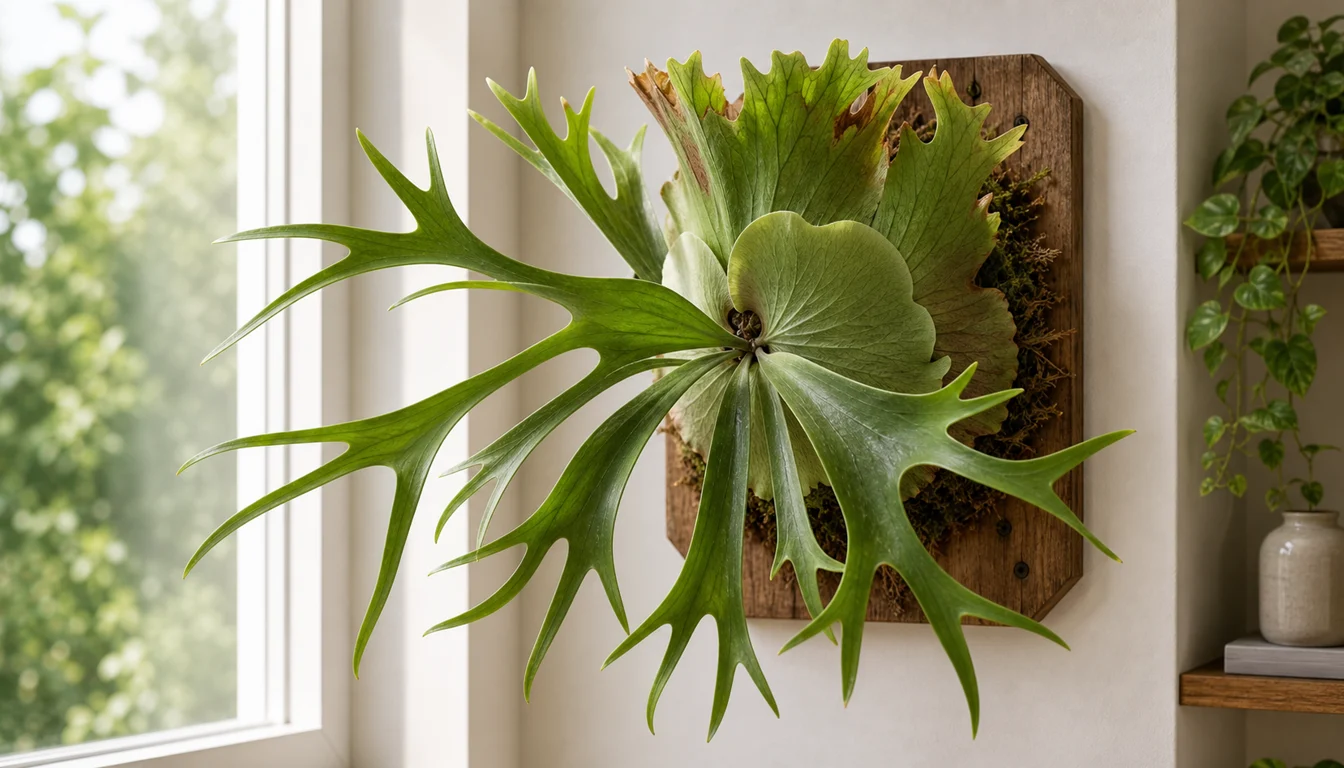
A staghorn fern is a pet-safe epiphytic fern grown on a mount, basket, or plaque. It rewards bright indirect light and full soak-and-dry watering, but it punishes normal pot-plant habits.
Care snapshot
Do Not Treat the Shield Like Dead Foliage
The shield frond is the part beginners often ruin.
On Staghorn Fern, that flat round frond protects the root pad and catches organic debris. It may turn tan as it ages, but it still belongs on the plant.
The antler fronds do the showing. The shield frond does the holding.
Once you understand that split, mounted care makes more sense.
This is why Staghorn Fern is not just a fancy Boston Fern. It grows like an epiphyte on a support, not like a fern in a damp basket.
A damaged shield also makes the mount dry unevenly. That is why one wrong cleanup cut can change the whole watering routine.
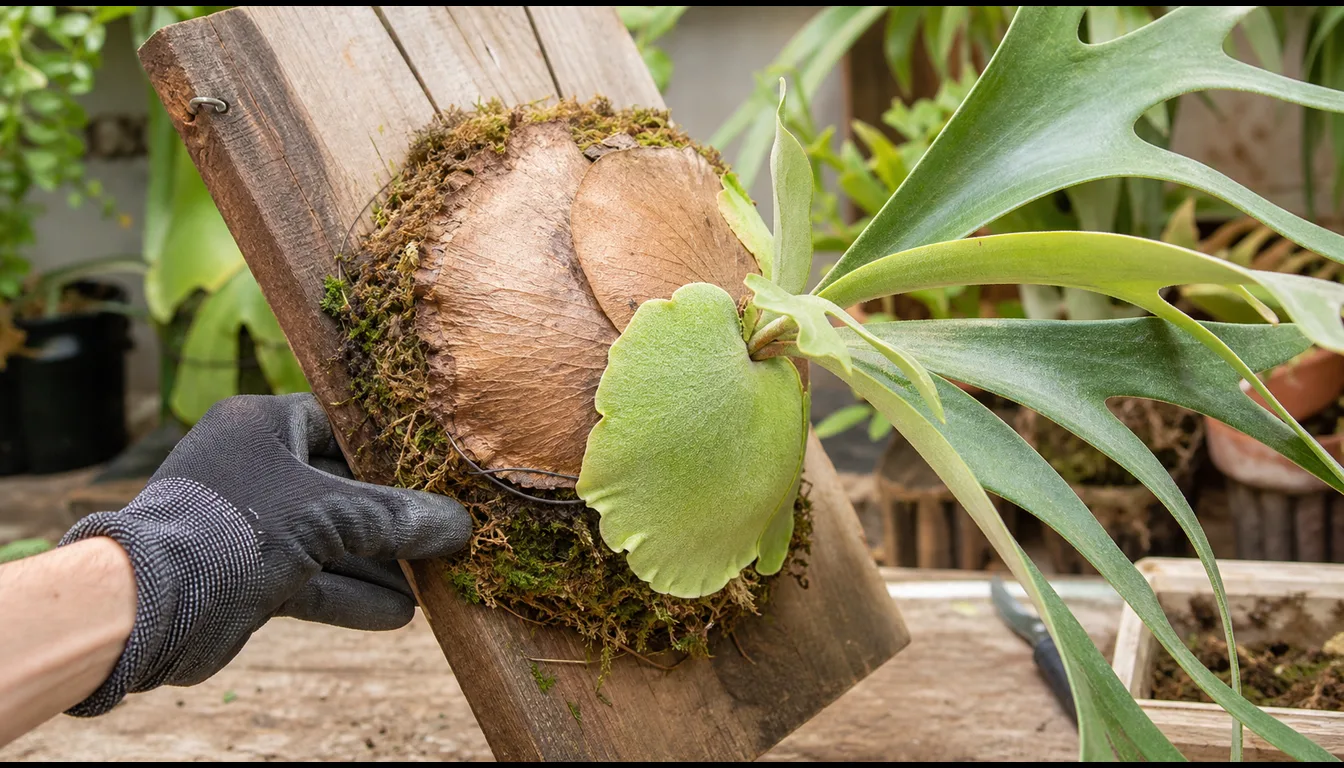
The first decision is whether you actually want a mounted plant.
A staghorn fern is usually sold like wall art, but it still needs the same practical access as a sink plant. You must be able to lift it down, soak it, drain it, inspect the back, and rehang it without breaking the shield edge.
That makes it a poor choice for a high stairwell, a narrow hallway, or a wall above electronics. It is much better on a bright kitchen wall, plant room panel, covered porch in warm climates, or bathroom wall where water cleanup is easy.
The display works only when maintenance is part of the placement.
Wall access
- You can lift the mount down without crushing antler fronds
- The nearest sink or tub is close enough for regular soaking
- The wall surface can handle an occasional drip after watering
Mount health
- The shield grips the moss instead of wobbling loose
- The board stays firm after repeated soaks
- The moss rewets evenly and then dries back to a lighter feel
Room fit
- The wall receives bright filtered light
- No vent blows across the shield edge
- Pets and people do not brush the fronds when passing
The brown shield is not a failure sign by itself. A healthy old shield often turns papery tan while newer green shields build over it.
Trouble looks different. A rotten shield feels soft, smells sour, or pulls away from a wet pad that never dries.
This difference matters because the fern cannot replace a damaged shield quickly. If you peel it off for looks, you expose roots, loosen the mount, and make the next soak less predictable.
Look at how the plant is attached before you buy it. A healthy mount has the plant seated firmly against damp but airy moss, with no loose wobble at the base.
If the fern rocks when the board moves, new roots can tear each time you water or rehang it. That hidden movement is one reason a mounted plant may decline even when the leaves still look acceptable at purchase.
If you are unsure between a pot and a mount, start with a young plant in a basket that can be watered over a sink.
You can still enjoy the antler shape while learning the soak rhythm. Move to a plaque only after you know the plant dries predictably in your home.
Choose the Mount Before the Plant Gets Heavy
Buy the mount as much as the fern. A small plant on a weak board becomes hard to water and harder to rehang once the shield expands.
For most homes, mount size matters more than cultivar name. A plaque should have enough back surface for the plant to expand and enough hanging strength for the soaked weight.
Wet moss, mature shields, and long antler fronds can make a small decorative hanger feel unstable.
A basket gives more airflow and more forgiveness if you sometimes wait too long between soaks.
A flat plaque gives the clean antler look, but it dries from the exposed edges first. Choose the format based on where the water will go after soaking, not only on how it looks at the nursery.
No-soil display plants do not all solve the same problem. Air Plant stays easier to move and soak, while Staghorn Fern earns its space when you want a living focal point that gradually wraps its support.
- Wood plaque
- Best for a clean wall display and easy hanging
- Slatted basket
- Better airflow, but messier watering
- Loose pot
- Useful for young plants, not the classic mature look
That size difference matters before you hang anything. A plant you can still lift, soak, and drain will get better long-term care than a dramatic mount you avoid moving.
Plan for watering space around the display. A board that looks perfect on a gallery wall may become annoying if the nearest sink is across the house.
The best mount is one you can carry with one hand while supporting the plant with the other. If the board needs two hands and the antlers brush every doorway, regular soaking becomes a chore and care quality drops.
Give Wall Light, Not Window Heat
A mounted Staghorn Fern needs bright indirect light because it cannot chase light from a heavy wall board. Pick the wall before you pick the plant size.
East light works well. Hot west glass can dry the moss and crisp antler tips before you notice the mount is thirsty.
If the wall is dim, the antlers stay shorter and the plant uses water slowly. Add a grow light before you soak more often.
If the wall cannot support bright light, Cast Iron Plant is a better low-light plant, but it will not give the mounted look.
The best wall is bright enough to cast a soft plant shadow for part of the day, but not hot enough to heat the shield.
Morning sun through an east window can work. A west window can work only with distance or a sheer curtain because the board warms faster than a pot.
Watch the antler fronds before you change water. Pale stretched fronds and a loose open shape usually mean the wall is too dim.
Brown crisp tips with a dry light mount point toward stronger light, moving air, or a missed soak.
A grow light is easier than moving a large mounted plant every season.
Place the light so it reaches the shield and the antlers, then keep the mount far enough away that the moss does not bake. If the room is truly dim, low-light plants will be a calmer choice.
The wall behind the plant matters too. A pale wall near glass can reflect heat into the shield, while a dark wall can warm the mount in afternoon sun.
Touch the board at the hottest part of the day. If it feels warm to your hand, move the plant back or filter the light before the moss starts drying from heat rather than root use.
Soak the Root Pad, Then Let Air Return
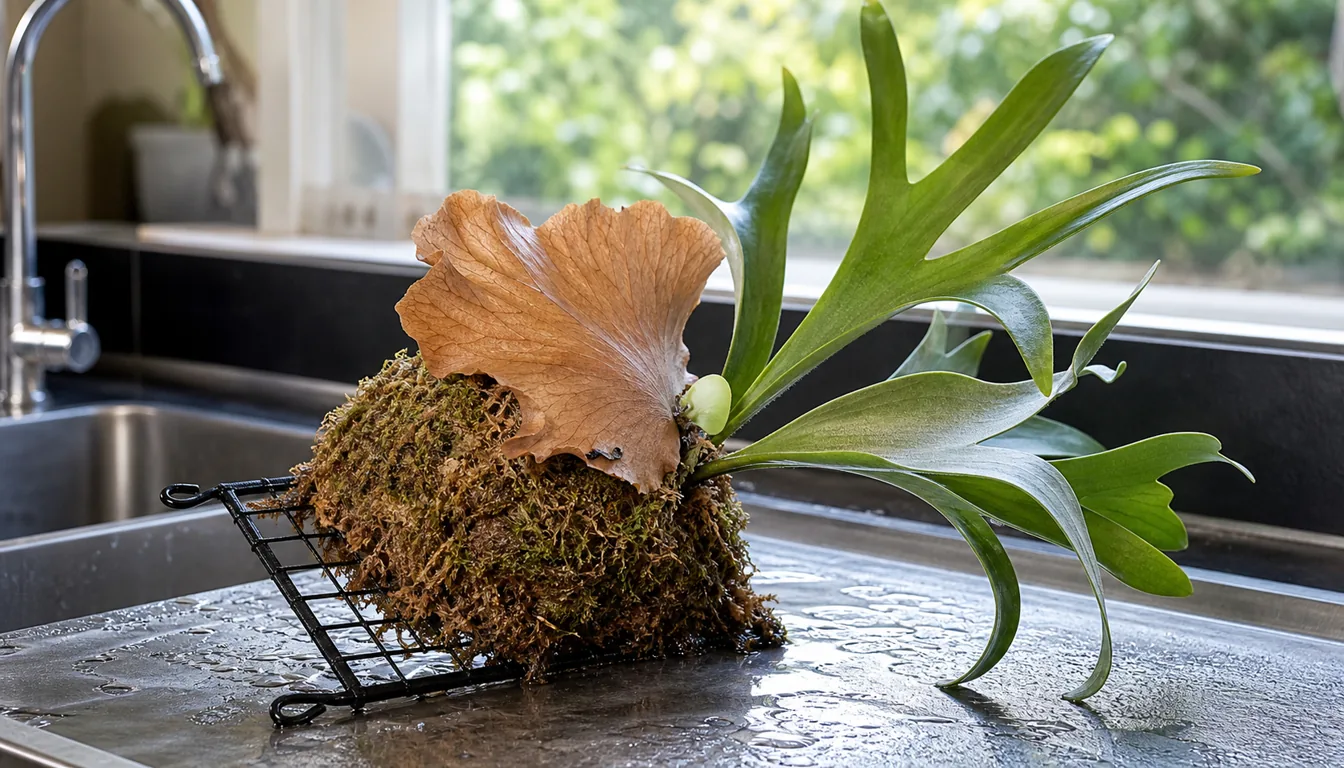
Watering means soaking the moss and root pad, not misting the tips for a few seconds. Take the mount down, soak until the pad is wet, then let it drain before it goes back on the wall.
The next watering depends on mount weight.
A dry mount feels light and sounds hollow when tapped. A wet mount feels dense and cool.
A calendar can start the habit, but it cannot finish the decision. In a humid room the mount may need a deep soak every ten to fourteen days.
In a dry heated room, a small mount may need water twice a week. The weight test tells you which room you have.
Use room-temperature water and soak the pad until bubbles slow.
Then set the board face-up or at a gentle angle so the moss drains without pooling behind the shield. Rehang only when the back has stopped dripping.
Do not replace soaking with daily misting. Misting can raise surface humidity for a moment, but it does not wet the root pad.
If you need a schedule anchor, use houseplant watering frequency as a starting point and adjust by mount weight.
- Dry, light mount, soak deeply.
- Wet shield edge, wait.
- Crisp antler tips with dry moss, soak sooner or raise humidity.
This soak-and-dry rhythm is closer to Air Plant than to a normal pot plant.
After soaking, keep the mount flat until dripping stops. Hanging it wet against the wall can trap moisture behind the board.
A light mount needs water. A heavy cool mount needs air.
Use the first month to learn the dry weight. Lift the mount after a full soak and again when the moss is ready for water.
That comparison is more useful than any app reminder.
If the mount dries in two days, increase humidity or choose a larger moss pad. If it stays heavy for a week, shorten the soak or add airflow.
If the shield edge darkens and stays soft after each soak, change the process before rot spreads.
Shorten the soak, increase drain time, and keep the board off the wall overnight. A mounted fern should return to a lighter feel between waterings, even when humidity is good.
When antler tips brown only on the newest growth, check the whole routine in order. Light heat, missed soaking, low humidity, and rough handling are all more likely than a nutrient shortage.
New fronds are the best early warning because old fronds keep their damage.
A mounted plant can also be too dry on one side.
During soaking, rotate the board once so the upper edge and lower edge both take in water. Uneven wetting creates one crisp side and one damp side, which leads to confusing symptoms.
Use Moss Like a Root Zone
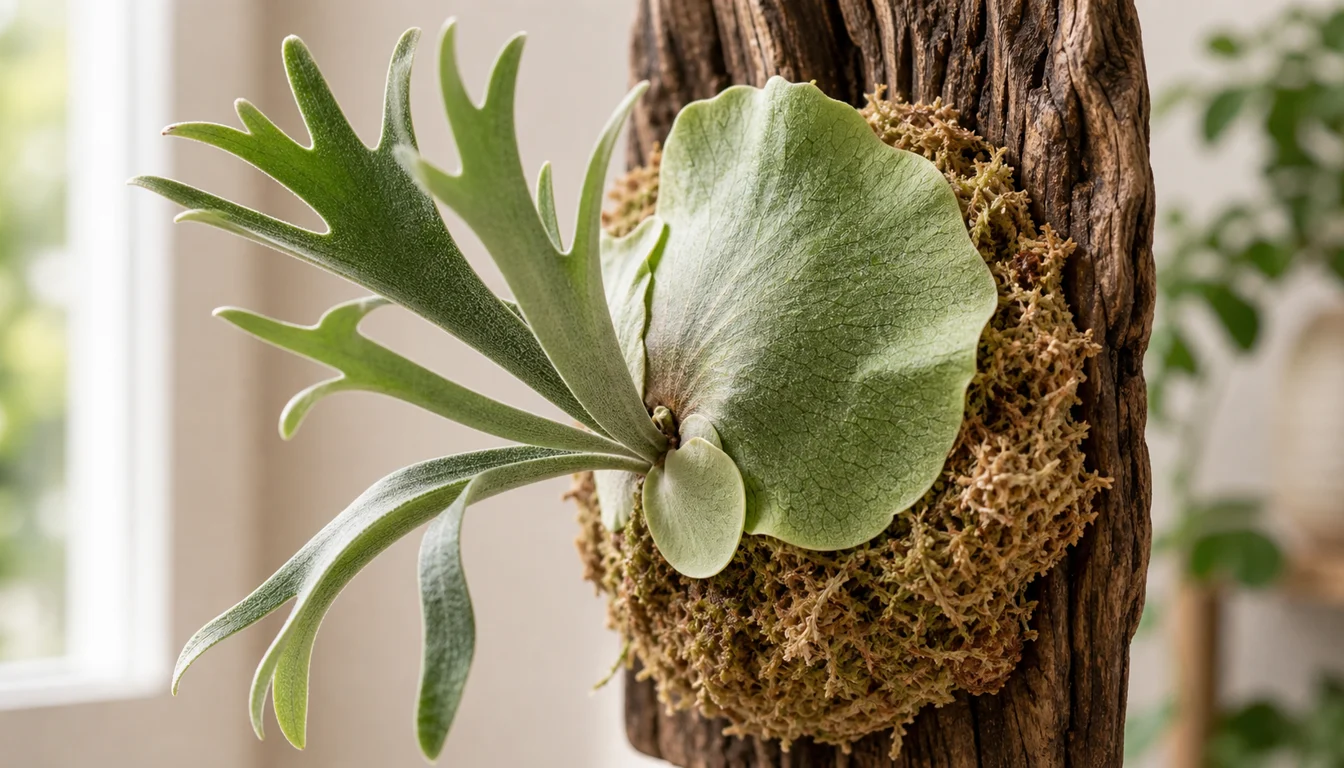
Sphagnum moss is not decoration here. It is the root zone.
Pack enough moss to hold water, but not so much that the shield stays wet for days.
Fishing line, coated wire, or plant-safe twine should hold the root pad, not cut through the shield. Loose support lets the fern wobble and break new roots.
A mounted plant also needs wall protection. Water can drip down the back after soaking, so let the mount drain flat before rehanging.
Long-fiber sphagnum works because it holds water without becoming a sealed sponge.
Coconut chips, bark pieces, and a little coarse material can add air if the pad stays wet too long. The goal is a root pad that rewets fully and then breathes again.
When remounting, leave the shield edge visible instead of burying it under a thick mound. Tie across the moss and support, not across the active shield surface.
The plant should feel snug when you tilt the board, but the tie should not cut into new tissue.
A board also ages.
Wood that stays wet, bends, or smells musty is part of the root-zone problem. Replace the mount before the fern becomes so heavy that every repair damages the shield.
Do not seal the back of the board with plastic to protect the wall unless the mount still has a way to breathe. A backing that traps water can sour the moss from behind.
Wall protection should be separate from the root zone, such as letting the board drain fully and using a wipeable wall area.
Remounting is easiest before the plant becomes a heavy shield mass.
If roots have filled the moss and water now runs around the pad instead of into it, plan a refresh. Keep old attached shield tissue in place and add fresh moss around the root edge rather than stripping the plant clean.
Divide Pups Only When the Shield Allows It
A pup is ready when it has its own shield area and roots. Cutting a small offset too early leaves you with a loose antler frond and no real plant.
Use a clean blade and take a piece of root pad with the pup. Then remount it tightly with fresh moss and keep it bright but gentle while roots grip.
- Ready pup
- Own shield, own roots, clear edge from parent
- Too early
- Only one antler frond or no firm root pad
- Aftercare
- Smaller mount, steady humidity, no direct sun
Division is not the easiest way to get more plants, and it is not a cleanup job. Wait until a pup has a separate shield area that can hold itself together.
A single antler frond at the edge is not enough.
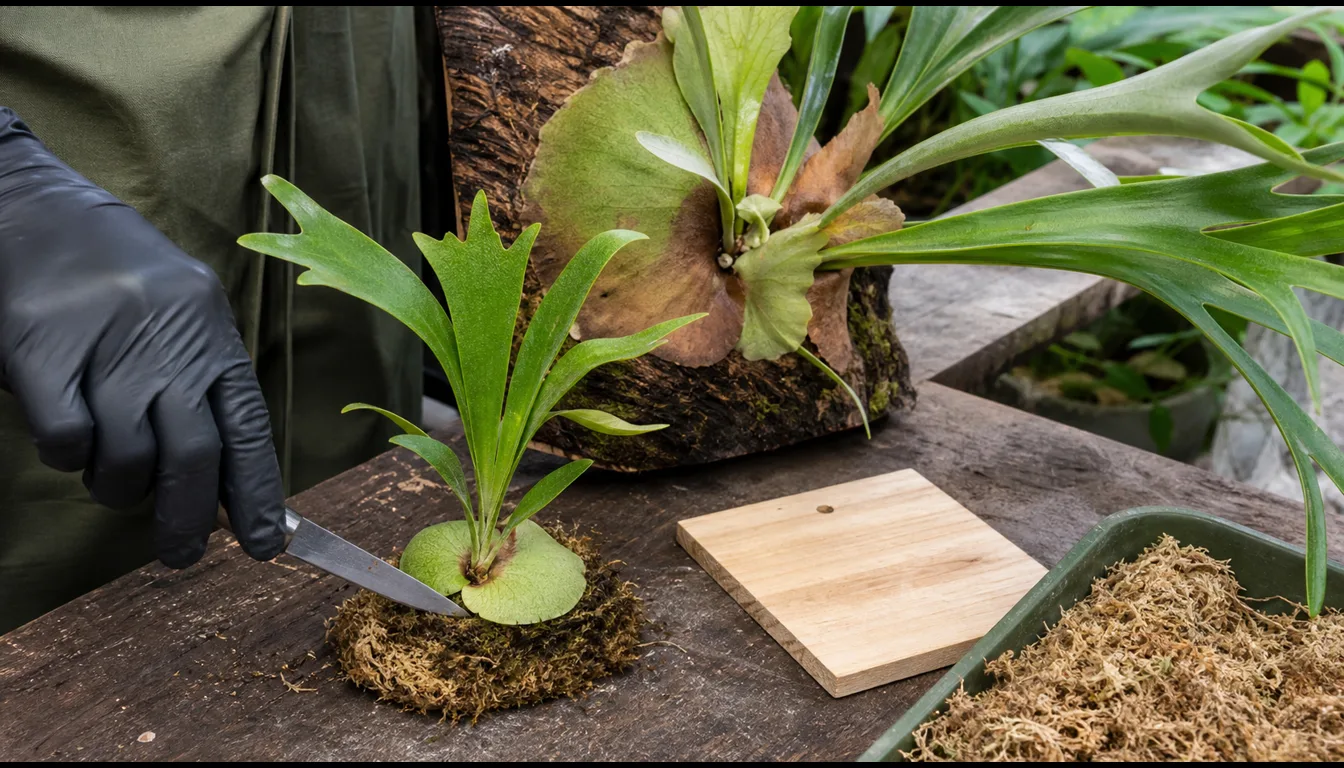
Cut through the old moss and root pad rather than trying to pull the pup free.
Keep the root mass attached to the pup, wrap it with fresh damp moss, and tie it to a smaller board. The new mount should be bright and humid, but not sun-baked while roots grip.
Expect the divided plant to pause. New antlers may slow while the shield seals the new mount.
That pause is normal if the shield stays firm and the moss dries on a steady rhythm.
After division, judge recovery by shield firmness before antler length.
A pup that holds its shield tight and slowly grips the moss is succeeding even if new fronds are slow. A pup that loosens from the board or develops a sour wet pad needs remounting before it spends energy on new antlers.
Find Scale Without Scrubbing the Shield
Scale can hide along antler fronds and near the shield edge. Inspect with your eyes first.
Rough wiping can damage the surface you are trying to save.
Use a cotton swab on individual bumps instead of washing the whole mount. If pests keep returning, check nearby plants like Rubber Plant because glossy leaves can carry scale too.
Brown antler tips do not always mean pests. On Staghorn Fern, dry moss, hot light, and low humidity are more common causes.
- Use a swab for single scale bumps.
- Do not scrub the shield surface.
- Check the back of the mount if ants or sticky residue appear.
The fuzzy look on fronds is normal, so do not scrub every pale surface. Scale looks like attached bumps that stay in place when you blow on them.
Mealybugs look like cottony clusters in protected joints. Dust wipes away, pests resist.
Treat one spot at a time with a damp swab or alcohol on the pest body. Avoid soaking the shield with oil sprays because oil can sit in the fern surface and cause spotting.
A heavy infestation is easier to control after you isolate the mount from nearby glossy-leaved plants.
Inspection should be gentle but regular. Use a flashlight along the shield edge, the antler bases, and the back of the board.
If sticky residue appears below the plant, check the mounted fern and nearby houseplants in the same session. Treating only the visible fronds can miss insects sheltered in the moss edge.
Quarantine matters because mounted plants are awkward to spray after they are hung among other plants. Keep a new staghorn easy to inspect for the first few weeks.
Once scale is excluded and watering is stable, move it to the final wall.
Raised attached bumps stay fixed on stems or frond bases and need spot treatment.
A pale surface on staghorn fronds can be natural and should not be scrubbed away.
Crisp antler ends usually point to light heat, dry moss, or low humidity before pests.
Change the Soak Rhythm When Indoor Air Changes
Summer growth can use water quickly, especially on a small mount. Winter heat can dry the air while the plant itself grows more slowly.
Do not follow the same calendar all year. Lift the mount, check the moss, and let the shield edge tell you if the root pad stayed wet too long.
A bathroom with bright light can help, but a dark bathroom only trades dry air for weak growth.
If your home gets dry enough to crisp fern tips every winter, Boston Fern may need a humid spot too, but its pot gives you a different water buffer.
A mounted fern changes with the room more than the calendar. Air conditioning can dry it in summer.
Forced heat can dry it in winter. A cool quiet room may keep the moss damp long after the top looks dry.
Fertilizer should stay weak. Use a diluted balanced houseplant fertilizer during active growth only after the plant is already watering predictably.
Feeding a dry or stressed mount gives you salt buildup in a small root pad.
If fronds shrink in winter but the shield stays firm, hold the routine steady and avoid a big reset. If the shield stays wet for several days, reduce soak time and improve airflow before root rot starts.
Humidity changes how much forgiveness you have.
A bright bathroom with an opening window may keep antler tips clean, while a dry living room may need a pebble tray nearby or grouped plants below the mount. The fern does not need swamp air, but it does need enough humidity that a missed day does not crisp every new tip.
Pet-Safe Wall Placement Still Needs Protection
Staghorn Fern is pet-safe, but the fronds are easy to break. Wall placement protects both the plant and curious pets.
A pet-safe houseplant still needs a handling plan. Spider Plant fits normal pot care better, while Staghorn Fern earns the wall only when the display itself is the point.
Keep it away from vents and doorways. A mounted plant can look secure and still dry out fast in moving air.
A floor plant solves a different room problem than a mounted fern. Do not use pet safety alone to choose the display.
Pet-safe does not mean damage-proof. Cats can shred antler tips, and a startled pet can pull down a loose board.
Use a hanger rated for the wet mount, not just the dry plant.
In warm outdoor zones, place staghorn fern where frost cannot reach it and where afternoon sun does not cook the mount. Indoors, keep it away from heater vents, door drafts, and walls that you cannot wipe after watering.
Choose this plant when you want to manage a display object as carefully as a houseplant. If you want pet-safe greenery with easier watering and fast replacements, Spider Plant is the more forgiving answer.
A mounted staghorn also needs human-safe placement.
Hang it below eye level if you inspect it often, and keep it away from seats where fronds will be bumped. A heavy wet board over a sofa or bed is a poor tradeoff even when the plant is healthy.
For renters, wall choice matters even more. Use a mount and hanger that can be removed cleanly, and drain the board away from painted walls.
A plant that needs weekly handling should not depend on a fragile hook or a wall surface that stains after one missed drip.
Frequently Asked Questions
Should I remove brown shield fronds on Staghorn Fern?
No, a brown shield frond can still protect the root pad. Remove it only if it is rotten and loose.
How do I water a mounted Staghorn Fern?
Take the mount down, soak the root pad, let it drain, then hang it back up once it stops dripping.
Can Staghorn Fern grow in a pot?
Young plants can, but the mature display works best on a board, plaque, or basket with moss around the roots.
Is Staghorn Fern pet-safe?
Yes, but the fronds break easily, so wall placement still matters in homes with pets.
Why are my staghorn antler tips brown?
Dry moss, low humidity, hot sun, or rough handling are more likely than pests. Check the mount before changing everything.
Sources & References
Related Plants
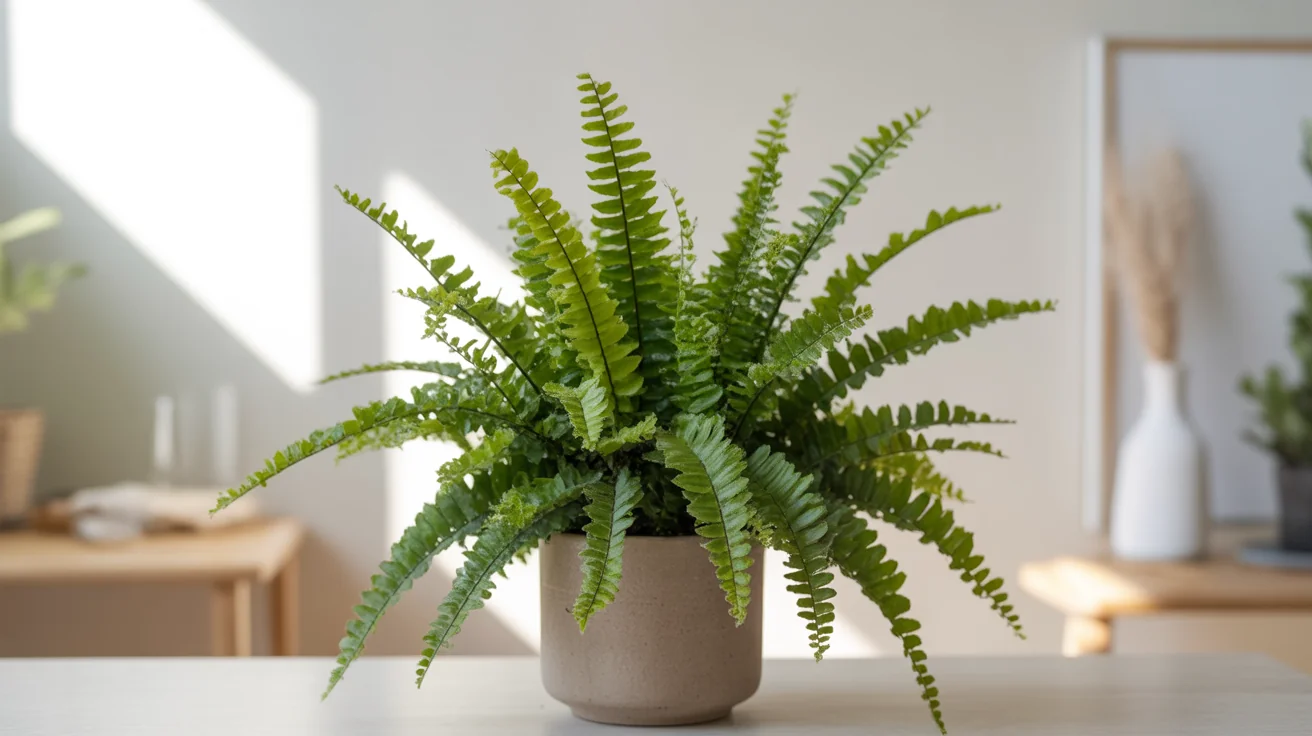
Boston Fern
A pot or basket fern for humid rooms, with finer fronds and different watering.
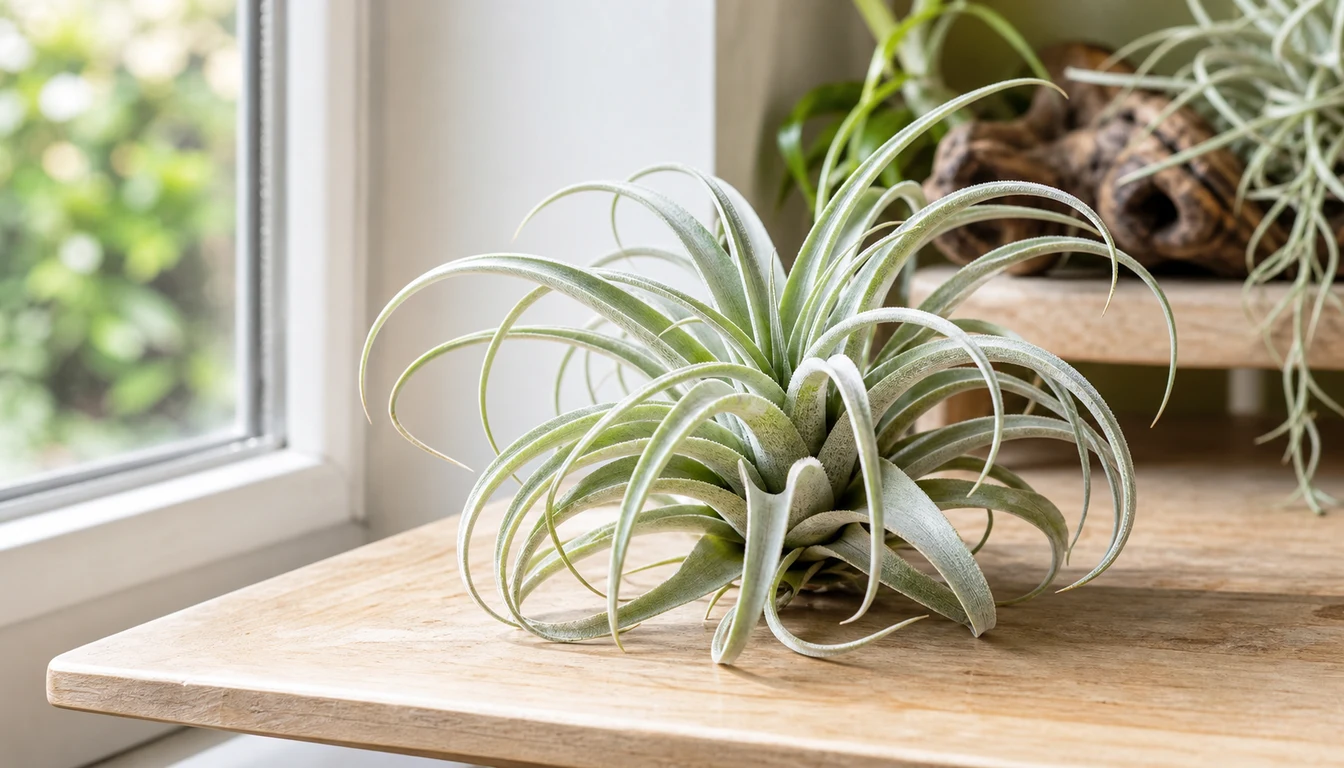
Air Plant
Another no-soil display plant that depends on soak-and-dry timing.
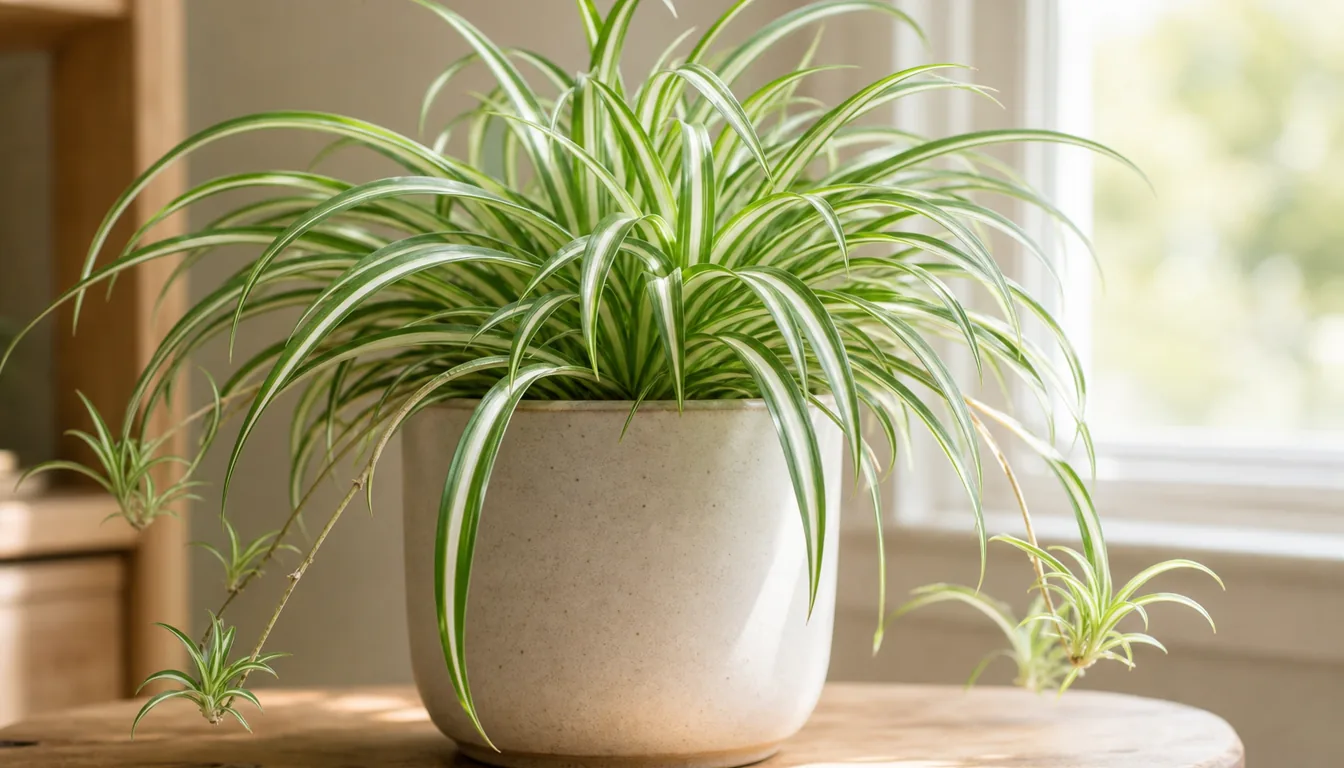
Spider Plant
A pet-safe hanging plant for people who want easier propagation.
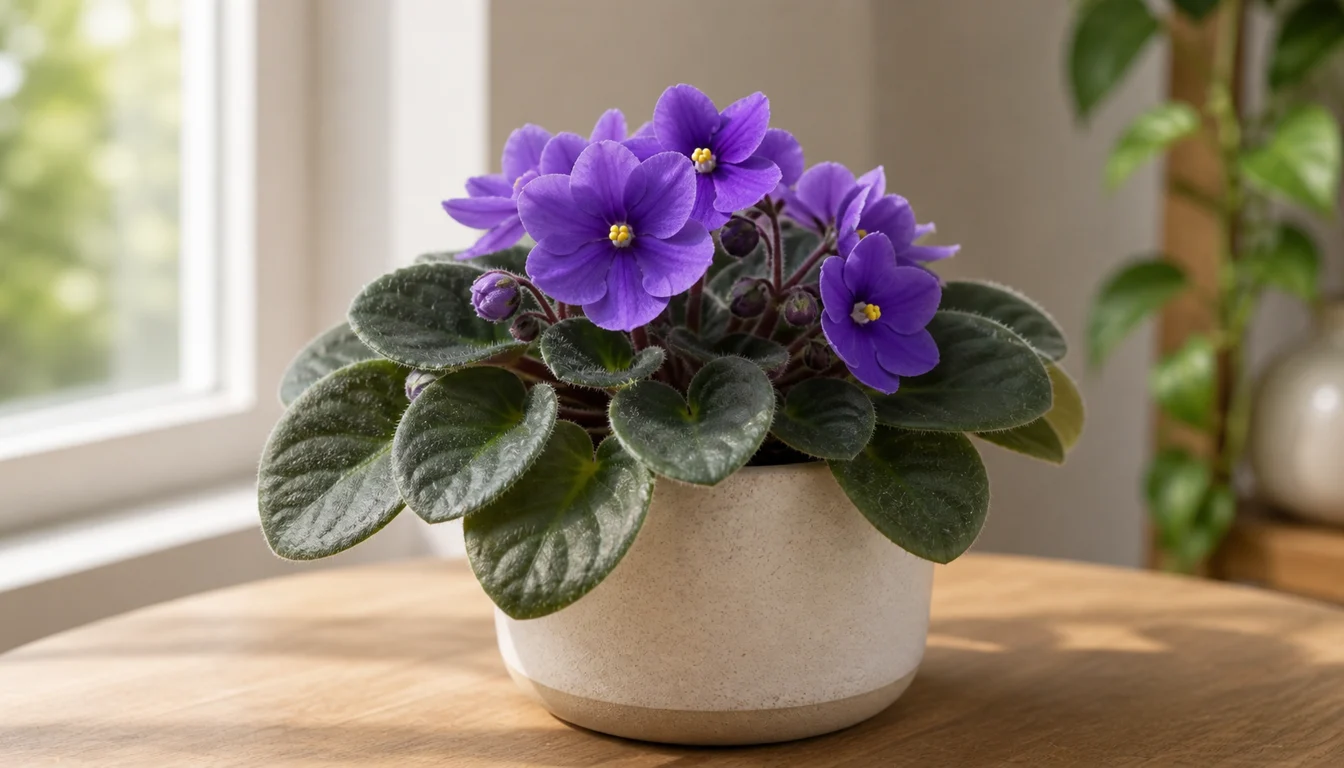
African Violet
African Violet is a windowsill bloomer that rewards steady, small-pot care.
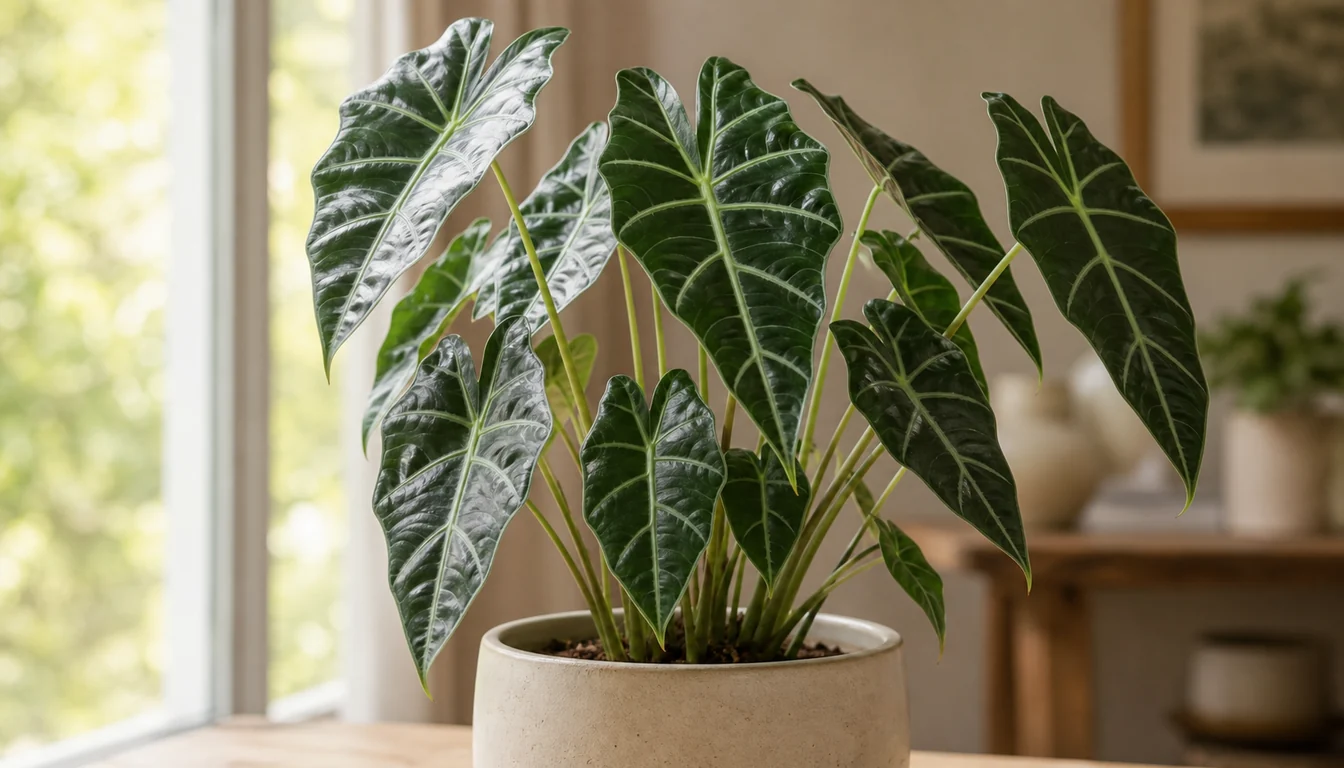
Alocasia
Alocasias include compact, textured houseplants and large elephant ears that need substantial floor space.
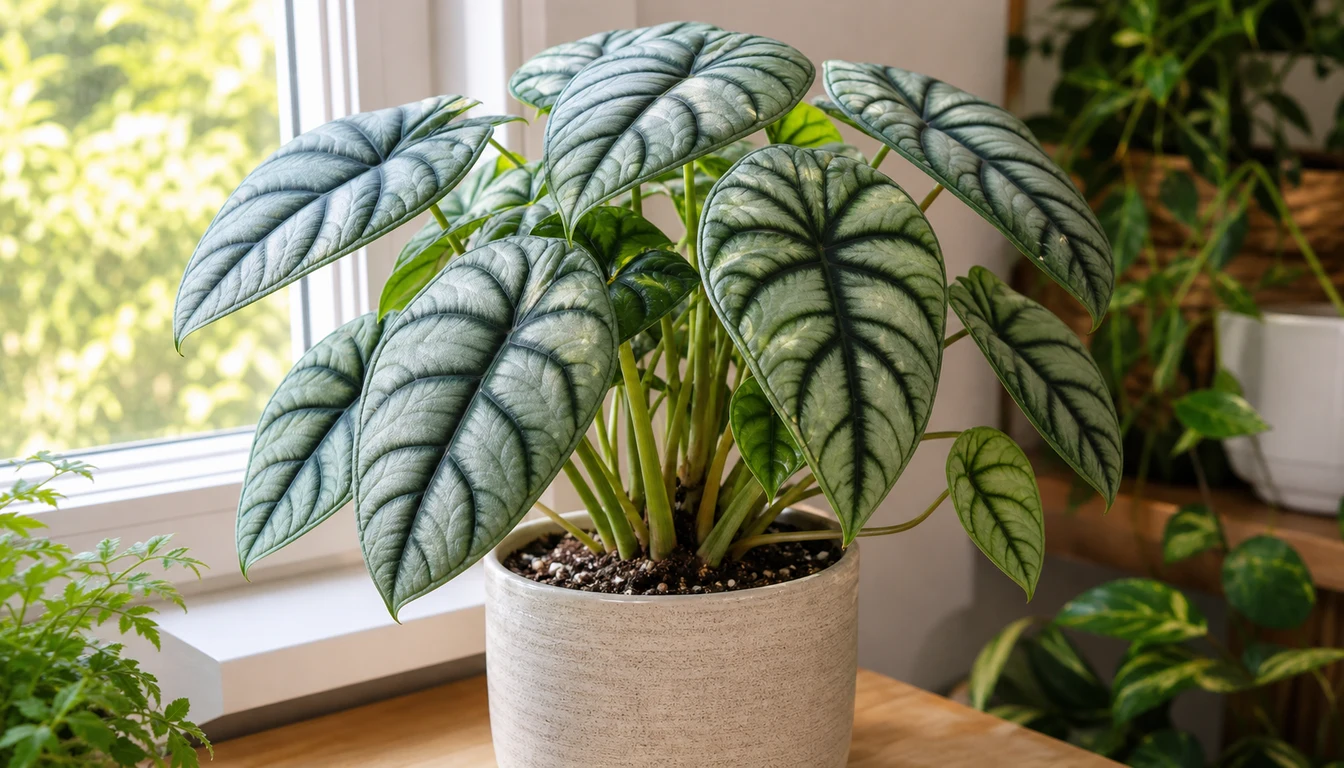
Alocasia Dragon Scale
Alocasia Dragon Scale has thick, quilted-looking leaves with dark veins.