verifiedSource Reviewed
Maple Tree: Shade, Structure, and Fall Color for the Right Yard
Acer species
Family: Sapindaceae
wb_sunnyLight
full sun to part shade depending on species
water_dropWater
Moderate moisture; deeper water during establishment
heightHeight
15 ft to 70+ ft depending on species
publicZone
Many landscape maples fit USDA Zones 3-9
petsPet Safety
Pet Safe
Native Region
North America, Europe, and Asia depending on species
biotechMaples Are a Yard-Scale Decision
Maple Trees cover a wide group of Acer species. Some stay modest and ornamental; others become broad shade trees that dominate an entire front yard.
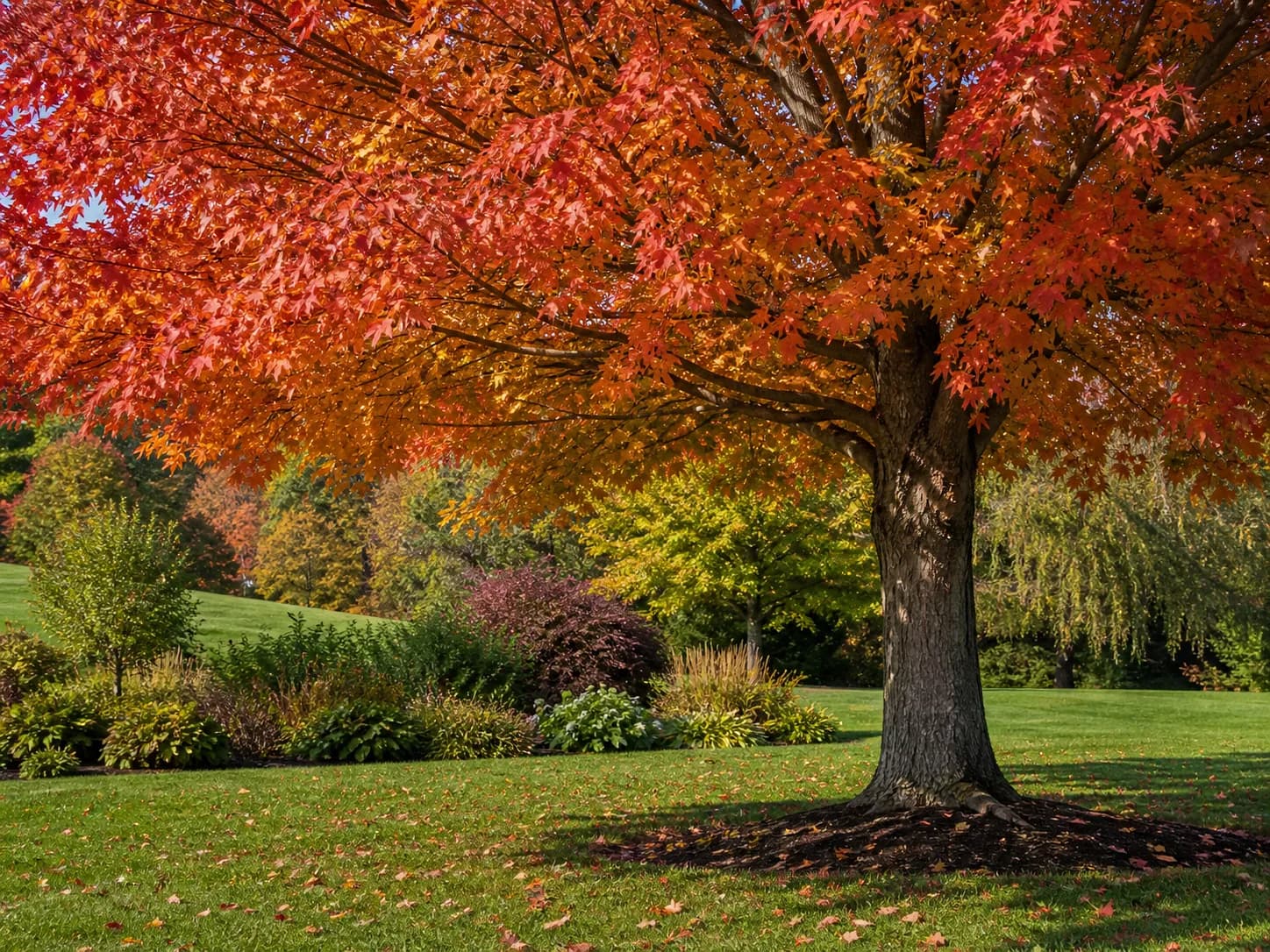
People plant Maples for three things: quick structure, recognizable fall color, and a canopy that cools patios, streets, or lawns. If autumn color is the main draw, compare the site with Red Maple before choosing a broader Acer group.
That is why broad site fit matters more than the word "Maple" on the tag. A tight courtyard may want Japanese Maple; a larger lawn may need a true shade species or even a different tree entirely such as Oak.
Main strengthsShade, fall color, branching structure
Main riskWrong species in too little space
Best useStreet trees, lawn shade, seasonal color, specimen planting
palettePick the Acer Type Before the Leaf Color
The big split is size and purpose. Some maples are planted for a fine ornamental silhouette; others are planted for hard-working canopy and summer shade.
Small ornamental forms fit patios, courtyards, and layered shrub borders. Medium and large species fit streets, open lawns, and big property lines where roots and mature spread have room to behave naturally.
If the site already feels tight next to foundations, walks, or driveways, step back and ask whether a maple is the right job fit at all. A smaller tree like Japanese Maple can save years of pruning and root conflict.
If what you really need is long-term canopy over a broad lawn, compare the site honestly against Oak before planting a medium Maple in the wrong space.
For a small courtyard, Japanese Maple owns the close-view ornamental job better than a full canopy Maple. For a front yard that needs shade, compare mature spread, surface roots, and driveway clearance before you chase the brightest fall color.
- fiber_manual_recordSmall ornamental maples: Better for entry gardens and narrow beds.
- fiber_manual_recordMedium shade maples: Better for residential lawns with moderate room.
- fiber_manual_recordLarge canopy maples: Better only where roots and spread have true space.
Comparison — See AlsoJapanese Maple vs Red Maple
chevron_rightwb_sunnyBalance Fall Color With Heat Stress
Most Maples grow best in full sun to light part shade. Sun drives canopy density and fall color, but hot reflected heat can still stress thinner-leaved forms.
In hotter zones, afternoon exposure next to concrete or a south wall can be rough on sensitive types. That is where smaller ornamentals like Japanese Maple often need more protection than a broad, tougher shade maple.
Scorch, pale color, and early leaf crisping usually mean the site runs hotter or drier than the tree expected. For a tougher urban alternative with clean fall color, Ginkgo may handle reflected heat better than a sensitive maple.
- check_circleGive Maples open sky for most of the day if shade and fall color are the main goals.
- check_circleProtect smaller ornamental types from reflected afternoon heat near driveways and walls.
- check_circleSwitch to tougher large-canopy trees if the site is brutally exposed and heat-prone.
If the site bakes all afternoon and the goal is pure shade, it is still worth comparing that job to Oak before settling on a Maple.
Email Updates
Join the KnowTheYard update list
Zone-specific advice, seasonal reminders, and new plant guides — no filler.
water_dropWater Young Maples Beyond the Trunk
Newly planted maples need deep watering while roots spread. A slow soak that reaches the wider root zone works better than frequent shallow sprinkles that keep roots near the surface.
Established trees still show stress in long dry spells, especially in compacted urban soils. If you are already tracking moisture around other yard trees, the same deep-soak approach from tree watering checks applies here too.
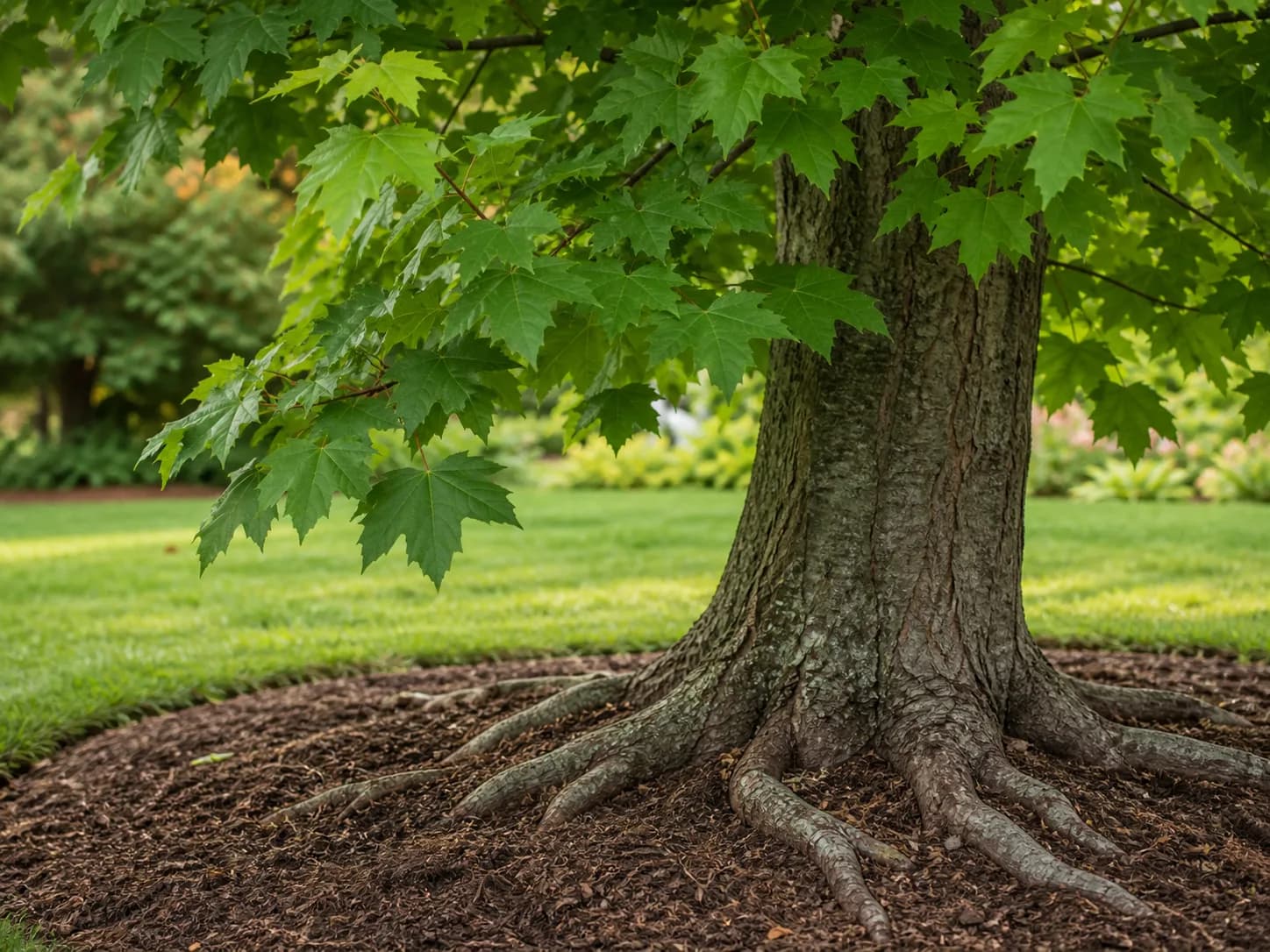
Surface roots are common on some maple species. That means mower damage, heat, and dry turf competition can hit them harder than many homeowners expect.
lightbulbWater the wider root zone
A wide soak around the outer root zone does more for an establishing Maple than repeated shallow watering right at the trunk.
Guide — See AlsoAir Purifying Plants for Cleaner Indoor AirLearn how to pick, place, and care for air purifying plants so they help your indoor air instead of just looking pretty.
chevron_rightpotted_plantRoots Decide Where a Maple Belongs
Most maples prefer reasonably well-drained soil with organic matter and room to breathe. Heavy compaction shortens root depth and pushes more roots toward the surface.
Root behavior is one of the biggest reasons maples become trouble trees in small lots. Sidewalk lift, lawn competition, and crowding near hardscape usually start as a site-planning mistake, not a tree-misbehavior surprise.
If the yard stays wetter than average, a different species like River Birch may fit better. If the goal is small-scale beauty with less aggressive spread, Japanese Maple is often the cleaner answer.
warningDo not plant by leaf shape alone
A young maple looks manageable in a pot. The root spread and mature canopy are what decide whether the planting works ten years later.
eventUse Fall Color as a Health Report
Spring is for checking structure, mulch, and moisture. Summer is mostly about drought stress and leaf scorch. Fall shows whether the tree is healthy enough to color up well.
If leaves scorch or color stays dull, start with water, sun, and feeding habits before assuming disease. Overfeeding and root stress can mute fall display just as fast as deep shade.
Major pruning belongs in the right seasonal window. If you are working around mature branches or crowding, use tree pruning timing instead of cutting opportunistically whenever a branch annoys you.
If fall color fades early on one side of the canopy, read that as a site report. Heat, compacted soil, or drought may be stressing that side before the rest of the tree shows obvious decline.
- check_circleRefresh mulch before summer heat peaks.
- check_circleDeep-water during extended drought, especially in the first years.
- check_circleWatch for scorch on hot reflected sites.
- check_circlePrune for structure in the correct season, not during stress.
Guide — See AlsoBest Herbs to Grow Indoors for Real Harvests, Not Spindly PotsChoose indoor herbs that can actually produce in your light, temperature, and container setup, then match each one to th
chevron_righteco
Keep Exploring
Related Plants
 Trees
TreesGinkgo
Ginkgo is not a plant for instant gratification. It is a patient tree that rewards the right buyer decision up front: male or female, narrow or broad, stree
 Trees
TreesDogwood
Flowering Dogwood is easiest to grow when you copy the place it wants to live. It likes bright woodland-edge light, cool root soil, leaf-rich drainage, and
 Trees
TreesJapanese Cherry
Japanese Cherry is a short-season show tree with real structural limits. The best care is not chasing bigger growth. It is choosing a cultivar that suits th
quiz
Frequently Asked Questions
Are Maple roots a problem near sidewalks?expand_more
They can be. Many maples develop strong surface roots in compacted or shallow soils, which is why site size and hardscape distance matter before planting.
Do all Maples have bright fall color?expand_more
No. Species, summer stress, fertilizer habits, and light exposure all affect fall color intensity.
Is a Maple tree good for a small yard?expand_more
Some are, but many are not. Small yards usually need an ornamental maple or a different tree, not a broad canopy species planted too close to hardscape.