
Pruning Herbs: Pinch the Soft Ones, Respect the Woody Ones
Nearly every mistake people make pruning herbs comes from treating them all the same. They split into two groups that want opposite cuts, and knowing which is which is most of the job.
Soft leafy herbs get pinched often to stay bushy and to hold off the flowering that ruins their flavor. Woody herbs get shaped lightly, like tiny shrubs, and never cut into their bare wood. This guide sorts your herb bed into the two camps, then gives the cut each one wants.
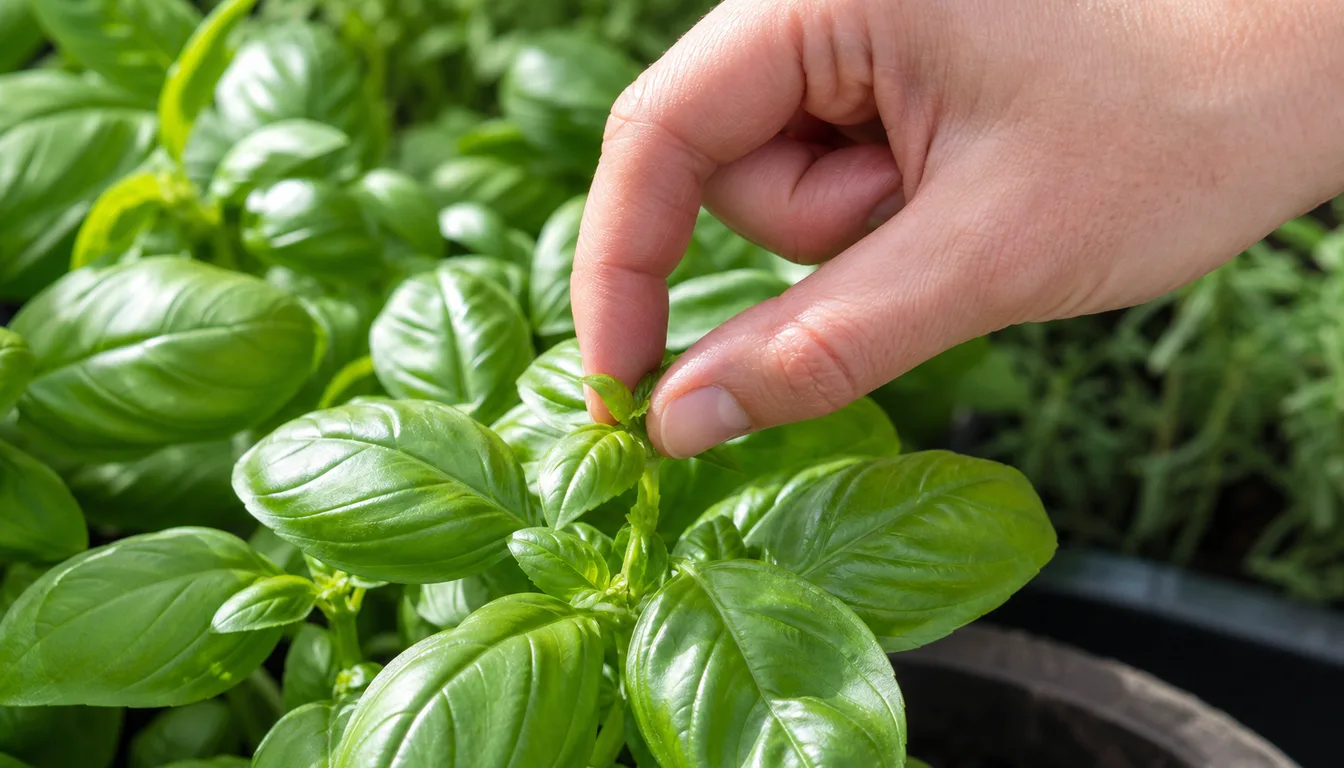
Soft Herb or Woody Herb? That Decides the Cut
The word herb covers two very different kinds of plant, and the split decides everything about how you cut. Soft leafy herbs grow tender stems that sprout new shoots from almost any node, so they want frequent, light pinching. Woody herbs build stiff stems that will not resprout once they go bare, so they want careful, occasional shaping.
You can tell them apart by feel. A stem you could pinch through with a fingernail is soft, and one that snaps like a twig is woody. Basil, cilantro, dill, parsley, and chives are the soft crowd, while rosemary, sage, thyme, and older oregano turn woody at the base. Mint sits in between, soft-stemmed but tough enough to shear hard.
| Group | Herbs | The cut |
|---|---|---|
| Soft leafy | basil, cilantro, dill, parsley, chives | Pinch often above a node |
| Woody | rosemary, sage, thyme, oregano | Light shaping, never the bare wood |
| Runs hard | mint | Shear low to keep it in bounds |
Pinch Soft Herbs Above a Node to Keep Them Bushy
A soft leafy herb turns leggy when you harvest a leaf here and there instead of pinching the growing tip. Take the top of a stem just above a pair of leaves and the plant answers by pushing two new shoots from that node, which is how a single-stemmed basil becomes a full bush.
Harvest and pruning are the same cut here, so take what you need from the tips rather than stripping lower leaves. Leave at least half the plant standing so it keeps feeding itself, and a young parsley or chives clump rebuilds within a week or two in active growth.
- Find a pair of leaves a few inches down a soft stem.
- Pinch or snip just above them, taking the tip.
- Watch two new shoots break from that node.
- Leave at least half the plant to keep it fed.
Pinching Is How You Stop Bolting
Flavor is the real reason to keep pinching soft herbs, because the moment they flower the leaves turn bitter and sparse. Removing the growing tips delays that bolt, and pulling off any flower stalk the instant it appears buys back more leafy growth.
Heat-driven bolters are the ones to watch. A cilantro plant races to flower in warm weather no matter what, so harvest it hard and often and sow a fresh batch every few weeks. A dill plant gives its best leaf before it blooms too, so pinch the tips and cut the leaves once buds form, since flavor drops fast after.
Once a soft herb bolts, pinching rarely fully reverses it. Cut the flower stalk right away to slow it, and if the whole plant has gone to seed, start a new sowing rather than nursing a bitter one.
Woody Herbs: Shape Light, Never Cut the Bare Wood
Woody herbs behave like small shrubs, so they take the same rule that governs lavender and boxwood. Below the soft green tips their stems turn gray and leafless, and a cut into that bare wood usually will not resprout.
Keep routine cuts in the green, harvesting tips for the kitchen and taking no more than a quarter of the plant at a time. For a leggy woody herb, renew it in early spring by removing about a third of the growth while always leaving green leaves below each cut, the staged approach spelled out for rosemary. A tidy sage or a low thyme mat stays productive for years this way.
- Routine: harvest tips in the green, up to a quarter at a time
- Renewal: in spring, take about a third, keeping green below each cut
- Never: cut down into bare gray wood, it rarely comes back
- Overgrown: renew in stages over two or three springs, not one chop
Herb-by-Herb Quick Reference
Here is the quick version to keep beside the bed, sorted so the soft herbs and the woody herbs stay in their own groups. The frequencies assume active growth and slow down in cool weather.
| Soft herb | Cut | How often |
|---|---|---|
| Basil | Pinch above a leaf pair, remove flower spikes | Weekly |
| Cilantro | Harvest hard, cut flower stalks, resow | Every 1 to 2 weeks |
| Parsley | Take outer stems at the base, spare the crown | Weekly |
| Dill | Pinch tips, harvest leaf before it blooms | As needed |
| Chives | Shear the clump to a couple of inches | Every 2 to 4 weeks |
The woody herbs and mint follow a slower, lighter schedule, and mint is the one to watch since it spreads by runners.
| Woody or running herb | Cut | How often |
|---|---|---|
| Rosemary | Light tip harvest, hard renewal in spring | Light weekly, hard yearly |
| Sage | Remove long shoots, stay in green | Monthly |
| Thyme | Trim new growth, avoid old wood | Monthly |
| Oregano | Shear lightly to stay compact | Every 2 to 4 weeks |
| Mint | Shear low, pull runners | Every 1 to 2 weeks |
When to Prune, and the Mistakes to Skip
Timing splits along the same soft-and-woody line. Pinch soft herbs lightly all through the growing season, and save the hard renewal cuts on woody herbs for early spring once frost is past, since a hard cut in fall pushes tender growth into the cold.
Most trouble traces to a few habits. Taking too much at once starves the plant, so cap it at a third on soft herbs and a quarter on woody ones. Cutting into bare wood on a rosemary or a sage leaves a dead stub, dull blades crush stems and spread disease, and pruning a plant already wilting in a heat wave only sets it back further.
- Over-pruning: keep it under a third soft, a quarter woody
- Old-wood cuts: stay above the green on woody herbs
- Dull tools: sharpen and wipe blades between plants
- Bad timing: skip heat waves, and hard-cut woody herbs in spring not fall
Pro Tips
- Feel the stem first, since a soft one wants frequent pinching and a woody one wants a light hand.
- Pinch soft herbs like basil above a leaf pair to force two new shoots instead of one leggy stem.
- Cut any flower stalk on a soft herb the moment it appears to slow bolting and keep the leaves sweet.
- Sow cilantro and dill in small succession batches, since they bolt no matter how you cut them.
- Never cut a woody herb like rosemary or thyme down into bare gray wood, it rarely comes back.
- Renew a leggy woody herb by a third each spring over two or three years, not in one hard chop.
- Shear mint low and pull its runners often, or it will run through the whole bed.
Frequently Asked Questions
How do I know whether to pinch or shape an herb?
Feel the stem. A soft stem you could pinch through with a fingernail, like basil or parsley, wants frequent pinching above a node. A woody stem that snaps like a twig, like rosemary or sage, wants light shaping and must never be cut into its bare gray wood.
Why does pinching keep herbs from flowering?
Removing the growing tips delays the plant's shift into flowering, which is important because leaves turn bitter and sparse once a soft herb bolts. Pinch the tips regularly and cut off any flower stalk the moment it appears to keep the plant producing tender leaves.
How much of an herb can I cut at once?
Take no more than about a third of a soft leafy herb, and no more than a quarter of a woody herb, in a single session. Leaving most of the plant in place gives it enough leaf to keep feeding itself and to regrow quickly.
Can I cut woody herbs like rosemary back hard?
Only in stages, and only into green growth. A woody herb will not reliably resprout from bare wood, so renew a leggy one by taking about a third each spring over two or three years, always leaving green leaves below every cut, rather than cutting it to bare stubs.
My cilantro and dill keep flowering. What am I doing wrong?
Probably nothing. Cilantro and dill bolt quickly in warm weather no matter how carefully you pinch them. Harvest them hard and often, cut the flower stalks, and sow a fresh small batch every few weeks so you always have young, leafy plants coming on.
Sources & References
Related Guides
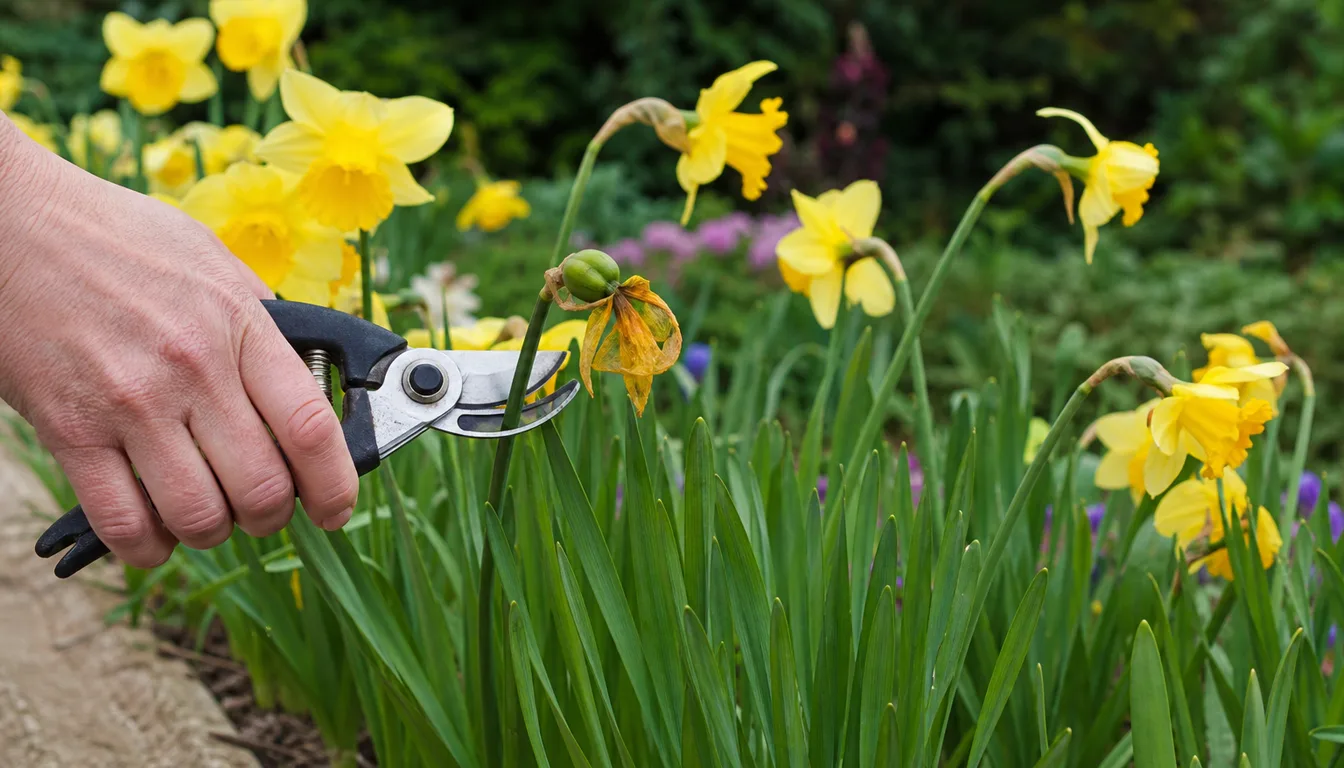
Deadheading Daffodils While Leaving Foliage to Recharge
Deadheading a daffodil is really two jobs that look like one. You take off the spent flower and the…
8 min read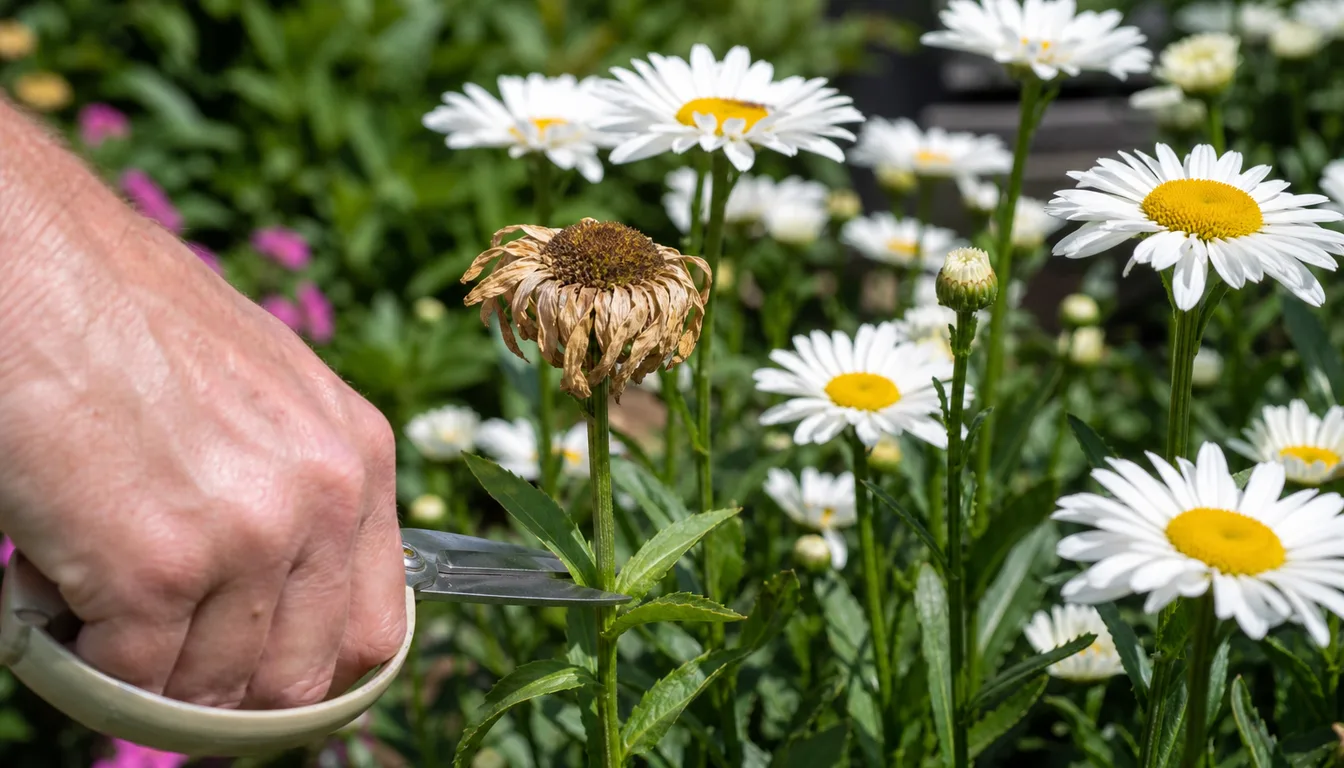
Deadheading Daisies: Why the Cut Depends on the Type
The word daisy covers a dozen unrelated plants, and the cut that keeps one blooming can waste your…
9 min read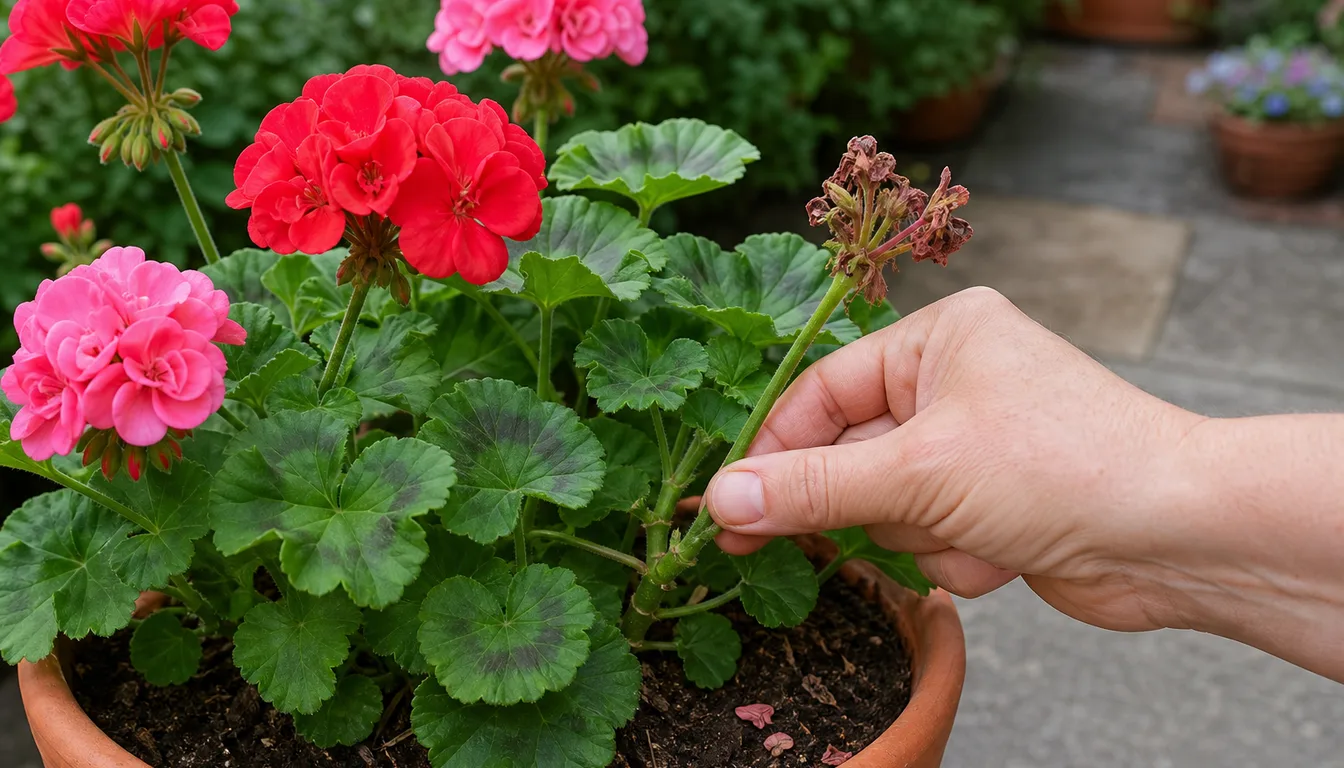
Deadheading Geraniums: Snap the Whole Stalk, Not the Petals
A geranium carries its flowers in a rounded cluster on top of a long bare stalk, and that shape is…
10 min read