
How to Deadhead Petunias and Cut Back Leggy Growth
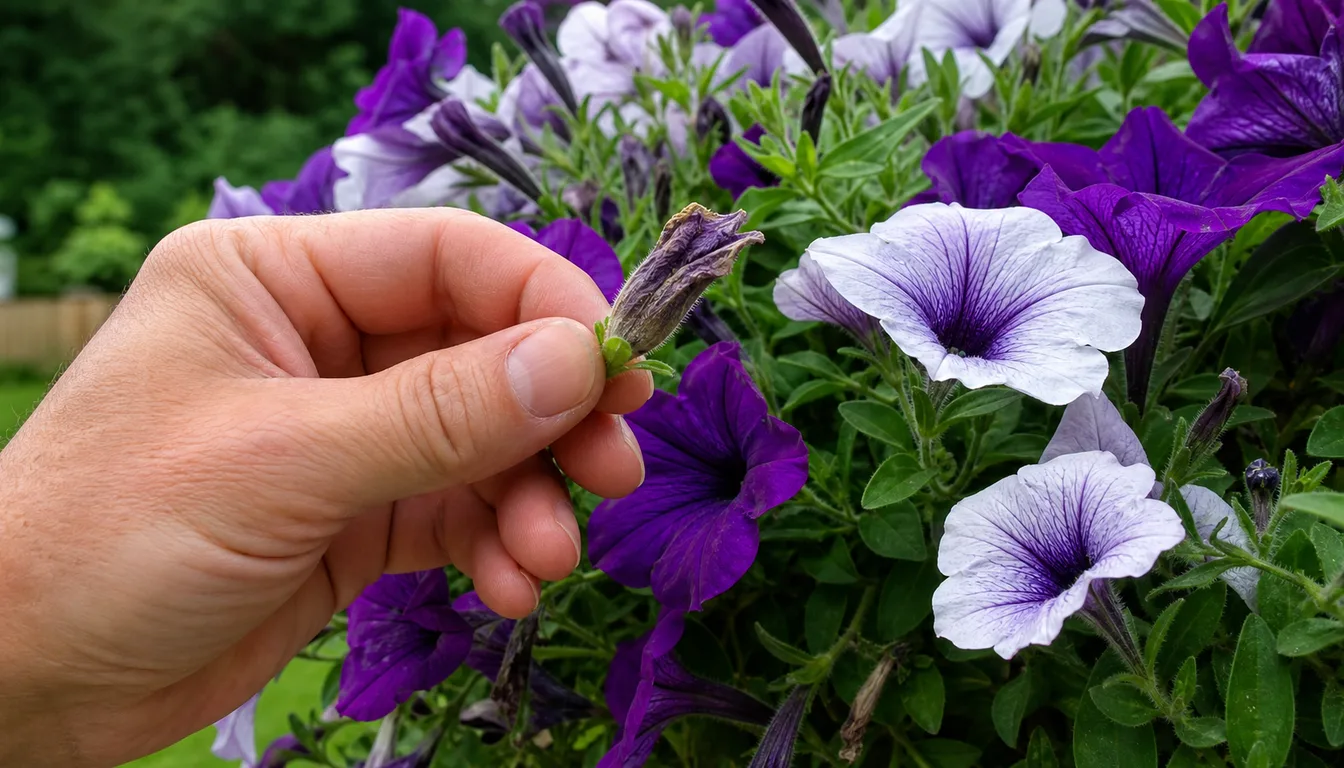
To deadhead a seed-grown or large-flowered petunia, remove the faded trumpet and the swollen seed capsule directly behind it. Pinch the short flower stem back to a leaf joint so no developing seed remains.
First check the plant tag. Many spreading, milliflora, and vegetatively propagated petunias are self-cleaning and continue flowering without routine deadheading.
Grooming them is optional unless old flowers look messy.
Even these vigorous types can become long and bare in midsummer, when shortening the stems is more useful than picking individual blooms.
The guide below separates those two jobs. You will see how to remove one spent flower, how to trim a tired basket without stripping it bare, and how to tell a pruning problem from low light, dry potting mix, or depleted container nutrients.
Do Petunias Really Need Deadheading?
It depends on the cultivar. Traditional grandiflora, double, and many seed-grown petunias benefit most because removing developing seed keeps the plant tidy and can encourage further bloom.
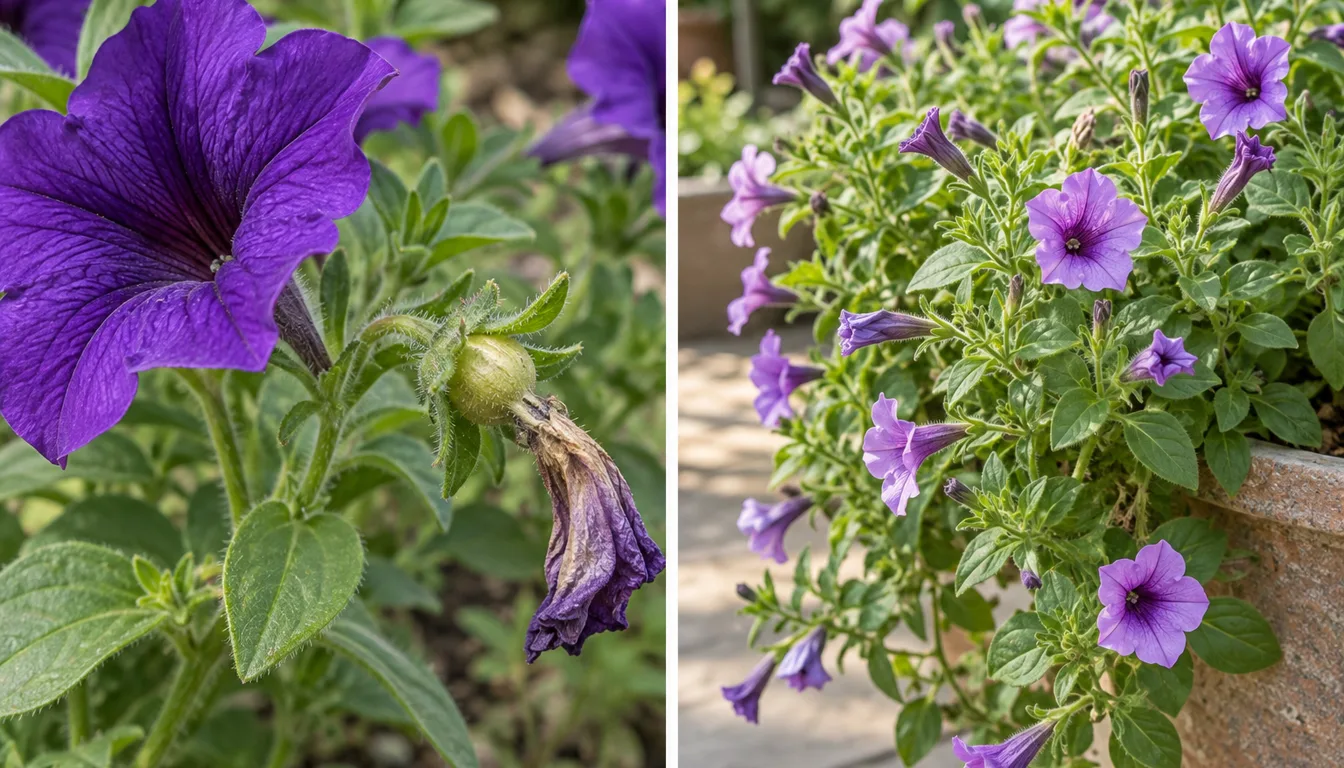
Their collapsed flowers also cling after rain and can hold moisture in a dense canopy.
Many modern milliflora and spreading petunias are bred to be self-cleaning. Their old flowers drop, and some vegetatively propagated cultivars set little or no viable seed, so they can keep flowering without a weekly deadheading session.
The tag or breeder description is more reliable than flower color or growth habit alone.
Use the plant's behavior as a second check. If faded flowers fall cleanly while fresh buds continue along compact stems, leave it alone.
If spent flowers remain attached, capsules swell behind them, and new bloom slows, deadhead. If flowers remain plentiful but stems are bare near the pot, skip the one-by-one cleanup and plan a shaping cut.
| What you see | Best response |
|---|---|
| Clinging faded flowers and swelling capsules | Deadhead individual blooms |
| Old flowers drop and new buds keep opening | Groom only for appearance |
| Long bare stems with flowers at the tips | Shorten stems to leafy nodes |
| Gray or mushy flowers after rain | Remove affected debris and improve airflow |
“Self-cleaning” describes flower drop and continued bloom. It does not promise that a basket will never need watering, feeding, or a midsummer trim.
Where Do You Pinch a Spent Petunia Flower?
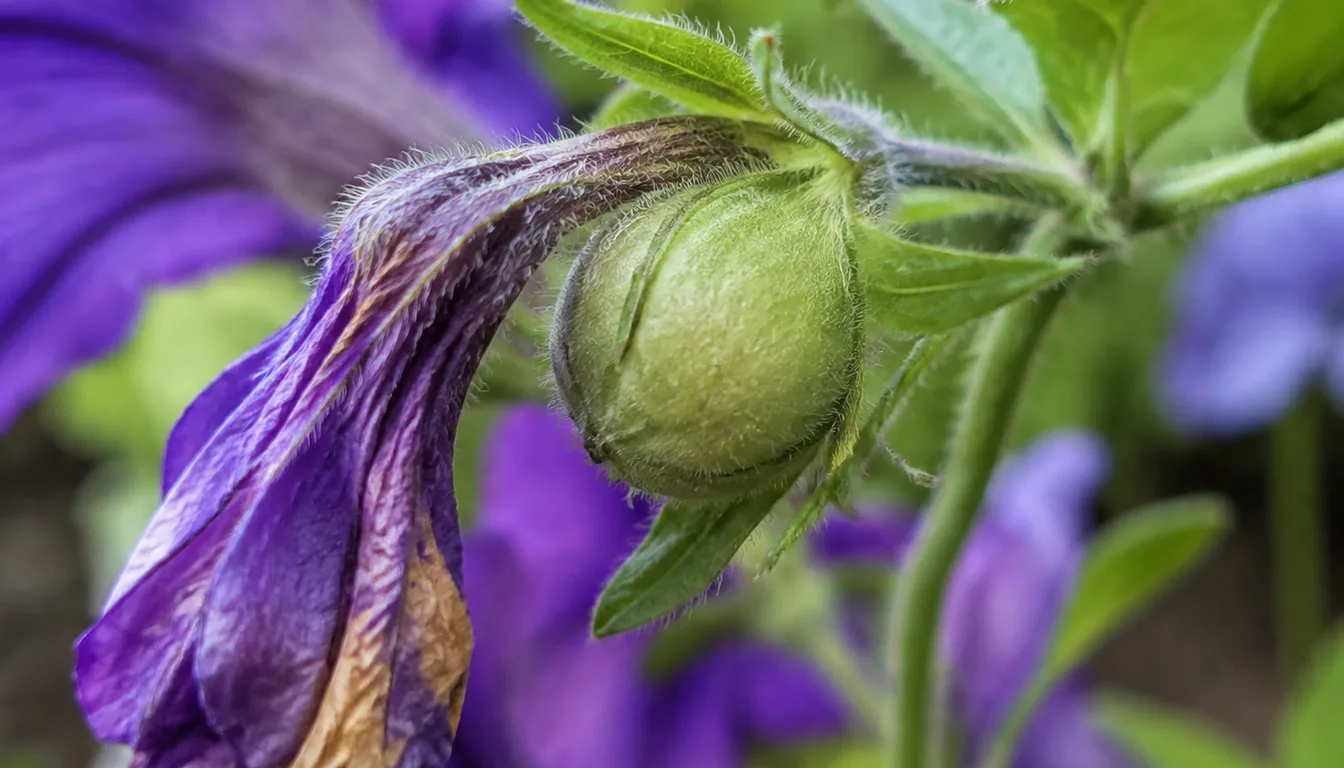
Pulling away only the papery trumpet can leave the reproductive structure behind. Look at the base of the flower for a green, star-shaped calyx.
The ovary and developing capsule sit inside or just behind it on the short flower stem.
For a single spent bloom, hold the stem so you do not tug the whole runner. Pinch or snip below the calyx and above the nearest healthy leaf joint.
You do not need to remove several inches of leafy growth every time, but taking the short flower stem prevents a bare stub from collecting along the branch.
- Find a faded, closed, or rain-damaged flower.
- Follow it to the green calyx at its base.
- Move down the short stem to the nearest leaf joint.
- Pinch or snip just above that joint, removing flower, calyx, and capsule together.
- Collect diseased or moldy debris instead of dropping it into the canopy.
A soft green stem usually pinches cleanly. Use small scissors or bypass snips when a stem has become fibrous, when double flowers hide the joint, or when pulling would disturb neighboring buds.
This is the same node-based principle used when pinching basil, but petunia stems are more brittle and need support from your other hand.
How to Deadhead Petunias Without the Sticky Mess
Petunia leaves and stems are naturally tacky because they carry glandular hairs. That texture is normal.
It does not mean the plant has a pest or disease.
Wear thin garden gloves if the residue bothers you, and wash hands with soap and water after working.
A clean pair of narrow scissors or bypass snips is useful for a large basket. Wash sticky residue from the blades with soapy water, dry them, and disinfect before moving from a diseased plant to a healthy one.
Do not routinely put rubbing alcohol on your skin, and do not use a dirty blade to spread gray mold from one damp container to another.
Work when foliage is dry enough that flowers do not mat together. Morning is comfortable, but after rain it is better to wait for the canopy to dry and then remove collapsed blossoms.
- For a few soft stems: Pinch with clean fingers while supporting the runner.
- For doubles or woody stems: Use narrow scissors or bypass snips.
- For sticky blades: Clean with warm soapy water, then dry them.
- For suspected disease: Bag affected material and disinfect the tool before the next plant.
When a Leggy Basket Needs a Cutback, Not a Pinch
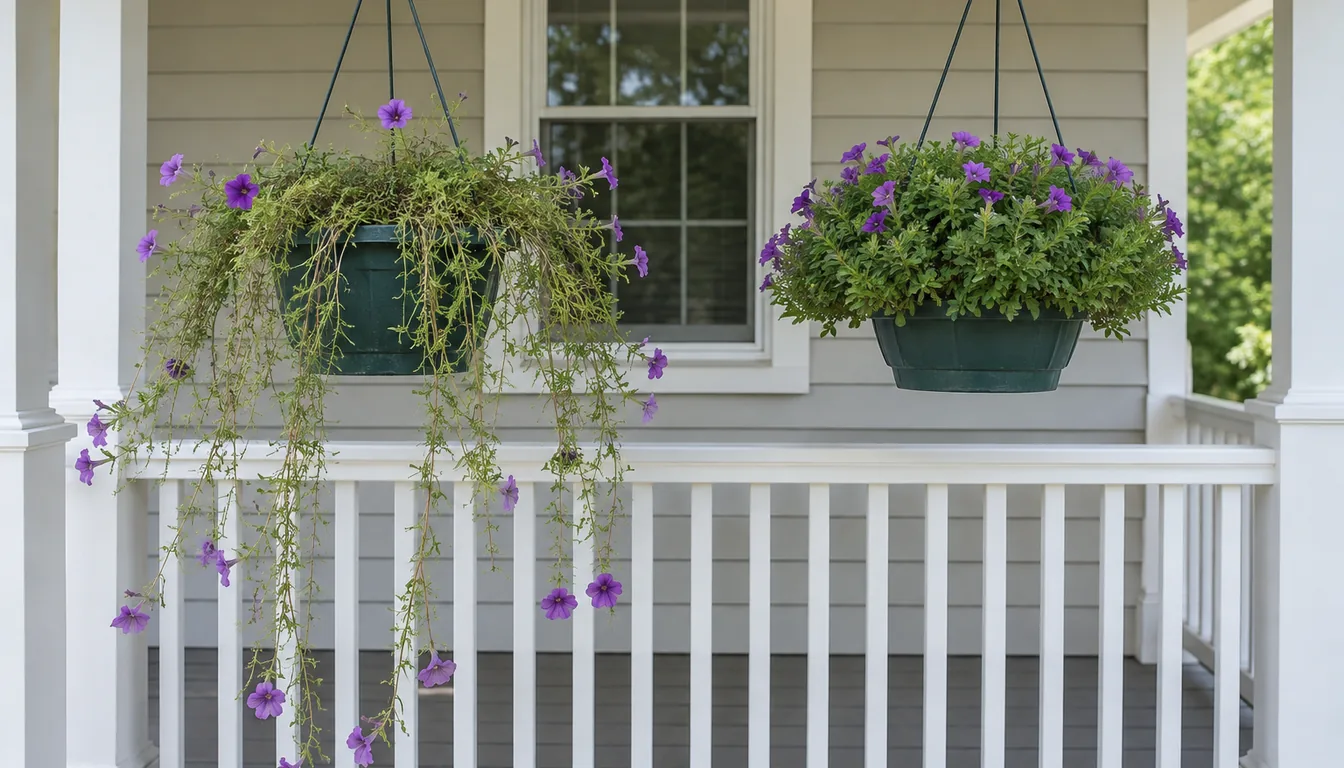
Picking flowers cannot restore a basket whose stems are bare for most of their length. Petunias branch from leaf nodes, so the useful cut is above healthy leaves closer to the pot rather than at the flower tip.
Shorten long stems by about one-third when the plant still has leafy growth through the middle. On a severely leggy annual, Extension guidance allows a stronger renewal cut that leaves several inches and multiple nodes, but do not remove every leafy shoot at once from a heat-stressed or drought-stressed basket.
Staggering the work over a week keeps some bloom and leaf area while new branches begin.
Water the pot thoroughly after pruning. If the potting mix has been fed according to its label and foliage is a healthy green, fertilizer is not automatically required.
If regular watering has leached nutrients from a container, use its normal labeled container feed rather than an improvised “bloom booster.”
| Situation | What to do | What to expect |
|---|---|---|
| Plant is full. a few old flowers cling | Remove individual spent blooms | Appearance improves immediately |
| Stems are leafy but uneven | Shorten the longest stems by about one-third | New side shoots form below the cuts |
| Most stems are bare with tip flowers | Cut back in stages to several healthy nodes | A temporary bloom pause while growth renews |
| Plant is wilted, hot, or bone dry | Correct water stress before pruning | Less risk of dieback after the cut |
Still Not Blooming? Look Past the Deadheading
Deadheading cannot compensate for a poor growing site. Petunias flower best with abundant direct sun.
A plant stretching toward light with wide gaps between leaves needs a brighter position, not more cutting.
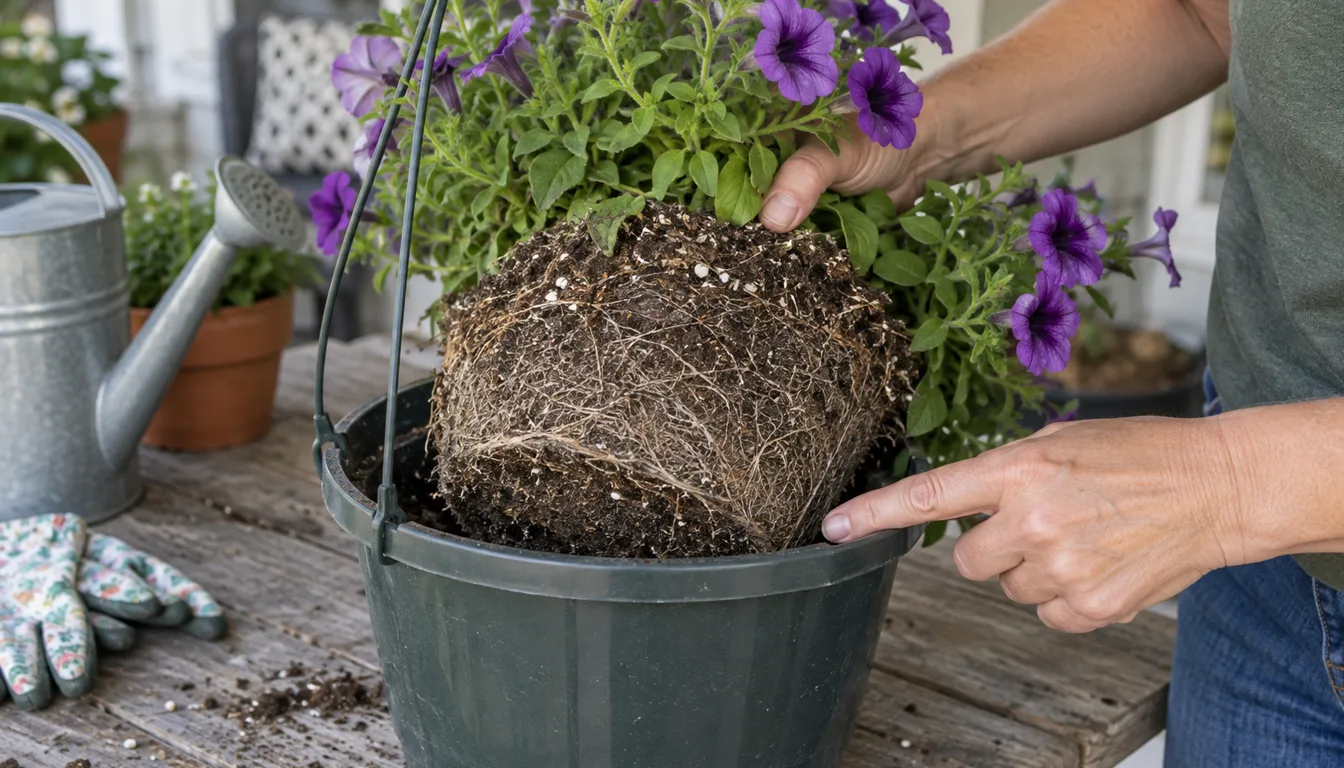
Containers also lose water and nutrients faster than beds. If a basket repeatedly wilts, water may be running between a dry root ball and the pot wall.
Soak it slowly until the root ball accepts water, then reassess pot size and watering frequency.
Follow the fertilizer label for the container and cultivar rather than assuming that extra phosphorus will create flowers.
Very dark, lush leaves with few flowers can follow excess nitrogen, but heat, low light, and saturated roots also reduce bloom. Examine the whole plant before changing fertilizer.
Gray fuzzy growth or collapsing flowers points toward Botrytis and calls for removal of infected tissue, more airflow, and watering at the soil rather than across flowers.
- Long internodes and a one-sided lean: Move to stronger light gradually.
- Repeated wilt and a light pot: Water more thoroughly or use a larger container.
- Wet mix and yellow lower leaves: Let drainage and roots recover before feeding.
- Healthy foliage but fewer blooms in extreme heat: Maintain even moisture and wait for milder weather.
- Sticky leaves with no insects or damage: Normal petunia glandular hairs.
A Deadheading Rhythm From Spring to First Frost
There is no useful universal schedule such as every two days. A traditional double petunia in a rainy spell may need frequent cleanup, while a self-cleaning spreading cultivar may need no individual deadheading all season.
Inspect while watering. Remove clinging spent flowers when they begin forming capsules or trap wet petals, and shorten runners when bare sections become conspicuous.
In midsummer, check the potting mix and roots at the same time because a tired basket often has more than one problem.
Late in the season, decide whether you want maximum bloom, seed, or less work. Seed-grown cultivars can be allowed to form capsules if you want to collect seed, though seedlings may not match a hybrid parent.
Near the local first-frost window, a major renewal cut may not have enough warm weather to repay the temporary loss of flowers.
- After rain: Remove collapsed blooms and any gray, decaying tissue.
- During steady bloom: Groom seed-forming types as capsules appear.
- When stems turn bare: Make a node-based shaping or renewal cut.
- Late in the season: Keep existing flowers unless enough warm weeks remain for regrowth.
Deadheading Trailing Petunias in Baskets and Mixed Pots
Most petunias live in hanging baskets and window boxes, and trailing types tangle as they grow. Work one section at a time and cradle the runner in your free hand as you cut, so you are guiding the vine instead of yanking it.
In a mixed pot, keep a lighter touch. When petunias share a basket with lantana or verbena or an upright salvia, cut enough to keep them full but not so hard that they crowd or smother the neighbors.
Right after a trim a basket dries fast and looks thin, so move it somewhere bright but out of hard wind for a couple of days while it refills.
In a border, treat the petunias as the bright front edge with a sturdier coneflower behind them.
A patch of black-eyed Susan can hold the back of the bed while a mounding verbena knits the two layers together.
Pro Tips
- A quick evening walk-by to pull the two or three worst blooms keeps weekend cleanups short.
- On wave types, run a hand under the basket and shake gently to drop loose spent petals before you snip.
- Mark your calendar for one hard cutback around mid-July so leggy baskets never get ahead of you.
- Angle each cut slightly so rain sheds off the wound instead of pooling on a flat stub.
- Before a week away, cut back and deep-water, then group baskets in shade so they dry slower.
- Rinse sticky snips in warm soapy water after a session so the sap does not gum up the pivot.
- Compost healthy spent blooms, but bin any that show gray mold so it does not spread in the pile.
Frequently Asked Questions
Do Wave and spreading petunias need deadheading?
Many spreading and milliflora petunias are self-cleaning and do not need routine deadheading. Check the cultivar tag and watch whether faded flowers drop while new buds continue.
Trim long bare stems only when the plant loses its shape.
Can I pinch petunias instead of using scissors?
Yes, when stems are soft and you can break them cleanly just above a leaf pair. For thicker or woody stems, small snips give a cleaner cut and avoid tearing the stem.
Will petunias rebloom if I never deadhead them?
Self-cleaning cultivars can bloom continuously without deadheading. Traditional seed-forming types usually look better and may flower more when spent blooms and capsules are removed, while leggy plants need a stem cutback rather than flower removal alone.
Why are my petunias sticky even the healthy ones?
That tacky feel is normally produced by glandular hairs on petunia leaves and stems. Wear gloves if it irritates your skin, wash with soap and water after handling, and check for pests only when you also see insects, stippling, honeydew, or distorted growth.
Do I need to deadhead right before a vacation?
If you will be gone a week or more, give them a thorough cleanup and a modest trim first. Water deeply and, if you can, move hanging baskets where a neighbor can reach them easily.
Sources & References
Related Guides
Cutting Back a Leggy Houseplant Does Not Fix It
Most people cut a houseplant back because it has gone long and bare.
11 min read
Deadheading Daffodils Matters Less Than the Six Weeks After
Almost every page about spent daffodils tells you to remove the seed pod so the bulb is not…
11 min read
French Lavender Pruning Depends on the Plant and Season
French lavender needs light trimming within its leafy growth, rather than a hard cut into bare…
6 min read
Fruit Tree Pruning Starts With Where the Crop Forms
A fruit tree that gives small, crowded, scabby fruit is usually not underfed.
11 min read
How Deep Can You Cut a Spent Lavender Spike?
Deadheading lavender is the lightest cut you will ever make on the plant, and the one place people…
7 min read
How Do You Prune Spanish Lavender for a Second Flush?
Spanish lavender is the one that flowers first and the one that keeps going.
7 min read