
Lawn Careschedule11 min read
How Long After Planting Grass Seed Can You Walk On It Safely
Learn exactly how long to stay off a newly seeded lawn, week-by-week, so you do not crush fragile sprouts or waste seed and water.
Most new lawns fail not from bad seed, but from feet, paws, and mower wheels showing up too soon. The roots are soft long after you see green. If you just overseeded using a guide like how to overseed a tired, the right “no traffic” window protects that work.
This guide breaks down weeks 0 through 8 so you know when light walking, mowing, and normal use are safe. We will also explain how timing changes for cool-season grasses like cool-climate fescue mixes. Warm-season types such as bermuda for hot zones need a longer traffic break.
grassThe Short Answer: Typical Wait Times
The first 3 weeks after seeding are the danger zone. Seeds are swelling, sprouting, and pushing tiny roots into the top inch of soil. Any footprints here can crush the seed or shear off those new white roots.
By week 4 to 5, most cool-season lawns like kentucky bluegrass blends and perennial rye overseeds are tall enough for a first careful mow. Perennial ryegrass is usually the fastest to green up, but the plants are still tender and only necessary traffic for mowing on dry ground is usually safe.
Warm-season grasses, especially bermuda and zoysia, take longer to spread and thicken. Plan closer to 6 to 8 weeks before you treat that area like the rest of the yard. They need extra time for horizontal runners to root at each node.
The grass is not “ready” when you see green, it is ready when roots are deep enough to hold the soil when you tug a blade. Always test a few clumps before deciding full traffic is okay.
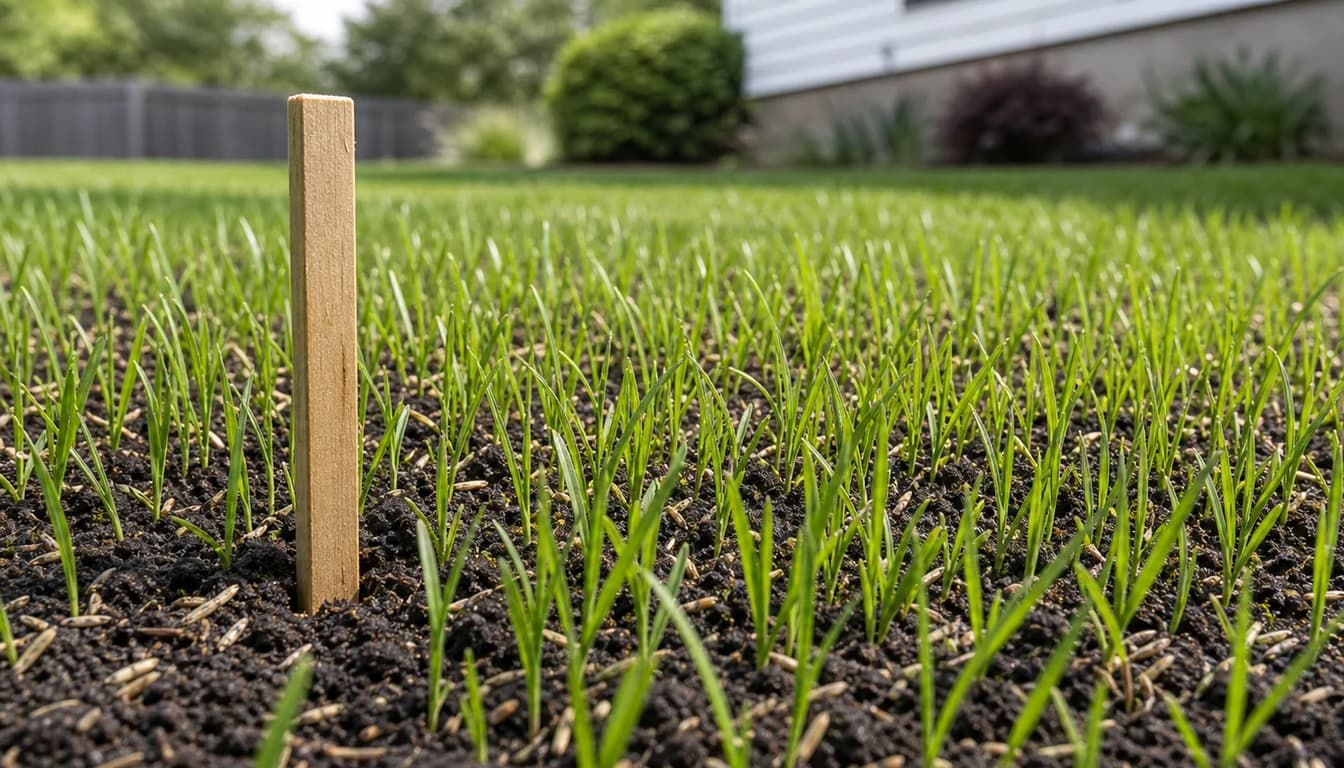
Young seedlings look ready long before their roots can handle kids, dogs, and mowers.
- fiber_manual_recordWeeks 0–3: Avoid all traffic except careful watering
- fiber_manual_recordWeeks 4–5: Limited walking for mowing on dry soil
- fiber_manual_recordWeeks 6–8: Gradual return to normal use if turf feels anchored
- fiber_manual_recordAfter 8 weeks: Most lawns handle regular play in good conditions
ecoHow Grass Type Changes the Timeline
Seed type controls how fast those roots toughen up. Cool-season grasses, which dominate in zones 3–7, sprout quickly in mild weather. Warm-season grasses for zones 8–11 need heat and often spread with stolons or rhizomes.
Cool-season mixes with perennial ryegrass often show green in 5–7 days, with enough height for a cautious mow at 3–4 weeks. Blends heavy on kentucky bluegrass seed are slower, often needing 5–6 weeks before even light traffic feels safe.
Tall turf types like tall fescue clumps put down deep roots quickly, so they usually tolerate careful use a bit sooner than bluegrass, especially in zone 5 where soil cools fast in fall. Think of it as behaving more like tough hosta clumps than delicate annuals.
Warm-season lawns, such as bermuda for full-sun yards or zoysia in hot summers, often need 6–8 weeks before they feel anchored. They rely on lateral growth, so each runner must root before it handles weight.
- fiber_manual_recordPerennial rye blends: Light use after 4 weeks in good conditions
- fiber_manual_recordTall fescue lawns: Careful traffic around 4–5 weeks
- fiber_manual_recordKentucky bluegrass: Often 5–6 weeks before mow and light steps
- fiber_manual_recordBermuda or zoysia: Plan 6–8 weeks for full-use readiness
Guide — See AlsoBest Time to Aerate and Overseed for a Thicker LawnLearn when to aerate and overseed your lawn by season and grass type so every pass of the machine leads to thicker, gree
chevron_rightwarningWeek 0–3: Total Traffic Lockdown
The first weeks after seeding are all about protection. Seeds are shallow, the soil stays soft from frequent watering, and any footprint can leave a lasting dip or bare patch that annoys you for years.
Foot traffic can also compact wet soil, which squeezes out oxygen roots need. That is a bigger problem in heavier clay, common in zones 4–7, than in sandy soils. If you have tight clay, treat new seed like a freshly tilled vegetable bed of carrot rows and stay off it.
Do not let kids, pets, delivery carts, or mowers cross a newly seeded area during weeks 0–3, even “just once.” The damage adds up fast.
During this period, water from the edges whenever possible. Use a sprinkler you can control from a walkway, or lay hoses before seeding so you do not need to step into the area.
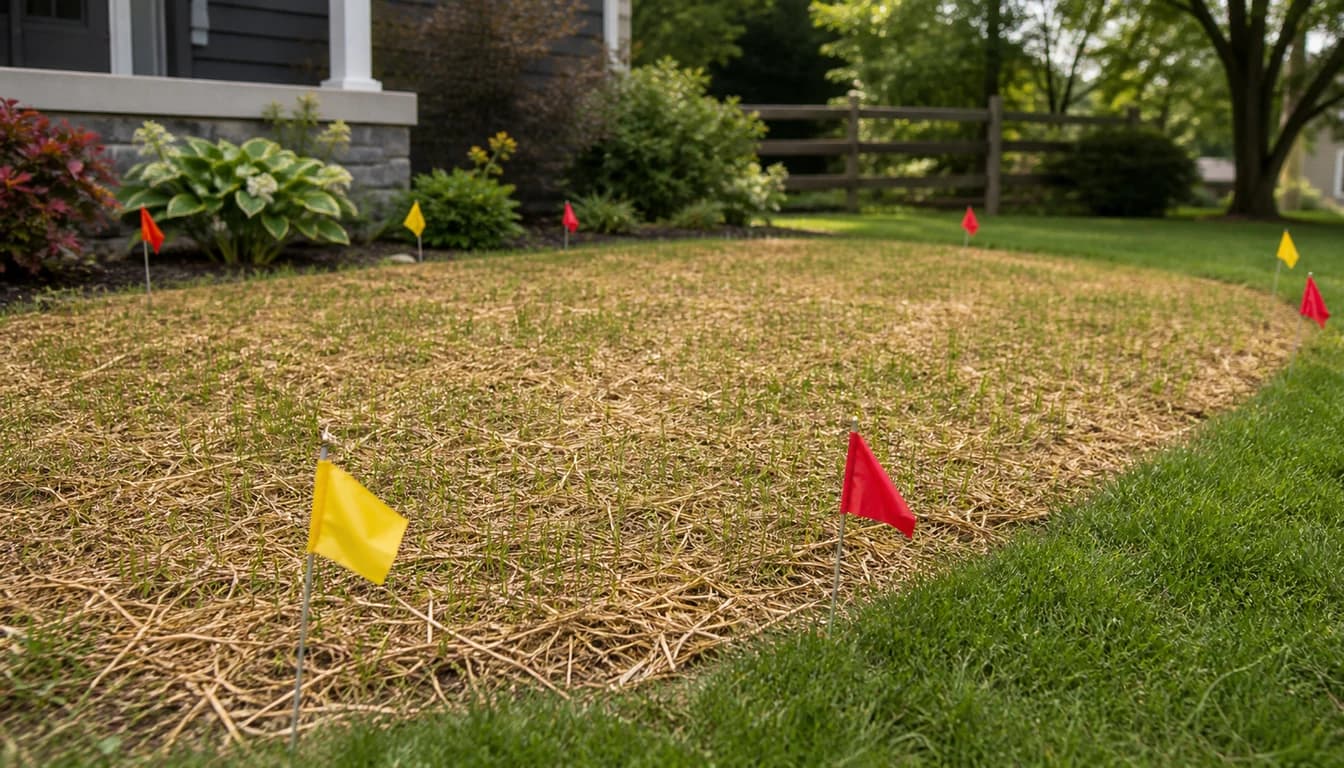
Use flags or string lines so everyone in the household avoids the new seedbed.
- fiber_manual_recordNo walking: Use existing paths only, even if it adds a few steps
- fiber_manual_recordNo mowing across it: Mow around the perimeter and leave a buffer
- fiber_manual_recordNo heavy tools: Wheelbarrows and spreaders stay off the new zone
- fiber_manual_recordFlag boundaries: Mark edges so visitors know it is off-limits
Email Updates
Join the KnowTheYard update list
Zone-specific advice, seasonal reminders, and new plant guides — no filler.
calendar_monthWeek 4–6: First Mow and Limited Walking
Once seedlings reach 3 to 4 inches tall, they usually need a first trim. That often falls around week 4 for rye and fescue, week 5 or 6 for bluegrass and warm-season types, depending on soil temperature and watering.
Before mowing, do the tug test. Gently pull on a few blades. If they slide out easily, roots are not ready. If the grass resists and lifts a bit of soil, it has some grip. Do not rush mowing; one extra week of waiting beats repairing ruts later.
Only mow when the soil surface is dry. Mowing soft, damp ground leaves wheel tracks and can uproot entire strips of grass.
Use the lightest mower you own, preferably a walk-behind with sharp blades. Set the deck high and follow the one-third rule that also keeps mature lawns like low-maintenance buffalo turf healthier.
- fiber_manual_recordCut height: Take blades from 3–4 inches down to about 2.5–3 inches
- fiber_manual_recordMowing speed: Walk slowly and avoid tight turns on the new area
- fiber_manual_recordWalking pattern: Use the same paths each time to limit disturbed spots
- fiber_manual_recordPost-mow check: Look for uprooted clumps or ruts to reseed quickly
Guide — See AlsoThe Ultimate Lawn Care Calendar by Grass Type and SeasonUse a season-by-season lawn care calendar to time mowing, fertilizing, watering, overseeding, and aeration without copyi
chevron_rightthermostatWeather, Season, and Soil: Why Timing Changes Everything
Soil temperature does more than the calendar to decide how fast new grass can handle foot traffic.
Cool-season seeds in 50–65°F soil creep along, while warm soil in the 70s pushes fast germination.
In cool, wet springs, soil stays soft longer, so even light footsteps can compact and rut a young lawn.
On the other hand, a dry late-summer seeding in zone 7 yards might firm up enough for light walking a week earlier.
Sun exposure matters too.
Shaded spots under a large maple canopy hold moisture and stay spongy, while sunny slopes dry faster and support weight sooner.
Just do not let the sunny areas fool you into thinking the whole lawn is ready.
Heavy clay soils are the slowest to "set" after you seed.
They smear and compact easily, which squeezes oxygen away from new roots.
Sandy or loamy soils drain faster, so they firm up sooner, but they also dry out, which can slow germination if you do not water correctly.
Walk across wet, clay soil too early and you can undo weeks of careful seed prep in a single afternoon.
Seasonal timing also changes disease risk.
Cool, soggy periods in early spring invite damping-off diseases if you add traffic dents that trap water.
Late summer or early fall seeding usually gives the best balance of warmth for quick sprouting and cooler air for root growth.
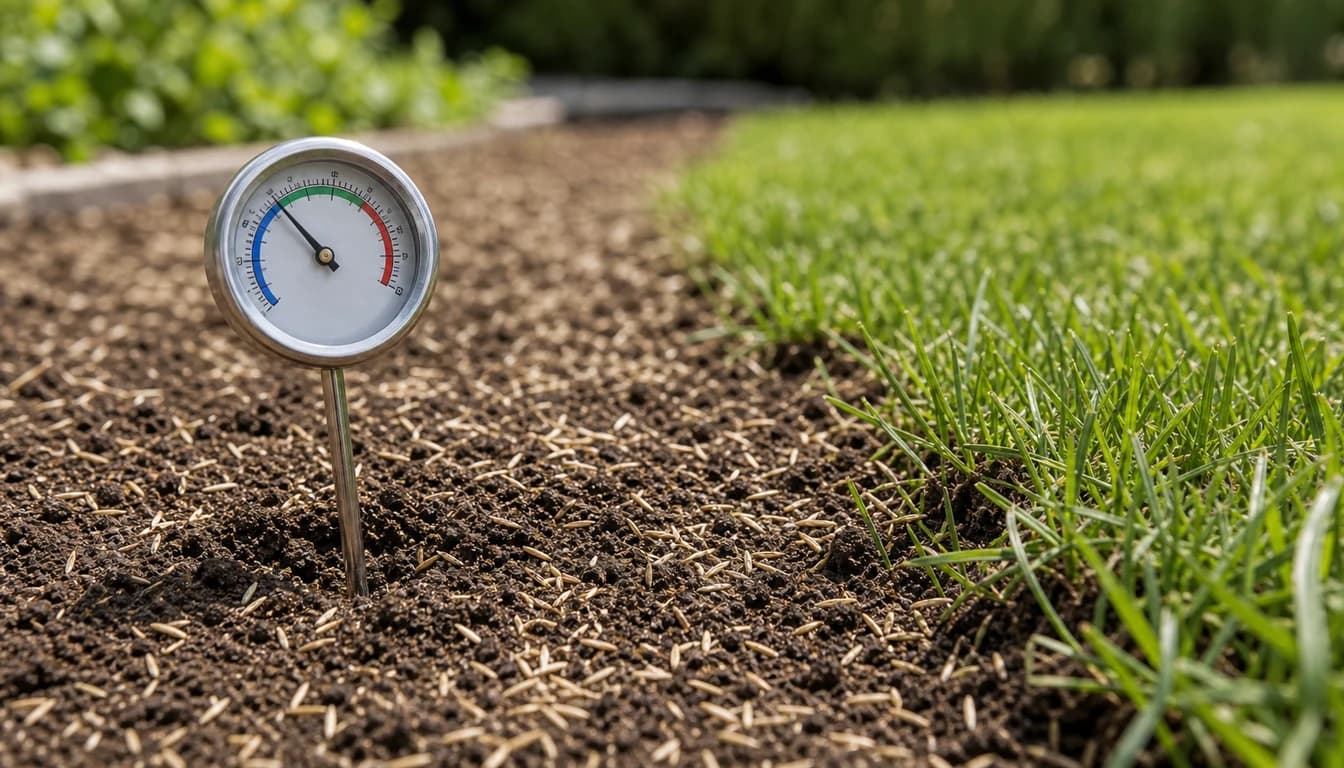
Soil temperature tells you much more than calendar dates about seed germination.
- fiber_manual_recordSoil temp target: Around 55–60°F for cool-season and 65–70°F for warm-season seed
- fiber_manual_recordRainfall pattern: More rain means longer wait before regular walking
- fiber_manual_recordSoil type: Clay needs the longest break, sandy or loam can handle feet sooner
- fiber_manual_recordSun vs shade: Shade holds moisture longer, so delay traffic there
petsPets, Kids, and Real Life: Managing Traffic While Grass Establishes
Households with kids and dogs put new lawns through a tougher test than any simple "X weeks" rule.
You are not just avoiding footprints, you are stopping repeated running, sliding, and turning that tears shallow roots.
Expect to manage traffic differently in high-use zones.
Play areas, dog paths along a fence, and shortcuts to the shed need extra protection, longer rest times, or even a different grass like durable tall fescue mixes.
Temporary barriers are your best friend in the first 6–8 weeks.
Use garden stakes, rope, and cheap plastic fencing to outline the seeded area, or at least block the most tempting "race tracks".
For small spaces, a few upside-down tomato cages create visible no-step zones.
Pets also bring digging and urine damage into the mix.
Young turf cannot shrug off high nitrogen and salts the way a mature stand can.
Train dogs to use a gravel or mulch potty strip and rinse spots with water if they hit the new grass by mistake.
Repeated dog traffic on the same line will kill even established turf, so plan a path you are okay sacrificing.
If your yard is the neighborhood playfield, consider staging the project.
Seed half the lawn first and keep it off-limits while the other half stays open, then swap.
It takes longer, but it is less frustrating than constantly repairing crushed seedlings.
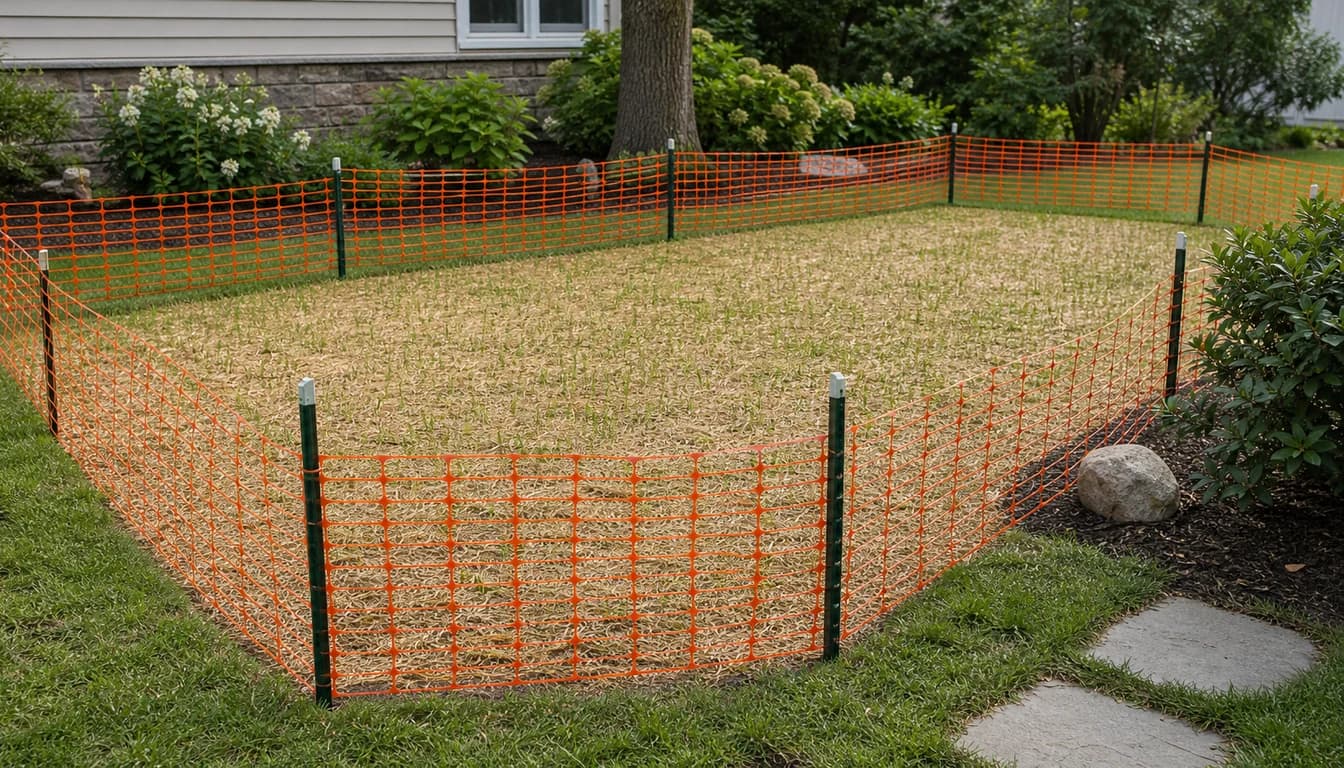
Simple barriers keep paws and feet off fragile new turf before roots anchor.
- fiber_manual_recordHigh-use zones: Give them extra weeks before games or dog zoomies
- fiber_manual_recordBarriers: Simple stakes and rope work better than "Do Not Walk" signs
- fiber_manual_recordPet plan: Create an alternate potty area before you spread seed
- fiber_manual_recordStaged seeding: Split the lawn so some area always stays usable
Guide — See AlsoBest Time to Overseed a Midwest Lawn for Thick TurfLearn the best time to overseed a Midwest lawn based on soil temperature, grass type, and hardiness zone so your new see
chevron_rightquizSpot Problems Early: What Damage From Walking Looks Like
Foot-traffic damage on new grass does not always show up as obvious footprints.
Often the first sign is uneven thickness, with thin strips exactly where people or pets crossed while the ground was still soft.
Crushed seedlings tend to die in lines or patches, not across the whole lawn.
You might see healthy, upright blades on either side of a narrow, weak band.
That is classic "shortcut" damage, different from patchy germination caused by poor seed-to-soil contact.
Compare with how kentucky bluegrass repairs itself by spreading.
It can slowly fill traffic scars, while clumping grasses struggle.
Another clue is how the soil feels underfoot.
If your heel sinks or the ground squishes sideways, the roots are not anchored deep enough.
You are likely shearing tiny roots every time you walk, which sets the lawn back days or weeks.
If you can see a shiny mud sheen where you stepped, that area was too wet and soft for traffic.
In more serious cases, pushed-down seedlings stay flattened and start to yellow.
They lose access to light long enough that they simply rot or dry out.
You may also notice small ruts channeling water, so those paths stay wetter and more prone to disease.
When you catch damage early, spot repair works.
Lightly rake matted areas to stand blades back up, scratch in a bit of fresh seed, and topdress with a thin layer of compost.
Then treat that strip like a brand-new seeding and keep feet off it for a couple of weeks.
- fiber_manual_recordTraffic lines: Narrow thin bands often trace where people or pets walked
- fiber_manual_recordSoil feel: Any sinking or squishing means roots are not anchored yet
- fiber_manual_recordFlattened blades: Matted, yellowing grass is not ready for regular use
- fiber_manual_recordRuts: Tiny channels collect water and invite more problems later
compostRecovering From Walking Too Soon
Stepped on your new grass before it was ready?
You are not alone.
The fix depends on how deep the damage goes, but you can usually bring things back without starting over.
Start with a hands-and-knees inspection of the worst spots.
Gently tug on a few blades.
If they pull out with short, white roots attached, traffic sheared them off.
If they stay put but look mashed, you mostly need to stand them back up and protect them.
Light damage responds well to simple grooming.
Use a leaf rake or the back of a stiff broom to fluff the grass so each blade has some space and light.
Follow with a gentle watering to wash soil back around bent crowns without creating mud.
For moderate damage, overseeding just the weakened strips is better than redoing the whole yard.
Scratch the surface with a metal rake, scatter fresh seed of the same type, and cover with a very thin layer of compost or peat.
Then treat that area like a small targeted overseeding project.
Never roll muddy soil to "fix" footprints on a new lawn, you will just crush more seedlings and compact the surface.
Severe damage looks like bare or nearly bare tracks.
In that case, accept that you have a failed strip and fully re-seed it when soil conditions are right again.
Block it off from traffic this time.
You can still mow around it once the surrounding grass is stable.
To help recovery everywhere, focus on root health.
Deep, infrequent watering once seedlings are established, plus a light starter fertilizer, encourages roots to chase moisture down.
Combine that with the mowing rules you would follow for an older stand.
Do not remove more than one-third of the blade at once and keep the mower blade sharp.
- fiber_manual_recordLight damage: Rake upright and protect for 1–2 weeks
- fiber_manual_recordModerate damage: Spot overseed and topdress affected strips
- fiber_manual_recordSevere damage: Reseed failed paths like a new lawn section
- fiber_manual_recordSupport roots: Shift to deeper watering and sharp-blade mowing
Guide — See AlsoWhen to Aerate a Lawn in Michigan for Thick TurfLearn exactly when to aerate a lawn in Michigan, how soil temperature and grass type change the timing, and how to pair
chevron_righteventLong-Term Wear: When Your Lawn Is Ready for Sports and Parties
Surviving a careful walk is one thing.
Handling soccer games, dog fetch, and backyard parties is another.
Full wear tolerance takes longer than the basic "you can walk on it now" stage.
Plan three months or more before you treat that area like a playfield.
By that point, roots have usually reached a few inches deep and filled the soil between plants.
You can check by gently digging a 3–4 inch slice in an out-of-the-way spot.
Healthy young turf has a white, fibrous root mat.
Grass type plays a big role here.
Spreading types like warm-season bermuda runners and creeping bluegrass types recover from divots and cleats faster than clumping fescues.
If your family is hard on turf, those species are worth a look.
Do not schedule a big event on a lawn that is less than a season old if you care how it looks afterward.
You can host people, but expect some scars and plan a bit of repair.
If you know you have a party coming, water a day or two before so the soil is moist but firm.
Skip watering the morning of the event so the surface does not get slick.
Back off on aggressive mowing leading up to heavy use.
Keep the height at the top of the recommended range for your grass.
Taller blades cushion foot traffic and shade crowns.
Then, after the event, give the lawn a calm week.
- fiber_manual_recordDelay sports: Wait at least one full growing season before regular intense play
- fiber_manual_recordCheck roots: Confirm several inches of dense, white roots before hosting
- fiber_manual_recordMow higher: Use the tall end of the range before heavy use
- fiber_manual_recordPlan repairs: Keep seed on hand for quick post-event touchups
tips_and_updates
Pro Tips
- check_circleUse small yard flags or string to mark new seed areas so delivery drivers and kids avoid them.
- check_circlePlace sprinklers and hoses before seeding so you can water without stepping on the soil.
- check_circleDo the gentle tug test on a few clumps; if blades pull out easily, stay off another week.
- check_circleSchedule heavy use, like dog play or kid games, on an older part of the yard while seed establishes.
- check_circleKeep mower blades very sharp so they slice seedlings cleanly instead of pulling them from the soil.
- check_circleAvoid watering right before you must cross the area; dry, firm soil handles light traffic better.
- check_circlePlan seeding during a quieter season for your yard so you are not tempted to use it too early.
quiz
Frequently Asked Questions
Can I walk on new grass seed to water it or pull weeds?expand_more
Avoid stepping directly on newly seeded areas for the first 3 weeks. Use boards or stepping stones if you must cross, and water from the edges with a sprinkler instead of walking through with a hose.
How long before my dog can use a newly seeded lawn?expand_more
Give a minimum of 6 weeks before any regular dog traffic, and 8–10 weeks for large or active dogs. Set up a separate potty area in gravel or mulch so you are not constantly repairing urine spots and ruts.
Will footprints in newly seeded areas go away on their own?expand_more
Shallow footprints may fill in as the lawn thickens, but deeper ruts often stay thin. Rake matted spots upright, add a little extra seed, and topdress lightly so you are not stuck with permanent weak paths.
Is it better to seed in spring or fall if I want to use the lawn sooner?expand_more
For cool-season grasses, early fall usually wins. Soil is warm for quick sprouting, air temps are cooler, and you get two growing seasons before summer heat. Spring seedings often stay soft and vulnerable longer due to rain and cool soil.
Can I mow new grass before I walk on it normally?expand_more
Yes. You should mow once seedlings reach about 3–4 inches and the soil feels firm underfoot. Use a light walk-behind mower and sharp blade, and keep other traffic minimal for another week or two afterward.
menu_book
Sources & References
Related Guides
Best Time to Aerate and Overseed for a Thicker Lawn
Learn when to aerate and overseed your lawn by season and grass type so every pass of the machine leads to thicker, greener turf instead of wasted seed.
11 min read
Best Time to Overseed a Midwest Lawn for Thick Turf
Learn the best time to overseed a Midwest lawn based on soil temperature, grass type, and hardiness zone so your new seed fills in thin spots.
11 min read
Best Time to Overseed a Northeast Lawn for Thick Turf
Learn exactly when to overseed cool-season lawns in the Northeast, how soil temperature and frost dates affect timing, and what to do before and after seeding for a thicker, greener yard.
11 min read