
Should You Fertilize the Lawn Before or After Rain?
Should you fertilize a lawn before or after rain?
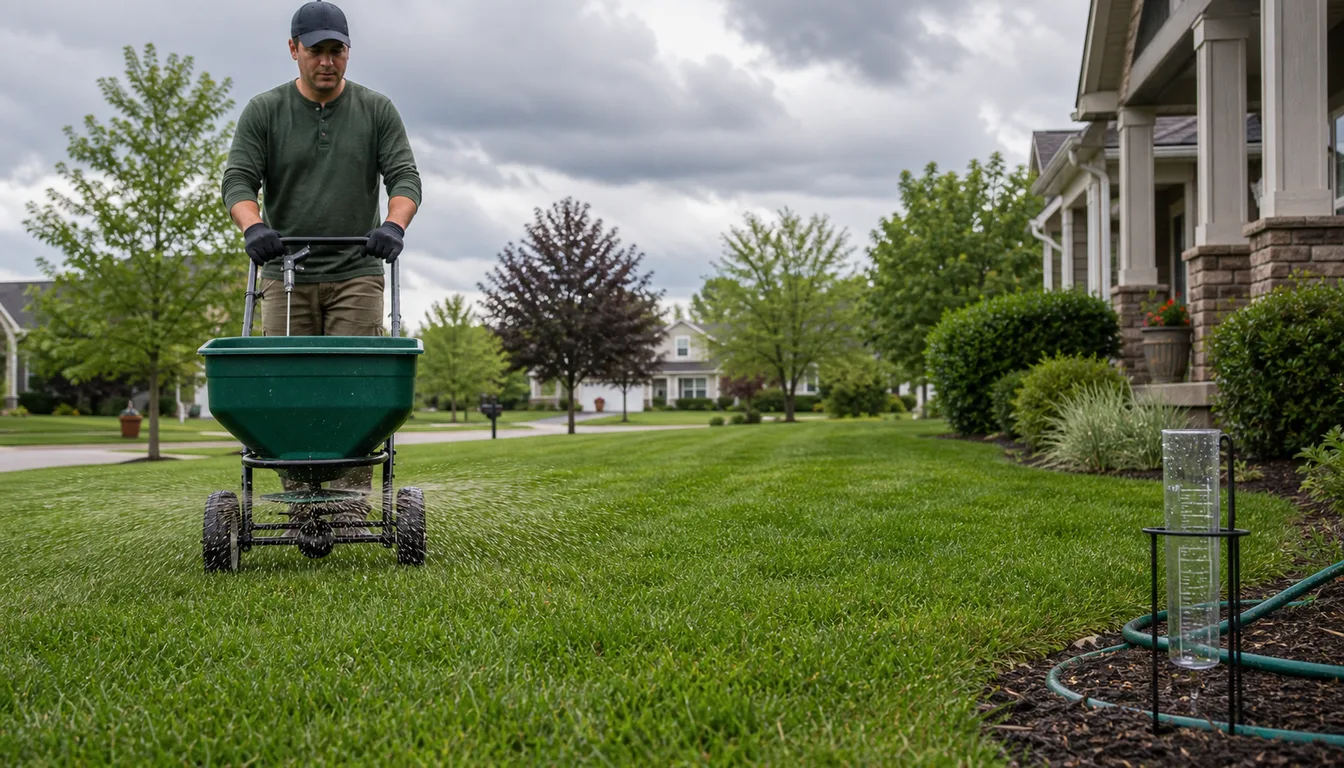
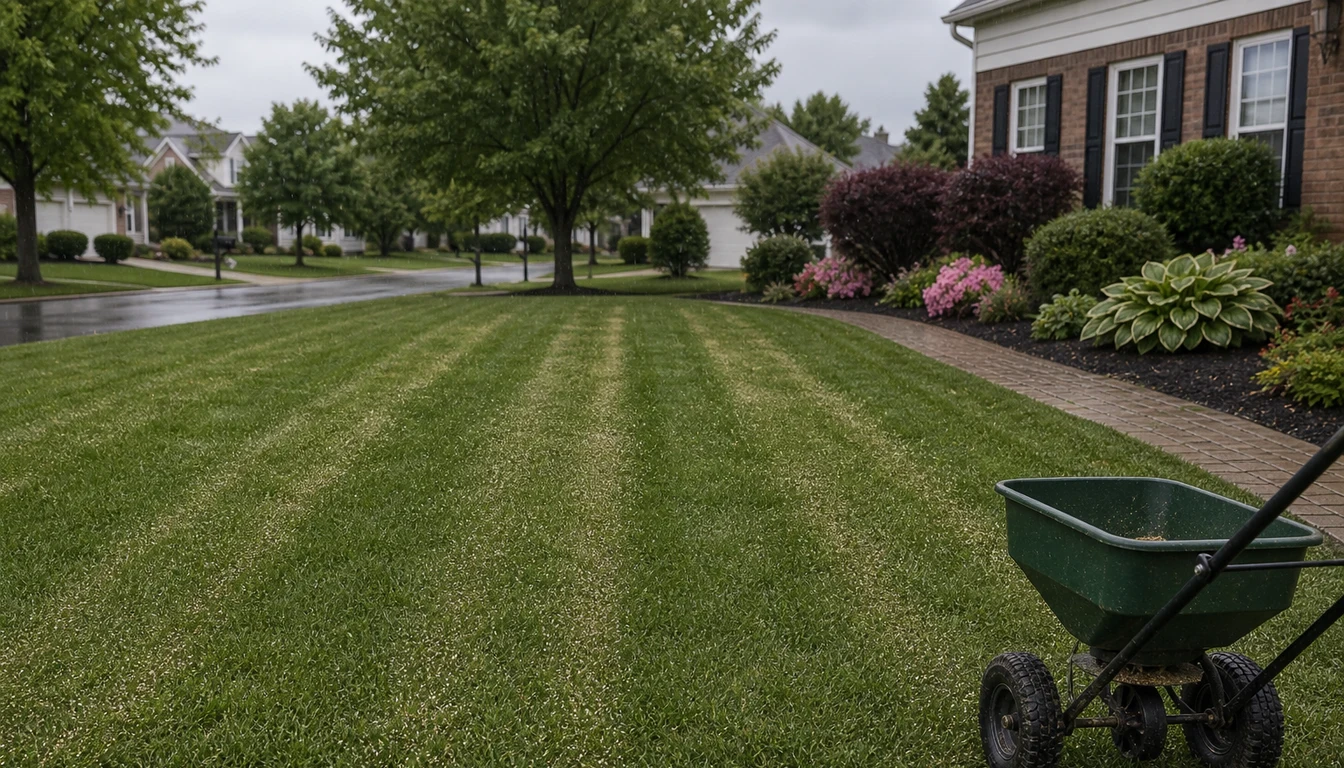
After the storm is the safer default. Wait until standing water is gone, the soil no longer feels saturated, and you can cross the lawn without making ruts.
Fertilizing before rain can work when a plain granular product must be watered in, the label allows that timing, and the forecast calls for gentle, predictable rain. Skip the application when a downpour, repeated storms, or uncertain rainfall could move nutrients off the lawn.
The bag label remains the controlling instruction. Granules, liquid feeds, and weed-and-feed products do not share one rain rule, and no universal rainfall total makes every yard safe.
At a glance
Is It Better to Fertilize Before or After Rain?
Choose after rain when you need the lower-risk answer.
Once the storm has moved away and the ground has drained, you can see puddles, runoff paths, and soft areas before fertilizer reaches them.
Choose before rain only when three facts line up. The fertilizer label should call for watering-in, the expected rain should soak into your soil, and you should have time to spread accurately and sweep every hard surface clean.
If any one of those facts is uncertain, wait and use irrigation you control.
Rainfall is not automatically free irrigation. A slow shower on a level, dense lawn can infiltrate, while the same measured amount falling quickly on compacted soil or a steep bank can run into the street.
- Safer default
- Apply after the storm and after saturated soil has drained
- Before rain
- Only for a label-approved, water-in product when runoff is unlikely
- Wait
- Heavy or uncertain rain, standing water, frozen soil, strong wind, or an active storm
- Final authority
- The product label for watering, rain-free time, rate, and reapplication
The weather also cannot tell you whether the lawn needs fertilizer. Apply only during the proper growth period for your grass and when a soil test or regional lawn guidance supports the nutrient.
Why Does the Product Label Change the Rain Answer?
The word fertilizer covers products that are meant to behave differently.
Some granules need water to release nutrients into the soil, some liquids are watered in, and some foliar liquids need time on the leaf before rain or irrigation.
Combination products add another set of directions. A weed-and-feed may need granules to remain on damp weed leaves for a stated period, while another fertilizer-pesticide product may require dry foliage and a rain-free interval.
That is why advice such as “always spread on dry grass” or “always let rain wash it in” fails. The correct surface condition and waiting period are printed on the exact label because they depend on the formulation and the active ingredients.
| Product in your hand | What rain changes | What to confirm on the label |
|---|---|---|
| Plain granular fertilizer | Water may be needed to release nutrients, but hard rain can move granules | Whether to water in, how soon, and how much irrigation is directed |
| Liquid soil-applied fertilizer | Rain may dilute the application or contribute to runoff | Whether irrigation follows application and whether a rain-free period applies |
| Foliar liquid fertilizer | Early rain can rinse material from the leaves | Required drying or absorption time before rain or irrigation |
| Weed-and-feed or fertilizer-pesticide combination | Leaf moisture, rain-free time, and environmental restrictions may all matter | Every application, watering, buffer, and re-entry direction on the full label |
Read the watering directions before checking the hourly forecast.
If the label says to irrigate after application, controlled sprinklers are often easier to manage than a storm whose intensity and path may change.
When Can You Fertilize Before Rain?
A before-rain application makes sense when the lawn can absorb the incoming water and the product is supposed to be watered in. Dense turf, a modest slope, unfrozen soil, and no visible saturation all improve the chance that water will enter the soil instead of carrying fertilizer away.
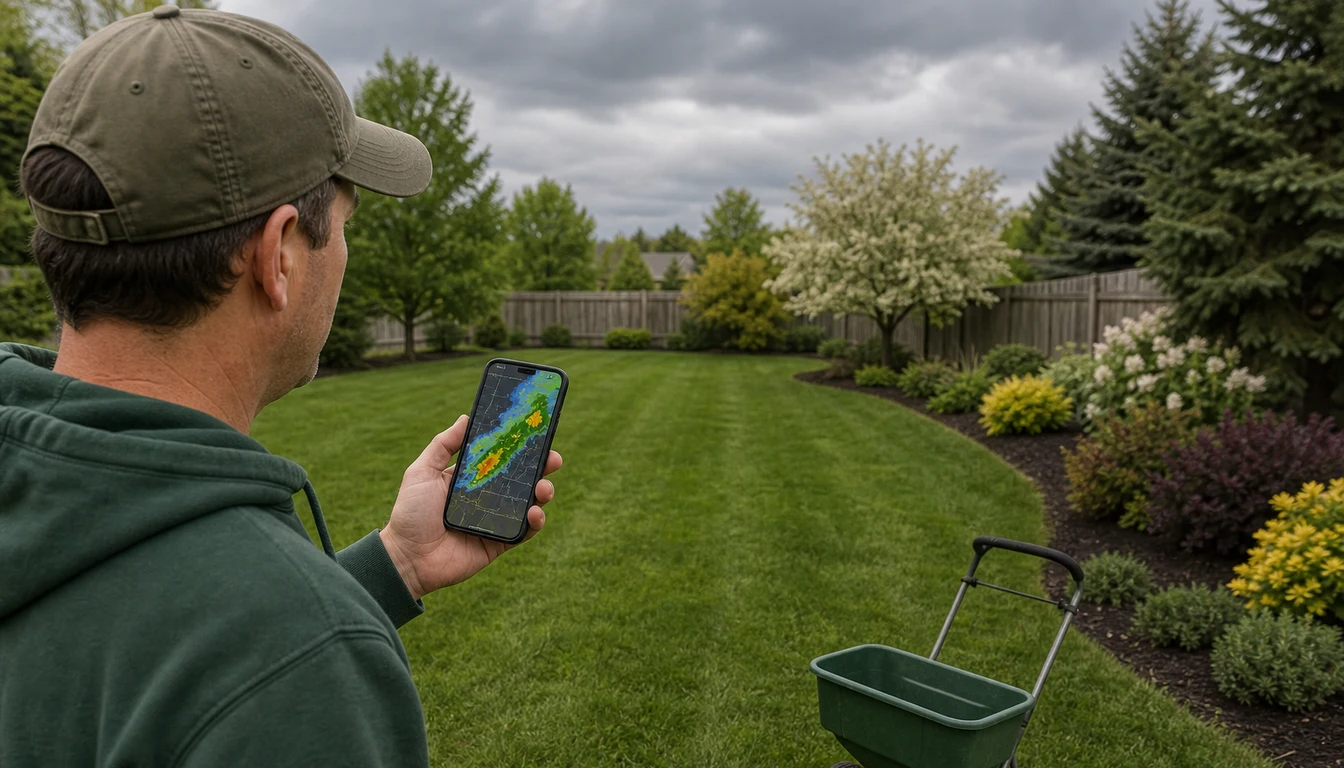
Check the hourly forecast and radar, not only the daily percentage.
The percentage describes the chance of precipitation for the forecast area. It does not promise a useful watering amount at your address.
Look for a stable period of gentle rain rather than a narrow line of thunderstorms. Storms with intense bursts, repeated cells, or rapidly changing tracks are poor tools for a measured application.
- [ ] The lawn is actively growing and the feeding belongs in its seasonal plan
- [ ] The product label calls for or permits watering after application
- [ ] The forecast is stable enough to rule out a likely downpour
- [ ] The soil accepts water instead of puddling or shedding it
- [ ] The lawn is not frozen, saturated, newly flooded, or crossed by flowing water
- [ ] Granules can be kept away from pavement, drains, ditches, ponds, and streams
- [ ] Wind is calm enough for an even application
- [ ] You can use controlled irrigation if the expected rain misses the yard
Do not turn an uncertain forecast into a fertilizer deadline.
The unopened bag can wait. Fertilizer that reaches a gutter or waterway cannot be recovered.
How Long Should You Wait to Fertilize After Rain?
There is no reliable wait of a fixed number of hours.
A sandy, level lawn may drain sooner than compacted clay after the same brief shower, while either soil can remain saturated when water arrives faster than it infiltrates.
Wait until standing water is gone and a normal step does not bring water to the surface or leave a deep footprint. The spreader wheels should roll without sinking, and granules should not be able to float toward a curb or low spot.
Blade moisture is a separate question. If the label calls for dry foliage, allow the canopy to dry.
If the label calls for damp leaves so an herbicide will stick, follow that direction without treating saturated soil.
Use the post-rain walk to find areas that need exclusion rather than a higher rate. Mark puddles, bare channels, downspout outlets, soft edges, and places where water crossed the property, then keep fertilizer out of them.
For a detailed answer about dew, wet leaves, and product sticking, see when you can fertilize wet grass after you settle the larger runoff question.
The important distinction is that damp turf can sometimes be workable, but saturated soil is a reason to postpone.
What Makes Fertilizer Runoff More Likely?
Rain intensity is only one part of runoff risk.
Penn State notes that runoff is shaped by rainfall rate, slope, soil infiltration, turf cover, and whether the surface is frozen or impervious.
A healthy, dense lawn slows moving water and gives it more opportunity to soak in. Bare soil, thin turf, compacted ground, and wheel ruts create easier routes downhill.
Hard surfaces deserve special attention because they cannot absorb fertilizer.
Granules on a driveway or sidewalk can move directly to a storm drain even during a small shower, so sweep or blow them back onto the intended turf before watering begins.
Slopes do not always make fertilizing impossible, but they shrink the safe weather window. Apply only when the product, soil, and forecast allow infiltration, and consider correcting compacted soil or thin cover before the next feeding rather than treating the symptom with more nitrogen.
Local rules may restrict phosphorus, seasonal dates, setbacks, or applications near water.
The label sets the minimum legal directions for the product, while state and local requirements can be more restrictive.
How Do You Apply Lawn Fertilizer Around a Rain Forecast?
Start with the amount, because weather cannot rescue an excessive rate.
Measure the lawn area, subtract beds and pavement, and use the label rate for the product and grass situation.
Calibrate the spreader instead of trusting an old dial setting. Granule size and density differ among products, and a setting printed for one bag may release the wrong amount from another.
- Read the entire labelConfirm the rate, surface condition, watering direction, rain-free period, buffer, protective equipment, and re-entry instructions.
- Check the siteWalk for standing water, soft ground, drainage paths, steep sections, bare soil, and fertilizer-sensitive edges.
- Check the weatherReview the hourly forecast, radar, wind, and the chance of repeated storms rather than relying on one rain icon.
- Measure and calibrateCalculate the treatable lawn area, weigh or measure the correct product amount, and set the spreader using the label or manufacturer procedure.
- Spread evenlyClose the hopper while turning or crossing pavement, maintain a steady pace, and prevent overlapping bands or piles.
- Clean hard surfacesSweep or blow every stray granule back onto the lawn without washing pavement toward a drain.
- Water only as directedUse forecast rain only when it fits the label and site, then stop before puddles or runoff begin.
- Record the applicationKeep the date, product, rate, and weather so a future decision is based on what actually went down.
Keep children and pets away for the period stated on the label.
Do not substitute a familiar rule from a previous fertilizer, because the next product may have different ingredients and re-entry directions.
What If Heavy Rain Starts After You Fertilize?
Do not reapply fertilizer as soon as the sky clears.
You cannot tell from the rainfall alone how much nutrient stayed in place, dissolved into the soil, moved off-site, or remained available to the grass.
First, keep people and pets away until the treated area meets the label's re-entry directions. When conditions are safe, inspect pavement, drains, low spots, and property edges without pushing visible material into water.
If a concentrated spill or pile remains on a hard surface, collect it dry when possible and follow the product label for disposal. If fertilizer has entered a pond, stream, storm drain, or other water body in a substantial amount, contact the local stormwater or environmental authority for instructions.
Wait for the lawn to drain and observe it through the product's normal response period.
A second full dose can overlap fertilizer that remained, increasing salt injury and excess growth even when the lawn does not green immediately.
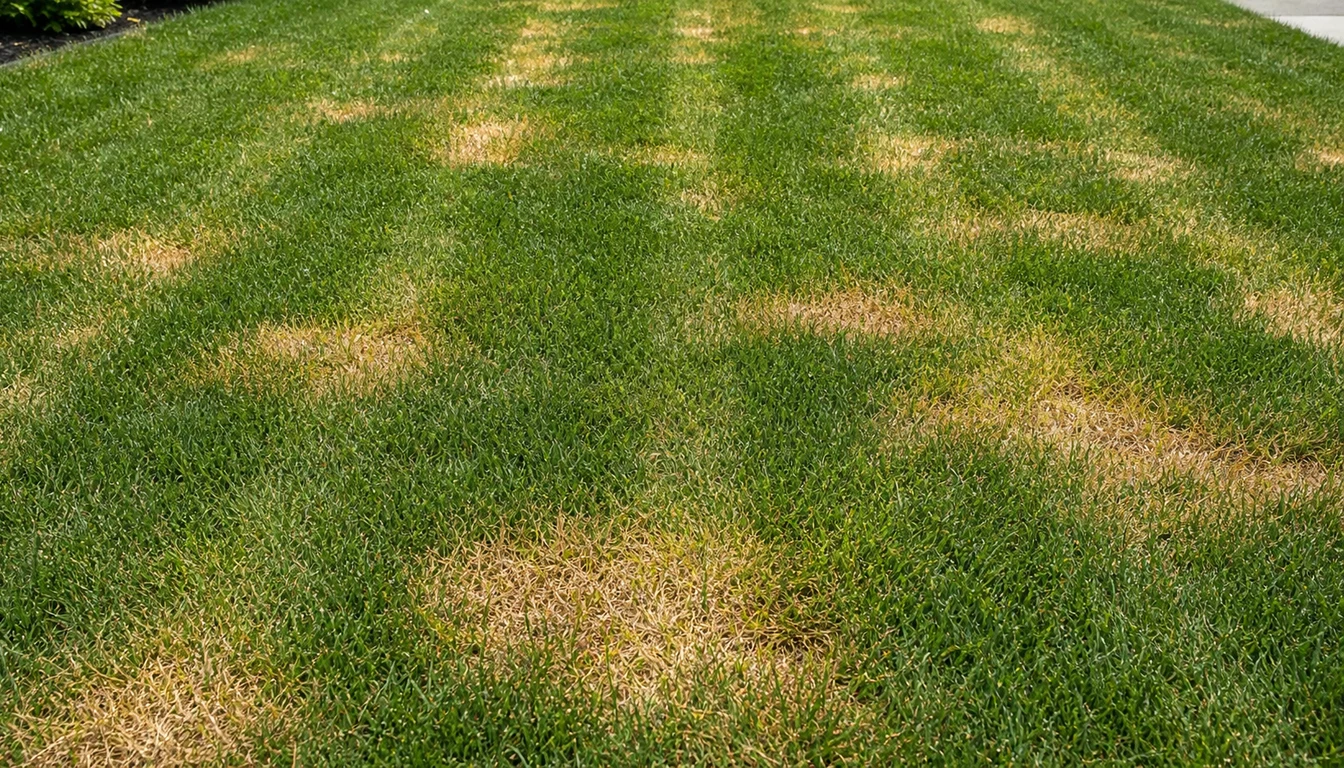
Yellow or brown areas do not prove that rain caused washout. Overapplication, spilled granules, drought, disease, pet urine, mower injury, and saturated roots can create similar symptoms, so compare the pattern with your spreader paths and site conditions before acting.
Does Grass Type or Season Change the Rain Rule?
Grass type changes when feeding is useful, but it does not make runoff safe.
Cool-season and warm-season lawns have different active-growth periods, and local climate moves those windows enough that a national date is unreliable.
Do not fertilize dormant or severely stressed turf merely because rain is coming. Nutrients applied when the grass cannot use them are more likely to support unwanted growth, move away from the target area, or be wasted.
A soil test can identify pH and nutrient issues before you buy a blend.
It also helps prevent routine phosphorus applications where the soil already has enough, which matters because phosphorus and nitrogen that leave a yard can contribute to nutrient pollution.
Use your state extension's turf calendar for seasonal timing, then use the forecast for the final application day. If fall feeding is your real question, use the regional fall lawn fertilizing guide.
Returning clippings, mowing at the proper height, reducing compaction, and watering effectively can lower the lawn's demand for purchased fertilizer. Better turf cover also slows runoff, connecting ordinary maintenance to the rain decision.
Which Rainfall Scenario Matches Your Lawn?
A rainfall total by itself cannot decide the job. Use the combination of product directions, storm behavior, and site condition instead.
| Situation | Best decision | Reason |
|---|---|---|
| Plain granules need watering-in; level lawn; soil is unfrozen and absorbs water; gentle rain is forecast | A before-rain application can be reasonable | The product needs water and the site has a low visible runoff risk |
| Thunderstorms may produce brief heavy bursts | Wait until the system passes | Intense rain can exceed infiltration even when the daily total sounds modest |
| Storm has passed; no standing water; wheels do not rut the soil; label conditions are met | Fertilizing after rain is reasonable | You can inspect the site and control any required follow-up irrigation |
| Soil squishes, puddles remain, or water crosses the yard | Postpone | The soil has no safe capacity for more water or mobile nutrients |
| Weed-and-feed label requires damp foliage and a stated rain-free period | Follow the label's exact sequence | The herbicide portion changes the surface and rainfall requirements |
| Forecast is uncertain but you have working irrigation | Wait for a dry application window and irrigate as directed | Controlled watering is easier to stop before runoff begins |
| Lawn is dormant, heat-stressed, or outside its regional feeding window | Do not apply yet | Correct weather cannot make an unnecessary feeding useful |
When two signals conflict, use the more cautious one.
A favorable label direction does not cancel saturated soil, and a dry lawn does not cancel a label-required rain-free period.
Pro Tips
- Read the watering and rain-free directions before you open the spreader.
- Treat after-rain application as the safer default when the forecast is uncertain.
- Use hourly radar to screen for storm intensity, then inspect the soil for saturation.
- Sweep granules from pavement; never hose them toward a gutter or storm drain.
- Record the product, rate, date, and weather so you do not accidentally repeat a dose.
- Do not fertilize dormant or severely stressed turf just because rain is available.
- Use irrigation you control when a storm cannot deliver predictable, runoff-free watering.
Frequently Asked Questions
Is it better to fertilize a lawn before or after rain?
After rain is the safer general choice because you can wait for the storm to pass and confirm the soil has drained. Before rain is reasonable only when the product must be watered in, the label permits it, and gentle rain is unlikely to cause runoff.
How much rain is too much after lawn fertilizer?
There is no universal inch total that is safe for every yard. Rain intensity, slope, compaction, turf density, soil infiltration, saturation, and the product directions determine whether water soaks in or carries fertilizer away.
Can I fertilize immediately after rain?
Wait until standing water is gone, the soil does not bring water to the surface under a normal step, and spreader wheels will not make ruts. The label then decides whether the grass blades should be dry, damp, or left rain-free.
Should I water fertilizer in if rain is forecast?
Follow the product's watering direction. If forecast rain is uncertain or could arrive as a downpour, wait for a dry window and use controlled irrigation rather than adding water before a storm.
Should I fertilize again after a heavy storm?
Do not reapply immediately. Record what happened, inspect for off-site movement when it is safe, and wait until the next label-approved interval or get local extension guidance because rainfall alone cannot show how much nutrient remained.
Does weed-and-feed follow the same rain rule as plain fertilizer?
No. The pesticide portion may require damp or dry leaves, a specific rain-free period, setbacks, and different watering. Read and follow the entire label for that exact product.
Sources & References
- What You Can Do: In Your Yard, U.S. Environmental Protection Agency
- Turfgrass Fertilization: A Basic Guide for Professional Turfgrass Managers, Penn State Extension
- Landscaping Tips, U.S. EPA WaterSense
- Stormwater Smart: Lawn Care, U.S. Environmental Protection Agency
- How Can I Manage My Lawn to Reduce Nutrient Pollution?, Penn State Extension
Related Guides

Best Fertilizer for Indoor Plants: How to Choose
The best fertilizer for most indoor plants is a complete fertilizer labeled for houseplants, with…
15 min read
Best Fertilizer for Vegetables by Garden Type
Fertilizer only helps vegetables if it matches what your soil and crops need.
11 min read
Can You Fertilize Wet Grass Safely?
A wet lawn right when you planned to fertilize creates second thoughts fast.
11 min read
How Long Does Compost Take to Be Ready?
Compost does not follow a calendar, it follows conditions.
11 min read
How to Fertilize Tomatoes Without Overfeeding
Fertilize tomatoes according to a soil test and product label, not a fixed weekly calendar.
15 min read
How to Fertilize a Vegetable Garden for Maximum Yield
Fertilizer is not magic dust. It is plant food in a specific ratio.
14 min read