verifiedSource Reviewed
Petunia: Long-Blooming Annuals for Pots, Baskets, and Beds
Petunia x hybrida
Family: Solanaceae
wb_sunnyLight
Full sun, 6+ hours for best bloom
water_dropWater
Consistent moisture, especially in containers
heightHeight
6-18 inches depending on type
publicZone
Grown as an annual in most zones; tender perennial in frost-free climates
petsPet Safety
Pet Safe
Native Region
Garden hybrids from South American species
biotechWhy Petunias Need More Attention Than They Look
The useful starting point: Petunias are grown like easy annuals, but heavy bloom takes real fuel. A basket covered in flowers is using water and nutrients faster than a simple bedding annual.
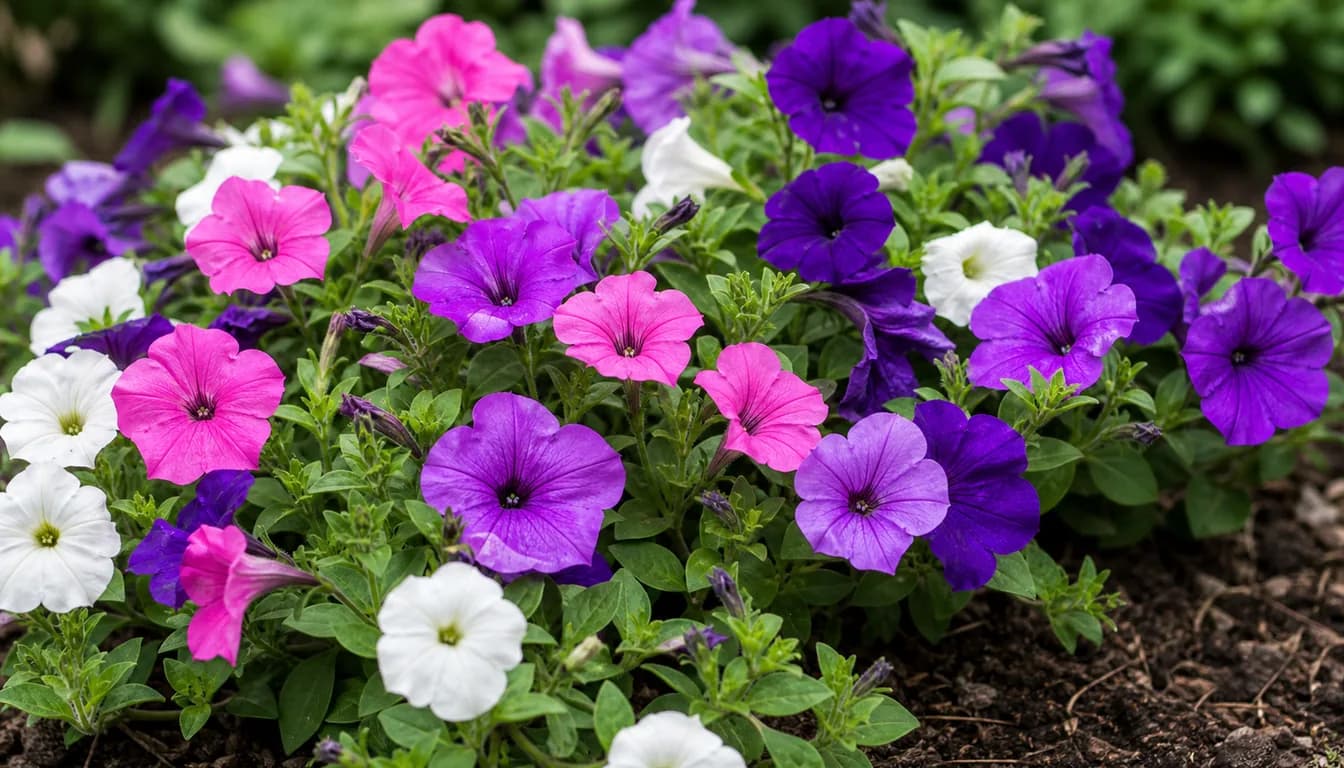
Modern Petunia x hybrida includes mounding, trailing, spreading, grandiflora, multiflora, and small-flowered types. The right choice depends on whether you need a tidy bed edge, a hanging basket, or a ground-covering wave of color.
They are in the nightshade family with tomatoes, but they are grown for flower performance, not edible use. Treat them as ornamental plants even though they are generally considered low-risk around pets.
infoThe Petunia Tradeoff
Few annuals bloom harder in a pot, but petunias punish missed watering and weak feeding faster than tougher plants like marigolds.
paletteChoosing Petunia Types
Choose petunias by habit first. Grandiflora types have big showy flowers but can look rough after rain; multiflora and spreading types usually recover faster.
Trailing and spreading petunias are the basket and window-box workhorses. They need more water and fertilizer than compact bedding types because they carry more stems and flowers.
For very hot, dry sites, compare with lantana before committing to petunia baskets that will need daily attention.
Verbena is another useful comparison when you want trailing color with better heat tolerance.
Petunias differ most in habit. Grandiflora types make large showy blooms, multiflora types handle weather better, spreading types cover baskets and edges, and calibrachoa-like forms need container care rather than bed care.
GrandifloraLarge flowers, best where rain and wind are limited
MultifloraSmaller flowers, heavier bloom, better weather recovery
MillifloraTiny flowers on compact plants for edging and small pots
Spreading/trailingStrong for baskets, walls, and ground-cover color
Guide — See AlsoAir Purifying Plants for Cleaner Indoor AirLearn how to pick, place, and care for air purifying plants so they help your indoor air instead of just looking pretty.
chevron_rightwb_sunnyLight: Full Sun for Heavy Bloom
The light target is practical: Petunias need 6 or more hours of direct sun for dense flowering. In shade, they stretch, bloom less, and become more prone to mildew.
In mild climates, full sun is ideal. In very hot regions, light afternoon shade can keep baskets from wilting hard and help flowers last longer.
lightbulbLight cue
Indoor growing is not realistic for normal bloom. If the spot is genuinely shaded, use shade plants instead of expecting petunias to act like low-light flowers.
Petunias need enough sun to keep producing new buds. In partial shade the plant may look leafy and healthy, but flowering becomes thin and stems stretch toward the brightest side.
- check_circleBest bloom: open sun for most of the day.
- check_circleHot climates: morning sun plus light afternoon shade can help.
- check_circlePoor-light clue: long stems, fewer flowers, and mildew.
- check_circleBasket note: rotate hanging baskets so one side does not thin out.
Email Updates
Join the KnowTheYard update list
Zone-specific advice, seasonal reminders, and new plant guides — no filler.
water_dropWatering Pots and Baskets
The watering target is practical: Petunias need consistent moisture to keep blooming. Letting a basket wilt hard can cause bud drop, yellow leaves, and a pause in flowers that takes days to recover.
Containers may need daily water in summer, and small hanging baskets can need more than one check during heat waves. Use the potted plant watering method: soak fully, drain fully, then water again when the top inch dries.
lightbulbWatering cue
In garden beds, water at the base and mulch lightly. Overhead watering leaves petals sticky and foliage damp, which invites botrytis and mildew.
Beds and baskets dry in different ways, so the best check changes with the container; petals, roots, and pot weight all give clues.
lightbulbBasket Weight Test
Lift a basket after watering and again when dry. That weight difference tells you when petunias need water faster than a calendar.
The heavy-blooming basket petunias people love are also the ones that dry fastest. If a hanging basket wilts hard, water may run down the sides without rewetting the root ball, so soak slowly until the mix actually absorbs moisture.
Petunia baskets may need water twice on hot, windy days, but that does not mean the roots want to stay wet overnight. Morning watering plus a late-day check is safer than soaking on autopilot.
Guide — See AlsoBest Herbs to Grow Indoors for Real Harvests, Not Spindly PotsChoose indoor herbs that can actually produce in your light, temperature, and container setup, then match each one to th
chevron_right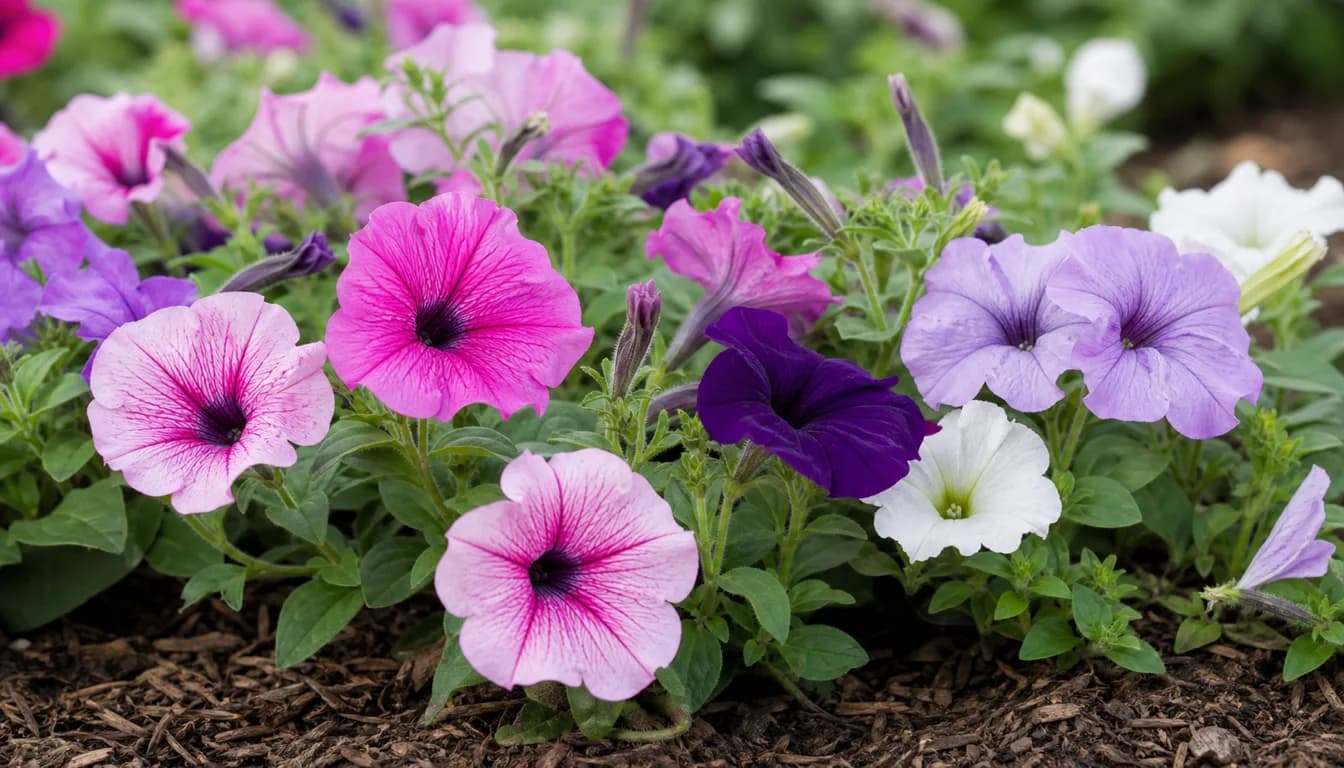
compostSoil and Feeding for Constant Flowers
The soil decision comes first: Petunias flower best in fertile, well-drained soil. In beds, mix compost into the top layer before planting, but avoid soggy low spots.
Container petunias are hungrier. A slow-release fertilizer at planting plus regular liquid feeding keeps the bloom engine running, especially for trailing types.
For baskets, light regular feeding beats occasional heavy feeding. If water runs through the pot every hot afternoon, nutrients leave with it; use a steady dilute routine during active bloom and back off when growth slows.
infoPlanting check
Too much nitrogen makes leafy growth with fewer flowers. That mistake is similar to overfeeding marigolds, but it shows up faster in petunia baskets because they grow so quickly.
Container mix for petunias should hold moisture but drain fast. Dense garden soil in a pot compacts around the roots and makes watering harder, especially in hanging baskets.
Bed soilFertile, drained soil with compost mixed before planting
Potting mixLight outdoor container mix with drainage
FeedingSlow-release at planting, then light regular liquid feed
WarningHigh nitrogen gives leaves at the expense of flowers
content_cutSeeds, Transplants, and Planting Timing
Most gardeners buy petunia transplants because seed is tiny and slow to reach blooming size. If you start seed, begin indoors early and do not cover the seed heavily because it needs light.
Set plants outside after frost danger has passed and nights are mild. Harden off transplants for a week so soft greenhouse growth does not scorch or stall.
For seed timing, follow the same indoor-start logic used in starting seeds indoors, but give petunias extra lead time compared with quick annuals.
For most gardeners, maintenance matters more than making new plants. The habits behind watering potted plants also explain why leggy baskets rebound after trimming, feeding, and deeper watering.
- 1Start seed indoors about 10-12 weeks before transplanting.
- 2Press tiny seeds onto the surface; do not bury them deeply.
- 3Transplant after frost when nights are mild.
- 4Space bedding types about 12 inches apart.
- 5Give spreading types more room so airflow stays decent.
Guide — See AlsoBest Indoor Plants for Every Room and Light LevelA practical guide to choosing the best indoor plants for your home, covering beginner-friendly picks, low light champion
chevron_rightpest_controlPests, Disease, and Heat Stall
Aphids, slugs, budworms, spider mites, powdery mildew, and botrytis are the usual petunia problems. Most get worse when plants are stressed, crowded, or kept wet overhead.
Budworms are especially frustrating because they chew holes in buds before flowers open. Check at dusk or early morning when caterpillars are easier to spot.
warningFirst-response cue
Extreme heat can also stop bloom without a pest being involved. If flowers slow in midsummer, trim back leggy stems, feed lightly, and wait for cooler nights.
Budworms are easy to miss because they eat holes in buds before flowers open. If blooms look shredded overnight, inspect at dusk and remove caterpillars before they move through the whole basket.
When Petunia flowers suddenly stop opening, look for budworm frass and clipped buds before blaming fertilizer. The caterpillars often feed inside buds where damage stays hidden until the flower unfolds badly.
pest_controlAphids
Clusters on soft tips and buds; rinse or use insecticidal soap.
pest_controlBudworms
Chewed buds and petals; hand-pick early.
pest_controlBotrytis
Gray mold on wet flowers; remove spent blooms and improve airflow.
pest_controlHeat stall
Fewer flowers during hot spells; trim, feed, and keep evenly moist.
calendar_monthDeadheading, Trimming, and Summer Reset
Deadheading depends on type. Some spreading and branded series are self-cleaning, while older grandiflora and multiflora types bloom better when spent flowers are removed.
When plants get long and sticky in midsummer, cut stems back by about one-third, water well, and feed lightly. The dedicated deadheading guide is useful when you need to judge cleanup timing.
A good reset looks harsh for a week, then pays off with cleaner branching and a fall flush. This is especially helpful for baskets that have turned into long bare strings.
A midsummer haircut is often better than weeks of weak flowering. Cutting leggy stems back and feeding lightly can restart branching, especially after heat, rain, or skipped deadheading has left the plant open in the center.
local_floristSpring
Plant after frost and begin steady watering.
wb_sunnySummer
Water containers often, feed lightly, and remove spent blooms as needed.
yardMidsummer reset
Cut leggy plants back by one-third and feed after watering.
ecoFall
Keep baskets going until frost, then compost spent annuals.
Guide — See AlsoHow to Harden Off Seedlings Without Sunscald or Wind ShockUse a simple 7-10 day hardening-off plan to move seedlings outdoors safely, avoid transplant shock, and match exposure t
chevron_rightpetsSafety and Garden Use
Handle this part plainly: Petunias are generally considered non-toxic to cats and dogs, which makes them a useful choice for pet-accessible patios compared with true lilies or other risky ornamentals.
They are still ornamental plants, not salad greens. Avoid using flowers from treated nursery plants as edible garnish, and keep pets from grazing on large amounts of foliage.
For ecology, petunias add long-season color but are not a complete pollinator plan. Mix them with pollinator plants that offer different flower shapes and bloom windows.
check_circleGood Patio Choice
Use petunias in hanging baskets and rail planters where you can water, feed, and trim them easily.
eco
Keep Exploring
Related Plants
 Flowers
Liatris
Liatris, also called blazing star or gayfeather, is a hardy native perennial grown from corms for upright purple flower spikes, strong pollinator value, and eas
 Flowers
Rose
Garden roses range from compact landscape shrubs to climbers, hybrid teas, old garden roses, and container types. They grow best with full sun, air movement, de
 Flowers
Verbena
Verbena is a sun-loving flower grown for long bloom, heat tolerance, and trailing or mounding color in containers, borders, and pollinator beds. Most garden for
quiz
Frequently Asked Questions
Do petunias need full sun?expand_more
Yes. Petunias need at least 6 hours of direct sun for strong bloom. In very hot climates, light afternoon shade can help containers avoid severe wilting.
How often should I water petunias?expand_more
Water petunias when the top inch of soil dries. Hanging baskets may need daily checks in summer, while in-ground plants usually need less frequent deep watering.
Do petunias need deadheading?expand_more
Some petunias need deadheading, especially older grandiflora and multiflora types. Many spreading or branded self-cleaning types need less, but still benefit from trimming when leggy.
Why did my petunias stop blooming in summer?expand_more
Petunias often slow during extreme heat, drought stress, weak feeding, or when stems get leggy. Trim back by about one-third, water well, and resume light feeding.
Can petunias grow in containers?expand_more
Yes. Petunias are excellent in containers and hanging baskets if they get full sun, drainage, regular water, and steady feeding.
Are petunias safe for pets?expand_more
Petunias are generally considered non-toxic to cats and dogs. They are still ornamental plants, so discourage pets from eating large amounts.