verifiedSource Reviewed
Marigold: Easy Annual Color With Real Companion-Planting Limits
Tagetes patula
Family: Asteraceae
wb_sunnyLight
Full sun, 6+ hours daily
water_dropWater
Moderate while establishing, lower once rooted
heightHeight
6-36 inches depending on type
publicZone
Grown as a warm-season annual in most zones
Native Region
Mexico and Central America
biotechWhat Marigolds Actually Do Well
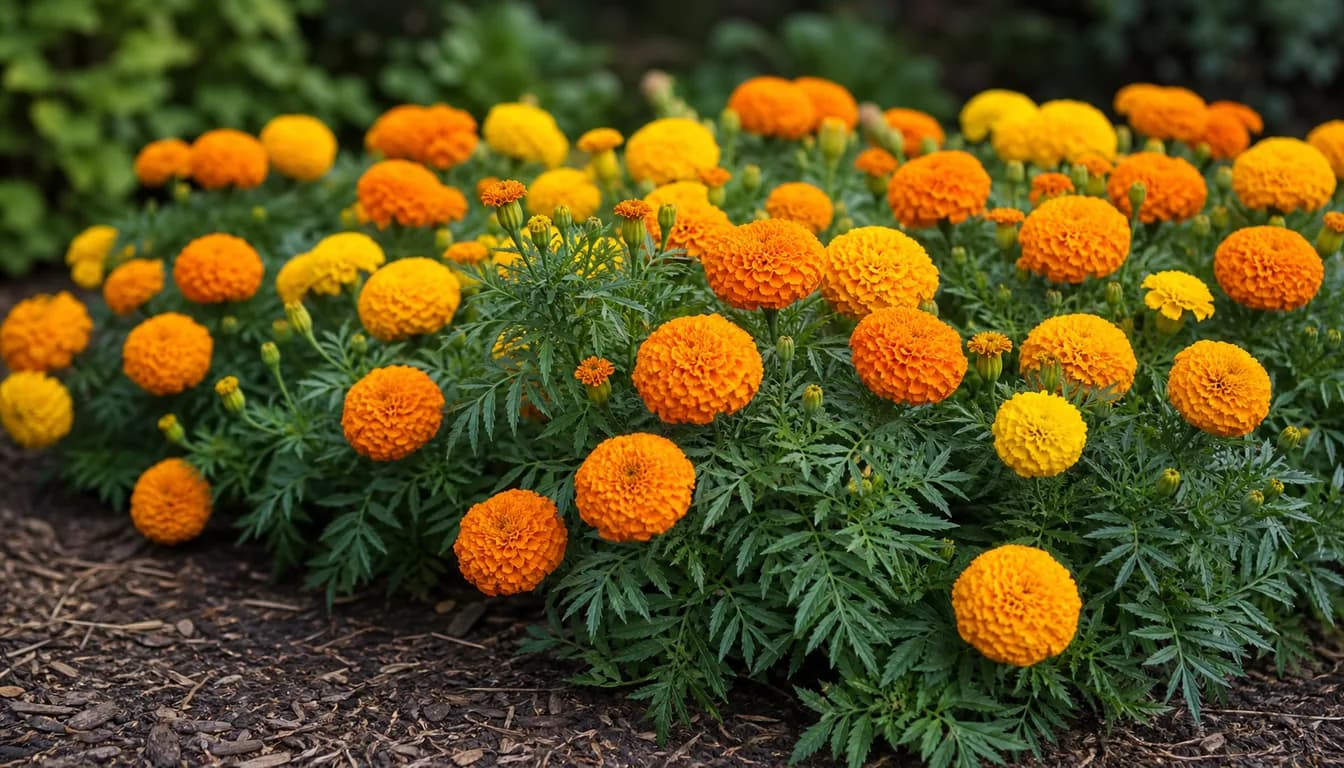
In garden terms, Marigolds are warm-season annuals in the genus Tagetes, grown for fast color in beds, pots, vegetable edges, and sunny path borders. They are popular because they germinate easily and keep blooming with basic care.
French marigolds are compact and bushy, usually best for edging, containers, and vegetable beds. African or American marigolds are taller with larger pom-pom flowers and need more space.
The strongest use is not that marigolds repel every pest. It is that they add long-season flowers, scent, color, and insect activity to places that would otherwise be bare soil.
infoGood Annual, Not Magic Armor
Use marigolds as part of a pest-aware planting, not as a replacement for barriers, inspection, crop rotation, or healthy soil.
paletteChoosing French, African, and Signet Types
Choose marigolds by mature size first. A tidy French type can edge tomatoes neatly; a tall African type may shade seedlings or flop over a narrow path.
Color is the easy part: yellow, orange, red, gold, cream, and bicolor blends are common. Form and height decide whether the plant belongs in a pot, border, or back row.
infoSelection check
If squirrels or digging animals are the reason you are planting, read what these flowers can and cannot do before building the whole plan around scent.
French, African, and signet marigolds behave differently in the garden. French types are compact and useful for edging, African types give large heads on taller stems, and signets are finer-textured plants for edible flowers and airy borders.
French marigoldsCompact, usually 6-18 inches, best for edging, pots, and vegetable borders
African/American marigoldsTaller, often 18-36 inches, with large rounded blooms
Signet marigoldsFine foliage, small edible-style flowers, and a lighter texture
Dwarf seriesBest for containers, front edges, and small raised beds
Guide — See AlsoAir Purifying Plants for Cleaner Indoor AirLearn how to pick, place, and care for air purifying plants so they help your indoor air instead of just looking pretty.
chevron_rightwb_sunnyLight: Full Sun Keeps Plants Compact
The bloom cue is light: Marigolds need 6 or more hours of direct sun for dense growth and steady flowers. In shade, they stretch, bloom less, and hold moisture longer.
They handle hot exposed beds better than many soft annuals. That makes them useful near tomato rows, pepper beds, patio containers, and sunny front edges.
If your site has only morning sun and afternoon shade, choose compact French types and expect fewer flowers. For deep shade, use plants from a shade list instead of forcing marigolds to perform.
Marigolds need sun for dense branching and constant flowers. In shade they stretch, bloom less, and become more prone to mildew, especially when planted tightly around vegetables.
- check_circleBest site: open sun after frost danger passes.
- check_circleGood container site: hot steps, rails, and sunny patios.
- check_circlePoor-light clue: tall stems, fewer buds, and mildew-prone foliage.
- check_circleSpacing help: leave air between plants so leaves dry quickly.
Email Updates
Join the KnowTheYard update list
Zone-specific advice, seasonal reminders, and new plant guides — no filler.
water_dropWatering Without Making Them Soft
New marigolds need steady moisture for the first week or two. Once rooted, they prefer a moderate dry-down between waterings rather than constantly wet soil.
In garden beds, water at the base during dry spells and let the top inch dry before watering again. Containers dry faster, especially small terracotta pots in full sun.
If you are unsure, use the same container watering routine you use for annual pots: check the mix, water thoroughly, and drain the pot fully.
Seedlings need a gentler touch than established plants. Keep the seedbed evenly moist until roots grab, then shift to deeper, less frequent watering so stems do not stay soft.
lightbulbAvoid Daily Sprinkles
Frequent light watering keeps foliage damp and roots shallow. A good soak followed by a dry-down makes sturdier marigolds.
Marigolds tolerate dry spells better than soggy roots, but young transplants still need even moisture until they start branching. Once established, let the top soil dry before watering; too much water grows soft foliage and fewer flowers.
Guide — See AlsoBest Herbs to Grow Indoors for Real Harvests, Not Spindly PotsChoose indoor herbs that can actually produce in your light, temperature, and container setup, then match each one to th
chevron_right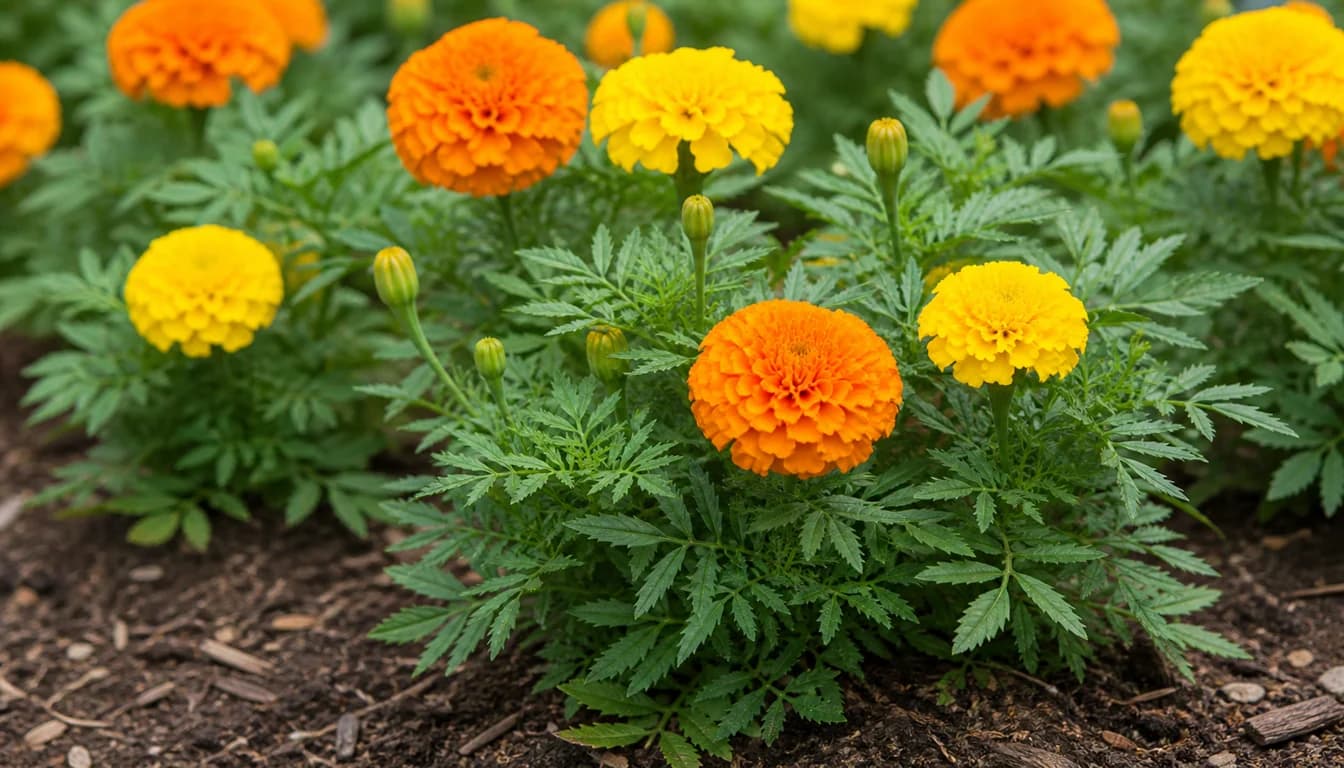
compostSoil and Fertilizer
The planting bed matters because Marigolds grow in average garden soil as long as it drains. They do not need a rich bed to flower, and too much nitrogen can give you leafy plants with fewer blooms.
Before planting, loosen compacted soil and mix in a small amount of compost. In containers, use regular potting mix with drainage holes, not heavy garden soil.
The fertilizer mistake is similar to overfeeding vegetables at the wrong stage. If you are already sorting that out for tomato fertilizing, apply the same restraint here.
Average soil is enough for marigolds. If you give them rich, wet ground and frequent fertilizer, they often respond with leaves instead of the compact flower production most gardeners want.
Soil textureAverage loam or improved soil that drains after watering
FertilizerLight feeding only; avoid high nitrogen
ContainersStandard potting mix with drainage holes
MulchThin mulch layer in beds, kept below lower leaves
content_cutGrowing Marigolds From Seed
New plants start with timing: Marigolds are one of the easiest flowers to start from seed. Direct sow after frost when soil has warmed, or start indoors 4-6 weeks before transplanting.
Seeds usually germinate quickly in warm soil. Keep the seedbed evenly moist until seedlings are established, then thin so plants have enough airflow.
If spring timing is hard in your climate, use seed-starting timing for trays and harden seedlings off before they move into full sun.
Starting from seed is usually easy, but timing still matters. If the soil is cold or the bed is not ready, the same direct sow vs transplant decision helps you choose between nursery starts and seeded rows.
- 1Sow after frost in warm soil, or start indoors 4-6 weeks early.
- 2Cover lightly and keep evenly moist until germination.
- 3Thin French types to about 8-12 inches apart.
- 4Give taller African types about 12-18 inches of room.
- 5Pinch leggy starts once to encourage branching.
Guide — See AlsoBest Indoor Plants for Every Room and Light LevelA practical guide to choosing the best indoor plants for your home, covering beginner-friendly picks, low light champion
chevron_rightpest_controlCompanion Planting and Pest Reality
Pest work starts with diagnosis: Marigolds can support pest management, but they do not create a force field. Their scent, flowers, and root chemistry can help in specific situations, while many pest problems still need inspection and barriers.
French marigolds are often discussed for nematode suppression, but the effect depends on species, timing, and how densely they are grown. A few plants tucked between vegetables will not fix a serious soil pest problem.
If nematodes are the real target, think more like a cover crop than a garnish. Grow a solid block of the right Tagetes type for a meaningful window, then remove or turn it under before planting the next susceptible crop.
warningFirst-response cue
For a broader strategy, use companion planting for pest control as the framework: diversity, trap crops, sanitation, and monitoring all matter.
The pest-control reputation is useful but often overstated. Marigolds can help with some nematode and companion-planting situations, but they do not repel every insect; their best value is steady bloom, easy deadheading, and drawing beneficial insects into vegetable beds.
pest_controlSpider mites
Hot dry stress can cause stippled leaves and fine webbing.
pest_controlSlugs and snails
Chew young seedlings in damp beds or heavy mulch.
pest_controlPowdery mildew
White leaf coating in crowded, humid, low-airflow sites.
pest_controlCaterpillars
Chew leaves and flowers; hand-pick small outbreaks.
calendar_monthDeadheading and Seasonal Care
Care shifts by season: Marigolds bloom from warm weather until frost if they get sun and are not allowed to spend all their energy on seed.
Deadheading is the main maintenance job. Pinch or snip spent flowers back to a leaf joint, or use the dedicated deadheading spent blooms guide when plants get heavy with old blooms.
infoSeasonal cue
In late summer, tired plants can be cut back lightly to push fresh growth for fall. Water afterward, but do not overfeed; the goal is renewed branching, not lush floppy stems.
Deadheading is optional but useful when you want a polished bed. Letting some flowers go to seed is fine late in the season, especially if you want to save seed from open-pollinated types.
local_floristSpring
Plant after frost and keep seedlings evenly moist.
wb_sunnySummer
Deadhead, water during dry spells, and scout for mites or mildew.
yardLate summer
Trim tired plants lightly for a fall flush.
ecoFall
Let final flowers run until frost, or save dry seed from open-pollinated plants.
Guide — See AlsoHow to Thin Seedlings Without Wasting PlantsLearn exactly when and how to thin seedlings in trays, pots, and garden rows so you end up with stronger, healthier plan
chevron_rightpetsSafety, Edibility, and Garden Use
Ecology and safety are separate jobs: Marigolds are generally low-risk ornamentals, but Tagetes plants can irritate sensitive skin and may cause stomach upset if pets chew enough foliage or flowers.
Do not confuse Tagetes marigolds with Calendula, often called pot marigold. Calendula is a different plant, and edible-use guidance does not automatically transfer between them.
warningSafety cue
For ecology, marigolds add long-season flowers and cover bare soil in vegetable beds. Mix them with petunias, herbs, and other annuals so beneficial insects have more than one food source.
Use them as useful annuals, not magic pest shields; safety and edible use still depend on how the flowers were grown and treated.
infoUse Around Pets With Common Sense
A few brushed leaves are not the issue. Keep pets from grazing on marigolds, and avoid using treated ornamental flowers as edible garnish.
eco
Keep Exploring
Related Plants
 Flowers
Lantana
Lantana is a sun-loving, drought-tolerant flowering plant grown for nonstop hot-weather color. It is easy in containers and dry borders, but warm-climate garden
 Flowers
Chrysanthemum
Garden mums are the compact chrysanthemums most people buy for fall color. They bloom best in full sun, steady moisture, and soil that drains well; if you want
 Flowers
Hibiscus
Tropical hibiscus is a warm-weather shrub grown for glossy leaves and huge one-day flowers. It blooms best with strong sun, steady moisture, regular feeding, fa
quiz
Frequently Asked Questions
Are marigolds easy to grow from seed?expand_more
Yes. Marigolds germinate quickly in warm soil and are good beginner annuals. Direct sow after frost or start indoors 4-6 weeks before transplanting.
Do marigolds really repel pests?expand_more
Marigolds can help with specific pest-management goals, but they do not repel every pest. Use them as part of companion planting, not as the only defense for vegetables.
How much sun do marigolds need?expand_more
Marigolds need at least 6 hours of direct sun for strong bloom. In shade they stretch, flower less, and become more prone to mildew.
Should I deadhead marigolds?expand_more
Yes, deadheading marigolds keeps plants tidier and encourages more flowers. Some modern types are more self-cleaning, but old blooms still slow the show.
Are marigolds safe for pets?expand_more
Marigolds are best treated as low-risk but not snack plants. They can irritate skin or upset pets that chew a lot of foliage or flowers.
Can marigolds grow in containers?expand_more
Yes. Compact marigolds grow well in containers with drainage, full sun, and regular water when the top inch of potting mix dries.
menu_book