Bell Pepper vs Jalapeno
Choose bell pepper for mild thick-walled fruit used raw, cooked, or stuffed. Choose jalapeno for chile heat, salsa, pickling, and smaller fruit, but let the cultivar, maturity date, climate, and kitchen plan decide how many plants to grow.
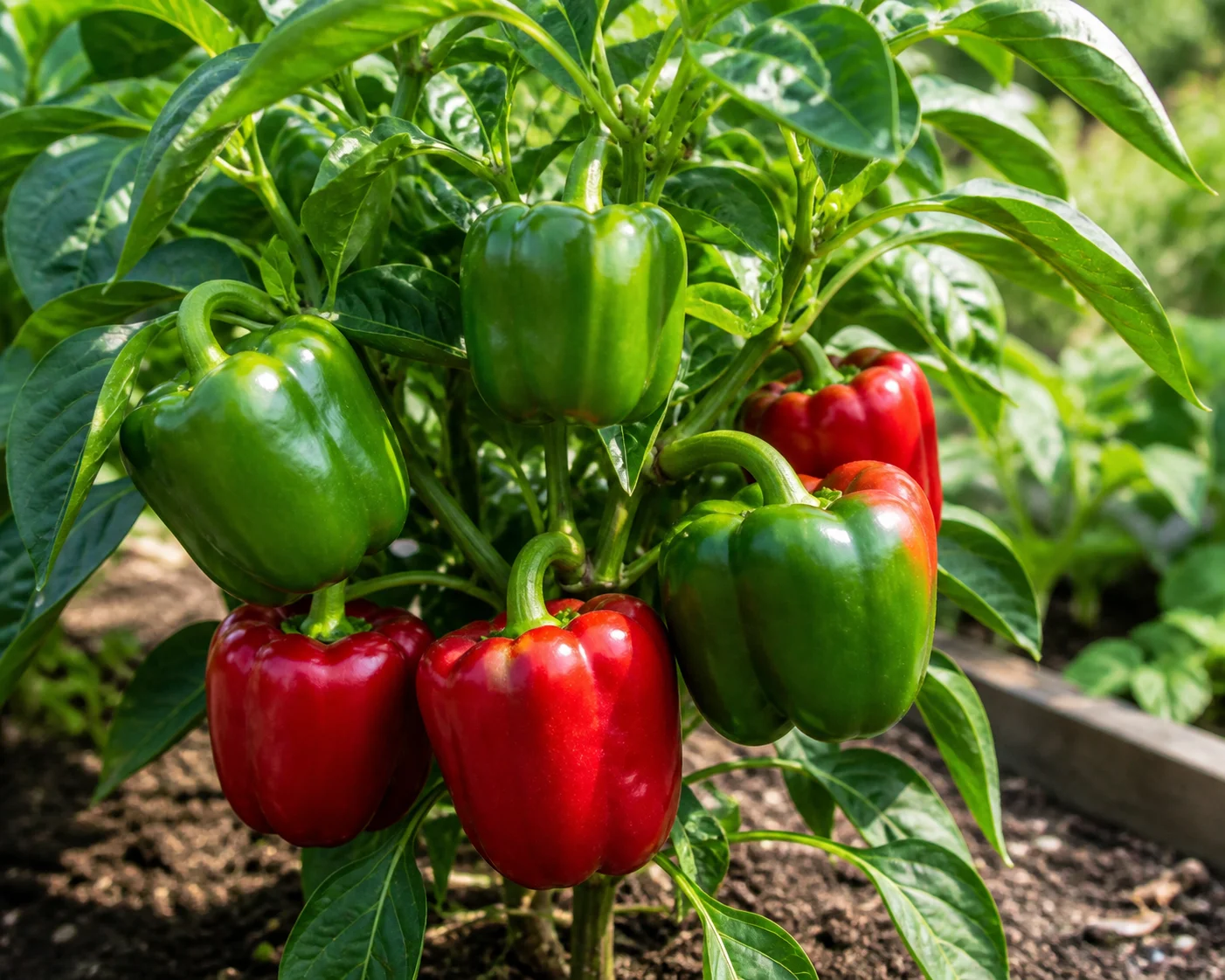
Bell Pepper
Capsicum annuum (sweet type)
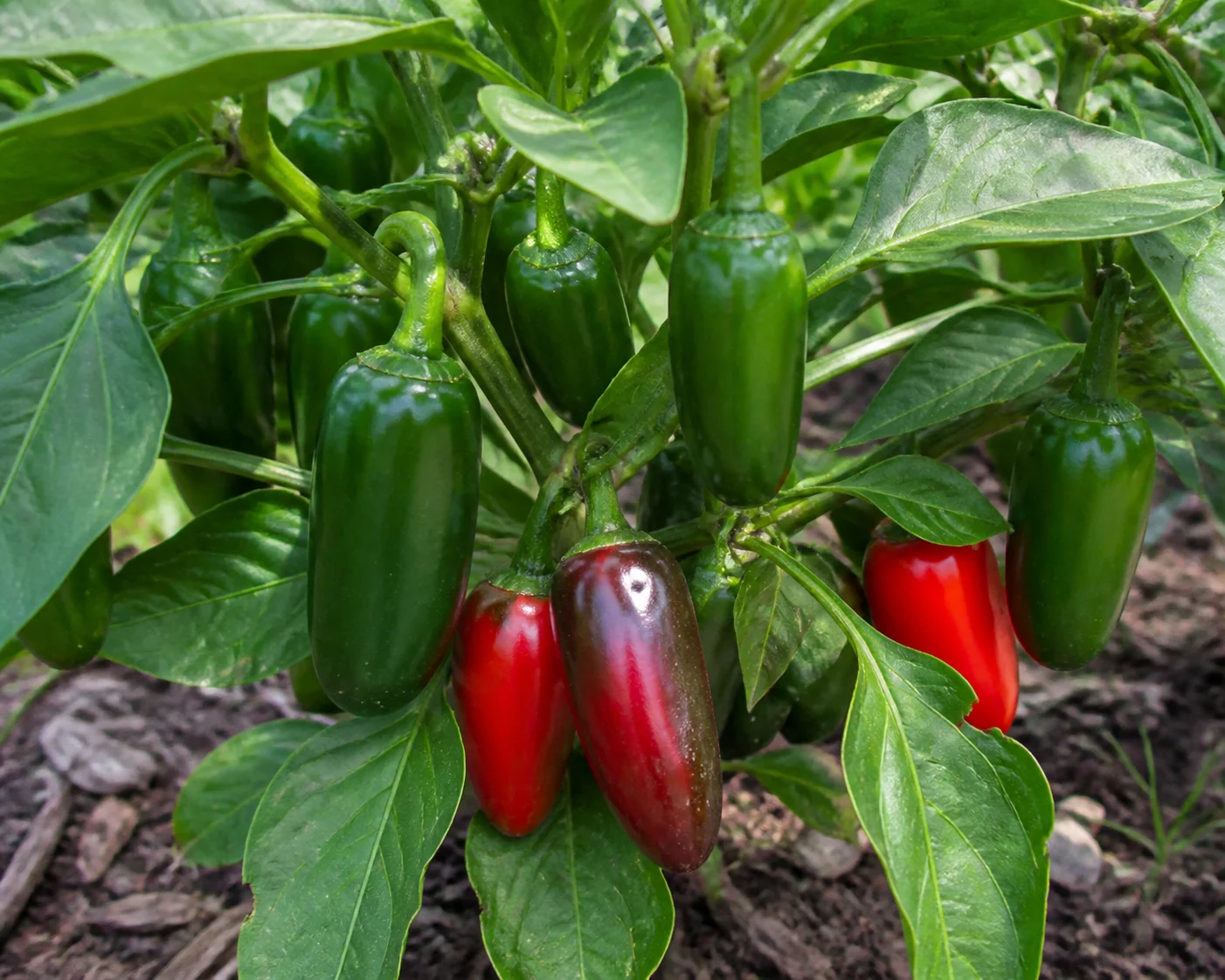
Jalapeno
Capsicum annuum (hot type)
Bell peppers and jalapenos are different forms of Capsicum annuum, so their basic warm-season care overlaps.
The fruit creates the useful difference. Bell peppers are sweet, large, and blocky, while jalapenos are smaller hot chiles whose heat falls within a cultivar range rather than one guaranteed number.
Both may be harvested green or left to develop their mature color. Extra time on the plant changes flavor and color, while jalapeno heat remains variable within the cultivar range.
Growing the two nearby does not make this year's bell peppers hot. Cross-pollination matters when you save seed for the next generation, not when you eat fruit already forming on the parent plant.
The practical choice depends on meals, tolerance for capsaicin, days to harvest, available warm weather, usable fruit weight, and how the harvest will be stored.
Specifications
Compare the named selections by the traits that matter in your garden.
| Feature | Bell Pepper | Jalapeno |
|---|---|---|
| Botanical relationship | Sweet type of Capsicum annuum | Hot type of Capsicum annuum |
| Fruit form | Large, blocky, hollow fruit with thick walls | Smaller tapered fruit with thinner walls |
| Heat | Sweet types normally register 0 Scoville Heat Units | Pungency varies by cultivar and growing conditions |
| Common green harvest | Full-sized, firm, and green | Full-sized, firm, and dark green |
| Mature color | Mature color depends on cultivar, often red, yellow, orange, or brown | Common types ripen red |
| Kitchen strength | Mild bulk, sweetness, crunch, and cavity | Chile flavor and capsaicin heat |
| Yield comparison | Fewer larger fruits can provide substantial usable weight | More smaller fruits may suit repeated small uses |
| Handling priority | Clip fruit stems to avoid breaking branches; preserve foliage over fruit | Wear gloves and keep capsaicin away from eyes and face |
Because both plants share a species and crop cycle, variety selection and intended harvest matter more than a generic care winner.
Compare the fruit, maturity window, heat, support needs, disease resistance, and preservation plan before comparing plant count.
Best Use Cases
Choose by the job the planting needs to do.
Stuffing and sweet slices
Large mild cavity and thick walls
Blocky bell fruit provides the volume, mild flavor, and wall thickness expected for stuffing, roasting, salads, and snack slices.
A jalapeno can be filled as a small hot chile, but it serves a different portion and flavor job.
Salsa and chile heat
Capsaicin with fresh pepper flavor
Bell pepper contributes sweetness and crunch without supplying the expected chile heat.
Jalapeno brings a moderate heat range that can still vary among cultivars, individual fruit, ripeness, and growing conditions.
Short or cool summer
A label-led maturity choice
Large bell fruit can be challenging where the warm season is short, although an early adapted bell cultivar may still fit.
Smaller-fruited peppers often tolerate temperature stress better, but the actual days-to-harvest label matters more than the name jalapeno.
Pickled pepper rings
Tested recipe and safe handling
Bell peppers can be pickled with an appropriate tested recipe, but they do not create jalapeno rings or the same heat.
Jalapeno suits rings, relish, and salsa when gloves and a research-tested preservation method are part of the plan.
Are bell peppers and jalapenos the same plant?
They are crop types within the same species, Capsicum annuum. Their flowers and basic plant structure can look similar even though selection has produced very different fruit.
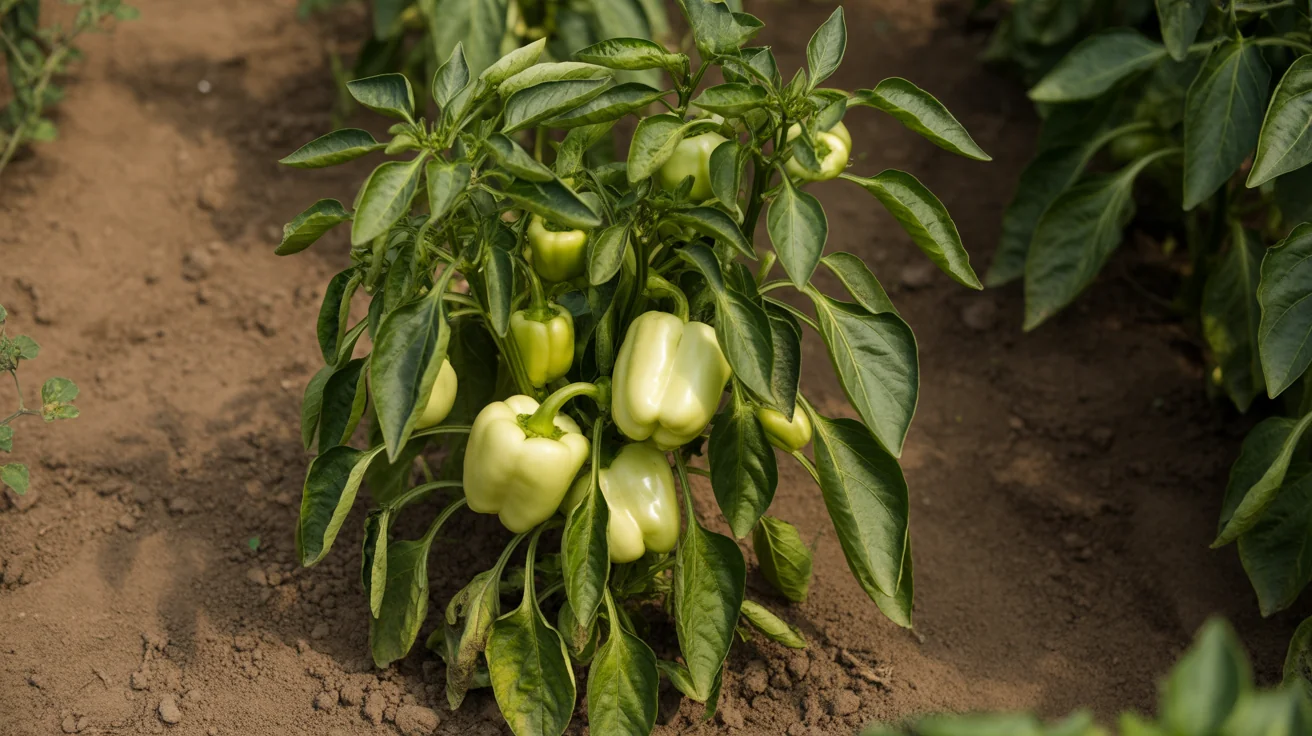
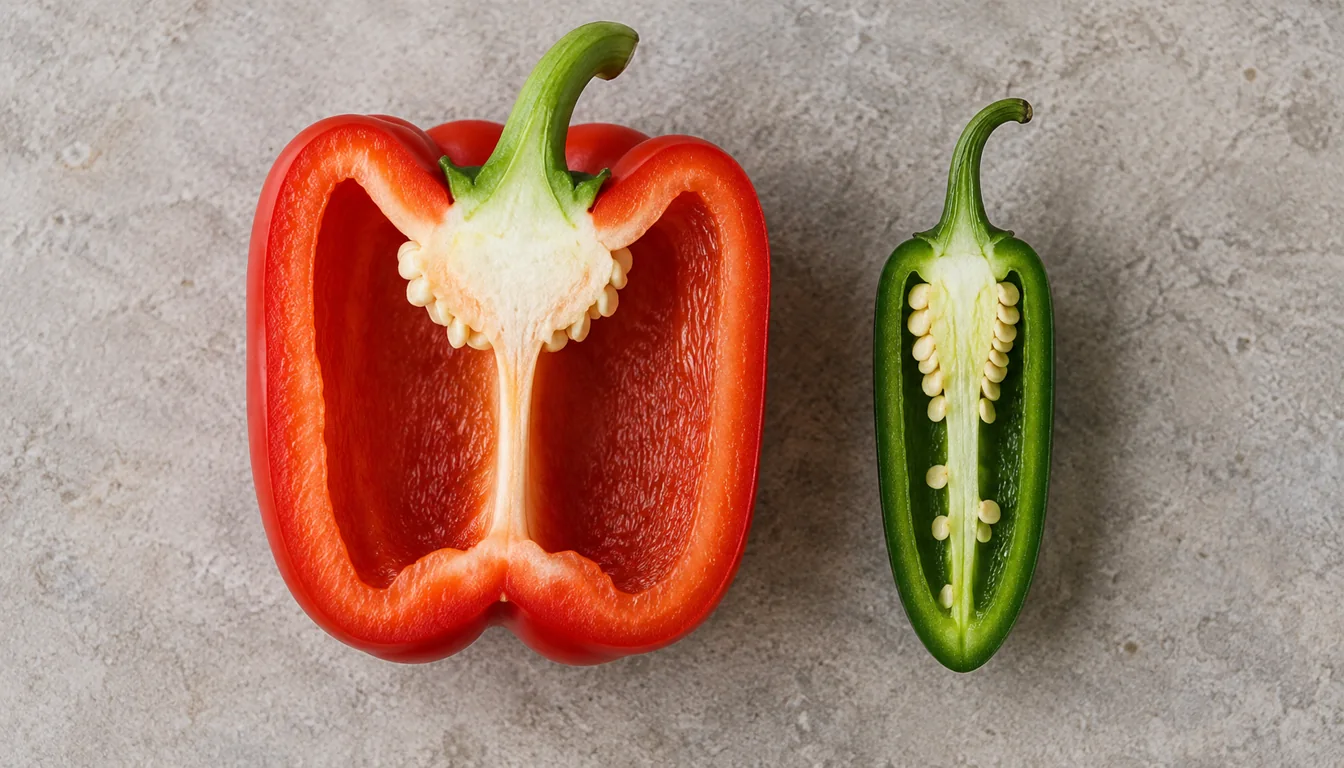
A bell pepper develops a broad blocky body, thick walls, a hollow interior, and no expected pungency. A jalapeno develops a smaller tapered body and capsaicinoids that create heat.
New Mexico State University identifies the placenta as the main capsaicinoid-producing tissue. Seeds are not the source of pungency, although contact with the placenta can leave capsaicinoids on their surface.
| Fruit clue | Bell pepper | Jalapeno |
|---|---|---|
| Shoulder | Broad and often lobed | Rounded to tapered |
| Body | Blocky and hollow | Short, cylindrical, and tapered |
| Wall | Thick and crisp | Thinner and firm |
| Green-stage flavor | Mild and grassy | Fresh chile flavor with variable heat |
| Ripe-stage direction | Sweeter and fruitier by cultivar | Redder and sweeter, with heat still variable |
| Best visual check | Full size, firmness, and variety color | Full size, firm skin, and green or red target stage |
A bell pepper's thick wall supplies larger slices and a roomy cavity, while a jalapeno supplies less flesh and a concentrated hot-pepper effect. Fruit anatomy explains kitchen use more clearly than plant height alone.
How much hotter is a jalapeno than a bell pepper?
Sweet bell peppers have no expected chile heat. Jalapenos are usually hot, but the cultivar and growing conditions matter more than assigning every fruit one Scoville number. NMSU describes heat as a combination of genetics and environment.
Genetics establishes the possible range, then fruit maturity and growing conditions influence where an individual pepper lands within it. Water stress can increase capsaicinoid concentration, but deliberately stressing a crop also risks flower loss, blossom-end rot, smaller fruit, and lower overall quality.
Do not use drought as a precision heat control. Choose a cultivar whose normal range fits the household, keep plants healthy, then taste one harvested fruit before adding a large amount to a dish.
Bell pepper is useful when the recipe needs fruit volume without chile burn. Jalapeno is useful when a smaller amount should change the flavor and heat of salsa, pickles, sauces, cornbread, or another dish.
They are not volume-for-volume substitutes. Replacing a cup of bell pepper with a cup of jalapeno changes both heat and usable flesh, while replacing jalapeno with bell pepper removes the chile effect rather than merely making it slightly milder.
Should you pick the fruit green or wait for it to ripen?
Both peppers can be useful before their final color. Harvest when fruit has reached the expected size and remains firm, using the cultivar description rather than color alone.
Green bell peppers are mature enough to eat but have not completed the color and flavor change of a fully ripe fruit. The final color depends on the cultivar, often red, yellow, orange, or brown. A colored pepper is not necessarily at its final stage, so the plant label remains useful.
Jalapenos are commonly used dark green and can also ripen red. Later harvest deepens color and sweetness, while the heat of an individual fruit still depends on genetics and growing conditions.
- Read the labelRecord expected fruit size, mature color, and days to harvest for the cultivar.
- Test firmnessPick fruit that feels full and firm rather than soft, shriveled, or water-soaked.
- Choose the kitchen stageTake green fruit for the desired crisp flavor or leave selected fruit to color.
- Clip the stemUse clean shears because pepper branches can snap when fruit is pulled.
- Keep harvestingRemoving usable fruit allows the plant to continue flowering and setting where weather permits.
- Sort immediatelySeparate sound fruit from sunscalded, cracked, insect-damaged, or rotting fruit.
Green fruit gives a crisp earlier harvest, while fully colored fruit trades more time on the plant for mature flavor. Full size and firmness come before a color preference.
Do bell peppers and jalapenos need different sun, soil, and water?
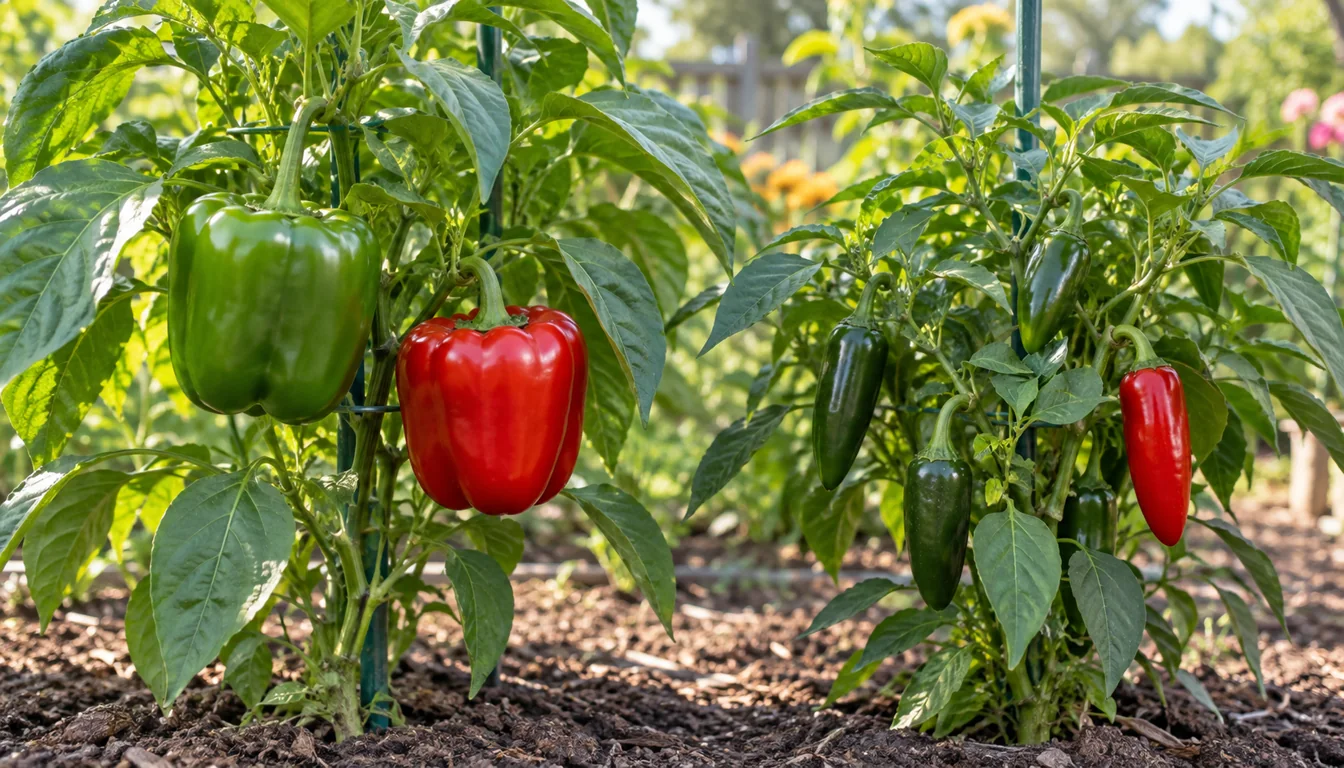
Their basic crop needs are more alike than different. Both pepper types want a warm frost-free growing period, full sun, fertile well-drained soil, and consistent root-zone moisture.
Transplant timing should follow local temperature guidance rather than a national calendar. University of Minnesota advises waiting until nighttime lows remain above 50°F, while local Extension advice can refine that threshold for the region.
| Site observation | Useful response for both pepper types |
|---|---|
| Cold nights after planting | Protect plants or delay transplanting according to local guidance |
| Soil stays wet after irrigation | Improve drainage or use a suitable raised bed or container |
| Surface dries but soil is moist below | Recheck before watering again |
| Flowers drop during extreme heat | Maintain plant health and wait for suitable temperatures to return |
| Bare fruit faces intense sun | Preserve healthy foliage and consider temporary heat protection |
| Disease has occurred before | Select labeled resistance and rotate away from related crops |
Moisture swings can weaken flowers and developing fruit and contribute to blossom-end rot. Soak the root zone rather than sprinkling only the surface, then use soil texture, mulch, rainfall, and plant size to decide when to water again.
Avoid routinely wetting foliage. Water delivered near the soil reduces splash and lets leaves dry faster, which lowers opportunity for diseases favored by free moisture.
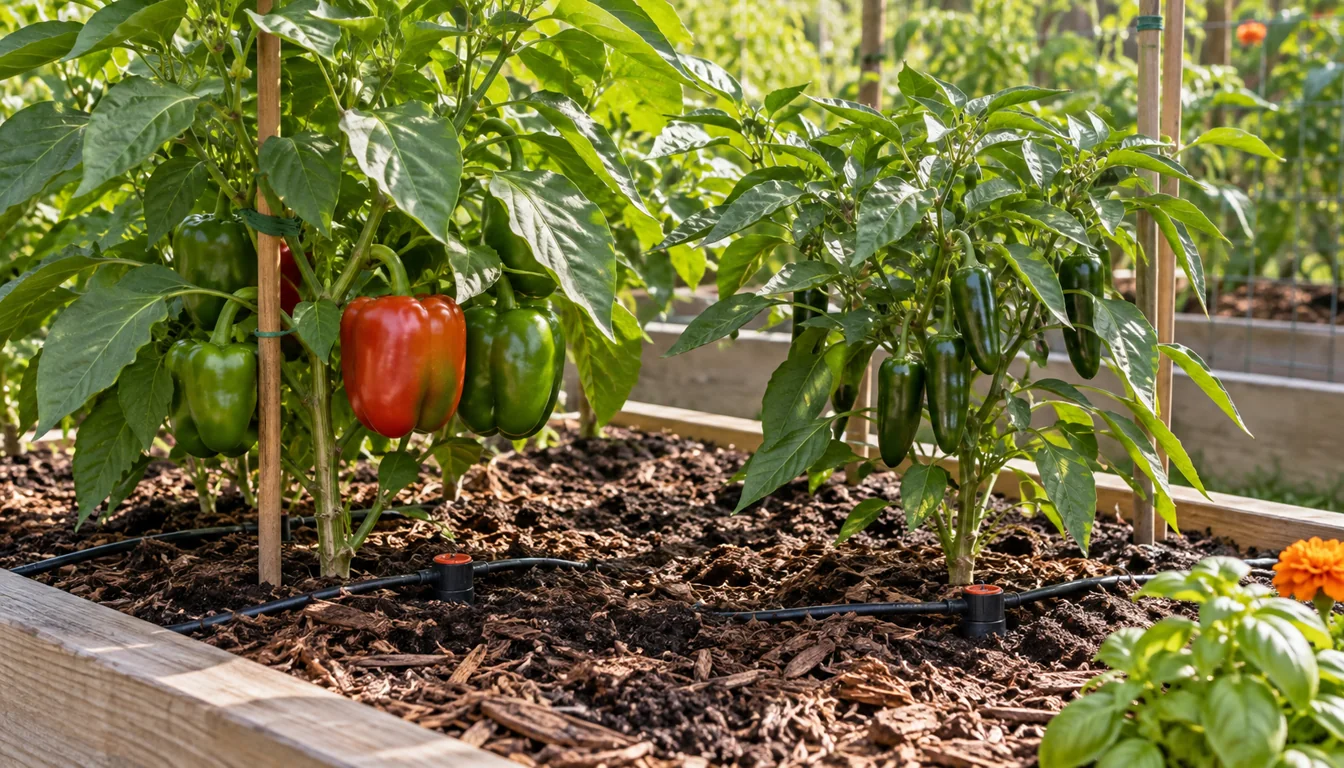
One irrigation line can serve both crops when it wets both root zones adequately. Emitter placement depends on the soil and irrigation layout, while the leafy canopy still needs to shade developing fruit.
Which pepper gives more food in a small garden?
A fruit count alone gives a misleading answer. One plant may carry fewer large bell peppers while another carries more small jalapenos, so usable weight and how much each recipe consumes matter more.
Cultivar habit also varies. Read the listed plant spread, fruit size, days to harvest, support advice, and disease resistance instead of assuming every jalapeno stays compact or every bell plant grows larger.
Smaller-fruited peppers often cope with cool and hot temperature stress better than large bells. That can make an adapted jalapeno or small sweet pepper more dependable in a difficult season, but it does not guarantee earlier fruit from every named cultivar.
- Estimate how many bell halves, slices, or cups a normal meal uses
- Estimate how many jalapeno rings or chopped chiles a normal meal uses
- Compare days to harvest against the local warm window
- Check mature plant spread and recommended spacing
- Allow room to reach fruit without breaking branches
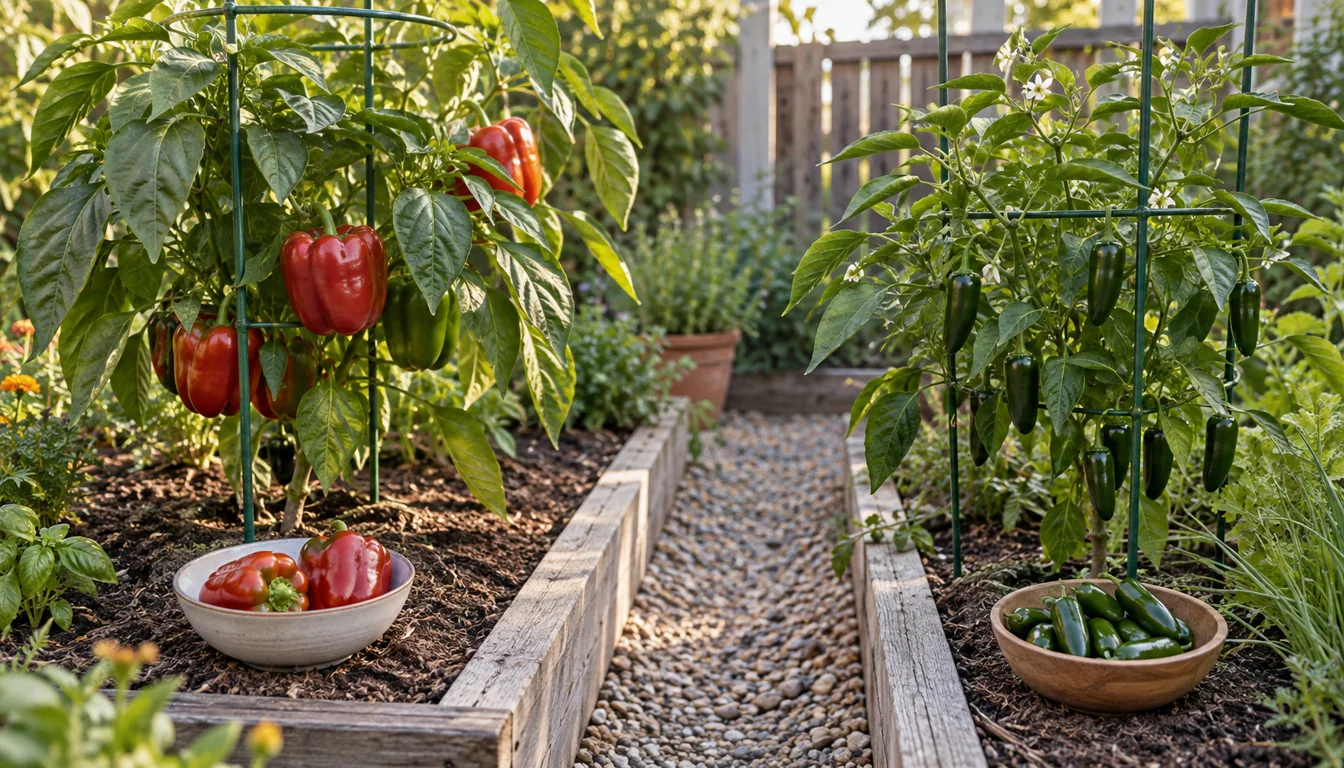
- Add a stake or cage if the cultivar or exposed site needs support
- Reserve leaf cover to protect fruit from sunscald
- Plan where surplus fruit will be frozen, dried, pickled, or shared
A household that uses one jalapeno at a time can be overwhelmed by several productive plants. A household that stuffs peppers may need more bell plants because each meal removes several large fruits.
Judge the bed by usable kitchen portions, then preserve a clear path for harvest and enough room for supports. Harvest weight depends on cultivar, weather, and losses.
Will jalapenos make nearby bell peppers hot?
No, not in the current harvest. The fruit develops from the bell pepper plant's own tissue, so pollen from a hot pepper does not turn that fruit hot.
Cross-pollination can change the genetics inside saved seed. A plant grown from that seed next year may produce fruit unlike the parent, especially when several compatible Capsicum annuum types flower together.
Do not blame a hot bell pepper solely on its neighbor. First confirm the plant label, seed source, fruit identity, and whether a volunteer or mislabeled transplant entered the bed.
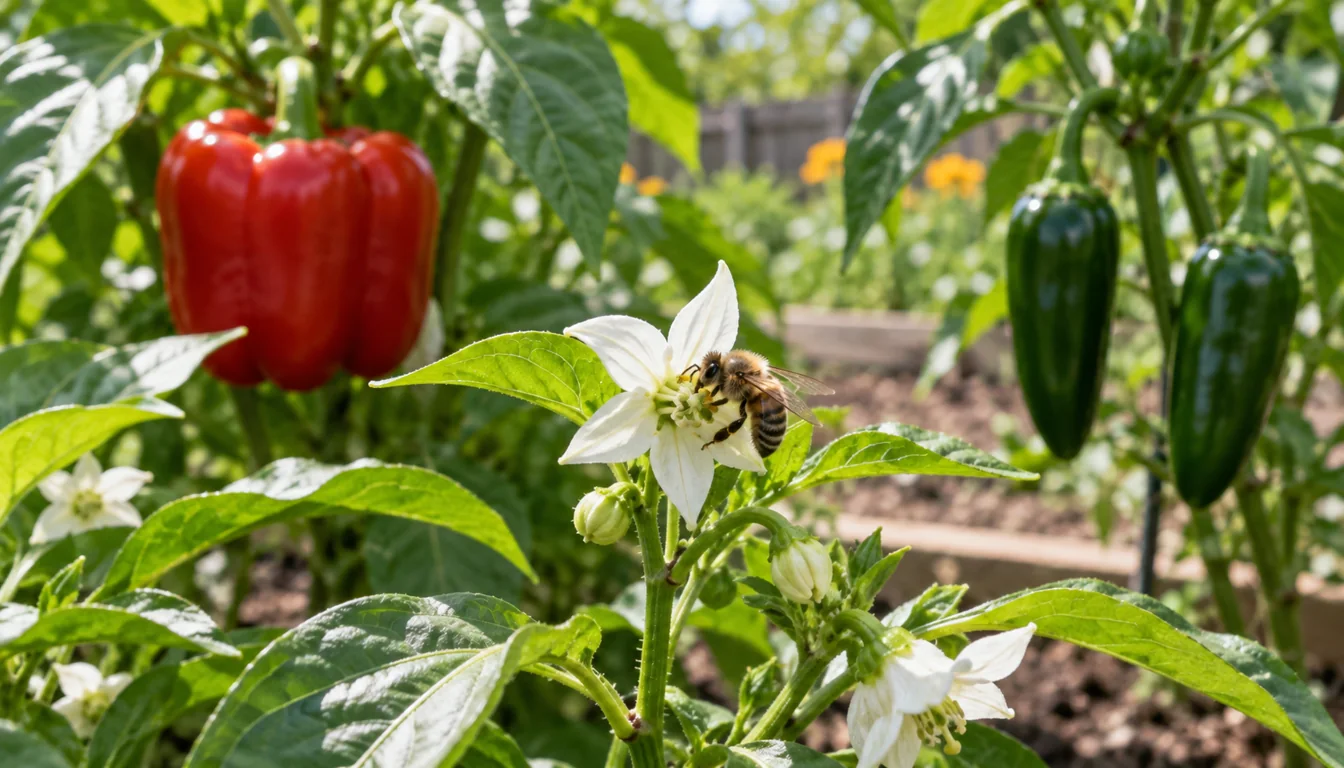
A bee may move pollen between open flowers while the mature fruit on each parent remains unchanged. Genetic mixing becomes visible in a later plant grown from the crossed seed.
Do bell peppers and jalapenos get the same problems?
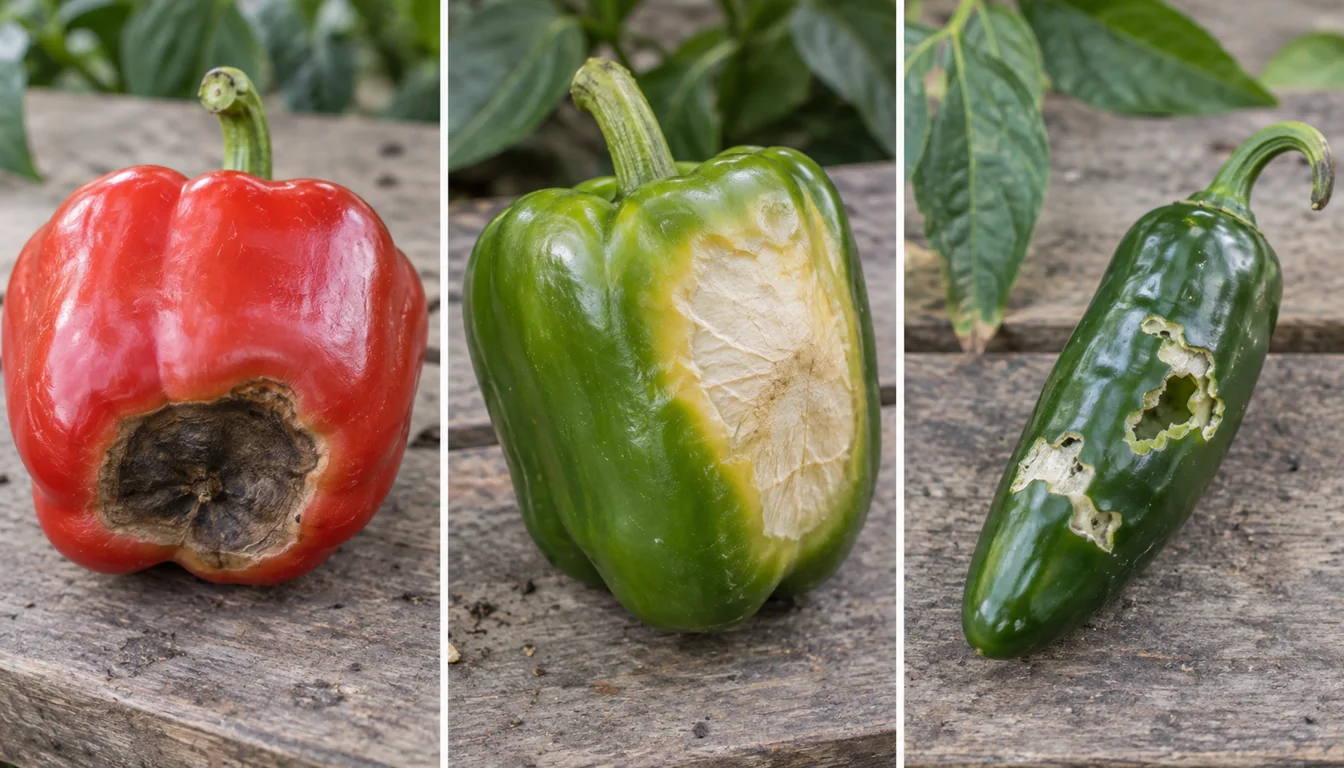
Because the two crops are closely related, they share many insects, diseases, and environmental disorders. The larger surface of bell fruit can make sunscald especially noticeable, but both types need intact foliage and steady plant health.
| Symptom | Likely category | First check |
|---|---|---|
| Dry sunken patch at blossom end | Blossom-end rot | Review moisture swings and root damage rather than adding calcium blindly |
| Flat tan or white patch on exposed side | Sunscald | Check whether leaves were lost or fruit suddenly faced intense sun |
| Small angular leaf spots and rough fruit spots | Possible bacterial spot | Check wet foliage, infected transplants, and local diagnostic guidance |
| Mottled twisted leaves or bumpy fruit | Possible virus | Isolate the plant and seek diagnosis because viruses are not cured |
| Chewed holes with frass | Caterpillar feeding | Inspect foliage and fruit at night and identify the larva |
| Whole plant wilts in wet soil | Root or crown disease | Check drainage and stem base before watering again |
| Flowers fall during heat | Temperature stress | Protect plant health and wait for a better fruit-set window |
Blossom-end rot, sunscald, insect feeding, and fruit rot can look similar from a distance. Location and texture of the damaged area provide better clues than pepper type.
Remove badly rotted fruit and avoid carrying wet diseased foliage through the row. Use clean seed or transplants, crop rotation, drip delivery, and cultivar resistance where a diagnosed disease has occurred.
Compare the lesion's position, texture, and exposure before choosing a treatment. The position of the lesion is the first useful clue, not whether the fruit is sweet or hot.
How should you handle and preserve each harvest?
Clip both pepper types with clean shears and keep the fruit shaded after harvest. Refrigerate sound unwashed fruit when it will not be used promptly, then wash it before cutting.
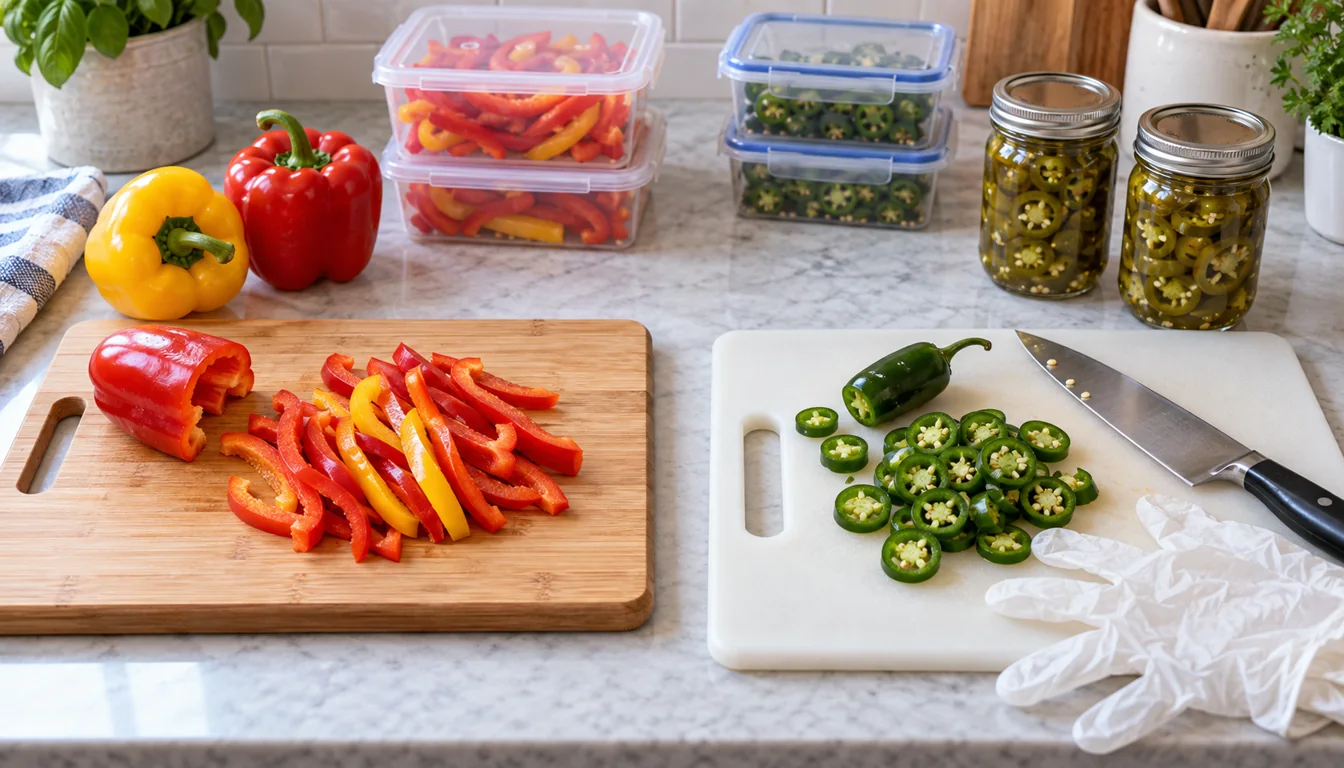
Wear disposable or washable gloves for jalapenos. Keep hands away from eyes, face, contact lenses, children, and pets until tools, boards, gloves, and skin have been cleaned.
Cutting out the pale placenta and ribs removes the main capsaicinoid-bearing tissue, while nearby seeds may still carry residue from contact.
- Sort the harvestUse firm sound fruit first and discard anything slimy, moldy, or deeply rotted.
- Match the cut to the mealKeep bell walls for stuffing or strips and slice jalapenos under glove protection.
- Freeze for cookingRemove stems and damaged tissue, portion the peppers, and expect thawed texture to be softer.
- Dry appropriate chilesUse sound mature fruit and a method that dries it fully before sealed storage.
- Pickle from a tested recipeKeep the stated pepper, acid, jar, headspace, and processing instructions.
- Label every packageRecord pepper type, cultivar when known, preparation, and date.
Peppers are low-acid vegetables, so an improvised vinegar ratio is not a safe shelf-storage plan. The National Center for Home Food Preservation provides tested pepper recipes and processing directions that must be followed as written.
Keep the mild cutting board separate from the gloved jalapeno station, then package frozen and pickled portions away from fresh food. This prevents raw chile residue from quietly reaching food meant to stay mild.
Should you grow bell peppers, jalapenos, or both?
Grow bell peppers when the household regularly uses sweet slices, roasted peppers, stir-fries, salads, or stuffed fruit. Select an early or locally adapted cultivar when large fruit must mature in a short season.
Grow jalapenos when salsa, pickled rings, sauces, smoked chiles, or small repeated harvests fit the kitchen. Choose the heat range and maturity date from the cultivar description rather than expecting every jalapeno to match.
Grow both when sweet bulk and chile heat are both useful. They can share a warm bed and irrigation system, and ordinary proximity will not alter the current fruit.
- Name the meals each pepper will enter
- Confirm how much chile heat each diner accepts
- Compare cultivar maturity with the local frost-free window
- Check plant spread, support, and access
- Choose green or ripe harvest goals
- Decide whether seed will be saved true to type
- Reserve gloves and separate cutting tools for hot fruit
- Choose a tested preservation recipe before planting for bulk pickling
- Include a plan for surplus harvest
Choose neither when the garden lacks a warm sunny position or the household rarely uses peppers. Buying the exact quantity needed can waste less food than forcing an unsuitable crop through a cool or shaded site.
The soundest decision joins cultivar evidence to actual meals. A smaller early bell may beat a late jalapeno in one garden, while several jalapenos may be excessive for a household that wants only occasional heat.
Sources & References
- Growing Peppers in Home Gardens, University of Minnesota Extension
- How to Grow Peppers in Your Garden, Utah State University Extension
- Measuring Chile Pepper Heat, New Mexico State University Extension
- Growing Chile Peppers in New Mexico Gardens, New Mexico State University Extension
- Saving Vegetable Seeds, University of Minnesota Extension
- Peppers, UC Statewide Integrated Pest Management Program
- Pepper Fruit Problems, University of Minnesota Extension
- Complete Guide to Home Canning, National Center for Home Food Preservation
- Pickled Jalapeno Rings, National Center for Home Food Preservation
- A Few Garden Questions: hot and sweet pepper neighbors, Cornell CALS