Blueberry vs Blackberry
Blueberry is the better fit where a suitably acidic root zone and the chosen shrub’s mature size suit the garden. Blackberry fits a sunny, well-drained site with room to train and renew canes. Neither has a universal yield advantage, and the cultivar changes the climate, space and harvest comparison.
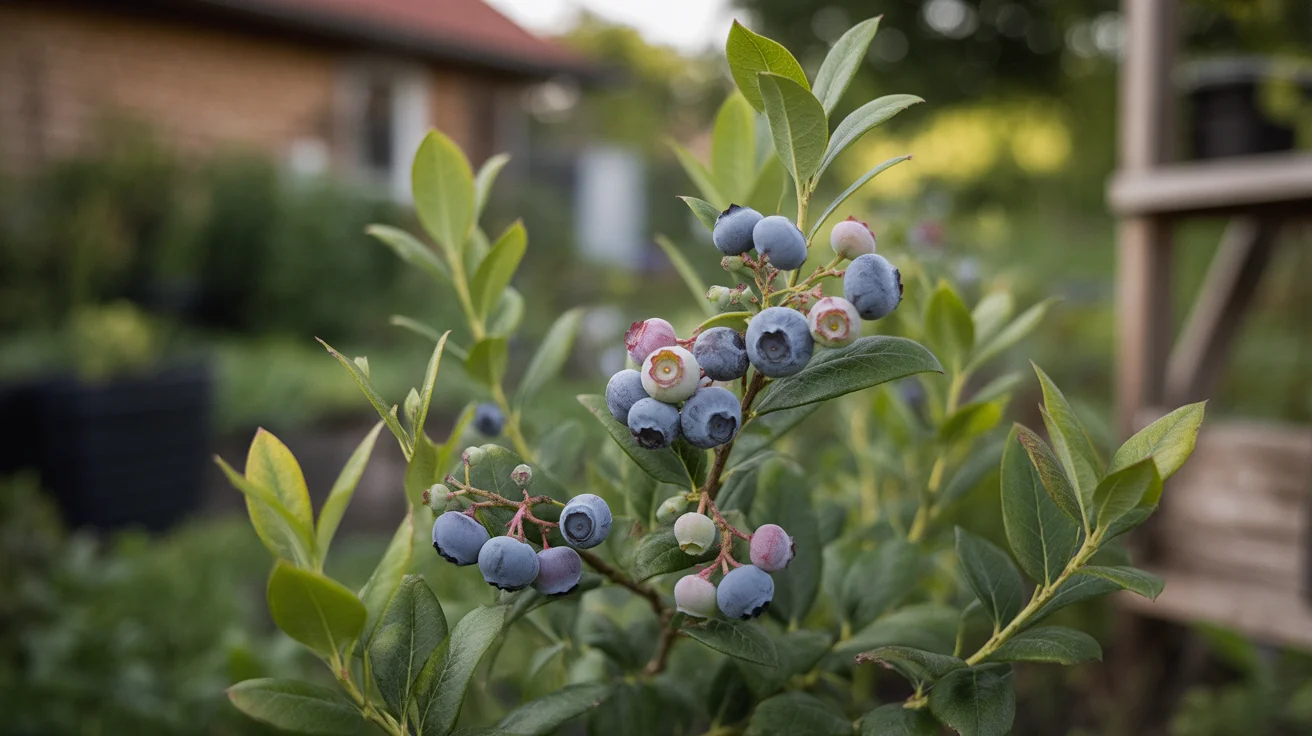
Blueberry
Vaccinium spp.
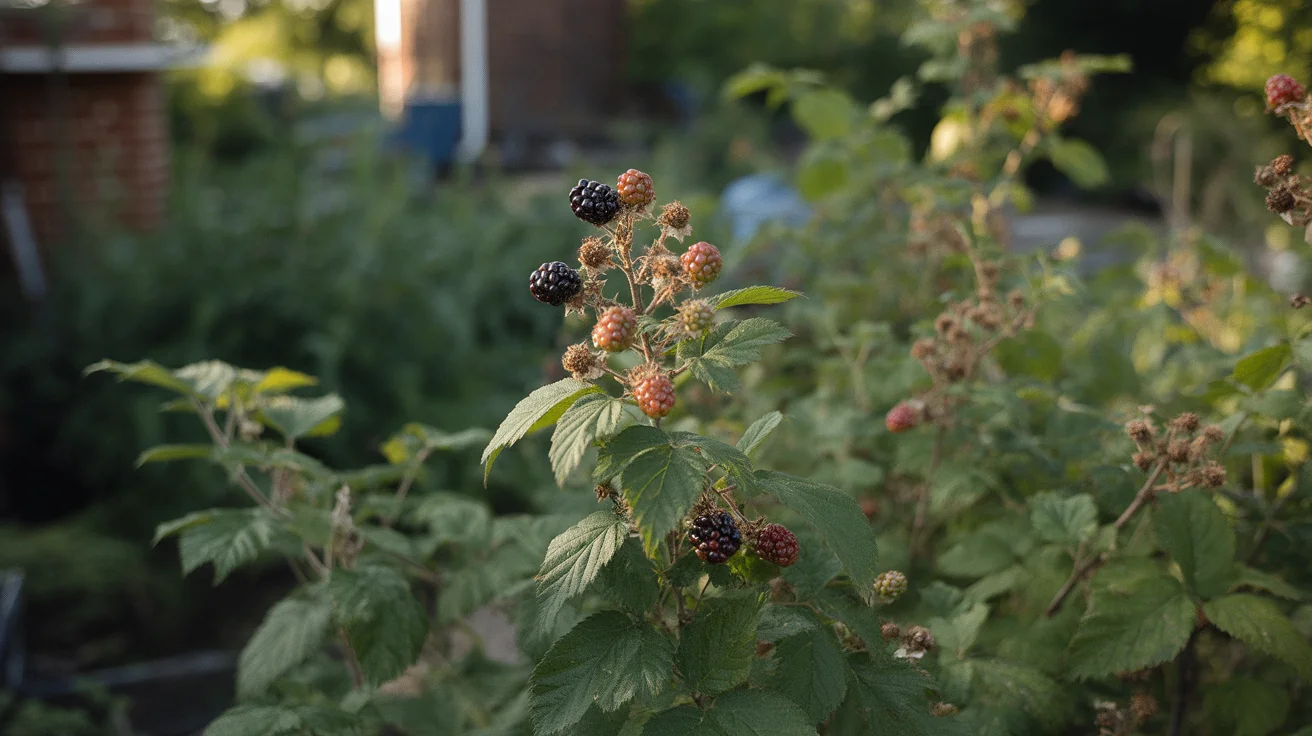
Blackberry
Rubus spp.
Blueberries and blackberries ask for different long-term commitments. Blueberry care depends heavily on the soil environment around a woody shrub. Blackberry care includes keeping a sequence of growing and fruiting canes organized around a perennial crown.
A small blueberry cultivar may fit a mixed border, while a large rabbiteye planting may need substantial room. An erect thornless blackberry is also a different proposition from a long trailing cultivar. Comparing the actual plants available locally is more useful than treating every blueberry as compact and every blackberry as a sprawling vine.
Specifications
Compare the traits that change the growing decision.
| Feature | Blueberry | Blackberry |
|---|---|---|
| Root-zone acidity | Strongly acidic; exact target depends on type and local guidance | NC State recommends pH 5.5–6.5 for its home-garden program |
| Plant structure | Woody shrub; compact through large cultivars | Erect, semi-trailing or trailing canes |
| Crop-bearing growth | Fruit on one-year-old wood carried by the shrub | Second-year canes in floricane types; first-year tips in primocane types |
| Routine physical work | Renew older weak stems while retaining vigorous fruiting wood | Train growing canes and remove canes that have finished their cropping cycle |
| Light and drainage | Full sun favors cropping; well-drained soil essential | Full sun and well-drained soil |
| Space estimate | Use the cultivar’s mature width and room for harvest | Include support, cane spread and a picking aisle |
| Yield expectation | Changes with cultivar, maturity, pollination and site | Changes with cultivar, cane survival, crop system and site |
Best Use Cases
Choose by the job the planting needs to do.
A bed with strongly acidic, freely draining soil
The soil already suits the crop
The site avoids one of blueberry’s biggest establishment difficulties. A soil test still matters because soil can also be too acidic, and drainage is a separate requirement.
Blackberries generally prefer a less acidic root zone. Sharing a bed does not mean the same soil amendments or fertilizer program suit both.
A sunny row with access for training and picking
Canes and support have a defined place
Support keeps fruiting canes accessible and helps separate them from replacement growth. Thornless choices reduce the prickly handling problem, while pruning and access remain necessary.
Blueberries can occupy a row too, but their growth and pollination needs determine spacing. The harvest available for freezing depends on the mature planting and growing conditions.
A garden with severe winters or hot summers
Local performance matters more than the common name
Cold-adapted blueberries grown in Minnesota and rabbiteye blueberries suited to parts of North Carolina are not interchangeable. The correct species and cultivar come before ornamental appearance.
Blackberry canes and buds also have cultivar-specific cold limits. Primocane-fruiting types offer another cropping pattern, but heat can limit that crop in some southern locations.
The pH difference changes the setup
Blueberries need an acidic root environment because nutrient availability changes with soil pH. A shrub can show poor growth and yellowing even where nutrients are present if the root-zone conditions prevent it from using them effectively. Adding more general fertilizer does not necessarily fix that problem.
NC State advises a target around pH 4.8 in its home-blueberry guidance, with differences between highbush and rabbiteye types. Its blackberry guidance instead uses pH 5.5–6.5. These regional recommendations explain the meaningful contrast without treating either endpoint as a universal diagnostic cutoff.
Soil acidification takes planning. Sulfur needs time to work, and the amount depends on the starting pH and soil properties. A test before planting and a later check are more informative than repeated additions of acidifier because a plant looks pale. Coffee grounds are not a reliable substitute for a tested amendment program.
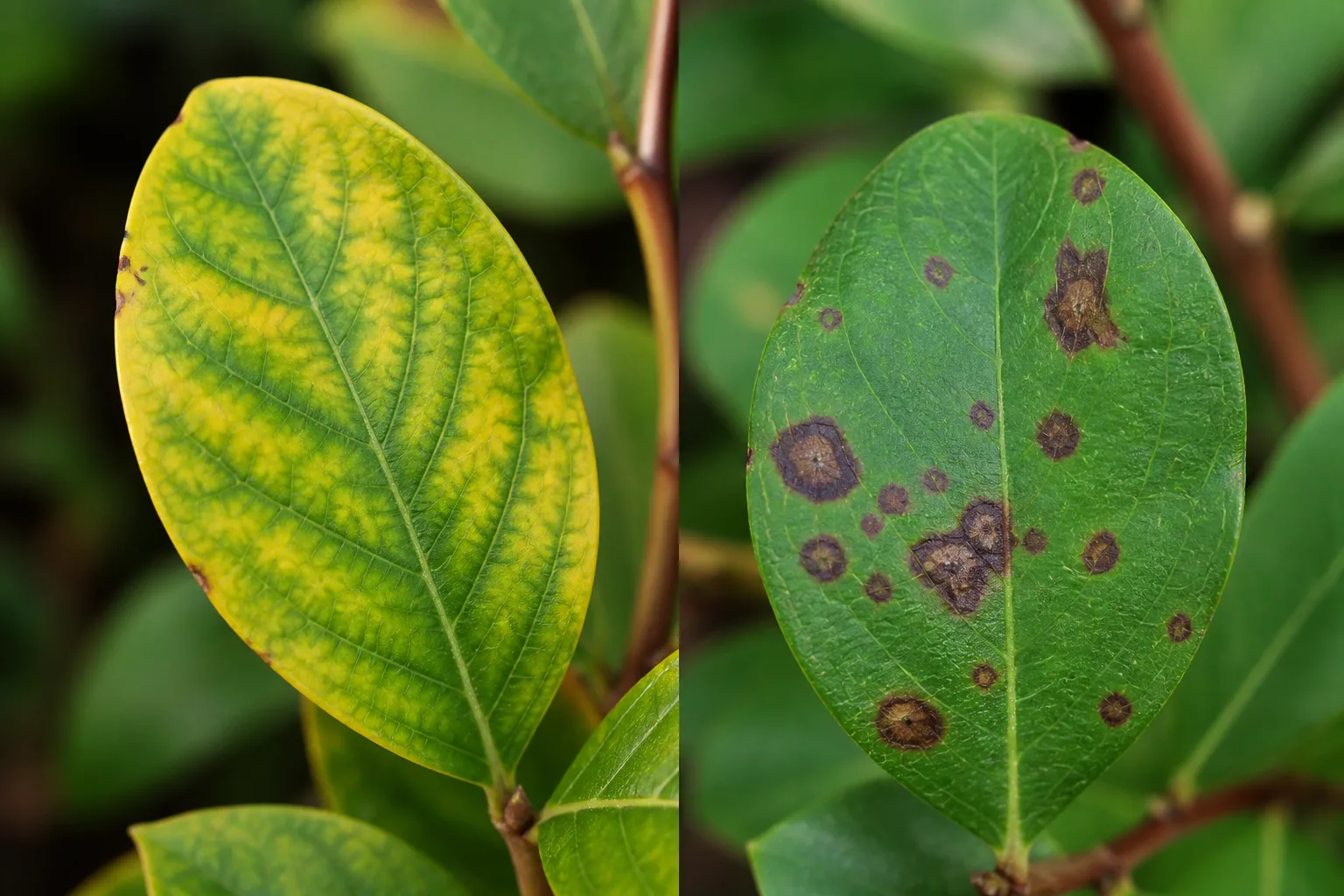
The leaf view below distinguishes diffuse yellowing from discrete spots, but an image cannot confirm soil pH, iron deficiency or a disease. Moisture and root health remain part of the investigation.
Drainage matters for both fruits. Blueberry’s need for consistent moisture does not mean its roots tolerate standing water, and blackberry’s broader soil adaptation does not make a poorly drained site suitable. A raised bed can improve the root environment only if water can leave it.
A shrub still needs room and compatible bloom
Blueberry is often described as the compact choice, but that description belongs to a cultivar. Minnesota’s trial list includes small northern selections alongside bushes several feet tall and wide. Southern rabbiteye blueberries have their own vigor and spacing needs.
For an ornamental bed, mature width affects neighboring plants and harvest access. Spring flowers and fall color can be useful additions to the landscape, but they do not remove the need for sun, suitable soil and reachable fruit. Young plants need time to build the canopy that will carry later crops.
Pollination also changes the space calculation. Minnesota recommends multiple blueberry varieties for larger and more plentiful berries, while NC State specifically emphasizes more than one rabbiteye variety for cross-pollination. Compatible bloom matters. Two plants with little flowering overlap do not provide the same benefit as a suitable pairing.
Blackberry space follows cane habit as well as plant count. Trailing canes need more room to train than an erect cultivar, and a support system occupies space beyond the crown. The picking aisle is part of the planting’s footprint, not spare room that can be planted densely without consequences.
The pruning jobs differ because the fruiting wood differs
Blueberry fruit is borne on one-year-old wood. Renewal pruning removes weak or aging stems that no longer carry strong young growth while keeping a productive mix of wood. Cutting the entire shrub down every year would remove the structure needed for that crop.
Blackberry crowns persist, but individual canes have a limited cropping life. In a floricane-fruiting cultivar, a new cane grows first and fruits in its second season. After that crop, the spent cane can be removed while replacement canes are retained and trained.
Primocane-fruiting blackberries can produce on the tips of first-year canes. Retaining the lower part can provide another crop the following year, or a fall-only system can remove the canes during dormancy. That choice changes pruning, harvest timing and the portion of the crop exposed to local heat or frost.
The support and pruning method also varies with erect versus trailing growth. “Cut all canes every year” is therefore incomplete advice. It can eliminate the next floricane crop if applied to the wrong type.
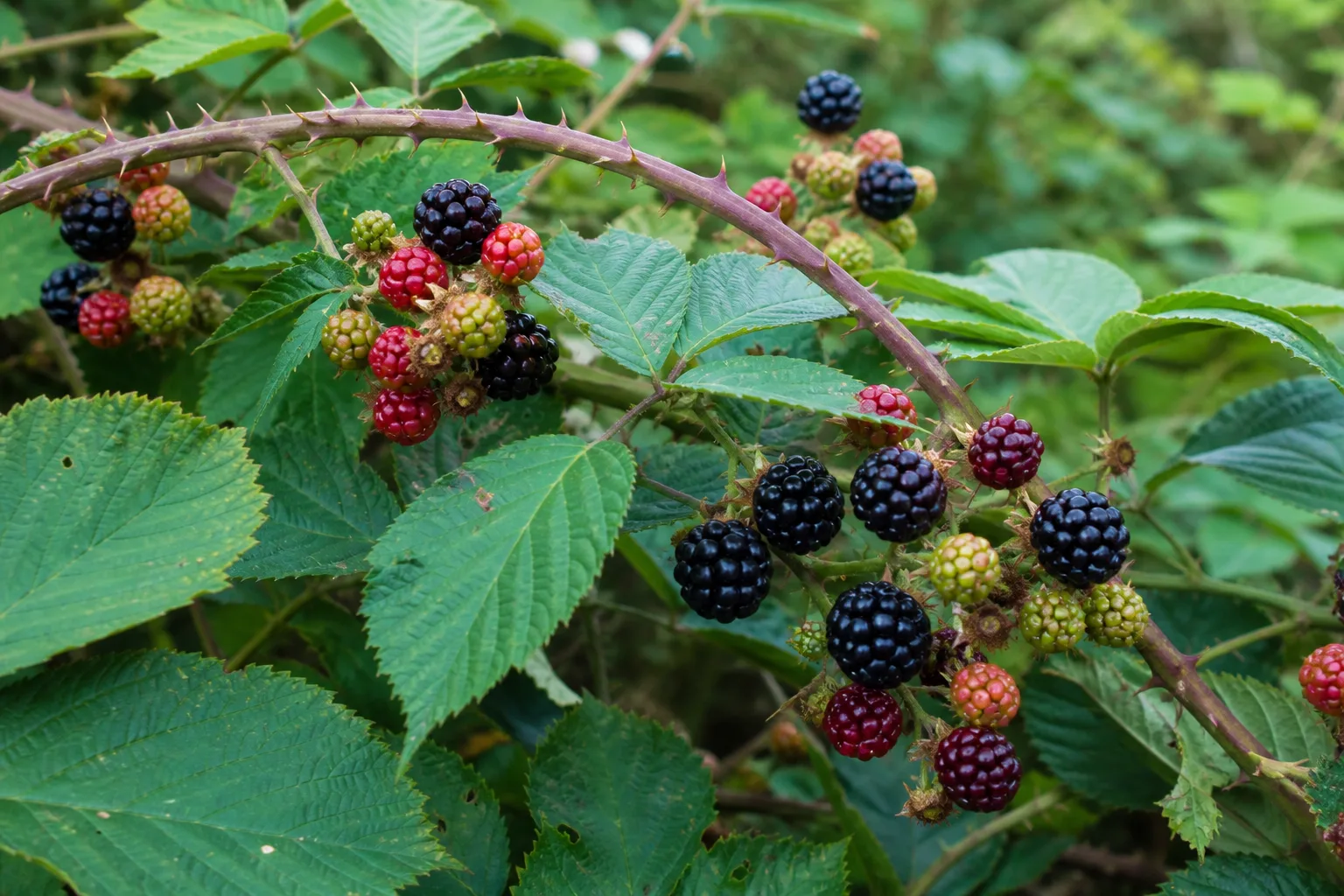
Thornless cultivars make handling easier, but they do not eliminate cane replacement or the need to keep a row accessible. The visible prickles in the example belong to that plant, not every blackberry sold for home gardens.
A productive planting starts with local fit
A broad zone label cannot capture all blueberry types. Cold-hardy northern selections, southern highbush and rabbiteye differ in adaptation. NC State favors different types between its warmer low-elevation areas and mountains, while Minnesota’s recommendations draw on northern trials.
Blackberry choices likewise need evidence of local cane survival and reliable ripening. A primocane crop is not automatically the solution everywhere. NC State notes that summer heat can limit flower and fruit development for that crop in its Piedmont and Coastal Plain.
Both fruits can be productive, but a fair yield comparison needs comparable mature plants, usable growing area and growing conditions. A per-bush figure cannot be compared directly with a whole row or used to guarantee a household’s supply.
The recurring costs follow the site. A blueberry planting on unsuitable soil can need continuing amendment and monitoring, while a blackberry row needs support and cane work. Bird protection, irrigation and regular picking may matter for either. The more practical choice is the one whose ongoing requirements fit the garden and the grower’s available time.