
Why Does My Pear Tree Bloom but Fail to Set Fruit?
Pear tree poor fruit set begins at one of two points.
Flowers either fail to form fruitlets because pollen, bees, or flower tissue failed, or fruitlets form and then drop because frost, disease, water stress, or crop imbalance prevents retention.
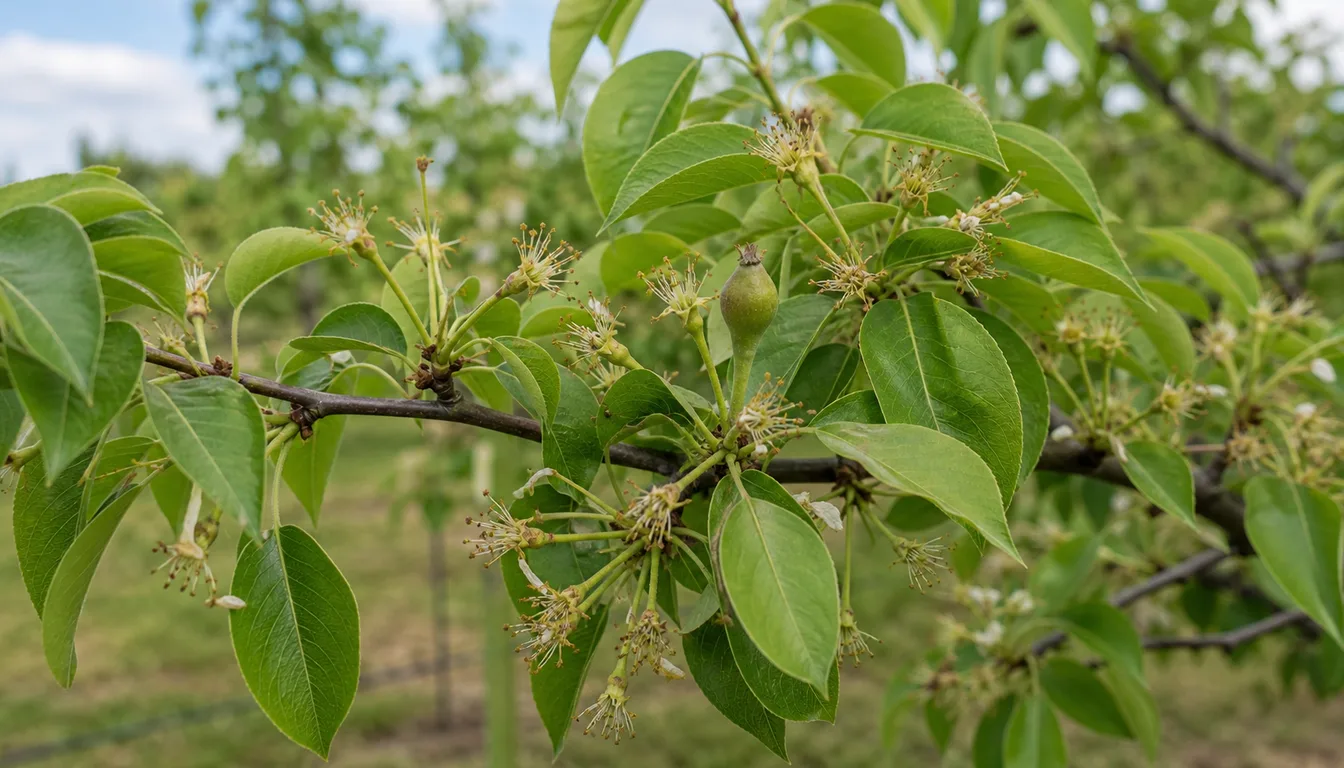
Quick diagnosis
No compatible pear pollen reached healthy flowers
First decide whether tiny pears ever formed.
Empty flower stems immediately after petal fall point toward cultivar compatibility, bloom overlap, bee activity, frost, or blossom injury, while fruitlets that enlarged and later fell move the investigation to cold damage, water stress, disease, or crop balance.
Open the full diagnosisWhat You Are Seeing
A heavy display of white flowers proves that the tree reached bloom, but it does not prove pollination or fertilization. Most pears crop more reliably when pollen arrives from a compatible second cultivar whose flowers are open at the same time.
The word pollinator describes the bee or other insect carrying pollen. A pollinizer is the tree supplying compatible pollen, so adding flowers for bees cannot replace the missing pear cultivar.
Collect evidence during bloom and for the next few weeks because petals, damaged flower centers, bee activity, and the first fruitlets disappear quickly. Notes and close photographs are much more useful next winter than a memory that the tree flowered well.
Blackened hooked shoots and brown blossom clusters that remain attached suggest fire blight rather than a simple pollination miss. Keep that disease branch separate because it requires sanitation and risk management, not hand pollination.
Common Causes
01 High likelihood
No second pear cultivar supplying pollen
Most European and Asian pears set a more dependable crop with pollen from another cultivar. A second tree of the same named cultivar is genetically the same pollen source and usually does not solve self-incompatibility.
How to identify it
- Only one named pear cultivar grows within useful bee range.
- A second tree is the same cultivar or came from the same clone.
- Flowers look healthy and bees visit, yet few fruitlets begin swelling.
- Crop history has remained poor across several mild bloom seasons.
What to do
- Identify the existing cultivar from its label or purchase record.
- Choose a second pear with compatible pollen and overlapping bloom for the local climate.
- Graft one or more compatible pollinizer branches when space is limited.
- Use fresh compatible pollen for hand pollination as a temporary current-bloom test.
- Do not rely on an apple tree as the pear pollen source.
02 High likelihood when two trees already exist
An incompatible or pollen-sterile pairing
Two different cultivar names still do not guarantee a working pair. Some combinations are poor matches, and a few pear cultivars can set their own fruit yet supply little or no viable pollen to the neighboring tree.
How to identify it
- Two cultivars bloom together but both or one repeatedly sets poorly.
- Cultivar references identify one tree as pollen sterile or a poor pollen source.
- Bee traffic and flower condition appear adequate.
- A third compatible cultivar nearby sets better than the suspected pair.
What to do
- Verify each full cultivar name instead of using fruit color or type alone.
- Check a regional compatibility source that addresses both bloom group and pollen fertility.
- Add or graft a third proven pollen source rather than assuming either existing tree works.
- Retain the original trees when their fruit is useful because the defect is in the pairing.
03 Site dependent
Bloom periods that do not overlap
Compatible cultivars must carry receptive flowers at the same time. Warm walls, cold pockets, cultivar genetics, and unusual spring weather can separate bloom dates even when a chart places both trees in nearby groups.
How to identify it
- One tree reaches petal fall before the other opens many flowers.
- Only a brief portion of the two bloom periods overlaps.
- The same timing gap appears in dated photographs across years.
- Branches in warmer parts of the yard open notably earlier.
What to do
- Record first bloom, full bloom, and petal fall for each tree.
- Choose a new cultivar whose observed local bloom overlaps the target tree.
- Graft more than one pollinizer cultivar when spring timing varies widely.
- Use hand-carried compatible pollen during the small overlap as a diagnostic test.
04 Weather dependent
Cold, wet, or windy weather limiting bee visits
Pear flowers can carry viable pollen and healthy ovaries but still receive too few insect visits during a chilly, rainy, or windy bloom. The effect often reaches several fruit trees in the same neighborhood that year.
How to identify it
- Most bloom days were rainy, cold, or windy.
- Few insects contacted flowers during calm observation periods.
- Multiple compatible trees produced weak set in the same season.
- A sheltered warm side of the canopy retained more fruitlets.
What to do
- Watch open flowers during the warmest calm part of several bloom days.
- Maintain nesting and forage habitat for locally active early-season bees.
- Avoid mowing all flowering groundcover during the pear bloom window.
- Hand-pollinate selected accessible clusters while compatible flowers remain open.
- Treat a single bad-weather year differently from a repeated cultivar problem.
05 Management dependent
Pollinator exposure to insecticide during bloom
An insecticide applied to open flowers or nearby attractive weeds can kill, repel, or disrupt bees when the tree needs them most. A product being sold for garden use does not make it safe for pollinators in bloom.
How to identify it
- An insecticide was applied while pear flowers or nearby weeds were open.
- Bee activity dropped after treatment despite suitable weather.
- The label restricts use when bees are foraging or crops are blooming.
- Other untreated flowering plants had stronger insect traffic.
What to do
- Stop insecticide applications to open bloom unless the label explicitly allows the exact use.
- Read the pollinator and timing restrictions for every product before mixing it.
- Control a pest outside bloom when its biology and label permit.
- Remove attractive flowering weeds before a permitted post-bloom treatment rather than spraying visiting bees.
06 Weather dependent
Frost injury to open flowers
A pear blossom can retain white petals after cold has killed its ovary or central reproductive tissue. Damaged centers turn tan, brown, or black and cannot grow into pears even if bees later deliver pollen.
How to identify it
- A freeze or near-freeze occurred during open bloom or early fruitlet development.
- Cut flower centers are brown or black instead of pale green.
- Damage is worse in low ground where cold air settles.
- Protected upper or wall-side branches set more fruit.
What to do
- Sample flowers from high, low, exposed, and sheltered branches before judging the whole tree.
- Use suitable frost protection on small trees before forecast bloom freezes.
- Keep the orchard floor managed according to local frost guidance so stored soil heat can help.
- Choose a later-blooming locally adapted cultivar when injury repeats.
- Wait for surviving fruitlets before deciding the entire crop is lost.
07 Evidence dependent
Fire blight in blossoms and shoots
Fire blight bacteria can infect blossoms and move into spurs or shoots. The loss looks different from clean petal fall because clusters brown or blacken, wilt, and often remain attached, sometimes with a hooked shoot tip.
How to identify it
- Whole blossom clusters turn brown to black and cling to the spur.
- Nearby shoot tips curve into a shepherd's crook.
- Dark tissue advances from the blossom into the twig.
- Sticky bacterial ooze may appear during warm humid conditions.
What to do
- Confirm the disease pattern before pruning during active spread.
- Follow local extension timing and sanitation advice for infected pear wood.
- Avoid excess nitrogen that produces highly susceptible succulent shoots.
- Select resistant cultivars when planting a replacement or pollinizer.
08 Check when fruitlets formed
Water, vigor, shade, or pruning stress after set
Once fruitlets exist, the tree must support them with water, leaves, and balanced growth. Drought, heavy nitrogen, deep shade, severe pruning, or a damaged root system can shift resources away from retention and future fruiting wood.
How to identify it
- Small pears formed before most of them fell.
- Shoot growth is extremely lush after heavy nitrogen or hard pruning.
- The canopy receives limited direct sun or has lost much of its leaf area.
- Soil dried severely while fruitlets were sizing.
What to do
- Water deeply during extended dry periods without keeping roots saturated.
- Base nitrogen on soil, growth, and local guidance rather than fruit count alone.
- Use moderate annual thinning cuts instead of removing a large canopy share at once.
- Restore light gradually and preserve fruiting spurs.
- Let a recently stressed tree rebuild before expecting a full crop.
09 History dependent
Previous crop load or normal early fruit drop
Pear trees shed many flowers and fruitlets because only a small percentage is needed for a crop. A very heavy previous crop can also reduce the next year's flower buds, but that explains sparse return bloom more directly than heavy bloom with no initial set.
How to identify it
- Enough evenly distributed fruitlets remain despite many fallen stems.
- The previous season carried an unusually heavy crop.
- This spring had fewer flower clusters rather than many empty healthy clusters.
- Retained fruitlets continue enlarging after the early drop period.
What to do
- Count retained clusters across several scaffold branches before calling the set poor.
- Thin an excessive current crop early enough to protect fruit size and future flower buds.
- Keep one healthy fruit per selected cluster where crowding is heavy.
- Track bloom density and crop load across years to distinguish a cycle from pollination failure.
When Does Pear Fruit Set Actually Fail?
Fruit set is a sequence.
A viable flower must remain undamaged, receive compatible pollen while receptive, complete fertilization, begin fruitlet growth, and retain enough resources to stay attached.
The first visible fork occurs after petal fall.
Stems that never swell focus the investigation on cultivar pairing, bloom overlap, insect visits, cold injury, or blossom disease.
Fruitlets that swell and later detach prove that initial fertilization occurred. Their timing, appearance, and the number left on the tree then separate normal shedding from frost injury and broader tree stress.
A pear tree does not need every flower to persist. Judge distribution and the final number of healthy enlarging fruitlets, not the dramatic carpet of petals and tiny dropped fruit beneath it.
Does a Pear Tree Need Another Pear Tree to Set Fruit?
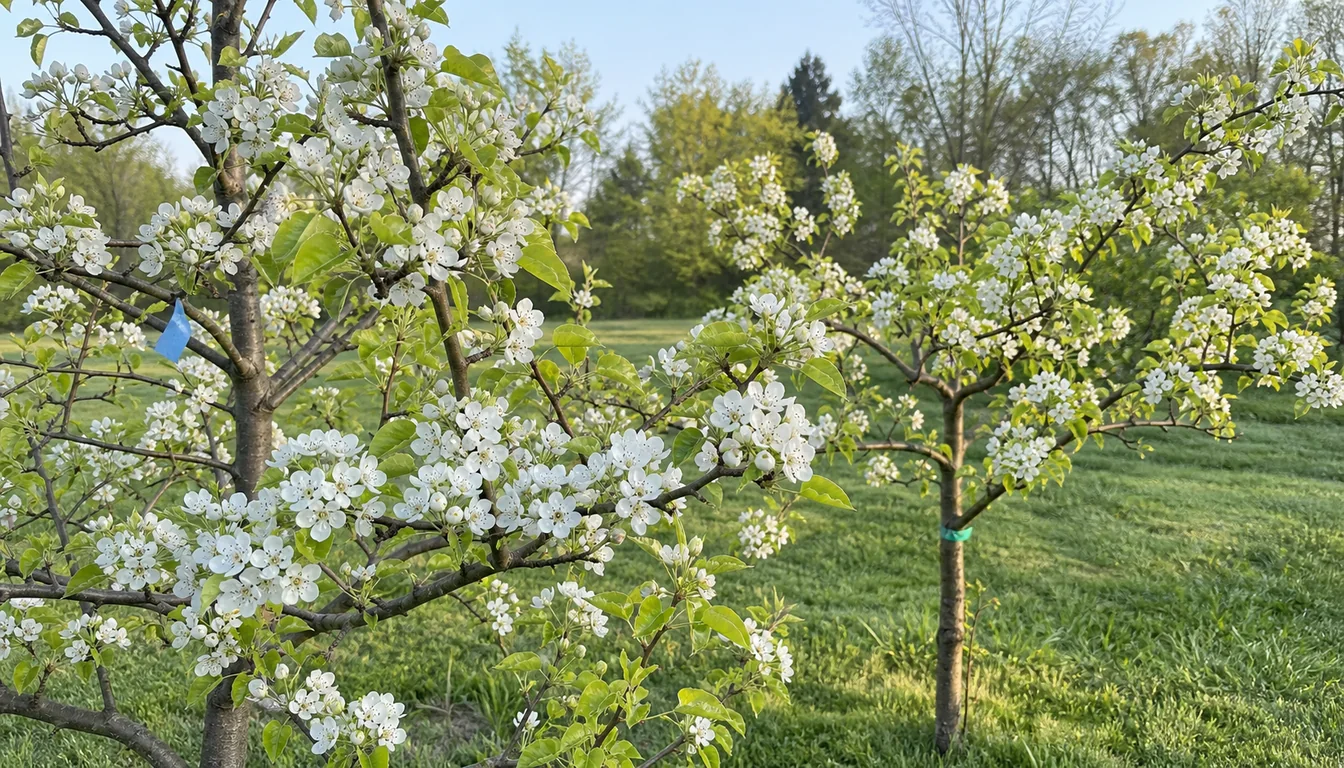
Write down the full cultivar name of each pear. Two unnamed trees or two trees sold under one cultivar name do not provide enough information to confirm compatibility.
Check whether either cultivar is known to be pollen sterile or a poor pollen source, then compare their bloom groups using a regional reference. Treat a chart as a starting point because weather and site exposure can shift actual opening dates.
During bloom, photograph both trees on the same dates and record first open flowers, peak bloom, and petal fall. The useful overlap is the period when one has viable pollen and the other still has receptive flowers.
When the gap is confirmed, grafting a compatible branch can solve limited space, while a separate tree can strengthen the orchard system. Select the cultivar from verified compatibility and local adaptation rather than fruit color alone.
- Identify the exact cultivar on every pear tree.
- Check pollen fertility and pair compatibility.
- Record actual overlapping bloom in the yard.
- Add or graft a verified pollen source when a gap remains.
How Can You Tell If Frost Killed Pear Blossoms?
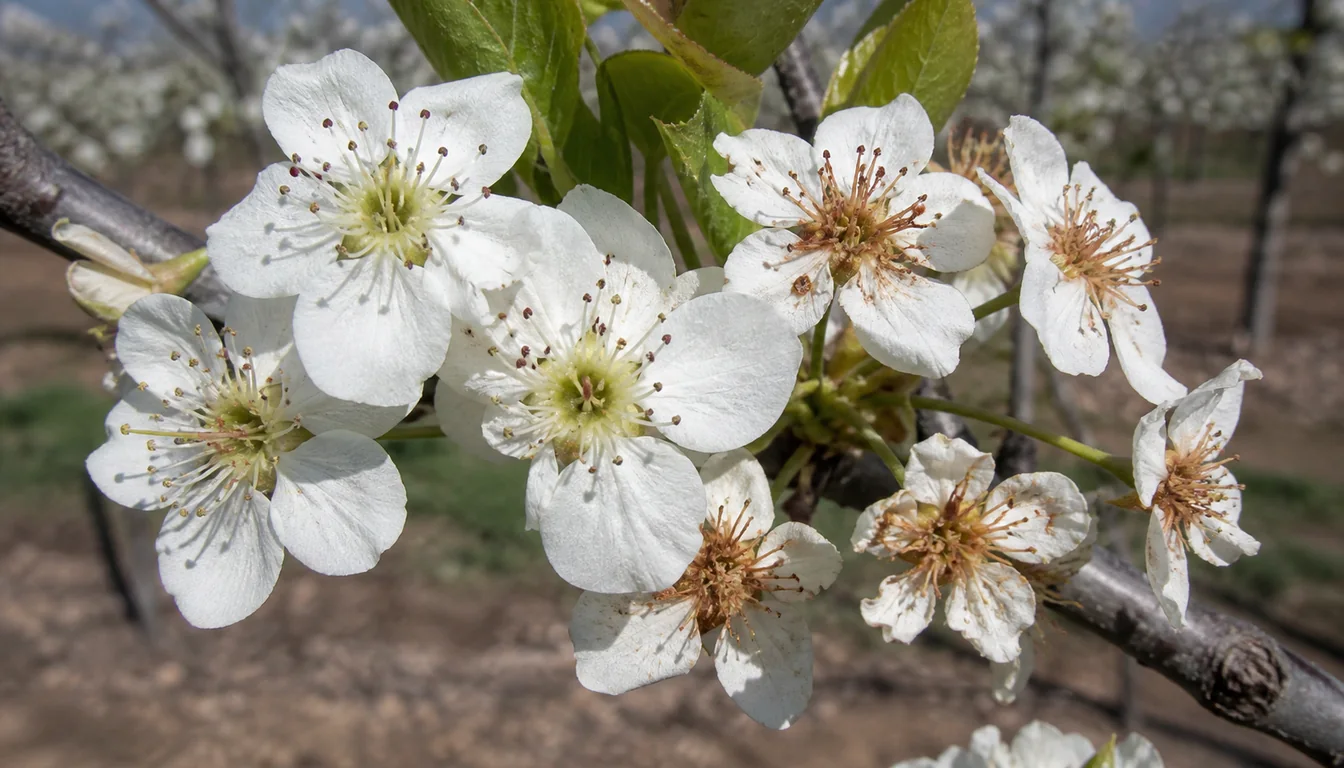
Collect several recently open or spent flowers from high, low, exposed, and sheltered parts of the canopy. Split the base lengthwise with a clean blade and examine the central ovary under bright light.
Healthy internal tissue is pale green to cream. Tan, brown, or black tissue after a cold night supports frost injury even when the outer petals did not look badly damaged.
Map the pattern across the site. Greater loss in a low pocket or on exposed outer bloom fits cold injury, while brown-black clusters that stay attached and spread into shoots fit fire blight.
Do not remove every cluster with weathered petals. Wait for the flower base to swell or fail, and reserve disease pruning for tissue that matches the disease pattern and local timing guidance.
Healthy center
- Pale green or cream
- Base begins swelling
- No shoot dieback
Frost injury
- Center turns brown
- Worse in cold pockets
- Clean later drop
Fire blight
- Cluster stays attached
- Shoot may hook
- Dark tissue advances
Are Bees Reaching Pear Flowers During Bloom?
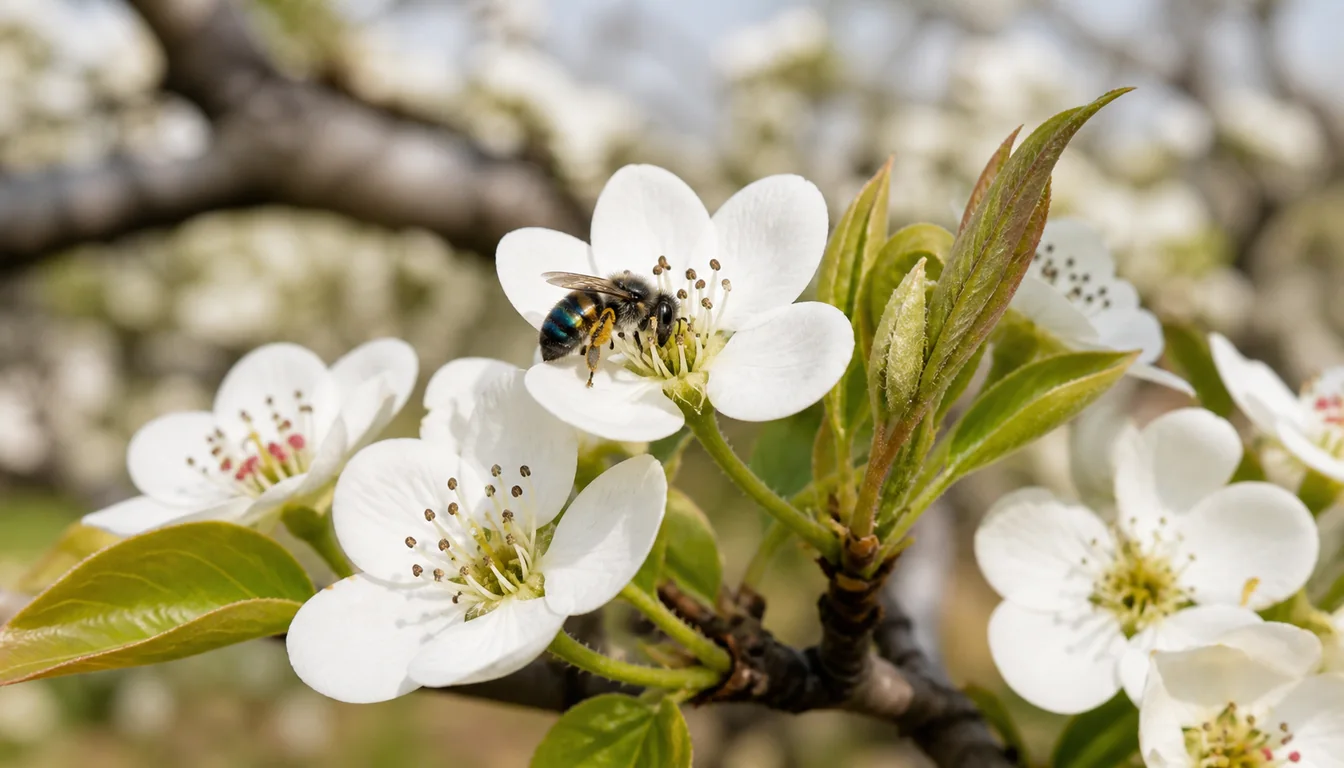
Watch several flower clusters during warm calm periods on more than one bloom day. Record insects that land and contact the center of multiple flowers rather than counting every insect that passes the canopy.
Compare activity before and after rain, wind, or cold. Poor flight during most of the overlap window can explain a one-year failure even when the cultivar pair has worked in milder springs.
Protect open bloom from avoidable pesticide exposure. Read the product label for bee warnings and application timing, and do not assume evening use makes a prohibited bloom application safe.
If compatible flowers remain, transfer pollen to a small marked set of clusters with a clean soft brush. Better set on those clusters provides useful evidence for next year's pollination plan without promising a full current crop.
Why Do Tiny Pears Form and Then Fall Off?
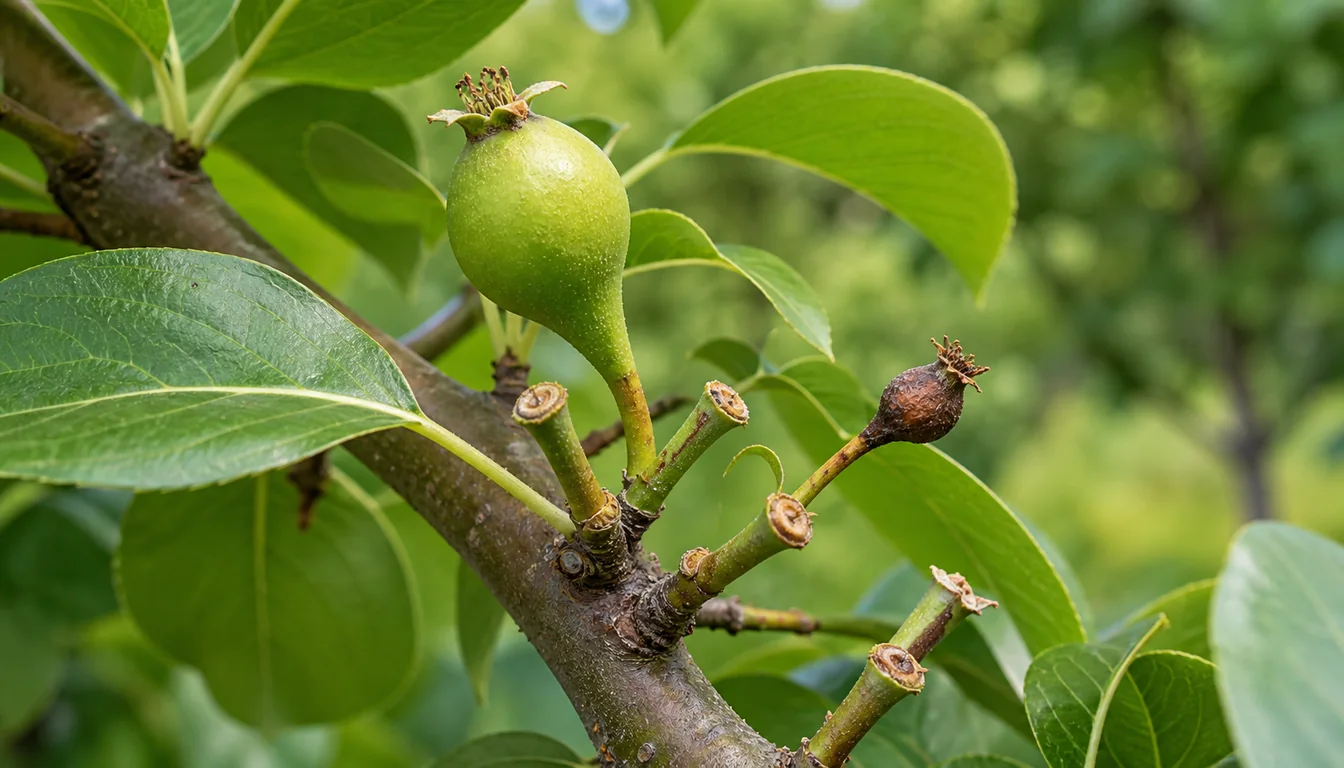
Mark representative clusters at petal fall and photograph them from the same angle each week. Look for a thickening flower base and upright green fruitlets rather than waiting until pears are obvious from the ground.
Fruitlets that never enlarge point back toward failed fertilization or killed flower tissue. Fruitlets that grow and later leave a clean scar show abscission, which may be normal unless very few remain across the tree.
Shriveled, blackened, or attached dead fruitlets carry different evidence from a clean drop. Inspect the spur and shoot for disease, and compare loss with frost exposure and dry periods before treating it as crop-load adjustment.
Count retained fruitlets on several branches rather than one sparse cluster. When the remaining crop is heavy, thinning can improve pear size and reduce pressure on the next year's flower-bud formation.
Recovery Plan
Test the pollination branch
Confirm overlap, watch bee contact, protect bloom from sprays, and hand-pollinate a few marked clusters if compatible pollen is available.
Inspect flower centers
Cut a sample from different canopy positions and photograph healthy, frost-killed, or blighted tissue before the evidence disappears.
Track retained fruitlets
Follow marked clusters and distinguish no swelling, clean early drop, damaged fruitlets, and healthy enlargement.
Repair the missing part
Add or graft a compatible cultivar, protect pollinators, adjust frost exposure where practical, and moderate water, nitrogen, and pruning based on the evidence.
Improve reliable pear set by pairing compatible locally adapted cultivars, recording real bloom overlap, protecting open flowers from insecticides, supporting early bees, and keeping the tree in full sun with balanced water and pruning. Thin an excessive crop after natural drop so retained pears size well and the tree can form future flower buds.
Sources
- Growing Pears in the Home Garden, University of Minnesota Extension
- Growing Tree Fruits and Nuts at Home, Oregon State University Extension
- Orchard Pollination, Pollinizers, Pollinators, and Weather, Penn State Extension
- Home Orchards, Why Is There No Fruit on My Tree, Penn State Extension
- Why Is Our Coastal Fruit Dropping, Oregon State University Extension