Strawberry vs Raspberry
Strawberry usually fits a small, low planting or modest container more easily. Raspberry needs room for canes and access for pruning and picking, although containers are possible. Fruiting type determines the harvest pattern, so strawberries are not always the faster crop and raspberries are not automatically the higher-yielding choice.
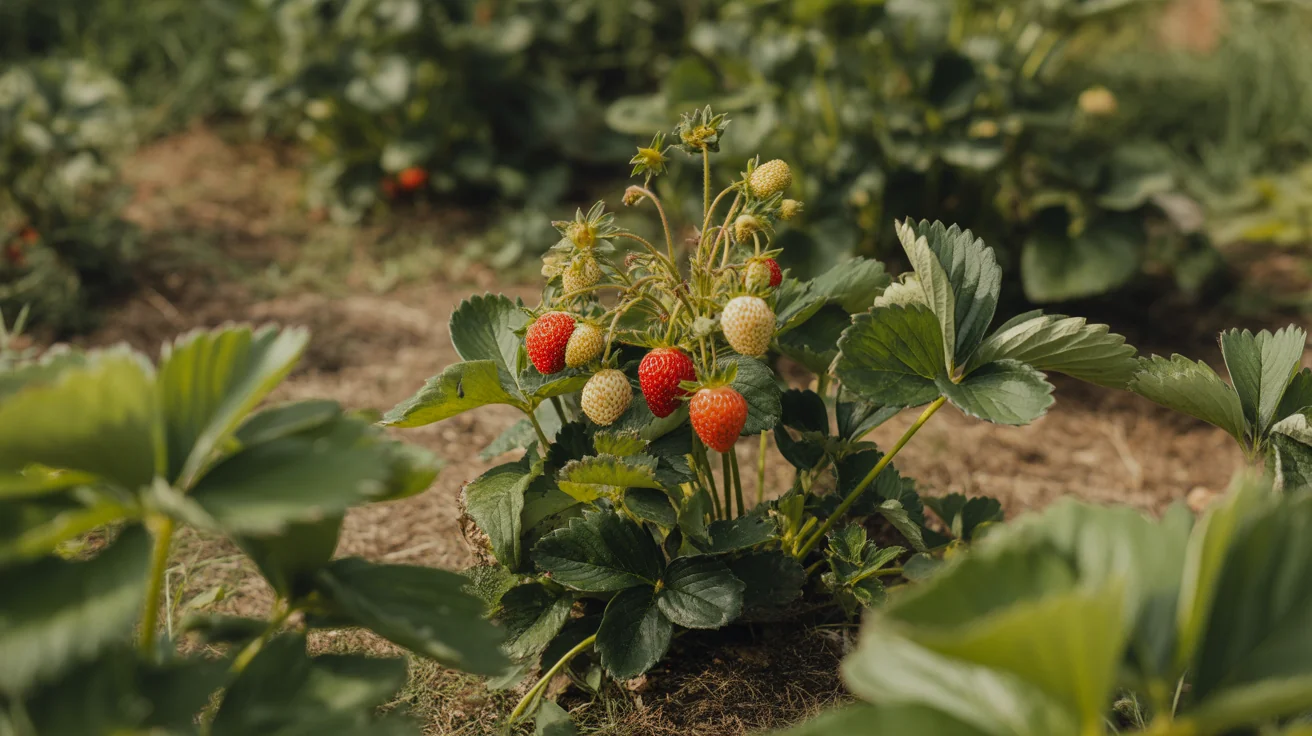
Strawberry
Fragaria × ananassa
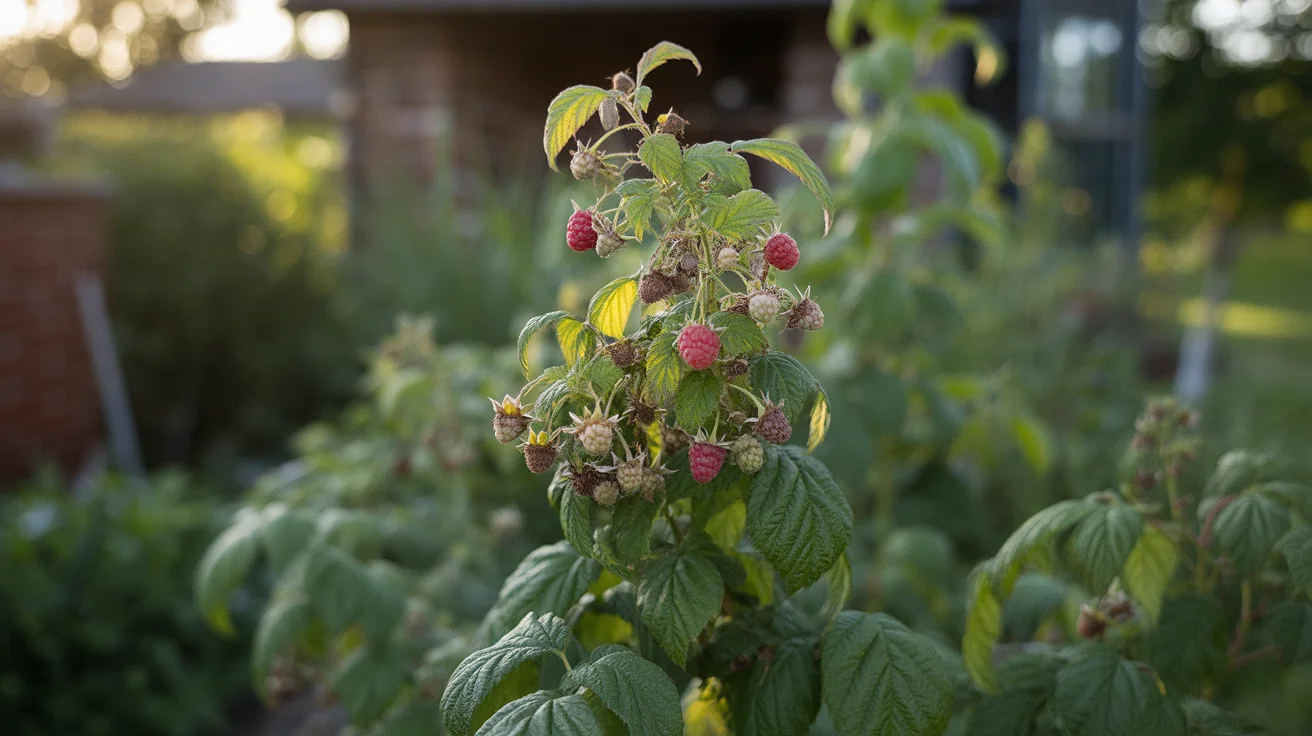
Raspberry
Rubus idaeus
A strawberry planting spreads through low crowns and, in many cultivars, runners that make daughter plants. A raspberry planting renews aboveground canes from a perennial root system. Those growth habits create different space and maintenance needs.
This comparison focuses on garden strawberries and red raspberries. Black and purple raspberries can spread and respond to pruning differently, so a rule about suckering red raspberry rows should not be applied to every raspberry.
Specifications
Compare the traits that change the growing decision.
| Feature | Strawberry | Raspberry |
|---|---|---|
| Plant structure | Low leaves and crowns; daughter plants from runners in many types | Perennial crown and roots with canes renewed over time |
| Spread to manage | Runner plants can crowd a bed; some types produce fewer | Red raspberries can send new shoots beyond the intended row |
| Harvest pattern | June-bearing, everbearing or day-neutral | Summer-bearing or primocane-fruiting |
| Container fit | Often convenient; drainage and frequent moisture checks matter | Possible with suitable cultivar, substantial root space and pruning |
| Main renewal job | Manage runners and renew the bed according to the growing system | Retain or remove canes according to their fruiting cycle |
| Cold-season risk | Exposed crowns and container roots need region-appropriate protection | Cane injury can affect summer crops; early fall frost can cut off a late crop |
| Sun and soil | Sun supports cropping; freely draining soil with steady moisture | Sun supports cropping; poor drainage increases root problems |
| Time to harvest | Depends on plant type, establishment and whether early flowers are removed | First-year cane fruiting is possible in primocane types; establishment still matters |
Best Use Cases
Choose by the job the planting needs to do.
A small sunny patio
Root space and regular watering
Day-neutral or everbearing strawberries can provide repeated small pickings in suitable conditions. Their shallow root zone still dries quickly in a pot, particularly in a hanging basket.
Raspberry can grow in a container, but the pot, support and pruning must suit the cultivar. It is a larger commitment than putting a standard cane into a small window box.
A garden for preserving a seasonal crop
A concentrated harvest can be useful
June-bearing strawberries concentrate production into a shorter harvest window. That can suit a grower who wants to process a batch rather than gather small amounts over many weeks.
Summer-bearing raspberries also provide a seasonal crop. A fall-bearing type shifts harvest, but the ripening window must fit local heat and frost conditions. Neither crop has a guaranteed yield per square foot.
A row with room for upright support
Harvest height and access matter
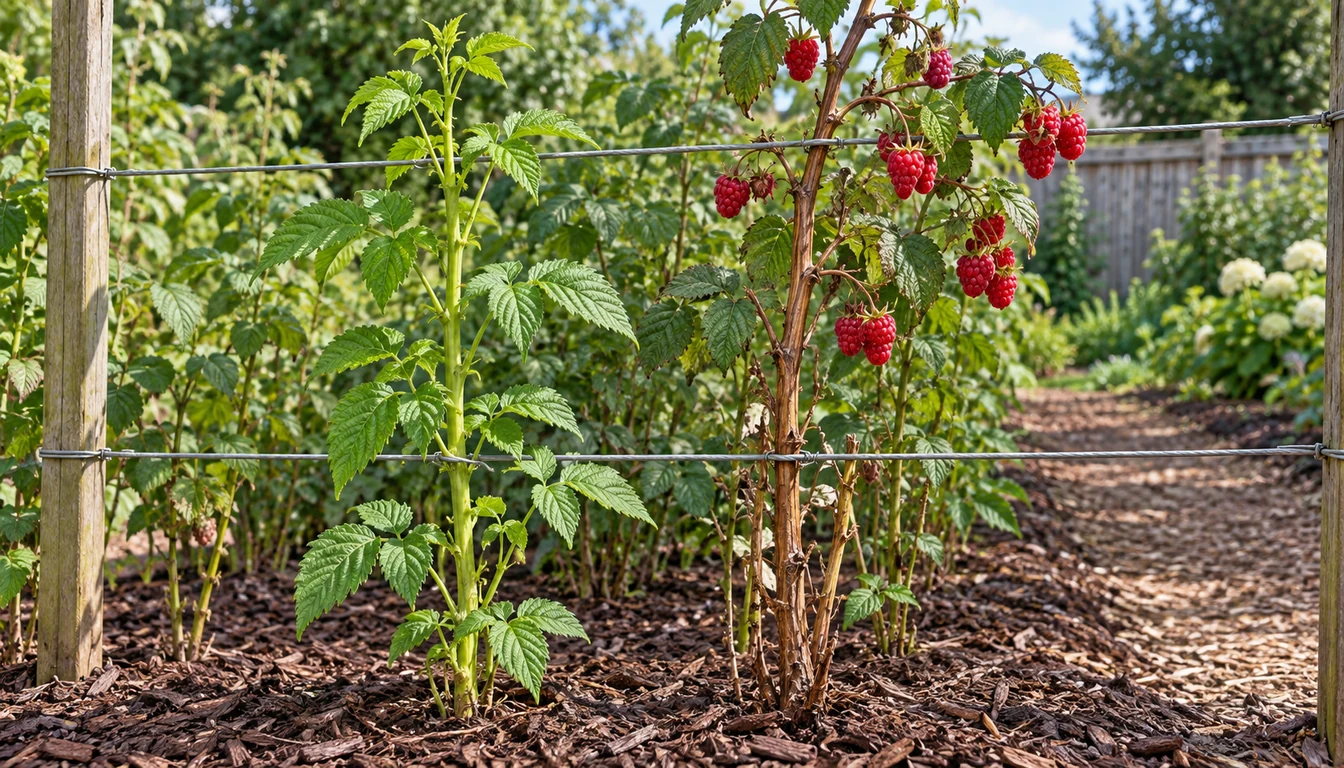
Supported canes can bring fruit within comfortable standing reach. An accessible aisle and manageable row width matter for harvesting, pruning and removing damaged fruit.
A raised strawberry bed can also reduce bending. Ease of picking depends on the actual layout, the gardener’s reach and the cultivar’s growth and prickles.
Container size changes the comparison
Strawberries are easier to fit into a modest container because their canopy and root system occupy less space. That advantage does not make a tiny or crowded pot a low-care planting. A shallow root zone has less water in reserve, and hanging baskets can become hot and dry quickly.
Iowa State favors day-neutral and everbearing strawberries for container production. These types can fruit in their first season and suit an annual container approach in its climate. June-bearing plants can also grow in pots, but their concentrated crop and stronger runner production change the value of that limited space.
Raspberries are not excluded from containers. Oregon State describes container growing when garden soil or available space is unsuitable, using a deep, substantial pot and careful pruning. Its example of a 20–30-gallon container at least two feet deep describes conventional raspberry production in that guidance, not a universal requirement for every compact cultivar.
For either fruit, drainage, sun and access to water remain essential. A container makes the root environment easier to control, but it also creates ongoing watering and winter-protection work. A small patio can support fruit without promising the output of a mature garden row.
Fruiting type matters more than “quick returns”
June-bearing strawberries give a concentrated crop, with timing shifting by climate and cultivar. Everbearing and day-neutral types spread production differently, and hot weather can interrupt the repeated crop of day-neutral plants. A label promising season-long fruit does not mean an uninterrupted harvest in every summer.
Strawberry establishment can also involve removing early flowers so that roots and leaves develop. The suitable approach depends on the growing system and local guidance. A nursery plant already carrying berries does not establish how a newly planted bed should be managed for later production.
Summer-bearing raspberries fruit on second-year canes. Primocane-fruiting raspberries can flower and fruit on first-year cane tips, so “raspberries always need another year” is wrong. That ability still does not guarantee a large crop in the planting year. New plants need to establish, and local advice may prioritize growth over that early fruit.
A primocane cultivar can be managed for a fall-only crop or for a fall crop followed by fruit on the retained lower cane the next summer. That choice affects both pruning and the harvest window. In a short season, early frost may arrive before much of a late crop ripens.
The growth you remove determines the next crop
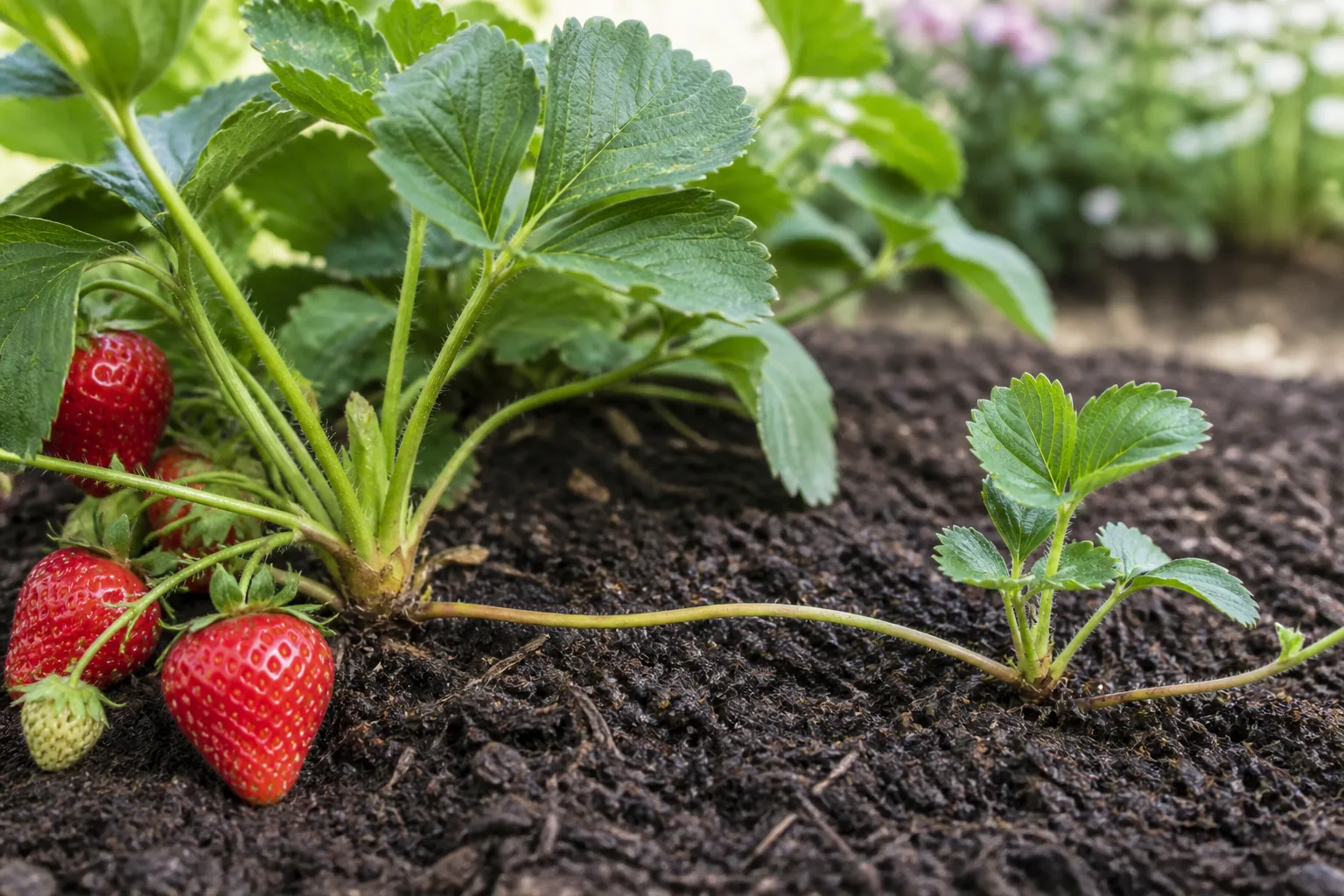
A strawberry runner can form a new plant where it contacts soil. In a matted-row system, selected daughter plants help renew the bed, while excess growth causes crowding. In a container or a system focused on individual crowns, retaining every runner can divert resources and leave too many plants sharing a small root zone.
A daughter plant needs its own roots before it can grow independently. Retaining selected daughters can renew a bed, while unrooted runners hanging outside a pot continue to draw on the mother plant.
Raspberry pruning follows a different cycle. A summer-bearing cane grows one year, fruits the next and then dies. The useful distinction is between spent fruiting canes and replacement growth. Removing all live canes before a summer crop removes the wood that would bear it.
For an established primocane planting managed for fall fruit only, cutting all canes down before spring growth simplifies pruning. Keeping a second crop requires retaining the appropriate lower cane instead. Neither schedule can be chosen safely from the word raspberry alone.
Red raspberry shoots that emerge outside the planned row also need managing. A wider thicket can make picking and air movement worse even though it appears to contain more potential fruit. Conversely, a low strawberry bed still needs attention to weeds, moisture and crowding.
Cold hardiness and useful harvest are separate questions
Both crops have cultivars suited to cold regions. Minnesota trials include cold-hardy strawberries and raspberries, so a blanket “raspberry wins in Zone 4” verdict loses the actual cultivar and protection requirements.
Their vulnerabilities differ. A strawberry crown close to the soil surface and roots in an exposed pot face different conditions from a raspberry cane held above snow. Summer-bearing raspberries need live fruiting canes after winter. A fall-only primocane system avoids relying on those overwintered canes for fruit, but still needs enough growing season to ripen its crop.
Heat matters too. North Carolina Extension offers a wider raspberry selection for its cooler mountain areas than for warmer locations. Iowa State notes that container strawberries can suffer from hot root zones and reduced summer production. Cold hardiness alone does not describe those growing conditions.
Yield comparisons need a defined area and a comparable system. A trellised raspberry row uses an aisle and access space, while a strawberry bed can support different densities and harvest schedules. Height alone does not prove more usable fruit per square foot.
The recurring work is different rather than absent. Strawberries need runner or crown management, while raspberries need cane decisions and often support. Both benefit from regular picking and removing damaged fruit. A crop that fits the site and can be harvested promptly is more useful than a larger theoretical yield that the planting cannot reliably deliver.
Sources & References
- Growing strawberries in home gardens, University of Minnesota Extension
- Growing raspberries in the home garden, University of Minnesota Extension
- Raspberries in the home garden, NC State Extension
- Growing Raspberries in Your Home Garden, Oregon State University Extension
- How to Grow Strawberries in Containers, Iowa State University Extension